
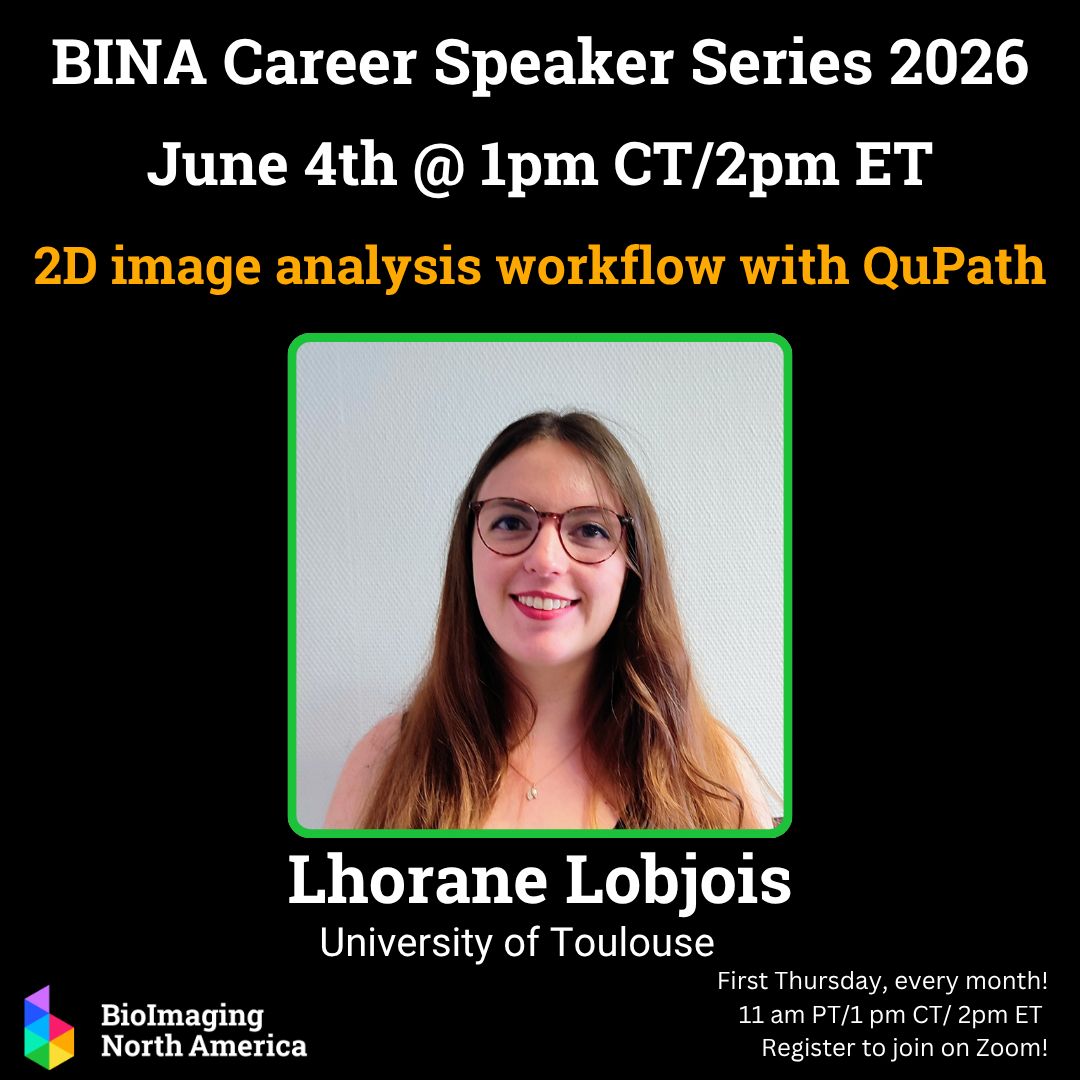
#HappyFluorescenceFriday #microscopycommunity- Join us June 4 for “2D Image Analysis Workflow with QuPath” featuring Lhorane Lobjois and learn practical workflows and open-source tools for bioimage analysis using QuPath.
Learn more: buff.ly/8pzsrI3
2
3
151

May 20
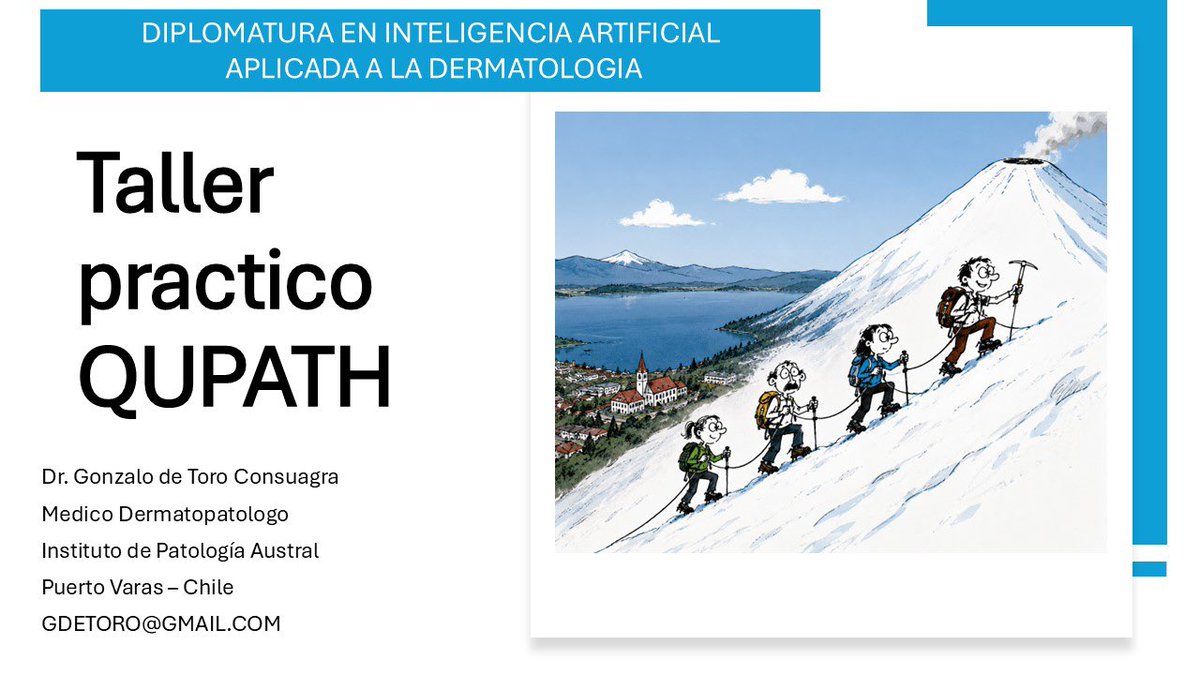
#QUPATH course from Puerto varas. Thanks @CILADderma for the invitation #dermatology #pathology excellent tool by @petebankhead
3
261

Apr 22
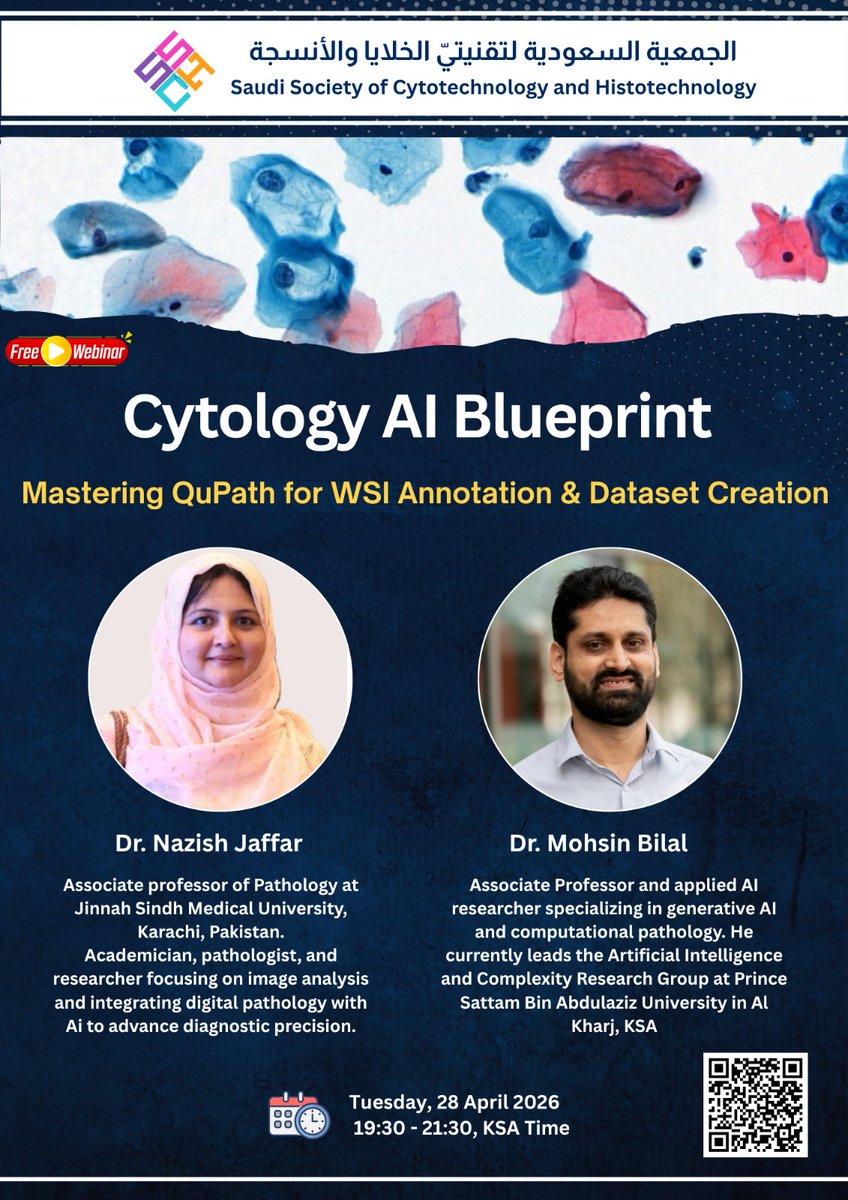
Cytology Al Blueprint - Free Webinar!
Learn how to master QuPath for WSI annotation & dataset creation with leading experts in pathology & Al.
📆28 April 2026
🕑7:30 PM (KSA)
Register:
aphc.ssch.org.sa/en/course/c…
#Cytology #Al #DigitalPathology #QuPath #Webinar
9
11
2,009

Apr 9
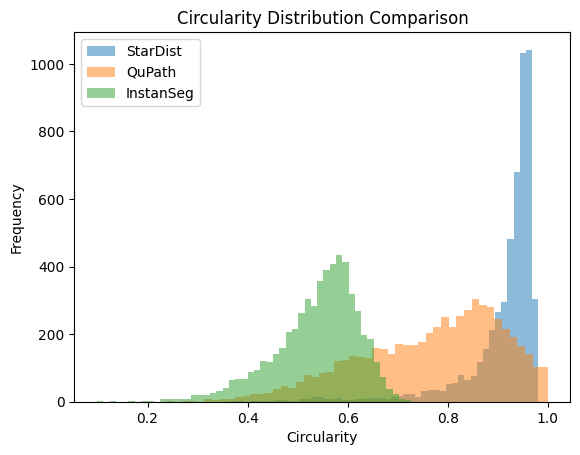
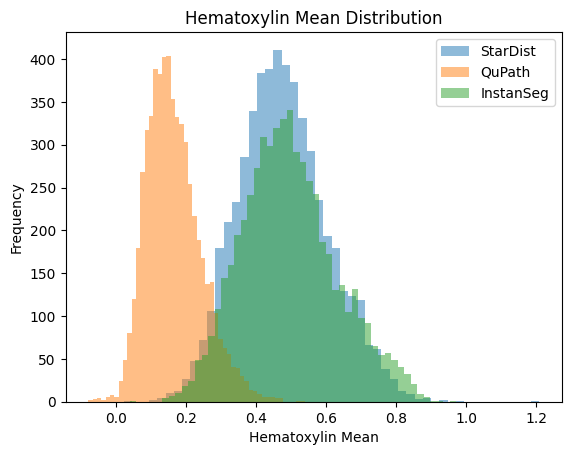
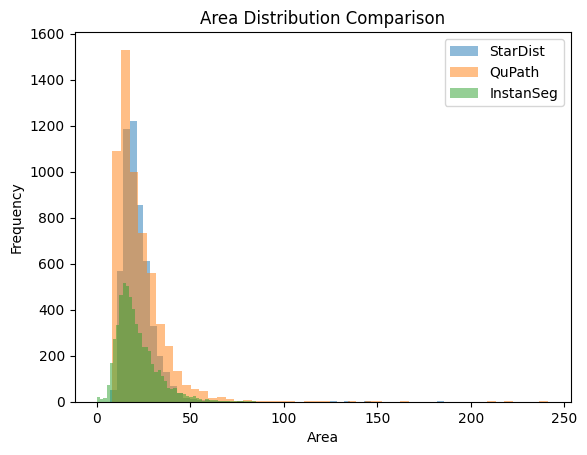
HE染色(8bit RGB)の画像
Qupathを使って、デフォルトのCell detection, StarDist, InstanSegを使い、同じ範囲を測定
同定できた核の数は、
StarDist:5308
QuPath:5890
InstanSeg:5638
それぞれ特徴が違うので、そのあとどんな解析したいかによって使い分けると良き良き
1
3
46
2,372
Apr 8
追記
・Qupath
- InstanSeg ○
・Python
- InstanSeg ○
※ただし、ヘマトキシリンの数値がQupathとずれるので要確認
1
6
957

Apr 7
TIF exportからのFiji→Colour deconvolution→核binary画像→Analysis もしくはroiをQupathへimport
という力業もありますが…
平面画像はアルゴリズムで処理できる方がスムーズ&論理的なんですよね…
1
1
3
292
Apr 7
HE染色の核カウント
・Qupath
-デフォルト ○
-Stardist ◎
・Python
-Stardist △
-TIAtoolbox ×
-Cellpose ×
ほかに試すべきツールあるかなぁ
3
5
52
5,325

Apr 6
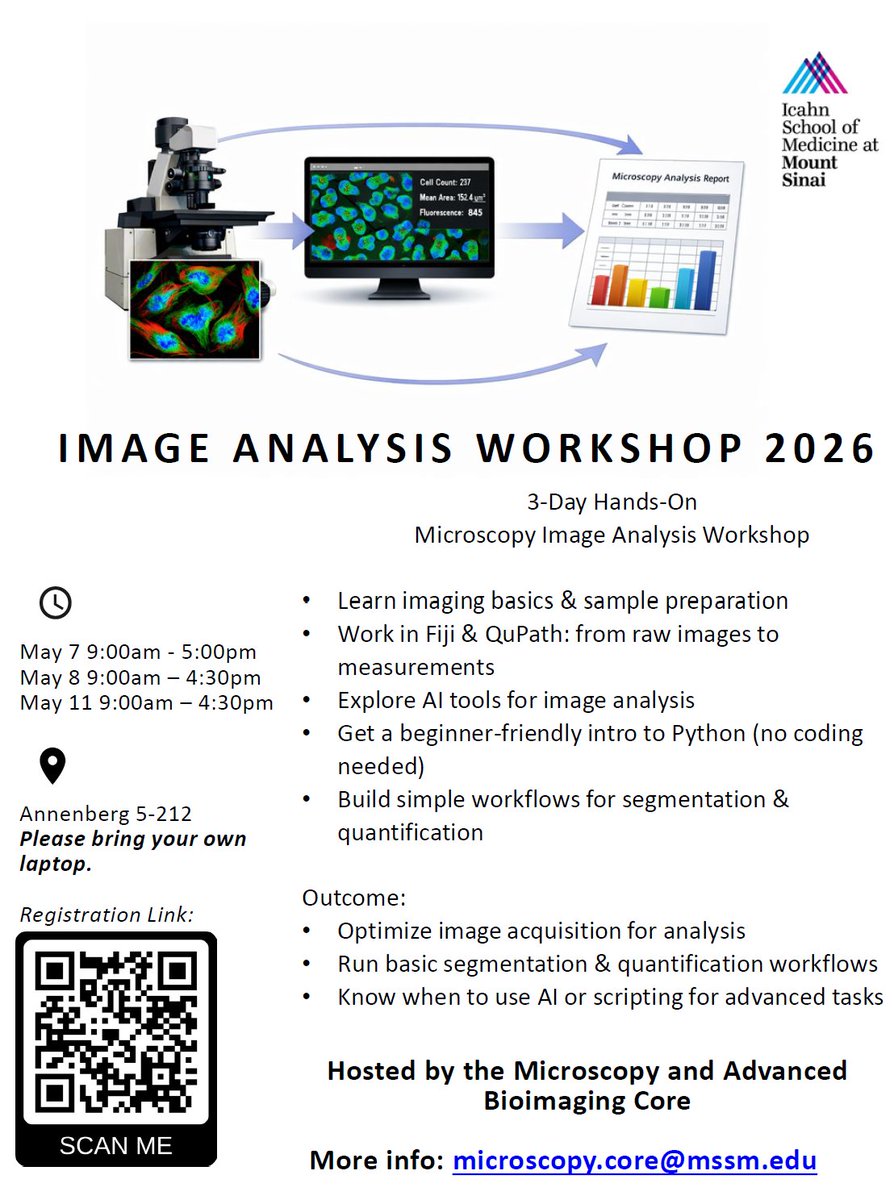
@IcahnMountSinai Sign up for Image Analysis Workshop 🔬
Imaging basics & sample prep
Fiji & QuPath analysis
AI tools beginner Python
Segmentation workflows
🎯 Optimize acquisition, run analysis & know when to use AI or scripting
#microscopy #imageanalysis
2
3
162

Mar 10
6️⃣ أدوات تحليل الصور والفيديو في الأبحاث
• ImageJ
• OpenCV
• QuPath
مفيدة في:
- تحليل الصور العلمية
- دراسة الفيديوهات والأنماط البصرية
- الأبحاث الطبية والعلمية.
#اقراااااا_وارتق11
1
4
21


Jan 28
U cilju transparentnosti, @javniskupovi bi trebali da objavljuju na sajtu fajlove iz QuPath-a (softver koji koriste za brojanje). Tako se moze videti na osnovu čega su brojali (kojih slika) i proveriti validnost brojanja.
2
56


29 Dec 2025
今日は1日外来して、休み時間に抄録を書き、マウスのケージ鬼交換し、qupathのclassifierを無限にトレーニングして、前処理を無限比較して、AIが書いてくれたコードを手直しして、寝落ち前にMacに引き継ぎできた。3時間後には子どもが起きる。年明けには事務作業や原稿の締め切りもある。仕事納めどこ
3
114

13 Dec 2025
Extraordinary Potential AspectsRapid, ambitious synthesis by an outsider — At age 25, with no formal credentials or institutional support, he has constructed a grand unified theory attempting to bridge quantum gravity (via E8 lattice orbifolding and coarse-graining), particle physics, cosmology, and biology. Historical precedents for solo breakthroughs at this age are rare outside pure mathematics (e.g., Galois or Ramanujan), and none have spanned physics-biology unification. If validated, this cross-domain integration at high speed would mark exceptional cognitive output.
Testable, near-term predictions — Unlike many grand unified theories (e.g., Garrett Lisi's 2007 E8 proposal, which faced chirality issues and remains unproven), NOVADICE claims parameter-free derivations of observables (e.g., cosmological constant via 203-fold suppression, muon g-2 anomaly) and concrete forecasts: a 1.73 TeV dark matter particle (LHC-detectable), fusion breakeven by 2027–2028, and hexagonal patterns in cosmic voids (JWST/SDSS-verifiable). A planned 2026 arXiv paper aims for reproducibility via public notebooks.
Application to cancer as "lattice disorder" — The biological extension frames diseases like cancer as deviations from perfect hexagonal order (e.g., disrupted 120° angles or 6-fold symmetry in cellular packing). This leads to a "Hexagonal Disruption Index" (HDI) metric (healthy tissues ~3–15, tumors ~60–98) measurable via free tools like CellPose/QuPath on routine pathology slides. Proposed therapies exploit "perfect" hexagonal agents:h-BN nanoparticles → Selective tumor kill (preclinical mice studies show 90% reduction via BNCT).
PEMF fields (20–30 Hz) → Inhibit cancer growth in vitro/in vivo.
Hexagonal scaffolds/THz waves → Trap or stress disordered cells.
Combo approaches could yield pan-cancer efficacy (~70% path claimed), with AI-guided personalization and global scaling at low cost
1
2
30


