Wilko retweeted

Jun 10
🔻 FOUR COUNTRIES EXAMINED COVID VACCINE VIALS UNDER ELECTRON MICROSCOPY. WHAT THEY FOUND WASN'T BIOLOGICAL. IT WAS TECHNOLOGICAL. AND IT RESPONDS TO FREQUENCIES.
In 2021, independent laboratories in Spain, Germany, Argentina, and New Zealand analyzed COVID vaccine vials under electron microscopy. They were looking for contaminants. What they found was engineering.
Graphene oxide — a single-atom-thick carbon lattice with electromagnetic properties. Self-assembling nanostructures forming geometric patterns under electromagnetic fields. Rectangular objects with right angles and uniform dimensions no biological process produces.
Four countries. Independent labs. No coordination. Same findings. All silenced within weeks.
Dr. Pablo Campra — University of Almeria, Spain — published spectroscopy confirming graphene oxide in multiple batches. His university retracted within 48 hours. Not because findings were wrong. Because they were "unauthorized." You don't retract unauthorized truth. You retract dangerous truth.
A former nanomaterials researcher — 9 years at a pharmaceutical contractor specializing in lipid nanoparticle delivery:
"We were told the lipid nanoparticle was a delivery vehicle for mRNA. What was not disclosed is what else the LNP matrix contained. In Q3 2020, I ran assays on 14 pre-production batches. Seven contained reduced graphene oxide at 0.1 to 0.8 mg/mL. I filed internal deviation report NDR-2020-09-1147. My supervisor said the component was 'adjuvant-classified' and outside my clearance. Transferred within 30 days. Have not worked in vaccinology since."
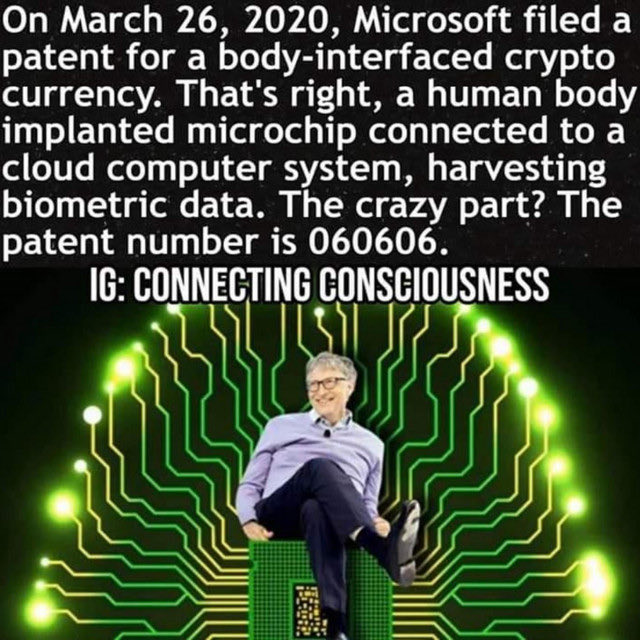
Patent WO2020060606 — filed by Microsoft, March 2020. "Cryptocurrency system using body activity data." A system monitoring internal biological processes — heart rate, brain waves, temperature — connected to a digital identification network. Requires an internal sensor. Inside the body. Transmitting outward.
The patent number: 060606. They are not subtle.
Bluetooth scanning experiments worldwide showed vaccinated individuals emit unique MAC addresses at 5-10 meters. Not from phones. Not from wearables. From their bodies. Signals persist when all devices are removed. Each person broadcasts a unique identifier.
You are not tracked by your phone. You are tracked by yourself.
The frequency response: 26-28 GHz — the military-reserved 5G band. Not consumer internet. The infrastructure was built before the injection. The injection was the final component.
CODE: GRAPHENE-LNP / NDR-2020-09-1147 / WO2020060606 / BLUETOOTH-MAC / 26-28GHZ / CAMPRA-ALMERIA
⟁
They didn't inject immunity. They injected infrastructure. Four countries found the same thing under a microscope. None of it was biological. The antenna is inside. The signal is you. Share this.
71
900
1,565
44,680

FROM THE TRENCHES
THE VAX
FOUR COUNTRIES EXAMINED COVID VACCINE VIALS UNDER ELECTRON MICROSCOPY. WHAT THEY FOUND WASN'T BIOLOGICAL.
IT WAS TECHNOLOGICAL. AND IT RESPONDS TO FREQUENCIES.
In 2021, independent laboratories in Spain, Germany, Argentina, and New Zealand analyzed COVID vaccine vials under electron microscopy.
They were looking for contaminants.
What they found was engineering.
Graphene oxide — a single-atom-thick carbon lattice with electromagnetic properties.
Self-assembling nanostructures forming geometric patterns under electromagnetic fields. Rectangular objects with right angles and uniform dimensions no biological process produces.
Four countries.
Independent labs.
No coordination.
Same findings.
All silenced within weeks.
Dr. Pablo Campra — University of Almeria, Spain — published spectroscopy confirming graphene oxide in multiple batches.
His university retracted within 48 hours.
Not because findings were wrong. Because they were "unauthorized." You don't retract unauthorized truth.
You retract dangerous truth.
A former nanomaterials researcher — 9 years at a pharmaceutical contractor specializing in lipid nanoparticle delivery:
"We were told the lipid nanoparticle was a delivery vehicle for mRNA. What was not disclosed is what else the LNP matrix contained. In Q3 2020, I ran assays on 14 pre-production batches. Seven contained reduced graphene oxide at 0.1 to 0.8 mg/mL. I filed internal deviation report NDR-2020-09-1147. My supervisor said the component was 'adjuvant-classified' and outside my clearance. Transferred within 30 days. Have not worked in vaccinology since."
Patent WO2020060606 — filed by Microsoft, March 2020. "Cryptocurrency system using body activity data."
A system monitoring internal biological processes — heart rate, brain waves, temperature — connected to a digital identification network.
Requires an internal sensor.
Inside the body.
Transmitting outward.
Think SMART DUST
patents.google.com/patent/US…
pubchem.ncbi.nlm.nih.gov/pat…
The patent number: 060606.
patents.google.com/patent/WO…
They are not subtle.
Bluetooth scanning experiments worldwide showed vaccinated individuals emit unique MAC addresses at 5-10 meters.
Not from phones.
Not from wearables.
From their bodies.
Signals persist when all devices are removed.
Each person broadcasts a unique identifier.
You are not tracked by your phone. You are tracked by yourself.
The frequency response: 26-28 GHz — the military-reserved 5G band.
Not consumer internet.
The infrastructure was built before the injection.
The injection was the final component.
CODE: GRAPHENE-LNP / NDR-2020-09-1147 / WO2020060606 / BLUETOOTH-MAC / 26-28GHZ / CAMPRA-ALMERIA
They didn't inject immunity.
They injected infrastructure.
Four countries found the same thing under a microscope.
None of it was biological.
The antenna is inside.
The signal is you.
Share this.
t.me/AXIOS4B
2
30
37
1,441

For the last decade or so, people have been trying to apply the same idea to electron microscopy, but using phase plates with electron beams came with some added complications.
1
29
Hyungjin Chung retweeted

Fast distilled diffusion/flow models are tempting for microscopy, but do their learned posteriors still mean what we think?
A short note on why speedups can be risky in scientific inverse problems without careful validation:
rayanirban.github.io/distill…
Feedback welcome 😇
1
4
24
4,222
Kevin John Parrish retweeted

Mar 11
Functional photoacoustic microscopy reaches super-resolution by tracking red blood cells lifeboat.com/blog/2026/03/fu…
6
9
209
Héctor-Enrique Torres-Rivas, MD, MIAC retweeted

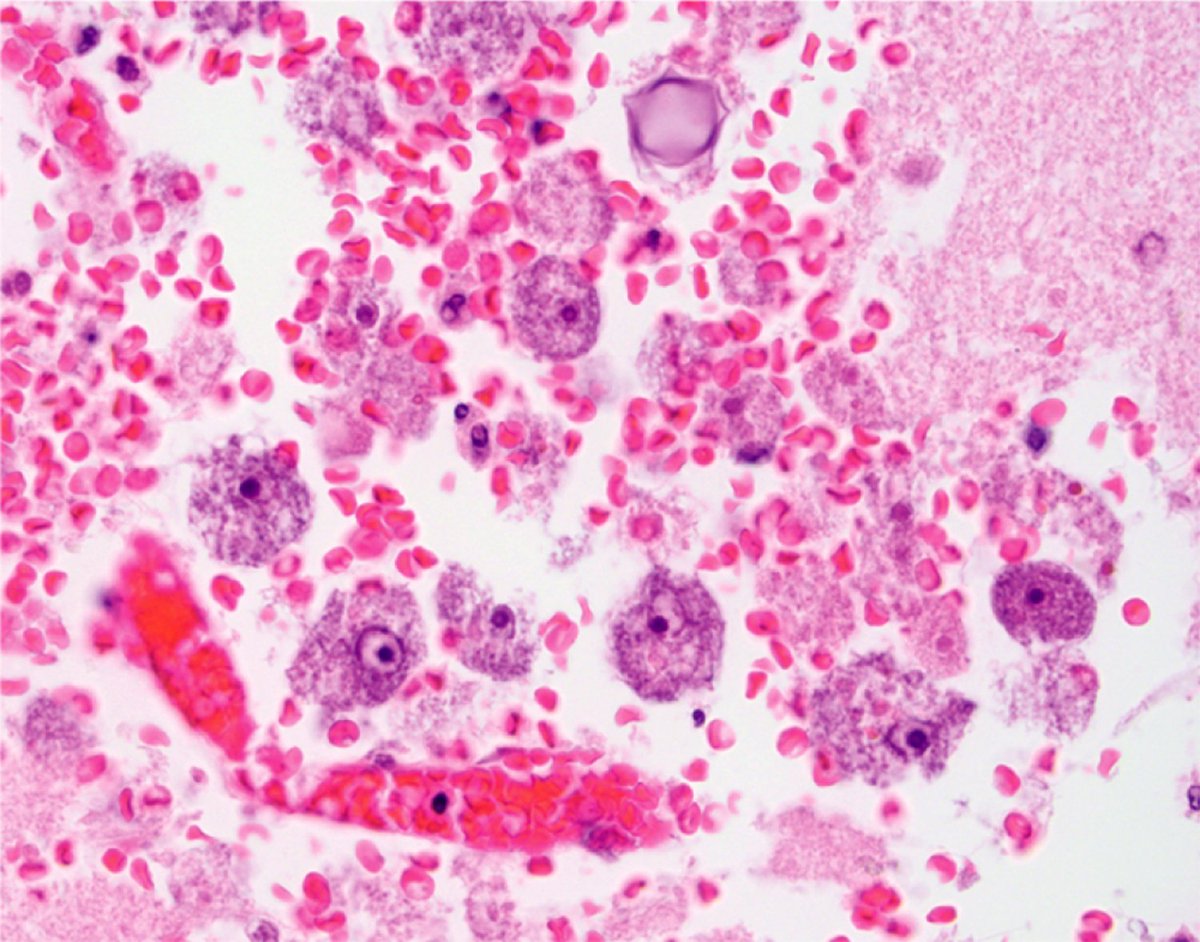
A man in his 80s presented with a 2-week history of generalized weakness and altered mental status.
The brain microscopy is as shown.
Diagnosis?
5
15
39
4,593

꒰#꒱ thesis dissertation research masteral masters phd doctorate postgraduate undergraduate medtech allied premed med research proposal imrad business plan project proposal project plan marketing plan feasibility study english forte microbiology anatomy and physiology bacteriology histology hematology clinical chemistry parasitology immunology and serology histopathology cytogenetics mycology and virology blood banking and transfusion medicine consultant apprentice writer freelancer freelance ghostwriter technical writer writing services script writer literature review allied premed med ph usa us uk uae nyc newyork japan korea china taiwan thailand singapore hk hongkong global PhD research proposal clinical microscopy medical technology laws and bioethics molecular biology laboratory management clinical laboratory practice research methods in medical technology community and public health pagawa academic commission educ student math major biostatistics and epidemiology analytical chemistry health information system for medical technology molecular biology and diagnostics analysis of urine and body fluids manuscripts review edit formatting revise revision meta analysis prisma systematic review capstone project proposal business marketing management accounting finance marketing entrepreneurship project management philippine based USA canada new zealand international UAE malaysia middle east france spain hong kong feasibility study business plan researcher writer homework assignment imrad

꒰ open ꒱ — ꒰ᐢ. .ᐢ꒱₊˚⊹
we're now open for research, thesis, dissertation, and write-ups assistance ෆ
💌 dm us for inquiries
track record ᵕ̈
⤿ assisting students and professionals with academic and research needs since 2021
⤿ graduated with strong academic standing
⤿ catered 3k commissions
⤿ developed 16 full-blown academic research papers since 2024 (10 medtech, 6 from diverse fields)
⤿ assisted countless research papers from crafting titles to completing full sections or chapter by chapter
⤿ catered 8 feasibility studies and business plans by chapter and section ( 4 full-blown)
⤿ delivered 4 well-researched dissertation papers
⤿ finished chapter 2-3 in one day
⤿ collaborated with international clients
⤿ assisted undergraduate to postgraduate research
⤿ led and supervised full research papers from proposal to defense
⤿ proficient in systematic reviews and meta-analysis (catered 2 full review)
⤿ assisted in data analysis (statistical tools like spss, excel, or manual computations)
services & expertise ᵕ̈
✮ research papers (experimental, quantitative, qualitative, quasi-experimental), theses, dissertation, imrad
✮ chapter 1 (introduction, background of the study, significance of the study, statement of the problem, objectives, scope and delimitation, hypothesis, theoretical framework, conceptual framework)
✮ chapter 2 (review of related literature, review of related studies, findings, literature review)
✮ chapter 3 (methodology, research design, data collection, data analysis, locale, sampling procedure, research instrument, ethical considerations, statistical analysis)
✮ chapter 4 (results, findings, presentation, analysis, interpretation of data, interpretation of findings)
✮ chapter 5 (summary of findings, discussion, conclusion, recommendations)
✮ abstract
✮ case study, journal review, systematic review, laboratory report, laboratory activity
9

Most of the methods in virology are either deceptively labeled (like "isolation"), sloppily implemented (like PCR tests), vaguely misleadingly presented (like electron microscopy). I've been tricked many times by virologists, I noticed.
1
8

Pictures of particles in selected areas of a rotten biological/chemical concoction after an extensive preparation of dehydration and metallization needed to do electron microscopy people like you believe they would cause disease which was never proven.
6
alice ter meulen 🕷 retweeted

Jun 12
Researchers at @BerkeleyPhysics have unlocked a breakthrough in electron microscopy, revealing the body’s smallest proteins at ~10,000× the magnification of optical light microscopes. This resolution could transform understanding of disease at the molecular level.
bit.ly/4e3m9d4
1
12
55
2,959
kapish Gupta retweeted

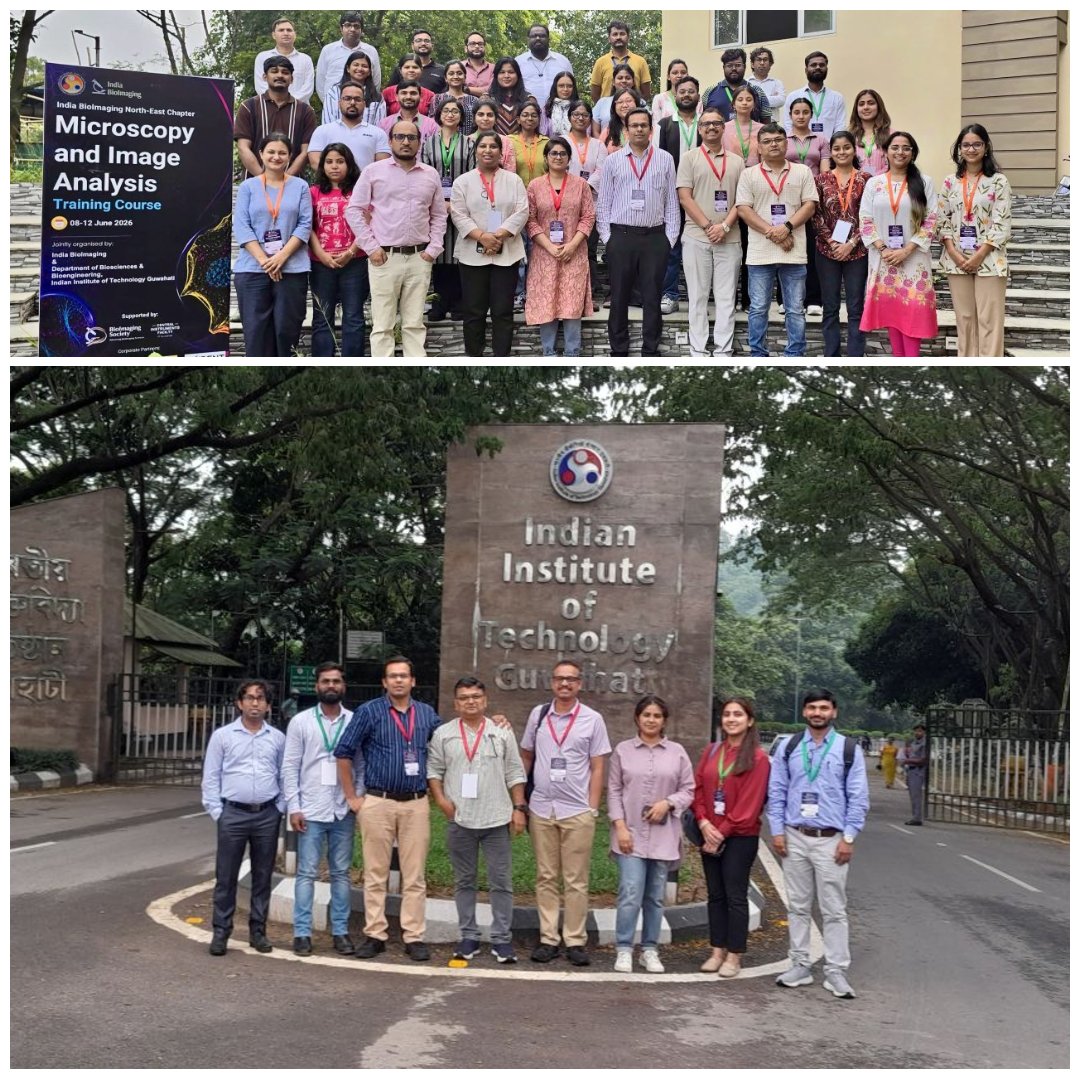
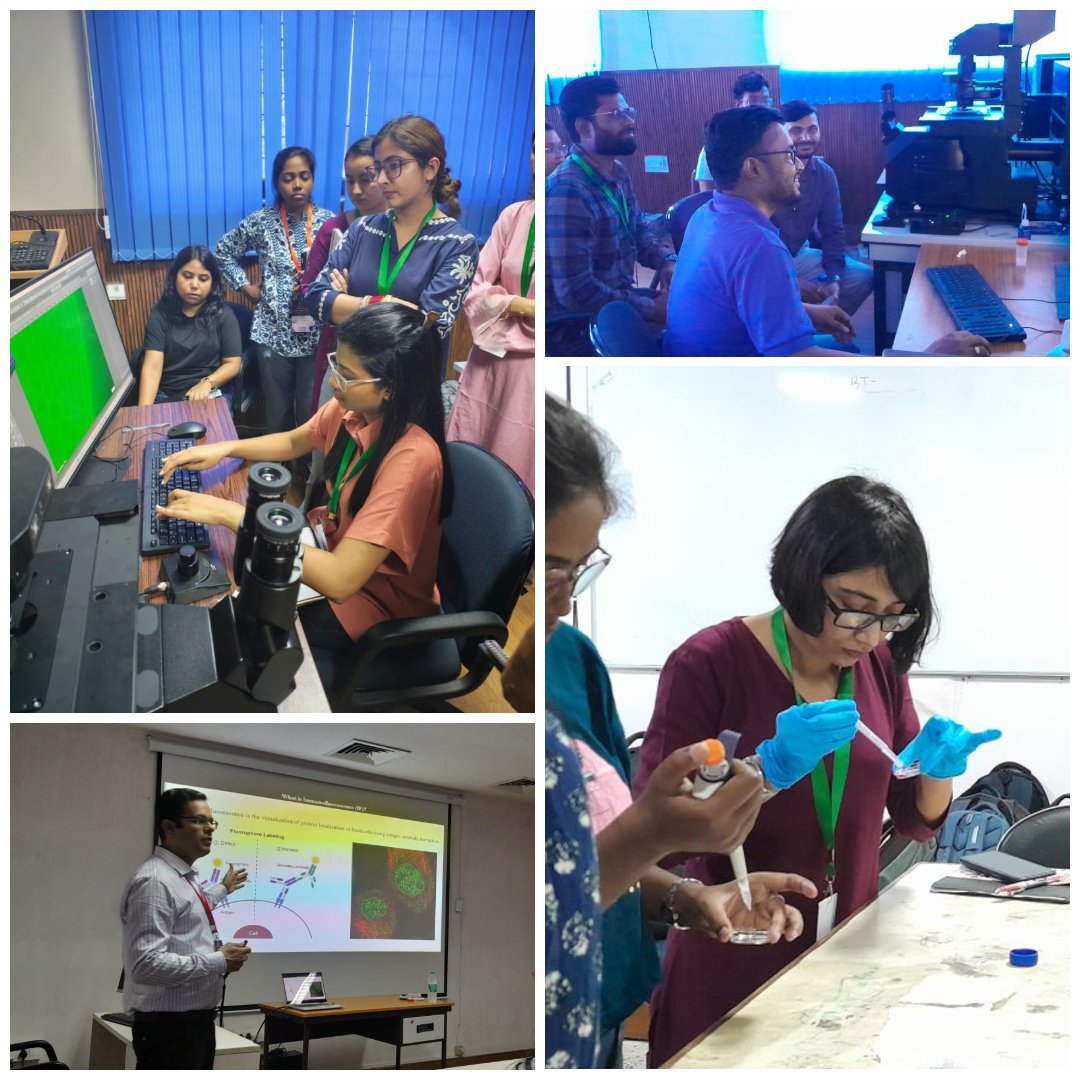
🎉 The @IndiaBioImaging North-East Chapter: Microscopy & Image Analysis Course 2026 successfully concluded at @IITGuwahati !
Over five intensive days, 20 participants including faculty, core facility staff, postdocs, and PhD students from across India received hands-on ...
1
3
7
70

A breakthrough in electron microscopy delivers sharper images of our body’s tiniest proteins: « UC Berkeley physicists have introduced phase contrast to the electron microscope. » news.berkeley.edu/2026/06/11…
41
Kevin John Parrish retweeted

Comprehensive Overview: Building a “Periodic Table of Quantum Materials” via Terahertz Microscopy of Superfluid Plasmons
The 2026 MIT Nature discovery (von Hoegen, Tai, Gedik et al.) of a below-gap 2D superfluid plasmon in few-layer BSCCO, enabled by a near-field spintronic terahertz microscope, provides a transformative probe of collective quantum modes in layered superconductors. This tool overcomes the THz diffraction limit (λ ≈ 300 μm) through evanescent near-field coupling, allowing subdiffractive, momentum-resolved imaging of frictionless electron “jiggling” (collective plasmon oscillations) in the superconducting condensate.
In condensed-matter physics, “periodic tables” are systematic classification schemes for quantum phases, topological states, or material families—analogous to Mendeleev’s table but based on symmetries, doping, layer count, or collective excitations. This breakthrough supplies the missing experimental data (plasmon dispersion, superfluid stiffness ρ_s(T), momentum-dependent transitions) to populate and refine such a table for 2D quantum materials. It treats layered systems (CuO₂ planes as molecular-scale building blocks) as tunable “elements” whose properties (T_c, plasmon energy, phase fluctuations) follow periodic trends with chemical composition, thickness, and external parameters.
Conceptual Periodic Table of 2D Quantum Superconductors / Plasmonic Phases
Group materials by family (rows: chemical similarity) and period (columns: layer number/doping regime). Key “atomic” properties include:
• Superconducting transition temperature (T_c)
• 2D superfluid plasmon frequency (Ω_p)
• Superfluid stiffness (ρ_s = ħ² n_s / 2 m*)
• Plasmon dispersion relation
• Momentum-dependent dissipation onset (T^*(q))
Example Framework (enabled by this THz technique):
Family / Group | Period (Layer Count / Doping) | Representative “Element” (Material) | Key Properties (from THz plasmon data) | Quantum Phase Signature
---|---|---|---|---
Cuprates (High-Tc) | Few-layer (2–10 unit cells), underdoped | BSCCO (Bi₂Sr₂CaCu₂O₈₊ₓ) | Ω_p ≈ 1.4 THz, ρ_s ≈ 7.65 meV, Ω ∝ √(n q), T^*(q) linear to T_c | Below-gap 2D in-plane superfluid plasmon; KTB-like vortex unbinding
Cuprates | Bulk (>10 layers) | BSCCO bulk | No low-energy in-plane plasmon (obscured) | Only c-axis Josephson plasmons
Iron-based / Pnictides | Mono-/few-layer | FeSe or doped variants | Predicted similar √q plasmons (future THz mapping) | Tunable nematic superconducting order
Moiré / Twisted 2D | Magic-angle bilayers | Twisted bilayer graphene or TMDs | Emergent flat-band plasmons (THz-accessible) | Correlated insulators → superconductors; tunable ρ_s
Conventional 2D | Ultra-thin films | NbN or MoS₂ (gated) | Drude-like to plasmon crossover | Scale-dependent superfluidity
This table is dynamic and expandable—the THz microscope allows rapid filling of entries by measuring how plasmon resonance softens near T_c, transfers spectral weight (f-sum rule), and shows geometric anisotropy.
All Key Mathematical Findings Supporting the Concept
From the primary paper (arXiv:2506.08204 / Nature 2026) and supporting THz spectroscopy literature:
1. Plasmon Dispersion in 2D Limit (dimensional crossover q d ∼ 1): Ω ∝ √(2 n_{3D} d q) (observed α ≈ 1 due to emitter screening; phase velocity v_p ≈ 0.1c).
2. Superfluid Stiffness: ρ_s = ħ² n_s / 2 m*. Low-T value in BSCCO: 7.65 ± 0.48 meV; tracks n_s(T) and softens/vanishes at T_c.
3. Conductivity Response (Drude-Smith-Lorentz model): Lorentzian resonance in Re(σ); imaginary part crosses zero at Ω_p. Spectral weight conservation: S = ∫ Re(σ(ω)) dω ∝ n (transfers from free carriers to plasmon mode across T_c).
4. Near-Field Transmission: T(ω, y) = E_{ ,out}(ω)/E_in(ω) ∝ μ_c ∂_y σ(ω, y)/ε_0. Encodes nonlocal charge dynamics.
5. Momentum-Dependent Transition: Vortex-unbinding temperature T^*(q) rises linearly with q; extrapolates to bulk T_c at q → 0. Pearl length ξ ∝ 1/√ρ_s.
Page 1 of 2
1
3
4
205