
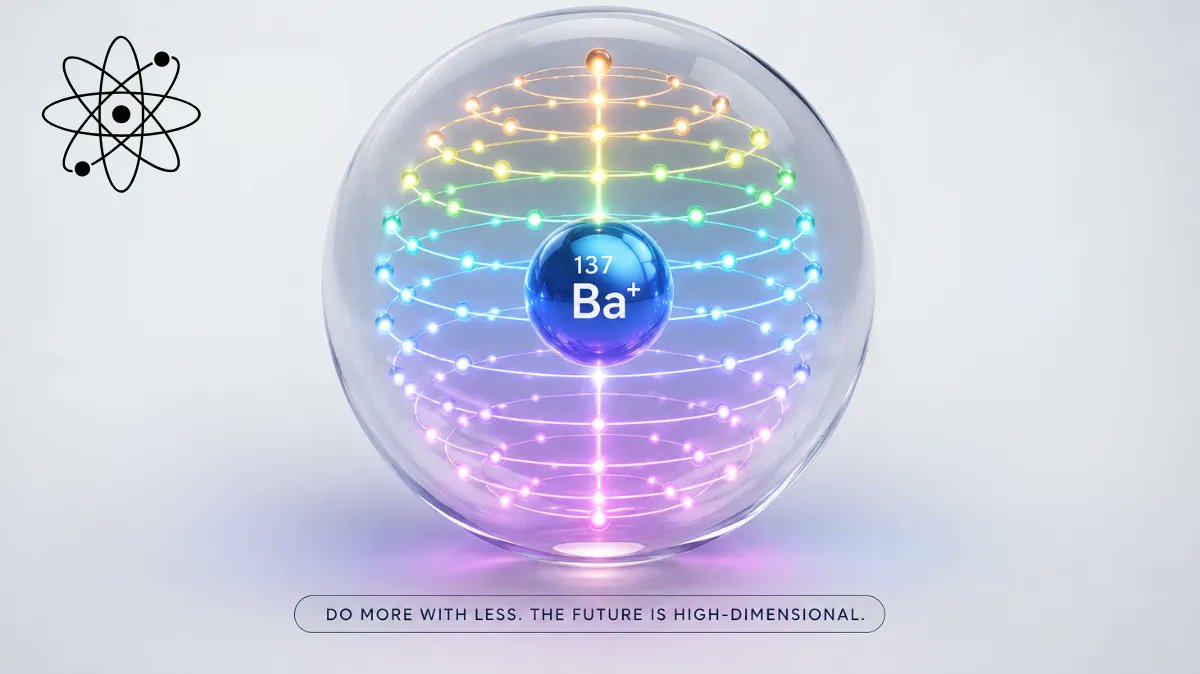
ALT The Institute for Quantum Computing (IQC) and Department of Physics and Astronomy at the University of Waterloo showing a significant increase in quantum hardware efficiency. Under the direction of Pei Jiang Low, Nicholas C. F. Zutt, Gaurav A. Tathed, and Crystal Senko, the group has effectively created a 25-dimensional qudit by operating a quantum processor with 25 internal energy levels of a single Barium-137 (137Ba ) ion. The Quantum Computing Scaling Crisis The qubit, the quantum counterpart of a classical bit, has been the foundation of conventional quantum computing for many years. A qubit may exist in a superposition of both 0 and 1, whereas a conventional bit can only exist as one. However, there is a “substantial scientific and technological challenge” in scaling these devices to the thousands or millions of qubits needed for real-world applications.

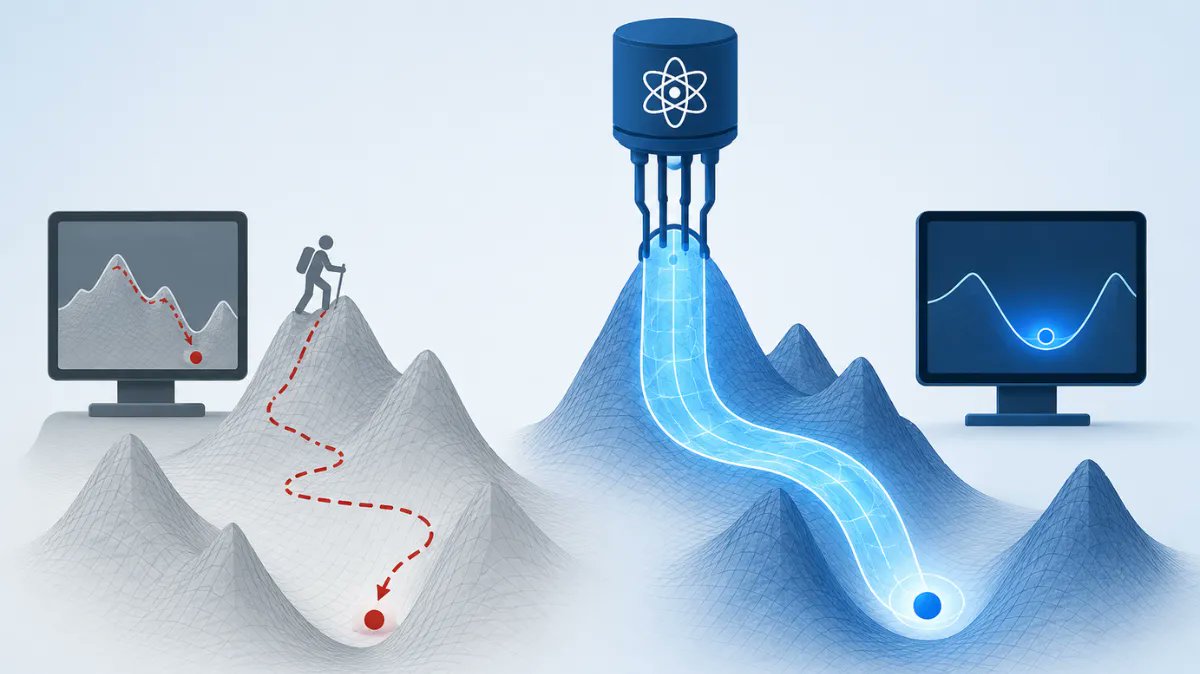
ALT Quantum Eigenvalues Imagine attempting to forecast how a virus spreads over a complicated social network or whether a bridge would fall in a strong wind. An “eigenvalue” problem is a particular kind of mathematical computation that lies at the heart of these enormous real-world puzzles. These computations have been the unseen framework of contemporary engineering for decades, but as a systems become increasingly intricate, conventional computers are reaching a breaking point. Researchers have now discovered a breakthrough that penetrates directly through that wall rather than merely climbing over it. They have created a framework that outperforms conventional classical methods by an astounding five orders of magnitude by rethinking these challenges for quantum computing. The Hidden DNA of the Modern World To comprehend the breakthrough, one must first comprehend the “eigenvalue.” These numbers are actually the mathematical “DNA” of a system, despite the name’s abstract sound.

ALT Quantum Computing for Weather Forecasting Every year, thousands of people are killed and infrastructure is damaged by storms, heat waves, and tornadoes. To assist communities prepare and reduce casualties, more precise and timely forecasts of catastrophic weather events are required. As these occurrences become more frequent and severe due to climate change, researchers are utilizing quantum computing to push the boundaries of meteorological techniques. The traditional computing bottleneck Modern weather forecast relies on numerical weather prediction (NWP) models, which mimic atmospheric dynamics using complicated mathematical equations. These models are notoriously difficult since weather systems involve several variables including temperature, pressure, humidity, and wind patterns. These computations are difficult for even the most advanced supercomputers to perform at high resolutions.

ALT Origin Quantum has announced QPanda3 Runtime, a toolbox intended to break down the high technical and financial hurdles currently surrounding true quantum computing, marking a significant change in the accessibility of advanced technology. The industry has encountered a major obstacle as quantum computing moves from isolated laboratory studies to useful, real-world applications the high cost and limited machine time. The Problem of Luxury in Quantum Development Developing for actual quantum devices has, up until now, been referred to as a “luxurious” undertaking. On actual quantum chips, even minor mistakes in circuit design or incorrect parameter configurations can result in wasted valuable machine time under conventional development methods. Significant financial losses and delays result from this inefficiency, which are made worse by the fact that actual quantum gadget resources are still in little supply and have notoriously long wait periods.
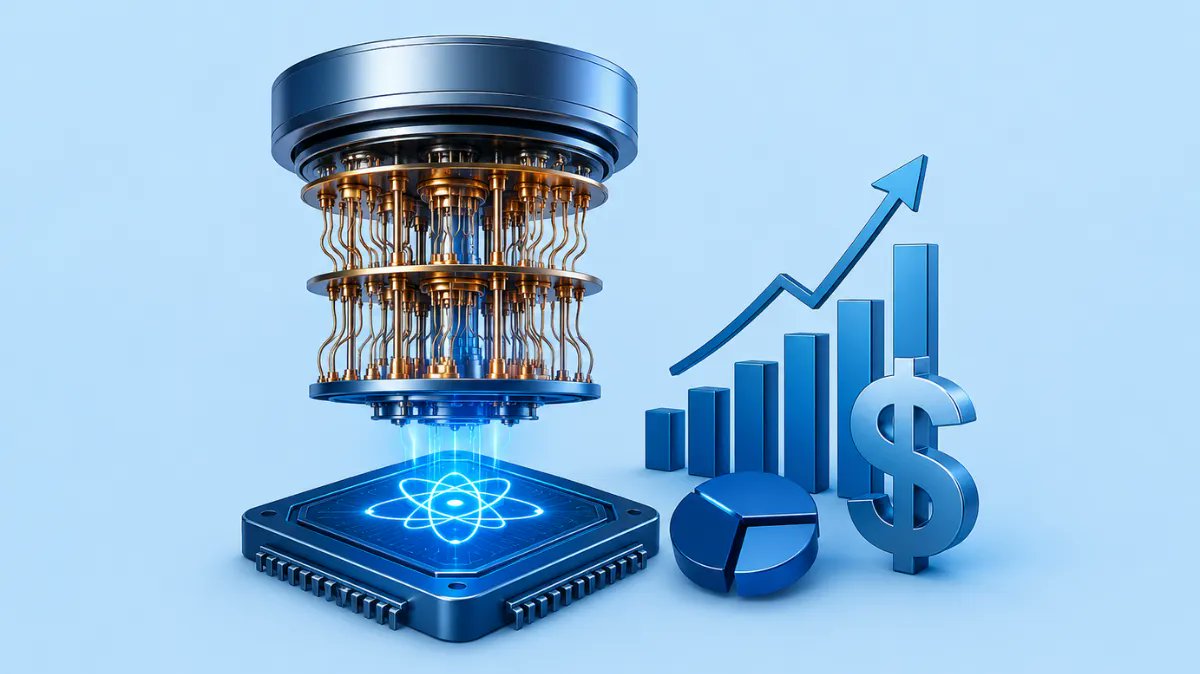
ALT What is the Quantum Financial System? A Quantum Financial System (QFS) is a future financial infrastructure that uses quantum computing to analyze massive amounts of data, perform complex computations, and increase security. A quantum-enabled financial ecosystem would use qubits to address exceedingly challenging optimization and simulation problems, unlike current financial systems that use standard computing architectures. Although experts stress that there isn’t yet a comprehensive QFS, quantum computing technologies are moving closer to applications that would enable next-generation financial services. Current Financial System at a Glance The billions of transactions are processed by modern financial systems through investing platforms, stock exchanges, banking networks, and payment processors. Financial technology has advanced remarkably with traditional computing systems, but there are still a number of obstacles to overcome.
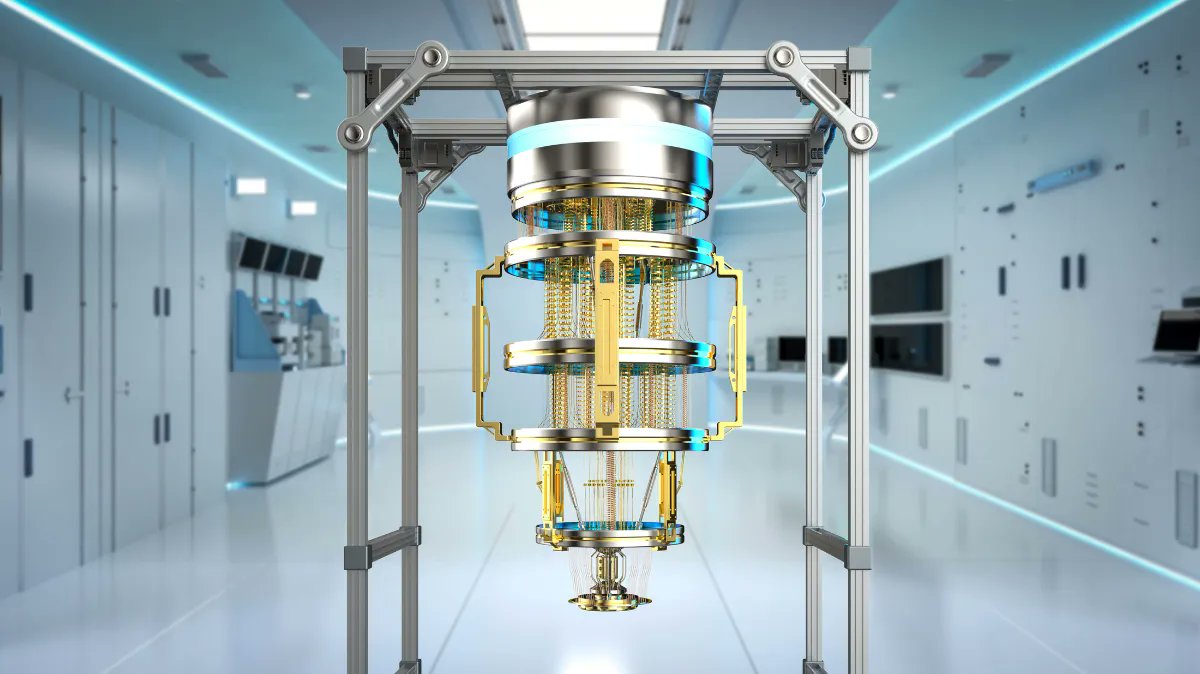
ALT Center for Computational Quantum Physics CCQ Quantum supremacy a single, high-stakes idea has shaped the future of quantum computing for over a decade. It marks the point at which a quantum machine can solve a problem that no classical supercomputer could rival. The belief that only a quantum device can reproduce hundreds of entangled qubits has motivated billion-dollar investments and academic careers. An innovative Science report from May 21, 2026, challenges this paradigm. Researchers from Boston University and the Simons Foundation’s Flatiron Institute’s Center for Computational Quantum Physics (CCQ) showed that quantum advantage goalposts are more flexible than thought. The Claim That Triggered the Hunt In March 2025, a major research group published findings seen as a clear victory for quantum hardware, sparking this scientific shift. They used a complex quantum processor to compute the dynamics of complex systems of qubits arranged in square, cubic, and diamond lattices.
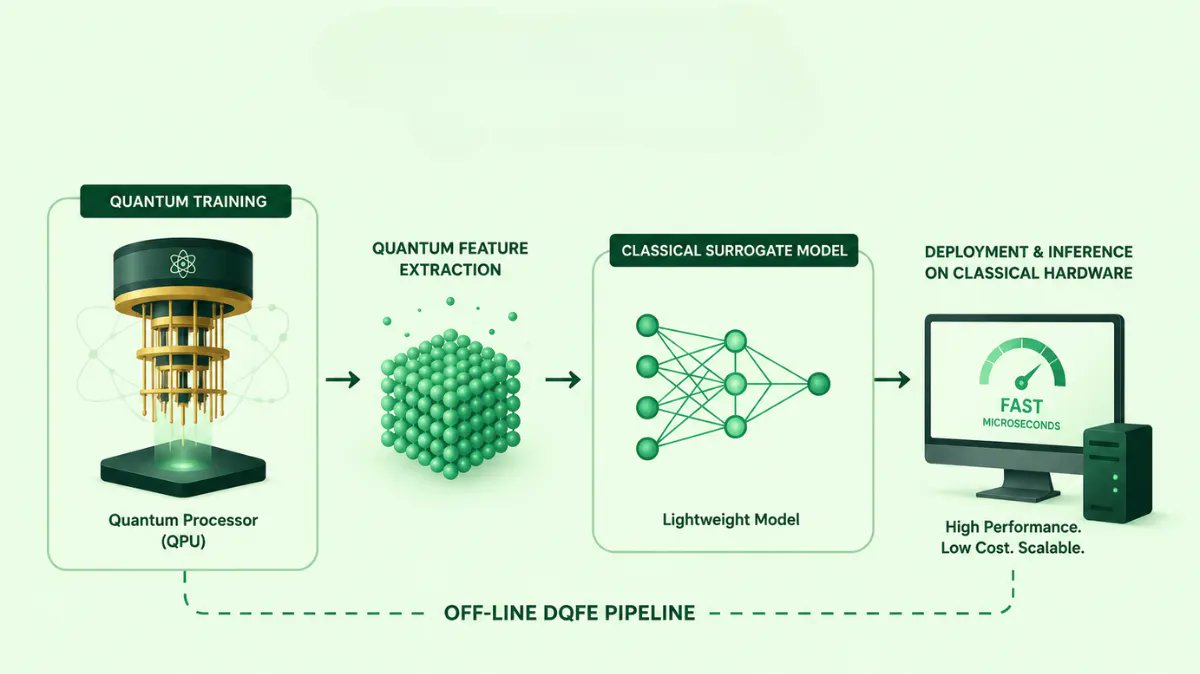
ALT Kipu Quantum introduced a hybrid quantum-classical architecture to bridge experimental quantum research and enterprise-scale production, transforming quantum computing. The technology allows companies to train QML models on a quantum processor before deploying them on traditional hardware. This development eliminates the requirement for a costly, slow quantum processor to be active during each prediction or inference cycle, which has long prevented quantum machine learning from being extensively utilized. By relocating the quantum component “off-line,” Kipu Quantum lowers these complex models’ latency and operating costs to traditional systems. The Fundamental Shift to “Off-line” The Offline DQFE (Digital Quantum Feature Extraction) pipeline is the core of this release. In the past, integrating a quantum processing unit (QPU) into the real-time production environment was necessary for quantum-enhanced AI models. However, Kipu’s unique structure only uses the QPU

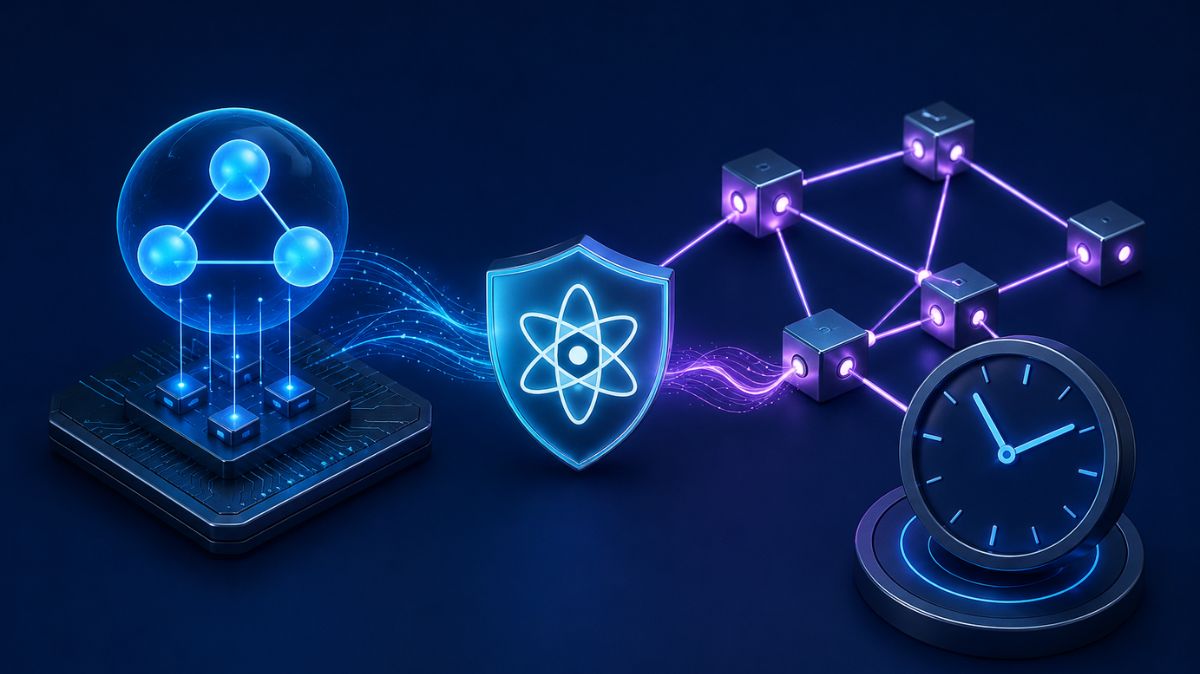
ALT Variational Graphical Quantum Error Correction Researchers from Tsinghua University and Nanjing University have created a machine learning-based framework called Variational Graphical Quantum Error Correction (VGQEC), that enables quantum computers to create their own “shields” against faults, marking a significant advancement toward useful, fault-tolerant quantum computing. The team’s invention, Variational Graphical Quantum Error Correction (VGQEC), is a change from the “one-size-fits-all” approach that has long dominated quantum error correction. The framework allows a quantum device to sense its own distinct “noise” and modify its error-correction technique by including adjustable parameters into the mathematical graphs that describe these codes.
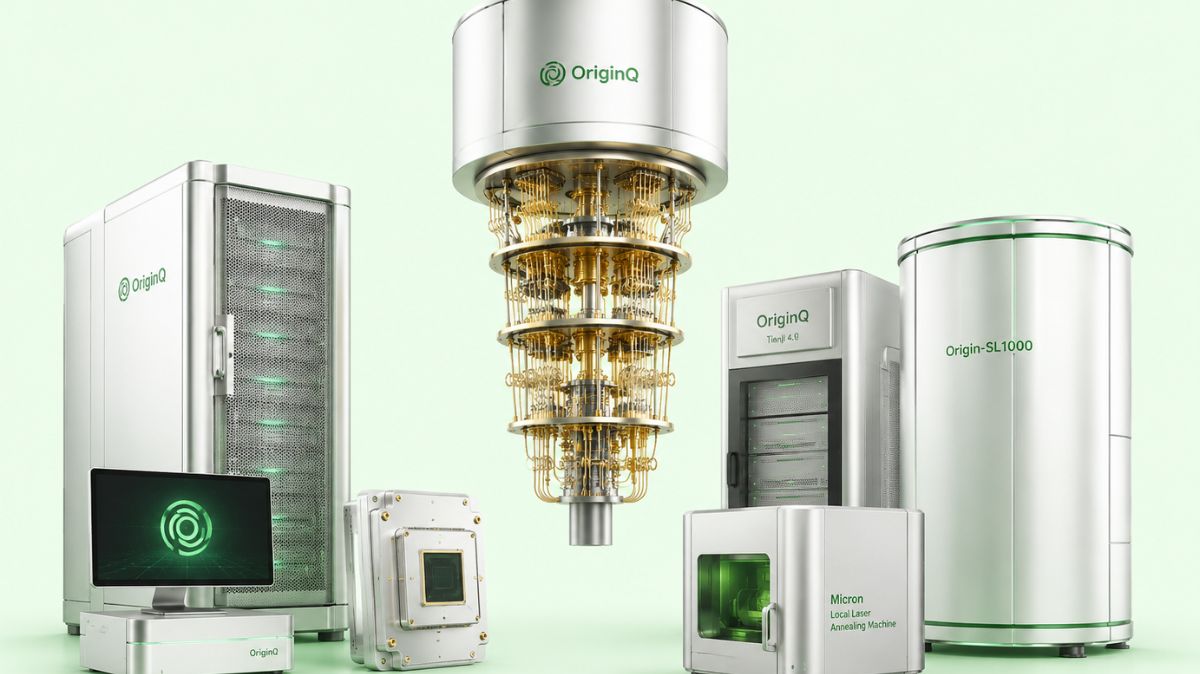
ALT Origin Quantum Computing Technology (Hefei) Co., Ltd. has officially launched its fourth-generation superconducting quantum computer, the OriginQ Wukong 180. The system is now available to global users, signalling China’s definitive transition into the 100-qubit engineering phase for domestic superconducting machines. The OriginQ Wukong 180 is a system used for realistic task execution and real-world delivery, not just a lab prototype. This platform seeks to provide a steady and dependable resource for the increasingly complicated demands of the Noisy Intermediate-Scale Quantum (NISQ) time by overcoming the experimental limitations of earlier generations. The OriginQ 180-Qubit Architecture Central to the system is a single-chip architecture with 180 computational qubits. This was a significant scaling effort compared to the company’s previous technology, which used a 72-qubit processor.

ALT Infleqtion sensing reports first-quarter 2026 financial performance. The company reported a 14% year-over-year rise in quarterly revenue to $9.5 million. This performance marks a significant milestone for the company, since it became a publicly traded business on the New York Stock Exchange during the quarter. The company’s expansion is mostly due to an increase in consumer demand for its wide range of quantum products, which include sensing devices, high-performance hardware, and the exclusive Superstaq software platform. Management highlighted that all of this income came from organic growth and quantum devices and software, indicating a mature market for useful quantum solutions. Strategic Market Momentum and Updated Outlook Infleqtion raised its 2026 sales projection to $40 million after a solid start. Increasing engagement in national security, space exploration, and hybrid quantum-AI applications supports this trust.
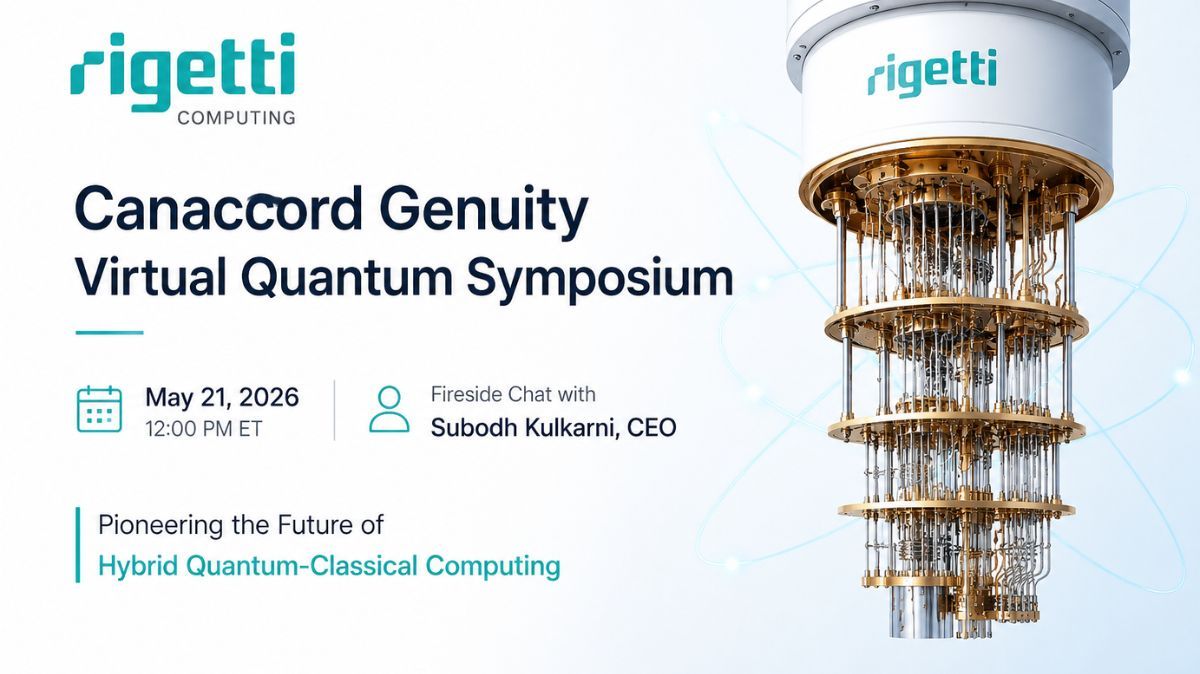
ALT Rigetti Computing, Inc. enrolled for the Canaccord Genuity Virtual Quantum Symposium. CEO Subodh Kulkarni will talk in a roundtable chat on Thursday, May 21, 2026. High-profile participation coincides with a crucial time for Berkeley-based full-stack quantum computing leader. As the quantum sector continues to grow, Rigetti’s leadership wants to inform investors and industry professionals about the company’s scientific roadmap and commercial achievements in a rapidly evolving market. Event Details and Investor Access At 12:00 PM ET, the virtual roundtable discussion begins. Rigetti broadcast the event live online for investors and participants worldwide. Interested parties can sign up for the session by going to the “Events” section of Rigetti’s Investor Relations website or by using Canaccord Genuity Specific link.

ALT The King’s Foundation and FormationQ have announced a innovative three-year agreement to solve one of the biggest worldwide concerns of the 21st century, fast and often chaotic development. The programme, ‘Harmonious Urban Growth a Health-Optimised Expansion Framework Using Quantum Methods’, uses quantum technologies to help Commonwealth cities plan for a practical and healthy future. Computational modeling is taking the place of traditional urban planning in order to safeguard human and environmental health. The Global Challenge of Unplanned Growth This initiative is highlighted by statistics on trends of worldwide resolution. Over the next 30 years, more than one billion people will live in unplanned resolution, already 1.3 billion. Unstructured city growth causes mobility, public health, and environmental resilience issues as infrastructure and key public services fail to keep up with population growth.
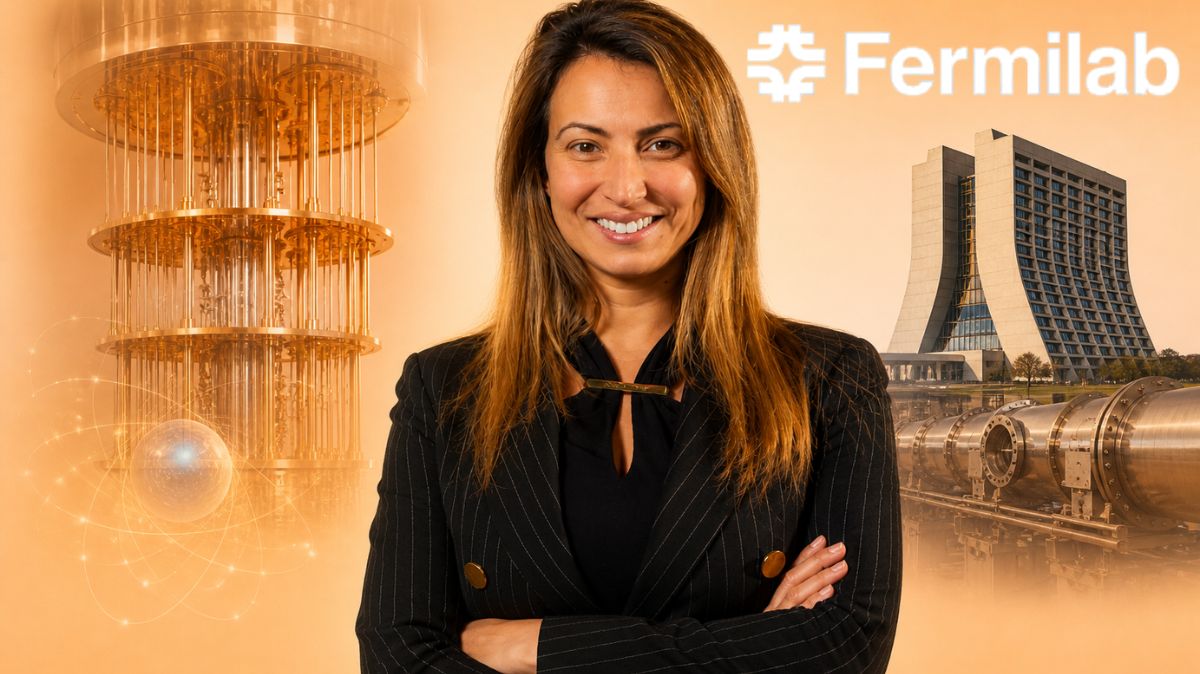
ALT Anna Grassellino Fermilab Anna Grassellino’s appointment to the DOE’s Office of Science Advisory Committee signifies a coordinated effort toward the next generation of computers and national scientific leadership. At Fermilab, Grassellino is the chief technology officer and associate laboratory director for the Technology Directorate. He will chair the SCAC quantum subcommittee. Grassellino is now in the center of federal scientific policy as a result of this position. Directly advising the DOE Office of Science on scientific objectives and strategies, SCAC is a federal advisory committee. As chair, Grassellino will be in charge of evaluating the condition of quantum information science (QIS) and determining the crucial actions needed to develop the discipline nationally.
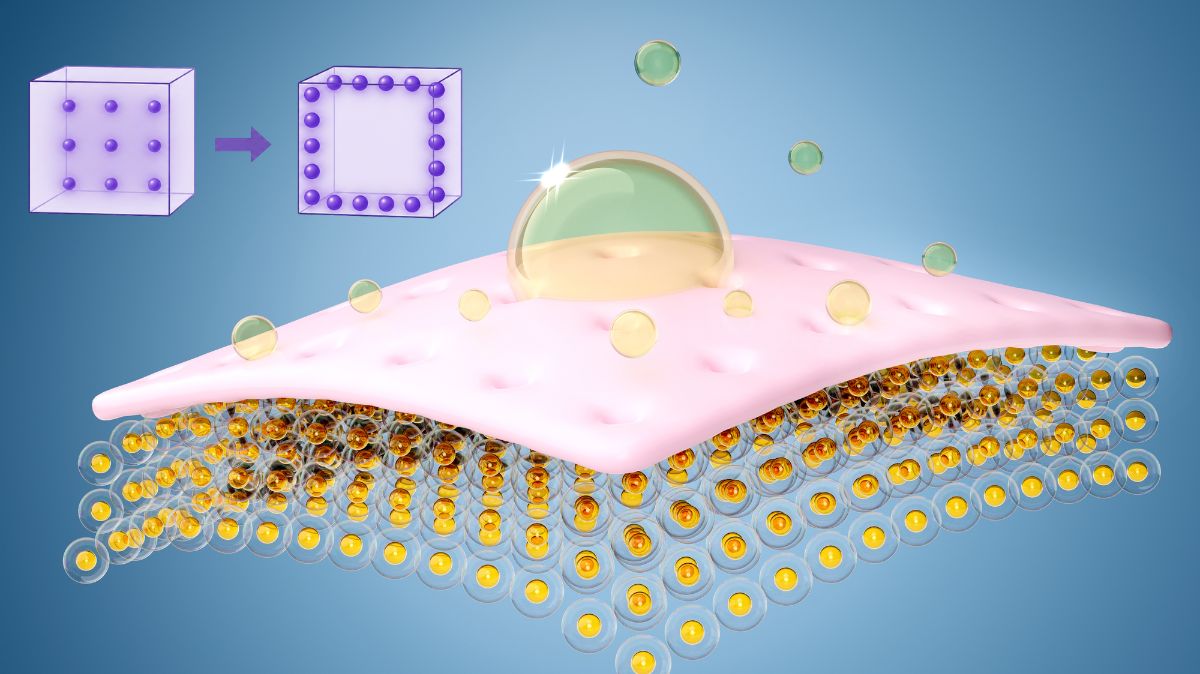
ALT The Mechanics of Drift: Understanding the Skin Effect The Non-Hermitian Skin Effect (NHSE) and its dynamical cousin, the Dynamical Skin Effect (DSE), must be understood to comprehend how noise can be advantageous. Systems in classical quantum physics are usually “Hermitian,” which means that energy is conserved and the system’s evolution is balanced. But “non-Hermitian” systems, which interact with their surroundings by gaining or losing energy, exhibit far more bizarre behavior. An enormous number of quantum states (eigenstates) cluster or “pile up” near a material’s physical boundaries in these non-Hermitian systems. The NHSE is this. A wave packet of energy delivered into such a system exhibits a directed “drift” toward the edge and eventually accumulates near the border rather than spreading out uniformly. The term “Dynamical Skin Effect” refers to this accumulation and directional motion.
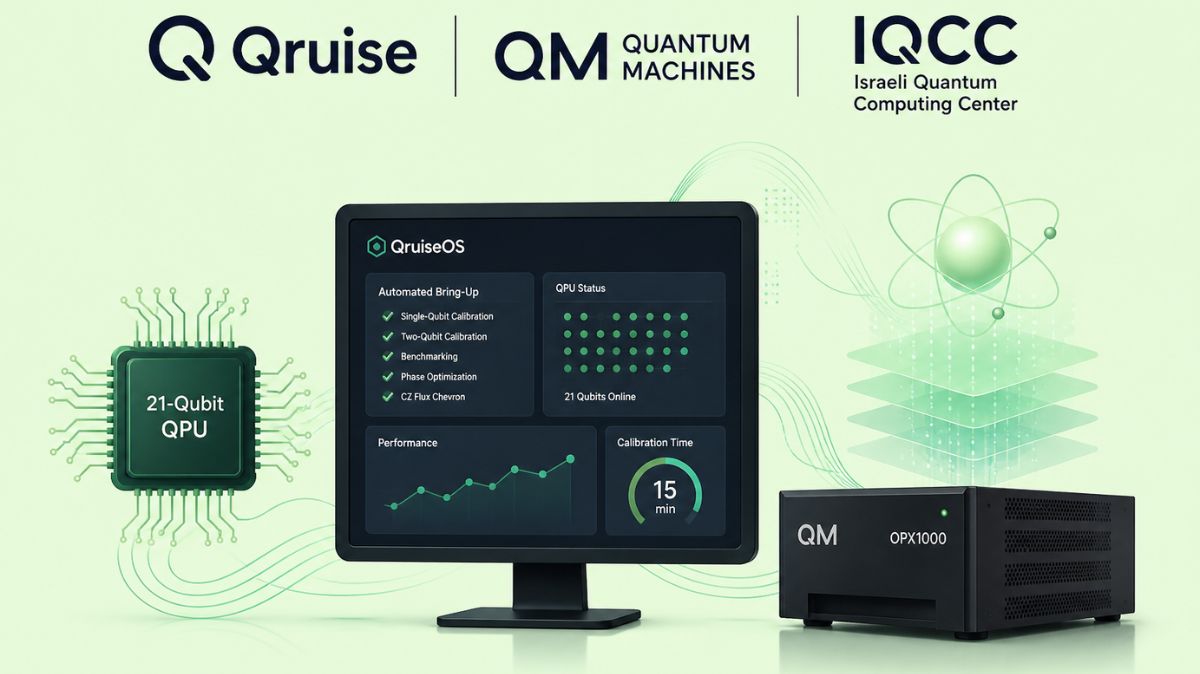
ALT The German software company Qruise has announced the successful completion of a proof-of-concept integration of their automated “bring-up” software at the Israeli Quantum Computing Center (IQCC), which is a major step for the worldwide quantum computing industry. The initiative, which makes use of Quantum Machines’ OPX1000 control infrastructure, is a significant step forward in the effort to automate the labor-intensive process of getting quantum devices ready for use. A complex combination of automated calibration, sophisticated data management, and hybrid quantum classical control is demonstrated by the implementation of QruiseOS at the IQCC testbed. The partnership has successfully simplified the administration of a 21-qubit QuantWare Contralto QPU by combining this software layer with Quantum Machines’ Quantum Orchestration Platform (QOP). The IQCC team can now perform multiplexed bring-up operations internally with this development, which enables real-time, low-latency
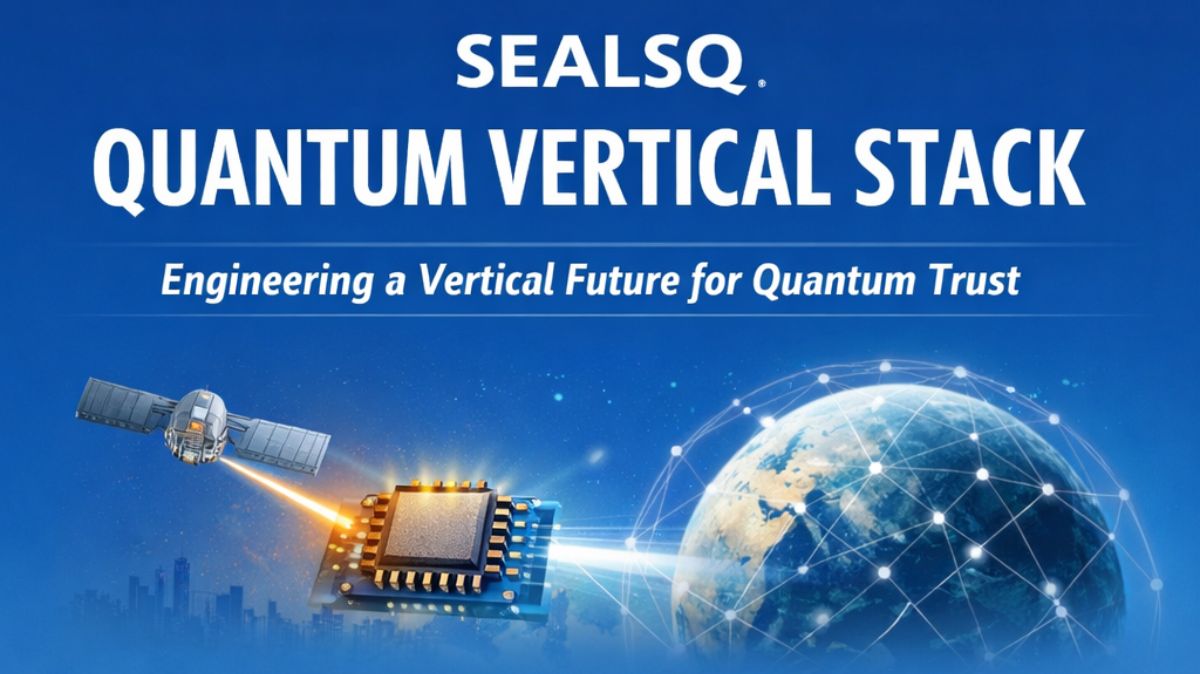
ALT SEALSQ Corp, a leader in post-quantum semiconductor and cybersecurity solutions, will introduce its Quantum Vertical Stack during SEALSQ Quantum Day in the third quarter of 2026. This ambitious project marks the first time a business will showcase a completely integrated, end-to-end quantum technology ecosystem that includes distributed quantum computing, global networking, space-based infrastructure, and the silicon-level Root of Trust. From the first transistors of a secure microprocessor to the last photons of a globally entangled orbital network, the architecture is made to guarantee that every crucial layer is controlled and protected by SEALSQ. As of right now, no other company in the worldwide market provides a level of integration between quantum hardware, security, interconnects, sensing, and space services.
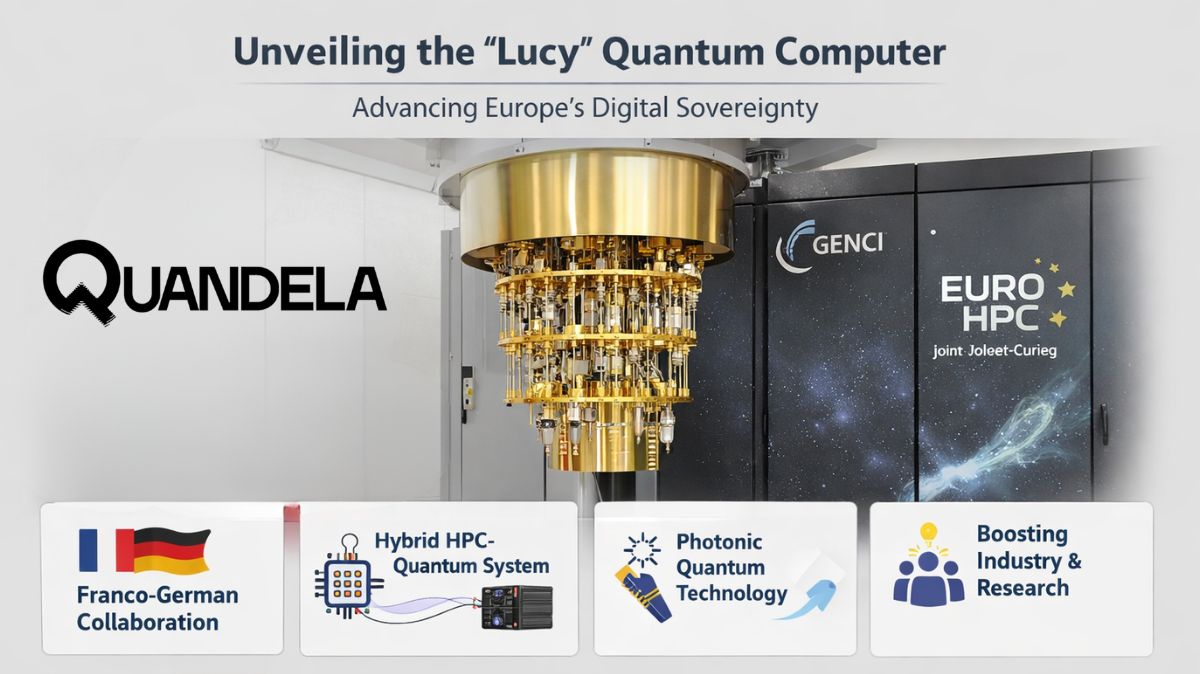
ALT In this article, we will know that, Quandela leads Europe’s quantum leap with Lucy, a hybrid HPC-quantum system accelerating AI, science, and industrial innovation. European technology reached a milestone when the CEA’s Très Grand Centre de Calcul launched the Lucy quantum computer on 2026. At this event, Bruno Bonnell, Secretary General for Investment, and Anne Le Hénanff, Minister Delegate for Artificial Intelligence and Digital Affairs, saw a major milestone for the European quantum ecosystem. World’s most powerful photonic quantum computer Lucy boosts digital sovereignty and industrial competitiveness in the continent. A Sovereign Hybrid Architecture Lucy is the result of strategic Franco-European cooperation and was acquired by the EuroHPC Joint Undertaking through GENCI as a member of the EuroQCS-France consortium. With sophisticated cryogenic systems supplied by their German partner, Attocube, the device is based on cutting-edge photonic technology created by the French
ALT NVIDIA has announced the release of NVIDIA Ising, the first family of open-source AI models designed exclusively to speed up the development of practical quantum computers, in a move that is expected to completely change the high-performance computing landscape. This new AI suite, named after the seminal Ising mathematical model that greatly simplified the scientific understanding of complicated physical systems, attempts to address the most enduring “bottleneck” issues in quantum hardware error correction and processor calibration. The “fragility” of existing quantum bits, or qubits, continues to hinder the quantum computing industry as it gets ready to reach an anticipated $11 billion by 2030. By positioning AI as the “control plane” or “operating system” for these fragile machines, NVIDIA’s entry into this market turns them into dependable, scalable quantum-GPU systems.