
36s
She said the N word and they are teaching her a lesson about respecting others, something her parents didn’t 😂😂😂
1
Jonathan Greenan retweeted

Bill C-14 becoming law is a blow to those who believe in evidence-based, principle-driven, rights respecting law reform. Crafted with police forces provincial politicians, it panders to the tough on crime crowd while likely worsening public safety. cbc.ca/news/politics/sean-fr…
5
8
151

ngl i feel like bron and messi are exactly the same, pretty obvious goat to any self respecting fan of the sport, annoying fanbase of a rapist thinks they're in the convo (Ronaldo and Kobe) and other comparisons across generations just don't respect how the game has evolved
Jun 17

there’s not a bigger gap between the best and 2nd best in any sport than between messi and whoever you think is second best
7

56s
Love changed William in the most beautiful way. He learned that loving someone isn’t about holding on tightly it’s about giving them space, respecting their feelings, and making sure they feel safe. 🤍
Thank you for this beautiful story, and I’m still hoping for a special update for this. 🫣😙✨ @viany_is_menace

Here it is!! The finale!!! Why you so obsessed with me CHAPTER 12!! Apolocheese for the delay, yeorobun, and thank you to all who were part of this journey with me 🥰🥰🥰
Enjoy!!
archiveofourown.org/works/81…

1
4
NaddyKat.Algo retweeted

Marc Miller, you say that Canada and its G7 partners are committed to respecting Canadians' privacy. You also say that "...transparency and accountability are essential..." But your own government is rushing Bill C-22 through committee despite opposition from privacy experts, tech companies, and civil liberties organizations. Is your government transparent and accountable to the Canadian public, or just to its G7 partners? When Canadians disagree with the digital agenda being advanced by your G7 and European partners, whom do you listen to?

Leaders’ call on a safer digital space for minors | Prime Minister of Canada pm.gc.ca/en/news/statements/…
10
195
548
10,189


CHINA'S STATE-SPONSORED ANTI-HINDU GENOCIDE ESCALATE (June 17, 21.00 - June 18, 09.00 Jakarta Time or June 17, 19.30 - June 18, 07.30 Delhi time, June 17, 14.00 - June 18, 02.00 UTC time)
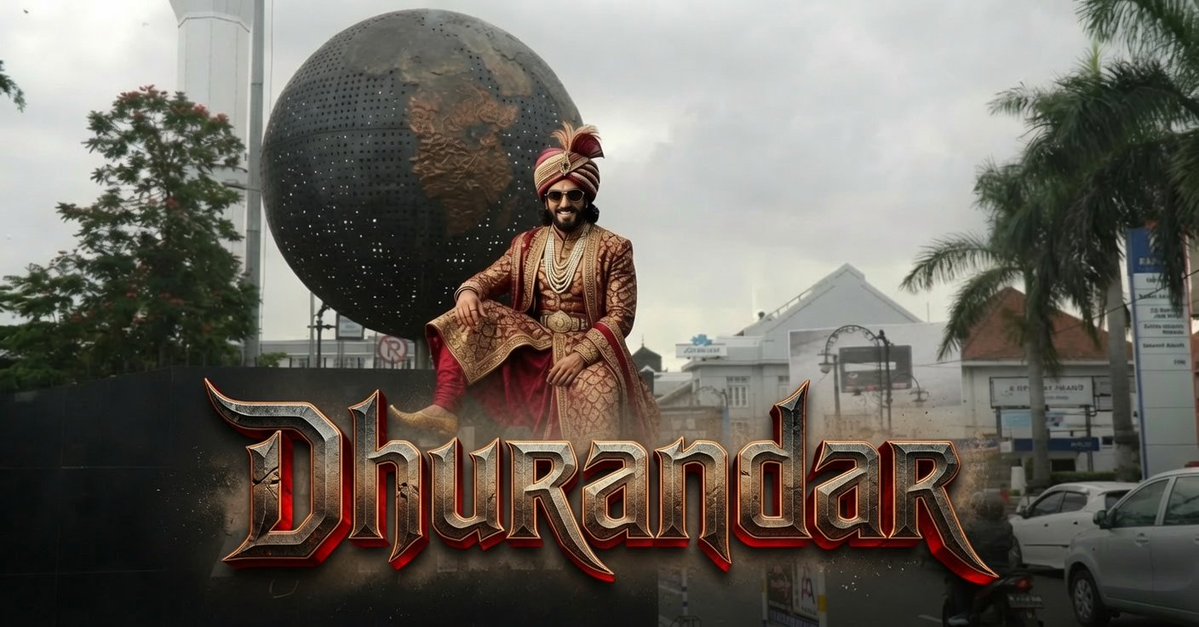
CLEARLY MORE SPECTACULAR THAN DHURANDAR BOX OFFICE!!! CHINA'S FIRST DEFENSE LINE IS BROKEN AT THE HEART OF SO-CALLED CITY OF SYMBOLIC DECOLONIZATION, BANDUNG!
AGRAPRANA PAHLAWAN SCHOOL, CRAZIER THAN ENGLISH SCHOOL AND FRANKFURTS CHOOL COMBINED!
1. Chronological Narrative, Thematically Structured
1.1 Afternoon–Early Evening (Talcher Visa: Laying the Grievance Groundwork)
Talcher default enters the feed (≈16:01–18:40 local)
飞扬军事铁背心 · 06‑17 16:01 · 微博网页版
Reports India’s Talcher coal‑to‑urea mega‑project: built by a Chinese SOE, passed acceptance, but India refuses to pay about ¥1.43b tail payment, citing “equipment not up to standard,” “slow approvals,” “lack of foreign exchange.”
五桶工坊 · 06‑17 18:40 · 微博
Amplifies the same case, emphasizes that some indicators exceed contract, and hints that China withheld a crucial component, turning this into a textbook example of Indian perfidy.
From this point, Talcher is repeatedly invoked as proof that “阿三真的是毫无商业信誉可言” (“Asan truly has no commercial credibility.”).
In parallel, media and long‑form posts debate visa volume and Indian inflows:
NetEase/163 articles discuss the surge of visas at the Chinese embassy in India, with figures like “五个月,48万张签证。发给谁的?印度的。” (“In five months, 480,000 visas. To whom? To India.”) and comparisons to much lower quotas elsewhere.
Commentary like 补一天下午觉 (20:45广东) notes that “最近又给了印度人签证便利” (“recently visa convenience has again been given to Indians”), which later posts treat as policy betrayal.
Strategic effect:
Talcher visa numbers form the “objective grievances” that later threads will weaponize. At this stage, India is still a specific counterpart in contracts and visa arrangements.
1.2 Evening (20:00–21:30): Doctrine Layer – India as Structural Adversary
“Overall diplomatic strategy” thread
2049年的世界 · 山东 · 06‑17 20:08 · 微博网页版
Frames the question: “我国对印度的整体外交战略是什么呢?” (“What is our overall diplomatic strategy toward India?”)
Key points:
India is a hegemonic, arrogant state: “那就是一个霸权主义国家,很骄横的。”
China–India relationship is structurally adversarial: “他和中国一定会是敌对关系的…只是印度国家实力弱,目前撑不起霸权主义。”
China’s generosity is misread: India sees kindness as proof of Chinese weakness and as signal to “要更多” (“demand more”).
Proposal: “维持平淡,不制裁他,这就已经足够友善了。” (“Maintain flat relations and not sanction it; that is already friendly enough.”)
Comments rapidly radicalize:
无心简影 · 21:09 → “说是极右翼法西斯主义也毫不为过,从三观到五官都与我国格格不入。”
春风梳柳66 · 20:37 → “对印外交,搞得跟easy girl一样下作…”
北极的雪豹 · 20:43 → “某种意义上,和印度越是闹翻越是对中国有利。”
Strategic effect:
This thread builds the middle layer: from Talcher/visa specific grievances → a macro doctrine that India is an irredeemable hegemon, best handled through cold distancing and refusal to “help it industrialize.”
1.3 Late Evening (21:00–23:00): US–India, INDOPACOM, and India as Taunt
Hu Xijin on INDOPACOM rename
胡锡进 · 北京 · 06‑17 22:01
Notes that the US renamed “Indo‑Pacific Command” back to “Pacific Command,” reading it as Washington recalibrating India’s “weight.”
Comments quickly shift focus from US strategy to taunting India:
wshlh007 · 22:08(重庆)
“喜欢闻屎的味道就贴近印度。显然美国已无法忍受。”
(“If you like the smell of shit, stick close to India. Clearly the US can no longer put up with it.”)
Deepleak · 黑龙江(次日清晨)
“特朗普可能发现,印太司令部咖喱味太重。”
(“Trump may have realized the Indo‑Pacific Command smelled too strongly of curry.”)
In parallel, an Iranian sanctions-lifting post:
前HR本人 · 06‑18凌晨
Discusses Iranian oil tankers crossing a US “blockade line,” then adds:
“看来前几天印度油轮被美国人打,阿三真的是很丢脸。”
(“Looks like when that Indian tanker was hit by the US, Asan were truly humiliated.”)
Strategic effect:
India is now a punchline in unrelated strategic discussions (US–Iran, G7, etc.). The earlier doctrine (“India is structurally untrustworthy”) is sliding into ambient slur usage.
1.4 Late Night–Early Morning (23:00–01:45): Exclusion, Kill‑Talk, and Out‑of‑Context Slurs
This is where the dehumanizing and genocidal registers peak, and “India/阿三” appears in threads that have little or nothing to do with India’s actual actions.
1.4.1 Total Boycott and Social Exclusion
蜜糖砒霜‑2019 · 北京 · 06‑18 05:49
Calls for full-spectrum exclusion:
“拒绝其酒店住宿、拒绝其进店消费、拒绝其租房买房、拒绝其求职求助、拒绝其求婚求爱!拒绝去印度餐厅消费!拒绝一切惠印行为!…清澈的爱只为中国!”
(“Refuse them hotels, shops, renting/buying property, job searching, requests for help, proposals of marriage or love! Refuse to patronize Indian restaurants! Refuse all ‘benefiting India’ behaviours!… Clear love only for China!”)
星河花语 · 07:48(06‑18)
“有阿三待过的酒店,大家都不去,酒店自己就会赶阿三了。”
(“If a hotel has had Asan stay, everyone won’t go; the hotel itself will drive Asan away.”)
Effect: India is no longer just an adversary state; Indians as individuals are targeted for total social and economic quarantine.
1.4.2 Explicit Kill‑Talk and Extermination Phrasing
净含量502g_ · 07:50(06‑18)
“对付这种国家,就应该往死里整”
(“Dealing with this kind of country, we should go at it to the death.”)
樱桃牛奶girl · 07:54(06‑18)
“这辈子不亲手杀一头阿三不圆满”
(“In this life it won’t be complete if I don’t personally kill at least one Asan.”)
喂安啊 引用 @谜之免女郎X · 07:58(06‑18)
“一帮狗国贼!换以前都是挂路灯的存在!!!”
(“A bunch of dog national traitors! In the old days these people would all be hanging from street lamps!!!”)
Here, both Indians and Chinese “traitors” (惠印派, tech transfer, visa facilitators) become legitimate targets of fantasized killing.
1.4.3 India as Pure Filth and Pest
可惜了了真的 · 07:56
“阿三到哪里💩尿横流到哪里,好怕万里江山一片💩啊”
(“Wherever Asan goes, feces and urine flow everywhere; I’m really afraid our vast land will become one big pile of shit.”)
风‑铃 · 00:52(06‑18,新疆)
“蟑螂自然状态下都是敌人,如果还被培养充满敌意,那不更是敌人?”
(“Cockroaches are enemies in their natural state; if they’re raised full of hostility, aren’t they even more enemies?”)
Cockroach imagery plus feces/urine narratives complete the pest control frame around Indians.
1.4.4 Out‑of‑Context “阿三” Insertions
lovebaga · 06‑18早上
In a thread about Japanese politician 高市早苗 at G7, writes:
“阿三去了,以后有捡不完的垃圾,和💩”
(“Once Asan goes there, there’ll be endless trash and shit to pick up.”)
身体健康荷包满满 · 07:55
Talking about New Zealand vs Shanghai:
“阿三客户去完中国跟我说…”
(“An Asan client, after visiting China, told me…”)
刺猬先生死逼 · Bilibili repost to Weibo
On Canadian immigration scams:
“阿三在加拿大的老套路…这些人也不会走,留在当地嚯嚯本地人。”
(“Asan’s old routine in Canada… they will not leave, staying to mess up locals.”)
来福11111 · 06‑18
On Hong Kong:
“发现阿三也是出奇的多,若之后有行动,应与港府同时协调进行。”
(“Asan were surprisingly numerous; if there’s any action later, we should coordinate with the Hong Kong government.”)
In each case, India is irrelevant to the core topic but is used as a floating insult or threat vector.
2. Thematic Integration: “Five Lines of Defense” as Conceptual Backbone
A Zhihu long‑form essay (user under Beijing IP) articulates a “五道防线” (five lines of defense) to explain why Chinese people “instinctively” react when they see Indians entering China. While we do not reprint it here, its structure is clear from the rhetoric:
Equality vs. Caste
Claim: China has spent decades building a (nominally) egalitarian social order; India runs on a deeply entrenched caste hierarchy.
Fear: Indian inflows will re‑introduce hierarchical thinking: high‑caste vs low‑caste, “高种姓富婆在中国没面子” narratives.
Sanitation & Public Health
Claim: China’s fragile urban hygiene is threatened by India’s “open defecation,” “恒河水,” “💩尿横流” stereotypes.
Fear: Indian tourism and settlement will erode public health gains.
Rule of Law & Credit
Claim: India as a “scam country”: Talcher default; small business cases; exam leaks; visa abuse.
Fear: Tolerating Indian inflows corrodes China’s fragile trust‑based market order.
Gender & Family Order
Claim: India is an extreme patriarchy, high rape rates, child marriage; cross‑border marriages like 郑墨沫 narrative show Chinese women being reduced to second wives.
Fear: Indian men in China seen as threat to women’s safety and to China’s “more equal” gender norms.
Work Ethic / Contribution
Claim: Asan are portrayed as coming to sponge welfare, air‑conditioning, public goods without contributing: “蹭空调,” “赖在五星酒店,” “靠开餐厅骗移民中介费.”
Fear: Indian inflows will strain welfare & urban ecology without adding value.
On this conceptual map, India appears like this:
The Zhihu piece argues that online anti‑India speech is not mere racism but a collective immune reaction: Chinese are “守护这五道仍然脆弱的防线” (guarding these five still fragile lines). That framing is then used to justify:
Economic exclusion (“不和印度做生意”)
Social exclusion (“拒绝其住宿、就业、婚恋”)
Political hardening (“外交维持平淡, 不帮助工业化”)
Normalization of kill‑talk and pest imagery as “defense.”
3. Theoretical Chapter: Five‑Line Doctrine, ASEAN Islam as Perceived Buffers
3.1 What the “Five Lines” Doctrine Signifies
Conceptually, the five lines create a moral geography:
Inside the lines: China and those seen as culturally compatible (often coded as East Asia selected partners).
Outside or threatening the lines: India (and, to a lesser degree, Western “decadence”), seen as sources of caste, filth, scam, patriarchy, and parasitism.
This dovetails with broader Beijing intellectual narratives where “制度自信” (institutional confidence) depends on external contrasts: India is the “wrong modernity” that validates China’s “right modernity.”
3.2 ASEAN Islam as Perceived Allies / Counterweights vis‑à‑vis India
Beijing‑linked analysis often casts Southeast Asia and parts of the Islamic world as:
Geopolitical buffers to India:
For example, NetEase commentary on disputes over the Indus Waters Treaty and Pakistan’s pressure notes Beijing’s support possibilities but also constraints when “美印联手绞杀巴基斯坦” (“US and India jointly strangling Pakistan”).
Narrative allies:
ASEAN/Islamic publics can be shown India’s “caste, filth, unreliability” image to limit India’s soft power in the Global South.
English‑language work on China’s “think tank diplomacy” in Southeast Asia shows how Beijing tries to use networks of ASEAN–China think tanks and Islamic outreach to shape narratives:
China engages Indonesian and other ASEAN think tanks via NACT (Network of ASEAN–China Think Tanks) to promote its version of regional order, Belt and Road, and “community of shared future.”
Analysts note this outreach is aimed at shaping public opinion and defending Chinese narratives, including vis‑à‑vis competing powers like India.
In Indonesia specifically, China supplements education and media with “Islamic diplomacy” (visiting pesantren, sponsoring Islamic organizations) to gain legitimacy within a Muslim‑majority society and to soften perceptions of China as an atheist or anti‑Muslim power.
In the context of the five‑line doctrine:
Equality vs caste:
ASEAN Muslim elites are framed as partners who also reject caste/untouchability, aligning them with China against India’s caste image.
Sanitation & public health:
China portrays itself as tech and infrastructure provider to Southeast Asia and Muslim countries (water treatment, anti‑epidemic cooperation), implicitly contrasting with India’s Ganges/open‑defecation stereotype.
Rule of law & credit:
When Chinese media highlight India defaulting on Talcher or foreign investors, parallel pieces often show Chinese financing in Pakistan, Bangladesh, or ASEAN as more stable, aiming to steer partners away from Indian-led projects.
Gender & family order:
Beijing’s image‑making sometimes leans on “protective” rhetoric about women and family compared to India’s sexual‑violence reputation; in conservative Muslim settings this is presented as a shared concern for modesty and safety.
Work ethic / contribution:
Official narratives highlight Chinese engineers and workers “吃苦耐劳” (enduring hardship) on BRI sites in Southeast Asia, framing them as productive contributors, in contrast to social media imagery of Indians as spongers.
In other words, ASEAN Islam are positioned as audiences and amplifiers for a China‑centric narrative in which:
India is the negative example of what development should NOT look like.
China is the provider of order and modernity, respecting local culture (including Islam) while building infrastructure and trade.
This is consistent with analyses of Beijing’s think tank diplomacy that stress how China wants to defend and promote its narratives on regional affairs, often by sponsoring research, conferences, and joint projects that subtly exclude or downplay India’s role in Southeast Asian security and connectivity architectures.
26


Cowboy Chicago - A Premium Black retweeted

1h
I firm believer in respecting cultural boundaries. I agree with my fellow Black Americans. I got homies that are Caribbean and I’ve always respected their cultural events. I understand what it means to them. I do not partake in it but i respect that’s for them.
3
5
92

Dani 🧊 retweeted

4h
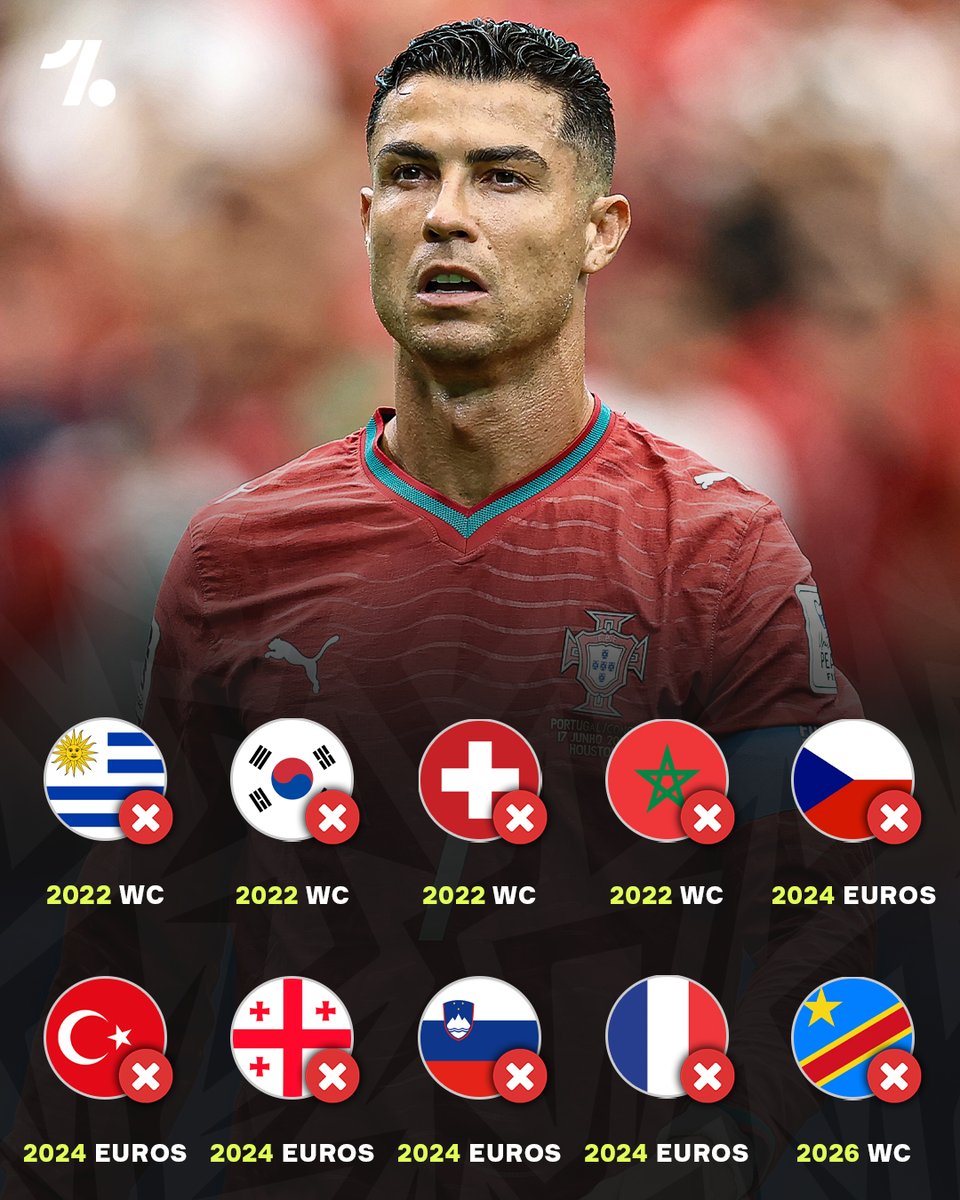
This is why no self respecting fan will ever take nations league seriously.
Big stage exposes players.

Cristiano Ronaldo has now gone TEN matches without scoring in major tournaments ❌😮
1
20
314
8,110


It sounds exactly lile, respecting a crime is needed, you cannot defame a crime even if you disagree with the criminal.. 😂
1

How about we send them all away, and place the Vatican in the middle of the Congo. How much longer do self-respecting Catholics need to be morally whipped into watching their Church die for a Papacy that's begining to see them as expendable.
13
Chidozie 🇳🇬🤴🏽 retweeted

“Once people think they have you figured out, they stop respecting the mystery”
4
11
363

HYPE's OI dominance has been wild to watch. One thing worth keeping an eye on is funding rates alongside it. When OI is that concentrated, sharp funding flips can trigger fast unwinds. Strong momentum, but worth respecting the volatility that comes with it.
1
U deserve urself retweeted

24 Sep 2021
It should be worthwhile to remind people of Catalonia.
After the Catalans had won the referendum, instead of respecting the will of the people, the West collectively denounced the result, and met it with force in violent crackdowns that can be properly called white terror. 1/3
13
17
112