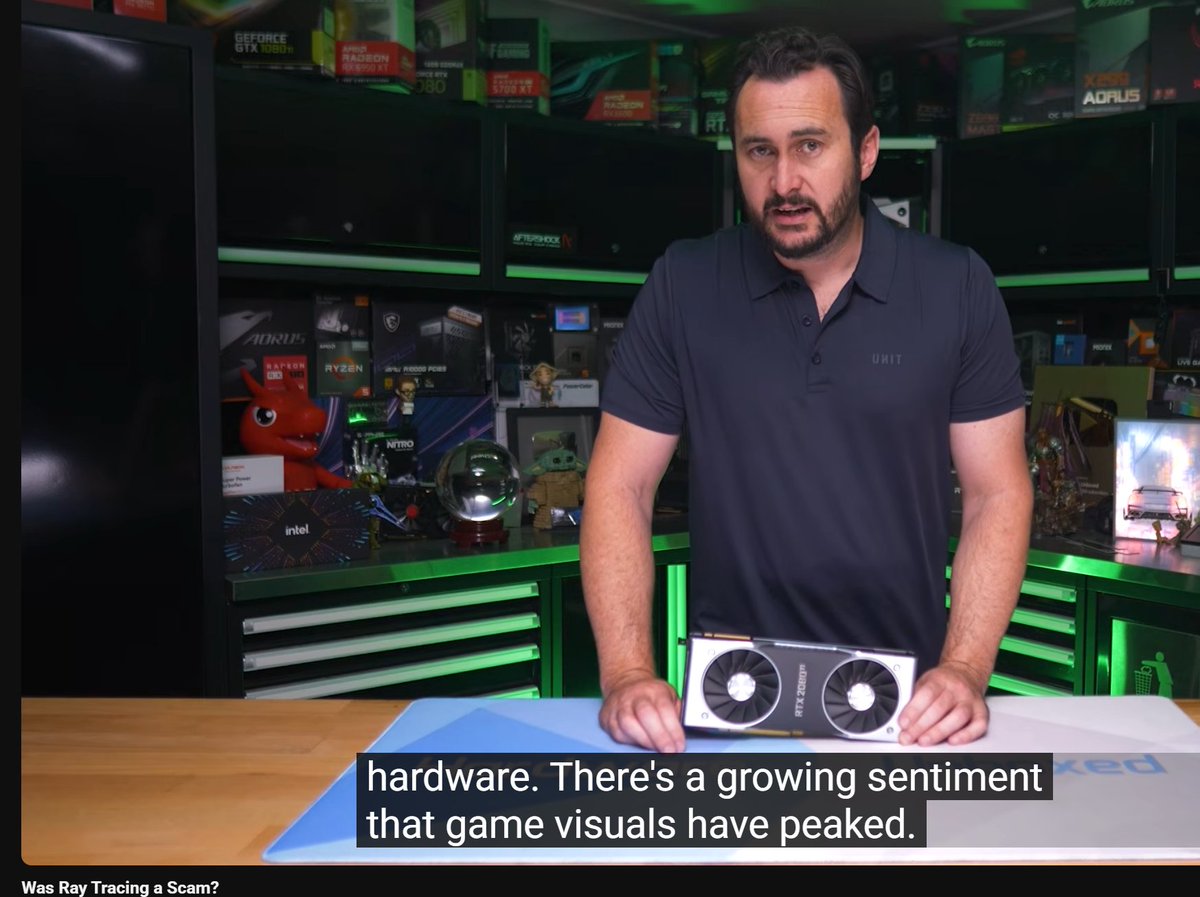
I agree with the said sentiment. To really understand it, you have to see it from the eyes of a customer.
To the average customer, the shift from diffuse-specular to PBR was a massive leap. Material shading, etc were looking far better and real and they could identify the change.
However, the same cannot be said for recent advances with respect to RT or ReStir RTXDI (PT) which mostly affect lighting and reflections. The common audience cannot identify what changed. RT lighting is giving almost same result as baked, but for the audience it is like - Uncharted looked the same and ran better - or something like that. They cannot differentiate between SSAO or RTAO. They don't know what realtime single bounce is vs baked lightmaps. To them only the final result and experience matters.
And now they are thinking, that they are paying more money in hardware for a change they can barely identify on screen and that to, to play at a performance worse than their older games.
Which is why they still hold games like Arkham Knight, Uncharted 4 as peak in graphics even today. Now take UC4 and Alan Wake 2. Sure you can see some graphical improvements but here comes the next question. Is it really "worth" it for the customer to spend $$ on a new hardware just for that graphical upgrade that doesn't mean much to them anyways?
Answer is no, it doesn't. If you look at Steam hardware surveys, and look at monthly comparison to see what hardware are upgraded, they are mostly low-mid end cards. Nobody is uber sold on RT PT whatever hoax Nvidia is trying to pursue to sell more hardware.
So yeah, people don't care much RT upgrades and they really haven't caused a big impact in the minds of audience to be considered for improving graphics.
May 5

I dont really like most of Steve's (HUB's) new video on Ray Tracing even if I do agree with parts of it. But this part here I strongly disagree with.
No. Video game visuals didnt peak 8 years ago. Dont humor your audience if they are actually delusional or believe in lies.
3
1
4
1,167

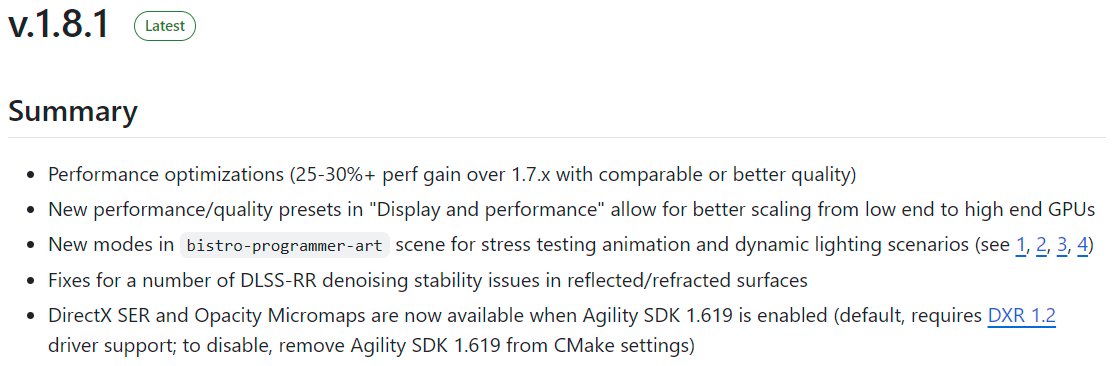
There's also another SDK, RTXPT, with a different set of features and samples but it includes the same PT runtime. I'm not sure what's up, I guess the RTXDI SDK is the new home for this. But RTXPT (also big update / Mar 5) has some useful release notes.
1
3
874
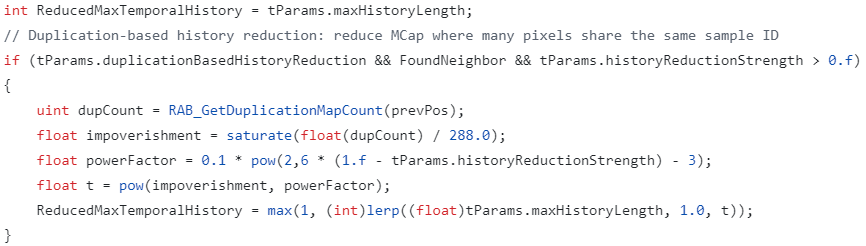
RTXDI-Library has no version tags or release notes, but it also has a big update in the same Mar 10 (two commits). And searching the code diff you can find all the new tricks referenced by the paper. Here, some code for the Sample Duplication Map for confidence cap reduction.
1
5
1,152
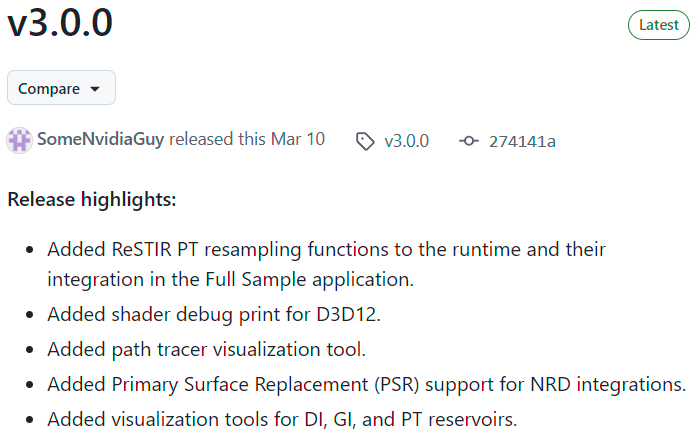
Let's check NVidia's RTXDI SDK. Huge update v3.0.0, published Mar 10: a month before the paper. Highlights include "ReSTIR PT resampling functions", that doesn't sound super specific.
But this SDK is mostly samples and docs, the runtime is in a separate project RTXDI-Library.
1
2
10
1,480

Apr 5
なお、ReSTIR GIなら論文もあるし実装コードもGitHub上にあるのでCodexさんがうまい具合にやってくれるに違いないと思って任せたところうまくいかなかったという経緯
結局自分で論文とRTXDIの実装を見ながら実装してある程度なんとかなった次第
4
753

Mar 24
Grok Imagine prompt:@imagine
15秒超写实科幻短视频分镜脚本,电影级多机位拍摄,丰富景别切换,全景/中景/近景/特写/仰拍/俯拍/环绕运镜/跟拍推进/特写交替,UE5影视级渲染,8K超高清,60帧流畅动态,高对比度光影,金属硬核质感,红色能量流光特效,极强真实感,科幻史诗氛围
00:00-00:05 开场镜头:8K分辨率/DLSS 3.5超分/实时光追全局照明,广角镜头俯视未来都市,纳米级材质呈现建筑表面锈蚀细节,雨滴粒子系统与RTXDI光线交互产生动态焦散效果,赛博朋克式孤寂氛围,Lumen全局光照营造蓝紫色环境光
1
3
340

Mar 24
Stress-testing my old 3090 GPU. Real-time path tracing, hundreds of shadow-casting lights, & ray reconstruction in the Nvidia RTXDI branch using a nighttime version of my large SF city scene on FAB. Will test the 5090 next, should be ~ 200fps instead of 12-20fps. impressive tech.
6
15
236
21,850

Mar 18
Things I covered on this channel that people hated at the time:
2012 — Blackmagic Cameras & DaVinci Resolve
2021 — Unreal Engine 5 for cinematics & MetaHumans
2022–Now — DLSS, RTXDI, Ray Reconstruction, Mega Geometry
2026 — Seedance 2.0 and DLSS 5
Innovation always looks unnecessary — until it isn’t.

Nvidia’s DLSS 5 is like motion smoothing for video games, but worse theverge.com/entertainment/8…
16
8
161
7,221

Incredible Lighting with RTXDI!🌞
Star Wars: Outlaws | PC
@StarWarsOutlaws @UbiMassive
#StarWars #VPRT #ArtisticofSociety #WorldofVP #VGPUnite #WIGVP #VirtualPhotography #InGamePhotography #PhotoMode #VPHiddenGems #VPWorld #VPCONTEXT #VGPUnite #VPGamers #Nvidia

3
8
203
PT is just a marketting term cooked up by Nvidia because RTXDI was giving them soft shadows that was almost same as offline path tracing. Richard Cowgill mentioned this in a tech talk once. It's basically RTXDI ReStir and nvidia's marketting making it to be something else.
2
50

Mar 2
The vite codebase has several additions to probe reflection captures for improved bounce.
About RTXGI the difference is not in the plugin but engine source side. 4.27 lacks many of the extra RTXGI consideration that are in Vite / nvrtx.
On RTXDI yes I did several updates to RTXDI a couple of months ago. I think it was a total of 8 pushes
1
2
246
The capture above is an excellent example of this problem with Path Tracing, we need temporal accumulation of light in systems like ReSTIR / RTXDI and you only get that from real frames. Even DLSS/RR doesn't help absolutely anything.
medium.com/@opinali/fg-multi…
1
8
549

Jan 26
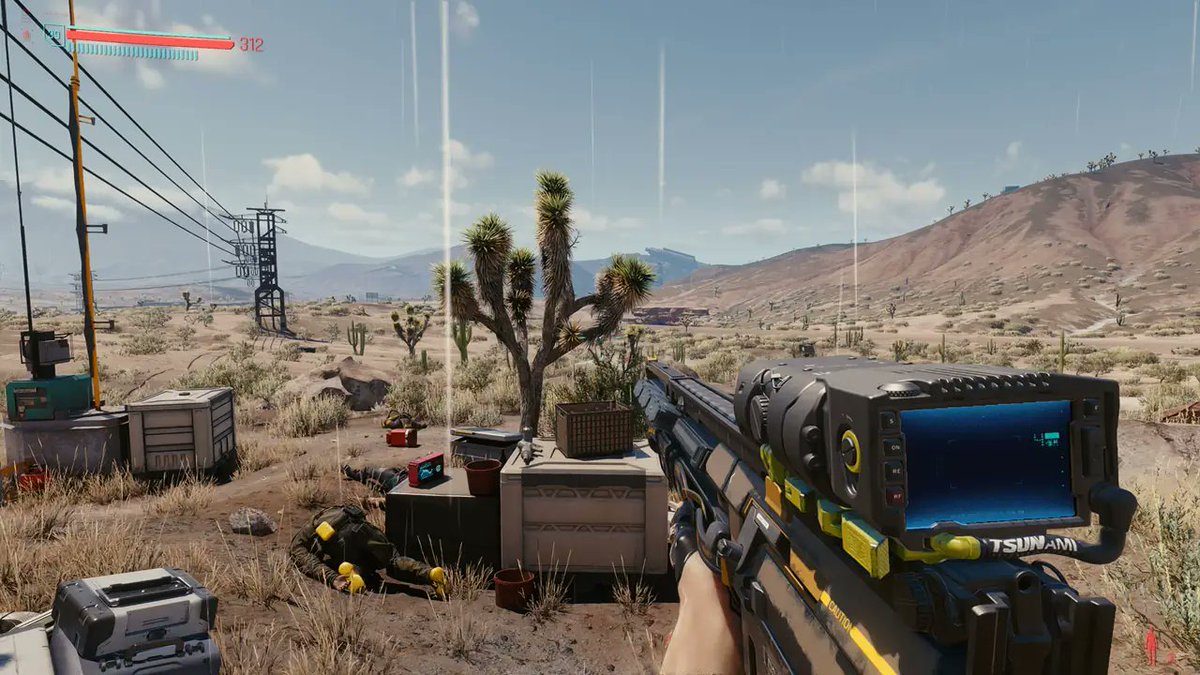
Cyberpunk 2077 PTNext v3: The ultimate Path Tracing showcase?
en.gamegpu.com/news/igry/cyb…
A new mod is turning heads on Reddit. PTNext v3 is being called the "best real-time path tracing showcase yet."
It uses a hybrid approach, combining the game's standard PT21 with the hidden PTNext mode, leveraging ReGIR GI and RTXDI for superior lighting.
#Cyberpunk2077 #RTXOn #NVIDIA #PCGaming #PathTracing
2
134

29 Dec 2025
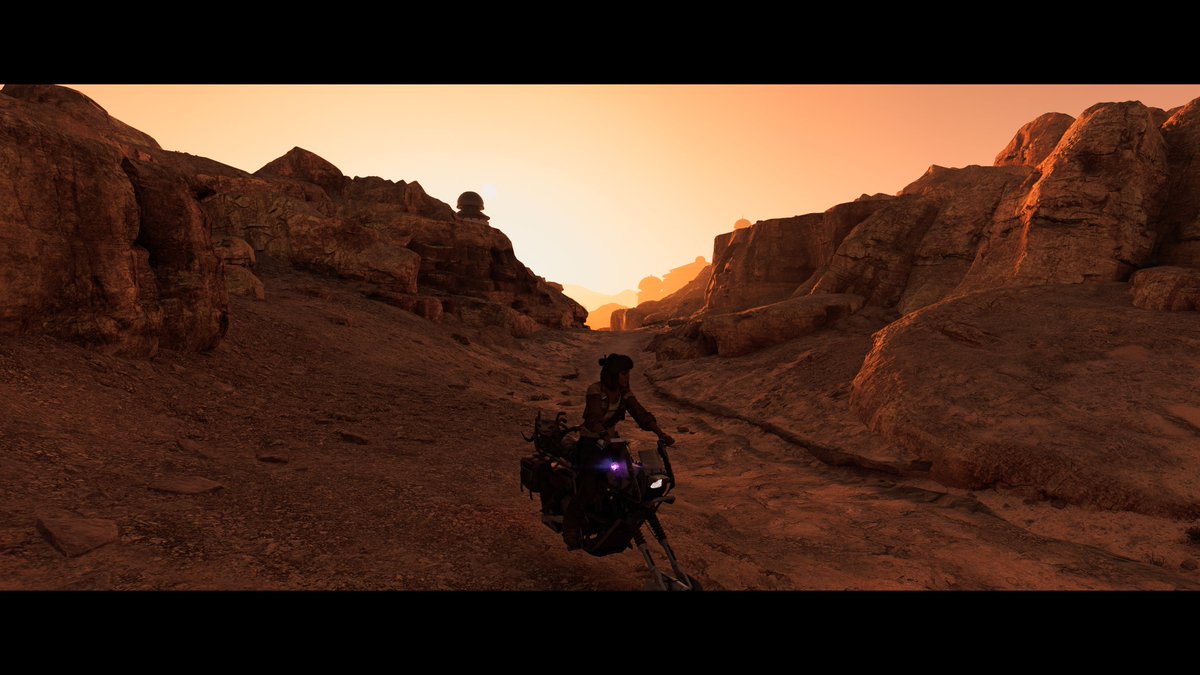
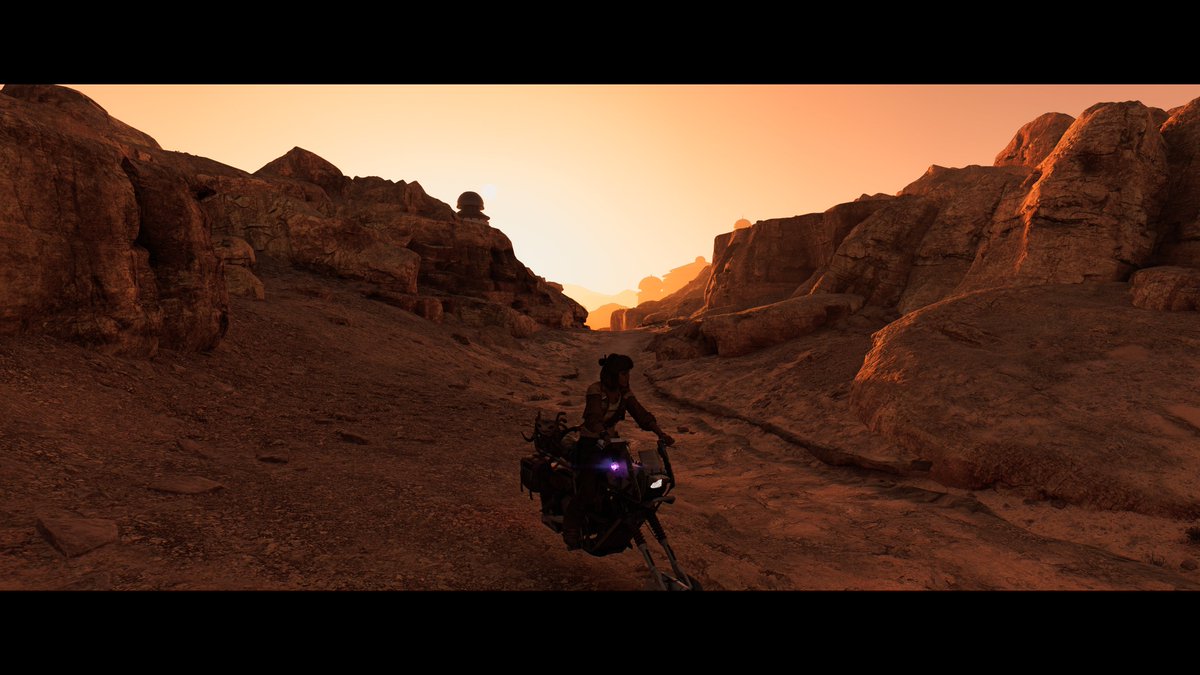
Which of these two screenshots has RTXDI (path tracing) and which one just uses standard lighting?
Just trying to see something here.
1
1
88

29 Dec 2025
I find it little bit of a stretch to call restir gi / ddgi and rtxdi as path tracing.
2
266

23 Nov 2025
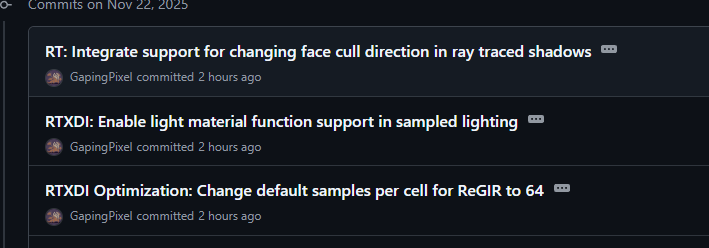
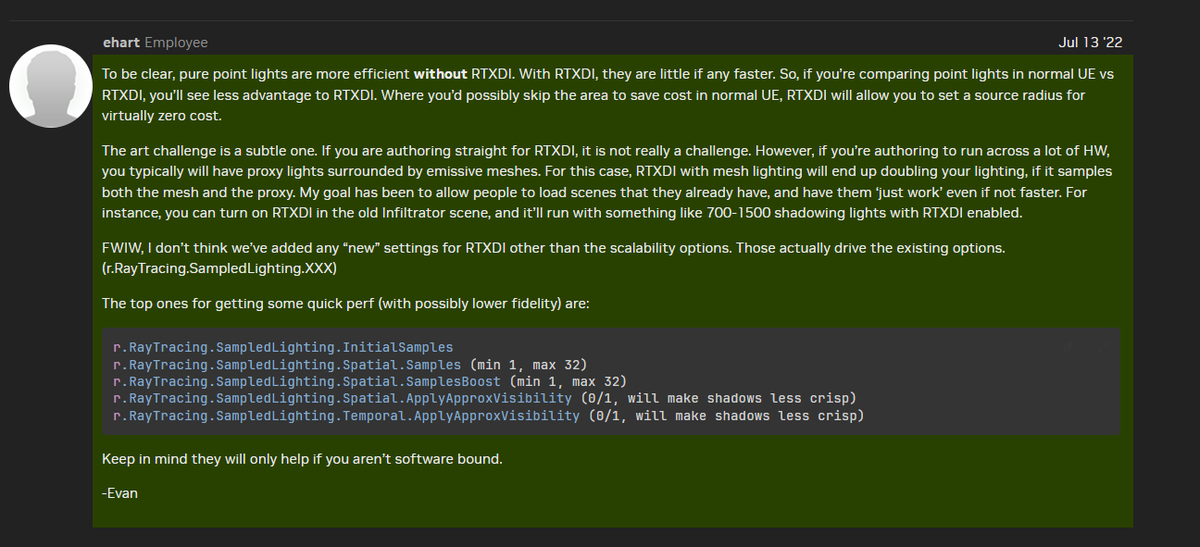
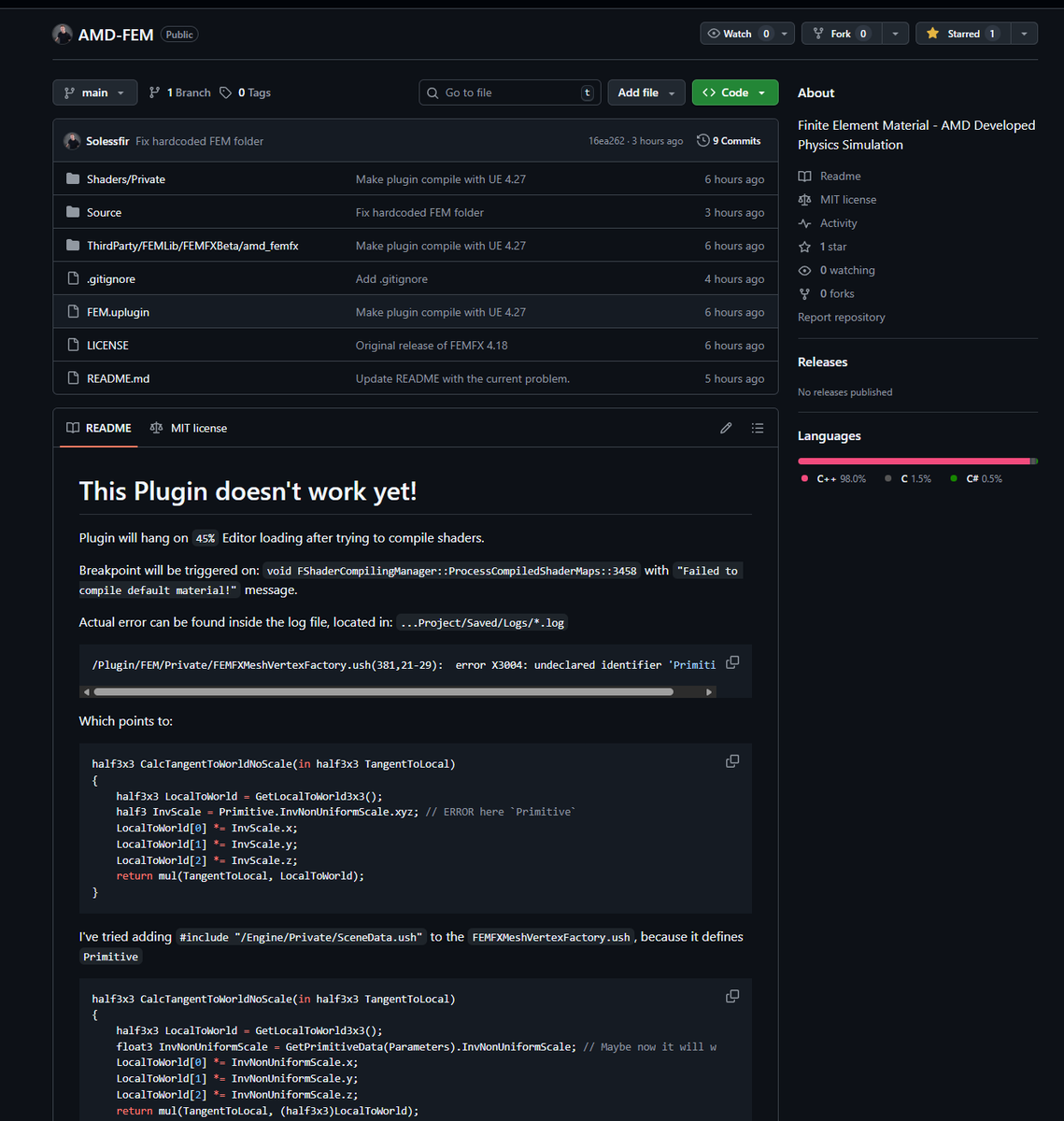
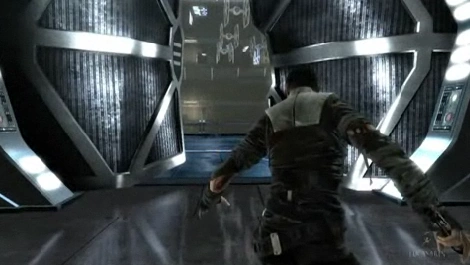
#UnrealEngine Vite #fork: Today I implemented several #Raytracing improvements for #Nvidia #RTXDI (Megalights alternative) and RT Shadows. Also @solessfir is working on bringing #AMD Fem ( #Physics Effects, similar to Force Unleashed: Digital Molecular Matter, same eng). Here the repo: github.com/Solessfir/AMD-FEM #gamedev #rendering #screenshotsaturday
2
1
43
3,638

30 Oct 2025
You can install it your self and check out the comparisons if you really want to know why lumen and nanite are still technically available in that branch and then check out RTXDI and see what you are talking about instead of throwing YouTube video around
1
3
53

24 Oct 2025
And if they played it on a high end PC RTXDI, it'd kill their entire bloodline.
6
106