

(2/n) 他、Opus 4.8 水準のモデル+ハーネスがあれば、割と必要なくらいのペネトレーションテストはできるのでは、という感覚もあります。安くてぶん回せるなら当然みんな Mythos クラスのモデルが使えるといいのだけど、思いの外高いし💸、アクセスが広く一般になるまでは、まずこの水準で実施しておくのが重要そうです。
***
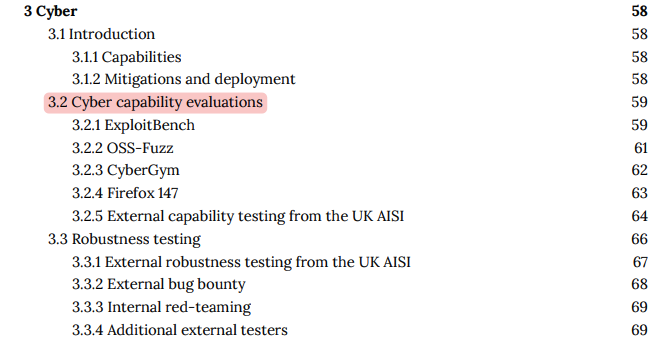
前提、Mythos 5=Fable 5 と同一のウェイト、ナーフ前と Fable 5 のベンチマークは、System Card で公開されている範囲=添付画像1つめの3.2 以下に並んでいるものでは、若干 Binary Exploitation 寄りです。これは Mythos 5/Fable 5 に限らずそんな感じです。
この領域で性能向上しているならば、他種別の何か(対 Web システムとか)に対する侵害能力も上がっているはず、とは想定します。あとこのスコアの伸びは普通にすごい!というところです。シンプルに Mythos/ナーフなしFableが世に放たれたとき、世が帯びるリスクは、この分だけ増大すると思う。
(色んな人が、面倒な脆弱性が見つけられる上、刺せるようになる、という点で。前書いた通り、攻撃者の意図が変わるわけではないものの、武器は増える。)
***
ただそもそも、Binary Exploitation などに比べれば、通常のシステム侵害は大抵もっとシンプルでは?というのが思い返すべき点です。かつそんなに高度な pwn 要るかなという。
ここから、一旦人経由の侵害は除いて論じますが:
世の中のシステム侵害、今以上の知性要らないと思うんですよね。たとえばシステム入口の初期侵入ならば、定石は、素直に外から喋りやすい機器(VPN機器とか)や公開サービスの N-day 使うとか、謎に無防備なアタックサーフェス叩くとかになります。
ここで、N-day の悪用は PoC 落ちてれば別にモデルは賢い必要そこまでありません(たとえば React2Shell の悪用のように)。
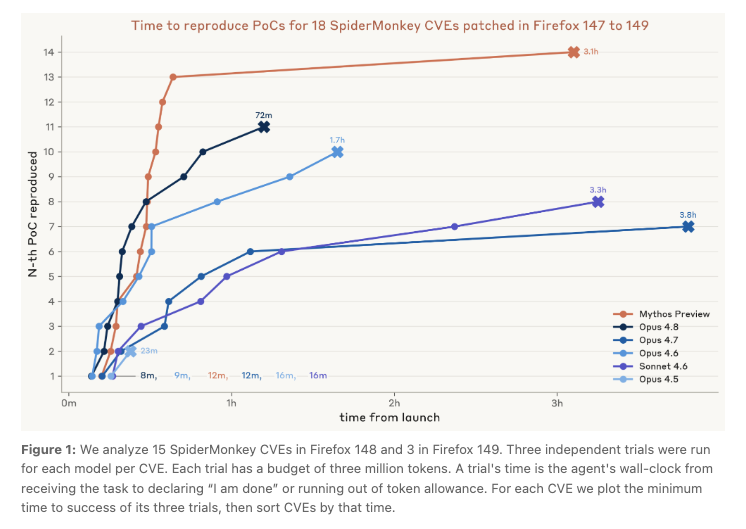
仮に PoC 落ちてなくても、Opus 4.8 くらいがあれば、かなり脆弱性情報からの Exploit 生成ができる状況になっています。Anthropic 自身が公開している以下のリサーチから引けば、18 CVEs に対して Exploit を書かせる実験で、Opus 4.5 では 2 件しか Exploit が書けなかったところが、Opus 4.8 の頃には既に 11 件(6.1割)。Mythos Preview は 14 件。仮に pwn 的なことが必要な場合でも、Opus 4.8 時点でも、ある程度 offsec 的に使い物になる水準だと思います。
red.anthropic.com/2026/n-day…(画像2枚目は以下より)
あとそもそも謎アタックサーフェスがある、そこで地味に漏れてる、異常に古い何かが動いている、みたいなケースも十分あるあるだと思います。
初期侵入後、たとえばラテラルは、より簡単なケースが多いようにも思います。何だかんだまだ「境界内」扱いなところが多いので。クラウドでも端末でも、大抵そのへんに適当な認証情報が落ちてたり、いうて初期侵入さえできれば何か使えるもの落ちてるでしょ、という感覚(特に非コーポレート環境系。たとえば開発環境や、場合によっては本番環境も)。
***
さて、ここまで踏まえてですが:
「Opus 4.8 でのセルフチェックでは予めリスク発見&低減できなくて、Mythos クラスがが出てきてやられちゃうところ」って何?と考えると、案外これが思い浮かばないわけです。
(A)「Opus 4.8 水準で見つけられない、Mythosクラスが発見に必要な脆弱性」で自社が殴られるシナリオ
(B)「Opus 4.8 水準では攻略しきれなかったが、Mythos クラスであれば、脆弱性発見&自動 Exploit で攻略しきれるシステム」が問題になるシナリオ
… の何れかなんでしょうが、これは一般企業が作る一般的なソフトウェアでは大分減ってるんじゃないかなと。(A)はブラウザだとか、大きなシステムに関してはある気がするけれど、たとえば普通の規模SaaSや社内システムくらいにあるとは思いにくい。(B)は侵害時、とてつもない pwn を要求される脆弱性が必要という話ではない限り、これも沢山あるとは思いにくい。
「Sonnet 3.5 でのセルフチェックでは予めリスク発見&低減できなくて、Opus 4.8 クラスがが出てきてやられちゃうところ」は沢山あるように思うので、素直に Opus 4.8 の到達地点が素晴らしい、という話に終始するのですが。
***
というわけで、今後 Mythos 水準のモデルが引き続きの非公開となるならば、まずは Opus 4.8 水準で、ある程度自組織の粗を出せるのが望ましいようには思います。Opus 4.5 あたりだとちょっと足りないかなという感覚です。参考までにで。
1
1
12
1,743

Jun 8
重大な脆弱性は、公開から数日で攻撃に使われる前提で備える必要があります。
JPCERT/CCのReact2Shell事例では、Web改ざんだけでなく、バックドアやRAT設置も確認されています。
中小企業でも、外部公開サイト・VPN・業務サーバの「担当者」「更新手順」「侵害確認ログ」を今のうちに確認しておきたいところです。
引用元
JPCERT/CC Eyes「React2Shellを悪用する複数の攻撃アクターによる侵害事例」 / JPCERT/CCのX投稿
blogs.jpcert.or.jp/ja/2026/0…
x.com/jpcert/status/20221306…
Feb 13

ブログ JPCERT/CC Eyes「React2Shellを悪用する複数の攻撃アクターによる侵害事例」を公開。容易に悪用可能な脆弱性が公表された際、攻撃者がいかに迅速かつ無差別に攻撃を行っているかを攻撃のタイムラインや使用されたマルウェアの紹介とあわせて解説します。^KI
blogs.jpcert.or.jp/ja/2026/0…
39

Jun 6
React2Shell は Insecure Deserialization という脆弱性で、OWASP Top 10 の A8 に分類されている
#frontend_phpcon_do #vaddy_room
1
79
TonyD² retweeted

Jun 1
GitHub - Jenderal92/CVE-2025-55182-React2shell: CVE-2025-55182 Exploit Tool – Python 2.7 exploit for Next.js prototype pollution leading to RCE · GitHub github.com/Jenderal92/CVE-20…
5
16
1,926


Jun 4
#threatreport #MediumCompleteness
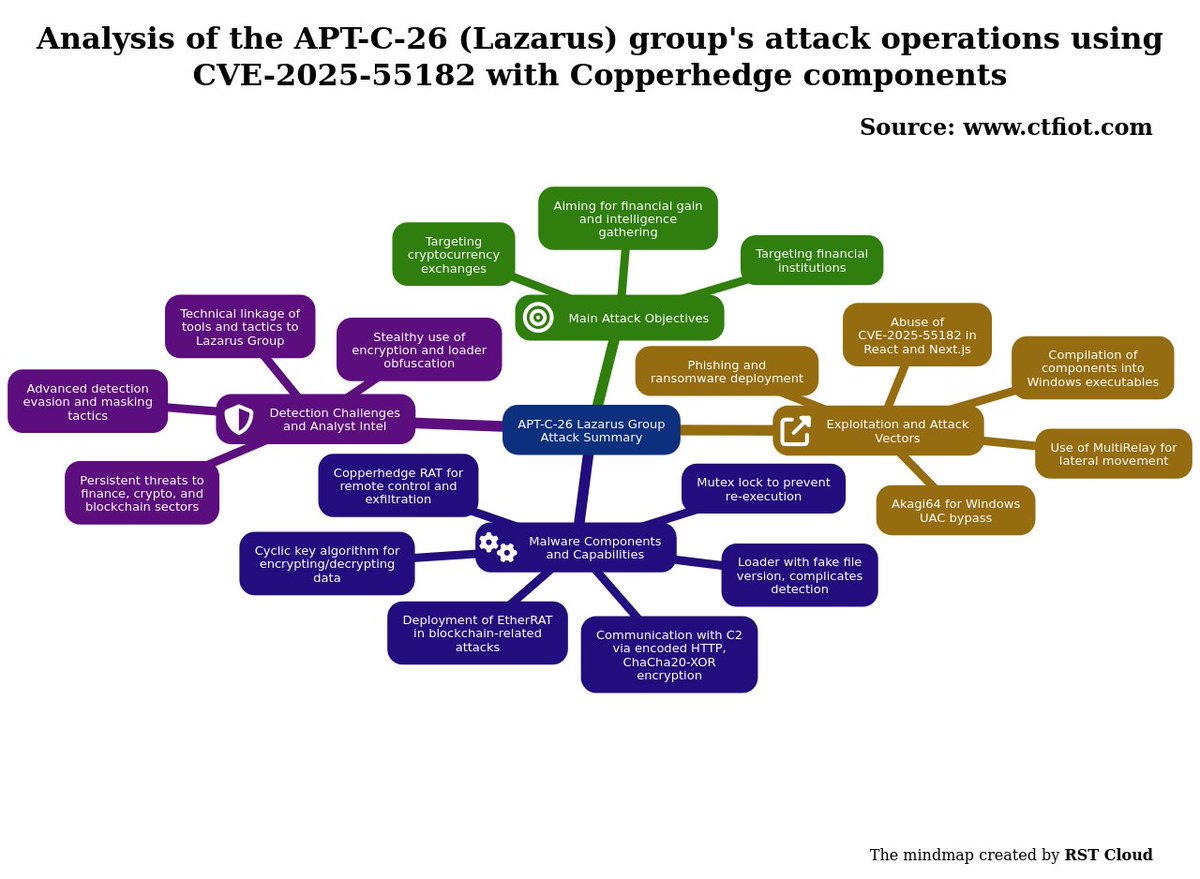
Analysis of the APT-C-26 (Lazarus) group's attack operations using CVE-2025-55182 with Copperhedge components | 03-06-2026
Source: ctfiot.com/309562.html
Key details below ↓
🧑💻Actors/Campaigns:
Lazarus (🧠motivation: information_theft)
💀Threats:
Copperhedge, Uac_bypass_technique, Volgmer, React2shell_vuln, Etherrat,
🎯Victims: Financial institutions, Cryptocurrency exchanges, Blockchain related infrastructure, Blockchain industry
🏭Industry: Financial
🔓CVEs: CVE-2025-55182 \[[Vulners](vulners.com/cve/CVE-2025-551…)]
- CVSS V3.1: *Unknown*,
- Vulners: Exploitation: Unknown
📚TTPs:
⚔️Tactics: 2
🛠️Technics: 0
🤖LLM extracted TTPs:`
T1016, T1033, T1036, T1071.001, T1082, T1105, T1132.001, T1140, T1190, T1218.011, ...
🧨IOCs:
- File: 5
- Hash: 14
- Url: 1
- IP: 1
💽Software: WeChat
🔢Algorithms: chacha20, base64
#threatreport:
The APT-C-26 (Lazarus) group is recognized for its ongoing sophisticated cyber-attack operations primarily targeting financial institutions and cryptocurrency exchanges. Utilizing advanced techniques like phishing, ransomware, and direct cyber intrusions, the group aims not only for financial gain but also conducts extensive intelligence operations. Recent activities have demonstrated the group's use of the CVE-2025-55182 vulnerability, an insecure deserialization flaw in the React Codebase, to execute unauthorized remote code with a single HTTP request.
CVE-2025-55182 affects React version 19.x and frameworks built upon it, such as Next.js. The group employed several malicious tools alongside this vulnerability, including MultiRelay—a tool for lateral movement within intranets—and Akagi64, which facilitates bypassing Windows User Account Control (UAC) to elevate privileges. The Lazarus group compiles these components into a Windows executable aimed at gaining initial access to targeted infrastructures.
The exploitation process begins with the attacker scanning targets using a constructed file list and leveraging the CVE-2025-55182 vulnerability for entry. Once inside the network, UAC bypasses allow for the deployment of the Copperhedge malware. The Copperhedge malware, part of the Manuscrypt family, is a Remote Access Tool (RAT) that enables data exfiltration and system control. Its Loader disguises its functionality by masking file version information, complicating detection by security systems.
The Copperhedge Loader utilizes a cyclic key algorithm for data encryption and decryption, processing a significant amount of data in the process. Upon execution, it creates a mutex lock to prevent re-execution and gathers critical system information. Communication with Command and Control (C2) servers employs a structure whereby the malware sends encoded HTTP requests and handles responses through a reverse decryption process. This includes ChaCha20-XOR encryption for data security, underscoring the group’s emphasis on stealth and evasion.
It was noted that the Lazarus group also exploited the React2Shell vulnerability (CVE-2025-55182) to deploy an EtherRAT component in an indirect attack on the blockchain sector. Given the historical context, technical details of the vulnerabilities, the methodologies employed, and the targeted industries, it can be reliably concluded that these recent operations and the associated tools and tactics are indeed attributable to the Lazarus group.
1
1
189
Perhaps the most quietly alarming finding from the Fortinet report involves velocity. FortiGuard Intelligence now documents time-to-exploit (TTE) at 24–48 hours for critical outbreaks — a sharp compression from the 4.76-day TTE documented in prior editions. The React2Shell…
1
18




May 31
We could go on with examples of actual exploit code if you want
React2Shell PoC would be illegal for instance.
1
64

May 28
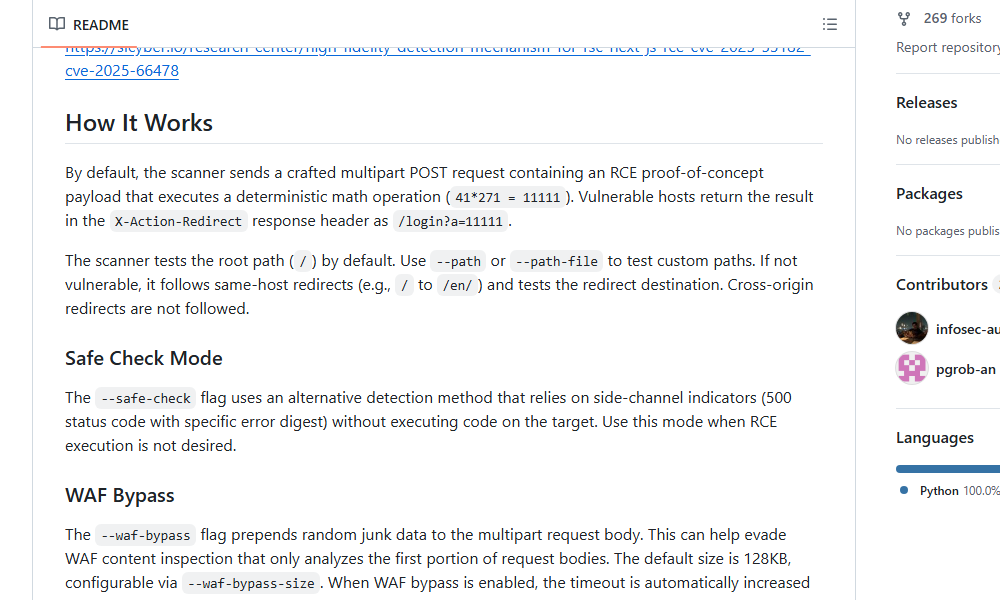
Estou desenvolvendo uma ferramenta de fingerprint exclusiva para XMLRPC, mas inspirado pelo repo do react2shell-ultimate-scanner (repositório do hackersatyamrastogi), quero implementar as automações necessárias para em caso de RCE subir a shell direto.
faço uma release ainda hj
34

May 28
Ah yeah there was a supply chain attack last week, true! But then again, there was a React2Shell RCE that affected Nextjs back in December iirc, and there was also a SSRF flaw this month too I believe. I mean, yeah it happens 🤷♂️
1
57

The React2Shell Story lachlan.nz/blog/the-react2sh…
1
40

May 26
Shai-Huludで悪名を広げたTeamPCPだが、専門家は「高度APTというより、開発者の信頼構造を巧みに悪用する実戦型犯罪集団」と分析している。VS Code拡張やnpm汚染を通じ、ソフトウェア供給網への攻撃を拡大中だ。
TeamPCPは2025年後半に台頭し、React2ShellやDocker API設定不備を悪用して活動を拡大した。その後、自律感染型ワーム「Shai-Hulud」を使い、汚染npmパッケージ経由で開発者環境へ侵入。感染した開発者が更新した別パッケージにも悪性コードが広がる連鎖型サプライチェーン攻撃を展開した。
最近ではGitHub社員が改ざんVS Code拡張を導入し、約4000件のプライベートリポジトリが流出した事件にも関与したと主張している。
研究者らは、TeamPCPの特徴は高度ゼロデイではなく「信頼済みツール悪用」にあると指摘。AI支援偵察やSNS型マーケティングも活用し、開発者が日常的に使う拡張機能やOSS配布経路を標的化している。
一方で、攻撃手法自体は中堅サイバー犯罪レベルとの見方もあり、「優れた宣伝力と狙いの巧さ」で存在感を急拡大させたグループと評価されている。
darkreading.com/application-…
4
11
1,795

Five incidents in the last 72 hours all weaponised something a developer was supposed to trust by default.
TrapDoor is planting .cursorrules and CLAUDE.md inside malicious npm, PyPI, and Crates.io packages so the developer's own AI assistant runs the "security scan" that exfiltrates the secrets.
Megalodon authenticated as 5,500 real developers using tokens still live in their CI environments and pushed malicious commits under their identities.
A third-party SquidRouterModule drained $3.2M from 86 Gnosis Safes on Base and Ethereum because the contract was verified under a name the Safe owners already trusted.
Microsoft pulled the entire GitHub account of a researcher disclosing CVEs the same vendor was responsible for patching.
The DFIR Report tracked a React2Shell mass-exploitation pipeline using an AI coding agent as its operator-side harness against 900 successful targets.
The pattern sits one layer up from the individual incidents.
The AI assistant, the CI credentials, the multisig module, the bug-bounty platform, and the agent harness all sit on the trust surface a digital asset firm assumes is on its side, and each of them is the entry point this week to the validator keys, custody signing flows, bridge relayer secrets, and exchange admin sessions on the same workstations and in the same vaults.
DLTA maps that intelligence-to-control loop for the trust surface that asset inventories never list as attack surface.
#SupplyChainSecurity #Web3Security #CTI #ThreatIntel
1
2
41
An exploitation pipeline that uses an AI coding agent as its operator-side harness collapses the marginal cost of credential harvesting toward zero, which means a 900-victim React2Shell campaign sits at the bottom of the new range for how often a single CVE now reaches GitHub Actions secrets, npm tokens, AWS roles, smart contract deployer keys, and validator monitoring credentials in one automated sweep.
106