
Stop polling, start reacting! 🛑
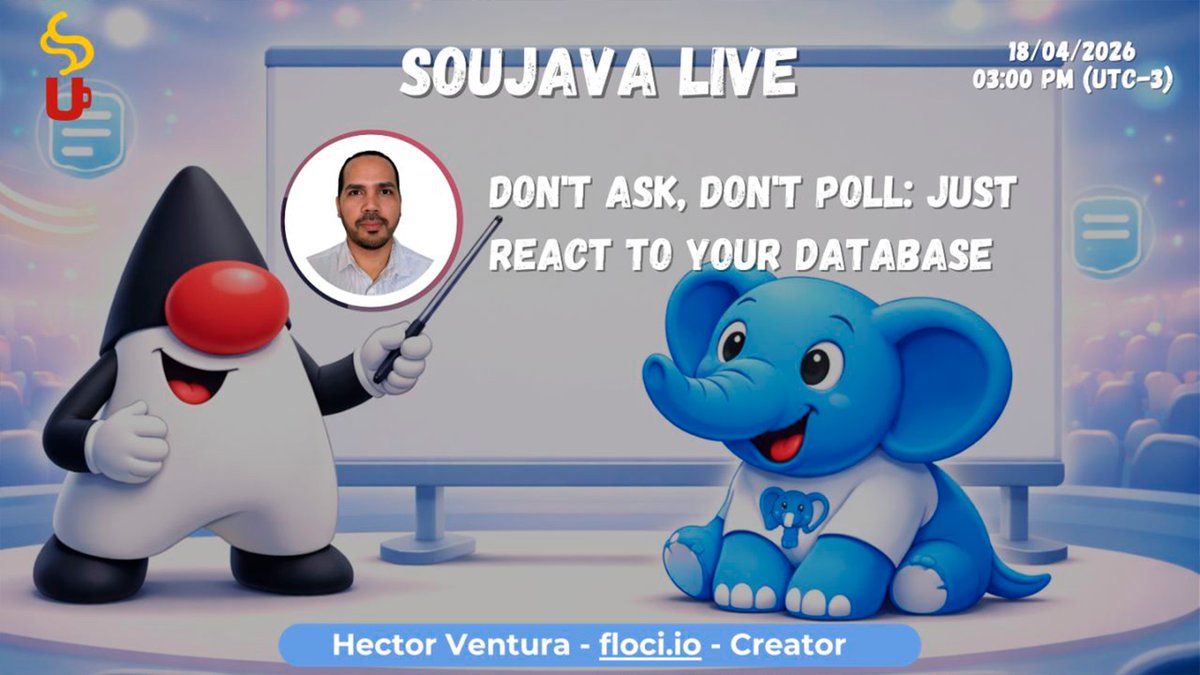
Tomorrow at 03:00 PM (UTC-3), I’m hosting a SouJava Live with @hectorvent. We’re diving into reactive systems and how to transform the way we interact with data persistence.
📺 Join us live on the SouJava YouTube channel: youtube.com/watch?v=iFNitm6y…
#Java #ReactiveSystems #Backend #Database
4
5
128

22 Nov 2025
🔌 Integrate WebFlux with R2DBC, Kafka, and WebSockets for fully reactive systems end-to-end. #ReactiveSystems
8
2,102

16 Sep 2025
Reactive Chemistry at Unrestricted Coupled Cluster Level: High-throughput Calculations for Training Machine Learning Potentials
1. A groundbreaking study by Allen et al. presents a novel approach to accurately model chemical reactions at the atomistic level using high-level electronic structure theory. The authors develop an automated workflow to create a dataset of gas-phase reactions with energies and forces calculated at the gold-standard level of unrestricted CCSD(T), overcoming previous computational challenges.
2. The study highlights the significant limitations of commonly used Density Functional Theory (DFT) in accurately describing reactive systems, particularly in bond breaking and making energetics. The new dataset provides a detailed analysis of the differences between DFT and unrestricted CCSD(T) descriptions across a wide range of chemical reactions.
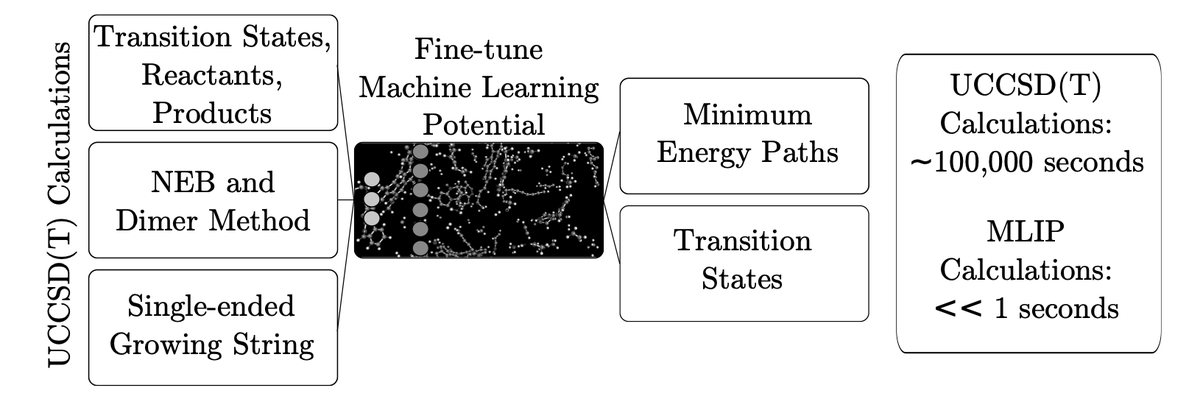
3. A key innovation is the development of a transferable machine learning interatomic potential (MLIP) trained on the high-fidelity UCCSD(T) data. This MLIP demonstrates substantial improvements in force accuracy and activation energy reproduction compared to DFT-trained models, with over 0.1 eV/Å improvement in force accuracy and over 0.1 eV in activation energy.
4. The authors introduce practical adaptations for large-scale coupled cluster calculations, including basis set corrections for forces and strategies to identify and filter out problematic structures. These advancements enable the creation of a high-quality dataset containing over 3,000 configurations of organic molecules with up to 16 atoms.
5. The study employs active learning techniques to efficiently explore reactive space, starting from existing datasets and using methods like the dimer method, NEB, and SEGS to generate new structures. This approach ensures that the dataset captures a diverse range of chemical reactions and geometries.
6. The MLIP trained on UCCSD(T) data not only outperforms DFT-trained models but also shows improved performance over DFT calculations themselves in several cases. This highlights the potential of MLIPs to revolutionize reactive simulations by offering both high accuracy and computational efficiency.
7. The authors emphasize the importance of robust and efficient quantum chemistry software for creating highly accurate datasets at the CCSD(T) level. They suggest that future work could focus on expanding these techniques to the condensed phase and developing automated approaches for multi-reference calculations.
📜Paper: arxiv.org/abs/2509.10872v1
#ComputationalChemistry #MachineLearning #QuantumChemistry #ReactiveSystems #HighThroughputCalculations
3
1
2
1,188

16 Jan 2025
The end of the year was so intense that I almost forgot to express my gratitude to BR-BIT (especially to Leonildo V., Marlon B., and Alan R.) for the opportunity to contribute to their initiatives.
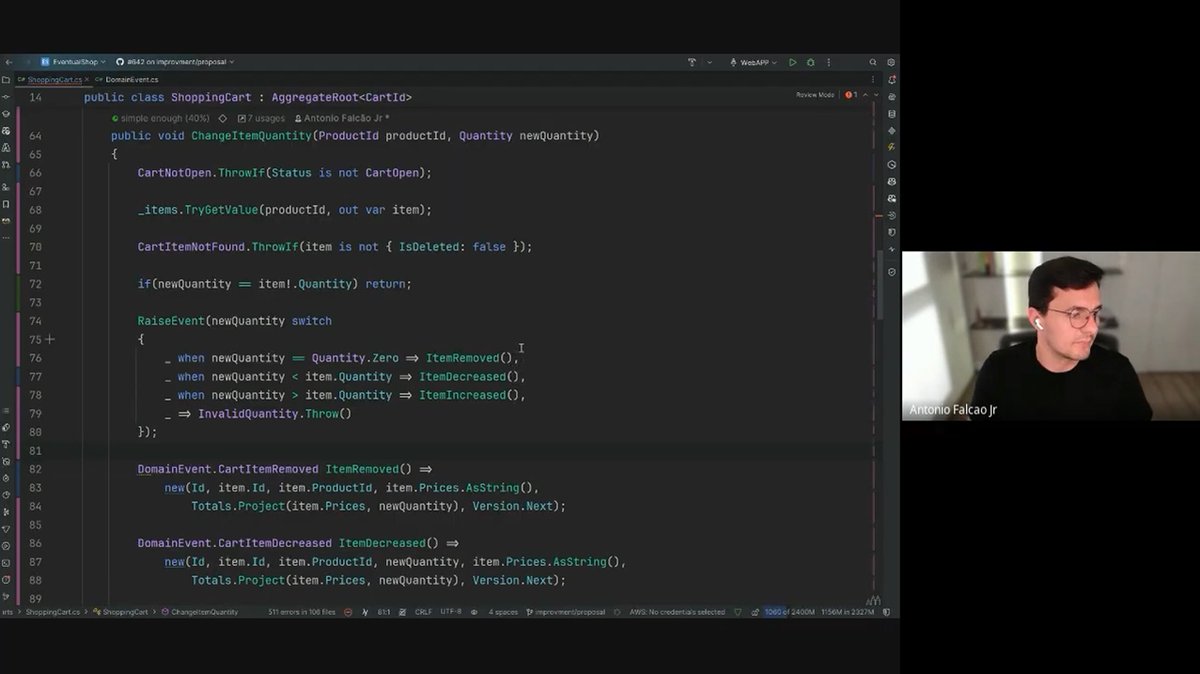
BR-BIT is modernizing its solutions by building a distributed, scalable platform designed to become a market differentiator for prison systems in Brazil. Over a four-day workshop, we explored several aspects of distributed reactive systems, fostering rich discussions and strategic insights.
Thank you for the collaboration and for trusting me to be part of this journey.
Looking forward to seeing the impact of these initiatives!
#ReactiveDDD #ReactiveSystems #DistributedSystems #EventDriven
#EventSourcing #CQRS #DomainDrivenDesign #DDDesign #Microservices
1
98
14 Jan 2025
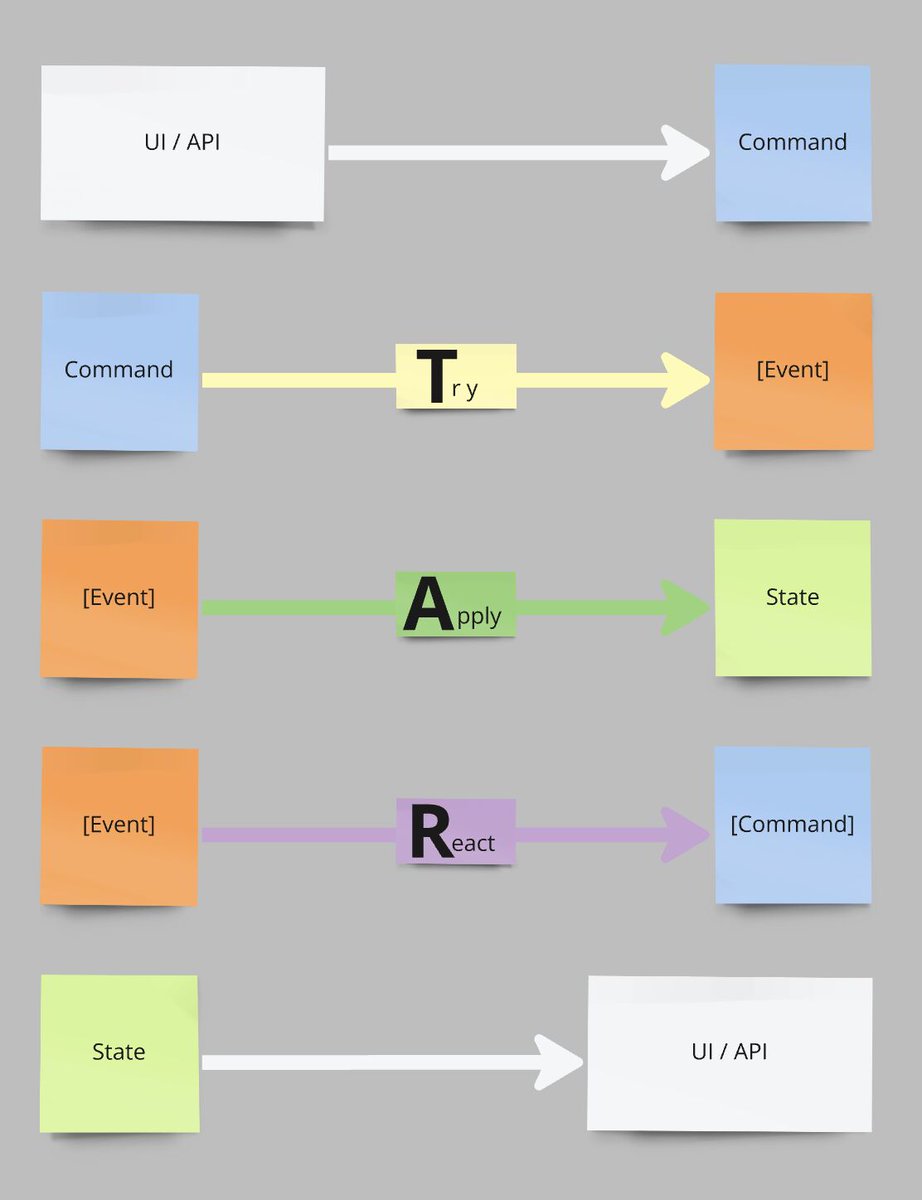
It is fascinating how the community around reactive systems is evolving. I want to thank Sam Hatoum and Raf Lefever for their significant contribution (which helped me explain the event-sourced systems).
"Investing in scale and real reliability can be made at various system levels. Much of this is seen at the edge, especially in the infrastructure, by combining different tools or explicitly relying on a specific capability to solve a business problem (vendor lock-in). However, another plausible alternative is incorporating these characteristics into the application's nature (behavior over state)."
TAR represents a paradigm shift, without a doubt. As with any paradigm shift, considerable resistance is likely, which is to be expected. However, a reactive system inherently achieves greater efficiency by optimizing the interactions between its components, regardless of whether they are distributed (tell, don't ask).
Image credit: Sam Hatoum
#EventSourcing #EventDriven #ReactiveSystems #DistributedSystems #ReactiveDDD #CQRS
2
107

29 Oct 2024
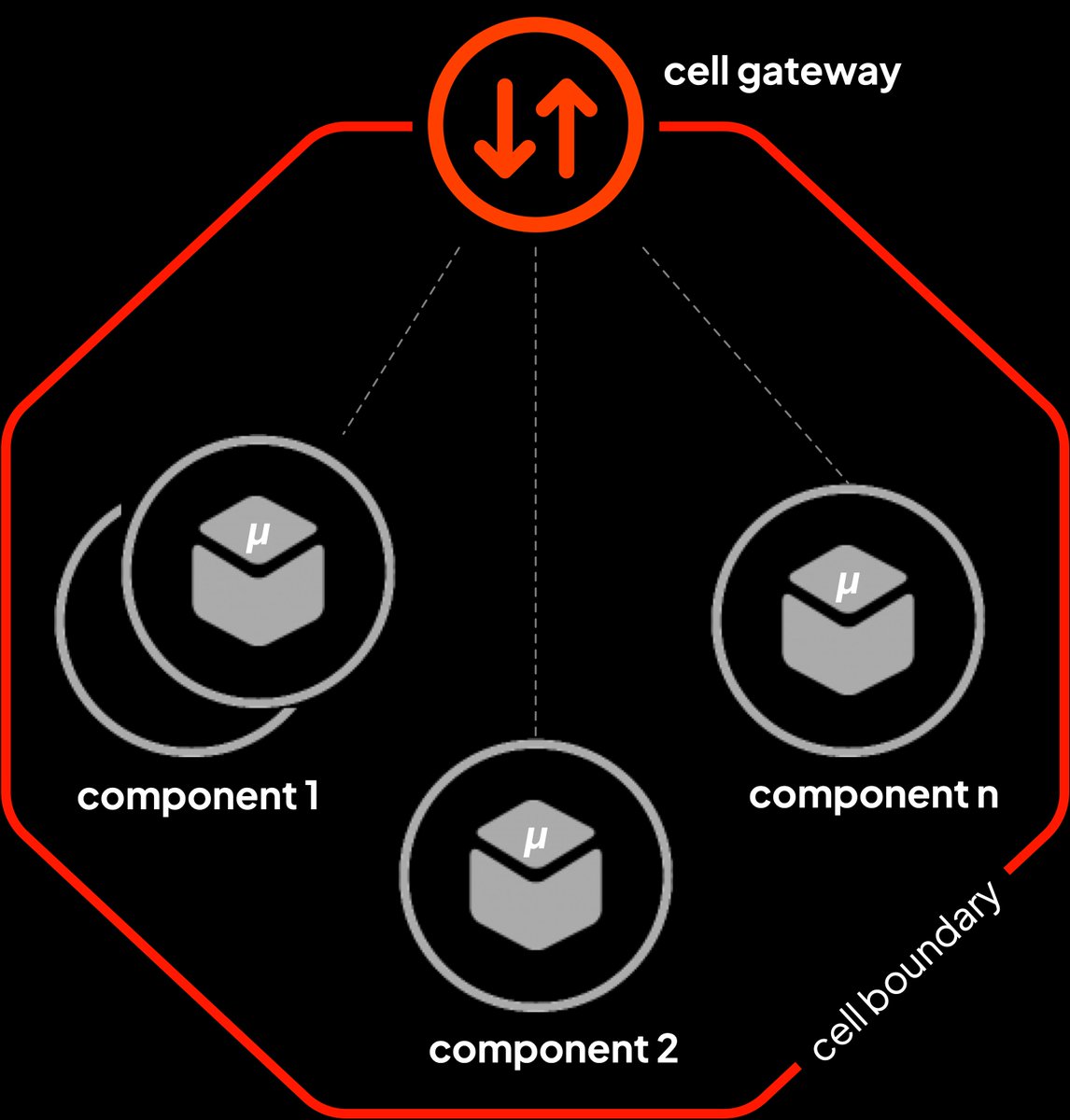
Cell-based architecture (CBA) is a reactive approach to building scalable, resilient systems. Check out the original spec for details: git.io/fpwtf #CellBasedArchitecture #ReactiveSystems #CloudNative
3
5
12
832
5 Oct 2024
🔄 From request-response to streaming—take your Spring apps to the next level with RSocket. #SpringFramework #ReactiveSystems #RSocket #JavaTips #Microservices buff.ly/3IRqX4X
2
12
1,309
2 Oct 2024
🔥 Unlock bi-directional communication and streaming with the RSocket interface in Spring—perfect for modern apps! #SpringFramework #RSocket #ReactiveSystems #JavaDevelopment buff.ly/3IRqX4X
3
15
1,370
1 Oct 2024
💡 Get started with RSocket in Spring! Create fast, scalable, and reactive applications with this lightweight messaging protocol. #SpringBoot #RSocket #ReactiveSystems #JavaProgramming buff.ly/3IRqX4X
2
10
1,142

24 Apr 2024
💡🔧Behold, #Scala devs! With @lightbend's Kalix, the world of #reactivesystems awaits!
To prove it, we've published a tutorial on how to build a simple invoicing app using this framework.
Full guide here: scalac.io/blog/kalix-tutoria…
#softwaredevelopment #appdevelopment #devops
2
3
12
5,223

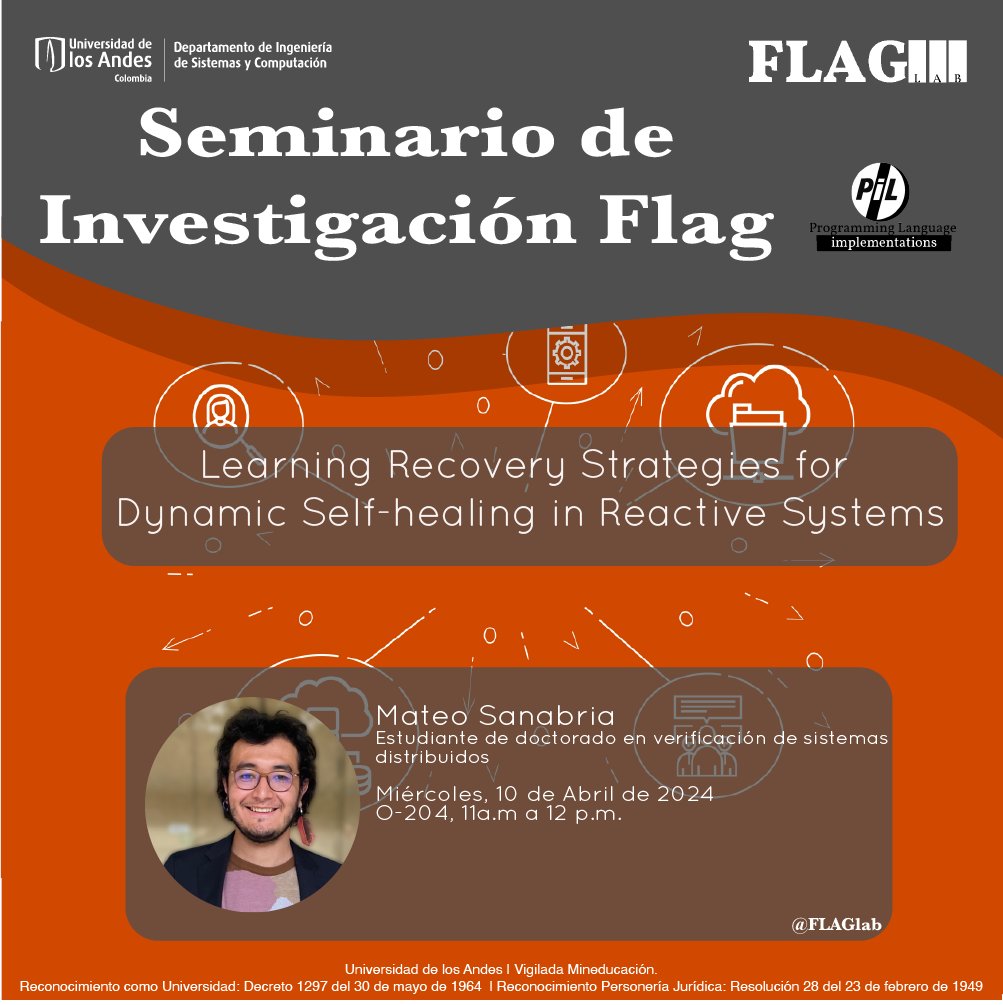
El #SeminarioFLAG esta semana presentara los resultados de investigación de Mateo en el uso de #rl para la corrección automática de sistemas reactivos.
Nos vemos el 10/04/2024 a las 11am en el O204
@DISCuniandes @ACMUniandes @IEEEUniandes #selfhealingsystems #reactivesystems
2
3
105

Curious about how #Kalix works? Learn more about how to easily build self-provisioning and reactive systems below.
bit.ly/kx_developer_how-kali…
#Lightbend #Developer #ReactiveSystems #DevOps #AppDevelopment
1
4
760

21 May 2023
Starting to work with message driven systems and wondering how to pass messages?
That's where message channels come in. In this video, we dive into the 2 most common types of message channels.
youtu.be/9Q2Ctyiub7I
#serverless #aws #reactivesystems #sustainablearchitecture

1
3
2
782

27 Oct 2021
Again, we're delighted to be a gold sponsor of Reactive Summit, the premier event for Reactive Systems design. And, don't miss our panel discussion. See you there!
Check it out: reactivesummit.org/
#ReactiveSummit #ReactiveArchitecture #ReactiveSystems

2
4

28 Sep 2021
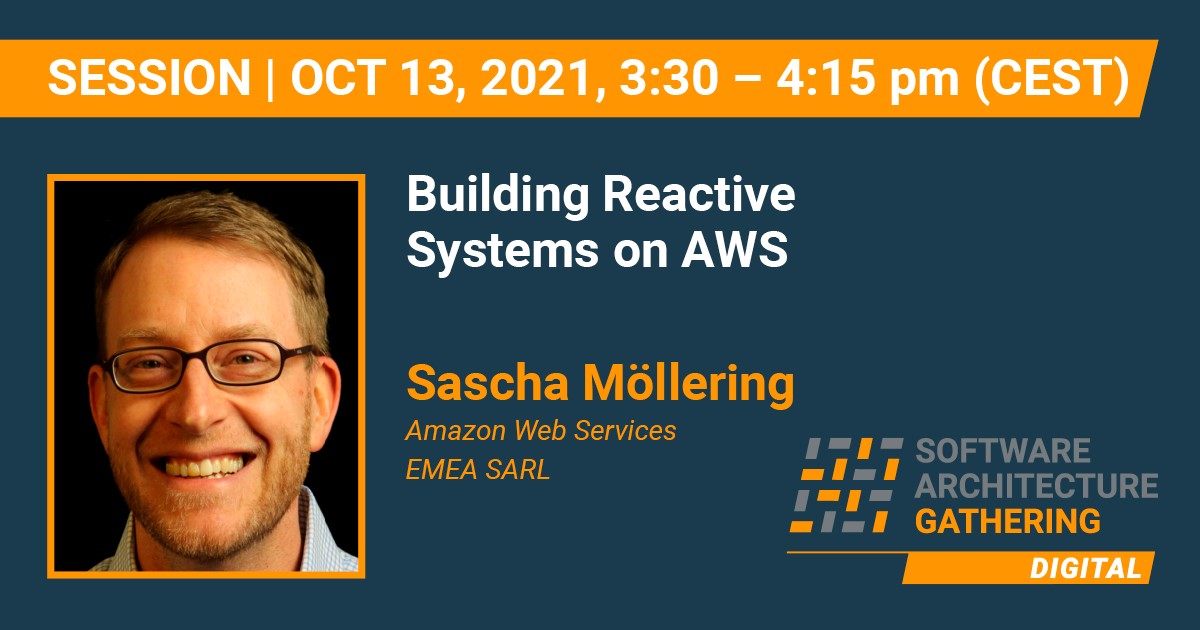
In this session with @sascha242, you learn how users adopt reactive patterns for their high-performance applications and have a look at typical, well-architected implementations on #AWS. Join #SAGconf now and learn about the building of #reactivesystems: ow.ly/D1DI50GhMnk
1
3
16 Aug 2021
The time is coming! We look forward to leading a panel discussion on Solving Legacy IT Systems Limitations with #ReactiveSystems on November 3rd, at Reactive Summit 2021!
For more information: reactivesummit.org/2021/sche…
#Microservices #Scala #ReactiveArchitecture
1
2

Can You Answer this #Coding #Interview Question? 🤔
⚡️ Topic: #reactivesystems
⭐️ Difficulty: 🟣 Expert
❓ QA: "What Does It Mean to be Message Driven for a Reactive System?"
Or Check ANSWER 👉 fullstack.cafe/interview-que…
#100DaysOfCode #DEVCommunity #CodeNewbie #freeCodeCamp
4
1

14 Jun 2021
⏳ We’re only a few hours away from our Panel Discussion 🗨️
There are still some free tickets left for the latecomers, so if you're into #reactivesystems - go ahead and register 👉 bit.ly/sphereRS
See you soon! 🙌
#reactivearchitecture #virtualevent
1
2
10 Jun 2021
Getting in the topic of #reactivesystems before our panel discussion - 📺 watch a talk by @pdolega, @lukasz_bialy & Marcin Zagórski.
👉 Beyond the hype: reactive vs traditional microservices 👉 bit.ly/2Sr6v4f
3
3
9 Jun 2021
Join our guests - Samuel, Trevor, @aklikic, and @lukasz_bialy on a #discussionpanel hosted by @pdolega this Monday.
Topic⤵️
#ReactiveSystems: real-world use cases and challenges
More about our panelists🎙️bit.ly/3pvskMg
Register now🎟️bit.ly/3pvskMg

2
4