
FACS Manual Coding vs. Automated AU Detection Tools: Comparison
Manual FACS (certified human coders using the 2002 Ekman/Friesen/Hager manual) remains the gold standard for precision and completeness. Automated tools scale efficiently but trade off accuracy, coverage, and nuance.
Key Comparison Table
AspectManual FACS (Certified Coders)Automated AU Tools (e.g., OpenFace, FaceReader, etc.)Accuracy / ReliabilityHigh (inter-coder agreement 0.70 required for certification; often 0.80–0.90 with experts). Objective but subjective judgment involved.Variable: AUC 0.65–0.81 across systems. Strong on common AUs (e.g., AU12 smile); weaker on subtle/rare ones. Often below certified human levels. AU CoverageFull ~44–46 AUs combinations, intensity (A–E), laterality, timing. Handles non-additive interactions .Limited (typically 17–20 AUs). Many AUs excluded; struggles with complex combinations.Speed & ScalabilityVery slow: 50–100 hours training; 50–60 minutes per minute of video.Real-time or near real-time (e.g., 30 FPS). Processes hours of video quickly.CostHigh (training, time, multiple coders for reliability).Lower ongoing (software licenses or open-source).Best ForResearch requiring precision (psychology, deception, clinical, subtle expressions).Large-scale screening, real-time apps, animation, initial analysis.StrengthsAnatomically grounded, context-aware, handles occlusion/pose variability with human judgment, full nuance.Objective, consistent within model, processes massive datasets, no fatigue.LimitationsTime-intensive, expensive, potential coder drift/bias (mitigated by certification).Sensitive to lighting, pose, occlusion, ethnicity/age diversity; lower sensitivity to subtle/intense variations; over-relies on posed data.ValidationGold standard; used to validate automated systems.Often validated against manual FACS but shows gaps (e.g., FaceReader ~0.67–0.81 agreement).
Popular Automated Tools
OpenFace (open-source, widely used): Good for research; dynamic models improve with video; strong on some AUs (e.g., AU6, AU12) but limited set and variable accuracy.
FaceReader (Noldus): Commercial; higher landmark count (468 vs. OpenFace’s 67); better FACS agreement in some validations (~0.70 ); marketed for reliability but still not equivalent to certified humans.
Others: Affectiva, AFAR, Py-Feat, RealEye, emerging AI models. Performance varies by dataset (posed > spontaneous).
Performance Insights (from studies)
Automated systems excel on common expressions (happiness, surprise) but lag on negative/subtle ones and in naturalistic settings (e.g., low detection rates ~25% in some real-world videos due to occlusion/lighting).
They often outperform on speed but underperform on comprehensive encoding compared to manual coding.
Hybrids (automated pre-screening human verification) are increasingly common for best results.
Bottom Line: Use manual FACS when scientific rigor or subtle details matter (aligns with experts like Ekman, Rosenberg, Fonagy, etc., in your chart). Use automated tools for volume, prototyping, or when perfect precision isn’t critical. Many researchers combine both.
1
1
45
FACS Updates Since the 2002 Manual (Current as of 2026)
The 2002 edition (by Paul Ekman, Wallace V. Friesen, and Joseph C. Hager) remains the official and current version of the FACS manual. It is still the standard used for training, certification, and research. No full new edition has been released yet.
Key Changes in the 2002 Revision (Compared to 1978)
Refined scoring criteria for many Action Units (AUs) and combinations.
Improved descriptions of appearance changes.
Added/enhanced details on head and eye positions/movements.
Better coverage of additive vs. non-additive AU combinations.
Updated didactic materials (hyperlinked text, embedded videos in digital version).
Appendix detailing specific changes from prior versions.
Post-2002 Developments
No major core revisions to the manual itself have been published. The 2002 version is what Paul Ekman Group sells and endorses for scoring.
Ongoing work on a new edition: Erika Rosenberg, Ph.D. (Ekman’s protégé and a leading FACS expert) is leading the only Ekman-approved revision. This includes:Modernizing image quality (higher-resolution photos/videos).
Expanding diversity in examples (wider range of faces, ages, ethnicities).
Updating content based on decades of additional research and feedback.
Calls for image submissions from the public have occurred (e.g., deadlines around 2024–2025).
As of mid-2026, the new manual is still in preparation (a 2024 target mentioned in older talks has not yet materialized publicly).
Related Advances & Complementary Tools
Automated FACS systems: Significant progress in computer vision/AI tools (e.g., OpenFace, Affectiva, RealEye, and others) that estimate AUs from video in real-time. These are faster than manual coding but often require validation against certified human coders.
FACSAID (FACS Affect Interpretation Database): Updated emotion-mapping resources replacing older EMFACS dictionaries.
Extensions: BabyFACS (for infants), adaptations for animals (e.g., chimpanzees), and integrations with other measures (physiology, self-report).
Training & Certification: Remains based on the 2002 manual. Erika Rosenberg offers endorsed workshops; self-study via the PDF manual final test is standard.
Research Applications: Continued widespread use in emotion science, psychology, animation (Pixar, etc.), AI, pain assessment, and consumer research. Books like What the Face Reveals (3rd ed., 2020, edited by Rosenberg & Ekman) compile studies using FACS.
Summary
The foundational methodology is stable since 2002, with refinements focused on usability, visuals, and accessibility in the upcoming revision. Manual coding is still the gold standard for precision; automation handles scale.
1
1
52

May 28
🔹🩷LUMINA &MISAKI&Linne対応🩷 𝑅𝑒𝑎𝑙𝑒𝑦𝑒 - 𝙵𝙴𝙻𝙸𝙰
【FULLpackage】Realeye
300円
【Linne】realeye
200円
【LUMINA】realeye
200円
【MISAKI】realeye
200円
【支援版】FullPackage
400円
[3Dテクスチャ]
🔗feliaa.booth.pm/items/834217…
#VRChat #booth_pm #PR
3
14
7,708
May 20
🔹🆕新作発売🆕
🩷LUMINA &MISAKI&Linne対応🩷 𝑅𝑒𝑎𝑙𝑒𝑦𝑒 - 𝙵𝙴𝙻𝙸𝙰
【FULLpackage】Realeye
300円
【LUMINA】realeye
200円
【MISAKI】realeye
200円
[3Dテクスチャ]
🔗feliaa.booth.pm/items/834217…
プレゼント企画はこちら↓
x.com/bakanote_00
#VRChat #booth_pm #PR
2
33
9,983

May 19
✨Realeye発売開始しました✨
LUMINA&MISAKI対応アイテクスチャ👁️
(Linne対応も追加予定!)
うるつや感と透明感を意識して制作しました🫧
プレゼント企画🎁もするのでご参加ください!!
🛍️shop⇩
feliaa.booth.pm/items/834217…
#VISIONTOKYO #MISAKI3D
#boothpm #VRChat
#LUMINA_EX #LUMINA3D
3
10
593

#FELIAeye 様の『Realeye』テスターさせて頂きました 👑
可愛いも大人っぽいもお任せなアイテクスチャ .ᐟ
🔔明日(20日)発売になります🔔
【 #Vrchat #LUMINA_EX #FELIAeye 】
♡ ↓ shop link ↓ ♡
feliaa.booth.pm/

3
25
1,357

May 19
#FELIAeye さんの『realeye』のテスターをさせていただきました!👀💖
シンプルなデザインでカラーバリエーション豊富だからいろんな改変にめちゃくちゃ合わせやすい…!
🗓️明日【5月20日】発売!
めちゃくちゃおすすめなので、ぜひチェックしてみてね👇
feliaa.booth.pm/
#VRChat

3
15
1,638

May 18


4
208


Jan 19
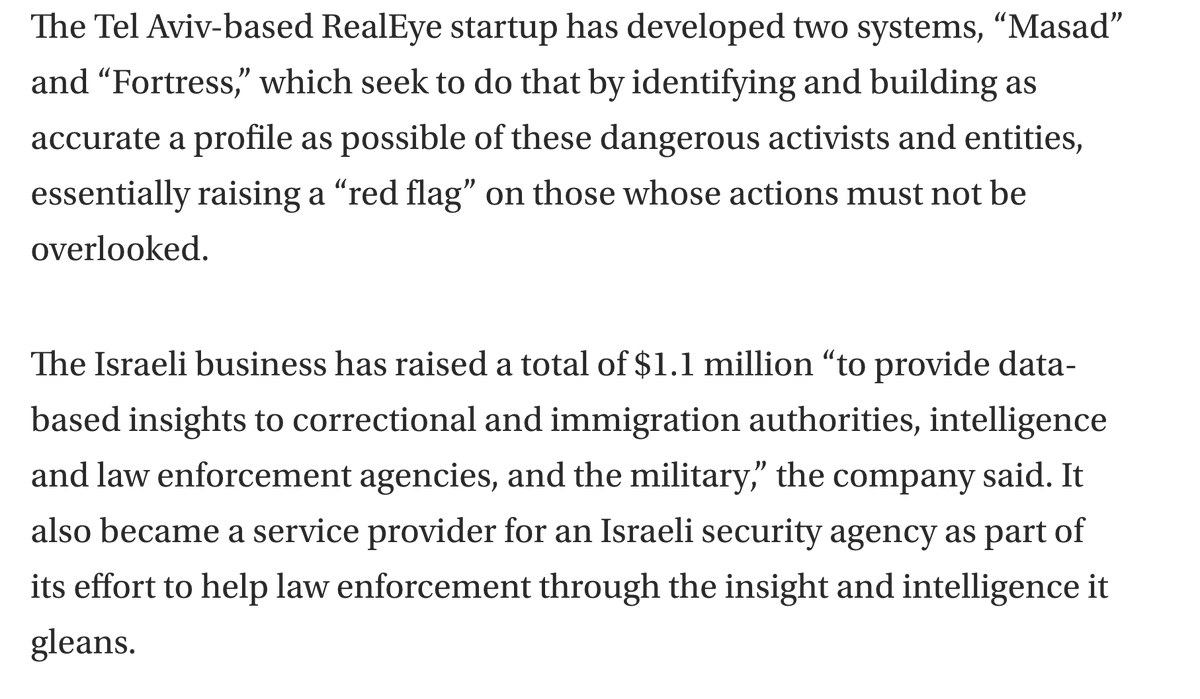
WaPo published an opinion article today by Kevin Cohen, whose bio stated that he is the "CEO of the cyber-intelligence firm RealEye and head of cyber-intelligence at Trident Group America." What WaPo fails to note is that RealEye is directly tied to Israel.
1
1
1
151


29 May 2025
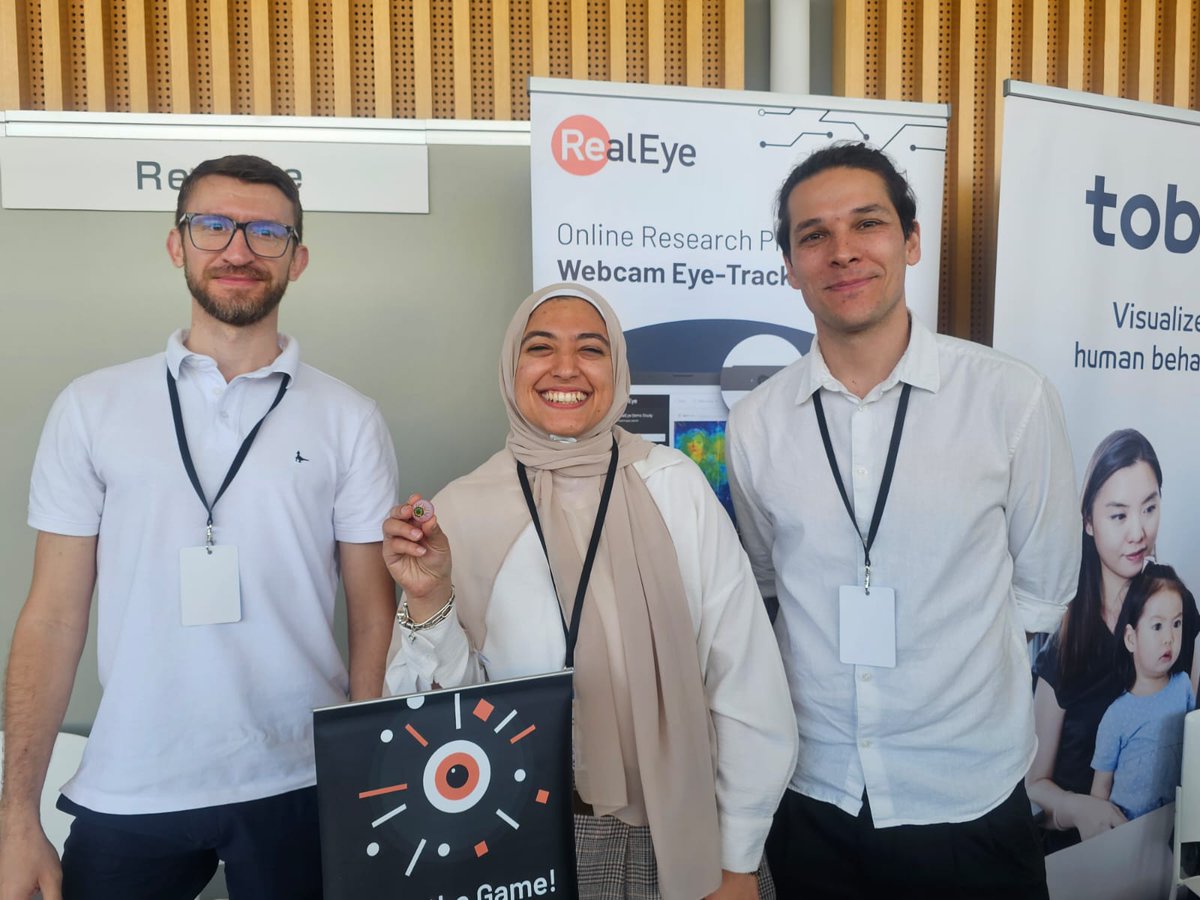
My yearly RealEye game post at @ETRA_conference with the googly eye but this year I actually won it not only taking a picture with it 😂
#ETRA2025 🇯🇵
1
3
275


10 Dec 2024
Leveraging ThirdEye’s groundbreaking AR smart glasses integrated with RealEye surgical software, surgeons can now access precision-enhancing real-time overlays. This innovation delivers advanced 3D visualizations of anatomical structures directly to the operative field, optimizing surgical accuracy and efficiency while reducing intraoperative risks.
Learn more about Mixed Reality and Artificial Intelligence at thirdeyegen.com/
#ArtificialIntelligence #Healthcare #ThirdEyeGen #smartglasses #MixedReality
1
1
63
5 Oct 2024
Amid the devastating floods in North Carolina, ThirdEye is stepping up to help. We're offering our RealEye AI/AR Platform FREE to first responders and residents to help them see through the chaos, locate victims faster, Telehealth, and streamline disaster relief efforts. 🌊🚁
Cutting-edge AR, real-time data, and AI—right when it’s needed most. Contact sales@thirdeyegen.com if you need access.
#TechForGood #FirstResponders #DisasterRelief #NorthCarolinaFloods #ThirdEyeGen

1
2
155
19 Sep 2024
ThirdEye's AR technology is playing a significant role in advancing healthcare by enhancing the training of generative AI models through piloted use cases. In these instances, medical teams are provided with specific Mixed Reality (MR) or Virtual Reality (VR) headsets, designed to solve complex problems in medical practice that have yet to be streamlined. By analyzing the data gathered during these pilots, ThirdEye can simulate and assess the effectiveness of these technologies in improving patient outcomes and shaping future healthcare workforces.
In line with the American Medical Association's principles for the development and use of augmented intelligence in healthcare, ThirdEye ensures compliance and accountability remain core to addressing new challenges. This commitment is crucial for building trust and advancing innovation in the healthcare sector.
Read more here: ama-assn.org/system/files/cl…
#AugmentedReality #Healthcare #AMA #AI #ThirdEyeGen #RealEye #GenerativeAI

1
2
117
7 Sep 2024
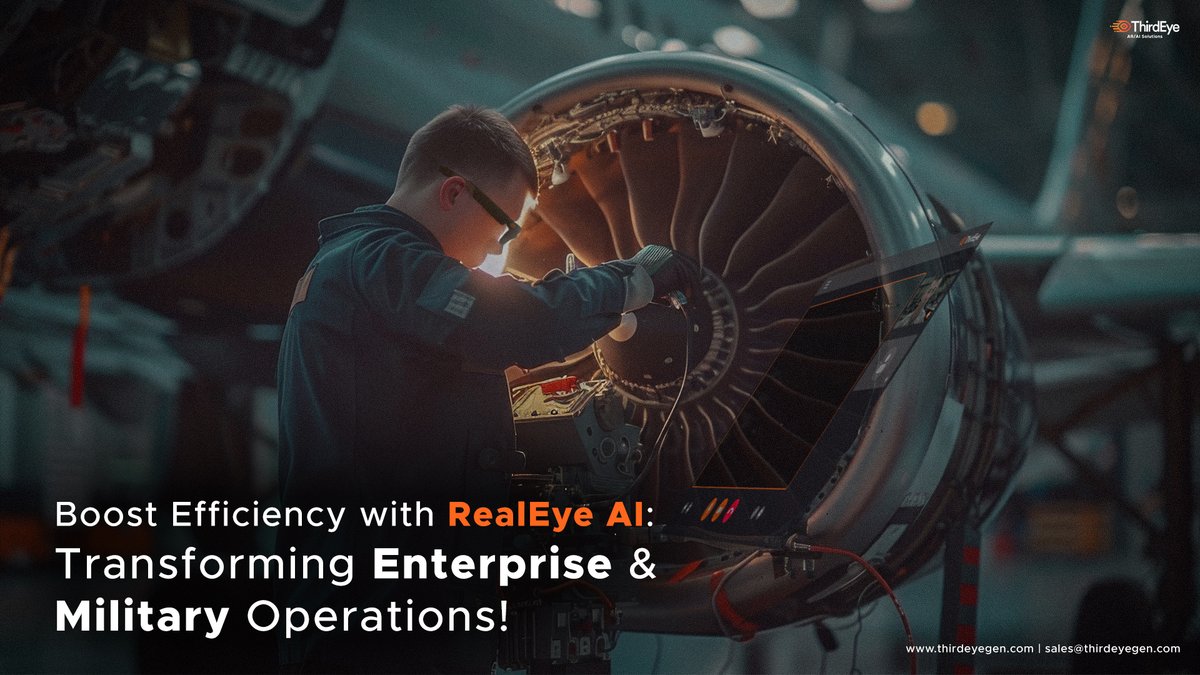
Revolutionize your operations with ThirdEye's RealEye AI! Our cutting-edge AI solution records critical conversations, converts them into actionable summaries, analyzes data in real-time, and generates instant insights. 💡
Whether you're optimizing enterprise workflows or enhancing military decision-making, RealEye AI boosts efficiency and accuracy like never before. From real-time data capture to AI-powered intelligence, we've got your back! 🛡️💼
Learn more about Artificial Intelligence and Augmented Reality at thirdeyegen.com/
#AI #EnterpriseSolutions #MilitaryTech #RealEyeAI #ThirdEyeGen #smartglasses #AR
1
2
91
6 Sep 2024
ThirdEye's Nick Cherukuri was included in Business Outline magazine's "The 10 Most Influential CEOs to Watchout - 2024"
You can reach us at sales@thirdeyegen.com or visit our website at thirdeyegen.com/ for more information about Ar/AI.
#AugmentedReality #AI #RealEye #ThirdEyeGen #smartglasses #TopCEO #BusinessOutlineMagazine

3
3
168
26 Aug 2024
New AI feature: With RealEye AI CRM now you can send payment quotes directly to the lead using AI to autopopulate!
Learn more about RealEye AI CRM at thirdeyegen.com/
#AugmentedReality #CRM #RealEye #ThirdEyeGen #smartglasses #technology
1
2
124
24 Aug 2024
New update! Connect your RealEye AI to Google Calendar to schedule AR conference calls between smartglasses and other devices.
Check out the new update here: youtu.be/kz_CxBIW_xM?si=DWWT…
Learn more about RealEye AI at thirdeyegen.com/
#AugmentedReality #RealEye #ThirdEyeGen #smartglasses #technology
1
5
264