
【登壇者紹介】
「この子は、自分の気持ちを言葉にできない。」
そんな場面に出会ったことはありませんか。
語られないから、わからない。
言葉にならないから、評価できない。
けれど本当にそうなのでしょうか。
7/26(日)9:30–12:30
第二会場シンポジウム
『メンタライジング・アプローチのアセスメントをめぐって』
筑波大学学生相談室公認心理師の北原祐理先生には、
『語りと表象を用いたメンタライジング・アセスメントの実際』
をご発表いただきます。
メンタライジング研究のゴールド・スタンダードとされるReflective Functioning Scale(RFS)。
北原先生は、家族についての「語り」からメンタライジングの質を捉える視点を紹介するとともに、言葉だけでは捉えきれない子どもや青年の内的世界にも目を向けます。
遊び。
イメージ。
描かれる物語。
言葉になる前の体験。
そこには、その人なりのメンタライジングの芽生えや躓きが表現されているかもしれません。
「何を語ったか」だけではなく、
「どのように語ったか」へ。
そして、語られないものをどう理解するかへ。
児童精神科、心理、教育、福祉など、子どもや若者のこころを理解したいすべての支援者におすすめの発表です。
#JSAP38ぐんま
#メンタライジング
#ReflectiveFunctioning
#児童精神科
#公認心理師
#臨床心理学
#プレイセラピー
#心理療法
3
14
671

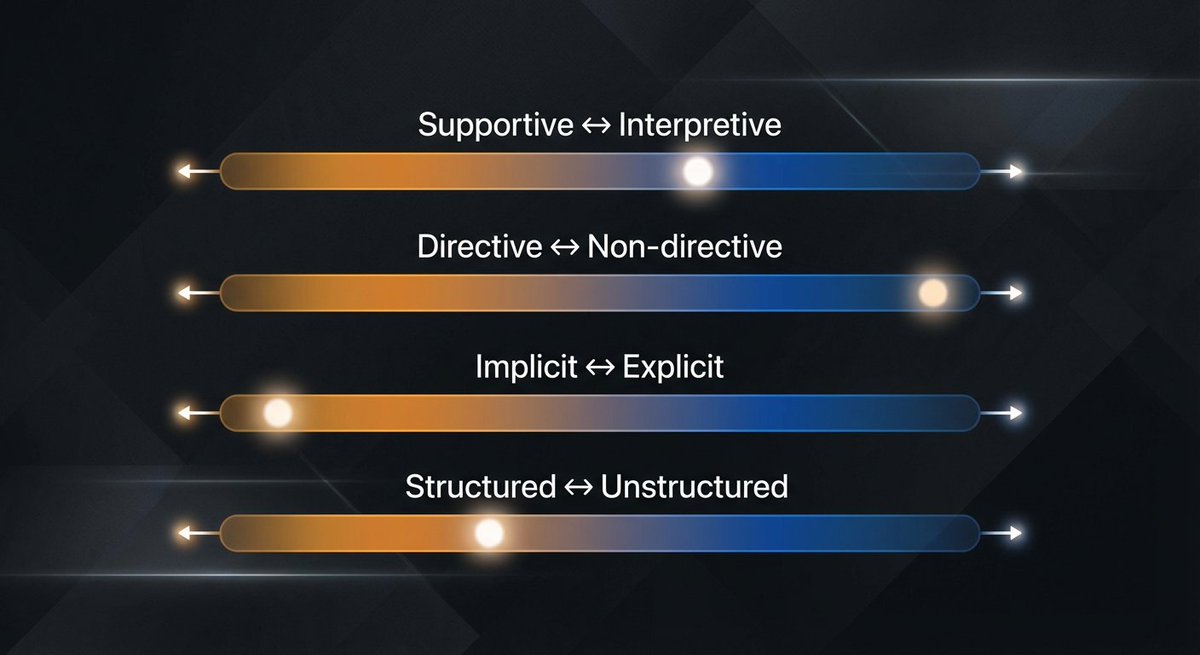
Four dimensions of psychotherapeutic engagement — not exhaustive or original, but I was building something and thought of these axes. How independent of one another are they?
Supportive ↔ Interpretive. Holding and stabilizing versus meaning-making and pattern-naming. Low reflective functioning, high distress, early alliance, or consolidation phases pull toward the supportive pole — but support isn't the absence of developmental work. Often enough, it is the developmental work, and mistaking it for a lesser intervention misreads what the person actually needs to grow.
Directive ↔ Non-directive. Structured guidance and concrete skill-building versus open exploration and following the person's lead. Directive moves earn their place when someone needs a capacity they don't yet have, or when unstructured work would simply overwhelm the system. Non-directive earns its place when material is emergent and the moment calls for following rather than leading — when your best move might be to get out of the way.
Implicit ↔ Explicit. Working through experience versus naming directly. Some people need articulation to consolidate what they're living through. Others need to arrive at recognition on their own terms — naming it too early forecloses the discovery, collapses something that needed to remain open a while longer. Learning this person's gradient on this dimension is itself part of the work.
Structured ↔ Unstructured. Defined formats — guided meditation, cognitive restructuring, journaling prompts, coaching frameworks — versus open developmental conversation. Structured tools aren't departures from the relational frame. They're precision instruments: they generate specific prediction errors, test specific assumptions, build specific capacities.
The question is always whether this moment, this person, this phase calls for scaffolding — or space.
None of these dimensions operate independently, and none of them stay put. The clinical art — if we can call it that — is reading where someone is across all four simultaneously, and being willing to move when the read changes.
#Psychotherapy #MentalHealth #ClinicalPsychology #Psychiatry #ReflectiveFunctioning #Psychoanalysis
2
8
51
2,148

Don’t miss our brilliant upcoming FREE webinar on #ReflectiveParenting with @redfernpsychol, on 16 July at 5pm UK, and improve your understanding of how Reflective Parenting links to #Mentalizing and #ReflectiveFunctioning.
Register now: bit.ly/3WO65ni
1
4
630
Don’t miss our brilliant upcoming FREE webinar on #ReflectiveParenting with @redfernpsychol, on 16 July at 5pm UK, and improve your understanding of how Reflective Parenting links to #Mentalizing and #ReflectiveFunctioning.
Register now: bit.ly/3WO65ni
2
545

5 Dec 2021
Last call!
Live Legacy Interview #MiriamSteele in collaboration with @ChildFirstInc @NFP_nursefamily & APA Division 39 Section II.
Hear about her groundbreaking research on #ReflectiveFunctioning, #Adoption and #attachment
7 Dec 5-7pm UK/12-2pm EST.
30 Nov 2021

“Miriam Steele is a master researcher whose work has shaped our understanding of transgenerational transmission of trauma & how to help distressed babies”. Tessa Baradon
Join our legacy interview 7 Dec.
@ChildFirstInc @NFP_nursefamily @PeterFonagy
eventbrite.co.uk/e/legacy-in…
5
2
23 Nov 2021
Our next legacy interview is with #MiriamSteele whose research @AFNCCF on #ReflectiveFunctioning underpins modern day #mentalization based treatments.
Hear about her transformational work 7 Dec
eventbrite.co.uk/e/legacy-in…
@miriamsteele12 @ChildFirstInc @NFP_nursefamily @salhogg
5
2

1 Feb 2021
New article by the wonderful Agostino Brugnera, from Angelo Compare's lab, that I am very happy to be a co-author on. The first 50 folks who click on the link below get free access.
tandfonline.com/eprint/YKZMD…
#psychotherapy #therapist #attachment #reflectivefunctioning
1
1

25 Jan 2019
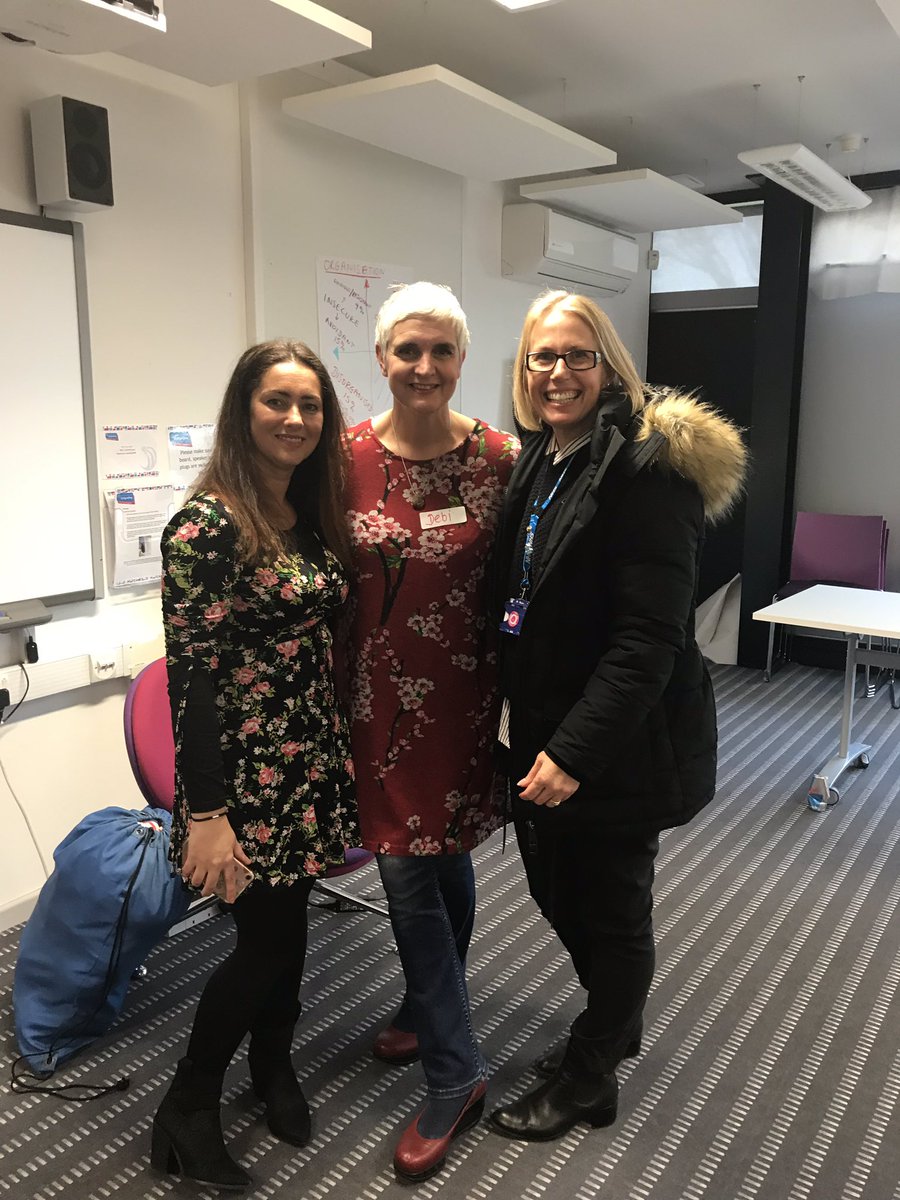
Thank you to Debi @BabyBondingUK for the last two days of insightful and valuable training with @LancashireCare @Debbie_TM50 @ZoeTate17 and all our new #SpecialistPMHServices colleagues. #ReflectiveFunctioning #Containment #Headspace #Attuned
2
12

12 Apr 2017
⚬🍃🌼| #Development & #Validation Of A #SelfReportMeasure of #Mentalizing |🔹🍃🌼 #ReflectiveFunctioning #Questionnaire ln.is/www.ncbi.nlm.nih.gov/J…
21
6