
May 23
I am live, So you should watch it. Because I am live.
twitch.tv/itsmejacktv
#twitch #live #rustdev #pizza
30


Apr 24
Keep your Rust skills and your favorite tools, but unlock the 'Superpowers' of REX and Native Connectivity. It’s the SVM you love, upgraded for the next era of DeFi. Swap your board, catch a bigger wave.
#SVM #RustDev #BuildOnRialo"
34

Mar 25
🚀 Bittlocker is hiring a Web3 Full-Stack Developer
We’re building the savings layer for Bittensor.
Looking for a builder who can work across frontend, backend, and smart contract integration.
🇬🇧 UK-based preferred (not essential)
🤝 Early-stage team, high ownership
Good understanding of the Bittensor ecosystem would be very valuable.
DM to join us 👇 #Web3Jobs #Bittensor #TAO #FullStackDev #BlockchainDev #SmartContracts #Solidity #RustDev #Web3Developer
6
3
323

Mar 20
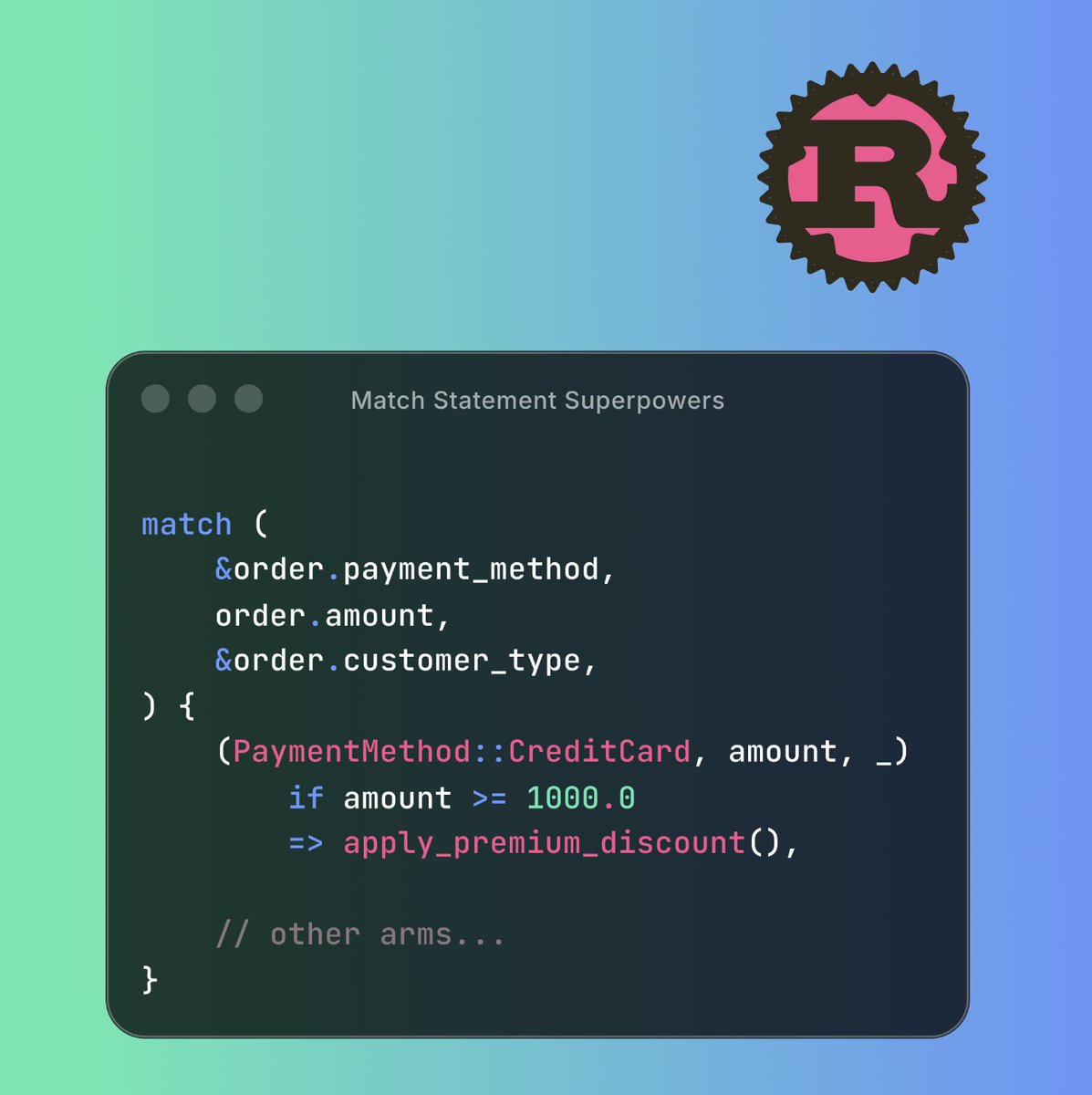
A Rust Superpower: The Match Statement
I wrote an article about match statements
- from basic to more advanced:
destructuring, references, bindings, ranges, and guards.
7-minute read. No fluff:
medium.com/@gunnar.h.karlsso…
#rust #rustlang #rustdev
159

Mar 18
4/4 Who's connecting their AI today?
🟪⛓️👩🏻💻
Share your first AI-generated KVM contract, screenshot or experience below 👇
Official: mcp.klever.org
Thanks @klever_org for this 🔥☺️🤘🏻🫡
Tag a dev friend – let's ship faster! #SmartContracts #RustDev #AIxWeb3
51
Mar 17
How can we make the compiler warn devs
when they ignore an important return value?
I wrote an article about the #[must_use] attribute. No fluff:
medium.com/@gunnar.h.karlsso…
#rust #rustlang #rustdev

1
36

We’re open-sourcing kache.
Until now most people knew us for Kunobi. Today we’re adding something new to the mix - a Rust developer tool we built to solve a problem that kept showing up in our own workflows.
Rust build caching is usually framed as a speed problem. In practice, it’s also a storage problem.
Once a Rust codebase grows, the same dependency tree gets compiled across branches and CI runs. And with git worktrees each branch keeps its own target/ directory, so identical artifacts quietly multiply across your disk.
We felt something was missing.
Not just another cache that skips compiles, but something closer to a next-generation sccache. A drop-in RUSTC_WRAPPER that deduplicates artifacts across worktrees, behaves properly on macOS, and can extend into CI without changing how teams use Cargo.
That problem led us to build kache.
In this blog we explain the motivation behind building it, how the cache works, which platforms and workflows it supports, and why we decided to open source it.
Blog: kunobi.ninja/blog/open-sourc…
If you’re curious how it works or want to try it, check out the repo and explore the project here: github.com/kunobi-ninja/kach…
GitHub Action: github.com/kunobi-ninja/kach…
#RustLang #RustDev #BuildSystems #CI #OpenSource #DeveloperTools #kache
1
33
Mar 11
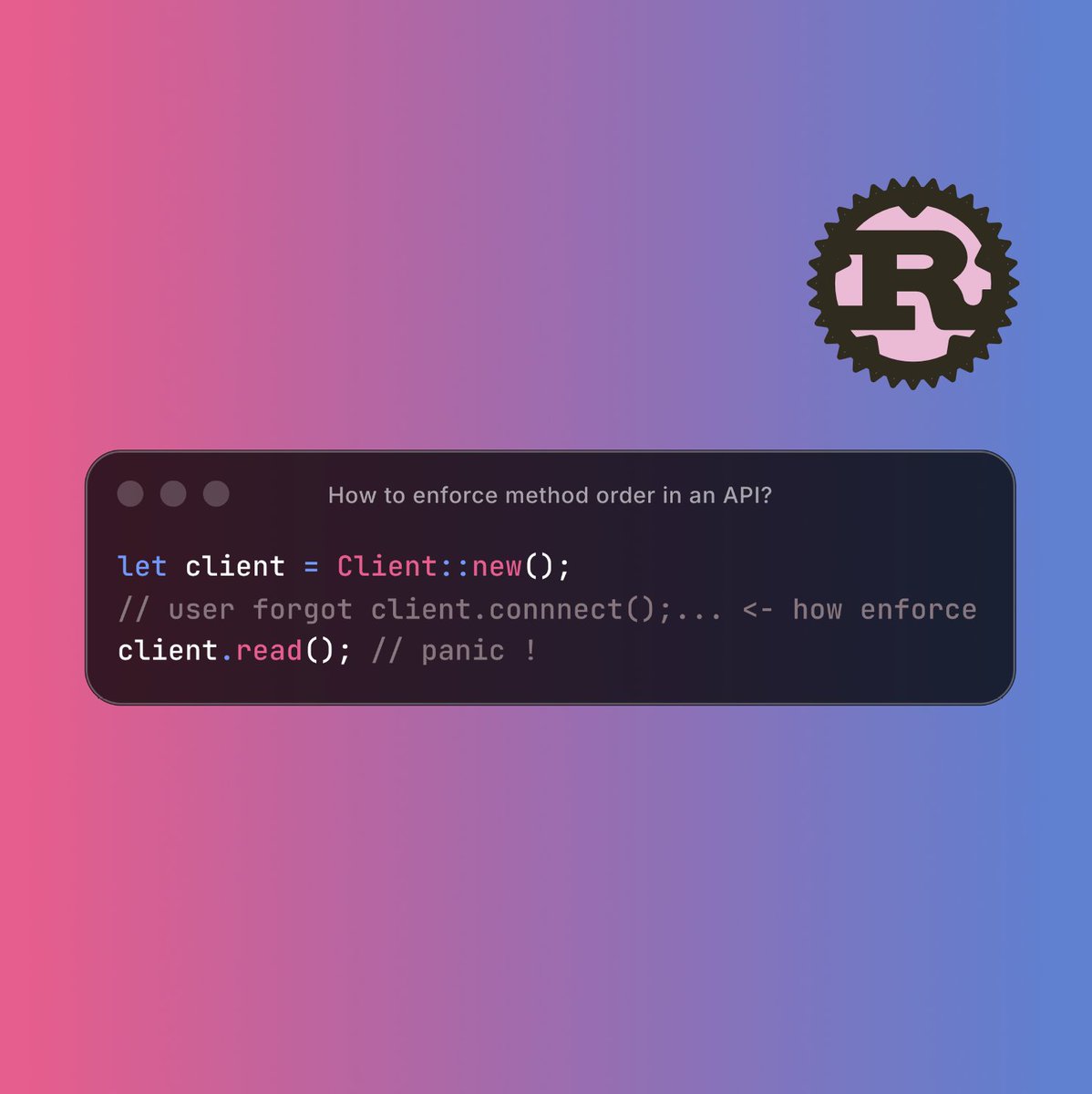
How can we enforce the order
methods are called on a Rust API?
I wrote an article about the Statetype Pattern:
2-minute read. No fluff:
medium.com/@gunnar.h.karlsso…
#rust #rustlang #rustdev
97


#RSCAN chillin' now — borrow checker tamed. Core rug checks flowing in Rust.
Test vid soon, scanning some sus ones live. Thought I'd test the waters 🥲
#Solana #RustDev #RugScanner #NoRug #SolanaSecurity
3
9
Survived first borrow-checker meltdown → now building real projects and launching meme tokens on top.
Thought it would be a really strong stepping stone.
#Solana #Memecoin #RustDev #solanamemecoin
1
3
21
Let’s Build a Bitcoin Wallet in Rust: Part III
Previously, we built the core of a Bitcoin wallet in Rust:
generating secure keys, deriving addresses, and checking balances on testnet.
This final installment dives into transaction signing, and broadcasting the transaction to the network.
Part III is live now, a 7-minute read:
medium.com/@gunnar.h.karlsso…
If you've been following along or want to catch up, this series demystifies coding a Bitcoin wallet in Rust in coffee-break sized chunks.
#rustlang #rustdev #bitcoin

56
Let’s Build a Bitcoin Wallet in Rust: Part II
We're building our own Bitcoin wallet from scratch, in Rust!
In Part II, we take the next big step:
we connect your new wallet to a Bitcoin testnet node.
You wallet will show your testnet BTC balance, funded by a faucet.
Part II is a 6-minute read. Find it here:
medium.com/@gunnar.h.karlsso…
#rust #rustlang #rustdev #bitcoin

84
Feb 28
Let’s Build a Bitcoin Wallet in Rust: Part I
Ever wondered what it really takes to build your own Bitcoin wallet from scratch?
Not just calling an API — but understanding the crypto primitives, generating secure keys, deriving addresses, and sending transactions.
This new 3-part tutorial series will walk you through creating a minimal, command-line Bitcoin wallet entirely in Rust.
By the end of the series, you'll have a working testnet Bitcoin wallet you can use to generate keys and address, check your balance and send testnet BTC.
One of the best ways to truly grok Bitcoin self-custody? Build it yourself.
Part I of the tutorial series, a 6-minute easy read, here:
medium.com/@gunnar.h.karlsso…
#rustlang #rustdev

87

Feb 28
Negative implementations in Rust are weird:
There is Send,
and then there is !Send (not Send)
There is Unpin,
and then there is !Unpin (not Unpin)
Why do we need to say that something is not something else?
3-minute read with a short clear example:
medium.com/@gunnar.h.karlsso…
#rust #rustlang #rustdev

58
Feb 27
Every dev learning Rust eventually asks:
“Wait… what actually is Pinning?”
It looks completely pointless
until you realize it's the hidden foundation
making zero-cost async Rust possible.
I've written a simple explanation concrete example.
5-minute read:
medium.com/@gunnar.h.karlsso…
#rustlang #rustdev

60
Feb 25
What is the mysteriously named PhantomData in Rust?
And why does Rust need a type that only pretends to exist?
I wrote a quick 3-minute read with a clear example:
medium.com/@gunnar.h.karlsso…
#rustlang #rustdev

1
142