
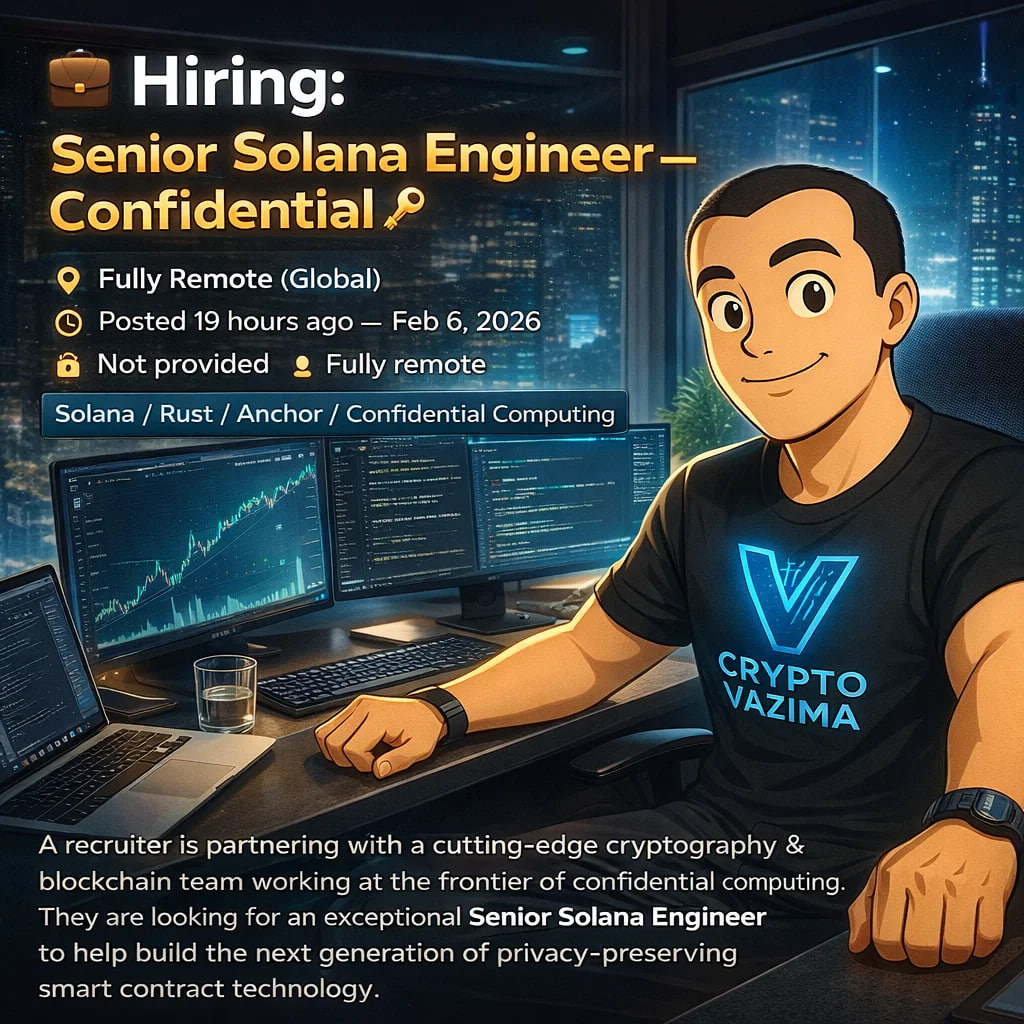
🚀 Hiring: Senior Solana Engineer — Confidential
📍 Fully Remote (Global) | 💼 Fully remote | 🧑💻 Solana / Rust / Anchor | 💰 Not provided | 🕐 Posted 19 hours ago — Feb 6, 2026
A recruiter is partnering with a cutting-edge cryptography & blockchain team at the frontier of confidential computing. They are seeking an exceptional Senior Solana Engineer to build the next generation of privacy-preserving smart contract technology on Solana.
If you’re passionate about Solana, Rust, and high-impact blockchain infrastructure, this is a special opportunity.
🔑 What you’ll work on
— Build core Solana programs & tooling
— Integrate advanced cryptography into the Solana runtime
— Create SDKs, dev tools & reference dApps
— Work with world-class blockchain & cryptography engineers
— Contribute to open-source innovation in confidential computation
You will adapt a pioneering Fully Homomorphic Encryption Virtual Machine (FHEVM) to the Solana VM, enabling confidential smart contracts in the ecosystem.
🧠 What we’re looking for
— Strong experience with Rust
— Deep knowledge of Solana development (programs, Anchor, Solana RPC, accounts model)
— Understanding of blockchain internals & runtime architecture
— 3 years in software engineering (5 is a plus)
⭐ Bonus
— Contributions to Solana Core or building dev tooling/SDKs
🌟 Standout perks
— Fully remote
— Breakthrough cryptography in real-world use cases
— Stock options
— Modern developer-centric culture
— Relocation support (if desired)
— Flexible arrangements & great benefits
Ideal for those who love low-level performance engineering, cutting-edge blockchain/crypto challenges, and collaborative technical environments.
📩 To apply: Drop a message to - linkedin.com/in/caroline-van… or comment “Solana” under original post for more details
🔗 Original: linkedin.com/posts/caroline-…
⚠️ DYOR — I don’t verify every job. If someone asks to run files (even from GitHub) or only replies via Telegram — 🚩 likely a scam.
❗️I’m not hiring. I just share real Web3 jobs with low competition — daily, for all levels!
✅ Follow for daily Web3/Crypto/Blockchain jobs — and share with anyone who might need it.
💡 For Interns & juniors → t.me/crypto_vazima_english
💼 Mid/senior jobs → t.me/web3_jobs_crypto_vazima
#Solana #SolanaDev #RustLang #Rust #RustDevelopers #SVM #Anchor #Web3 #CryptoJobs #BlockchainJobs #Web3Jobs #CryptoEngineering #BlockchainDevelopers #SmartContracts #DeFi
4
139

16 Dec 2025
👀 Rust devs, quick poll!
What’s the hardest part of building in Rust right now?
1️⃣Borrow checker
2️⃣Async ecosystem
3️⃣Error handling
4️⃣Finding good learning resources
Drop your vote — curious what the community feels 👇🦀
#RustCommunity #RustDevelopers #CodeTalks
17
52
3,739

25 Nov 2025
Arbitrum’s Stylus SDK & Rust Tooling Upgrades - Making Smart Contract Development Faster, Easier, and More Open
One of the most underappreciated breakthroughs happening quietly in the @arbitrum ecosystem is Stylus, the technology enabling developers to build smart contracts using mainstream languages like Rust, C, and C alongside Solidity.
Now, with new SDK features and CLI tooling updates, Stylus has entered a developer-friendly phase, lowering onboarding friction, improving testing workflows, and making high-performance smart contract development more accessible than ever.
What Stylus Actually Is
#Stylus is Arbitrum’s next-generation smart contract engine, allowing developers to write & deploy code that compiles to WebAssembly (WASM) instead of relying solely on the EVM.
This means developers from traditional systems programming backgrounds, particularly Rust developer, can now enter #Web3 without learning Solidity from scratch.
It’s not just language flexibility. Stylus also allows contracts written in Rust or C to interact seamlessly with Solidity contracts, bridging the gap between ecosystems.
👉In short: Stylus makes Arbitrum the most polyglot-friendly Layer 2 in the Ethereum ecosystem.
What’s New in the SDK & Tooling
The latest SDK update introduces improvements that make the developer experience feel much closer to modern Rust workflows.
Key highlights include:
✅ Enhanced CLI Tooling: Streamlined setup, build, and deploy commands via stylus-cli, reducing configuration time and simplifying the dev lifecycle.
✅ Optimized Build Pipeline: Rust developers can now compile directly into Stylus-compatible WASM binaries using a refined toolchain.
✅ Expanded Docs & Templates: New prebuilt contract templates, detailed examples, and an improved developer reference to guide first-time builders.
✅ Integration Testing Improvements: Developers can simulate WASM contract interactions locally before deploying on Arbitrum testnets, faster iteration, fewer gas costs.
Together, these updates create a plug-and-play developer experience, accelerating how teams build DeFi protocols, games, or even AI-integrated smart agents on Arbitrum.
Why It Matters For The Culture
The real innovation here isn’t just multi-language support, it’s what it unlocks:
1️⃣ Massive Developer Accessibility - Rust and C developers, who previously sat outside the EVM world, can now build on Arbitrum with minimal friction.
2️⃣ Performance & Efficiency - WASM execution allows for more optimized bytecode, lower computation costs and higher on-chain efficiency.
3️⃣ Security by Design - Rust’s memory safety model drastically reduces entire classes of vulnerabilities common in Solidity contracts.
4️⃣ Composability - Stylus apps can call Solidity contracts directly, maintaining interoperability across Arbitrum’s growing DeFi & gaming ecosystem.
These traits make Arbitrum not only more attractive to established crypto developers but also to Web2 engineers transitioning into Web3.
My View
@Arbitrum’s long-term success won’t just come from scaling throughput, it’ll come from scaling developers.
Stylus, especially with these SDK and Rust tooling upgrades, is a turning point in that direction.
When you make smart contract development as simple as running cargo build, you don’t just grow an ecosystem, you invite millions of engineers from the Rust and C worlds to start shipping in Web3.
And that’s how innovation compounds.
Key Takeaways
✔️ Stylus SDK updates simplify Rust-based smart contract development on Arbitrum.
✔️ Enhanced CLI & templates accelerate testing, deployment, and onboarding.
✔️ Cross-language compatibility bridges Solidity with WASM contracts seamlessly.
✔️ Rust’s safety model enhances reliability and reduces vulnerability risks.
✔️ Developer-first design positions Arbitrum as the most accessible Layer 2 for Web2 engineers entering crypto.
Learn more: docs.arbitrum.io/stylus/refe…
#Arbitrum #Stylus #RustDevelopers #Web3Builders


4
31
78
18 Nov 2025
Who’s your fav Rust YouTuber? Besides me of course…😁
Out of all the Rust YouTube channels, who do you think it’s the most educational to you?
Who’s got the best low level programming content right now?
#RustDevelopers #RustCommunity #SystemProgramming
19
2
86
5,705

11 Sep 2025
Why would you want an IDE or terminal in your AI coding tool?
Any differences or benefits? Why does this even matter for Rust developers? 🤔
We tested @cursor_ai, @windsurf, Copilot by @github, Claude Code by @AnthropicAI, and Aider on the same Rust API project.
Measured them on:
✅ Speed of generating a working project
✅ Code quality & refactoring
✅ How well they fit Rust workflows
✅ Collaboration & Git integration
Some tools nailed prototyping. Others slowed down but caught subtle bugs.
The trade-offs were not what we expected 👀
Full breakdown in the comments 👇
Bonus: you'll see how we got each generated project to run across multiple frameworks using @shuttle_dev
#aicoding #rustdevelopers #softwareengineering
1
5
7
592

24 Jun 2025
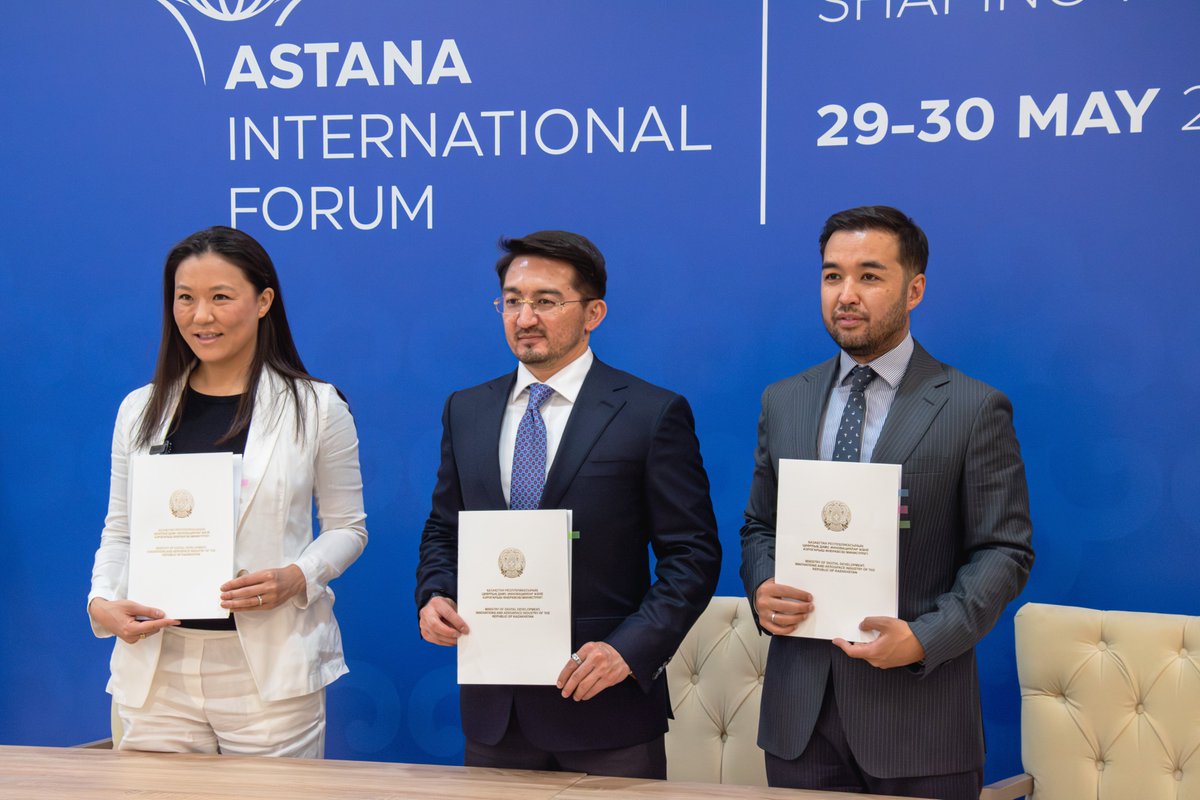
Solana to Launch Web3 Economic Zone in Kazakhstan
According to PandoraTech News, the Solana Foundation has signed an agreement with the Kazakh government to launch a Web3 economic zone focused on tokenized markets, developer training, and blockchain business support.
Full Article & Analysis Here 👇
pandoratech.com/newsDetail/1…
PandoraTech - Unlocking the Pandora Box of Blockchain
#Solana #Kazakhstan #Web3Economy #Tokenization #BlockchainEducation #RustDevelopers #SolanaFoundation #Web3Adoption #CryptoInfrastructure #EmergingMarkets #BlockchainPolicy #DeFiExpansion #TokenizedAssets #Web3Development #PandoraTechNews
2
3
138

23 Jun 2025
Is 'password' still a valid password on Substrate chains in Rust, asking for a friend?"
Source: devhubby.com/thread/how-to-a…
Substrate Community: Visit the Substrate Developer Hub or forums where developers discuss recent topics, which might lead you to popular or relevant hashtags.
#DecentralizedApps #SubstrateBlockchain #RustDevelopers #user #rust
1
6
22

8 May 2025
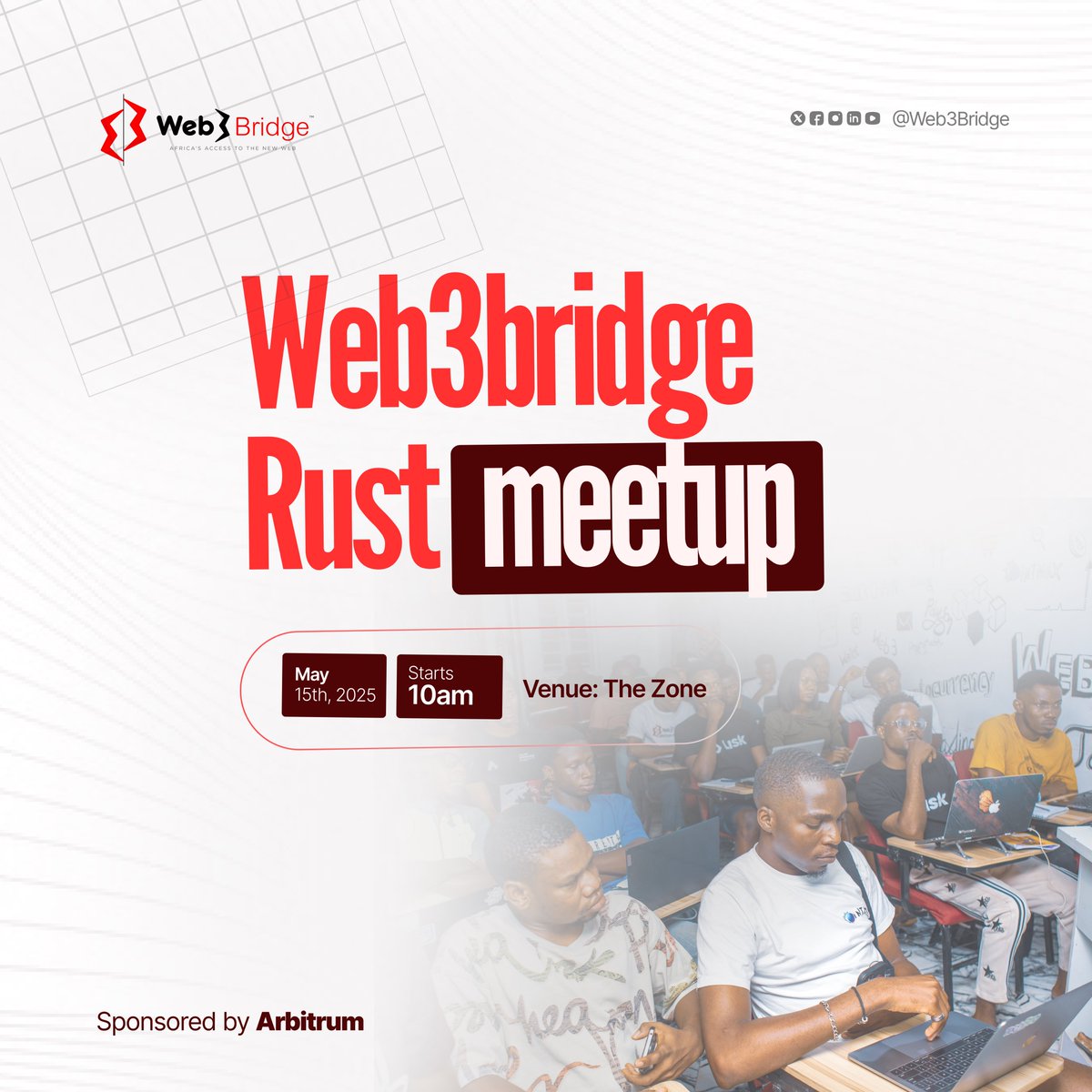
🚀 Lagos, are you ready? The Web3bridge Rust Meetup is here!
Join devs, builders & blockchain enthusiasts for a deep dive into Rust, smart contracts & real-world applications.
What to Expect:
•🔥 Insightful Tech Sessions
•👥 Community Connections
•💻 Live Coding & Learning
Details:
•📅 Date: May 15th, 2025
•🕙 Time: 10AM
•📍 Venue: The Zone
•🎤 Hosted by: Mr Ayo Awoshika
•🤝 Sponsored by: ArbitrumDAO
Don’t miss it!
Click here to register: lu.ma/fels8x69
#RustLang #Web3bridge #BlockchainNigeria #RustDevelopers
7
11
40
2,535

20 Jan 2025
You can address those issues soon enough, @teamspacemesh #AthenaVM is now in public testnet!
The real decentralized solution is coming along nicely!
#RustDevelopers tune in!
docs.spacemesh.io/docs/exper…
1
7
82

3 Jan 2025
Do I need to sacrifice bytes to the Rust gods for string conversion approval? 🖥️🌌
Source: devhubby.com/thread/how-to-c…
#RustDevelopers #Programmer #LearnToCode #CodeChallenge #rust #convert
1
7
31

7 Sep 2024
Can you teach me the secret handshake for setting the origin header in a websocket client in Rust?
Source: devhubby.com/thread/how-to-s…
#WebsocketLibrary #RustDevelopers #RustProgrammingTips #RustProjects #set #client
5
15

7 Aug 2024
#Blockchain #Memecoin #RustDevelopers #Solana #TechJobs
🚨Radar🚨Discover how the Solana memecoin trend is driving demand for Rust developers. Explore market dynamics, job opportunities, and future prospects in blockchain.
stockcoin.net/solana-memecoi…
3
1
53

HIRING 🚨 Full-time
➡ Rust Engineer
🌟 Minimum 2 yrs experience
📩 DM me. Don't comment.
#web3recruiting #web3talents #rustdevelopers #rust #rustengineers
1
2
47

3 Apr 2024
Seriously, though.
Where can I find trustworthy Rust Developers?
🤔
#solana #SolanaMobile #SolanaCommunity #SolanaNFT #SolanaDeployer
#solanadeveloper #Rust #RustDevelopers #SolanaUniverse #SOLANACEO #nft #nfts #NFTCollection #NFTartist #nftcollectors #NFTCommmunity
1
96

26 Mar 2024
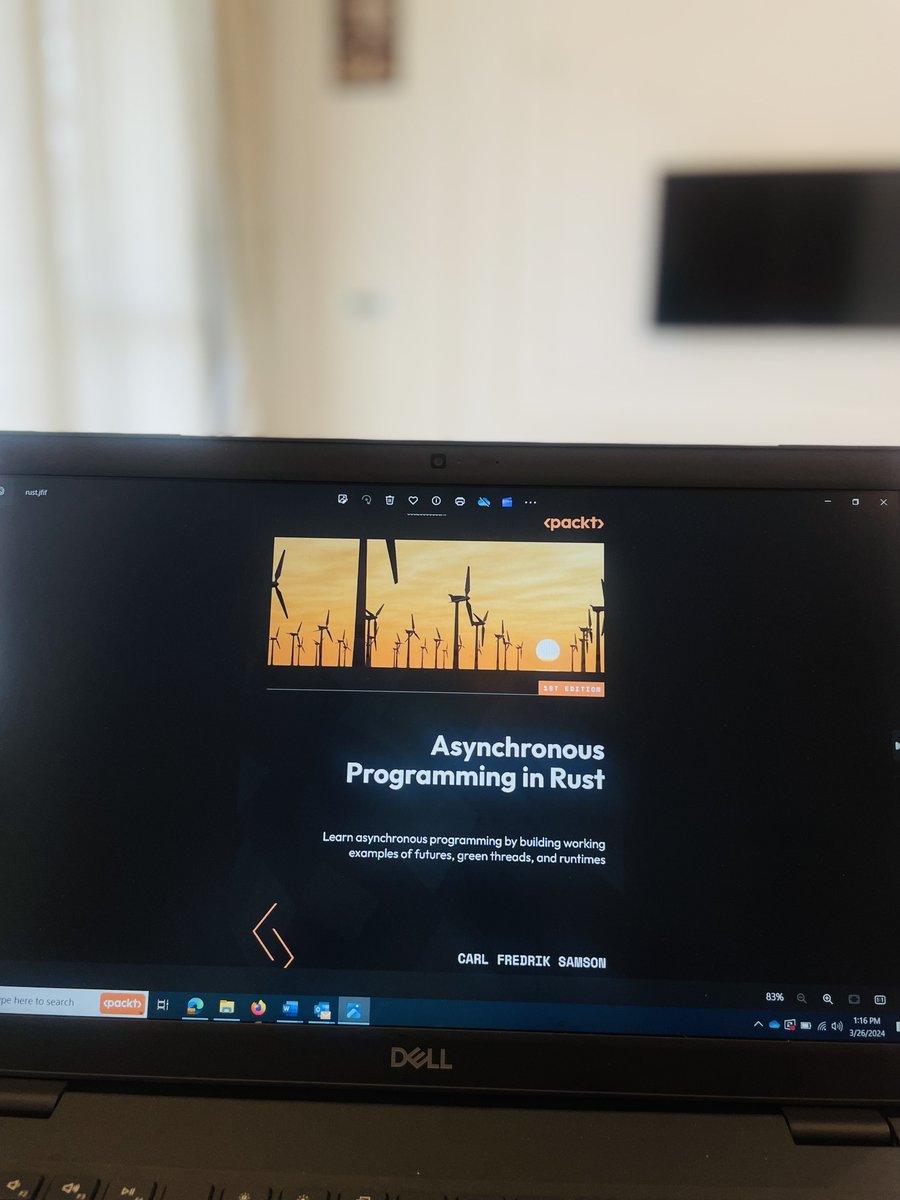
#rust #rustlang #rustdevelopers #rustaceans #newbook #NewRelease
Asynchronous Programming in Rust by @cf_samson
3
252

Since day 1, Tabby has harnessed Rust's unbeatable performance and security. 🚀
Now, we're glad to see a growing community of developers embarking on #Rust journey alongside Tabby. 🥂👩💻👨💻
youtube.com/watch?v=zZXjaF0-…
#rustlang #OpensourceAI #RustDevelopers @rustlang

4
366

13 Nov 2023
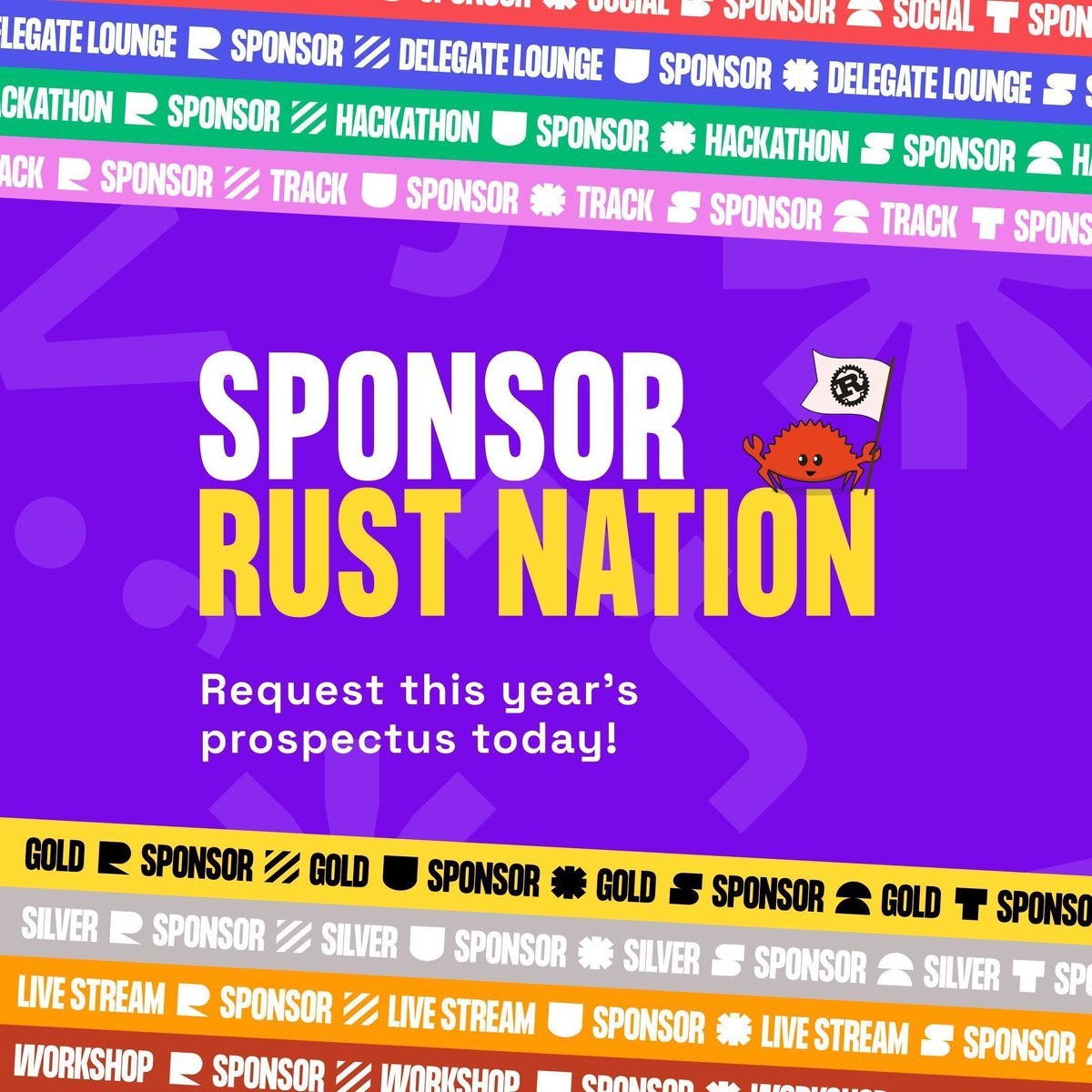
Are you looking to grow your brand's awareness within the #Rustcommunity?
Our sponsorship packages for #rustnationuk 2024 are now available and can help put your brand in front of leading #Rustdevelopers.
Request our sponsorship pack here - buff.ly/49vt0Yj
5
7
751

5 Sep 2023
“Casper is a top 5” DLT. “Code easily, and with larger smart contracts. Bullish $CSPR
Thanks for the video post.
2
61

5 Sep 2023
If you're developer OdraDev offering free consulting about using Odra Framework in your project! $CSPR
@web3devs @web3DevsPoland @hackonchain @DegenHouse_
@googledevs @rustdevelopers

1
9
46
1,555

3 Jul 2023
Curious about #RustLang? Learn how it's changing the game in enterprise #appdev at our upcoming event. Get hands-on with CRUX, our headless cross-platform app dev framework.
Save the date! 🗓️👉 20th July
#RustInEnterprise #RustDevelopers
New Blog: bit.ly/3CVpIi4

191