
Jun 12
🚨 EXTENSION ALERT!🚨
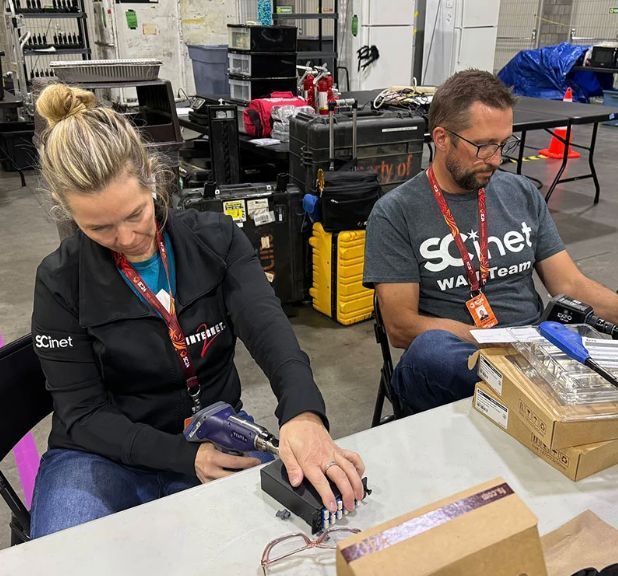
Our CommUNITY@SC26 program has been extended to June 26th!
If you (or someone you know) is local to the Chicago area and would love to get hands-on networking experience with the SCinet team - this is your chance! More: sc26.supercomputing.org/comm…
1
248
MATSUMOTO Yutaka retweeted
Jun 10
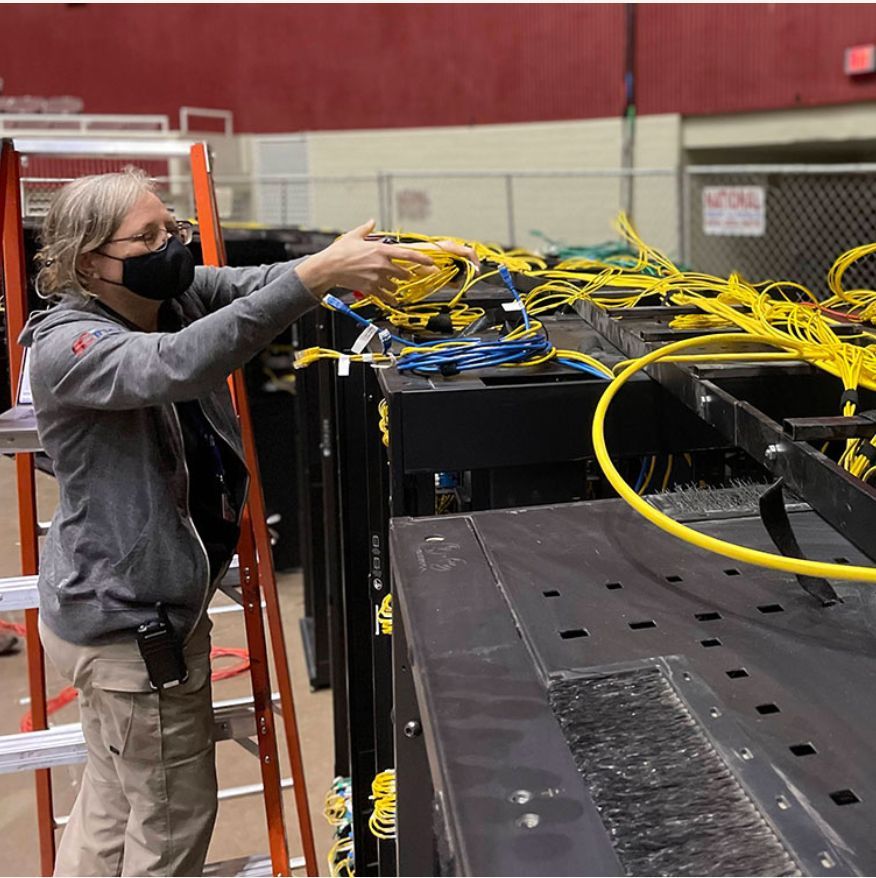
From demo concept to dependable system - SCinet launched in 1991 as a means to showcase what was possible. Now, it's not only an integral part of our community's research but also the technical heartbeat of our conference. Get the history: sc26.supercomputing.org/scin…
2
8
678

May 15
Congrats to Taylor Graham who will be sharing her poster at ISC26. Taylor's poster showcases her hands-on experiences as part of the SCinet Fiber Team and is a behind-the-scenes look at the work that powers one of the world’s fastest temporary networks. isc-hpc.com

ALT Woman wearing a black T-shirt with 'HAIL PURDUE' printed in white and gold letters standing against a geometric patterned background.
3
35
May 12
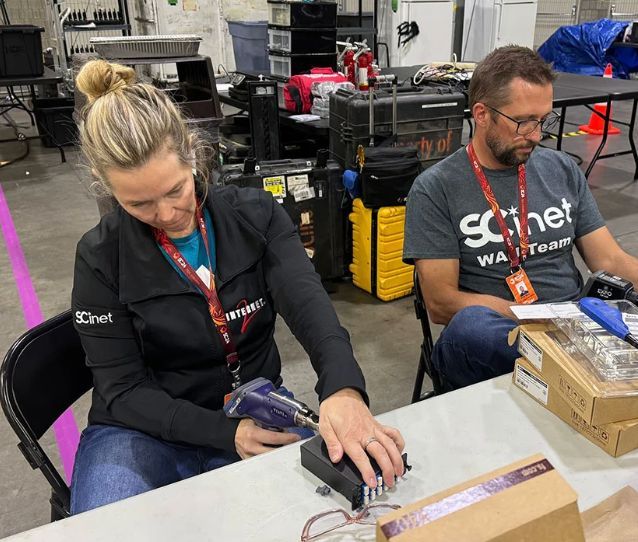
Local to the Chicago area? Looking to gain hands-on experience in building SCinet, one of the fastest networks in the world? We're seeking early and mid-career participants to provide opportunities in mentorship and training via CommUNITY@SC26: sc26.supercomputing.org/scin…
1
3
495

Apr 2
$LITE $COHR $CIEN $AAOI EXECUTIVE OVERVIEW
Across the LightCounting materials, the common thesis is that optical connectivity has moved from a supporting component to a primary scaling constraint inside AI infrastructure. LightCounting estimates total sales of optical transceivers and related products reached $23.8 billion in 2025, with Ethernet transceivers near $18 billion and AOCs above $1.1 billion. Separately, its January 2026 AI optics note puts the combined market for Ethernet optical transceivers and CPO used across AI and non-AI applications at $16.5 billion in 2025 and $26 billion in 2026, both implying 60% growth, while optics going to the top 5 cloud companies rises from 2.7% of capex in 2025 to 3.1% in 2026 and 4.1% by 2031. The important implication is not only that cloud capex is rising, but that the optical content intensity of each incremental AI dollar is rising as architectures become more communication-heavy.
This is not a simple straight-line supercycle argument. LightCounting repeatedly warns that capacity additions in lasers and modules are catching up, that flat quarters could appear in late 2026 as supply and demand rebalance, and that the optical market still carries the historical pattern of 2-3 strong years followed by flat or negative periods. The March 2026 Ethernet Optics note explicitly frames 2027-2031 through 3 scenarios: a “Soft Landing,” a “Bumpy Ride,” and a “Fantastic Growth” case that could push annual AI-cluster optics toward $100 billion by 2030, but only if macro stability, meaningful AI productivity gains, strong scale-up optical adoption, and limited high-speed copper substitution all align. The table on page 5 of that note makes the framework explicit by listing economic cycles, model and cluster efficiency gains, TPU substitution, training-to-inference mix shift, and copper progress as swing variables. The February capex note is even more cautionary, arguing that the top 5 cloud companies represented 68% of total capex in 2025, plan to nearly double spending in 2026, and could still trigger an avalanche through the supply chain if even 1 customer moderates spend. The correct inference is structurally bullish on optics but tactically skeptical of straight-line earnings extrapolation into 2027.
The most important architectural shift in the LightCounting set is that optics is expanding along 3 separate axes at once: scale-out, scale-up, and scale-across. Scale-out remains the volume engine and still leans heavily on standardized pluggable Ethernet modules. Scale-up is the major new content unlock, because LightCounting argues it needs almost 10x the bandwidth of scale-out and may become the decisive use case for CPO and NPO as clusters move from a single rack toward 4-8 rack domains. Scale-across is the later but potentially longer-duration transport opportunity, with LightCounting estimating roughly 20% of data-center DWDM traffic in 2030 will be tied to AI scale-across architectures and citing scenarios that require 5-50 Pbps and hundreds to thousands of fiber pairs in C L bands. The chart on page 3 of the January 2026 AI note visually shows AI scale-out dominating current spend while AI scale-up becomes the incremental growth wedge later in the forecast. That 3-axis framework materially broadens the beneficiary list beyond conventional transceiver vendors.
WHAT THE LIGHTCOUNTING REPORTS ARE REALLY SAYING
CPO is clearly past the concept stage, but the reports do not support the simplistic view that pluggables are about to be displaced wholesale. LightCounting’s December 2025 CPO note says Nvidia introduced 200G/lane CPO on InfiniBand and Ethernet switches in March 2025, Meta provided strong reliability data on Broadcom CPO, Broadcom launched 3rd-generation 200G/lane CPO, and Nvidia reported 10x higher resiliency and 5x higher cluster uptime versus pluggables. At the same time, the January 2026 “Waiting for Green Light” note says customer acceptance remains the main gating issue and that early deployments are likely to begin in smaller, risk-tolerant clusters before broad top-5 cloud adoption. Nvidia’s own roadmap reinforces the staged nature of the transition: Spectrum-X and Quantum-X photonics are in market for rack-to-rack switching, but the current Rubin NVL72 still uses a copper NVLink spine inside the rack. Even the stacked chart on page 5 of the December 2025 CPO note still leaves transceivers as the largest 2030 bucket, with cables still substantial and CPO additive rather than instantly dominant. The implication is that 2026-2027 remains a hybrid era, with pluggables, AECs, ACCs, AOCs, LRO/LPO, NPO and CPO all coexisting by reach and failure-cost profile rather than 1 form factor immediately winning the entire stack. (NVIDIA Newsroom)
The standardization wave at OFC 2026 is therefore strategically important. LightCounting highlighted the OCI MSA and the CPX MSA as attempts to pull the industry out of a proprietary “wild west,” while Arista simultaneously launched the XPO MSA as a dense liquid-cooled pluggable alternative. Broadcom described OCI as an open specification for low-power optical SerDes in multi-rack scale-up systems, Ciena’s CPX and Vesta 200 offer a pluggable co-packaged optical engine based on the Nubis architecture, and Arista’s XPO targets 12.8 Tbps per module with 4x the front-panel density of 1600G OSFP while preserving serviceability. The strategic implication is that ecosystem opening should accelerate adoption but also redistribute value away from proprietary system lock-in toward differentiated component suppliers, thermal and control software, test vendors, and companies whose architectures remain field serviceable. That is positive for Lumentum, Coherent, Ciena, Viavi, and Aehr in different ways, and less favorable for any thesis that assumes 1 closed CPO stack captures the entire value pool.
China is an important incremental swing factor, but not a clean visibility source. LightCounting argues that demand from Chinese cloud companies has reaccelerated sharply, with the U.S.-China optics spending gap narrowing from 7x in 2022 to 4x in 2024-2025 and potentially 2.5x by 2031, with 2025-2031 CAGR of 18% in the U.S. versus 29% in China. That is materially supportive for suppliers with China exposure and for the global supply chain at 800G, 1.6T and eventually 3.2T. However, the external policy environment remained volatile even after LightCounting’s note: Reuters reported conditional U.S. approval for some Nvidia H200 exports to China in January 2026, but also reported Chinese customs restrictions, approval frictions, and renewed U.S. debate over AI-chip export rules. The correct conclusion is that China adds meaningful volume upside, but not dependable quarter-to-quarter predictability. (Reuters)
The supply-side structure of the optics market matters as much as demand. LightCounting estimates optical transceiver and related-product sales rose 55% in 2025, notes that Innolight reached $1.87 billion of quarterly revenue in Q4 2025, estimates Eoptolink above $1 billion, and says Coherent, Fabrinet, and Lumentum posted record levels as well. Yet the same March 2026 note warns that optical chip and module capacity is now catching up with demand, which could intensify supplier competition and drive sharper price declines by the end of 2026. This means stock selection should increasingly favor constrained technology layers rather than commoditizable assembly. In practical terms, upstream lasers, InP, silicon photonics content, optical switching, and manufacturing and test infrastructure should prove more defensible than merchant module assembly alone if the market transitions from shortage economics to competition economics.
IMPLICATIONS FOR OPTICAL NETWORKING AND THE GENERATIVE AI INFRASTRUCTURE BUILD-OUT
Optical networking is no longer a back-end utility. It is becoming a first-order determinant of AI-system economics because networking increasingly shapes cluster size, GPU utilization, uptime, power efficiency, and rack-to-rack or campus-to-campus topology. That is the meaning of the OFC 2026 formulation that optics is now “inside the machine.” Once that framing is accepted, value creation shifts away from the old question of how many pluggable ports are shipped and toward a broader question of which companies own the laser sources, photonic engines, switching layers, software control, and validation tools that make larger AI systems economically operable. This is why the LightCounting notes are not merely bullish for transceivers; they are bullish for the entire photonic control stack.
Optical circuit switching is one of the most underappreciated beneficiaries of this transition. Once optics moves closer to the compute complex, the problem is no longer only bandwidth density; it is also utilization, failure isolation, and dynamic topology management. Lumentum disclosed in February 2026 that OCS backlog was already above $400 million and paired that with an incremental multi-hundred-million-dollar CPO order for 1H 2027. Coherent’s OFC materials describe OCS as a new growth engine shipping into production deployments with more than 10 customer engagements, and Marvell demonstrated interoperability between its optical DSPs and Lumentum’s R300 OCS for AI scale-up fabrics. OCS therefore appears to be emerging as an architecture layer, not a niche adjunct, especially if AI fabrics require reconfigurable optical paths to improve accelerator utilization and resiliency. (Lumentum Investor Relations)
LightCounting’s DSP note also reframes how value should be allocated across semiconductors. In 2025, 800G PAM4 chipset shipments nearly tripled and 1.6T chipset sales are expected to exceed $2 billion in 2026, but LightCounting also expects PAM4 growth to moderate in 2027-2031 as linear-drive optics and CPO displace some retimed DSP content. Conversely, coherent DSP growth should reaccelerate as coherent-lite and inter-building AI training traffic expand. That is a critical nuance: pure retimer and DSP beta is likely strongest in the current pluggable ramp, while the longer-duration upside migrates toward a broader set of optical components and coherent-lite transport solutions. The companies best positioned are those that can monetize both phases rather than only 1.
COMPANY IMPLICATIONS
LUMENTUM
Lumentum is one of the best-aligned public equities for the LightCounting thesis because it sits in multiple profit pools that expand as the optical stack thickens. Near term, it remains exposed to the 800G and 1.6T pluggable cycle through components and modules. Medium term, it is positioned in the highest-value CPO inputs through CW and ultra-high-power lasers, external laser source modules, and optical circuit switches. Longer term, it also has scale-across exposure through coherent and transport optics, and it has introduced a 1060 nm VCSEL-based scale-up platform that deliberately provides an alternative supply chain to silicon photonics and InP-laser CPO approaches. Operationally, Q2 FY26 revenue was $665.5 million, components were 66.7% of revenue, OCS backlog was already above $400 million, management disclosed an incremental multi-hundred-million-dollar CPO order for 1H 2027, and the company announced a new 240,000 square foot U.S. InP laser facility in North Carolina with Nvidia as a customer and a mid-2028 production ramp. The read-through is that Lumentum is not merely a transceiver beneficiary; it is a control-point supplier to the system bottlenecks that LightCounting thinks become more important as scale-up and CPO adoption deepen. The main risk is that this makes the company highly sensitive to customer concentration and capacity timing if 2027 becomes a rebalancing year rather than a continuation year. (Lumentum Investor Relations)
COHERENT
Coherent appears to have the broadest portfolio alignment with the full LightCounting framework. The company’s portfolio maps directly onto the 3 scaling vectors: pluggable transceivers and laser content for scale-out, CPO and NPO building blocks and high-power CW and ELS for scale-up, and DCI transceivers, transport optics, multi-rail, and optical circuit switching for scale-across. Coherent’s official OFC 2026 materials describe CPO and NPO revenue starting in H2 2026, position OCS and multi-rail as incremental SAM expansion, and show a deep datacom stack spanning VCSELs, EMLs, CW lasers, silicon photonics, detectors, thermoelectric coolers, external laser sources, and passive optics. Coherent also disclosed that InP capacity is doubling across 2026 and 2027, that it is ramping 6-inch InP in Sherman, Texas for high-power CW lasers and ELS, and that its technology leadership extends to 100G, 200G, and 400G EMLs for 800G through 6.4T. Financially, Coherent reported Q2 FY26 revenue of $1.69 billion and highlighted strong data-center and communications demand with continued growth expected into FY27. Relative to most peers, Coherent offers the cleanest hedge against architecture uncertainty: its exposure remains favorable whether pluggables remain dominant longer, CPO and NPO ramp sooner, or AI networking extends into DCI and transport. The risk is not architectural obsolescence; it is margin compression if the industry overbuilds photonic capacity while hyperscaler ordering volatility rises. (Coherent Inc)
CIENA
Ciena is one of the biggest secondary winners from the LightCounting work because the reports materially enlarge the addressable market around, between, and increasingly inside AI data centers. On the inside-DC side, Ciena’s acquisition of Nubis in September 2025 and launch of the Vesta 200 6.4T CPX pluggable optical engine in February 2026 give it a credible position in the packaged-optics debate without forcing it into a single proprietary CPO architecture. On the around-and-between-DC side, Ciena is already highly leveraged to AI-driven DCI and scale-across demand, which LightCounting expects to be a meaningful share of DWDM traffic by 2030. This is already visible in operating data: Ciena said direct cloud provider revenue grew 76% y/y and represented 42% of revenue in Q1 FY26, while revenue and shipments of RLS grew more than 80% y/y, fueled by AI-driven cloud expansion. The investment implication is that Ciena may not show the same immediate torque as pure-play 800G and 1.6T merchants in 2026, but it likely has better duration if the optical spend mix continues shifting from in-building connectivity toward coherent-lite, DCI, and scale-across architectures. That makes it more of a compounding network-systems beneficiary than a short-cycle optics squeeze name. (Ciena Corporation)
VIAVI
Viavi is a beneficiary of complexity rather than of port count. That distinction matters because the LightCounting materials increasingly frame AI networking as a reliability, interoperability, and serviceability problem, not only a raw-bandwidth problem. As the stack moves from 800G to 1.6T and toward multivendor AI fabrics with LPO, NPO, CPO, and optical scale-up, qualification intensity and failure-cost asymmetry both rise. Viavi’s March 2026 launch of its TestCenter D2 1.6T appliance explicitly targets hyperscalers, neoclouds, and network equipment manufacturers, and the company stated that the shift from 800G to 1.6T deployments for AI back-end infrastructure is expected to begin in earnest in 2026. Its October 2025 acquisition of Spirent’s high-speed Ethernet, network-security, and channel-emulation testing business also materially broadened its AI data-center testing stack. The implication is that Viavi is a relatively lower-beta but higher-quality way to express the thesis that AI optics is becoming harder to validate, harder to debug, and more economically costly to fail. (VIAVI Solutions Inc.)
AEHR TEST SYSTEMS
Aehr is the most asymmetric beneficiary if the LightCounting vision of packaged optics and optical I/O expands deeper into the compute fabric. The core reason is that Aehr monetizes the reliability and early-life-failure screening problem at wafer level, before photonic devices are packaged into expensive modules or co-packaged systems. In March 2026 Aehr disclosed a follow-on order from a lead silicon photonics customer for systems used in data-center optical interconnects and emerging optical I/O architectures, with each system able to test up to 9 300 mm wafers in parallel at up to 3500 W per wafer. It also announced a new major silicon photonics customer buying systems for both engineering qualification and high-volume production, and explicitly said silicon photonics could become a meaningful long-term growth driver for its wafer-level burn-in business. The LightCounting implication is straightforward: as optics moves closer to the ASIC and the serviceability penalty of field failures rises, burn-in and reliability screening become more valuable, not less. The main uncertainty is technology mix. If the industry stays longer in discrete-laser pluggables or shifts meaningfully toward VCSEL-based scale-up alternatives, Aehr’s ramp can be slower than the broad AI-optics narrative implies. (Aehr Test Systems)
AXT
AXT is a genuine upstream read-through to the LightCounting thesis, but not a clean one. LightCounting’s repeated emphasis on InP laser demand, easing shortages, and capacity additions directly supports InP substrate demand, and AXT itself said in February 2026 that Q1 growth should be driven primarily by indium phosphide for the AI infrastructure build-out, that it is broadening exposure to Tier-1 customers, and that it is on track to double indium phosphide manufacturing capacity in 2026. The company also identifies data-center connectivity and silicon photonics as end markets for its substrates. The positive case is that an AI-optics cycle increasingly built on EMLs, CW lasers, and silicon photonics light sources should raise InP substrate demand over several years. The negative case is that AXT’s manufacturing and permit exposure in China adds a separate volatility layer that can dominate near-term results even when end demand is healthy. AXT therefore fits best as a leveraged but geopolitically noisy input supplier to the optics build-out. (AXT Investor Relations)
AAOI
AAOI is one of the clearest near-term beneficiaries of what LightCounting is actually forecasting, because the forecast still expects 2026 to be dominated by merchant pluggables, active cables, and 1.6T ramps rather than by immediate wholesale CPO substitution. AAOI reported Q4 2025 data-center revenue of $74.9 million, up 69% y/y and 70% sequentially, received its first 800G volume order from a major hyperscale customer, and guided to more than $1 billion of revenue in 2026. In March 2026 the company announced its first 1.6T data-center transceiver volume order from a major hyperscale customer worth more than $200 million, with shipments starting in Q3 2026, and said it expects to reach combined 800G and 1.6T production above 500,000 units per month by year-end. It has also expanded U.S. and Taiwan production, highlighted 10M pieces of annual 100G, 400G, 800G and 1.6T capacity, and is sampling NPO, OBO and ELSFP products while building a large Texas AI-optics facility. The implication is that AAOI can work very well if the next 12-18 months are about hyperscaler pluggable ramps, U.S. sourcing, and speed transitions from 800G to 1.6T. The risk is that its moat is narrower than upstream laser or system-control names, so the late-2026 price-down phase that LightCounting warns about could hit AAOI harder than more differentiated peers. (Applied Optoelectronics, Inc.)
OTHER IMPORTANT READ-THROUGHS
Credo and Marvell are important additional beneficiaries because LightCounting’s base case is still extremely favorable for the bridge technologies between conventional pluggables and full CPO. LightCounting explicitly raised forecasts for ACCs and AECs, still expects fully retimed transceivers to drive the largest chipset dollar growth in the current phase, and only later expects LPO and CPO volume deployments to pressure PAM4 DSP sales. That framework lines up well with Credo’s 1.6T LRO, ZeroFlap optics and AEC portfolio, and with Marvell’s mass-volume Ara 1.6T DSP platform and broader end-to-end AI-connectivity stack. Marvell is especially well hedged because it spans both the current DSP-heavy pluggable phase and the later scale-up photonics phase, including optical DSPs, coherent-lite, and interoperability with Lumentum OCS. (Credo Technology Group)
Broadcom and Nvidia set the roadmap even when they are not the purest investment vehicles for optics. Broadcom’s 3rd-generation 200G/lane CPO is explicitly targeted at scale-up domains beyond 512 nodes, while Nvidia’s silicon photonics switching claims 5x better network power efficiency, 10x higher resiliency, and 5x longer sustained AI application runtime versus pluggable-transceiver-based networks. Those roadmaps support LightCounting’s argument that optics is moving into the heart of the AI system. At the same time, Nvidia’s current rack-scale Rubin platform still uses a copper NVLink spine inside the rack, which underscores that copper remains viable at the shortest reaches and that the opticalization of scale-up is a progression, not a singular event. That nuance is critical when comparing higher-beta pluggable names to longer-duration CPO, NPO and optical-switching beneficiaries. (Broadcom Inc.)
Arista and Cisco should also be interpreted as evidence that the pluggable ecosystem is adapting aggressively rather than ceding the field to monolithic CPO. LightCounting’s January 2026 note framed Arista and Google as not planning CPO at that point, but by March 2026 Arista had launched the XPO MSA, a dense liquid-cooled pluggable architecture for AI fabrics, while Cisco was emphasizing 1.6T OSFP optics and energy-efficient AI-networking systems built around Silicon One G300. That supports the view that the end-state is likely segmented by reach, serviceability, cooling, and operator preference rather than determined by a single universal form factor. Companies tied exclusively to 1 architecture should therefore trade at a discount to companies with credible exposure across several form factors. (Arista Networks)
The module market is likely to remain intensely competitive because Chinese vendors continue to scale quickly. LightCounting highlighted record or near-record performance at Innolight, Eoptolink, Accelink, Hisense, and HG Genuine, while also forecasting a sharp reacceleration in Chinese cloud optics demand. This matters for all U.S. names. The most durable winners are unlikely to be those with the highest gross number of shipped pluggables; they are more likely to be the companies that own scarce upstream content, differentiated optical engines, optical switching, or validation infrastructure. That is the central reason the LightCounting work is more structurally bullish for Lumentum, Coherent, Ciena, Viavi, and Aehr than for simple merchant-assembly stories, even if the latter can outperform tactically during shortage phases.
BOTTOM LINE
The highest-conviction inference from the LightCounting set is that optical networking is no longer a derivative of compute; it is becoming 1 of the primary determinants of AI-system architecture, power efficiency, uptime, and therefore monetization. The best-positioned public companies are the ones with exposure to multiple scaling layers and multiple form factors. In that framework, Coherent and Lumentum appear best aligned to the broadest range of outcomes, Ciena appears best positioned for the longer-duration scale-across and open-packaged-optics opportunity, Viavi and Aehr benefit from rising qualification complexity, AAOI offers the highest near-term beta to a still-pluggable 2026 cycle, and AXT is a higher-risk upstream material beneficiary. The most important risk factor is not whether AI spend remains large in 2026; it is whether the market mistakes a structural optical-intensity trend for a straight-line annual earnings trend and ignores the very real rebalancing and pricing risks that LightCounting flags for late 2026 and 2027. (Lumentum Investor Relations)
Longer term, the SC25 note is also worth attention because it places AI within a broader convergence of HPC, quantum, and optical computing, and it reported SCinet peak traffic of 13.72 Tbps versus 8.41 Tbps the prior year. That does not change 2026 earnings models, but it reinforces the strategic direction: the industry is moving toward a world in which photonics is not only the fabric between machines, but increasingly part of the compute-adjacent substrate itself. If that direction proves correct, the long-duration winners will be the companies that own photonic building blocks, interoperability layers, and manufacturing know-how rather than only the current generation of pluggable module SKUs.
1
3
12
2,323
Mar 13
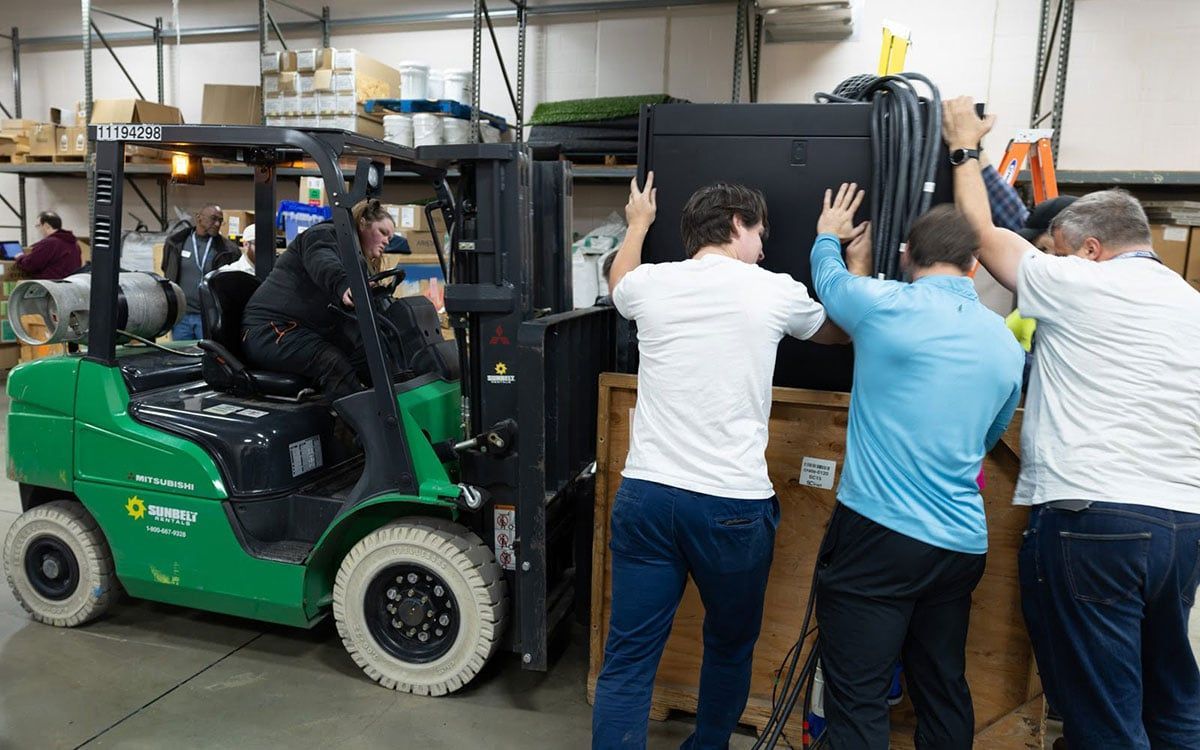
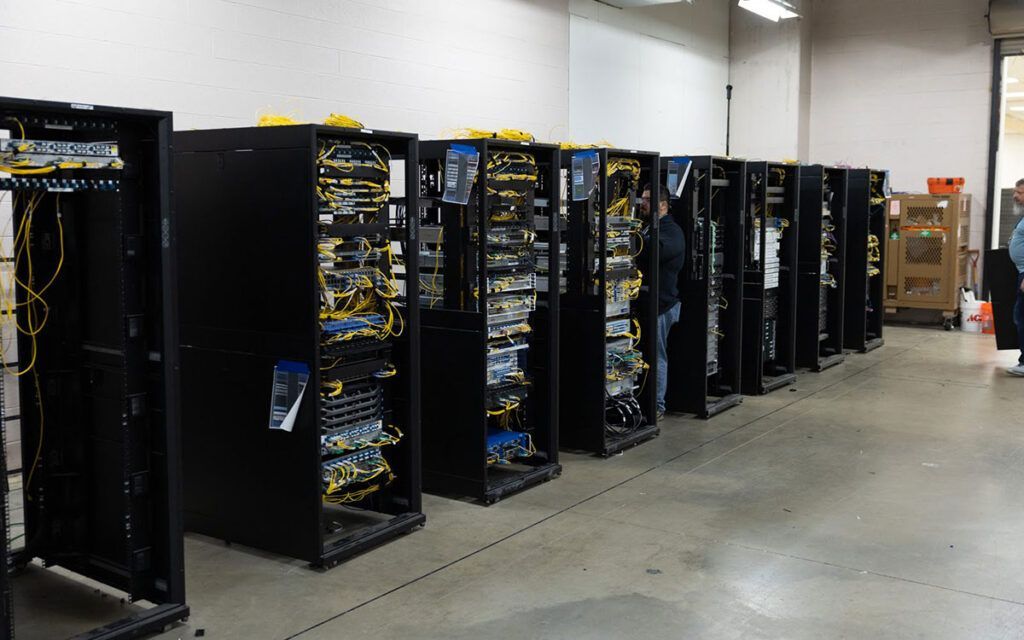
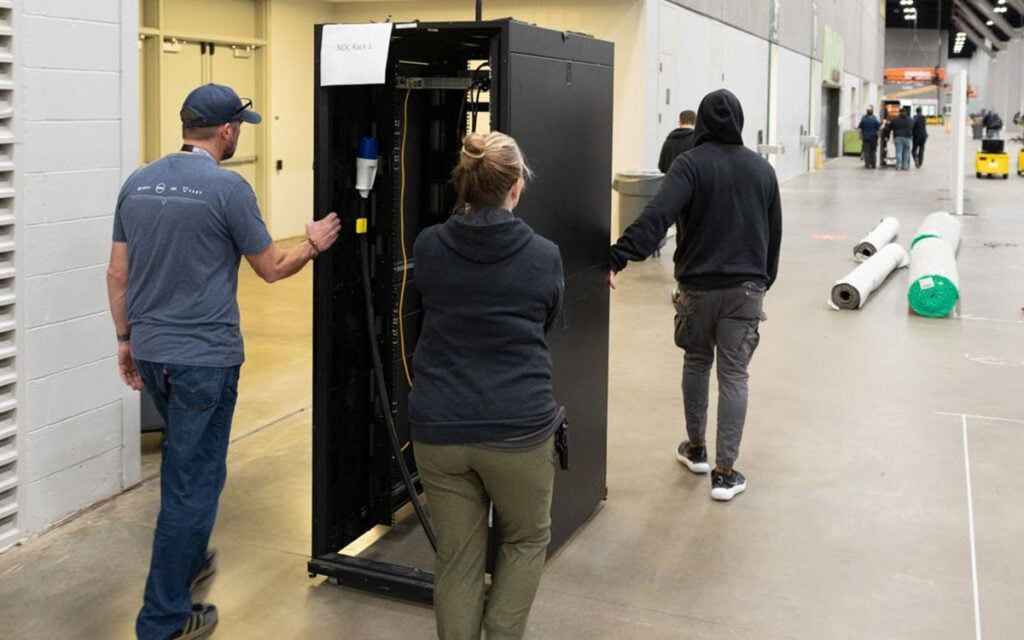
NOC, NOC! Did you know that our SCinet network starts its on-site build a month before the conference, and takes two days to move into its official home? Now you do! Learn more fascinating insights about our network: sc26.supercomputing.org/2026…
1
2
525


Feb 20
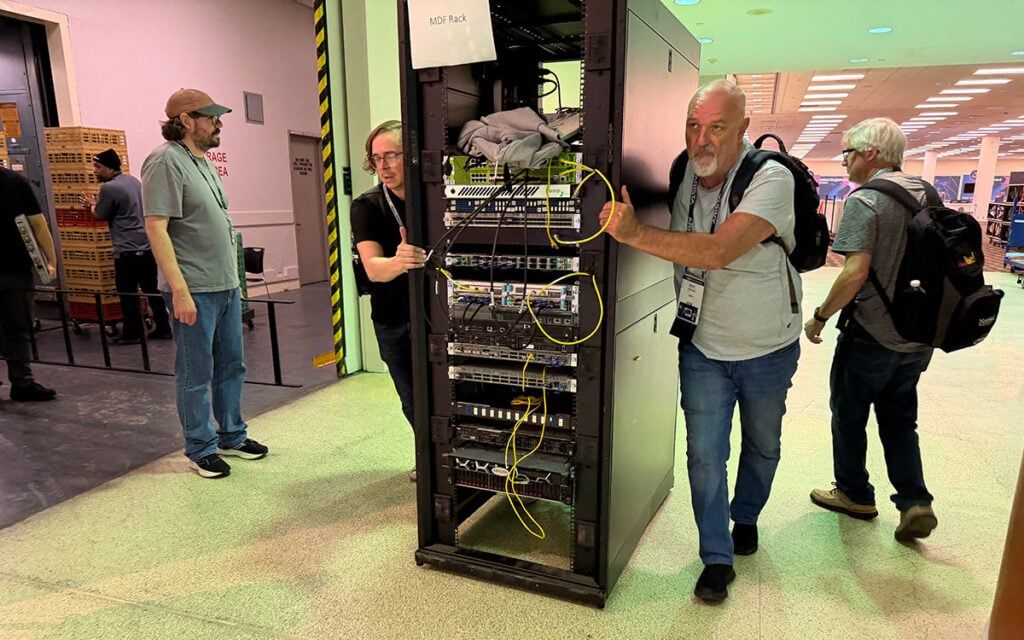
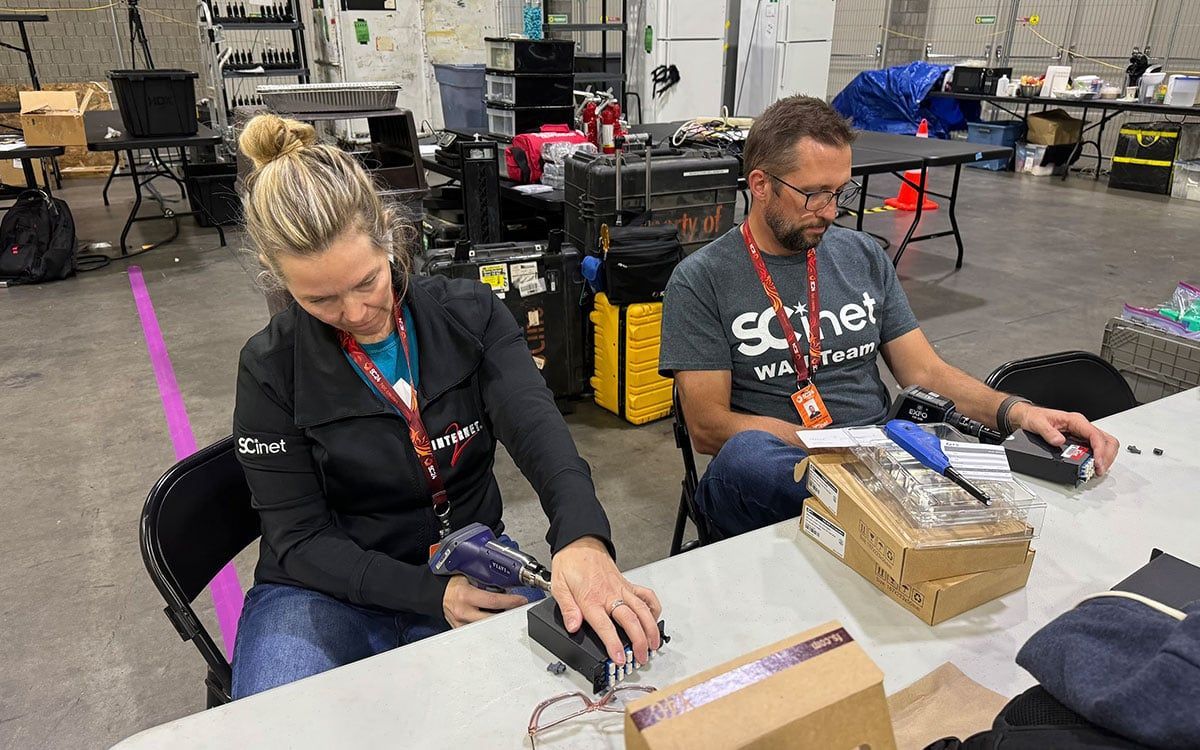
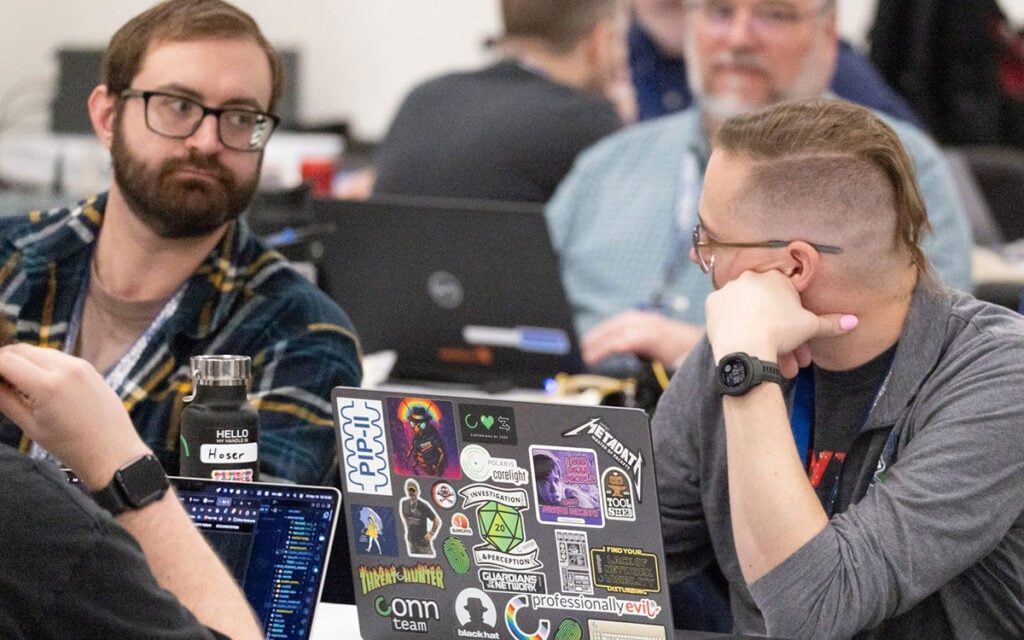
Are you in the Chicago area? Are you just getting started in #HPC and/or #Networking? Then CommUNITY@SC26 might be the #SC26 program for you! Designed to give hands-on experience with our SCinet initiative, get the best training and mentoring out there: sc26.supercomputing.org/scin…
2
4
463

Feb 6
memes: BIGTROUT for the whale lockup play and popcat for the kraken futures listing
privacy: zcash shielded pool grew 11% to 30% in a year. SciNet building token gated access on solana for academic papers
283

Feb 5
ok here is my project idea for @monad Moltiverse hackathon:
- AI is cool, lots of data, etc. - but at the end of the day real breakthroughs/innovations are hidden behind paywalls by academies
- SciHub / SciNet developed a way to ask for access using tokens on Solana, so you have a way to access any paper in the planet
- Could be awesome to develop an aggregator that gives the latest research as a digest every day, by combining SciNet an agent x402 on Monad

🦞 Moltiverse Hackathon 🦞
A 2-week sprint with $200k in prizes
Brought to you by @monad | @naddotfun | @withAUSD | @paradigm | @dragonfly_xyz | @AttentionX_AI
Let’s see what happens when AI agents can transact at scale, build communities and monetize them
Application below

2
2
21
1,738
Five @NCState graduate students recently used their data science and computer technology skills to help address agricultural challenges for American farmers. As part of the USDA-ARS Artificial Intelligence Center of Excellence and SCINet Graduate Student Internships Program, each was paired with a USDA-ARS scientist mentor for 10 weeks. The students engaged in computer vision projects, using AI to improve agriculture productivity, costs, and sustainability. loom.ly/4qB33TY
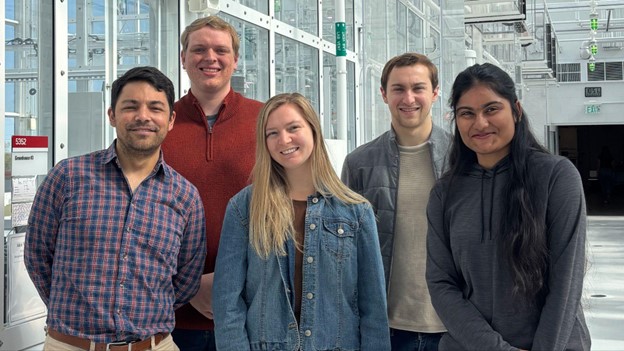
ALT NC State grad students from left are: Camilo Zuluaga, Nicholas Brunsink, Delaney Dow, Loevan Bost, and Jaya Shruti Chintalapati.
1
3
343
Jan 19
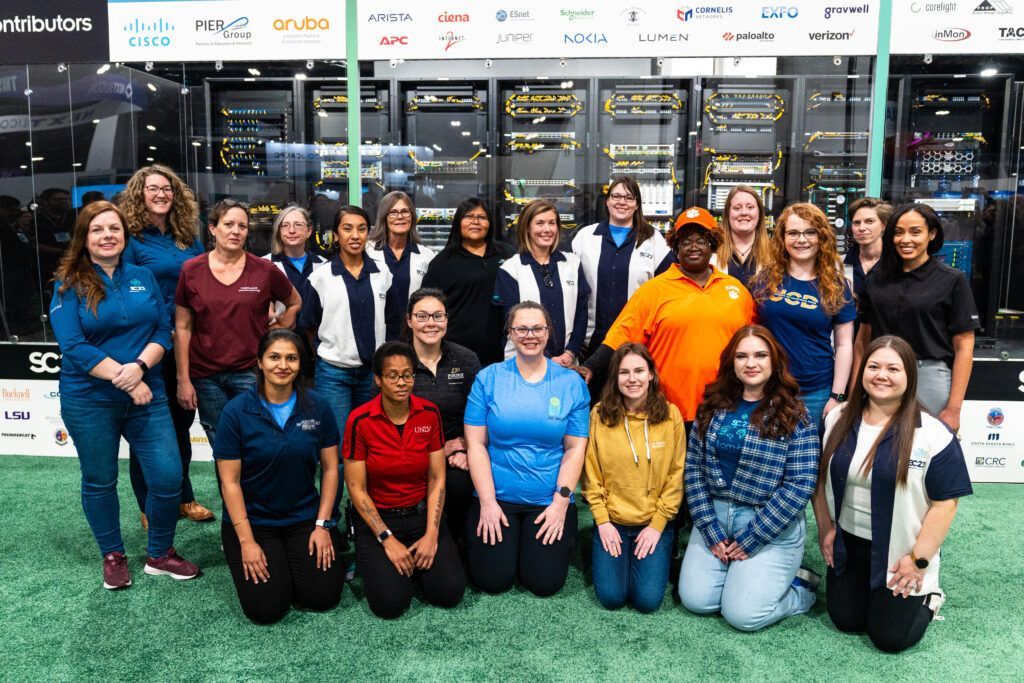
Are you in it to WINS it? The SCinet WINS program returns to #SC26. If you or someone you know is early in their engineering career, we invite you to apply for the opportunity to get hands-on with the world's fastest temporary network: winsworkforce.it/apply/
3
322

❗️Watched domains for Whiteintel alerts on the website and on the @DarkWebIntelBot have been updated. This list is monitoring United States Government domains. The list below was taken from:
flatgithub.com/cisagov/dotgo…
Watched:
whitehouse[.]gov
visitthecapitol[.]gov
visitthecapital[.]gov
ushouse[.]gov
uscapitol[.]gov
uscapital[.]gov
speaker[.]gov
senate[.]gov
sen[.]gov
republicans[.]gov
house[.]gov
gop[.]gov
dems[.]gov
democrats[.]gov
copyright[.]gov
congress[.]gov
capital[.]gov
aoc[.]gov
ustaxcourt[.]gov
ussc[.]gov
usprobation[.]gov
uscourts[.]gov
uscavc[.]gov
usc[.]gov
usbankruptcy[.]gov
supremecourtus[.]gov
supremecourt[.]gov
supreme-court[.]gov
scuspd[.]gov
scus[.]gov
scinet[.]gov
scinet-test[.]gov
sc-us[.]gov
pacer[.]gov
judicialconference[.]gov
fjc[.]gov
federalrules[.]gov
federalprobation[.]gov
federalcourts[.]gov
fd[.]gov
cavc[.]gov
bankruptcy[.]gov
smithsonian[.]gov
ns[.]gov
nic[.]gov
itis[.]gov
igorville[.]gov
dotgov[.]gov
domainops[.]gov
dns[.]gov
31 Dec 2025

Watched domains for Whiteintel alerts on the website and on the @DarkWebIntelBot have been updated.
These are 65 of the top domains in the World for the Airlines industry.
koreanair[.]com
qatarairways[.]com
airnewzealand[.]com
cathaypacific[.]com
singaporeair[.]com
emirates[.]com
jal[.]com
qantas[.]com
etihad[.]com
turkishairlines[.]com
evaair[.]com
fijiairways[.]com
virginatlantic[.]com
ana[.]co[.]jp
aeromexico[.]com
aircaraibes[.]com
thaiairways[.]com
starlux-airlines[.]com
vietnamairlines[.]com
srilankan[.]com
airfrance[.]com
klm[.]com
aircalin[.]com
airmauritius[.]com
garuda-indonesia[.]com
jetblue[.]com
westjet[.]com
virginaustralia[.]com
delta[.]com
united[.]com
aa[.]com
lufthansa[.]com
aircanada[.]com
lot[.]com
flytap[.]com
alaskaair[.]com
swiss[.]com
avianca[.]com
iberia[.]com
britishairways[.]com
finnair[.]com
austrian[.]com
hawaiianairlines[.]com
itaspa[.]com
flysas[.]com
airasia[.]com
jetstar[.]com
airbaltic[.]com
hkexpress[.]com
easyjet[.]com
flydubai[.]com
ryanair[.]com
flyscoot[.]com
flybreeze[.]com
southwest[.]com
skyairline[.]com
flynas[.]com
tui[.]com
norwegian[.]com
goindigo[.]in
airarabia[.]com
volaris[.]com
jet2[.]com
wizzair[.]com
vueling[.]com
1
1
5
5,122
Jan 8
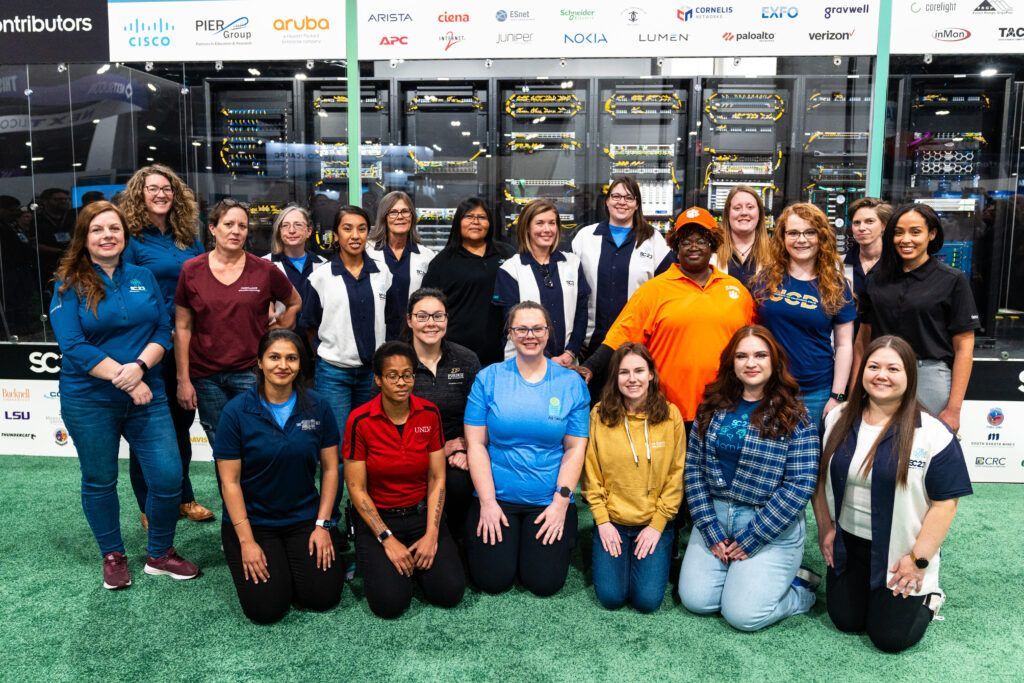
It's SCinet for the WINS! Applications for this year's Workforce in Networking at SC are open through January 31st. Know someone (or are you someone?) early in their IT career that would benefit from hands-on training? Read on and apply: winsworkforce.it/apply/
#SC26
1
2
312

Check out Rich Jensen's latest blog on the POLATIS OCS contribution to a record-breaking SCinet at @Supercomputing 2025
Already looking forward to SC26 in the Windy City!
polatis.com/POLATIS_switch_o…

2
95

23 Dec 2025
Congratulations🎉🎉 -- to Dr. Ronnie Serfa Juan at the ARS Center for Grain & Animal Health Research, in Manhattan, KS. The ARS SCINet/AI-COE Fellow has received the 2025 Christine Stevens Wildlife Award from the Animal Welfare Institute for his project focusing on AI-powered insect infestation detection for stored grain products. loom.ly/Z7RyOjU

ALT Dr. Ronnie Serfa Juan, ARS SCINet/AI-COE Fellow with the Center for Grain and Animal Health Research in Manhattan, KS.
1
4
493
11 Dec 2025
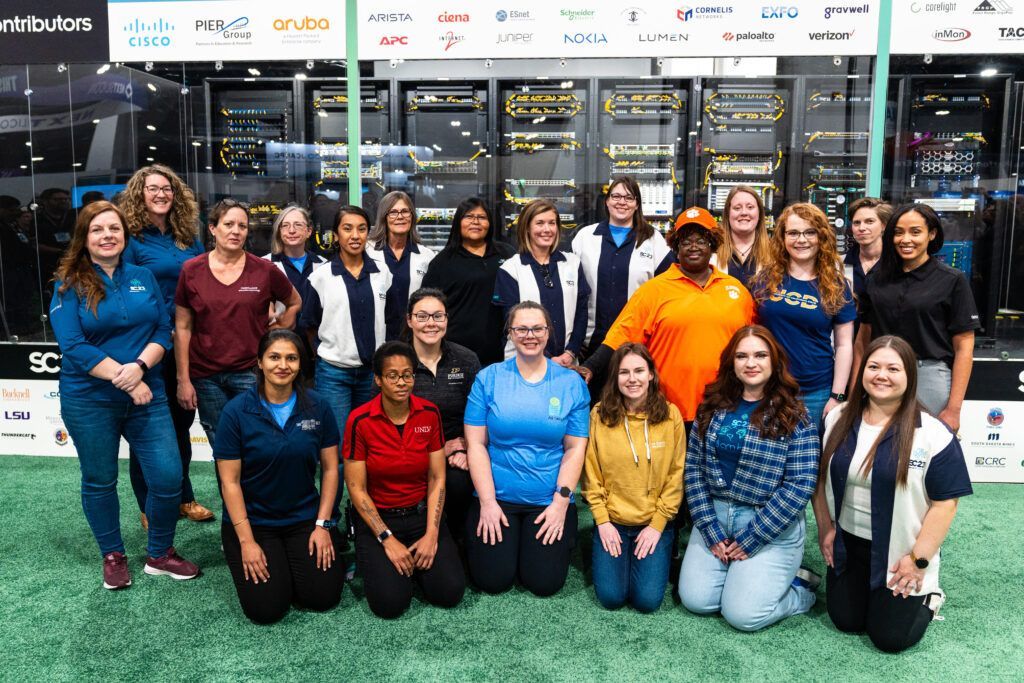
🚀 We are delighted to announce the return of the Workforce in Networking at SC (WINS) program for #SC26! WINS gives early- to mid-career IT professionals a hands-on, mentor-led opportunity to help build the world’s fastest temporary network: SCinet! winsworkforce.it/apply/
2
323