
Jun 15
Ovo doba godine, pa da se PODSJETIMO.
Committee for Compiling Data on Crimes against Humanity and International Law
No. 162/95
March 12, 1996
List of Concentration Camps for SERBS
1. Concentration Camps for Serbs in Bosnia and Herzegovina
BANOVIĆI, basement of the main railway-station building
BANOVIĆI, old building of "Helios" company management
BANOVIĆI, management-building of former Territorial Defence Headquarters, opposite the post-office
BANOVIĆI, village of Treštenica, primary school
BANOVIĆI, village, primary school “Ivan Goran Kovačić” and barracks nearby school
BANOVICI, Djurdjevik
BIHAĆ, main prison (District prison), Luke
BIHAĆ, aero-club premises
BIHAĆ, military barracs “27th July"
BIHAĆ, “Jedinstvo” football-club stadium
BIHAĆ, hotel “Park” - cement premises
BIHAĆ, restaurant of the owner Vuković Mustafa
BIHAĆ, “Batnoga” camp
BIHAĆ, village of Čekrlije, basement
BIHAĆ, school-building in village of Frkašić
BRADINA near Konjic, primary school
BRATUNAC, village of Gornje Potočare, private prison of Bešlić Hajro
BREZA, Military prison
BREZA, Police station
BREZA, camp in "Elektroterma" company basement
BREZA, "Udarnik" company warehouse, across the Department of Interior
BREZA, outdoors swimming-pool
BREZA, camp in warehouse of the "Breza" mine
BREZA, building "29"
BROD (Bosanski Brod), secondary-schooling center "Fric Pavlik"
BROD (Bosanski Brod), Tulek, warehouse of the "Belgrade" department store
BROD (Bosanski Brod), storage of the building material of the "GIK" company
BROD (Bosanski Brod), camp "Krndija" (opposite fire-station building)
BROD (Bosanski Brod), camp near the Sava river (kayak-club)
BROD (Bosanski Brod), "Bosnia" stocking-factory manufacturing hall
BROD (Bosanski Brod), camp in Military police building (former "Jugobanka" building)
BROD (Bosanski Brod), city stadium
BRČKO, Boderište, “Interplet" factory, manufacturing hall
BRČKO, Bosanska Bijela, local community premises
BRČKO, Bosanska Bijela, place for drying plums
BRČKO, Bosanska Bijela, private houses
BRČKO, Boće, primary school
BRČKO, Boće, local community premises
BRČKO, Gornji Zovik, warehouse of building material
BRČKO, Gornji Rahić, local community premises
BRČKO, Gornji Rahić, warehouse of building material
BRČKO, Gornji Rahić, place for drying in Okrajci
BRČKO, Gornji Rahić, primary school
BRČKO, garage in hothouse between places of Rahić and Maoče
BRČKO, Donji Rahić, private houses
BRČKO, Maoča, chicken-farm
BRČKO, Maoča, restaurant “Bolji život”
BRČKO, Palanka, library of the local community
BRČKO, Rašljani, warehouse
BRČKO, Ulice, primary school
BRČKO, Ulice, local community premises
BUGOJNO, building of the bank in which the Military police of the Army of the B&H is stationed
BUGOJNO, basement of the "Kalin" hotel
BUGOJNO, private house at the outskirts
BUGOJNO, sports-cultural center hall
BUGOJNO, "Stipo Djerek" primary school
BUGOJNO, Grammar school
BUGOJNO, "Rostovo" ski-center
BUGOJNO, "Slavko Rodic" factory
BUGOJNO, garages in former Tito’s Villa, "Gorica"
BUGOJNO, house of murdered Serb, Lukić Relja
BUGOJNO, coal-mine in village of Gračanica
BUNA, camp in school-building
BUNA, prison of brothers Ivan and Srećko Gagro
BUSOVAČA, Kaonik
BUSOVAČA, hotel complex “Tisovac”
VAREŠ
VELIKA Kladuša, prison
VISOKO, “Ahmet Fetahagić” military barracks
VISOKO, basement of investihation prison
VISOKO, local community premises
VISOKO, “Fojnički odred” school-building
VISOKO, "Ognjen Prica" school-building
VISOKO, Military police prison based at the “Ahmet Fetahagić” school-building,
VISOKO, village of Srhinje, house of Enver Bašić
VISOKO, village of Hlapčevići, local community premises
VISOKO, village of Glina, stables of the owner Sakib Sudžuk, called “Postman”
VISOKO, Buzić Mahala, cooperative consumers’ house
VITEZ,police station building
VITEZ, factory of chemicals
VITEZ, Kruščica
VIŠEGRAD, marshy rooms of Hydro-Energetic Plant "Višegrad"
VIŠEGRAD, grain silo “Žito”
VIŠEGRAD, Crni Vrh
VLASENICA
GABELA near Čapljina, hangars of the former Yugoslav People¢ s Army (JNA), near STRUGA, Croatian Defence Council (HVO) prison
GORAŽDE, Department of Interior, Police station in the center of the town
GORAŽDE, grain silo in Kopači
GORAŽDE, building of the insurance company ZOIL “Sarajevo”
GORAŽDE, “Balkan” old hotel building
GORAŽDE, camp named “Mujkovića Polje”
GORAŽDE, Mahala
GORAŽDE, building of electric power distribution center “Elektrodistribucija”
GORAŽDE, VitkoviĆI
GORAŽDE, camp in printing house in VitkoviĆI
GORAŽDE, camp in Moše Pijade Street, opposite police station building
GORAŽDE, camp in house of Nedimović family
GORAŽDE, isolated part on the right bank of the Drina river
GORAŽDE, village of Mravinjac
GORAŽDE, village of ŠašićiI
GORNJI VAKUF, camp in Rama, police station building
GRADAČAC, prison in basement of the Town Tower (in fortress)
GRADAČAC, camp in secondary school center building
GRADAČAC, basement of the Grammar School
GRADAČAC, village of Srnica
GRADAČAC, Gornja Tramošnjica, camp in a school building
GRAČANICA, village of Godinje, garage
GRAČANICA, Cultural Center
GRAČANICA, camp in “Hasan Kikić” primary school building
GRUDE, school building
GRUDE, garages
GRUDE, Dejčiće, camp in primary school building
DERVENTA, former JNA Club
DERVENTA, camp in grain silo in Polje
DERVENTA, Poljari, “Vuk Karadžić” primary school
DERVENTA, Rabić, underground premises of military storage
DERVENTA, Plehan
DOMANOVIĆI, near Čapljina, camp in a private house
DRETELJ, near Čapljina
DUVNO (Tomislavgrad), Department of Interior prison in a basement
DUVNO (Tomislavgrad), central-heating station
DUVNO (Tomislavgrad), secondary school center
DUVNO (Tomislavgrad), the Grammar School
DUVNO (Tomislavgrad), “Boriša Kovačević” primary school
DUVNO (Tomislavgrad), nuns’ home
DUVNO (Tomislavgrad), military prison
DUVNO (Tomislavgrad), Eminovo Selo
DUVNO (Tomislavgrad), village of Babine
DUVNO (Tomislavgrad), private prison in Šuice
DUVNO (Tomislavgrad), Balečić near Šuice
DUVNO (Tomislavgrad), village of Rašćani
DUVNO (Tomislavgrad), Gornji Brišnik
DUVNO (Tomislavgrad), village of Stipanići, basement of a deserted house
DUVNO (Tomislavgrad), village of Stipanići, primary school
DJEVERUŠA
ŽEPČA, storage of cement
ŽEPČA, gym in a primary school “Rade Kondić”
ŽEPČA, secondary school center
ŽIVINICE, building of former ambulance
ŽIVINICE, building of Department of Interior
ŽIVINICE, building of an old Post-office
ŽIVINICE, building of Employment Bureau
ŽIVINICE, stadium “Mladost”, dressing-rooms
ŽIVINICE, library “Šarenjak” near stadium
ŽIVINICE, Ljubače, mill situated between Tuzla and Živinice
ŽIVINICE, Ljubače, warehouse of the former JNA. Military prison
ŽIVINICE, Maline, (on the road to Husi)
ŽIVINICE, stadium “Metalac”
ZAVIDOVIĆI, basement of a building of political organizations’ premises (old City Hall)
ZAVIDOVIĆI, basement of the Forestry Center building
ZENICA, House of Correction
ZENICA, prison
ZENICA, basement of the Faculty of Metallurgy,
ZENICA, hotel "Internacional"
ZENICA, "Mihajlo Pupin" schooling center
ZENICA, "Sead Škrgo" primary school
ZENICA, camp in the Music school
ZENICA, Perin Han, "Bratstvo-Jedinstvo" primary school
ZENICA, Arnauti
ZENICA, Bijelo Polje, stadium
ZENICA, school building in a village of Janjići
ZENICA, village of Drivuša, school building
IGMAN, atomic shelter in the hotel "Igman"
IGMAN, basement of the hotel "Famos"
IGMAN, hotel "Mrazište"
JABLANICA, Memorial Museum of the Battle on the Neretva River (Museum of Revolution)
JAJCE, old fortress
JAJCE, prison in basement of the "SJS" main building
JAJCE, prison of Territorial Defence Center in "ElektroVrbas" main building
JAJCE, camp in "Bratstvo - Jedinstvo" primary school
JAJCE, prison in HVO military barracks, near Catholic Church
KAKANJ, camp in a coal-mine
KAKANJ, motel "Sretno"
KALESIJA, village of Miljanovci
KALESIJA, village of Medjan
KLADANJ, former Insurance Bureau for People and Property
KLADANJ, village of Stupari - camp in primary school building
KLADANJ, prison in cinema
KONJIC, prison in Police station
KONJIC, camp in Čelebići, in a warehouse of the former JNA
KONJIC, Čelebići, “Maksim Kujundžić” primary school
KONJIC, "3rd March" primary school, 3. mart Street
KONJIC, sports hall “Musala”, Braće Bektaševića Street
KONJIC, new residential settlement
KONJIC, Donje Selo
KONJIC, cafe-bar "Amadeus"
KONJIC, Buturović Polje
KONJIC, village of DžepI
KONJIC, village of Parsovići
KOTOR VAROŠ, village of Večići
KREKA, Faruk Ppcić’s private prison in the cultural centre “Moša Pijade”
KRUPA, Podpazariće, warehouse of the former JNA
KUPRES, "Kvalitet" clothes factory
KUPRES, basement in Vila Milenka’s house, Narodnih Heroja Street where the "War Headquarters" was located
KUPRES, private camp
LIŠTICA
LIVNO, police station and garages of police station
LIVNO, “Ivan Goran Kovačić” primary school
LIVNO, "10th October" primary school
LIVNO, fortress "Old City"
LIVNO, school gym
LIVNO, "Dinara" hotel, basement (brothel)
LIVNO, secondary schooling center
LIVNO, camp in a school in the village of POTOK, 10 km towards Mostar
LIVNO, camp in IVETIĆ’s family house in a village of Zastinje
LIVNO, village of Čelebići
LUKAVAC, basement of the Secondary school, "Patriotska liga" prison
LUKAVAC, old policlinic’s building
LUKAVAC, slaughterhouse
LUKAVAC, village of Modrac, prison of the owner Rifat Morankić,
LUKAVAC, "Transervis"garages
LUKAVAC, Croatian Armed Forces (HOS) camp in workers’ resort in Svatovci village
LJUBUŠKI, HVO military investigation prison
LJUBUŠKI, HOS old prison
LJUBUŠKI, prison in a buy off tobacco station
LJUBUŠKI, village of Lipno, camp in a primary school building
LJUBUŠKI, prison in a school building in Kravice
MAGLAJ, dressing rooms of "Natron" football team
MATIJEVIĆI, near Kladanj
MEDJEDJA, cooperative consumers’ house, central prison of Višegrad Territorial Defence Headquarters
MEDJEDJA, basement of a private house
MOSTAR, military policlinic
MOSTAR, Ćelovina, 27 Šanticeva Street - former District prison, HVO prison
MOSTAR, Military hospital, HOS prison
MOSTAR, Faculty of Mechanical Engineering, HVO Military police
MOSTAR, Faculty of Economy, HVO Military police
MOSTAR, Faculty of Law, "collective center" for Serbs
MOSTAR, local community club "4th July"
MOSTAR, "Bristol" hotel, basements
MOSTAR, Mladena Balorde Street
MOSTAR, Northern Camp
MOSTAR, Rodoč, heliport (central prison in Herzeg-Bosnia), in Military Grammar School
MOSTAR, Svinjarina, halls of "Djuro Salaj" spinning mill, camp of the Moslem Army
MOSTAR, Svinjarina, "Djuro Salaj" spinning mill
MOSTAR, Svinjarina, “Zlatka Vuković” company
MOSTAR, Svinjarina, a private house
MOSTAR, village of Kočine, camp of the Moslem Army
MOSTAR, CIM, a private prison
MOSTAR, village of Vojno
NOVI TRAVNIK, installations of the former JNA in the village of Stojković
NOVI TRAVNIK, "Bratstvo" annealing factory
ORAŠJE, secondary schooling center
ORAŠJE, Donja Mahala, camp in a primary school building
ORAŠJE, Donja Mahala, storage of Mirza Filipović, nick-named Deljković
ORAŠJE, POSAVSKA MAHALA
ODŽAK, primary school (gym)
ODŽAK, “Strolit” company
ODŽAK, village of Novi Grad
PAZARIĆ, primary school
PAZARIĆ, former JNA military barracks “Kruap” in Zovik
PAZARIĆ, Cultural Center
PAZARIĆ, camp in storages in Krupska Rijeka
PAZARIĆ, village of Urduk
PODBREŽJE, “Vatrostalna” company, main building
POSUŠJE, police station
POSUŠJE, a garage
PROZOR, prison
PROZOR, garages
RAVNE, in Popovo Polje
SARAJEVO, Alipašino polje - private prison
SARAJEVO, Alipašino’s settlement No. 2, "Borsalino" cafe-bar
SARAJEVO, Alipašino polje, basement on ZAVNOBIH Square Nos. 21 and 27
SARAJEVO, central heating station Alipašino polje, B phase
SARAJEVO, local community club "Mladost" in Alipašino polje
SARAJEVO, atomic shelter in Dobrinja 3
SARAJEVO, the Buća stream
SARAJEVO, the Buća potok, ŽIŠ secondary school (Secondary School for Railroad and Industrial Workers)
SARAJEVO, military prison in former JNA “Viktor Bubanj” barracks, now “Ramiz Salčin”
SARAJEVO, garage near "Privredna banka of Sarajevo"
SARAJEVO, cellar vault of the "Privredna banka of Sarajevo", Dobrinja 5 in Bratstvo-Jedinstvo Street
SARAJEVO, kinder-garden in Palmira Toljatija Street
SARAJEVO, "Iskrica" kinder-garden in Moše Pijade Street
SARAJEVO, “Iskrica” kinder-garden in Mladena Pojanovića Street
SARAJEVO, “Iskrica” kinder-garden in Skerlićeva Street
SARAJEVO, complex of "Zetra" company
SARAJEVO, 2 Dobrinja Street, basement of a trading company "Mašinopromet" in Oktobarska Revolucija Street
SARAJEVO, Railway Station
SARAJEVO, Female Prison
SARAJEVO, basement of the "Zagreb" hotel, in Marin-Dvor area (brothel)
SARAJEVO, the "Europa" hotel, (brothel), air-conditioning chamber in basement
SARAJEVO, prison in the Stup area
SARAJEVO, building of The Bank and the Social Accounting Office in “Čengic Villa"
SARAJEVO, restaurant named either "Strela" or "Stela"
SARAJEVO, deserted Serb-owned apartment in 28 Muhameda Djurdje Street
SARAJEVO, deserted Serb-owned apartment in 30 Mahmuta DŽudže Street, Koševo brdo
SARAJEVO, Meteorological Center on Bjelave
SARAJEVO, "Mehmed Bušatlija" students’ dormitory on Bjelave (brothel)
SARAJEVO, the Ciglana settlement, Djure Djakovića Street
SARAJEVO, “Djuro Djaković” cinema
SARAJEVO, Skyscraper No. 2, Pera Kosarića Square
SARAJEVO, camp in "Slobodan Vukovic" school-building, Blagoja Parovica Street in Novo Sarajevo
SARAJEVO, primary school "Pavle Goranin"in Švraka village
SARAJEVO, primary school "Andrija Rašo", Alipašino polje
SARAJEVO, primary school " 1st May", Alipašino polje
SARAJEVO, primary school in the Marin-Dvor area
SARAJEVO, police station on the Koševo Hill
SARAJEVO, "Center" police station on Bjelave
SARAJEVO, police station in the Sokolović Colony
SARAJEVO, police station, Novo Sarajevo
SARAJEVO, House of Correction in Pofalići
SARAJEVO, Pofalići, G.P. “Vranica” basement premises, former hostel premises
SARAJEVO, local community offices "Mojmilo"
SARAJEVO, warehouse "25. May" in Švraka village
SARAJEVO, "Koševo" Stadium
SARAJEVO, camp "Sunce" - in the atomic shelter in Dobrinja II, the 5th Motorized Brigade Headquarters (in the building just below the “Sunce” shop), 1 Marko Orešković Street
SARAJEVO, students’ dormitory "Mladen Stojanovic" at the corner of the (118?) Radićeva Street and JNA Street (brothel)
SARAJEVO, Faculty of Civil Engineering, basement (brothel)
SARAJEVO, Technical High School, Vojvode Putnika Street, (School of Civil Engineering)
SARAJEVO, tunnel of the "Koševo" hospital
SARAJEVO, tunnel “Velešići - Ciglane”
SARAJEVO, FIS (DTV Partizan), Mis Ibrina Street, basement
SARAJEVO, Central Prison, 8 & 9 JNA Street
SARAJEVO, warehouse of “Šipad” company in Džemala Bijedića Street
SARAJEVO, "Vladimir Nazor" school for retarded children, in Ivana Krndelja Street, Bjelave area
SARAJEVO, special school in 54 Ivan Krndelja Street, in Čengić Villa
SARAJEVO, basement of “Poljoopskrba” company, on the way towards the centre of the old city (Baš Čaršija)
SARAJEVO, the 101st brigade prison
SARAJEVO, the 102nd Brigade HQ in Hrasno
SREBRENIK, primary school
SREBRENIK, Youth Center in Rapatnica suburb area
SREBRENICA, a prison between the buildings of the Municipality Court and the City Hall
SREBRENICA, prison of a police station
SREBRENICA, village of Potočari, private prison of Orić Naser
SREBRENICA, village of Sćeska, Zulfo Tursunović’s private prison
STOLAC, buy off tobacco station
STOLAC, "Inkos" company
TARČIN near Pazarić, grain silo
TEOČAK near Ugljevik, primary school building
TEOČAK, local community offices
TEŠANJ, military prison
TRAVNIK, prison
TRAVNIK, prison near "Tri Bora" restaurant
TRAVNIK, Retired Persons’ Club
TRAVNIK, “Petar Mećava” military barracks
TRAVNIK, club of the former JNA (old medrasa)
TRAVNIK, Hunting home in Pavlovica area
TRAVNIK, basement of the old Railway-Transport Enterprise building
TRAVNIK, prison in Dolac, near the matchmaking factory in Sljemena village, within the JNA warehouse compund
TRAVNIK, laundry in 14 Slavka Radića Street
TRAVNIK, village of Kraljevica
TRNOVO, building of police station
TRNOVO, camp in kinder-garden
TRNOVO, "Treskavica" hotel
TRNOVO, village of Godinjske bare, private storage
TRNOVO, village of Dejčići
TUZLA, military investigation prison based in District prison building in 1 Djura Djaković Street, both on the ground and on the 1st floor
TUZLA, camp in District prison, part for civilians, 2nd floor
TUZLA, camp in "Husinjska Buna" military barracks in Skojevska settlement
TUZLA, camp in an "old mine" near "Sloboda" stadium in Tušanj
TUZLA, former military fire-range near "Sloboda" stadium
TUZLA, camp in saltworks in Tušanj
TUZLA, military barracks "Lipnica", 4 km away from Tuzla
TUZLA, Engineering-Technical High School
TUZLA, Mining School-Centre in Irac
TUZLA, camp in Medical High School
TUZLA, students’ dormitory
TUZLA, Workers’ University “Mitar Trifunović - Uča”
TUZLA, Mining - Geological Institute
TUZLA, "Tušanj" Stadium
TUZLA, a club of the former JNA
TUZLA, Faruk Prcić’s private prison
TUZLA, Šerija Zaimović’s private prison
TUZLA, hanger on the "Dubrava" Airport
TUZLA, Cerik
TUZLA, Kozlovac, shelter-place in a motel
TUZLA, Kozlovac, former prison’s husbandry
TUZLA, Tojšići, 14 km from Tuzla, village Cultural Centre
TUZLA, Požarnica
FOJNICA, basement of the "Sarajevo" Bank
FOJNICA, "Kata Govoršić” secondary school, basement
HRASNICA, Cultural Centre
HRASNICA, former building of apartments for single persons, who worked in "Famos" company
HRASNICA, stadium of the "Hrasnica" football team
HRASNICA, "Famos"company workers’ residential area
HRASNICA, "Aleksa Šantic" primary school
HRASNICA, Social Club
HRASNICA, basements of a skyscraper near the Moslem police station
HRASNICA, garages in basement, Igman’s Partisan Battalion Street
HRASNICA, basement of a residential building, still in construction
CAZIN, prison
CAZIN, gravel works
CAZIN, stadium dressing-rooms
CAZIN, "Vojin Marić” primary school in Osredak
CAZIN, village of Liskovac, primary school
CAZIN, village of Ćoralići, hamlet of Djehveruša
CERSKA, near Vlasenice, private stable
ČAPLJINA, police station
ČAPLJINA, “Mirko Popara” military barracks in Grabovina, HVO camp
ČAPLJINA, basement in the City Hall
ČAPLJINA, tobacco station
ČAPLJINA, HOS camp in a basement of an old Post Office
ČAPLJINA, grain silo near “Neretvatrans” company
ČITLUK, garages
ČITLUK, police station
ŠAMAC, village of Domaljevac, primary school
2. Camps in CROATIA
BIOGRAD at the seaside
BIOGRAD at the seaside, fishing house on the "Vransko" lake
BJELOVAR, prison of the Ministry of Interior
BJELOVAR, District prison
BJELOVAR, Military prison
BJELOVAR, sports hall
BJELOVAR, military barracks
BJELOVAR, school-building
VARAŽDIN, prison
VINKOVCI, prison
VIROVITICA, military barracks (guardhouse)
VRGINMOST, police station
VRGORAC, camp in a Croatian Club
VRGORAC, garage in a village near Vrgorac
VRPOLJE, prison
VUKOVAR, Ministry of Interior in Vukovar
VUKOVAR, Borovo village, "Komerc" company
VUKOVAR, Borovo village, “Nova obuća” company
VUKOVAR, hanger at the airport
VUKOVAR, school in construction in Borovo village
VUKOVAR, kinder-gardens near City Hall
VUKOVAR, basement premises in the City Hall
VUKOVAR, atomic shelter
VUKOVAR, warehouse of "Drvopromet" company
VUKOVAR, catacombs under the cemetery
VUKOVAR, Ruthenians’ Church
VUKOVAR, "Vladimir Nazor" school
VUKOVAR, Lužac
VUKOVAR, warehouse of "Abazis" company
VUKOVAR, Elc’s royal palace, chapel
VUKOVAR, Military recruiting department
GOSPIĆ, District prison
GOSPIĆ, camp Smiljane
GOSPIĆ, brick-works in a village of Perusić
GOSPIĆ village of Zablato
GOSPIĆ,Trnovac (Zablato)
GRUBIŠNO POLJE, hotel "Bilogora", National Guard Forces (ZNG) HQ
DARUVAR, prison
DARUVAR, police station
DARUVAR, sports hall "Czechs’ House"
DARUVAR, "Varteks" department store
DARUVAR, basement of the supermarket-building in the centre of the city
DARUVAR, Miokovićevo
DUBROVNIK, hotel "Excelsior", Military Police HQ
DUBROVNIK, villa "Palma"
DUBROVNIK, District Prison
DUBROVNIK, hotel "Zagreb" on Lapad, Military Police HQ
DJAKOVO, prison
ZADAR, prison of the District Court
ZADAR, Military prison
ZADAR, hotel "Donat" on Diklovac, Borik
ZADAR, aeronautics club
ZADAR, "Velimir Škorpik" school
ZADAR, primary school "Šime Budinić”
ZADAR, primary school “Šimun Kozičić”
ZADAR, “Marko Orešković” military barracks
ZADAR, restaurant belonging to Josip Prtenjača, on the road to Diklo
ZADAR, old town
ZAGREB, Vlaška Street, Ministry of Interior
ZAGREB, Vukomerec (prison of torts)
ZAGREB, 3 Gajeva Street, former military investigation prison
ZAGREB, "Maršal Tito" military barracks
ZAGREB, Kerestinec in Sveta Nedelja settlement near Zagreb
ZAGREB, Kunišćak, basement of the Military police hospital
ZAGREB, Remetinec, Rajtarićeva (Rajterova) Street, prison of the Military Court
ZAGREB, 12 &18 Petrinjska Street
ZAGREB, 92 Selska Street, former JNA barracks
ZAGREB, Correction house-hospital
ZAGREB, "Martinovska" sports hall
ZAGREB, Trstenik
ZAGREB, Černomerec
ZAGREB, Černomerec, brick-works
ZAGREB, sports hall in Samobor
IVANIC GRAD
IMOTSKI, police station
KARLOBAG
KARLOVAC, prison
KARLOVAC, Ministry of Interior
KARLOVAC, pupils’ dormitory
KOSTAJNICA, Babina reka
KRAPINA, prison
KUTINA, Firemen House
LEPOGLAVA, Correction House
LIPIK
LIPOVICA
MARINO SELO, Ribarska Koliba (near Daruvar)
MARINO SELO, main administrative building of the "Ribnačarsko-Pakračka poljana” company
METKOVIĆ, prison
METKOVIĆ, Military police
METKOVIĆ, Civil Protection Center
METKOVIĆ, Radio Station
METKOVIĆ, Sports hall
METKOVIĆ, basement of a tobacco station
METKOVIĆ, village of Doboka
NAŠICE
NIN, brick-works
NOVA GRADIŠKA, prison of the Department of Interior
NOVA GRADIŠKA, prison in military barracks (on the road to Rešetari)
NOVA GRADIŠKA, basement of the Grammar School
NOVA GRADIŠKA, school building
NOVA GRADIŠKA, Sports hall
NOVSKA, prison
NOVSKA, Military Recruiting Department near City Hall
OGULIN, prison
OKUČANI, forge
ORAHOVICA
OSIJEK, Department of Interior
OSIJEK, Investigating prison
OSIJEK, "Red" Military Barracks
OSIJEK, "Pampes" prison on the fire-range
OSIJEK, camp on the stadium
PAG (Slano)
PAKRAC, prison
PAKRAC, basement of a department store
PAKRAC, village of Šeovica, a camp in the Cultural Centre
PAKRAČKA POLJANA, “Jedinstvo” company, hall for producing the pens and electric switches
PAKRAČKA POLJANA, fishing house
PETRINJA, village of Brijest
PLOČE
PODRAVSKA SLATINA
PULA, District Prison
PULA, Katarina
PULA, Kranjčevica
PULA, "Valtura" Correction House
RAKITJE near Samobor, ZNG Training centre
RIJEKA, prison
RIJEKA, 24 or 25 Ciotina Street., a camp, "reception center for foreigners" in former JNA barracks
RIJEKA, “Via Roma” in Žrtve Fašizma Street
RIJEKA, Škurine, barracks
RIJEKA, "Trsat" military barracks, Military police prison
SINJ, "I Split Partizan Detachment" military barracks of the former JNA
SINJ, prison of Military police
SISAK, District Prison
SISAK, garages of the refinery
SISAK, Department of Interior
SISAK, camp in forge
SISAK, High School of Economic Sciences
SISAK, powder plant
SISAK, "22 Lipanj" primary school
SLAVONSKA POŽEGA, District Prison
SLAVONSKA POŽEGA, police station
SLAVONSKA POŽEGA, Sports hall
SLAVONSKI BROD, Military prison
SLAVONSKI BROD, basement of a restaurant with a bowling alley belonging to Dusan Bardak, in Partizanska Street (now Osječka Street)
SLAVONSKI BROD, premises in basement of the Center for Public Security
SLAVONSKI BROD, camp in the Firemen House
SLAVONSKI BROD, Refinery
SLAVONSKI ŠAMAC
SLUNJ
SPLIT, prison on the Katalinić Hill
SPLIT, Lora
SPLIT, Dračevac, former JNA barracks, HOS prison
SPLIT, Bilice (between Split and Solin), District Prison
SPLIT, the "Firule" hospital
TROGIR
TUROPOLJE
FILIP JAKOV, Hospital for retarded children
ŠIBENIK, "Mandalina" prison
ŠIBENIK, “Ante Jonjić” military barracks
ŠIBENIK, Šubićevac
ŠIBENIK, Sports hall near "Stjepan Radić” school
ŠIBENIK, Island of Obonjan
3. CAMPS IN SLOVENIA
DOB PRI MIRNI, Correction House
DOB PRI HRASTNIK, mine
DRAVOGRAD
ZIDANI MOST, improvised prison in a Hunting House
ZIDANI MOST, prison
ILIRSKA BISTRICA
KOPER, prison
KOPER, police station
KOČEVSKA REKA, camp in military barracks
KRANJ, Exhibition Hall
LJUBLJANA
LJUBLJANA, students’ centre near the railway station
LJUBLJANA, Povšetova Street
KOZINA
MARIBOR
MURSKA SOBOTA, primary school
NOVA GORICA
RADOVLJICA, barracks, sports halls
RIBNICA, St. František’s Monastery
CELJE
CERKNICA
280

250 years ago today, one month after lifting price controls, Congress re-regulated salt.
We saw previously that, in April 1776, the Second Continental Congress embraced the free market. On April 6th, it relaxed the United Colonies’ global trade embargo, known as the “Continental Association.” The ports of America were opened to all nations except Great Britain and her territories, with whom they were at war*. And to encourage merchants to take the risk of running Royal Navy blockades to bring imports into the country, on April 30th, Congress deregulated prices on all commodities other than tea, permitting the market to dictate the prices at which goods would be bought and sold**.
During the Association, many commodities suffered from shortages and skyrocketing prices. Salt, which was imported from the West Indies, was in especially short supply. In those pre-refrigeration days, it was more than just a seasoning; salt was a critical preservative, essential to prevent meat and fish from spoiling.
Price deregulation did not have an immediate impact on the salt supply, nor should it have been expected to. To bring a ship in from the (non-British) West Indies took several weeks. Further, a patchwork of provincial and local market interventions of a non-price control variety discouraged, and in some cases outright prevented merchants from bringing supplies to market.
For example, The Philadelphia Committee of Observation and Inspection had seized 4,000 bushels of salt which the merchants Joshua Fisher and Son had imported illegally in December 1774, the first month of the Association. The owners were willing to sell it for three shillings a bushel, but the Committee refused to return it to them, on the grounds that they were “enemies to their country.” By May 1776, word of the committee’s hoarding generated outrage, so that the members had to issue a vague statement to “assure the publick that they have under their consideration a mode of disposing of the said Salt, so as to serve the publick in the most effectual manner.”
The price of salt was also caught up in the general inflation caused by Congress’s addiction to paper money. When nothing bad happened after a modest initial printing of $2 million in June 1775, the delegates authorized four more print runs by May 1776, for a total of $15 million.
At the end of May, the Rev. Henry Muhlenberg reported that the price of salt in Philadelphia soared from 40 shillings to 140 shillings a bushel, and yet the commodity was still in short supply. “The people push and jostle each other whenever there is a small quantity of salt to be found,” he said. While the Committee of Inspection was still sitting on 4,000 bushels.
Recipes for making salt at home appeared in the newspapers.
Because of its critical necessity, salt was a political flashpoint. The nervous delegates in Congress chose not to wait for the market to work. On May 18th, less than three weeks after price controls had been lifted, they appointed a committee, consisting Robert Livingston, Elbridge Gerry, John D'Hart, and the normally free-market Robert Morris, to re-regulate the price of salt.
The committee returned on the 28th with a draft resolution to reimpose price controls. Their report conceded that market prices were, in general, necessary to prevent shortages, but salt was so critical, and high prices such a hardship on those of limited means, that an exception was needed: “Tho’ regulations of that nature tend to discourage Commerce and increase the scarcity which they were designed to remove,” they wrote, “yet that the same is not applicable to salt, unless it is sold so high as to be very burthensome to the poor, as it can only be imported in large vessels the risk of which is extreamly great.”
The resolution did not explain how the fact that a commodity was needed really, really badly stopped the laws of economics from working.
After some amending, Congress passed the resolution on May 30, 1776. As they had since the beginning of time, the politicians blamed high prices on greed, rather than a combination of the normal functioning of markets and their own ill-conceived measures:
“Whereas it hath been represented to Congress, that avaricious, ill designing men, have taken advantage of the resolve of Congress, passed the 30th of April, for withdrawing, from the committees of inspection, the power of regulating the price of goods, to extort from the people a most exorbitant price for salt:
“Resolved, That it be recommended to the committees of observation and inspection in the United Colonies, so to regulate the price of salt, as to prevent unreasonable exactions on the part of the seller, having due regard to the difficulty and risque of importation.”
Throughout the nation, and especially in the mid-Atlantic states, local committees eagerly decreed price controls. On June 1st, a mere two days after the salt resolution passed Congress, the Philadelphia committee set the maximum price to 7 shillings 6 pence per bushel—pure delusion at a time the market price was 140 shillings. A month later, the Maryland legislature followed suit.
The results were predictable. Law-abiding merchants, unable to make a profit, declined to import new stocks, while scofflaws flouted the regulations and flocked to the black market. The bottom line: shortages persisted and, despite the decrees of the committees, prices reached new heights.
Over the months and years ahead, American diaries, letters, and official proceedings were chock full of accounts of shortages, hoarding, insane prices, and desperate expedients. A few examples:
The export of barrel staves was prohibited because of their value to British molasses and rum manufacturers in the West Indies. But, in July 1776, the North Carolina legislature authorized waivers to trade staves for salt, arms, or ammunition. It also set a maximum profit for salt of 25%.
In August of the same year, the Pennsylvania legislature authorized the Philadelphia committee to confiscate supplies of salt from “divers persons [who], in contempt of the just and wholesome regulations of the Committee, &c., of Philadelphia, under directions of Congress, have continued to dispose of their Salt at most exorbitant prices.” The committee was directed to distribute the confiscated salt to every county in the state, according to population.
That month, Dutchess County, New York (up around Poughkeepsie), seized all supplies of salt “except what may be intended for the private use of families.” It also prohibited any salt from being removed from the county.
The minutes of the Continental Congress for October and November document the struggle of the fledgling nation to supply the army with salt. The delegates even went so far as to grant an exemption to two merchants to trade with the British West Indies.
The United States also attempted to reduce its dependence on foreign salt by developing the domestic industry. For example, the governments of New Jersey and Pennsylvania offered incentives to businessmen for constructing saltworks on the Jersey shore. The effort was rife with the incompetence, corruption, and cost overruns that go hand-in-hand with government-backed industries. The most notorious of these corporate welfare kings was Thomas Savadge, a failed ironmongering entrepreneur who, in June 1776, sold the state of Pennsylvania on a grandiose plan to produce 60,000 bushels a year. The state gave him an advance of £400 against a budget of £2,500.
After three years of glowing progress reports, promises, excuses, labor shortages, requests for waivers, resistance to government auditors, and mysteriously disappearing records, the hapless Savadge died and the state privatized the Pennsylvania Salt Works. Its total lifetime production under Savadge’s management: 20 bushels.
In 1793, Thomas Paine, who had served on the Philadelphia Committee, looked back at the salt follies of the 1770s with regret. He warned his friends in the French Revolution not to go down the same road: “In Philadelphia,” he wrote, “we undertook among other regulations of this kind to regulate the price of Salt; the consequence was that no Salt was brought to market, and the price rose to thirty-six shillings sterling per Bushel. The price before the war was only one shilling and six pence per Bushel.”
The letter contained one mistake. Paine had forgotten just how high the price of salt had risen. In August 1777, John Adams wrote to Abigail that the commodity was selling in Philadelphia for $27 a bushel—around 160 shillings.
I'm @MadMikeIsenberg, and that's the way it was.
Check out Quarter Millennial Moments on Spotify open.spotify.com/show/15PzSw…
Previous QMM: The Mechanics’ Declaration of Independence x.com/TheBig250/status/20603…
Next QMM: The British Fleet Invests Charleston Harbor
*See QMM for April 6, 1776 x.com/TheBig250/status/20411…
**See QMM for April 30, 1776 x.com/TheBig250/status/20498…
Illustration(s):
Salt (Weston A. Price Foundation)
Source(s):
John Adams, “Letter to Abigail Adams,” August 29, 1777, National Archives, founders.archives.gov/docume….
Michael S. Adelberg, “Long in the Hand and Altogether Fruitless: The Pennsylvania Salt Work and Salt-Making on the New Jersey Shore during the American Revolution,” Pennsylvania History: A Journal of Mid-Atlantic Studies, vol. LXXX, no. 2, 2013, pp. 215-242, journals.psu.edu/phj/article….
American Archives: Consisting of a Collection of Authentick Records, State Papers, Debates, and Letters and Other Notices of Publick Affairs, Washington: M. St. Clair Clarke & Peter Force, Peter Force, ed., 4th ser., vol. VI (1846), pp. 499-500, 669-70, 946, 1509, archive.org/details/american…; 5th ser., vol I (1848), pp. 1096-7, 1119, 1366-7, archive.org/details/american….
Devon Downes, “Saving the American Revolution from Itself,” Foundation for Economic Education, July 3, 2016, fee.org/articles/saving-the-….
Journals of the Continental Congress (1774-1789), Washington: Government Printing Office, vol. IV, (1906), p. 365, 397-8, 404, archive.org/details/journals…; vol. V (1906), pp. 843, 849, archive.org/details/journals…; vol. VI (1906), pp. 859, 880, 906, 914, 935, 950, 989, archive.org/details/journals….
“Of Common Salt,” The Pennsylvania Ledger, no. LXXI, June 1, 1776, p. 3, loc.gov/resource/sn83025898/….
Thomas Paine, “Letter to George Jacques Danton,” May 6, 1793, The Thomas Paine Historical Association, thomaspaine.org/letters/to-g….
#AmericanRevolution #patriotic #salt #Philadelphia #Pennsylvania #NewJersey #NewYork #NorthCarolina #RobertMorris #JohnAdams #Economics #PriceControls #CorporateWelfare
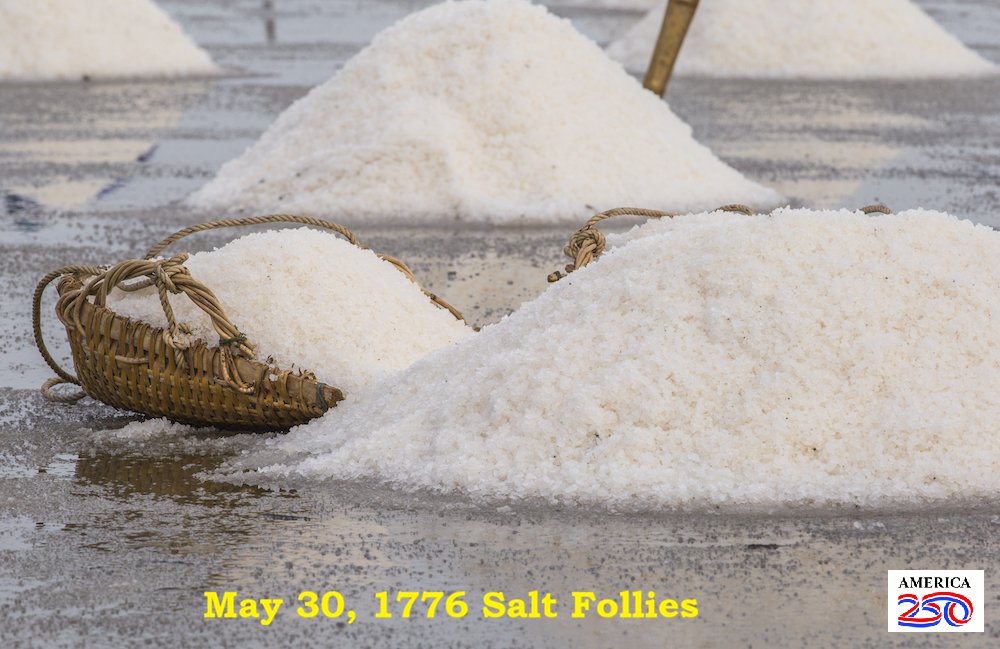

250 years ago today, Congress passed a resolution to end price controls.
We saw previously that America, in order to put the economic squeeze on Great Britain, had inflicted a near total trade embargo—on itself. Known as the “Continental Association,” the measure prohibited commerce not only with the mother country and her territories, with whom they were at war, but with the rest of the world as well. Local Committees of Inspection and Observation were organized to enforce the ban, primarily through public shaming.
The economic dislocation caused by the Continental Association rippled through the colonies. Restraint of trade caused widespread shortages and skyrocketing prices for a range of products: salt, coffee, chocolate, cotton, wool, linen, pins. Goods from the West Indies—molasses, rum, sugar—were particularly hard hit.
Congress had anticipated this and included a provision in the Continental Association—Article 9—to prohibit price gouging:
“Such as are venders of goods or merchandise will not take advantage of the scarcity of goods, that may be occasioned by this association, but will sell the same at the rates we have been respectively accustomed to do, for twelve months last past — And if any vender of goods or merchandise shall sell any such goods on higher terms, or shall, in any manner, or by any device whatsoever violate or depart from this agreement, no person ought, nor will any of us deal with any such person, or his or her factor or agent, at any time thereafter, for any commodity whatever.”
The Philadelphia Committee of Inspection and Observation was especially aggressive about enforcing Article 9. On March 6, 1776, it published a schedule of maximum prices for thirteen commodities. A month later, it published the names of two merchants, William Sitgreaves and Peter Ozeas, who had sold coffee for more than the official price—by one penny a pound in Sitgreaves’s case*.
But by then it was clear that the Association hurt the United Colonies far more than it hurt Great Britain. That same day, April 6th, Congress opened up the ports of America to all nations except Britain, Ireland, and the British West Indies**.
A week later, on the 13th, the delegates repealed Article 3 of the Association, which prohibited the sale and consumption of tea. The resolution established a price ceiling of seventy-five cents a pound on Bohea tea and directed the Committees of Inspection to establish maximum prices on other varieties***.
Dismantling so many provisions of the Association so quickly caused confusion as to which parts were still in effect, and what authority the committees still retained. In particular, given that Congress had specifically spelled out a price ceiling for tea, did that mean that the prices of other goods were no longer regulated?
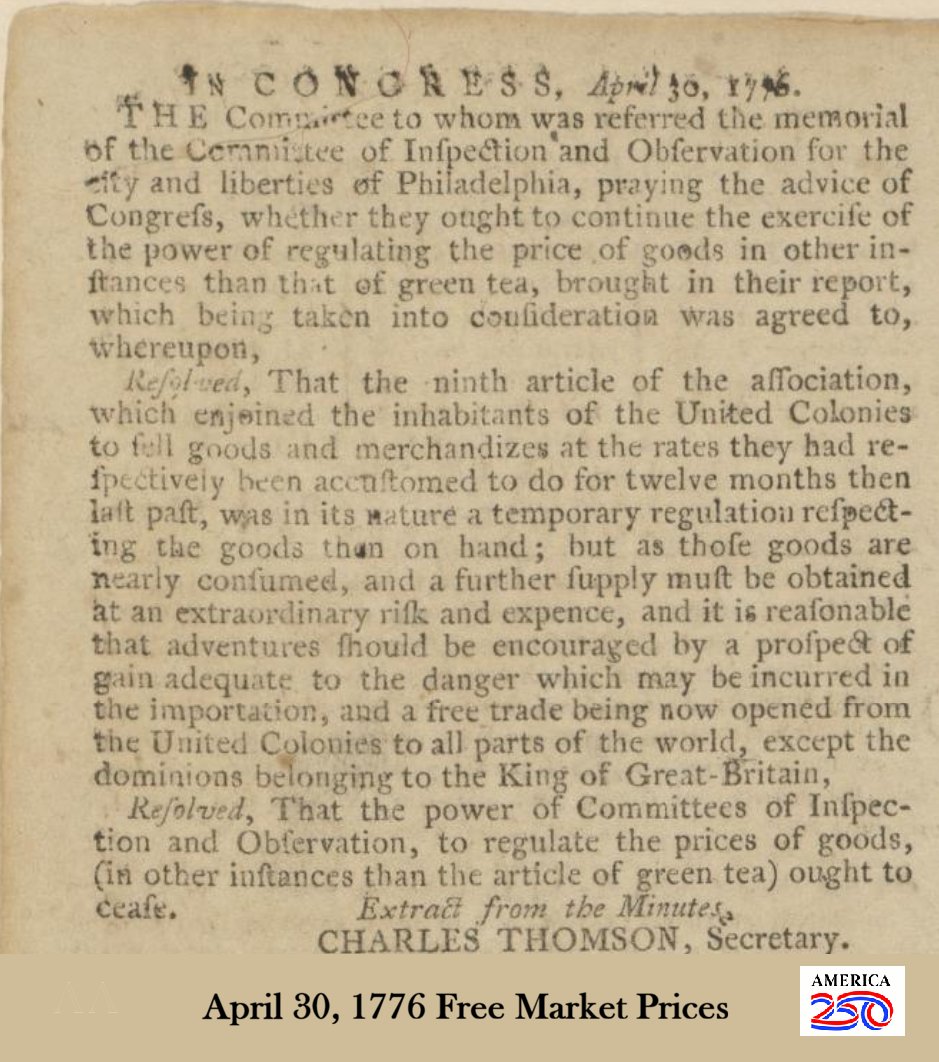
The Philadelphia committeemen sought guidance. According to the minutes of Congress, they sent a petition, “praying the advice of Congress whether they ought to continue the exercise of the power of regulating the price of goods in other instances than that of green tea.”
Congress went beyond a simple clarification. It repealed Article 9:
“Resolved, That the ninth article of the association…was, in its nature, a temporary regulation respecting the goods then on hand; But as those goods are nearly consumed, and a further supply must be obtained at an extraordinary risk and expence, and it is reasonable that adventurers should be encouraged by a prospect of gain adequate to the danger which may be incurred in the importation, and a free trade being now opened from the United Colonies to all parts of the world except the dominions belonging to the King of Great Britain,
Resolved, That the power of committees of inspection and observation to regulate the prices of goods, (in other instances than the article of green Tea,) ought to cease.”
Prices in the United Colonies would now be governed by the free market.
To channel Adam Smith’s seminal work, The Wealth of Nations, it was not from the benevolence of the merchant, the captain, and the sailor that Congress expected ships to run the gauntlet of the Royal Navy and carry goods to American ports, but rather from their regard to their own profit.
The delegates in Congress had not read The Wealth of Nations. It had been published in London only the month before—hardly enough time to cross the Atlantic. And yet, in dismantling price controls, they demonstrated a remarkable grasp of the nascent science of economics in general and the profit motive in particular.
Whether Congress would retain its grasp of economics and continue to adhere to free-market principles will be the subject of a future Quarter Millennial Moment.
I'm @MadMikeIsenberg, and that's the way it was.
Previous QMM: A Grand Reception x.com/TheBig250/status/20495…
Next QMM: In the Name of the King—NOT
*See QMM for March 6, 1776 x.com/TheBig250/status/20298…
**See QMM for April 6, 1776 x.com/TheBig250/status/20411…
***See QMM for April 13, 1776 x.com/TheBig250/status/20437…
Illustration(s): Excerpt from the May 8, 1776, Pennsylvania Gazette showing the price deregulation resolution (Library of Congress)
Source(s):
“In Congress,” Pennsylvania Gazette, no. 2472, May 8, 1776, p. 4, loc.gov/item/sn84026371/1776….
Journals of the Continental Congress (1774-1789), Washington: Government Printing Office, vol 1 (1904), p. 78, archive.org/details/journals…; vol. 4 (1906), p. 320, archive.org/details/journals….
#AmericanRevolution #PriceControls
1
1
2
229

May 4
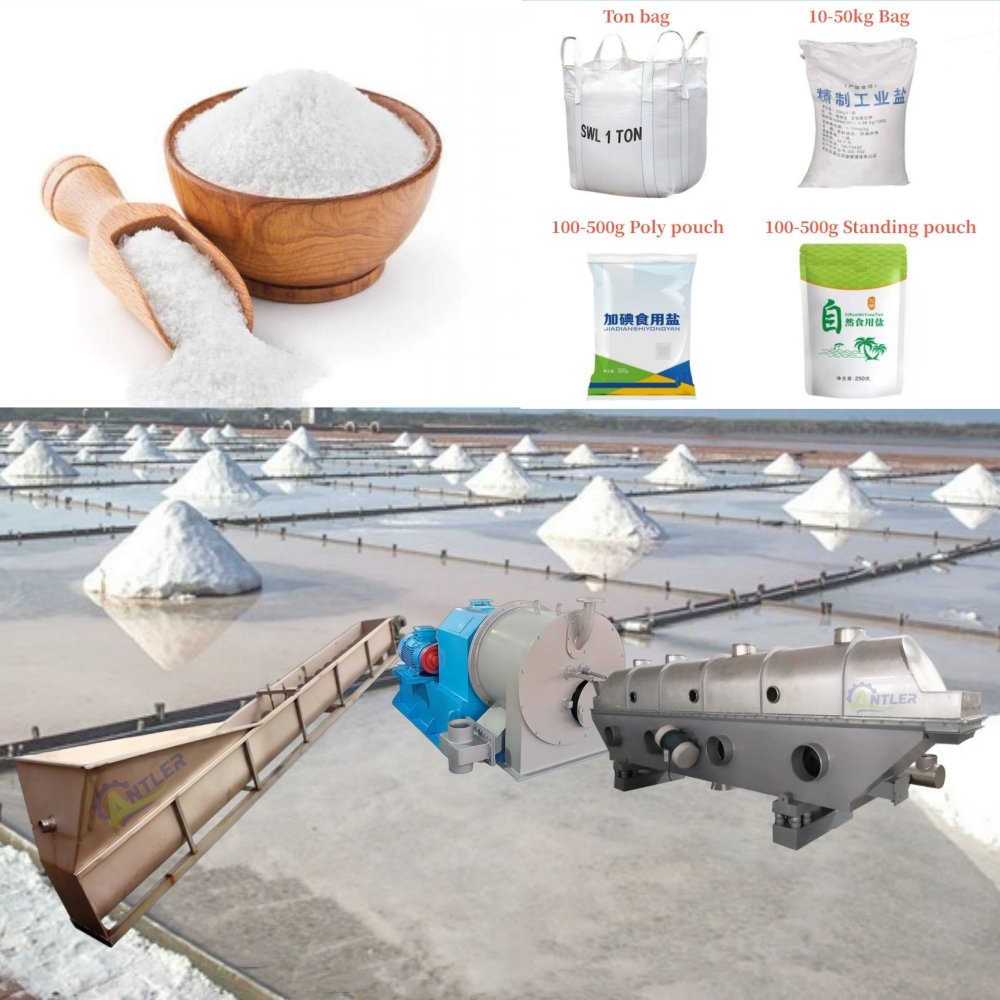
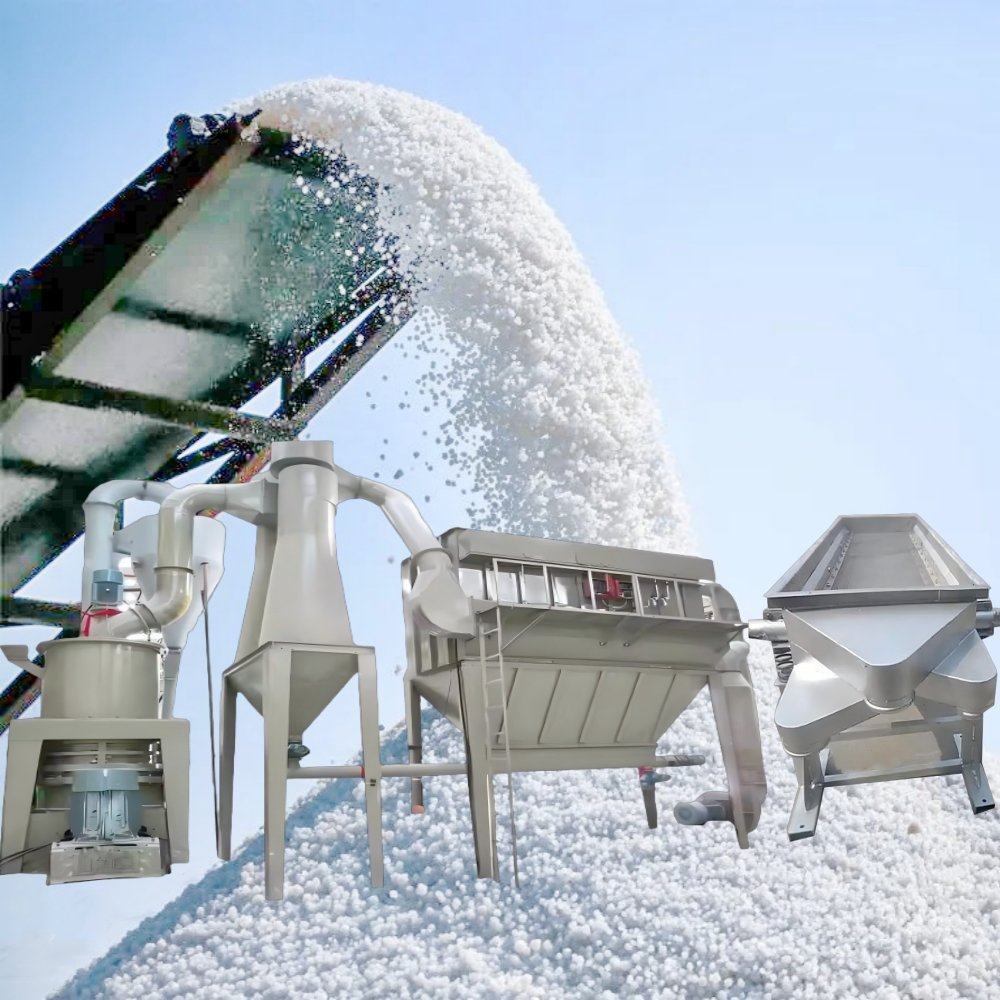
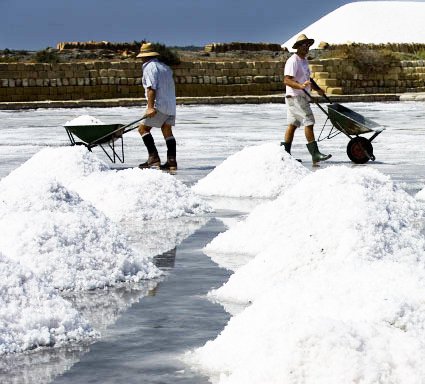
Opportunités de monté des usines des productions des sels en RDC. Des dépôts de sel gemme ou sources salines/thermales existent, notamment dans le Bas-Congo (Kongo-Central : rock salt mentionné avec d'autres minéraux comme le calcaire, le gypse) et au Katanga (saltworks, sources salines à Mwashya, Pweto, etc.)
12
49
4,860

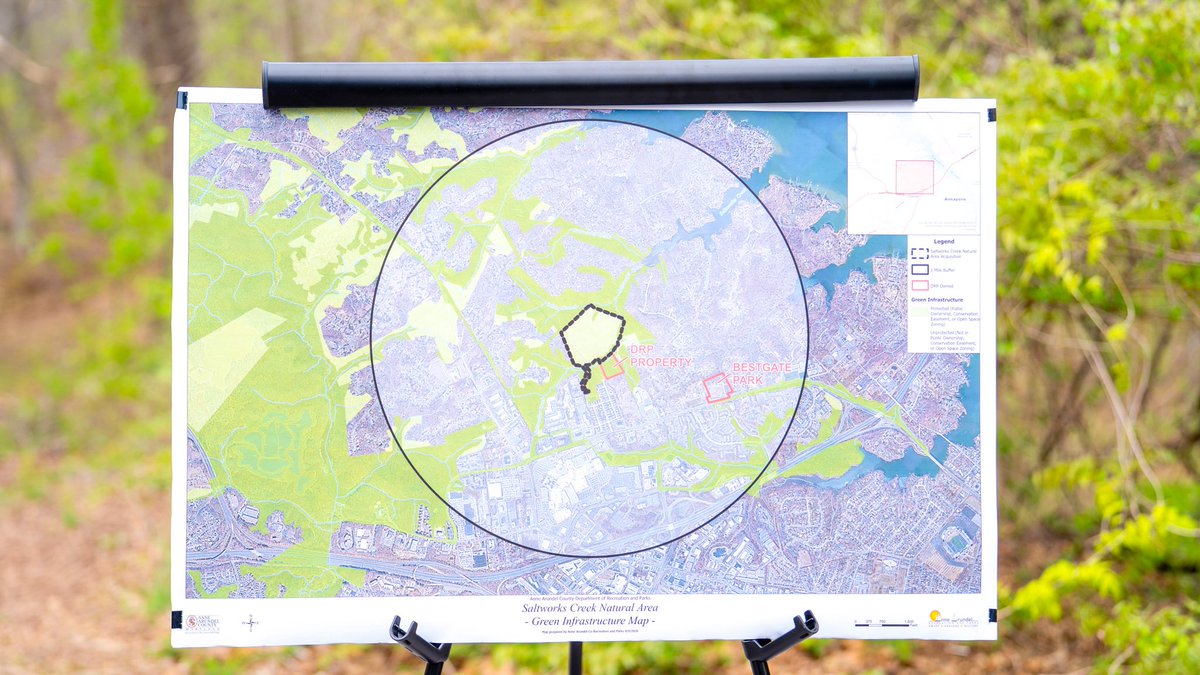
ICYMI: The Saltworks Creek Watershed will soon be open to the public! It was an honor to join @AACoExec in taking down the “No Trespassing” sign at the property’s entrance – marking an official end to the era of private use for the Saltworks area.
This is all thanks to the collaboration between the local, state, philanthropic, and federal partners that has allowed us to think bigger and bolder on our conservation efforts – and make our waterways more accessible for generations to come.
As the weather gets warmer, I encourage you to take some time and explore our newest protected lands at the Saltworks Natural Area soon. More information to come!
1
3
297


Apr 16
A 20-acre parcel of land was supposed to have 76 town houses, an assisted living center and 272 parking spaces back in 2020. Now, it will be part of a 277-acre block of protected forest.
Anne Arundel County has announced that it has acquired two plots of land totaling 47 acres along the Saltworks Creek watershed, just north of the Annapolis Mall.
According to the county, the land will be used by the Department of Recreation and Parks to provide residents with “park space for wildlife observation, personal recreation and shared use paths.”
Read more: bit.ly/4ccPZee

1
5
683

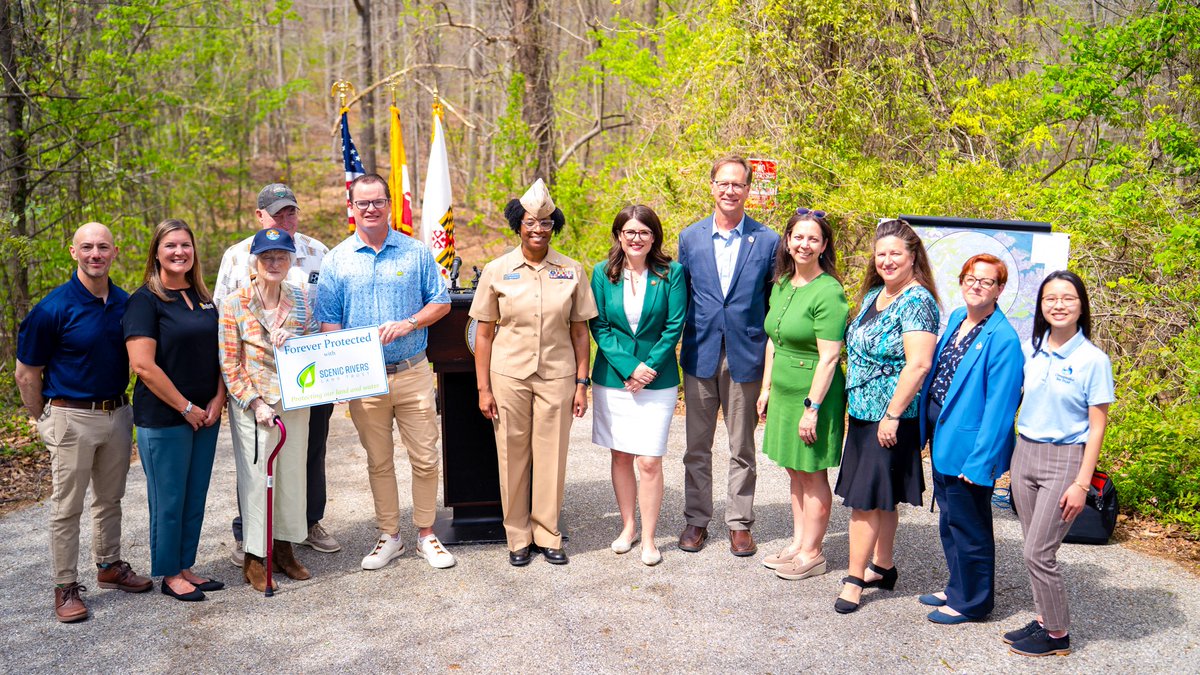
After the county announced the acquisition of 47 acres of forested land in the Saltworks Creek watershed earlier this week, @RepSarahElfreth joined me to remove the “No Trespassing” sign at the property’s entrance.
1
3
176
We all know the saying, “How do you eat an elephant? One bite at a time.” Conservation efforts aren’t too dissimilar. How do you responsibly conserve the Chesapeake Bay Watershed and Maryland’s other crucial forests and watersheds? One acre at a time!
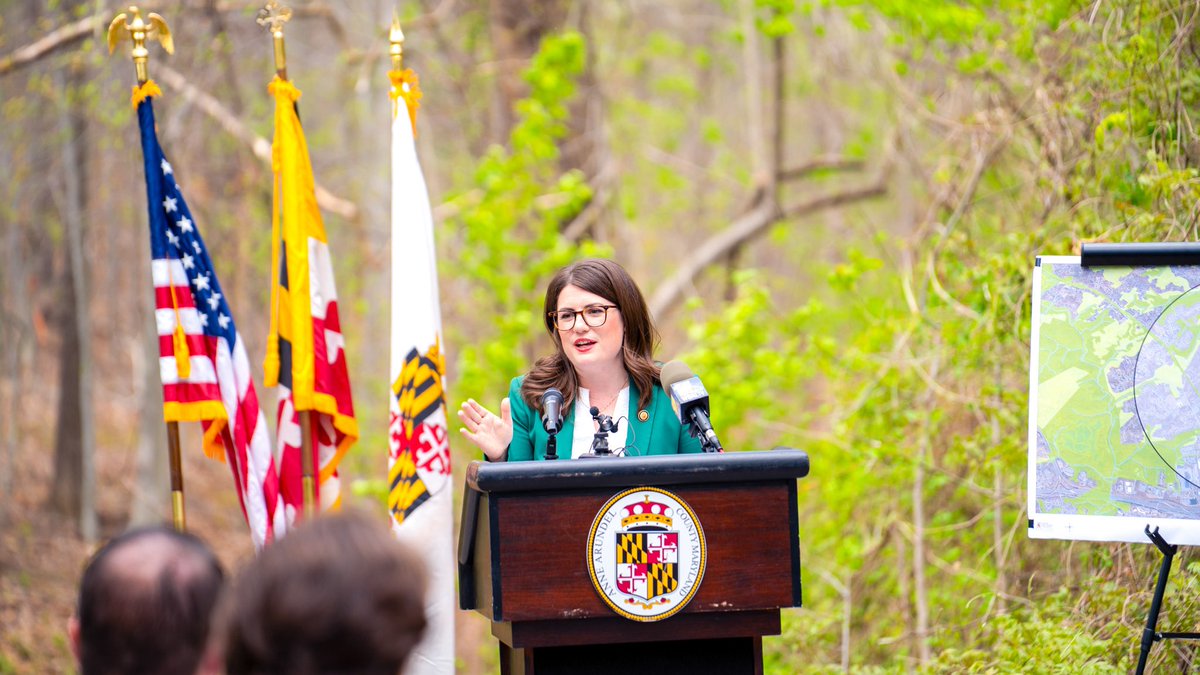
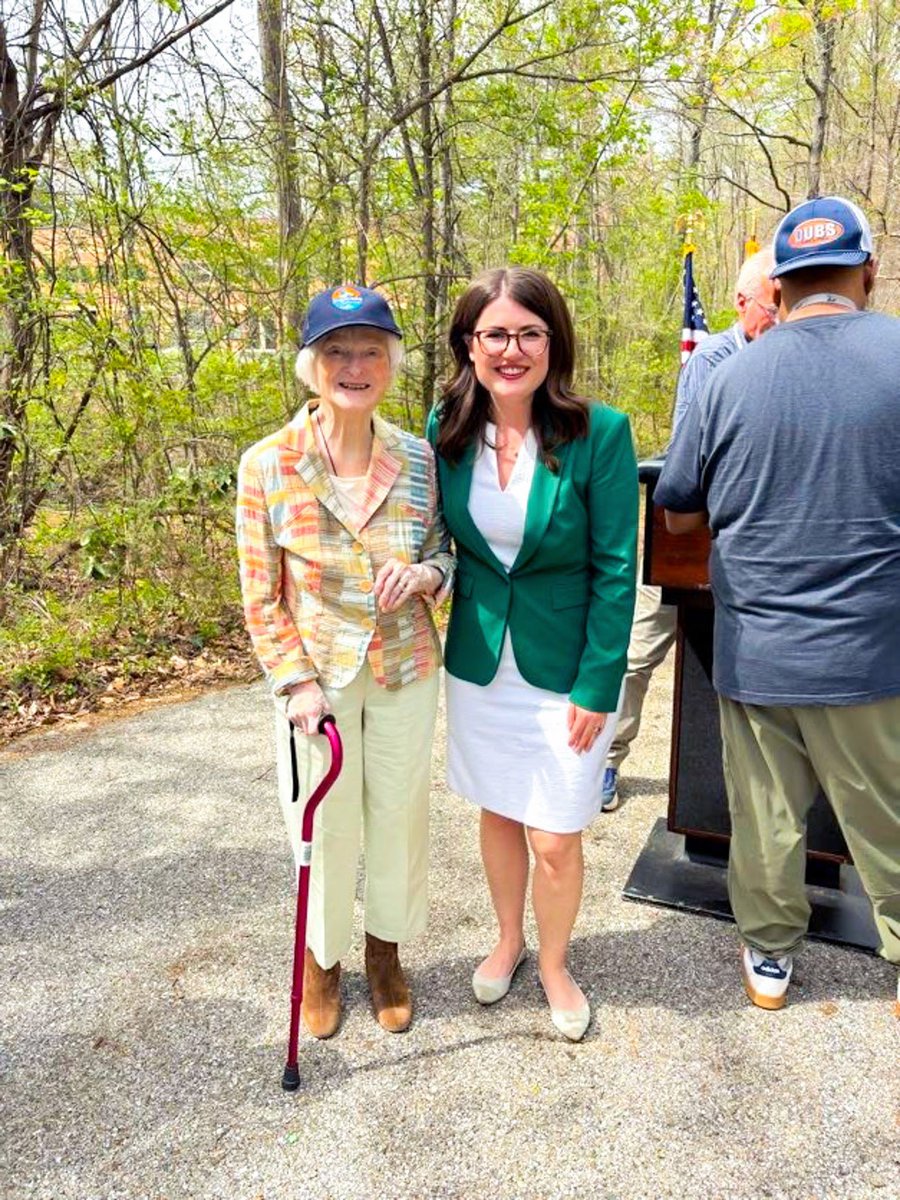
Three years ago this week, I went on a rather bumpy golf cart tour of a beautiful forest just next to the Annapolis mall with the @ChesConserv and philanthropists Jim and Sylvia Earl. Thanks to their extraordinary leadership, yesterday we got 47 acres closer to our conservation goals with Anne Arundel County designating part of the Saltworks Creek Watershed, a vital tributary to the Severn River, as protected land. This work is only possible because of our local, state, and federal partners – led by @AACoExec, the @NavalAcademy, Councilwoman Rodvien, and the Earl family – who are committed to protecting the Saltworks Creek Watershed and advancing our shared vision of accessible and connected parks for our neighbors. It’s through these efforts that we can reach our land conservation goals and continue thinking bigger, bolder, and faster. Stay tuned for updates on this extraordinary new passive park!
2
148


Apr 7
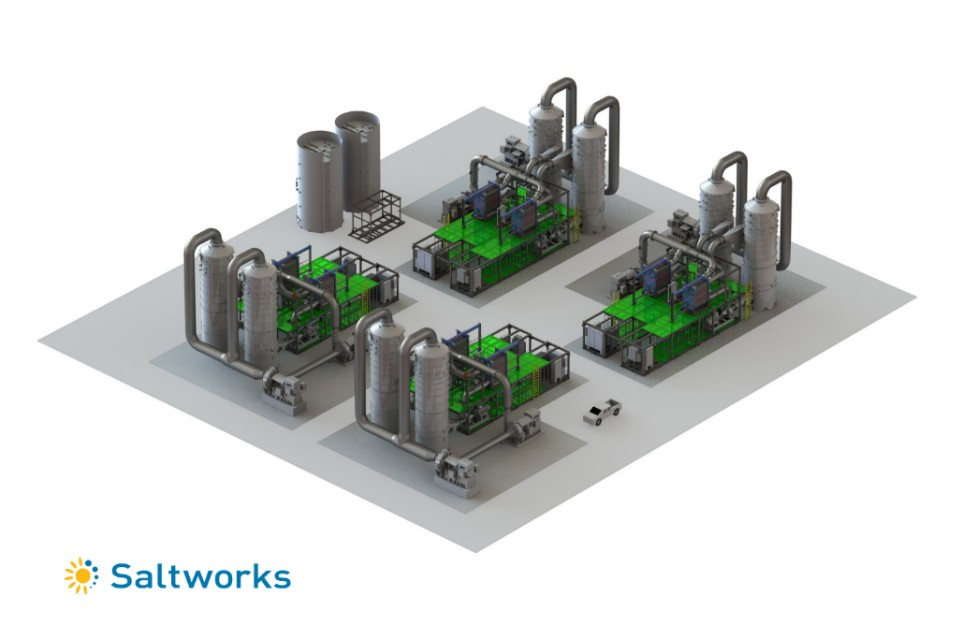
EMP Metals CEO and Saltworks CEO Host BC Minister of Jobs and Economic Growth, and Representatives from the Government of BC, for Announcement of $1 Million in Funding. $EMPS $EMPPF
Photo: 3D model of multiple SaltMaker units integrated into a ZLD system for semiconductor fab water recovery @SaltworksTech
News ▶️ empmetals.com/emp-metals-par…
2
3
384
Apr 6
EMP Metals Corp. highlights:
• Saskatchewan brine characteristics supporting scalable design
• Provincial funding & established permitting framework
• Grid power connected; existing oilfield infrastructure
• Ongoing land consolidation efforts
• Saltworks modular systems & continued innovation
$EMPS.CN $EMPPF
👉 youtu.be/Kx06MekeJJ4?si=mme0…
1
3
153

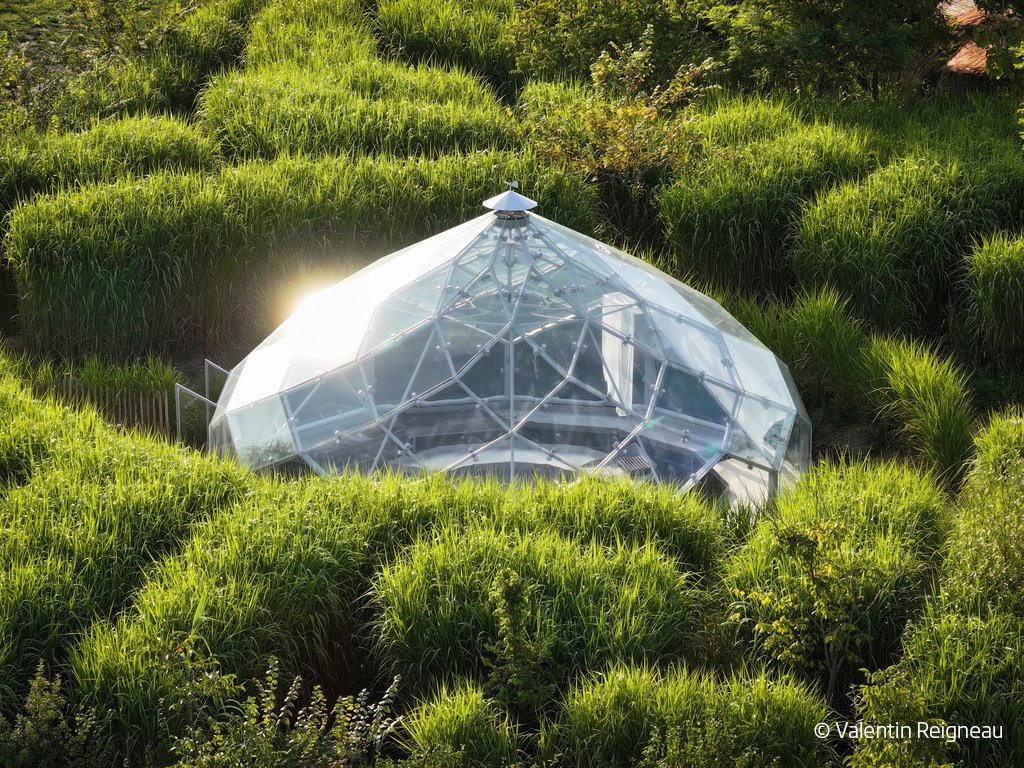
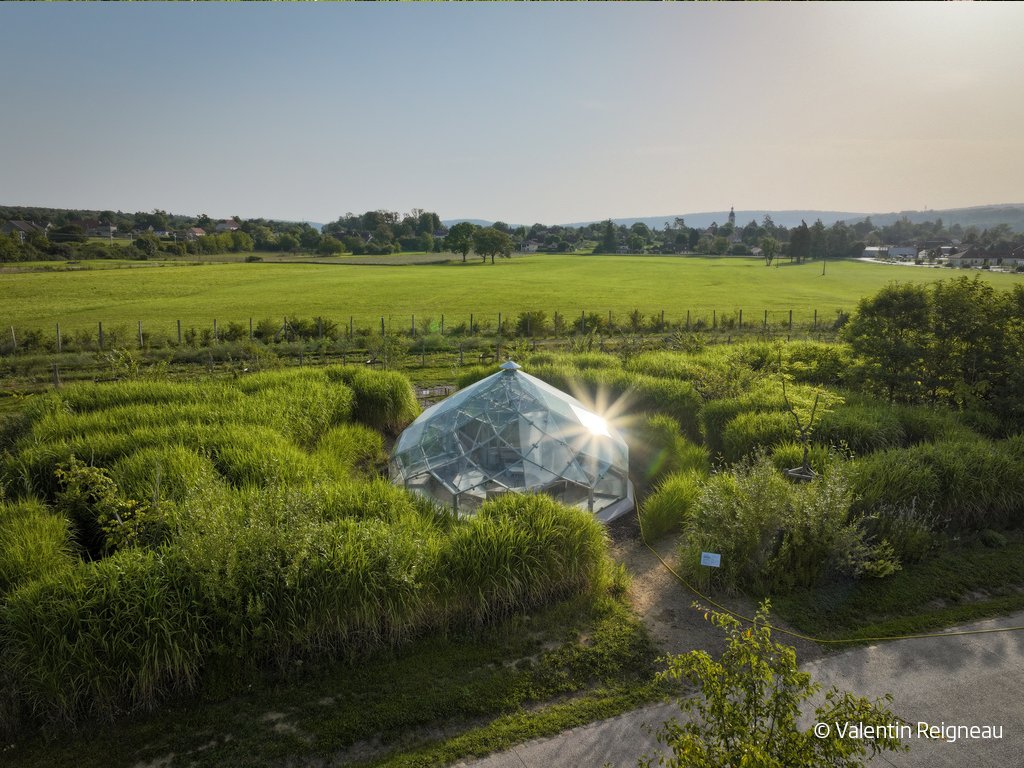
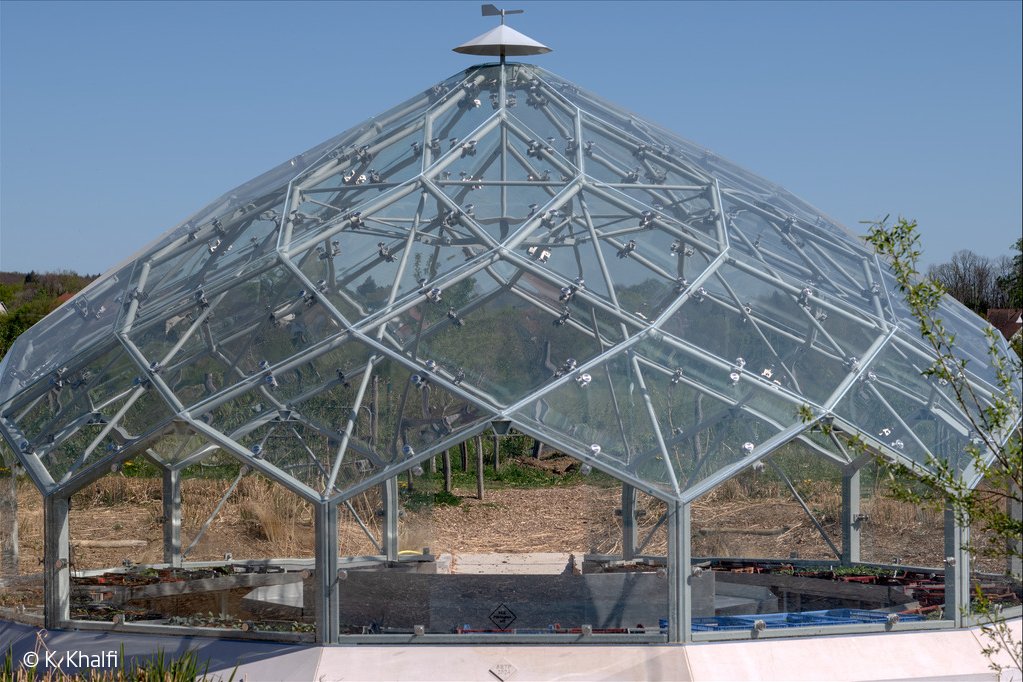
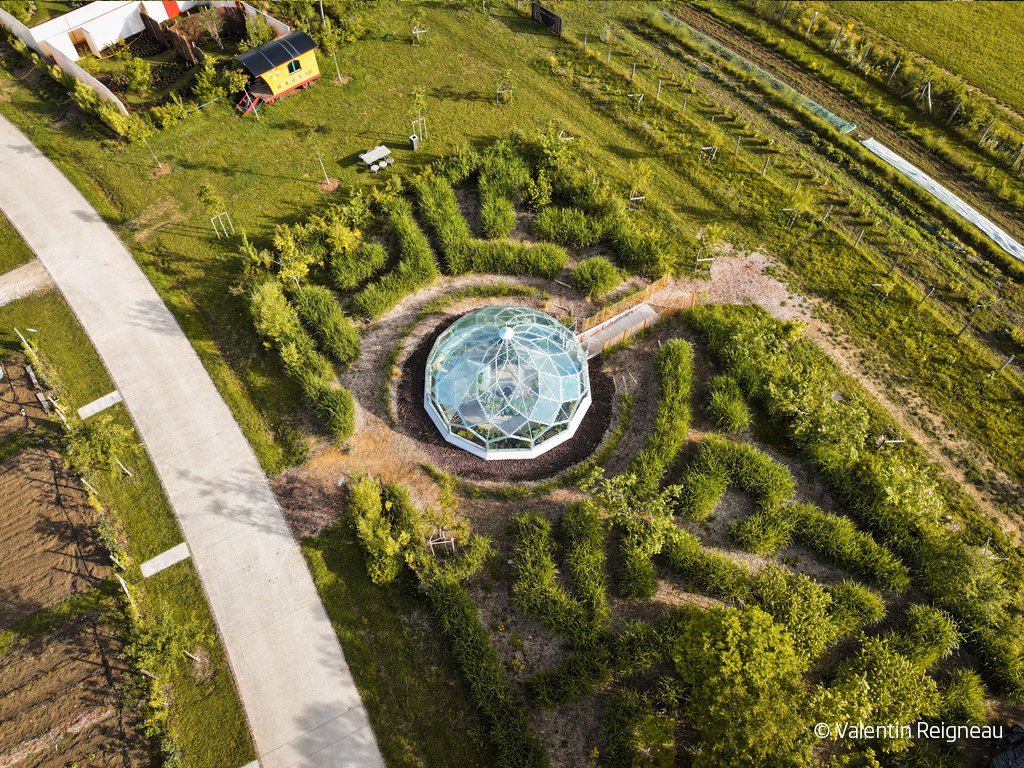
At the historic UNESCO‑listed Royal Saltworks in Arc‑et‑Senans, a stunning new geodesic greenhouse has been created to support year‑round sustainable food production.
#glass #lowcarbonglass #mirai #pilkington #design #greenhouse
1/2
1
1
5
91

Mar 28
6,000 year old Neolithic saltworks, the earliest found in the UK, was discovered near Boulby on the North Yorkshire coast, just north of Whitby, around 2021.
Led by archaeologist Dr. Stephen Sherlock, the dig uncovered a subterranean chamber with a brine storage pit, hearths, and pottery, suggesting salt production predating Stonehenge.
Starmer will insist Muslims built it probably.
5
139

Mar 25
The Rev War Minute
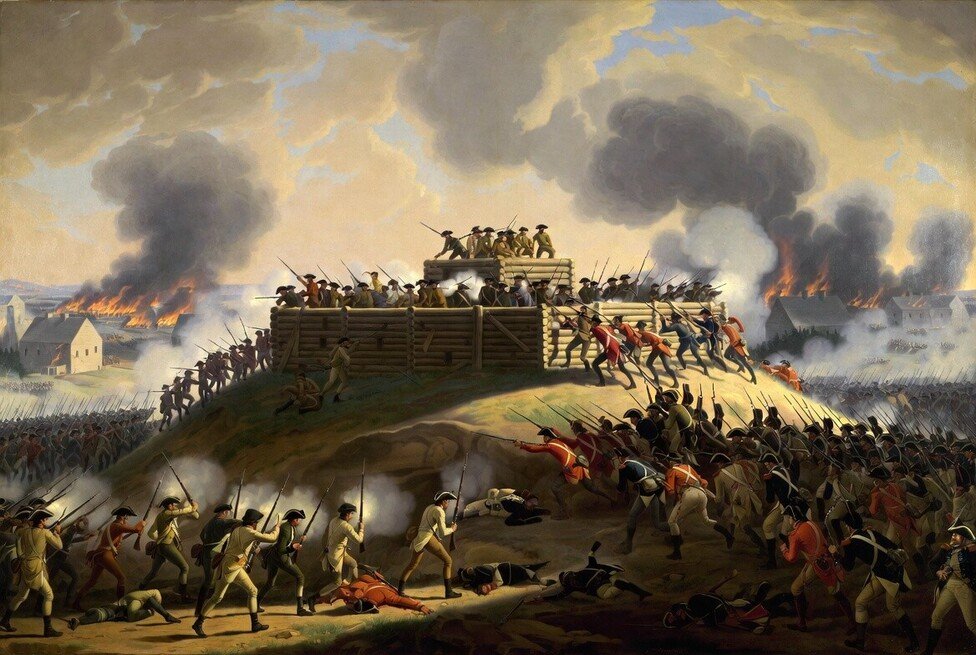
March 1782. As the Revolutionary War wound down, a British-backed Loyalist force stormed the privateering hub of Toms River, New Jersey. Captain Joshua Huddy, a battle-hardened Patriot born in 1735 in Salem County, commanded the small Blockhouse with just 25 men. After a fierce fight that exhausted their ammunition, the defenders surrendered. The raiders burned the village, saltworks, and mills, capturing Huddy.
Huddy’s life had been turbulent: a former militia raider, he later captained the gunboat Black Snake, striking British targets along the Jersey shore. Earlier captured at his home, he had boldly escaped. This time there was no flight. On April 12, Loyalists hanged him near Sandy Hook in retaliation for a comrade’s death. The brutal act ignited a diplomatic firestorm, sparking the Huddy-Asgill Affair and briefly stalling peace negotiations. #RevWar #History #AmRev
1
5
19
358
Mar 24
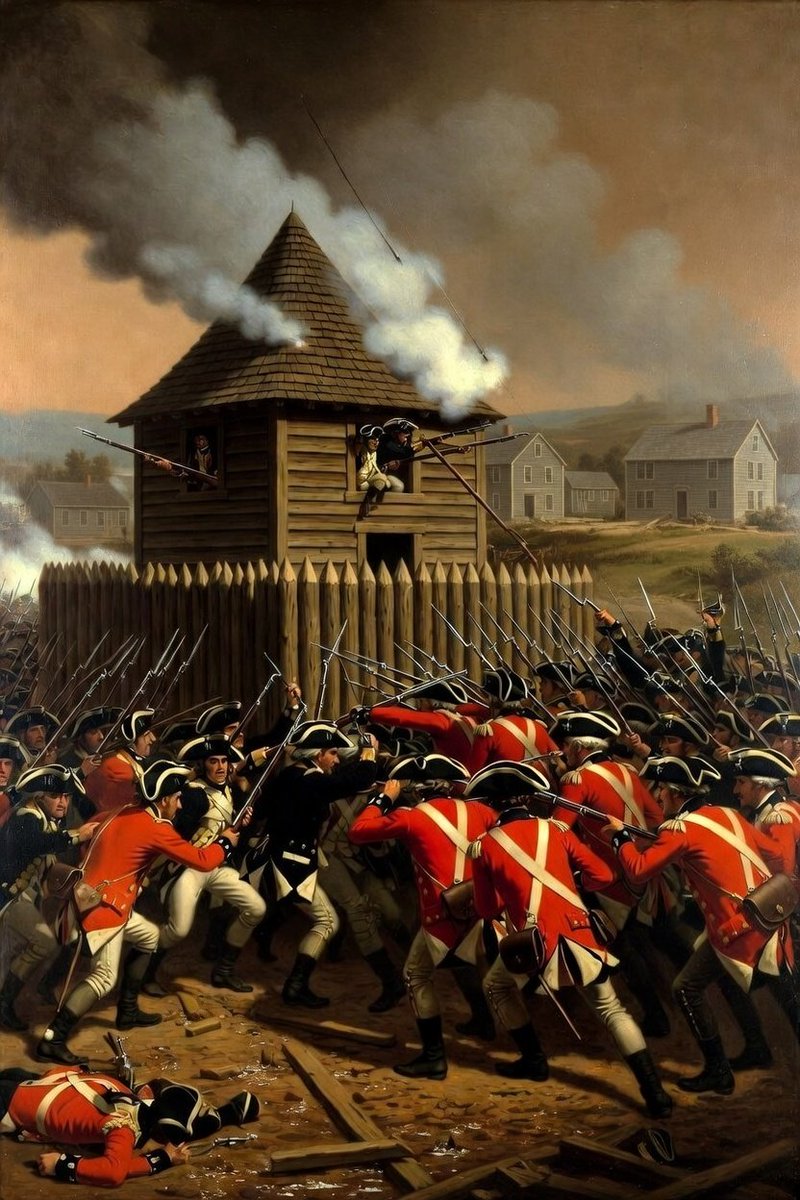
24 March 1782, Toms River (then Dover), New Jersey. A Royal Navy-supported force of about 80–100 Associated Loyalists raided the privateering hub and saltworks. They stormed the Blockhouse, a small log fort defended by Capt. Joshua Huddy and roughly 25–30 New Jersey State Troops plus locals. After a fierce defense until ammunition ran out, the garrison surrendered; Huddy was captured, and the village and saltworks were burned. Huddy was handed over to British authorities, then removed by Loyalists under Capt. Richard Lippincott was hanged without trial on April 12 at Middletown Point as retaliation. The "Huddy Affair" sparked outrage and nearly derailed the Paris peace talks. #RevWar #History #AmRev
4
17
416
Mar 24
EMP Metals Corp. introduces Saltworks Technologies as Project Aurora partner.
Saltworks provides end-to-end lithium refining systems (pre-conditioning, DLE, concentration & conversion).
~$10M commitment includes engineering, equipment, staffing, Phase 2 engineering & financing support.
$EMPS.CN $EMPPF
👉 youtu.be/Kx06MekeJJ4?si=mme0…
2
2
203


Mar 12
EMP Metals Corp. (CSE: $EMPS.C) (OTCQB: $EMPPF) (FSE: 9ST) announces that it has initiated work on an updated Front End Engineering Design (“FEED”) study on the Generation 2 process flow sheet in development with Saltworks Technologies Inc.
Read news 🔗 empmetals.com/emp-metals-com…

1
1
118