
10 Dec 2025
$SATS $ASTS $RKLB $RDW SPACE-BASED DATA CENTERS FOR AI
The concept of space-based data centers for AI is transitioning from science fiction to early commercial experimentation. Over the next 10–20 years, space-based compute is likely to evolve from small proof‑of‑concept payloads to multi‑megawatt or even gigawatt‑scale infrastructure, driven primarily by the power and cooling constraints of terrestrial AI clusters. At the same time, fundamental physical limits, orbital mechanics, and radiation effects impose hard constraints that will shape which workloads and business models are viable.
What follows is a detailed analysis of the current ecosystem, the enabling technologies, the economic logic, and the technical feasibility of large‑scale generative AI data centers in space, with emphasis on suppliers, customers, and the data/latency model.
MACRO DRIVERS AND ECONOMIC RATIONALE
Global data center electricity demand is projected to more than double by 2030 to roughly 900–950 TWh, approaching 3–4% of global electricity consumption, with AI‑optimized data centers the primary driver of growth. McKinsey estimates total data center capex of approximately $6.7 trillion by 2030, of which $5.2 trillion is linked to AI workloads. In the U.S., data centers could account for up to 12% of national electricity use by 2030, and some academic work suggests that when including the full cost of delivering AI services, data centers could drive as much as 21% of global energy demand by 2030.
Simultaneously, grid operators are being overwhelmed by gigawatt‑scale interconnection requests from AI data center developers. In Texas, the ERCOT queue for large loads exceeded 230 GW in 2025, roughly 4x the level a year earlier, with more than 70% of requests from data centers. Similar demand pressure is visible in other major markets, and utilities such as NextEra are explicitly positioning around a "golden age of power demand" largely driven by AI.
This constraint set is leading hyperscalers and neocloud providers to three broad strategies. The first is bring‑your‑own‑generation on Earth, co‑locating with gas, nuclear, hydro, or renewables such as Crusoe's Texas and Abilene facilities for OpenAI and Oracle. The second is novel terrestrial siting, including underwater, Arctic, or colocated with industrial heat users. The third is off‑Earth infrastructure, using orbit or the lunar surface to access essentially continuous solar power, eliminate land and water use, and externalize thermal challenges.
Space offers two structural energy advantages. First, solar irradiance above the atmosphere is higher and unfiltered. Second, in appropriate orbits, panels can receive sunlight nearly 24/7 without night cycles. Technical literature on space‑based solar power suggests an orbital solar panel can be 5–8x more productive than the same panel on Earth, depending on orbit and atmospheric losses. Google's Project Suncatcher explicitly cites up to 8x higher energy productivity for orbital solar relative to ground installations and near‑continuous output in a sun‑synchronous orbit.
At the same time, large AI clusters are power‑dense and thermally constrained; the ability to use the 3 K cosmic background as an "infinite" radiative sink has strong engineering appeal. Starcloud and Nvidia estimate that, after including launch costs, space data centers could achieve energy costs up to 10x lower than terrestrial equivalents by using continuous solar power and radiative cooling instead of land, water, and grid electricity.
Against this backdrop, space‑based data centers can be viewed as an energy arbitrage: high up‑front launch CAPEX in exchange for decades of essentially zero‑marginal‑cost, high‑availability power and cooling, with no local permitting risk. Whether this arbitrage is attractive depends on launch pricing, hardware lifetimes, system reliability, and regulatory treatment.
ARCHITECTURES AND TECHNOLOGY STACK
Most proposed systems share a common architecture that combines satellite bus technology with data center design principles.
Orbits and Constellation Design
Project Suncatcher envisions constellations of compact satellites in dawn–dusk sun‑synchronous low Earth orbit (LEO) at roughly 650 km altitude, providing near‑continuous sunlight while keeping physical path length and latency close to terrestrial internet norms. Starcloud's first H100 satellite (Starcloud‑1) operates in a 325 km LEO orbit; the firm's long‑term vision involves a 5 GW "data center satellite" with approximately 4 km × 4 km integrated solar and radiator arrays.
LEO offers round‑trip latencies typically in the 20–40 ms range for internet connectivity, comparable to long‑haul fiber, while geostationary (GEO) systems incur latencies around 500–600 ms. For latency‑sensitive generative AI inference, LEO architectures are strongly favored; for batch training or archival storage, GEO or even lunar options are viable.
Power Generation and Distribution
Power is supplied by high‑efficiency space‑grade solar arrays. In sun‑synchronous LEO, satellites effectively experience continuous low‑angle daylight, allowing reduction or elimination of heavy battery storage. Google's analysis notes that in such orbits, solar panels can be up to 8x more productive per unit area and provide near‑continuous power, with only short eclipses near the poles.
Power management involves DC distribution from large solar wings into high‑voltage buses, then conversion into rack‑level power for GPUs/TPUs. High‑efficiency DC‑DC converters and radiation‑tolerant power electronics are required. Vendors such as Maxar, Airbus, and Northrop Grumman already supply multi‑kW to 10s‑of‑kW space power systems; scaling to 100s of MW or GW will require new ultra‑light deployable arrays and structurally integrated radiators.
Thermal Management and Radiative Cooling
Thermal management is both the key advantage and a major engineering constraint. In vacuum, convective cooling is impossible; all heat must be removed via conduction to radiators and then radiated as infrared energy. Heat‑flux densities from dense AI racks can be several kW per square meter; therefore, large radiator areas and efficient heat‑pipe or pumped‑loop systems are required.
Starcloud and Google both emphasize radiative cooling as critical: space provides an "infinite heat sink" where waste heat can be radiated without water consumption. However, building radiators large enough for multi‑gigawatt data centers implies kilometer‑scale structures, which raises launch, deployment, and dynamic control challenges. Suncatcher's roadmap notes that future gigawatt‑scale constellations will likely require tightly integrated mechanical designs where solar collection, compute, and thermal radiators are structurally co‑designed rather than bolted together as separate modules.
Compute Hardware
Space data centers have moved rapidly from low‑power FPGAs and microcontrollers to mainstream accelerators. HPE's Spaceborne Computer‑2 on the ISS uses essentially commercial off‑the‑shelf HPE ProLiant and Edgeline servers to run HPC and AI workloads with radiation‑tolerance provided via software and modest shielding. AWS Snowcone edge devices have been flown on Axiom and ISS missions to demonstrate in‑orbit edge compute, machine learning, and automated data transfer back to AWS. Ramon.Space offers radiation‑hardened computing platforms (NuBox, NuPod, NuStream) for storage, processing, and communications; NuPod integrates storage, edge compute, and RF for real‑time data analysis in orbit. Aitech's S‑A1760 Venus GPGPU system uses an Nvidia Jetson TX2i SoM with 256 CUDA cores and roughly 1 TFLOP, qualified for LEO and short‑duration missions.
Starcloud's Starcloud‑1 satellite carries the first Nvidia H100 GPU in space, providing data‑center‑class compute and reportedly 100x more GPU power than any prior orbital mission. The satellite, based on Astro Digital's Corvus‑Micro bus, has a mass of about 60 kg and an 11‑month expected life in a 325 km orbit. Recent reports state that Starcloud has successfully trained and run inference on a Google Gemma model on this H100 in orbit, establishing the first practical LLM training in space.
Google's Suncatcher work demonstrates that its Trillium v6e TPU can tolerate radiation doses up to 15 krad(Si), well above the expected 5‑year low‑Earth‑orbit mission dose (~0.75 krad(Si)) when shielded, with memory (HBM) the most sensitive component but still within acceptable limits. This result is important because it suggests data‑center‑class accelerators can be used in LEO with modest hardening and shielding, rather than fully custom rad‑hard ASICs.
Communications and Networking
Inter‑satellite networking and ground connectivity are central to making space data centers behave like cloud regions. Google's Suncatcher architecture uses free‑space optical (laser) links with dense wavelength‑division and spatial multiplexing to target inter‑satellite bandwidth in the tens of Tbps, comparable to intra‑data center fabrics. The design assumes tight formations (satellites separated by 100–200 m within a ~1 km cluster) to close the optical link budget. Bench tests already demonstrate 1.6 Tbps bi‑directional throughput with a single optical pair.
Starlink and Muon Space are demonstrating 25 Gbps persistent optical connectivity in orbit using Starlink's mini laser terminals integrated into Muon's Halo satellite platform, enabling near real‑time internet connectivity for in‑orbit assets and unlocking use cases in edge AI, wildfire detection, and real‑time data fusion. This is directly relevant as these same OISLs can provide the backbone connectivity for space‑based compute clusters.
For ground links, optical downlinks and Ka‑band RF are both used. NASA's Laser Communications Relay Demonstration and other programs have proven high‑speed laser comms between GEO and Earth. However, scaling to many‑Tbps between a clustered constellation and multiple ground stations will require dense ground infrastructure, spectrum coordination, and likely relay networks that combine LEO, MEO, and GEO assets.
Latency Characteristics and Data‑Path Behavior
The latency of user interactions with orbital AI clusters is dictated by both physical propagation and network architecture. In LEO (~500–650 km), the one‑way speed‑of‑light propagation to a satellite is on the order of 2–3 ms; including satellite–ground routing and terrestrial backhaul, operational satellite broadband systems such as Starlink deliver 25–40 ms RTT in many locations, with worst cases higher where ground stations are distant. In GEO (35,786 km altitude), the theoretical minimum RTT between user and satellite is ~477 ms, with practical systems often around 600 ms. This is marginal for interactive generative AI but acceptable for batch workloads.
A realistic data path for an LEO AI inferencing request would be: user device to terrestrial ISP to regional point of presence to uplink to a LEO gateway or space data center satellite to intra‑constellation optical fabric for compute to downlink to the closest gateway to terrestrial network back to user or to another cloud service. For a dense gateway network, the incremental RTT versus a terrestrial data center is likely 10–30 ms, which is within acceptable bounds for chat or code generation but somewhat more noticeable for gaming‑grade workloads.
For training, latency is largely irrelevant; the key metrics are throughput, job completion time, and cost per FLOP. Datasets can be pre‑staged to orbital storage or incrementally streamed; back‑propagation and gradient synchronization occur within the constellation over Tbps optical links, so performance is dominated by the on‑orbit fabric, not Earth connectivity.
For space‑to‑space workloads (Earth observation satellites sending imagery to orbital compute nodes), orbital processing can reduce latencies from tens of minutes (waiting for passes over ground stations) to seconds or less, enabling real‑time wildfire detection, SAR image fusion, and dynamic targeting. Starcloud and Muon explicitly target such "edge in space" workloads.
SUPPLIERS AND ECOSYSTEM OVERVIEW
The ecosystem around space‑based data centers spans launch, satellites, compute hardware, software, communications, and customers.
Current Operational or Near‑Term Players
Starcloud is a venture‑backed startup (Nvidia Inception program, notable VCs) building orbital AI data centers. It has launched Starcloud‑1 with an Nvidia H100 GPU and aims to scale to a 5 GW orbital data center with multi‑kilometer solar/radiator arrays. The company projects energy costs 10x lower than land‑based data centers and targets both AI training and inference, as well as near‑real‑time Earth observation analytics. Crusoe will act as the cloud operator on Starcloud's platform, offering "first cloud in space" H100 services with initial commercial access expected around 2027.
Google (Project Suncatcher) is a large‑scale research moonshot to explore constellations of Google TPUs in sun‑synchronous LEO, connected by free‑space optical links. Analysis suggests that with launch prices below $200/kg by the mid‑2030s and the 8x solar productivity advantage, space‑based AI compute can achieve cost parity with terrestrial energy costs on a per‑kW‑year basis. Google plans an initial learning mission with Planet in 2027, deploying 2 prototype satellites with 4 TPUs each to validate hardware, radiation tolerance, and inter‑sat links.
Blue Origin and Amazon are also active in this space. According to Reuters, Blue Origin has been working for over a year on AI data center technology in space, aligned with Jeff Bezos' public prediction that gigawatt‑scale data centers will be built in space within 10–20 years, eventually beating terrestrial costs owing to continuous solar power and absence of weather. Given Amazon Web Services' experiments with Snowcone devices on the ISS and Axiom missions, and AWS's strong interest in edge compute, there is a plausible path to AWS space regions over time.
SpaceX plans to use upgraded Starlink satellites to host AI computing payloads as part of its broader capital‑raising narrative, according to Reuters. Starlink already provides LEO broadband with low latencies and OISLs, and the company is partnering with Muon Space to deliver 25 Gbps optical connectivity for in‑orbit assets. SpaceX therefore occupies both the launch provider and potential orbital data center operator roles.
OrbitsEdge is a startup building SatFrame orbital edge platforms using HPE Edgeline 8000 systems to provide supercomputing‑class edge processing in LEO. HPE Spaceborne Computer missions on the ISS directly fed into OrbitsEdge's product, which aims to host analytics and AI close to sensors in space.
Axiom Space and IBM/Red Hat have deployed AxDCU‑1, a prototype containerized data center module running Red Hat Device Edge and MicroShift Kubernetes on the ISS, to test whether modern edge/cloud software stacks can operate reliably in orbit and support autonomous operation with limited connectivity. Axiom's long‑term plan includes commercial space station modules with embedded data centers.
Lonestar Data Holdings is focused on lunar data centers for disaster‑recovery and archival storage. The company has flown multiple missions, including an 8 TB SSD and FPGA‑based module on Intuitive Machines' Athena lander, and claims the first hardware data center on the Moon. Customers include the State of Florida, Isle of Man government, and various enterprises seeking off‑world backup. While not oriented to GPU‑heavy AI training, Lonestar is relevant as a pathfinder for off‑planet data center operations, logistics, and regulatory treatment.
Ramon.Space, Aitech, KP Labs, and others provide space‑resilient computing and storage modules used today for onboard processing, AI inference, and telecom. Their offerings are the likely building blocks for early orbital edge compute and for ancillary control and networking functions in larger orbital data centers.
Enabling Incumbents and Strategic Partners
GPU and accelerator vendors including Nvidia, AMD, and in‑house accelerator teams (Google's TPU, Amazon's Graviton/Trainium, etc.) are central. Nvidia is directly involved via its Inception partnership with Starcloud, with H100 already in orbit and Blackwell targeted for future launches. AMD has not yet announced space‑specific MI series deployments, but BIS Research identifies AMD, Nvidia, IBM, and HPE as key hardware players for in‑orbit data centers.
Cloud and software vendors beyond Google and AWS are also involved. Microsoft's Azure Space has worked with HPE Spaceborne Computer‑2 on genomics workloads on the ISS, demonstrating cloud‑to‑orbital HPC patterns. IBM/Red Hat are now running containerized workloads on AxDCU‑1. Starcloud's cloud services are provided by Crusoe, which is evolving into a specialized "energy‑first" neocloud.
Communication infrastructure providers including Skyloom, Kepler, NTT/Sky Perfect JSAT's Space Compass, and others are building space‑integrated computing networks combining OISLs, HAPS, and LEO/GEO assets. BIS Research highlights Space Compass and Kepler as central in providing high‑capacity optical links for in‑orbit data centers, targeting up to 10 Gbps per link in early systems.
Launch providers and satellite bus manufacturers including SpaceX, Blue Origin, Rocket Lab, Relativity Space, and traditional players such as ULA and Arianespace are the launch backbone. Astro Digital, Maxar, Airbus, and similar firms provide satellite buses; Astro Digital's Corvus‑Micro bus is used for Starcloud‑1.
Market Sizing and Future Players
ResearchAndMarkets/BIS Research projects that the in‑orbit data center market will reach about $1.8 billion by 2029 and grow at a 67% CAGR to approximately $39 billion by 2035, driven by AI automation, high‑efficiency solar power, and advances in space logistics. While small relative to total AI data center capex, this segment could represent a high‑growth niche initially dominated by a small number of infrastructure developers (Starcloud, OrbitsEdge, Axiom, Space Compass), hyperscalers (Google, AWS, potentially Microsoft), and space majors (SpaceX, Blue Origin).
Bezos expects gigawatt‑scale data centers in space within 10–20 years, while Sundar Pichai has stated that space data centers powered by satellites will be "normal" within a decade. These statements are not guarantees, but they signal intent from firms with the balance sheets and technical depth to drive such outcomes.
REVENUE MODELS AND CUSTOMERS
Several distinct revenue models are emerging.
Space‑based cloud compute through Crusoe's partnership with Starcloud to offer H100 GPU capacity from orbit is effectively a space region of a specialized cloud. Pricing will likely be benchmarked to terrestrial GPU instances, with potential discounts or premiums depending on energy cost, latency, and regulatory features (e.g., sovereign data, export controls).
Edge analytics for Earth observation is another model. Starcloud, OrbitsEdge, Ramon.Space, and others target customers needing in‑orbit processing of remote‑sensing data: agriculture, insurance, disaster response, defense/intelligence, climate monitoring, and telecom. Real‑time inference reduces downlink bandwidth and latency for actionable insights (e.g., wildfire detection). Revenue models here will resemble SaaS or "insights as a service" layered on top of satellite imagery contracts.
Disaster‑recovery and sovereign storage represents a third model. Lonestar sells "global backup, refresh, and restore" services using lunar data centers, with early customers including governments and enterprises seeking resilient, off‑world storage. Monetization resembles cold storage or archival cloud tiers, with premium pricing justified by unique resilience and jurisdictional properties (e.g., "data embassies").
Platform and infrastructure‑as‑a‑service for future space stations and lunar bases is also emerging. Axiom, Intuitive Machines, and others may bundle data center capacity into broader offerings for industrial customers, researchers, and agencies operating in cislunar space.
For generative AI specifically, likely early customers of space‑based GPU clusters are hyperscalers and AI labs seeking additional training capacity unconstrained by terrestrial power and permitting, particularly for very large pre‑training runs; governments and defense customers seeking highly resilient, difficult‑to‑attack infrastructure with sovereign control; and enterprises requiring ultra‑secure compute enclaves separated physically from Earth for high‑sensitivity workloads.
COST STRUCTURE AND ECONOMIC FEASIBILITY
The cost structure of space data centers has four main components: launch, hardware, orbital infrastructure (solar/radiators/structure), and operations/insurance.
Launch cost is a key factor. Google's Suncatcher analysis assumes launch costs decline to below $200/kg by the mid‑2030s, based on historical learning curves and projections for fully reusable rockets. If a complete GPU pod (including structure, power conversion, cooling loops, and shielding) has an areal density of, for illustrative purposes, 200–400 kg per MW of IT power (lower than current satellites but plausible for optimized designs), then launch cost per MW is on the order of $40,000–$80,000 at $200/kg. Even if this estimate is off by 2–3x, launch remains a modest fraction of the lifetime TCO of a multi‑million‑dollar GPU cluster that consumes millions of dollars per year in electricity on Earth.
Hardware costs are dominated by GPUs/TPUs. For example, an H100‑class accelerator can cost tens of thousands of dollars each. The economic question is whether the lifetime energy and cooling savings in orbit (and possibly extended utilization via 24/7 availability) offset the incremental cost of space‑qualifying and launching this hardware plus the opportunity cost of less flexible upgrades (hardware cannot be easily swapped every 2–3 years).
Orbital infrastructure including multi‑km solar arrays and radiators will be expensive to design and deploy initially but can benefit from mass production and on‑orbit assembly over time. SBSP studies historically found that structures and power transmission dominated cost; however, those systems had to beam power back to Earth. AI data centers in space avoid that complexity by consuming power in situ and only transmitting data, which is far less energy intensive.
Operations and maintenance remains the most uncertain piece. Space hardware must be designed for high reliability and graceful degradation, with extensive redundancy and error‑correction. On‑orbit servicing, refueling, and modular replacement can mitigate risk but require further infrastructure (servicing vehicles, robotic arms, etc.). Insurance premiums and the risk of catastrophic mission failure will be material until there is a track record of multi‑year orbital data center operations.
Google's Suncatcher cost modeling concludes that space‑based AI clusters are not precluded by economics and could reach cost parity with terrestrial data centers on a per‑kW‑year energy basis in the mid‑2030s, assuming continued launch cost declines and high utilization. Starcloud claims up to 10x lower energy cost versus terrestrial data centers, even after factoring launch, based on continuous solar and radiative cooling. These claims are plausible at the physics level but unproven at commercial scale; they also exclude opportunity cost (slower hardware refresh cycles, higher risk, and regulatory friction).
10 Dec 2025

Deeply amused by all the confident commentary that datacenters in space do not work from a physics and engineering perspective.
Elon operates two of the largest coherent GPU clusters in the world, SpaceX is responsible for over 90% of mass to orbit and SpaceX operates the largest satellite constellation in the solar system. More than 10 years later, no other company or country can consistently land and reuse orbital rockets.
He publicly stated that the “lowest cost way to do AI compute will be with solar powered satellites.”
Maybe, just maybe, his “pencil and paper analysis of the physics or the economics at play” is superior to yours. There might have even been more than just a “pencil and paper analysis” of the subject done by some of the best engineers in the world. Perhaps they have thought of a cooling solution that has not occurred to the galaxy brain accounts here even after they took several minutes to carefully think about the problem.
The CEO of Google also agrees that data centers in space will be “normal” within a decade.
If you are not currently operating a large AI datacenter, a large satellite cluster and have not landed a rocket, maybe be a little less quick to confidently assume that Elon and Google are *both* wrong on this topic.
Especially when there is a working, albeit very small, datacenter in space *today* - Starcloud’s orbital setup just successfully trained an LLM. Great name btw.
Yes, I am biased on these topics and as ever, time will tell.
1
1
5
4,010

6 Jul 2020
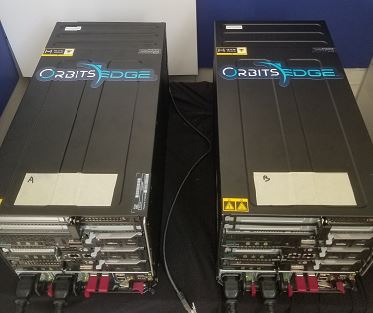
The next stage of our testing has begun with the @HPE EL8000's, the hardware for our first SatFrame #satellite, up and running. We will be performing benchmark testing and an #Earth simulation for #space applications. #cloudabovetheclouds #edgecomputing #orbit #datacenter
1
6

23 Jun 2020
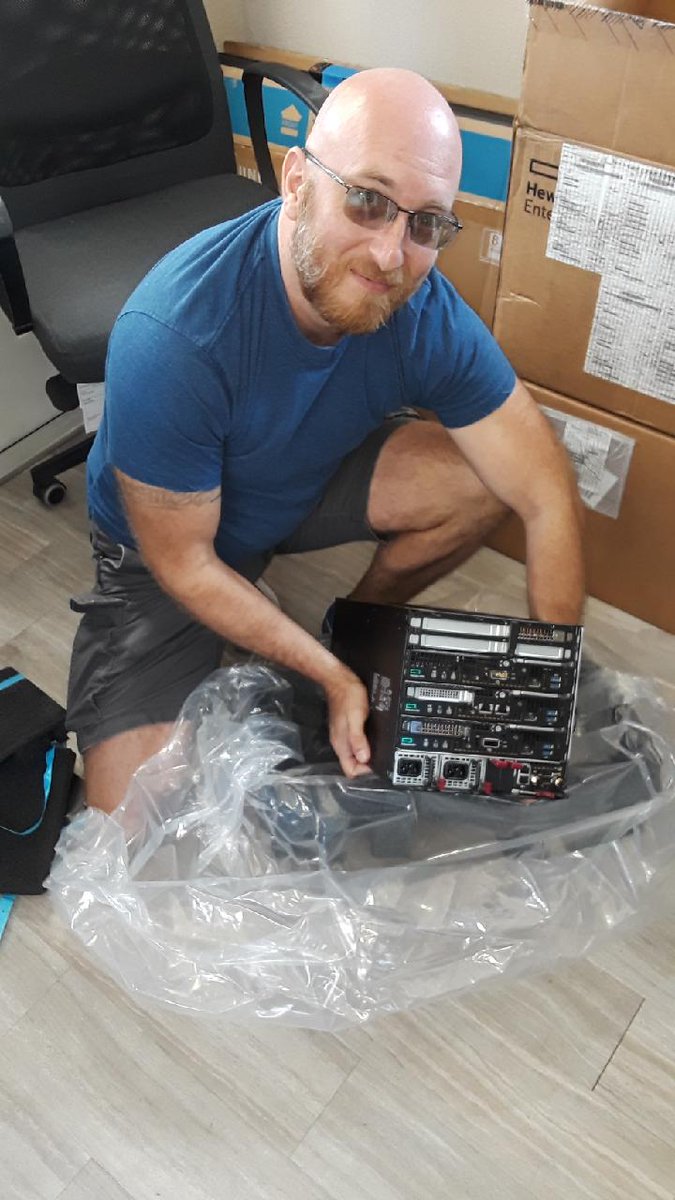
Hunting was good today!
We bagged a wild @HPE EL 8000 and its twin.
Now, we will mod them as needed, join them to our SatFrame and launch them into space!
Should be easy enough.
#edgecomputing #hpc #abovethecloud
6
22 Jun 2020
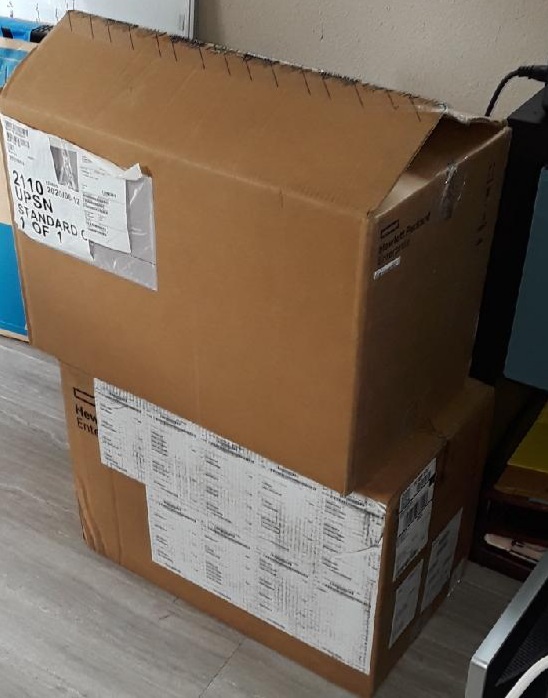
It might look like just a couple of boxes, but it is the @HPE EL8000's. We are now able to go to our next phase of testing. No #ruggedization needed when protected by our #SatFrame. #orbit #datacenters #space #edgecomputing #datacenter #satellite @rjward1775 @sylviadfrance
3
6
29 Apr 2020
A good argument for having the ability to cleanse and analyze data in #space with our #data #remotesensing #imagery #bigdata #spacetechnology #ai #machinelearning #SatFrame. You can then stream down relevant insights to #earth. bit.ly/DC042820 @DougonIPComm @dcfrontier
1
4
19 Feb 2020
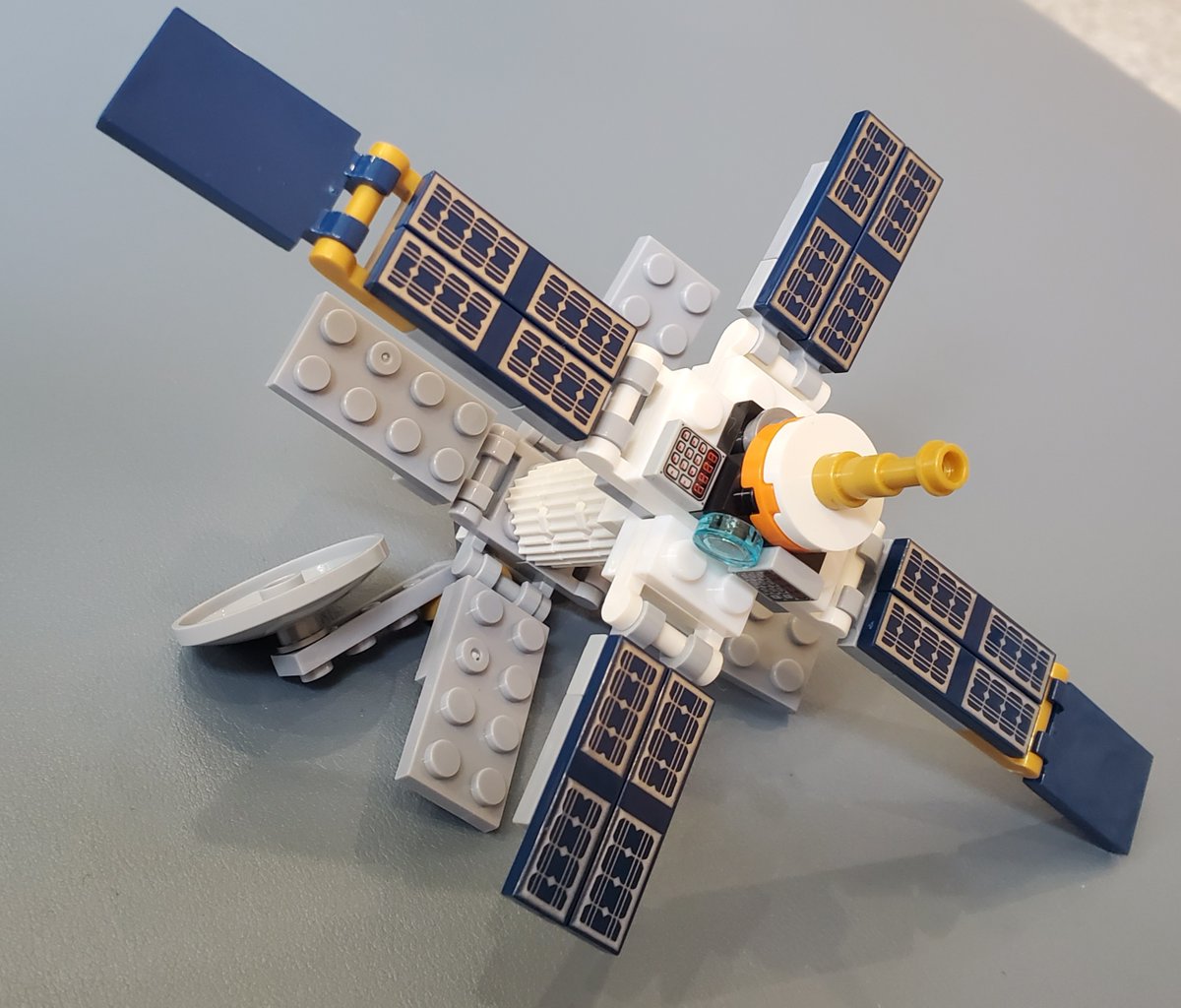
A The LEGO Group version of our #proprietary SatFrame with #radiators, #solar #panels and #communications. #satellites #iot #space #energy #solarpower #lego #edgecomputing #orbit @rjward1775
3
3

Exciting collaboration between @HPE and @OrbitsEdge is producing the first-ever commercial data-center environment used for in-orbit computing. Using HPE’s Edgeline Converged Edge System in their platform, called SatFrame, they are reaching new heights. hpe.to/60151XrUR
5
11

17 Dec 2019
Get ready for space-data-as-a-service – @OrbitsEdge has started collaborating with @HPE to develop computing-in-orbit solutions, including ruggedized #edgecomputing technology, writes @Patnet. spr.ly/60161nEG8
#SpaceDataAsAService #SatFrame #IoT #InternetofThings
3
3
