Imagine This! retweeted

#MondayQuiz #MondayNight
#ConsciouslySpeaking not #CONspeaking #CSL- con as a #secondlanguage? 🤔🙏🏽🙌🏽🫶🏽☮️🫴🏾

…mfking #questiontime? 🤔👁️✅
#Sinners not the #AwardWinner 🎬tho…#Doyouknow any? 🤔
Do you #follow them? 🤔
You are consciously choosing to follow that…#pathway
to where? 🧐..🖖🏽🙏🏽🙌🏽🫶🏽☮️🫴🏾✅✅
#mindsetmode #MondaySpecialMsg 📝
1
29

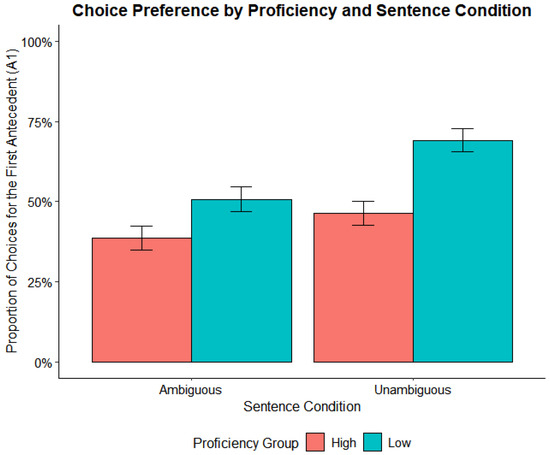
✨We are pleased to share a new paper titled "Cognitive Mechanisms of Referential Ambiguity Resolution in L2 Russian by Chinese Learners: Evidence from Eye-Tracking."
🎊You can read the full text here:
brnw.ch/21x3bNt
#eyetracking #secondlanguage
#OpenAccess #MDPI
20

Apr 22
Know why Brazil wants to join the millions learning Mandarin, the World'... youtu.be/hsu8CqJJoxk?si=o81Q… via @YouTube with @miuda #LearnMandarin #Brazil #LanguageLearning #MostSpokenLanguage #SecondLanguage #MariaValls #americasnow #features
2
611

Mar 30
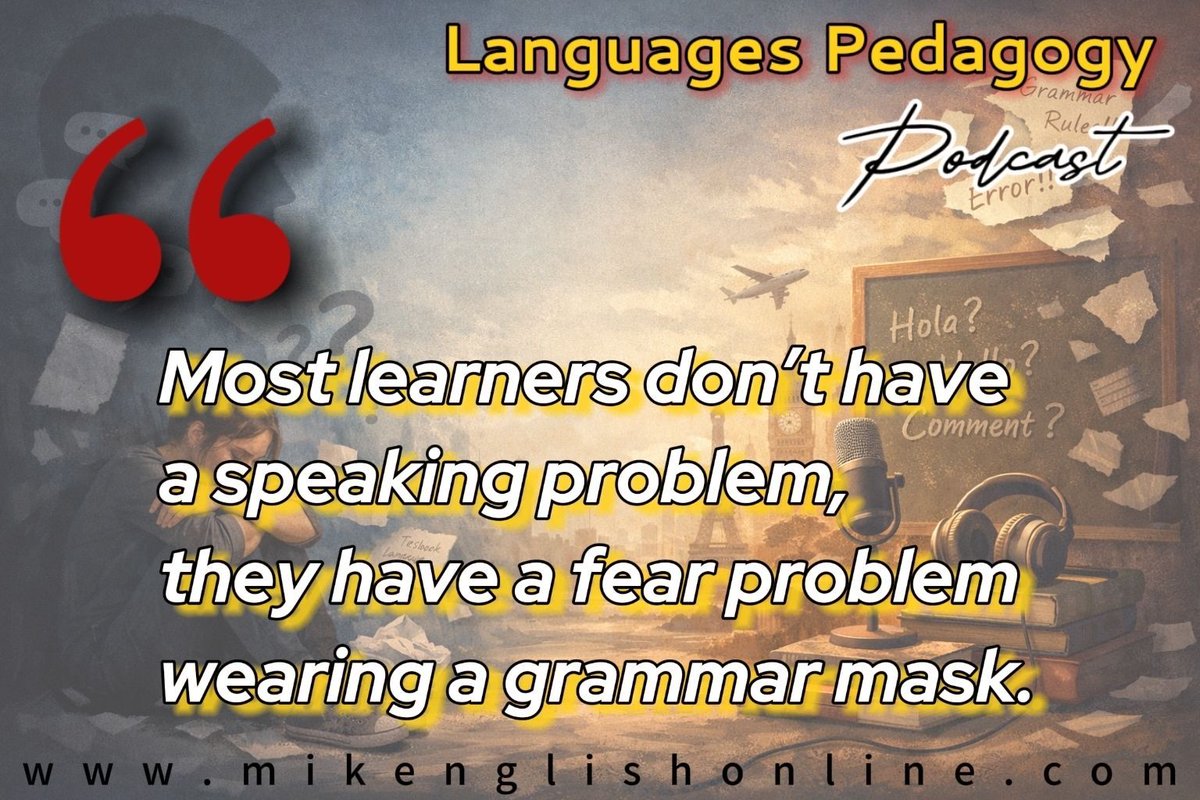
Let’s be honest…
It’s not a speaking problem.
It’s fear disguised as “I need more grammar.”
Learners don’t stay silent because they lack words.
They stay silent because they’re afraid of using them wrong.
So they hide behind rules.
Behind perfection.
Behind “one more lesson.”
But fluency doesn’t come from hiding.
It comes from risking being wrong—out loud.
Drop the mask. Speak anyway.
🎙️ Languages Pedagogy Podcast
🌍 mikenglishonline.com
#languagelearning #confidence #fluency #englishlearning #secondlanguage
2
14

I low-key say franchaela cause my brain sounds it out phonetically #secondlanguage
4
882
Mar 25
If language has no context, it has no power.
You can memorize thousands of words…
and still not understand a real conversation.
Because language isn’t vocabulary lists.
It’s meaning.
It’s interaction.
It’s lived experience.
When you remove context, you don’t teach language—
you create the illusion of learning.
Real learning starts when words connect to life.
🎙️ Languages Pedagogy Podcast
🌐 mikenglishonline.com
#languagelearning #education #elt #teachinglearning #linguistics #secondlanguage #teachers #edutalk #learnlanguages #meaningfullearning

2
15
Mar 25
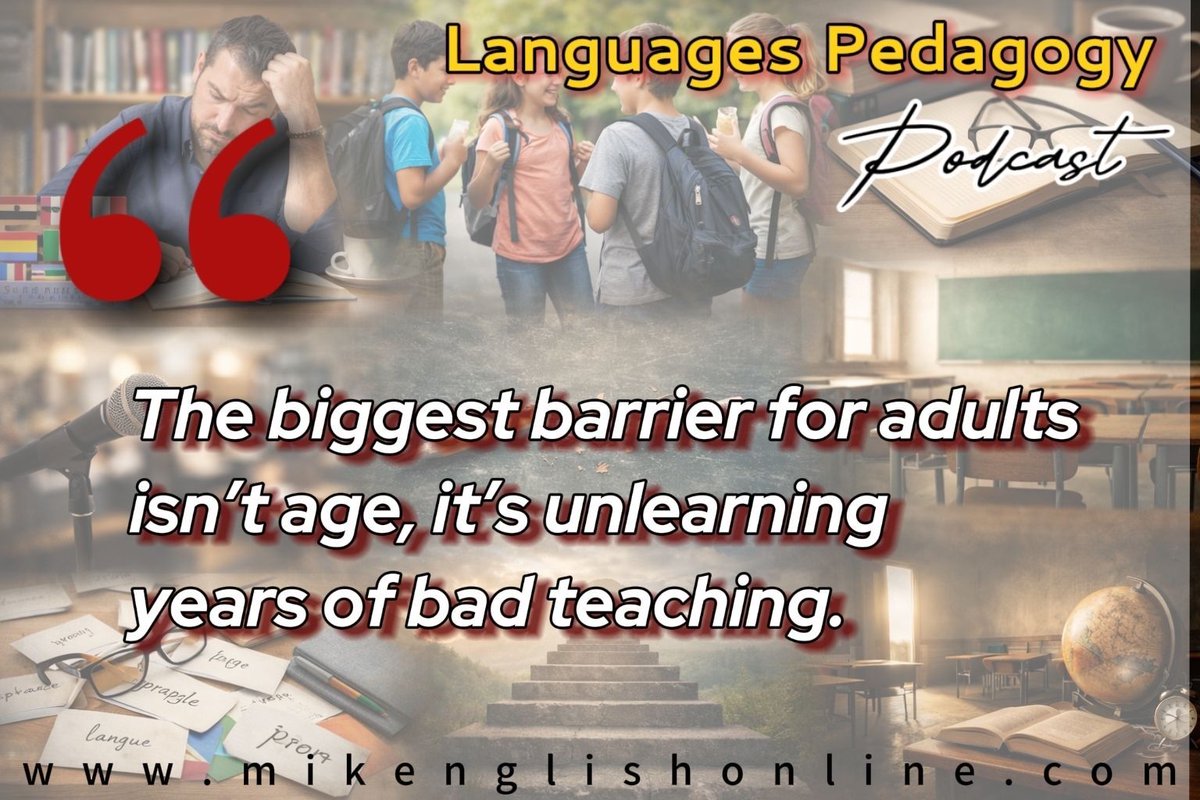
Age isn’t the problem. Conditioning is.
Most adults don’t struggle with languages…
they struggle with undoing years of ineffective learning.
Memorizing without meaning.
Studying without using.
Learning without ever communicating.
That’s the real barrier.
Fluency doesn’t start when you “learn more.”
It starts when you unlearn what’s holding you back.
Rebuild the process → rebuild the learner.
🎙️ Languages Pedagogy Podcast
🌐 mikenglishonline.com
#languagelearning #education #elt #teachbetter #learnlanguages #secondlanguage #teachers #edutalk #linguistics #growthmindset
2
7
Mar 24
You didn’t fail the language. The method failed you.
You were taught to read it.
You were trained to write it.
But you were never taught to hear it…
never pushed to live it.
So what did you actually learn?
Not communication.
Just decoding symbols on a page.
Real language isn’t built through rules.
It’s built through exposure, interaction, and repetition.
If it doesn’t sound real… it won’t feel natural.
🎙️ Languages Pedagogy Podcast
🌐 mikenglishonline.com
#languagelearning #elt #education #teachinglearning #linguistics #secondlanguage #teachers #edutalk #learnlanguages #communication

2
12
Mar 23
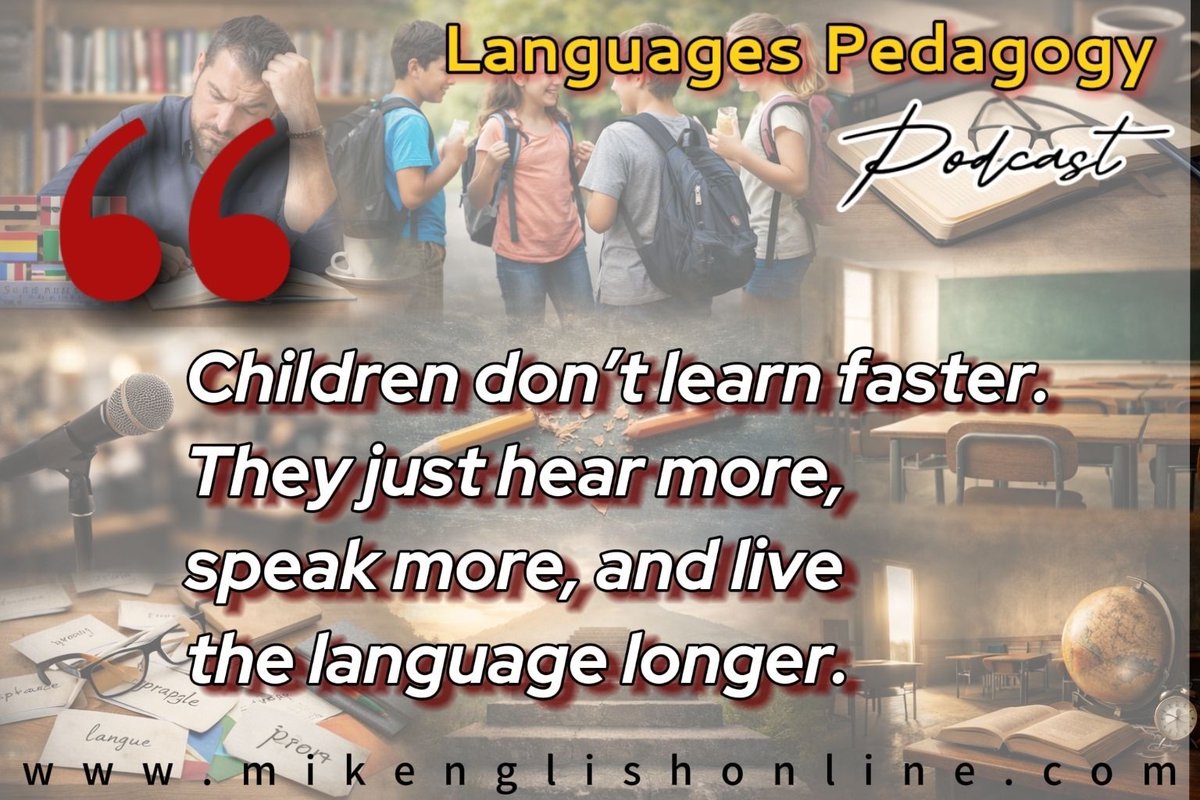
Children don’t learn languages faster. They’re just given better conditions.
More exposure.
More repetition.
More real-life use.
They don’t study the language…
they live inside it.
Meanwhile, adults are expected to perform without ever being immersed.
That’s not a learning gap.
That’s a design flaw.
Change the conditions → change the results.
🎙️ Languages Pedagogy Podcast
🌐 mikenglishonline.com
#languagelearning #education #elt #teachinglearning #linguistics #secondlanguage #teachers #edutalk #learnlanguages #growthmindset
2
18

Learning a new language, whether it's your first or second, thrives on repetition, curiosity, and relaxation. Don't stress about mistakes—focus on consistent exposure and engagement. These basics are key to mastering any language. #LanguageLearning #SecondLanguage
3
119
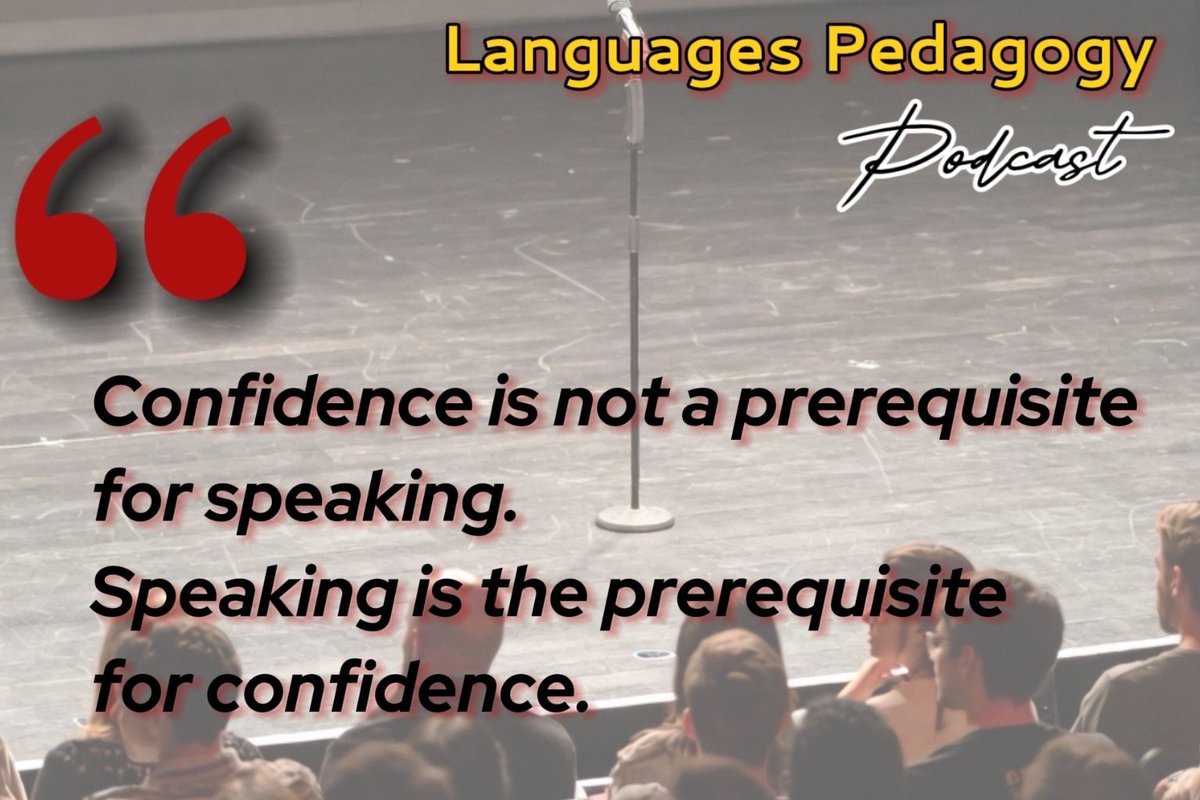
Most people are waiting to feel confident before they speak.
That’s why they stay silent for years.
Confidence doesn’t come first.
Speaking does.
Episodes 189 & 190 with John Freeman expose the truth nobody tells language learners.
And it will challenge everything you believe.
#languagespedagogypodcast #speakingconfidence #languagelearning #elt #learnenglish #communication #confidence #mindsetshift #secondlanguage #englishteacher #podcast #globeteach #personaldevelopment #appliedlinguistics
3
19
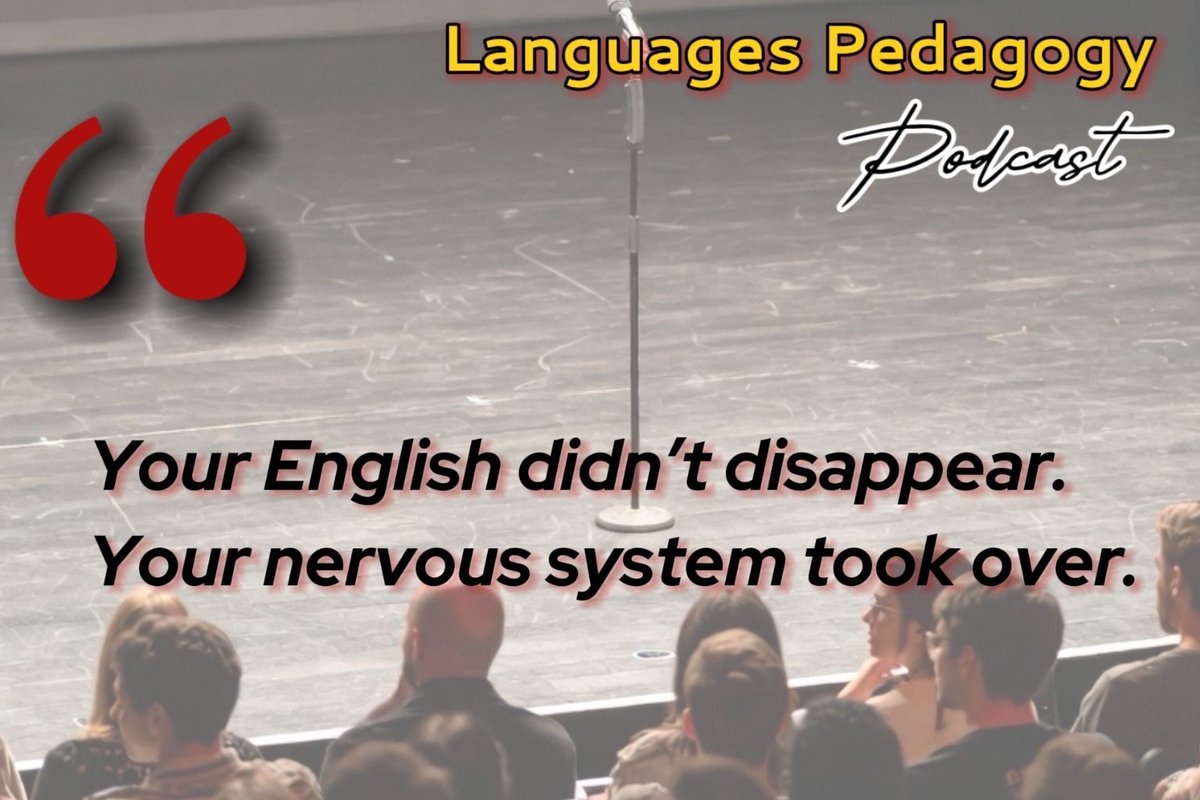
You didn’t forget English.
Your brain protected you.
That moment when you freeze… go blank… panic…
It’s not about vocabulary.
It’s about your nervous system.
Episodes 189 & 190 with John Freeman will change how you see speaking forever.
It’s deeper than language.
#languagespedagogypodcast #speakingconfidence #languagelearning #elt #learnenglish #communication #psychologyoflearning #secondlanguage #englishteacher #podcast #globeteach #confidence #mindset #appliedlinguistics
3
33

Feb 7
اكتساب اللغة ليس بالصعوبة التي يتصورها البعض، ولا يتوقف عند عمرٍ معين. فحسب نظرية المدخل القابل للفهم للعالم اللغوي ستيفن كراشن، يتعلم الإنسان اللغة بشكل طبيعي عندما يتعرض لها في سياق مفهوم وبدون ضغط. اللغة رحلة مستمرة وليست سباقًا مع العمر.
Language acquisition is not as difficult as some people think, and it does not stop at a certain age. According to the Comprehensible Input Hypothesis by linguist Stephen Krashen, people acquire language naturally when they are exposed to meaningful and understandable input without pressure. Language learning is a lifelong journey, not a race against age.
#تعلم_اللغة #اكتساب_اللغة #تعليم #تطوير_الذات #تعلم_الانجليزية #LanguageLearning #SecondLanguage #Krashen #Afrah_Alazmi
1
5
710

Jan 21
難しい言語『日本語』
難しい言語『英語』
『両方』『むずかしい』んかい。
とびっきりの『マゾ』だな。
#Language #Linguistics #SecondLanguage
#ThirdLanguage #MonoLingual #Bilingual
#Trilingual #Quadrolingual #Pentalingual
#Multilingual #BodyLanguage #EnoughWriting
4
60

✍️ #BCBLpaper in #ScientificStudiesofReading | Cross-linguistic influences of orthographic depth on written #wordlearning in the first and #secondlanguage.
Antzaka, A., Li T., Jevtovi, M. & Martin, C.
info⬇️
tandfonline.com/doi/full/10.…
2
114

ReCALL @CambridgeUP Journal Volume 38 - Issue 1 -January 2026 is out. #appliedlinguistics #language #languagelearning
Here's a quick look at the papers in this issue.Hou, Z., & Min, S. (2026). Dialogue-based computer-assisted language learning systems for second language speaking development: A three-level meta-analysis. ReCALL, 38(1), 40–56.
doi:10.1017/S0958344025100268
cambridge.org/core/journals/…
#LanguageLearning #EdTech #CALL
#SecondLanguage #AIinEducation #languageeducation #appliedlinguistics
Speaking in a second language (L2) is hard: limited practice, anxiety and few real conversational partners are persistent barriers. Dialogue‑based CALL systems aim to let learners interact with automated interlocutors, potentially boosting fluency and confidence.
The authors systematically reviewed 16 empirical studies with 89 effect sizes and conducted a three‑level meta‑analysis to assess how effective dialogue‑based CALL is for improving L2 speaking skills.
Three major moderator factors impacted outcomes:
• The type of system used
• Meaning constraint on learner production
• The modality of system output (e.g., speech vs. text)
Other variables like learner proficiency or length of study didn’t meaningfully alter effectiveness in this analysis.
📍 Dialogue systems that offer meaningful, interactive exchanges can help learners practice speaking when human partners aren’t available.
📍 Teachers and developers should focus on task design and system features rather than only technology hype.
The field is still young with limited studies.
7
26
990

I’m writing the first draft of a brand new short story in the Japanese language. Wish me luck in crafting something powerful and convincing someone to publish it.
#exophonic #writing
#secondlanguage #japanese #shortstory
3
76


3 Dec 2025
When learning a new language. You have to learn the “fun” stuff first 😂 Gracias México 🇲🇽🥳
🎥 @klxxblatt @clinchmafia
#BadWords #SecondLanguage #LearningWhatsImportant #FunFirst #🇲🇽 We Can, We Will, Together, We Are, #TeamShorty
2
4
72
3,371