31 Oct 2025
The United States, along with the international community, maintains an extensive global network of detectors designed to monitor for nuclear explosions, making fully secret testing highly challenging but not entirely impossible under certain limited conditions.
### Global Monitoring Systems
The primary international framework is the International Monitoring System (IMS) operated by the Comprehensive Nuclear-Test-Ban Treaty Organization (CTBTO). This network consists of 321 monitoring stations and 16 laboratories across 89 countries, using four main technologies to detect nuclear explosions anywhere on Earth:
- **Seismic sensors**: These detect ground vibrations from underground explosions, distinguishing them from earthquakes based on waveform patterns. They form the backbone for monitoring underground tests, which are the most common method for attempting secrecy.
- **Hydroacoustic sensors**: Eleven underwater stations listen for sound waves from explosions in oceans or near coastlines.
- **Infrasound sensors**: Sixty stations pick up low-frequency atmospheric sound waves from above-ground or near-surface blasts.
- **Radionuclide sensors**: Eighty stations (plus mobile labs) sniff out radioactive particles or gases in the air that vent from a test site, providing "smoking gun" evidence of a nuclear event.
About 90% of the IMS is operational, and it has successfully detected all six of North Korea's declared nuclear tests between 2006 and 2017, as well as non-nuclear events like earthquakes and the 2020 Beirut explosion. The system can generally detect explosions as small as 0.1 to 1 kiloton (kt) yield, depending on location and depth, though very distant or tiny events might be misidentified as natural phenomena.
The U.S. supplements this with its own national capabilities, including:
- Space-based sensors on satellites (e.g., the Space and Atmospheric Burst Reporting System, or SABRS) that detect optical flashes, electromagnetic pulses, and X-rays from atmospheric or space explosions.
- Advanced radionuclide detection systems like Xenon International, which monitors for specific isotopes (e.g., xenon) that indicate nuclear activity, even distinguishing them from civilian sources like medical isotope production.
- Seismic and other ground-based networks operated by agencies like the National Nuclear Security Administration (NNSA) and the U.S. Air Force Technical Applications Center.
These systems provide real-time data to the CTBTO's International Data Centre in Vienna and U.S. agencies, enabling rapid analysis. The U.S. also collaborates with allies for data sharing, ensuring near-global coverage.
#SecretTesting 👀
3
1
5
340

26 Oct 2025
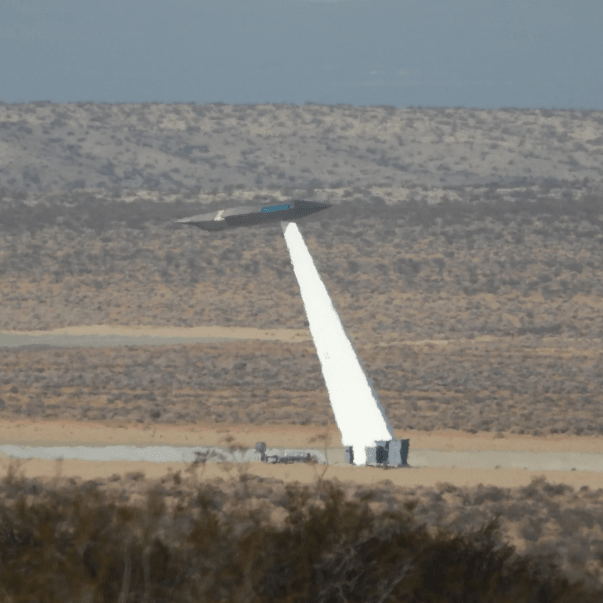
EXCLUSIVE: 'UFO-like' craft seen at secret US test base...
UF-WOAH!!!!..... Bombshell footage shows mystery ‘UFO-like’ aircraft being tested in secret experiments at US weapons base "Skunk Works"
THE SUN: For years, the testing facility has been known for housing secret objects due to its history of developing classified technology
BOMBSHELL: Video footage shows a mysterious “UFO-like” aircraft being tested during secret experiments at a US military-linked base.
Investigative YouTuber Anders Otteson told The Sun how he camped on public land overlooking defence firm Lockheed Martin’s Helendale radar-testing facility, where he filmed the unknown object.....
the-sun.com/news/15390497/
#UFO, #MysteryAircraft, #SkunkWorks, #LockheedMartin, #Helendale, #SecretTesting, #UFOSighting, #MilitaryBase, #ClassifiedTech, #Bombshell, #SecretExperiments, #Aerospace, #UnknownObject, #RadarTesting, #Conspiracy, #UFOFootage, #Investigative, #YouTuber, #AndersOtteson, #TheSun, #MysteryCraft, #USMilitary, #SecretBase, #UFONews, #Aviation, #TopSecret, #UFOEvidence, #MilitaryTech, #Unidentified, #AerospaceMystery, #SecretFacility, #UFOConspiracy, #ExperimentalCraft, #HiddenTech, #UFOInvestigation, #SkunkWorksSecrets, #MysteryFlight, #Classified, #UFOReveal, #SecretProject, #MilitarySecrets, #UFOVideo, #AerospaceTech, #Unexplained, #UFOTesting, #SecretAircraft, #ConspiracyTheory, #UFOReport, #MilitaryMystery
1
4
179

20 Jun 2025
A harrowing but necessary watch #Grenfelluncovered
#Netflix
#Arconic #Rydon #Kingspan #DavidCameron
#Deregulation #SecretTesting #FailedTesting
#EricPickles (a disgraceful human being)
Remember the #72 😥
netflix.com/us/title/8168313…
2
2
25
982

25 Apr 2020
Another terrible effect of coronavirus delaying all these races, was giving @canyon_bikes more time to help me ruin gravel 😈😈😈 #secrettesting #PeteRuinedGravel
2
1
26

16 Aug 2018
@freesamplescouk Freebie Thursday !!! Thank you for the #freesamples #links @ComeRound #MyBassettsVits #SecretTesting #free goodies 😊😊😊

1
3

7 Feb 2018
Random morning @HeathrowAirport and already bumped into people from two other #F1 teams #SeasonIsGo #SecretTesting #AirportSocialClub
1
8

4 Jun 2016
We're testing 360 video using multiple Olfi's at @Oulton_Park .... #secrettesting ;)
1
2
4

18 May 2016
#secrettesting // we have just secured secret testing video of the new BMC Mini AP4... #maybe #maybenot... fb.me/3Gj9Mushq
2

5 Dec 2015

1
1
4 Dec 2015

6
11
4 Dec 2015

2
3