
11 Aug 2025
Years ago, I filled in for a 6th grade math teacher for three months, covering his five classes per day. Since I wasn’t the “real” teacher, some kids were anticipating three months of nothing but chilling with their friends.
“You better not make us do math!” one threatened.
She wasn’t playing.
I had been given permission to pilot the example-based “see it, do it, check it” worksheets that later became the You Teach You math method during the teacher’s absence, and I was planning on having the students start at the beginning of the sequence and work their way through it at their own pace, filling in missing background knowledge and skills along the way.
But while the rest of the students in her class got right to work on the first activity - some of them sighing angrily - she just sat there red-faced with her arms folded, refusing to budge.
I was hoping they would all make it through the 6th grade activities and test prep worksheets I had prepared before the three months were up, since their regular teacher would be back right before testing season.
But she was determined not to take the trip.
In the old days, I would have clamped down on her, but the whole point of the worksheets was to be self-motivating, so I let it drop. She wasn’t being disruptive, so - figuring you can’t please everybody - I looked away and tried not to let it get to me.
But it did.
I had thought that the self-pacing and the self-checking challenge of the activities would work for all of them, but that clearly wasn’t the case.
My hopes for the method - a method I had put my heart and soul and every last moment of free time into - started to sink.
But then something big came to my rescue.
Boredom.
After sitting for twenty minutes with nothing to do but look at the clock, and after seeing everyone else in the room settling in to do the work, she slowly looked over the first activity.
And then picked up her pencil.
She rarely put it down again for the next three months.
And she crushed the state test that year.
Kids hate boredom more than anything.
And they love feeling smart more than anything too.
I’ve said it before and I’ll say it again: B CC = M.
Boredom Checkable Challenge = Motivation.
#YouTeachYou #CognitiveLoadTheory #MathEd #SelfPacedLearning #SelfCheckingMath
9
8
58
2,762
8 May 2025
“Modifying” math worksheets by reducing the number of problems a student must complete can mean crucial content gets missed. Better to have everyone work through a structured sequence of self-explanatory, example-rich worksheets at their own pace. That way no one gets rushed or slowed down, and everyone has the chance to master every single aspect of the material.
#YouTeachYou #AmpleExamples #SelfCheckingMath #Reproducible #MathWorksheets
3
3
26
1,211
7 May 2025
I came in from my morning walk the other day to find my wife, coffee in hand, reading a tweet I had posted earlier that morning. The tweet included a photo of an example-based worksheet that requires students to graph inequalities on the number line, and as I walked past, she said, scanning the examples and thinking her way through the practice problems, “This is like doing Sodoku!”
This was not the first time I had heard this; my 6th, 7th, and 8th graders from a while back used to say the exact same thing.
And it's not surprising.
In addition to their countless other benefits, pre-worked examples present students with a delightful challenge right up front: “Are you clever enough to figure out what's going on here?” Add the chance to test their understanding with practice problems and throw in a self-checking key, and you've got everything you need for an enjoyable and even addictive activity that leaves students feeling smarter than they did before.
Sorta like a self-instructional Sodoku.
#YouTeachYou #SelfCheckingMath #ReproducibleMathWorksheets
9
432
5 May 2025
The other night my wife and I met our son for dinner and to discuss plans for the You Teach You math method going forward. As we sat down at the table, our son - who's a full partner in our effort to bring basic math to the masses - launched into a story he couldn't wait to tell us.
Turns out several days ago, our first-grade granddaughter was playing in his office at home, and he noticed that she had been silent for a while. He didn't think much of it, being occupied with work on his laptop in the next room, but after a while he started to wonder what she could possibly be doing in a room with no “kid stuff” in it.
Several moments later he found out when she emerged with a copy of You Teach You: Book One and a pencil in her hands. She had taken it off of the pile of sample books he keeps in his office, leafed through the first few pages, gotten curious, and taken it upon herself to complete the first nine activities at his desk, studying the self-explanatory examples and working through the related practice problems on her own; she had emerged to ask if he could check her work. She hadn't noticed the answer keys on the back of each page, and when he pointed them out to her, she snatched the book back from him to do the job herself. She snuggled in next to him on the couch, and for the next several minutes they worked side by side, him typing on his laptop, her going through the problems she had completed, asking him a question every so often, but mostly just whispering “Yesss,” “Yesss,” “Yesss” to herself over and over again.
He choked up a little as he told us this story. We choked up a little as we heard it. The image of the two of them working together independently still chokes me up a little.
Of all the claims I've made here on TwitterX over the past two years, the one that's been met with the most derision (expectedly) has been the idea that even young children can teach themselves math with the right materials and assistance.
But why shouldn't they be able to?
Math can be expressed visually; kids love studying pictures (think of all the “spot the difference” challenges on restaurant placements that keep even the youngest kids occupied).
Math offers chances to try things yourself; kids are forever saying “Let me try!”
Math offers positive, meaningful reinforcement; kids crave positive, meaningful reinforcement.
Above all, mastering math makes a person feel smart, and kids love, love, love feeling smart.
Still, I know what some of you are thinking. What if a very young child isn't ready for something like You Teach You?
Then they're not ready.
That's the beauty of self-paced instruction.
(And yet another problem with the “one-size-fits-all” assembly line approach to math instruction that pervades our schools.)
When they are ready, on the other hand, self-explanatory, self-checking methods like You Teach You, can motivate them to, like my granddaughter, pick it up on their own.
Literally!
#YouTeachYou #AmpleExamples #SelfCheckingMath
5
5
58
2,227

24 Sep 2023
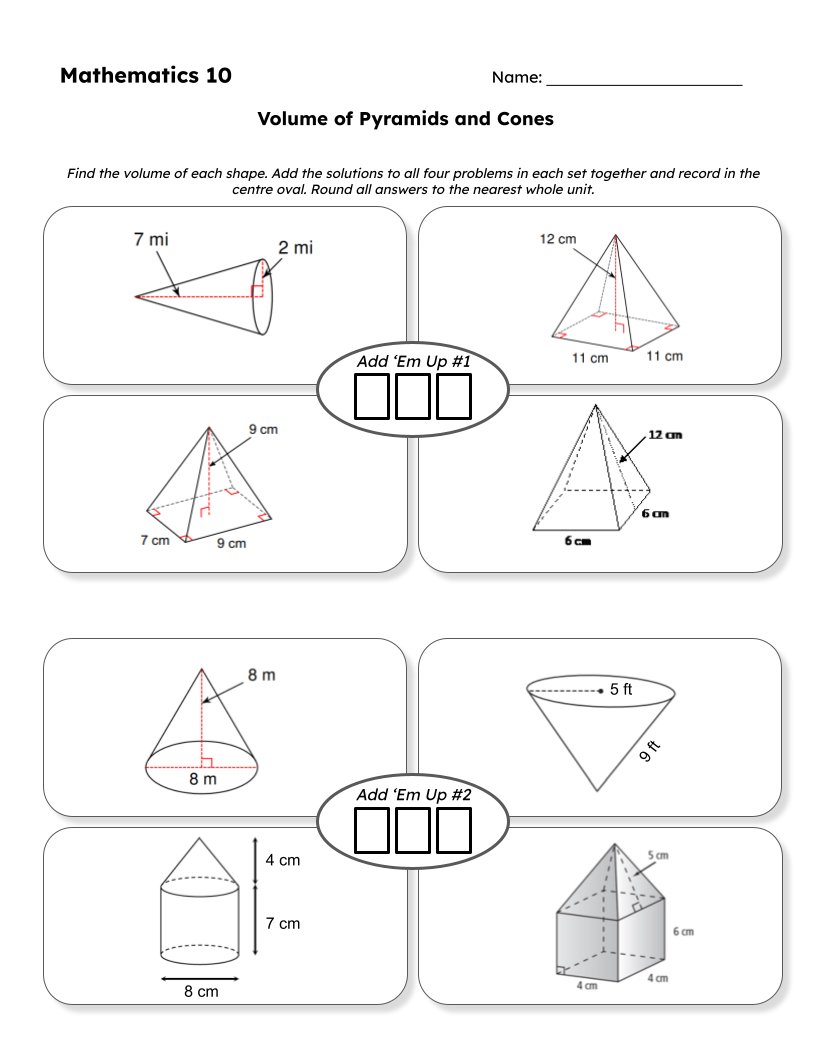
An "Add 'Em Up" #selfcheckingmath practice handout for my students tomorrow. Self checking sheets allow students to have immediate feedback. #ITeachMath #HRCEmath pbbmath.weebly.com/blog/asse…
1
17
69
19,246
16 May 2023
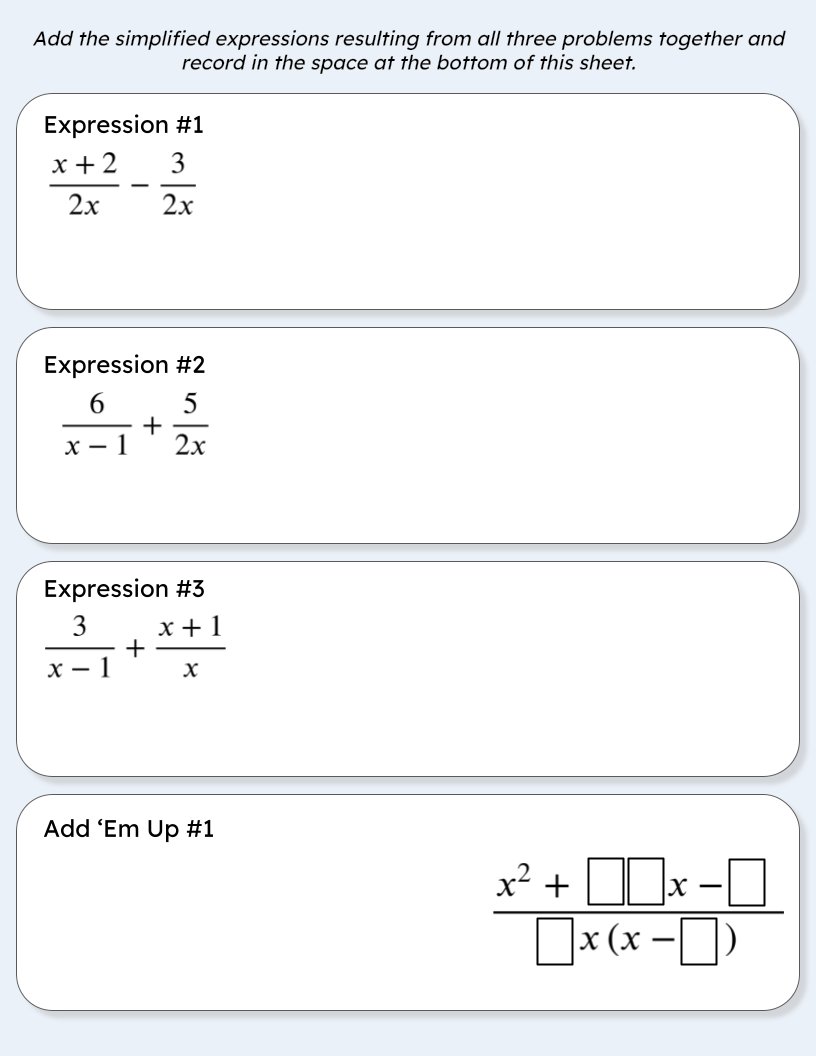
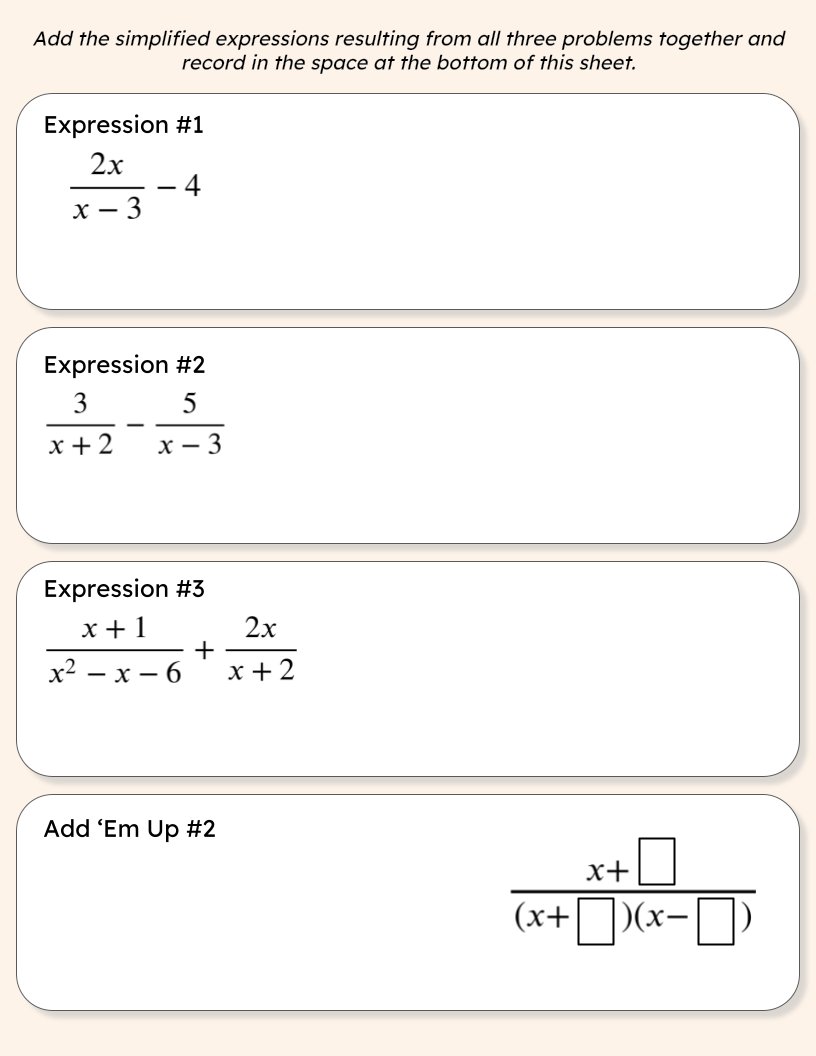
A #selfcheckingmath Add Em Up activity for adding rational expressions in Precal11. Giving this a try this week with @MullaneLouise. #ITeachMath #HRCEmath docs.google.com/presentation…
1
3
14
3,783