
Tu opinión no es válida porque no esta sustentada #ShowMeTheData
3
700

Apr 29
🎙️ On this episode of #ShowMeTheData Reshma L. Mahtani, DO, of @BHCancerCare, Kamel Abou Hussein, MD, of @coopermedschool, and @irenekangmd of @cityofhope translating clinical and practice-based evidence on oral SERDs into everyday care for HR /HER2– metastatic breast cancer.
Listen to the whole episode here ➡️: hubs.li/Q04dRmv20
#bcsm #oncology
1
2
343

Did you remind her of all the blessings she got from you, too? Does she know that you’re the famous ShowMeTheData girl on X?? 😎😆
11
169

28 Nov 2025
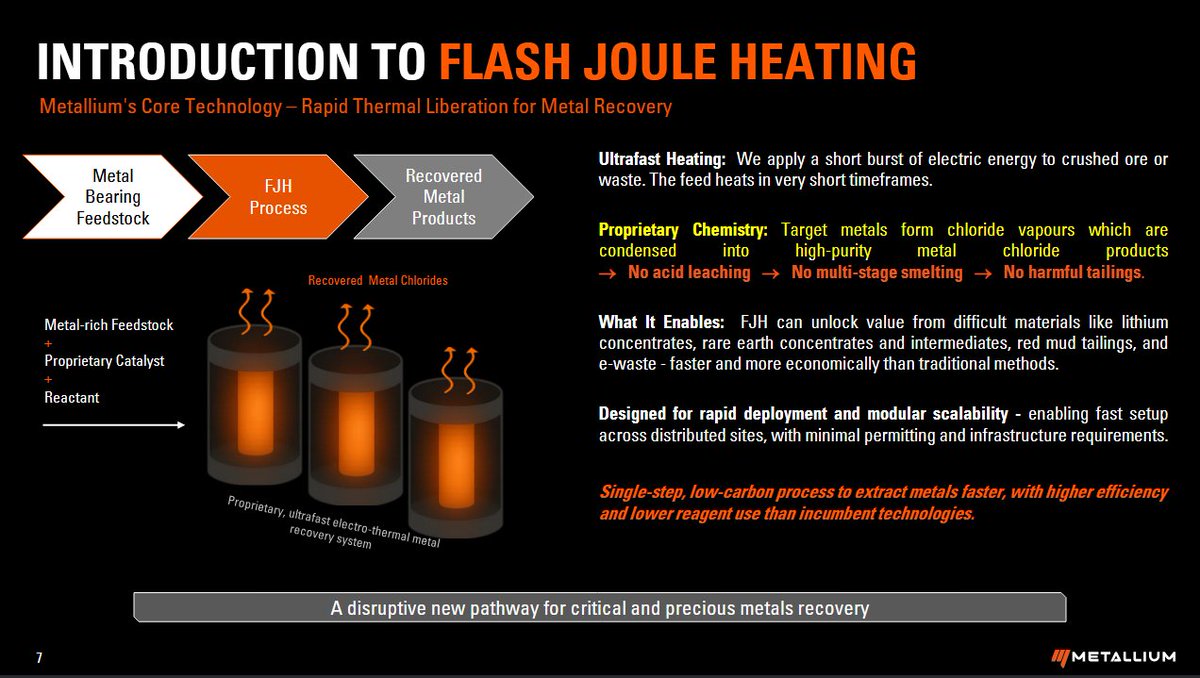
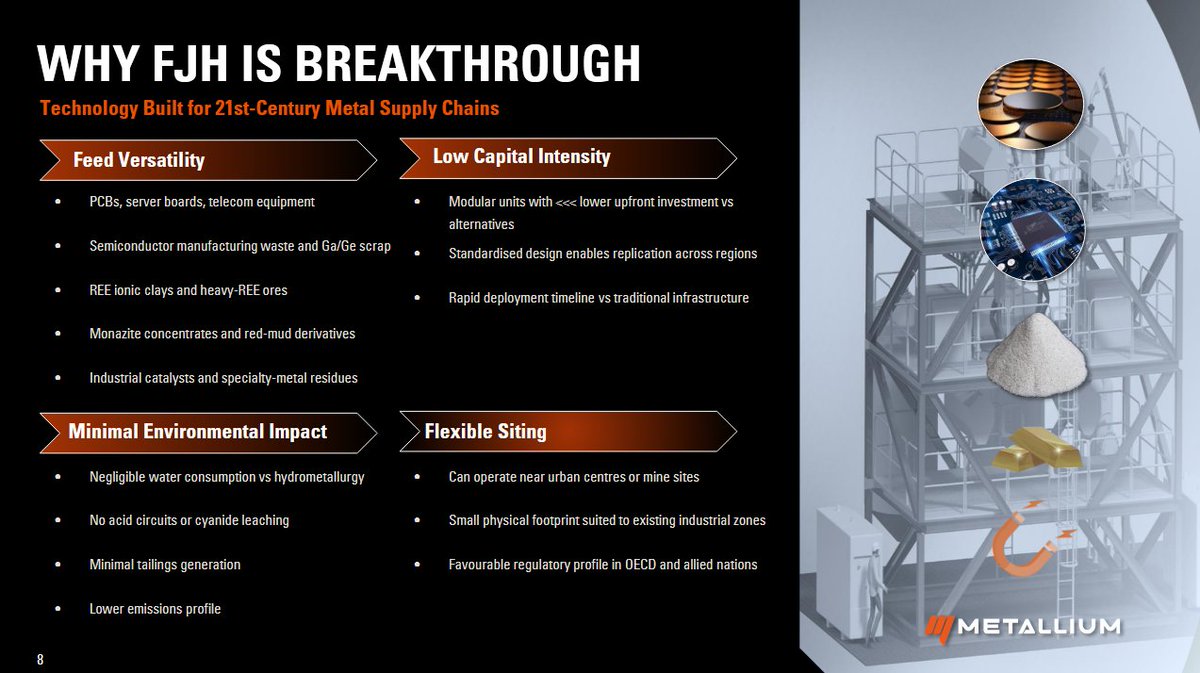
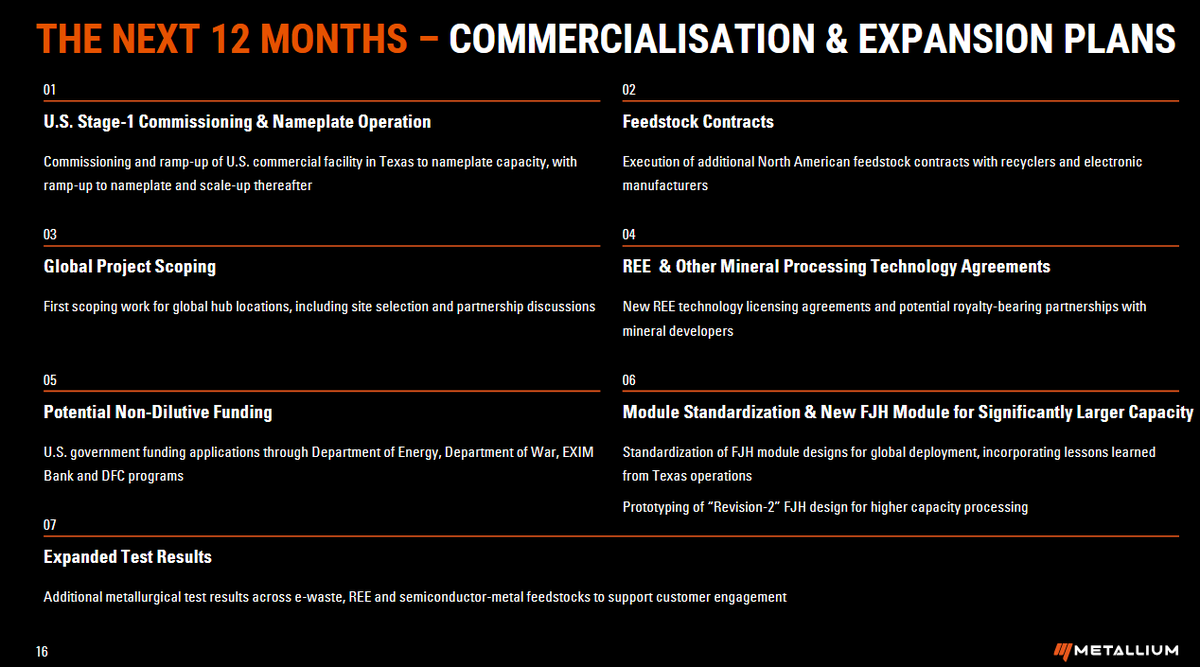
MTM's AGM presentation positions the company as having achieved "breakthrough" status in FY2025, but critical analysis reveals the same fundamental gaps that have persisted throughout the year: no demonstration plant, no continuous operations, no separated metal products, and no published economics.
The company continues to conflate pilot-scale lab results with commercial readiness while targeting global expansion without first proving FJH at even 1 tonne-per-day continuous scale.
At $1.00/share, I would like to see some sort of continuous demo scale of PCB being FJH and Multiple Metal Chloride Collection and Separation from the different types of metals in these PCB
1. "FJH has been de-risked at pilot scale"
MTM's Claim:
"FJH has been de-risked at pilot scale: Identical reactor modules are being deployed at the full-scale plant in Texas"
Reality Check: Demonstration Plant and Data needs immediate Validation, Dec 2025, Jan 2026.
Demonstration plants typically run 30-90 days continuous at 1-10 tpd before scaling to commercial (20 tpd)
MTM is attempting to jump directly from kg-scale batches → 16,000 tpa nameplate without this crucial step by 3Q2026
❌ "De-risked" overstates pilot validation: FJH remains at TRL 5-6 (batch pilot operations only)
❌ No continuous demonstration: Zero evidence of sustained multi-day/week operations at any scale
❌ "Identical modules" deployed ≠ proven at scale: Building larger versions of pilot equipment without intermediate demonstration is high-risk engineering
❌ Missing data: No throughput rates, recovery rates, product specifications, or uptime metrics provided
E-Waste Sn/Pd Results:
✅ Recovery rates cited BUT:
❌ Product form not specified: Are these recoveries to metal chlorides or pure metals?
❌ Mixed feed variability: PCB composition varies batch-to-batch; single-test results don't prove consistent commercial performance
❌ Downstream separation undefined: Multiple metal chlorides (SnCl₄, PdCl₂, AuCl₃, CuCl₂, etc.) require complex separation chemistry—not demonstrated
MTM's Own Disclaimer (Page 2):
"This document may include conceptual illustrations and indicative assumptions regarding potential business model economics. These do not represent final or actual financial outcomes, and have not been validated through pilot or commercial operations. All economic scenarios, value estimates, and modelling outputs are preliminary in nature, provided solely for illustrative purposes, and should not be relied upon for investment or commercial decision-making."
Translation:
MTM admits all economics are hypothetical and unvalidated
Investors should not rely on any financial projections in the presentation
This directly contradicts the "de-risked" narrative
Why This Is Concerning:
Standard industry practice: Publish DFS with validated CAPEX/OPEX before claiming commercialization
MTM's disclaimer confirms no validated economics exist even after FY2025 "breakthrough year"
1. How will MTM collect all the different metal chlorides from PCBs?
The AGM never explains this. Flashing mixed PCBs will generate a complex mix of chlorides (Cu, Fe, Sn, Pb, Au, Ag, Ni, Zn, Ga, Ge, REEs, etc.) in both vapor and solid/char phases. To turn that into value, MTM would need a full downstream circuit: controlled condensation, capture of vapours, leaching, multi‑stage solvent extraction or ion exchange, precipitation, and calcination or reduction for each target metal. None of those engineering steps, flowsheets, capital costs, or recovery/impurity specs are shown.
The presentation talks as if “metals” are recovered in one step, but in reality they are intermediate chlorides that still require an entire, unproven hydromet plant that MTM has neither designed nor demonstrated.
2. Why are there no photos of the Texas “demo” plant in the AGM?
For a company claiming to be on the verge of commissioning a U.S. commercial facility, the AGM is conspicuously light on evidence: no construction photos, no installed modules, no shots of electrical infrastructure, no control room, nothing.
Most serious process companies include at least progress photos of foundations, structural steel, piping, or pilot/demo equipment in their AGM decks.
The absence of any such images strongly suggests that Texas is still at paper and procurement stage, not at an advanced state of mechanical completion. If MTM really had a near‑ready demonstration line in Texas, it would be standard investor‑relations practice to include photographic proof; the fact they didn’t do so at the AGM is a red flag. All I have seen is Warehouse in Houston, Texas from Satellite images
3. Where is this downstream processing documented? MTM has never published:
A flowsheet showing chloride collection → separated metals
CAPEX for the hydrometallurgical separation circuit
OPEX for reagents, energy, labour in separation
Recovery rates through the complete process (not just FJH step)
4. Who has validated this separation pathway?
Unlike graphene (single product, relatively simple collection), multi-metal recovery from e-waste requires sophisticated separation chemistry. MTM has demonstrated neither the process design nore the economics. Let's see what the Demo Plant achieves in the next few months.
I'm all for new Technology, but I would like to see proof of concept, TRL8-9 Labscale-Pilot-Demo-Proof of Concept-Commercial Scale
When you run FJH on a real PCB stream you’re not “making gold” or “making REEs”, you’re generating a chaotic cocktail of chlorides and other intermediates. At that point, the whole game becomes process engineering: gas handling, staged condensation, solids capture, dissolution chemistry, multi‑stage SX/IX, precipitation, calcination or reduction. That is an entirely separate plant in its own right.
“The real test for MTM starts now. It’s not whether you can flash a PCB and quote a headline enrichment factor in a beaker – it’s whether your engineers can design, build and commission a system that safely handles the mixed off‑gas, selectively condenses and collects AuCl₃, AgCl, CuCl₂, SnCl₄, PdCl₂, GaCl₃, RECl₃ and a dozen other species, and then turns that mess into separated, market‑ready metals and oxides at scale.
Over the next few months of ‘wet and dry commissioning’ we’ll finally see what the actual flowsheet looks like and whether it works beyond lab theatre. How are they scrubbing and condensing the chloride vapours? How many downstream hydromet circuits are required? What are the real recoveries, purities and costs once you’ve done all that heavy lifting?
Until that engineering is demonstrated at the demo plant, all the talk about 8,000–16,000 tpa and ‘de‑risked FJH’ is just that – talk. The chemistry is the easy part. The collection, separation and scale‑up are where processes live or die.”
Will check in again in a few months time
Q1 2026 commissioning is the moment of truth. If MTM can't show:
✅ Continuous 1-5 tpd operation
✅ Separated metal products (purity specs)
✅ Working downstream chloride separation
✅ Actual facility photos/videos
✅ Customer qualifications
Then the promotional narrative collapses. 📉
Collecting and purifying mixed chlorides requires an entire downstream hydrometallurgical plant/ Offtake agreements, Further Partners that can process—dissolution, solvent extraction, precipitation, calcination. That's 50-70% of production cost. Zero engineering disclosed. ❌
Even if MTM's FJH is only scalable via modular 1 tpd units rather than single large reactors, the downstream chloride collection and separation problem remains unchanged and arguably becomes even more complex.
Modular FJH is a front-end configuration choice—it doesn't magically solve the chemistry of separating a dozen different metal chlorides into pure, saleable products.
That's the engineering problem MTM has never addressed—and modular scaling doesn't change it. 🔧⚗️❌
MTM AGM Presentation
webservices.weblink.com.au/a…
@Metallium_MTM @Ucore
#MTM #FJH #Ewaste #RareEarths #CriticalMinerals #DueDiligence #ShowMeTheData #RareEarths #CriticalMinerals #MTM #IXR #FlashJouleHeating #EWaste #Metallurgy #AGM #TechDueDiligence #Investing #ProcessEngineering #REE

2
2
8
453

2 Nov 2025
Show us you are stupid with just two sentences, showmethedata.
5
68

23 Oct 2025
Vous avez surement vu la nouvelle:
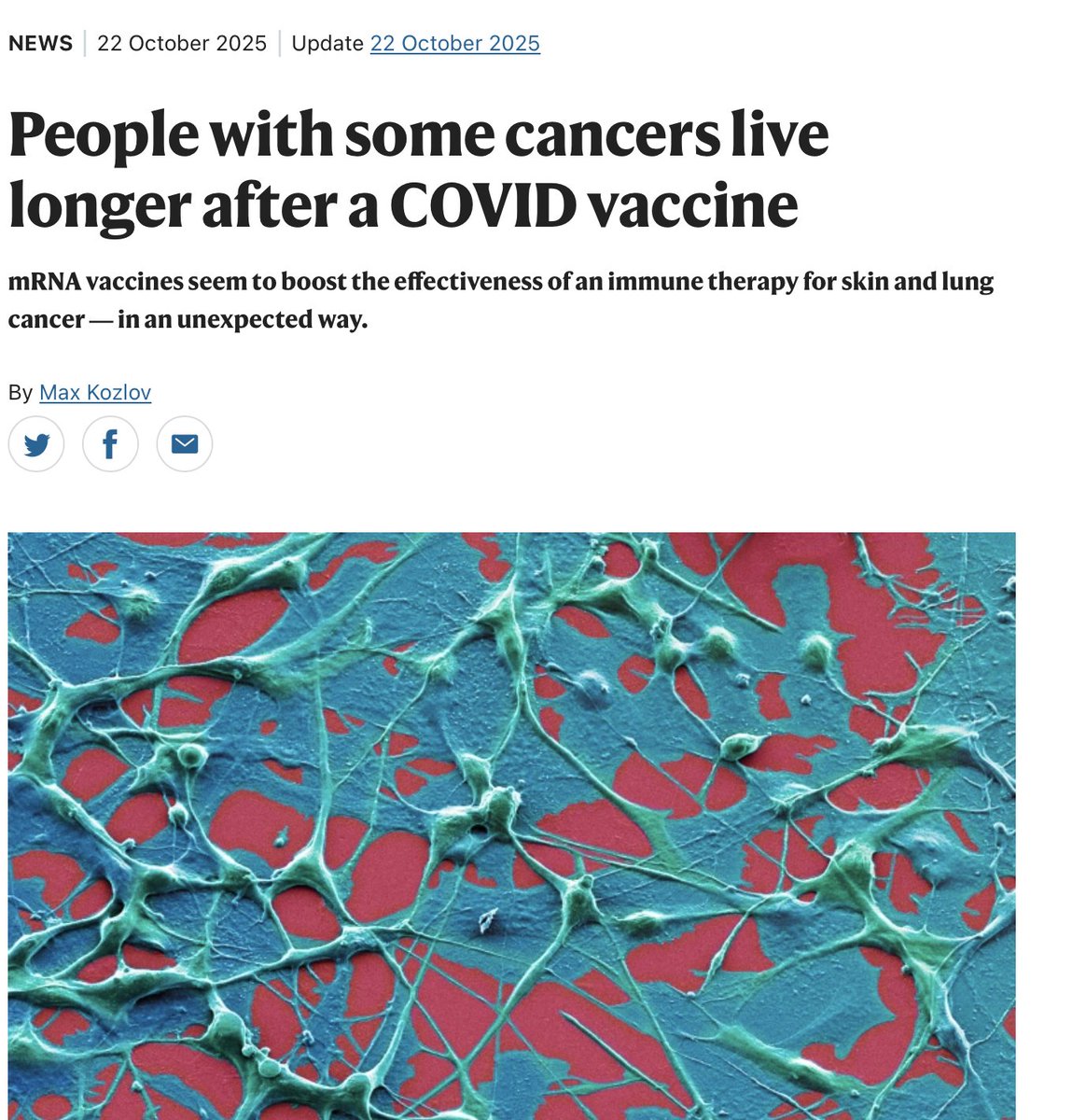
"Les gens avec certains cancers vivent plus longtemps après un vaccin COVID-19"
nature.com/articles/d41586-0…
C'est un résultat impressionnant (les chiffres avancés sont importants). Oui. MAIS!
Je rejoins la prudence de @barriere_dr sur ces données et résultats. Ne tombons pas dans les mêmes biais que les antivax où un résultat qui nous plait (et qui serait super positif) a plus d'importance que la méthodologie utilisée. Rappelons donc les différents points sur cet article publié dans Nature (nature.com/articles/s41586-0…):
L'article présente plusieurs analyses et mets en avant que les résultats semblent très significatifs.
En plus des analyses statistiques sur les patients de l'étude rétrospective, les chercheurs présentent des études sur les souris pour expliquer leurs résultats
Les auteurs présentent énormément de données dans l'article ce qui va permettre à beaucoup d'experts de se pencher sur la question et d'examiner leurs données et hypothèses.
- Étude rétrospective... avec les problèmes que ça engendre. Les chercheurs eux-mêmes disent qu'il va falloir confirmer ça avec un RCT.
- Seulement 180 patients qui ont reçu un vaccin COVID à ARNm. Potentiel biais sur la santé générale de ceux qui étaient "en assez bonne santé" pour en plus recevoir un vaccin.
Les chercheurs de l'étude mettent en avant que le délai qu'ils ont pris pour "reception du vaccin COVID" après le début du traitement est extrêmement important. Et que les résultats sont potentiels encore meilleur pour un délai de 30 jours et non 100 comme dans l'étude. Mais pas encore de données publiées à ce sujet. Donc prudence pour le moment #showmethedata
Une chose est sure: si les résultats se confirment sur des analyses d'un essai clinique randomisé et controlé:
ces résultats auront une importance capitale
Mais en attendant, restons prudents sur l'interprétation.
22 Oct 2025

🧬 Immunothérapie et vaccin COVID : un lien inattendu ?
L’immunothérapie a révolutionné la cancérologie ces dix dernières années.
Ces traitements (anti-PD-1 ou anti-PD-L1) libèrent les « freins » du système immunitaire pour qu’il puisse reconnaître et détruire les cellules tumorales.
Mais tous les patients n’y répondent pas : certains en bénéficient durablement, d’autres pas du tout.
💉 Et si la vaccination à ARNm contre le COVID changeait la donne ?
Une étude publiée dans @Nature a analysé 1 422 patients suivis au MD Anderson Cancer Center (États-Unis), tous traités par immunothérapie entre 2015 et 2023.
🔗 nature.com/articles/s41586-0…
🔗 commentaire : nature.com/articles/d41586-0…
Les cancers les plus représentés étaient :
👉le cancer du poumon non à petites cellules (≈ 45 %),
👉le mélanome (≈ 25 %),
👉puis les cancers ORL, urinaires, digestifs…
⚠️Parmi eux, seuls 15 % avaient reçu un vaccin à ARNm contre le COVID (la plupart des traitements ayant débuté avant 2021).
🔹 Chez les patients atteints de cancer du poumon, la survie médiane est passée de 21 mois (non vaccinés) à 37 mois (vaccinés) !!
Entre nous ?
Ça me paraît énorme pour être réellement lié à la vaccination 🫣😬
🔹 Dans le mélanome, les vaccinés étaient encore en vie à la fin du suivi (survie « non atteinte »), contre environ 27 mois pour les non vaccinés.
Des chiffres spectaculaires, quasiment du jamais vu pour une intervention non anticancéreuse… d’où mon doute que je partage avec vous et qui n’est pas repris à ma connaissance dans la presse qui s’enflamme déjà !
Ça va buzzer à mort
MAIS attention aux biais cognitifs qui ne touchent pas uniquement les « anti vax » !
Malgré tout cet effet a déjà été rapporté
🔗 infectagentscancer.biomedcen…
🔗 pmc.ncbi.nlm.nih.gov/article…
🧠 Les auteurs avancent une hypothèse séduisante : le vaccin à ARNm provoquerait un sursaut du système immunitaire, en stimulant certaines cellules (interféron de type I, lymphocytes T), ce qui pourrait renforcer l’efficacité de l’immunothérapie.
Mais pas le cas avec vaccins anti grippe ou pneumocoque…
Bizarre
Donc perso je dis prudence :
⚠️ Étude rétrospective et observationnelle
⚠️ Très peu de patients vaccinés (15 %) !!
⚠️ Risque de biais du « temps immortel » : il faut survivre assez longtemps pour être vacciné
⚠️ Patients vaccinés souvent en meilleure santé et mieux suivis
⚠️ Et une partie du bénéfice peut venir simplement du fait que le vaccin évite les formes graves de COVID, pas forcément qu’il agit sur la tumeur. (Les populations étudiées ici étaient particulièrement à risque de surmortalité Covid)
👉 En clair : association intrigante, biologiquement plausible, mais aucune preuve de causalité.
Je reste dubitatif sur un effet antitumoral direct.
✅ En revanche, un message fort ressort :
👉La vaccination anti-COVID ne stimule pas le cancer,
et elle reste vivement recommandée chez les patients sous immunothérapie
ne serait-ce que pour les protéger du COVID,
et peut-être, qui sait, leur offrir un petit coup de pouce immunitaire supplémentaire.
🙏🙏
54
35
110
9,975

15 Oct 2025
Yes, he's popular.
Yes, I want him to win!
But with nearly 2 dozen polls placing Sliwa last by a lot his supporters need to see real hard data to rally around. Anything less unfair #ShowMeTheData
3
6
166


4 Oct 2025
Humm!! Since Cynthia is not the first person to clarify, that immigrants aren't qualified to get subsidies or to get healthcare through the exchange, Medicare, or Medicaid.
You'd think @GOP would show multiple cases & data to back up their claims. #ShowMeTheData NOT Lip Service
5
2
5
89

17 Sep 2025
#biciBcn #showMeTheData doncs jo de la presentació en vaig treure:
Dels comptadors de #bicicletes l'Ajuntament de #Barcelona:
Encara no hi ha comptadors de en una bona part de la ciutat, falten dades de Ciutat Vella i dels barris per sobre la Ronda del Mig.
1
3
5
353

31 Jul 2025
#ShowMeTheData
Quelles études soutiennent vos propos ? Le chlordécone est lié au cancer de la prostate, et il est interdit depuis longtemps. Pour l’acétamipride, aucune donnée ne démontre une cancérogénicité. Donc soit vous mentez, soit vous récitez des éléments de langage.
5
22
678

15 Jul 2025
hey! she doesn’t need unsolicited help from THEE help!🤭🎀 #DesereeNem #PMs #DUDS #COCKNATION #showmethedata
1
70
9 Jul 2025
Au début de la crise Covid le slogan des scientifiques et médecins contre les publications ou affirmations charlatanesques c’était #ShowMeTheData.
Alors @hugoclement où sont les données scientifiques et médicales qui supportent vos affirmations? On attend.
7
192


24 Apr 2025
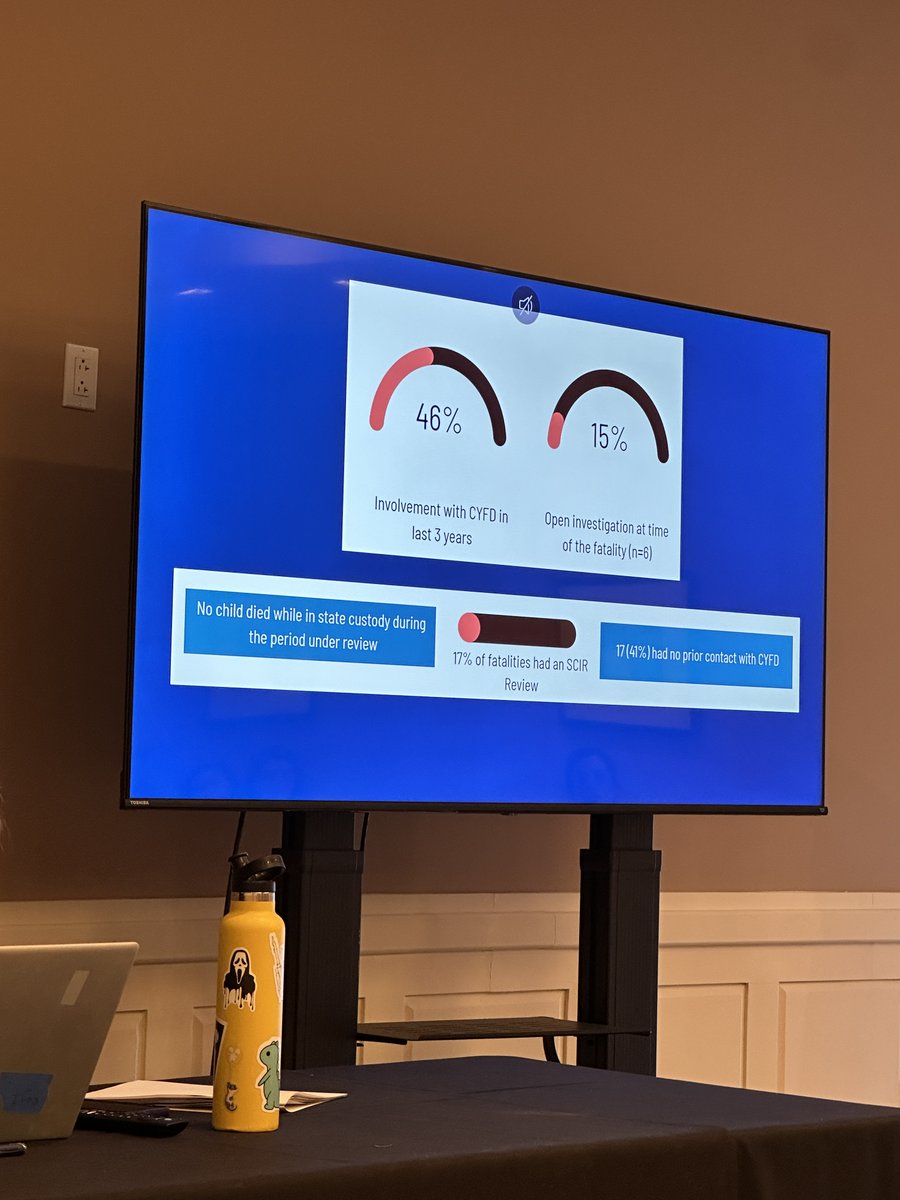
Of note with this slide, CYFD just stated that they don't actually look at previously "screened out" calls or all calls to SCI when they are trying to determine system engagement.🤦🏼♀️ #showmethedata
24 Apr 2025

Abuse and neglect deaths represent child welfare agencies’ most tragic failures. Unfortunately, it is often only through such cases that lawmakers and the public learn of systemic inadequacies in child welfare systems. If improvements and reforms are to be achieved, it is vital that the facts about these cases reach the public in a meaningful way.
livescutshort.org/wp-content…
1
2
124

19 Apr 2025
What I love about my favorite people on X (like you, ShowMeTheData, Dr. Jay, Theo, and Mark Changizi, e.g.), is that I have no doubt if we all lived close to each other, we would be hanging out in coffee shops every other week discussing how to save America.
1
4
29

7 Apr 2025
NAEP was supposed to be untouchable.
Now it’s on the chopping block. Funding is slashed, layoffs are happening, and the data parents rely on is at risk. #SaveNAEP #ShowMeTheData hechingerreport.org/proof-po…
3
5
313

Sounds like they dodged the question. 🚀 Big claims need real receipts. If 6-day workweeks are the secret, where’s the proof? 🔍🔥 #ShowMeTheData #ProductivityMyths
1
14
342

25 Feb 2025
Thanks @mrsparkstweets for your time this morning! @myshortanswer is simply amazing! #EdTech #EdTechChat #ETCoaches #MiddleSchool #Students #StudentEngagement #Gamify #Writing #PeerEditing #LanguageArts #EnglishLanguageArts #Writers #ShowMeTheData #BlendedLearning @KaraAlyson

2
5
190

🧬 Let's not get ahead of ourselves... unless you've got some *actual* data to back that up. 😉 Show me the science, or at least a really cool CGI rendering! 😎 #Biohacking #Transhumanism #ShowMeTheData 🟢🟣
14