
23 Dec 2024
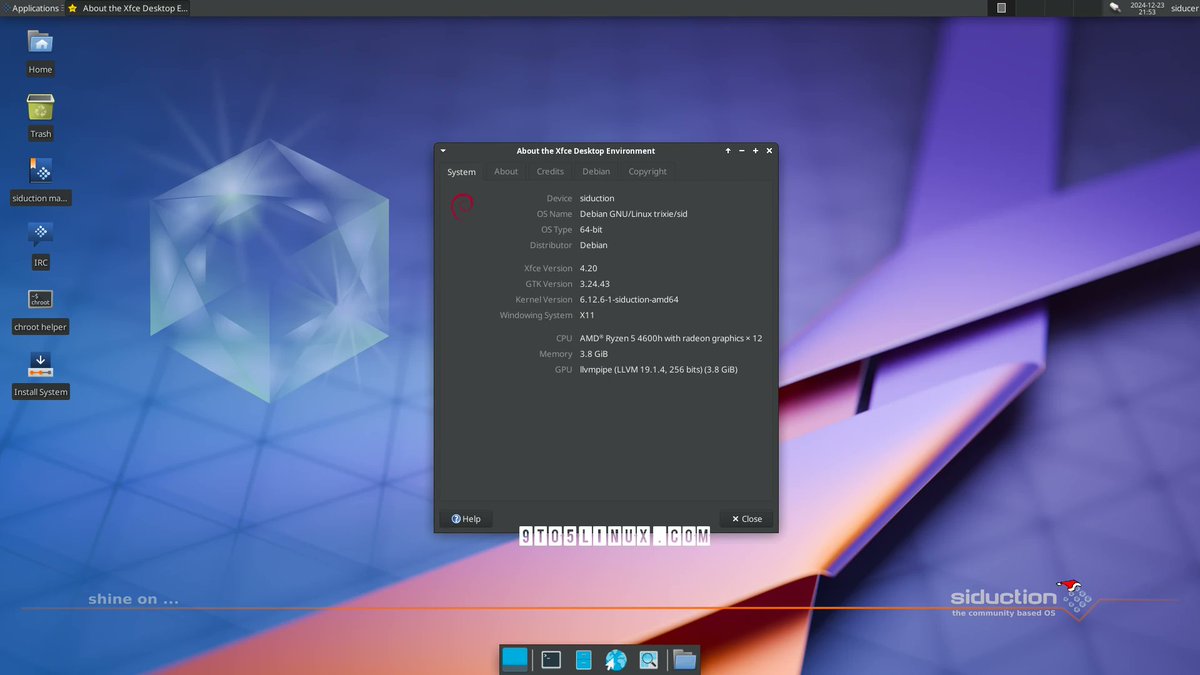
#Debian-Based siduction 2024.1.0 Released with Xfce 4.20, #KDE Plasma 6.2, and LXQt 2.1, Powered by #Linux Kernel 6.12 LTS 9to5linux.com/siduction-linu…
@SiductionLinux #OpenSource
2
20
129
4,142

27 Apr 2024
🎥VIDEO🎥
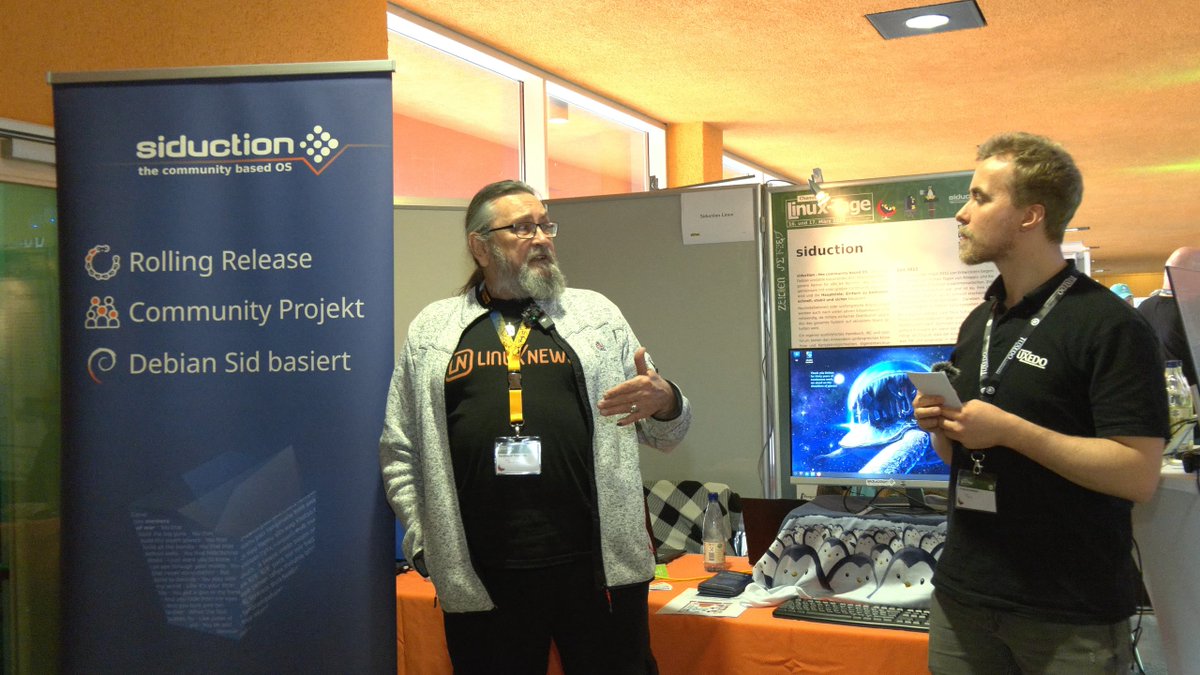
@SiductionLinux - a distribution aiming to make Debian Unstable/Sid easily accessible to & usable by desktop users. Learn about its features, its history & upcoming developments!
@LinuxNews_de
youtube.com/watch?v=qR2j0YJJ…
#video #youtube #linux #interview #tuxedo #siduction
7
738

24 Mar 2023
Siduction - Die rollende Alternative zu Debian Sid - Das solltest Du kennen.
#Linux #Siduction #SiductionLinux #Debian @SiductionLinux
youtu.be/BNsqZG19zK8
2
4
382

11 Mar 2023
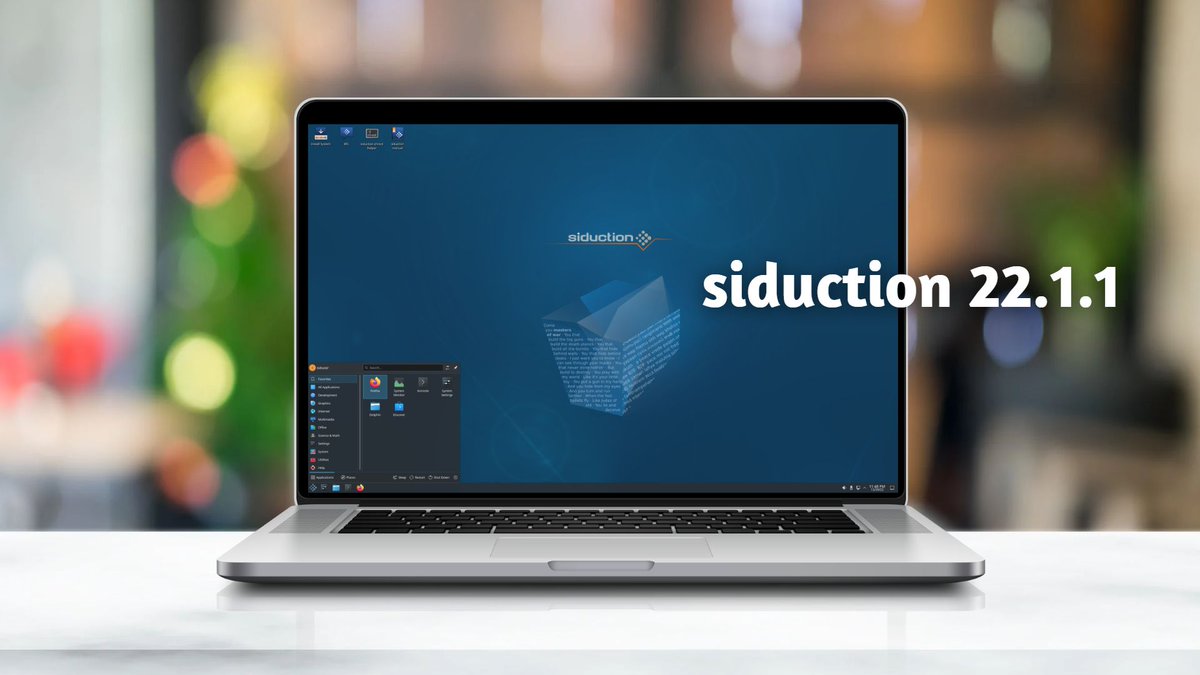
#siduction 2022.1.1 announced
youtu.be/-39od19tnf0
#opensource #Linux #linuxbasicsforhackers @SiductionLinux @debian @kdecommunity @XfceNation @xfceofficial @lxqt_project
4
71
10 Mar 2023
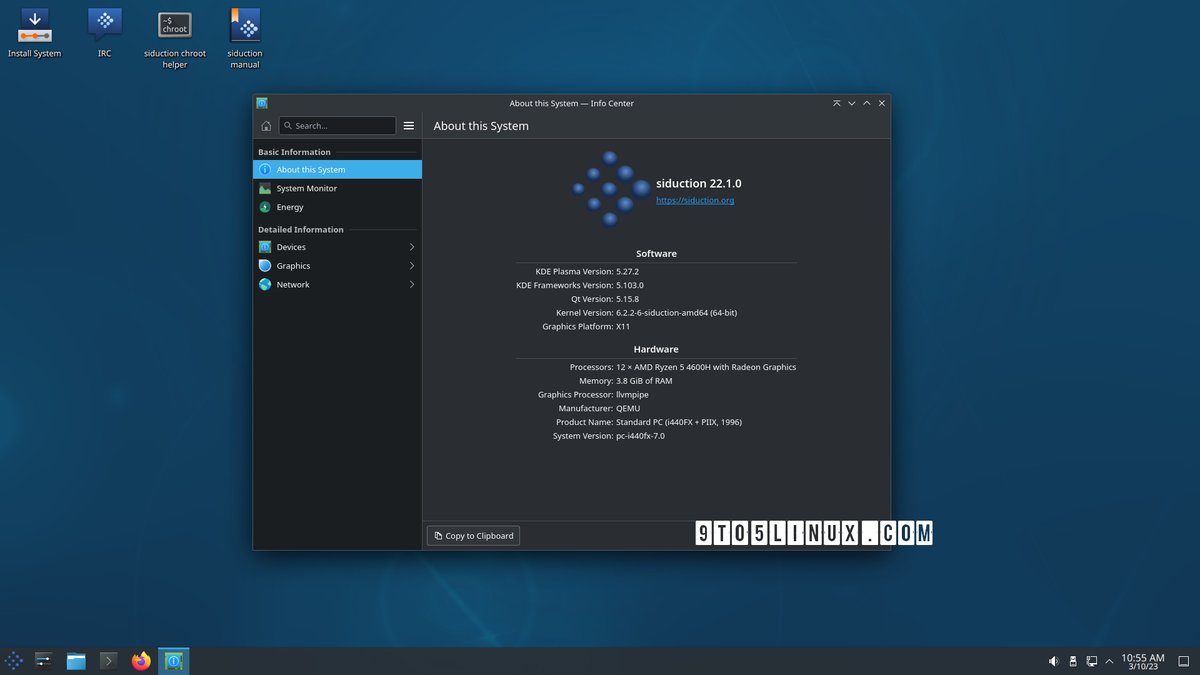
#Debian-Based siduction 2022.1.1 “Masters of War” Arrives with #Linux Kernel 6.2 and #KDE Plasma 5.27 LTS, Improved Snapshot Feature 9to5linux.com/siduction-2022…
@SiductionLinux #OpenSource
18
57
10,225

20 Jan 2023
Oh yes. If you don't fill it up, you don't use `df` but carefully use the special commands to measure free space, you don't try to run the special `fsck` command under any circumstances, you keep backups, and you protect your machine with a UPS, it's fine. 😉
2
85

20 Jan 2023
Despite all the major shortcomings of Btrfs, both @openSUSE & @fedora #Linux (and possibly others) use it as their default file system. Good thing there is an option to change this default. I'm very satisfied with Ext4 on single SSD for now, which I've been using for a long time.
2
2
189
20 Jan 2023
*But* it's here, it's GPL, it kinda works, noisy of the time, if you're very careful... and it does snapshots, compression, & deduplication, & a few other Nice Things that no other production ready Linux filesystem can currently do.
But we're not comparing like with like here.
2
2
87
20 Jan 2023
None that I'm aware of, no.
Btrfs is considerably more immature, less stable, less robust, & less featureful, but at the same time, it's dramatically more complicated to use, AND it has massive feature overlap with both `mdraid` AND kernel LVM.
There is nothing to recommend it.
1
3
102
20 Jan 2023
Now I'm wondering, are there actually any advantages of Btrfs over ZFS (besides being native to the Linux kernel with development taking place there)? 😉
2
2
94
20 Jan 2023
So the BSDs don't benefit from the improvements.
When Castle Technology got & released Pace's RISC OS source, I think I was the commentator who pointed out that the requirement to assign all copyright for changes back to Castle meant it wasn't FOSS but MS-style "shared source".
1
3
51
20 Jan 2023
Compatible licenses. It's a bigger issue than is generally understood.
Parallel examples: Apple just release the Lisa OS & apps' source code, after >40 years. But it's look-don't-touch.
BSD gets corporate backers, because they can take the code, close it & use it.
1
2
70
20 Jan 2023
ZFS isn't GPL. Even with it in a module & bootable, it's not *part* of the kernel & mustn't be. So, fr'ex, its (large) cache is separate, not combined with the Linux kernel's cache.
Even Oracle Linux doesn't include ZFS, but has Btrfs (developed at Oracle, remember) instead.
2
1
2
155
19 Jan 2023
And also, of course, Btrfs is native to the Linux Kernel, which is a plus.
If I decide to use ZFS right now, it will be on FreeBSD, not on Linux.
3
78
19 Jan 2023
Because all advocates of Btrfs insist that eventually, when the remaining code needed to fix RAID 5/6 & other issues is merged, it will be as good as ZFS with similar & perhaps more features.
Since I do not use any RAID array of storage yet, I'm patient enough to wait a bit.
1
2
74
19 Jan 2023
Stratis aims to replicate the core features of ZFS: a snapshotting FS with integrated volume management, so it replaces Btrfs, partitioning, mdraid, and LVM, all in one.
It's ambitious but there doesn't seem to have been much recent progress.
1
2
109
19 Jan 2023
In terms of current, stable, mature, usable-in-production snapshot filesystems for Linux, it's Btrfs and ZFS, nothing else. In active development are Bcachefs (not in-kernel yet) & @RedHat's Stratis, based on XFS.
Neither is ready for production use yet.
1
1
2
169
19 Jan 2023
I used ZFS on Linux & it was fine. Never used Btrfs, yet. From the comments here, ZFS appears to be just as good on FreeBSD.
Currently, I'm using Ext4 fs, an EFI boot partition (vfat/fat32) & ZRAM for Swap (which utilizes RAM for swap space), all on one SSD. Might test Btrfs.
1
2
98
