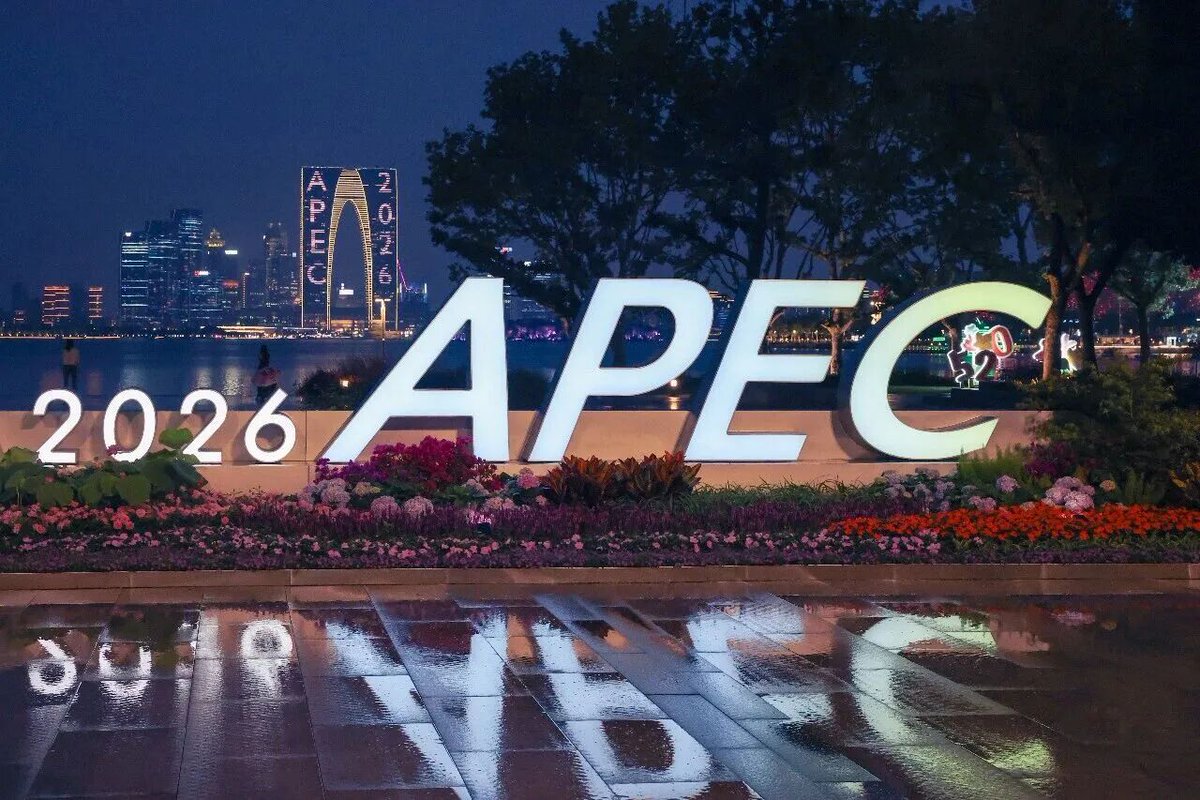
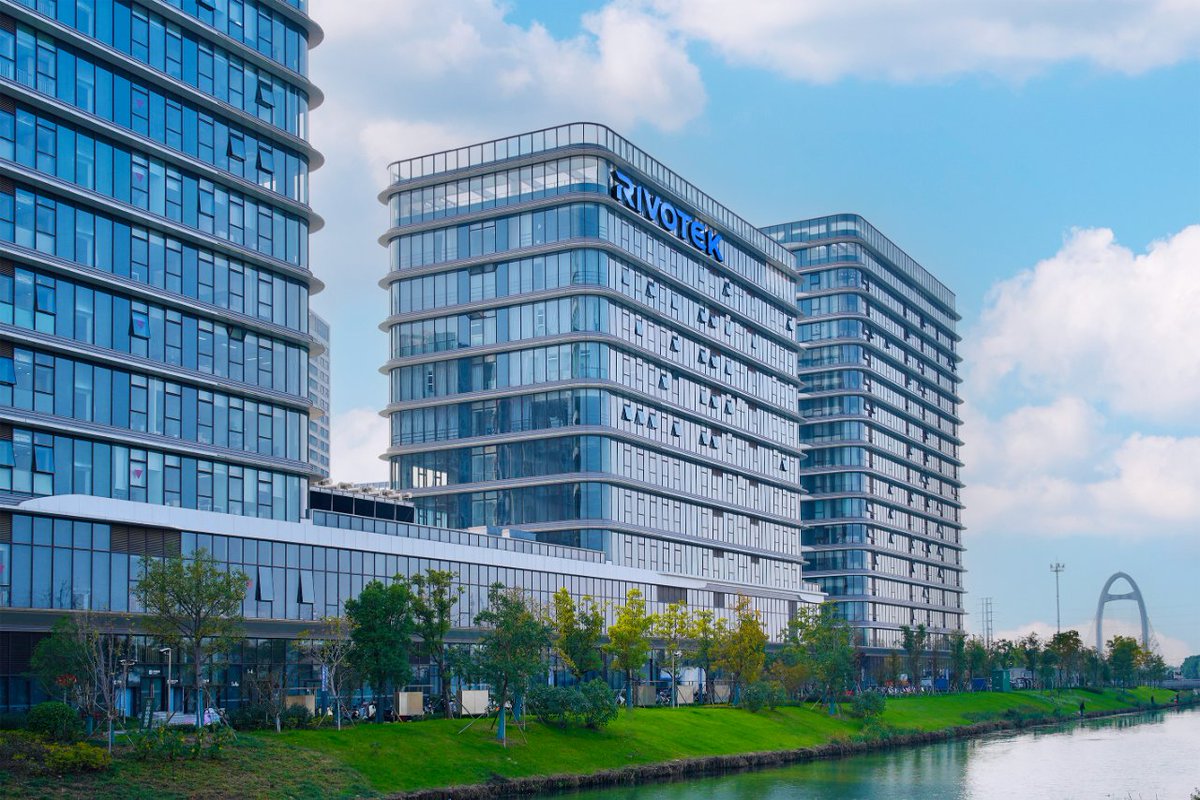
As an official supplier for the APEC Trade Ministers' Meeting in #Suzhou, #Xiangcheng tech leader RIVOTEK ensured fully glitch-free operation! ✨
Leveraging its core "Chip OS AI" technologies, the firm has expanded its reach from automotive smart cockpits to premium mobile conference systems. 💻🚗 It is a great testament to the booming new quality productive forces of Xiangcheng worldwide! 🚀🌟#APEC2026 #EncounterXiangcheng #TechInnovation #SmartOS #TechXiangcheng
4
49


Crypto has no shortage of blockchains. What it still lacks are ecosystems where developers can deploy real consumer applications without stitching together half the internet just to make things work
That’s the problem @DogeOS is quietly trying to solve for Dogecoin.
For years, DOGE has existed in a strange category of its own; globally recognized, deeply embedded in internet culture, and supported by one of the most loyal communities in crypto, yet still missing the production-grade infrastructure that allows serious applications to thrive natively
Most projects tried solving this backward, launching complex infrastructure first, then spending years trying to manufacture culture and users afterward
Dogecoin already solved the hard part, people actually care about it. What it never had was a purpose-built operating environment capable of turning that attention into scalable applications, developer ecosystems, and persistent economic activity
That’s what makes DogeOS different. Not another generic Ethereum clone, not another hype driven scaling narrative, and not another token designed primarily for speculation.
Instead, it is a dedicated, open-source cloud and application development layer engineered specifically for the Dogecoin ecosystem
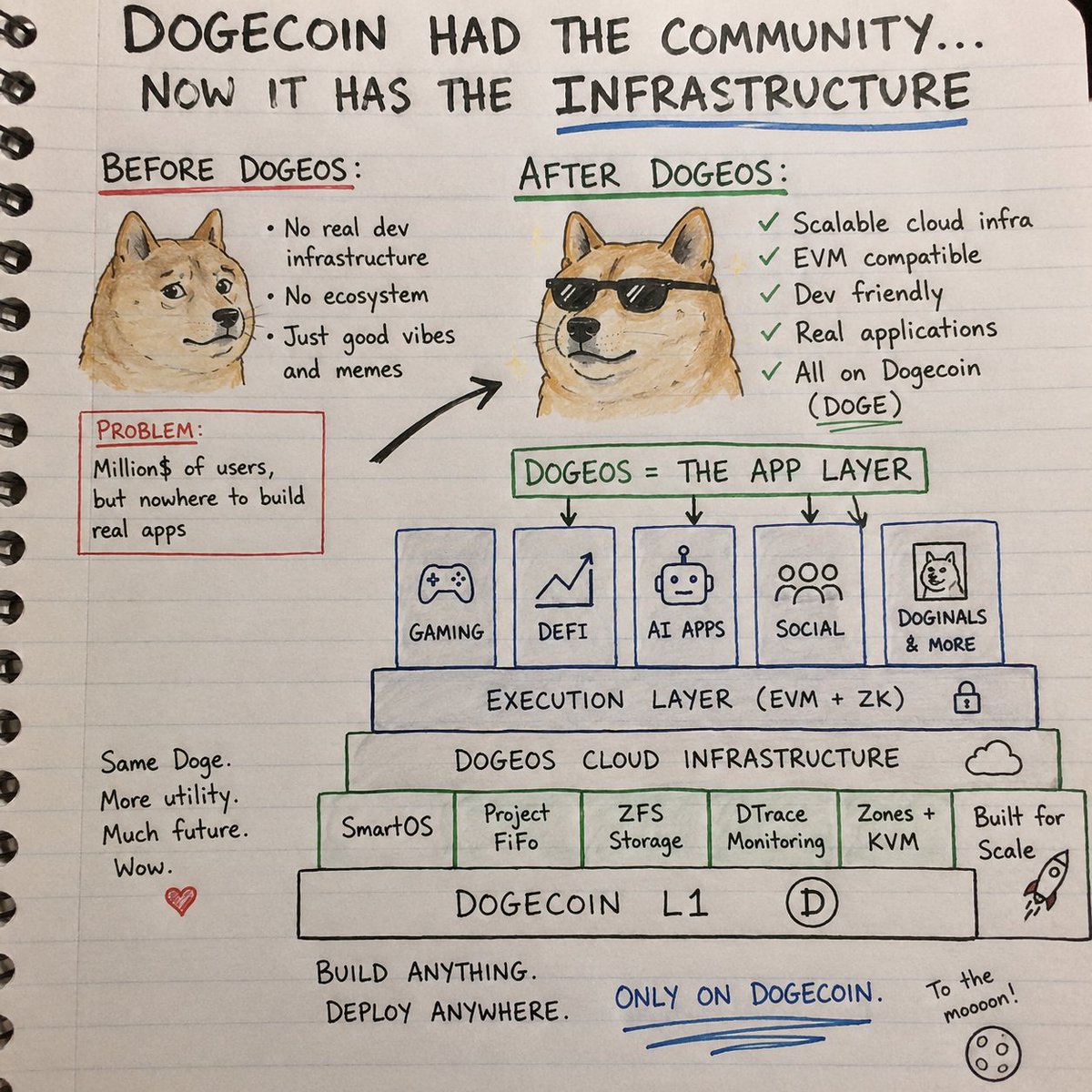
At its core, DogeOS functions as both an application execution layer and a high-performance cloud operating environment for deploying scalable applications directly around DOGE.
Modern applications need more than transaction throughput. They require compute environments, orchestration, virtualization, observability, scalable storage, deployment tooling, and infrastructure coordination. DogeOS aims to unify them into a cohesive, Dogecoin-native stack.
The foundation is powered by SmartOS, an enterprise-grade hypervisor derived from illumos/Solaris. Orchestration uses Project FiFo. Storage relies on ZFS for snapshots, replication, compression, integrity verification, and scalable management. DTrace enables low-overhead observability, while Lightweight Zones and KVM virtualization support efficient isolation and broader workloads.
This creates something closer to a complete cloud operating platform than a traditional blockchain stack. Developers gain a unified environment optimized for scalable blockchain-native applications, whether AI-powered systems, DeFi protocols, gaming, social apps, Doginals infrastructure, or consumer tools.
What makes the environment especially compelling is how much operational friction disappears for builders. Instead of spending months piecing together fragmented backend services, infrastructure layers, RPC setups, scaling environments, and deployment workflows, teams can focus directly on shipping products.
The stack is designed to support flexible development across different architectures, workloads, and application types while keeping DOGE itself at the center of the economy.
DogeOS is also developing zkVM and ZK-rollup architecture with native ZK-proof verification tied to Dogecoin, enabling trust-minimized interoperability, privacy-preserving apps, and advanced off-chain compute.
It benefits from enterprise-grade RPC infrastructure via Ankr for low-latency broadcasting, reliable querying, and scalable connectivity
Importantly, there is no separate DogeOS token. DOGE remains at the center, so ecosystem growth directly reinforces its utility and economic activity.
DogeOS is not simply adding DeFi to Dogecoin. It is building the infrastructure foundation for a consumer internet economy around DOGE-native applications, extending Dogecoin’s core strength of accessibility into the application layer.
Momentum is building, devnet and testnet are active, SDKs and APIs are live, Ankr integration is operational, quickstarts are available, and over 100 projects are building
Dogecoin already achieved global cultural distribution. Now it is gaining the operational foundation to support a true application economy. That may change everything..
6
5
34
528

May 17
macOS environment:
LC_CTYPE=UTF-8
ssh:
passes LC_CTYPE to the SmartOS zone
remote SmartOS tcsh/root session:
LC_CTYPE=UTF-8
1
2
35

May 12
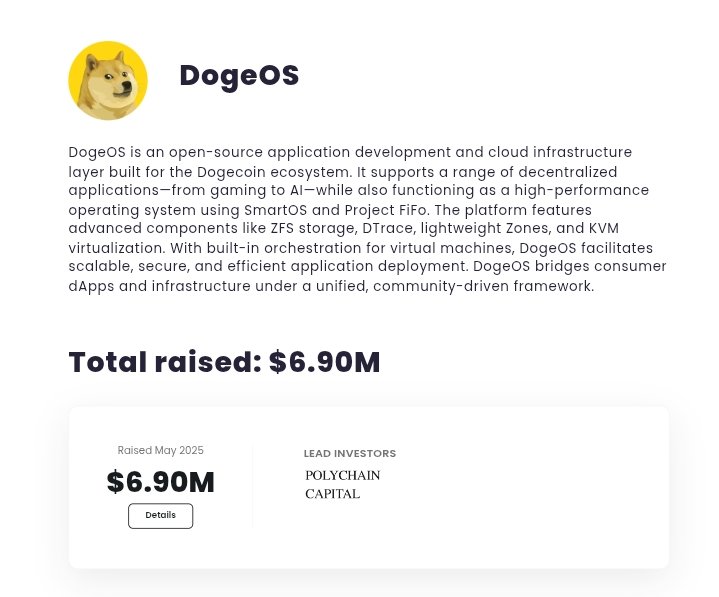
🚨 @DogeOS Loyalty Program is LIVE 🪂🐶
DogeOS is building the Application Layer for Dogecoin — bringing Gaming, AI & dApps to the @dogecoin ecosystem.
💰 Raised: $6.9M
💸 Cost: FREE
🎁 Reward: Confirmed Airdrop
🛡 Backed by Polychain Capital
Why it matters 👇
• Open-source infra for Dogecoin
• Scalable cloud infrastructure
• SmartOS Project FiFo powered
• Supports Gaming, AI & Web3 apps
✅ How to join: ➡️ heist.dogeos.com/loyalty?ref…
• Connect ETH wallet
• Bind social accounts
• Complete tasks
• Earn points
👀 Points are expected to convert into future tokens, so early participation could be huge.
1
1
2
227


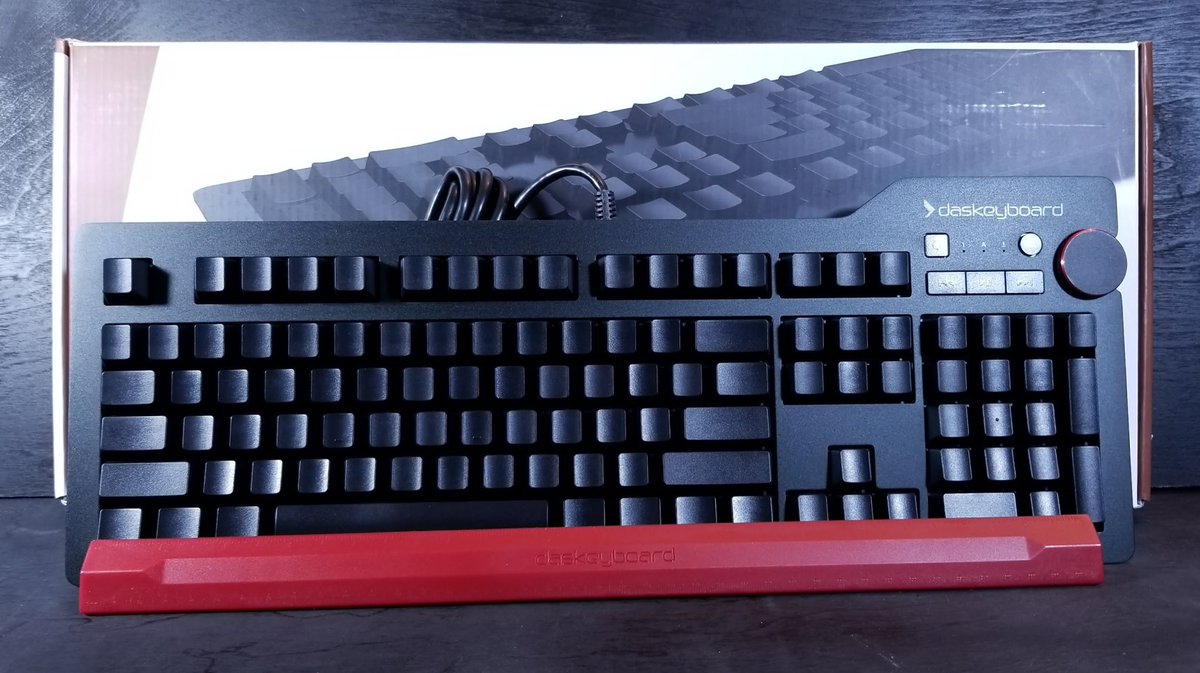
I don't have stickers on mine, this way when I swop between linux, Mac, illumos, SmartOS, and QNX, I do not really notice. @daskeyboard BADASS 4
3
144
I got ubuntu and alpine in containers, arch on laptops and some workstations, debian on bareback servers and some workstations, and then again I also use Joyent SmartOS and proxmox as hypervisors, I also use mac BTW.
1
2
948

Apr 4
smartOS isn’t going anywhere.
We build our platforms at Nora. Always have. Always will.
Apr 3

Nora could drop smartOS 27 (or 13?) in favor of using Neon’s dreamOS.
Per sources working with both Neon and Nora.
2
63
Mar 30
GNU / Linux was NEVER about getting things done; that's what HP-UX, Solaris and IRIX were for. That's what Solaris and illumos-based systems like SmartOS are for.
GNU / Linux was and remains a hacked-together, not system engineered, hodge-podge of various masturbation efforts.
1
3
684
In Solaris such as Joyent SmartOS I always use ZFS for ZRAIDs, in linux on a single M.2 I go with ext4
3
651

Mar 16
I like using them both for various purposes. Though I guess I’ve stopped using FreeBSD for SmartOS. Mostly out of boredom and wanting something new. It’s been a fun adventure
3
467
Feb 27
OS 26.4 is now available, adding support for the entire Nova 4 lineup.
- smartOS 26.4
- tabOS 26.4
- masterOS 26.4
- realityOS 26.4
- pulseOS 26.4
- homeOS 26.4
Available now!
2
51
Feb 9
Why the hell would I do that? I have Solaris and SmartOS, which have a kernel so advanced, that it automatically reconfigures himself based on the hardware detected.

2
2
88