

yes smartstack should do very well. I think it allows somewhere near 0.5 GWh/acre vs. the typical 200-300 MWh of most legacy lithium-ion systems.
$EOSE also has what looks to be a game changer with their Indensity product which is their stackable, fire proof energy storage solution that can accomodate 1 GWh/ acre. Seems like a great solution for either data centers or urban settings.
Energy storage should see many winners over the next decade.
1
1
510

Jun 9
Fluence(FLNC)'s probably a more established name with their Smartstack solution. It's also included in the reference design for NVL72.
1
36

To ensure that AI factories can operate seamlessly in energy-constrained and volatile power grid environments, Fluence ( $FLNC ) will provide critical grid support services such as voltage stabilization, black start capability, and load smoothing via its Smartstack platform.
Thus, Fluence Energy has transformed from being merely a storage provider in the renewable energy sector into an indispensable infrastructure layer for Nvidia's ( $NVDA )Vera Rubin platform, which will be deployed in over 350 factories across 30 countries. This directly links the company's record order backlog, which has grown by 106% annually to $10.1 billion, to the CapEx spending of global technology giants.

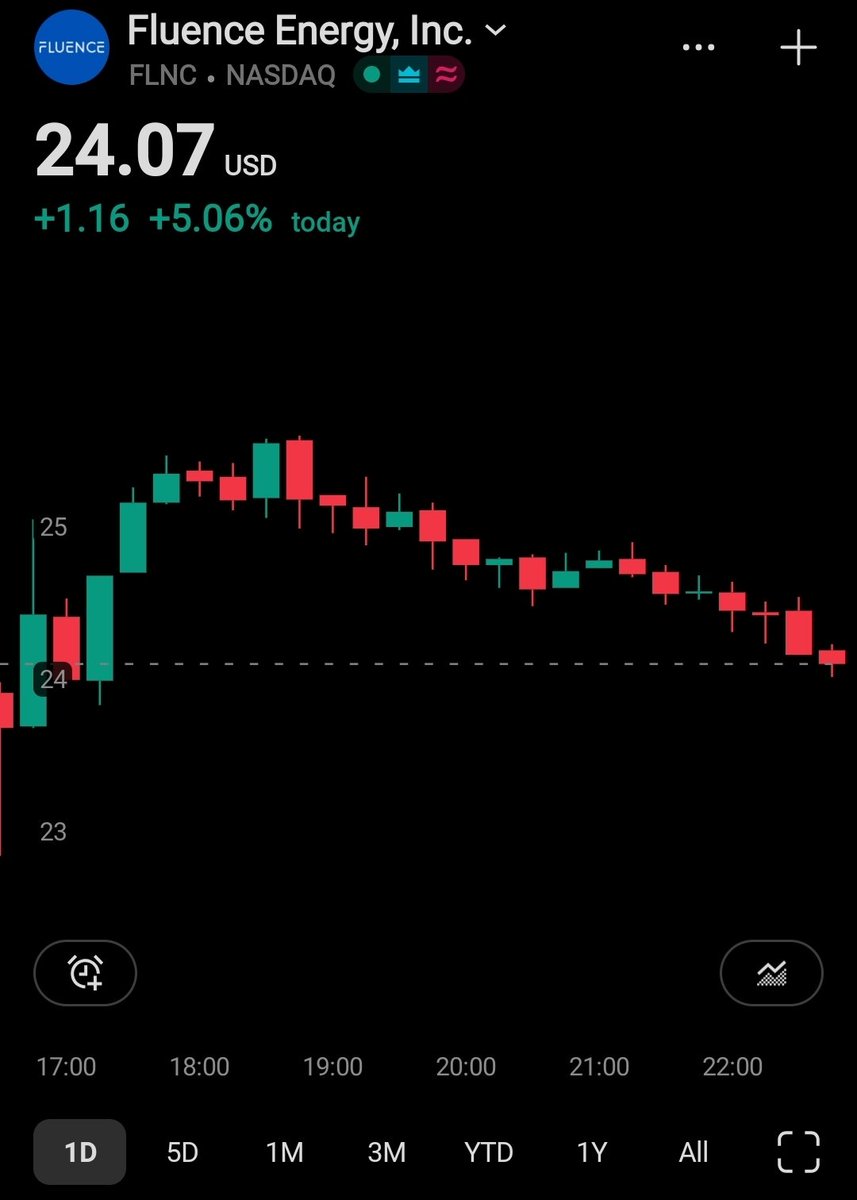
$FLNC rose by 5%. Fluence Energy was selected as a key partner in Nvidia’s Vera Rubin AI factory reference architecture, compatible with Siemens. Smartstack BESS will provide grid support and voltage switching for next-generation hyperscale plants.
Under the agreement, Fluence became the sole energy storage partner in the infrastructure design developed for Nvidia’s ( $NVDA )latest Vera Rubin platform.
477
$FLNC rose by 5%. Fluence Energy was selected as a key partner in Nvidia’s Vera Rubin AI factory reference architecture, compatible with Siemens. Smartstack BESS will provide grid support and voltage switching for next-generation hyperscale plants.
Under the agreement, Fluence became the sole energy storage partner in the infrastructure design developed for Nvidia’s ( $NVDA )latest Vera Rubin platform.
1,922

Jun 7
最近在研究美股 $flnc 的同时,学习了下储能赛道
先说结论:
1、储能赛道,尤其是 $flnc 是个重资产的项目,至今公司是不赚钱的,亏损的,也可以看到股价波动非常大 ,在AI这波偏炒作 ;
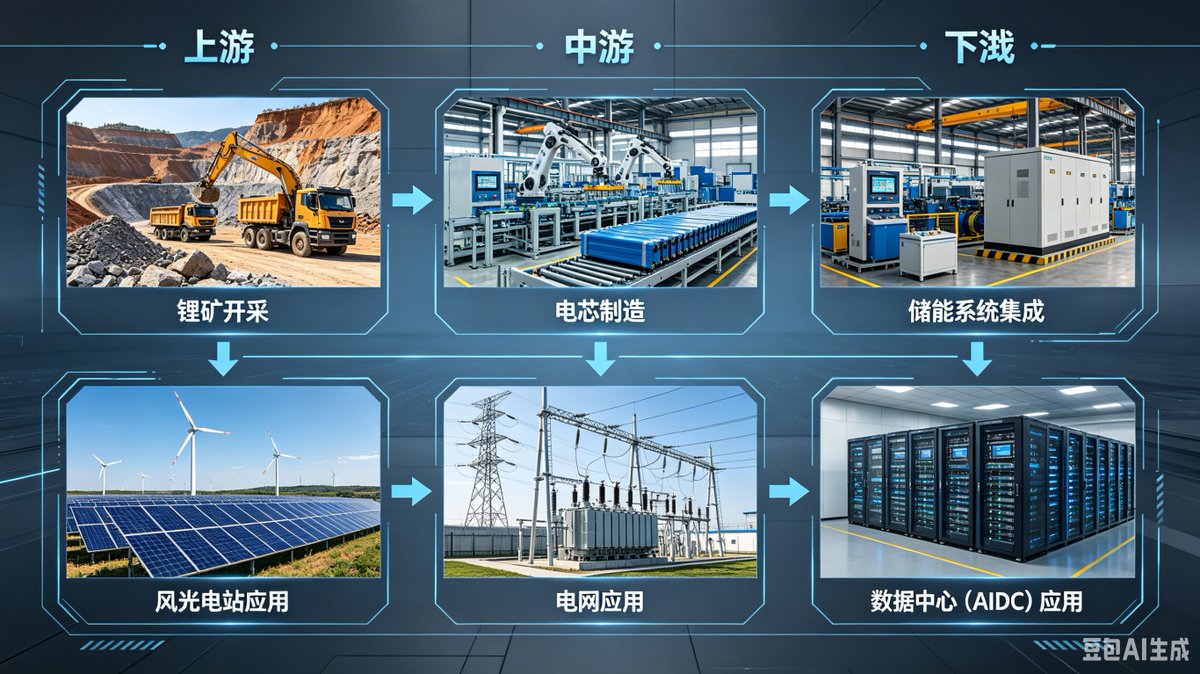
2、从产业链的角度来说,最大的利润区来自于上游:锂电等材料和电芯, $FLNC 占比最大的成本来自于采购电芯,占比50% ,也就说打钱被电芯供应商给赚走了,电芯的公司比如 #宁德时代 #亿纬锂能 等;
美股如:三星 松下 LG
3、被上游赚到了利润的大头,flnc 毛利比较低;
4、8年以上的换台率,不是易耗品;
为什么 $flnc 能占据储能的龙头呢?
1、壁垒:拥有牌照,头部 AI 超算大额订单被 FLNC、特斯拉凭全牌照垄断,SmartStack 英伟达 / 西门子认证也是其股东;
英伟达 西门子官方参考设计唯一指定 BESS,全球顶级 AI 数据中心基建默认用 FLNC 方案 ;
2、商业模式:硬件一次性收入 软件订阅 / 分成(高毛利、持续性强);
美国大储 AI 数据中心储能,FLNC 几乎是首选 / 必选之一,但是,目前是亏损的,理由是被电芯占据了大头,短期内很难盈利,只能靠着牌照壁垒拿到aidc机房的准入门槛 ;
总结:储能赛道一句话利润链(谁最受益)
锂矿(ALB/SQM) > 隔膜 / 正极 > 电芯(LGES / 宁德) > PCS(阳光电源) > 液冷(英维克) > 储能运营商 > 系统集成(FLNC)
我的观点:短期内不会买入 $flnc ,持续观望态度
35
1
12
5,068

#Lazada 6.6 มีให้ส่งข้อความหา AI Lazzie รับ #LazRewards
🫶 เพียงพิมพ์ SMARTSTACK ส่งไปตรงข้อความ หรือตามลิงก์นี้ค่ะ
👇
s.lazada.co.th/s.A0trn?cc
💙 แต่ละคนอาจได้ไม่เท่ากันนะคะ
💬 แชทคุยต่อ ก็จะได้รับ LazRewards เพิ่มอีก ✨ แชทคุยเพื่อรับ LazRewards ได้ทุกวัน ถึง 8 มิ.ย.
😃 หากใครไม่รู้จะคุยอะไร กดตรงข้อความอัตโนมัติข้างล่างวนไปมาได้ค่ะ


1
6
5,372

Jun 4
China's battery giants are locked out of the US grid.
BYD, CATL, and Sungrow own most of the world's grid storage, but IRA and CFIUS rules bar them from American utility projects.
$TSLA won't sell its Megapack standalone.
So for US utility-scale BESS (grid-scale batteries, basically a giant power bank that stores solar and wind for when demand spikes), $FLNC ends up #1 by default, not by winning a fight.
The June 1 $NVDA-Siemens AI-factory blueprint named $FLNC's SmartStack as the storage layer.
That adds share, not just a line of revenue.
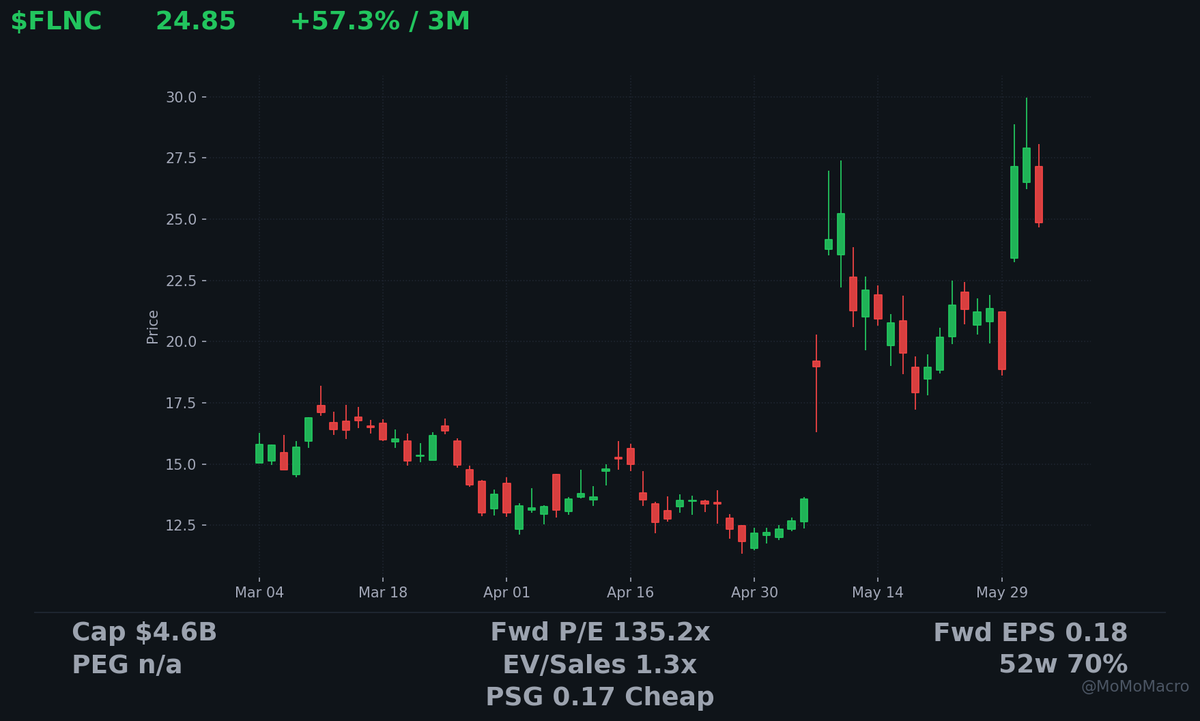
$4.6B cap, trading at barely 1.3x its $2.58B in sales.
PSG sits at 0.17, meaning the market is charging almost nothing for the growth.
What kills it: the hyperscaler supply deals slip, or margins stay too thin to matter.
I'm long here, and a bigger buyer down near $18 where the multiple gets silly cheap.
1
6
3,107

Jun 3
$FLNC ✨
Could Fluence Energy Become the "NVIDIA of Energy"?
Fluence Energy has gained significant attention after joining NVIDIA, Siemens, and nVent in developing next-generation power infrastructure for AI data centers.
Key highlights:
• Included in NVIDIA Vera Rubin AI data center architecture
• Provides battery energy storage systems (BESS)
• Supports grid stabilization and AI load management
• Helps solve power constraints facing large AI data centers
• Smartstack platform positioned as a key AI infrastructure component
As AI moves from a GPU bottleneck toward a power bottleneck, energy storage and grid management are becoming critical parts of the AI ecosystem.
Fluence is positioning itself as more than a battery company—potentially becoming a core infrastructure provider for AI data centers worldwide.
The long-term opportunity is significant, but investors will be watching execution, customer adoption, and revenue conversion closely.
#FLNC #FluenceEnergy #NVIDIA #AI #DataCenters #EnergyStorage #BESS
finance.yahoo.com/sectors/en…
1
9
962

Jun 2
$FLNC
A Fresh Energy Boom Powers Up AI Data Centers
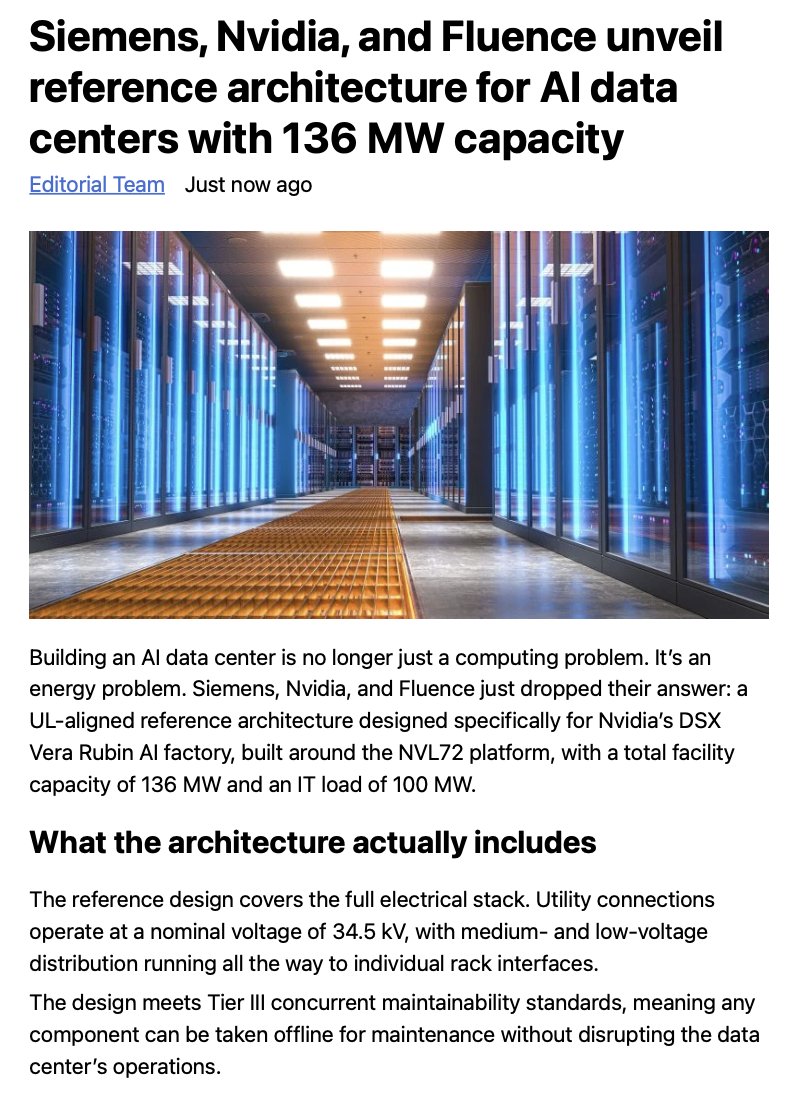
Fluence Energy just locked in a big three way partnership with Siemens and Nvidia to handle the huge power demands of next level artificial intelligence data centers. They went with the company’s Smartstack battery storage tech as the core choice for a brand new reference architecture designed for 136 megawatt scale setups.
This integration boosts seamless grid compatibility and takes load balancing to the next level with way less hassle. Fluence has now emerged as the standout and only battery energy storage system partner called out in the Nvidia ecosystem.
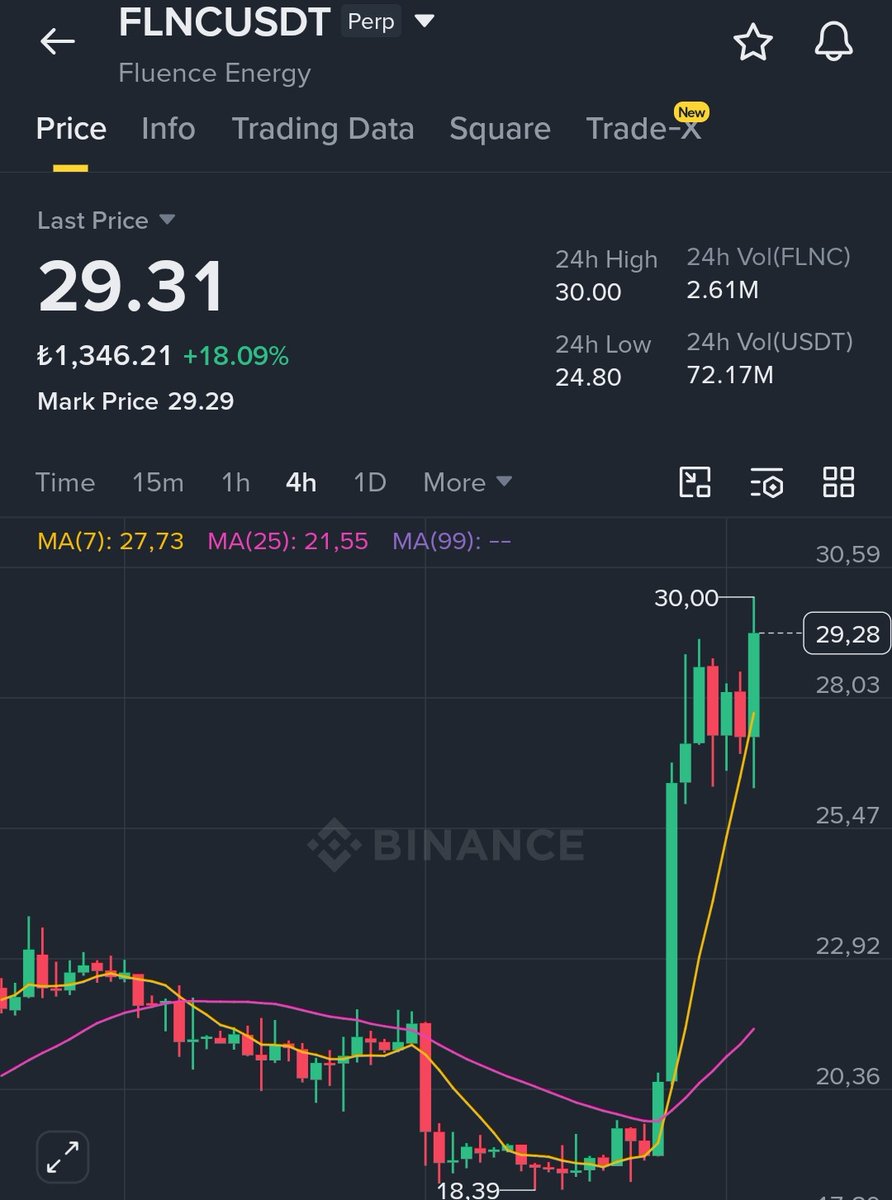
The announcement triggered a massive surge in the stock with shares skyrocketing over 40% in a single day to set a new all time high. Investors are calling this partnership a total game changer that unlocks a powerful new revenue stream right in the heart of exploding artificial intelligence infrastructure.
71
3
260
12,964

Fluence to integrate Smartstack into Siemens’ Nvidia AI data centre reference architecture dlvr.it/TSqdcN #energystorage
1
3
173

People are completely off on why $FLNC wins this partnership.
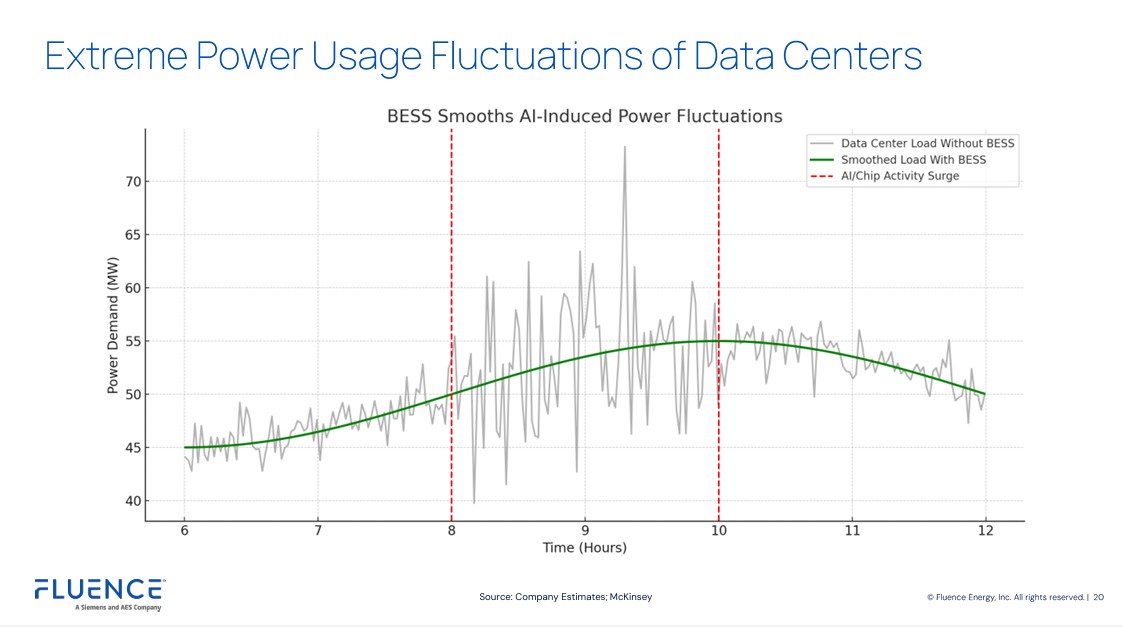
The technical edge is Fluence's sub-100ms power-conditioning tech, combined with its modular Smartstack platform.
AI data centers are notorious for power spikes, and those spikes cause real reliability issues. $FLNC solves it with best-in-class tech.
This is why Fluence beat out 26 competitors/potential suppliers to secure two big MSAs with major hyperscalers in Q2.

Congrats to $FLNC!! This is a BIG DEAL!
Renewables are now being directly integrated into data center development. This joint development architecture with the biggest data center players is huge. The hunger for power is much greater than most people realize, imo.
Batteries are likely to be deployed in most, if not all, major data centers. The complementarity with existing energy sources is so strong that BESS feels like one of the lowest-hanging fruit opportunities in the entire power stack.
The BESS players to watch, imo: $TSLA, $FLNC, $CSIQ and $EOSE.
More broadly, everyone selling electrical equipment into this buildout should do very well over the coming years.
Each company is adapting to this rapidly changing environment. $FLNC got its announcement today, some orders should follow. I believe $EOSE will soon have a very strong data center product offering. Same with $CSIQ, which has already hinted to expect more news around data center BESS in the coming quarters (and already signed a 2.5GWh FTM DC order. Less complex but huge). And $TSLA will for sure sell a ton of batteries.
I also expect the conversation around data centers and solar to get much louder over the next 3-6 months. So does Leopold Aschenbrenner… $CSIQ and $TE for this theme.
Exciting times ahead.
2
2
5
2,329

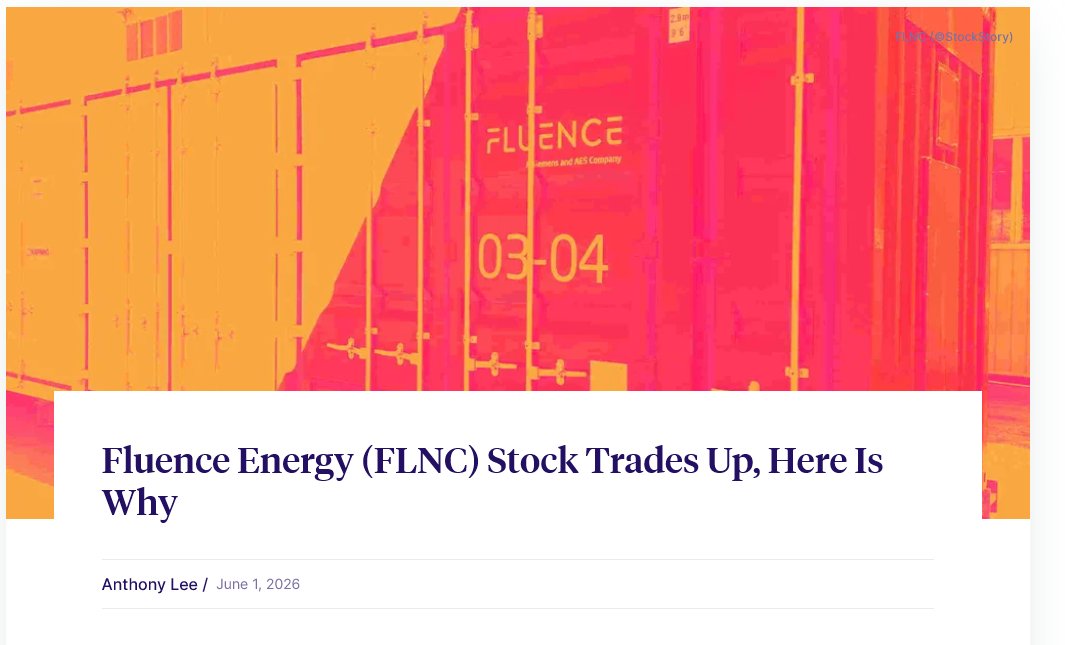
西門子與 #NVDA 合作,發布建構大規模人工智慧基礎設施(或稱為「人工智慧工廠」)的參考設計。此藍圖將 #FLNC 的 SmartStack 電池儲能係統作為電力架構的關鍵組成部分。該系統旨在幫助這些高耗能資料中心可靠運行,尤其是在電網受限的地區。
stockstory.org/us/stocks/nas…
2
18
2,058

Jun 1
플루언스에너지의 BESS가
엔비디아 표준으로 채택 🥷👀
ESS의 구조적 변화가 실체화되는 중..!
---
[플루언스에너지, 엔비디아 NVL72 랙 표준 전력 솔루션 채택 - 유진 허준서]
지멘스 보도자료입니다.
엔비디아 랙(NVL72, 136MW급) 구축시 지멘스, 엔벤트와 함께 전력 솔루션 표준 아키텍처에 플루언스에너지의 스마트스택 제품이 채택됐습니다.
세부 역할은 아래와 같습니다.
지멘스: 전력망(34.5kV)에서 랙 인터페이스까지 이어지는 중저압 전력 분배 및 제어 솔루션 구축.
플루언스 에너지: 'Smartstack' 플랫폼 기반 시설 단위 배터리 저장 장치(BESS) 배치. 전압 및 주파수 유지, 블랙 스타트, AI 전력 부하 평탄화 지원.
엔벤트: 엔비디아 작업 부하에 맞춘 전기 설계 매개변수 정렬. 향후 초고밀도 랙 지원을 위한 수랭식(Liquid Cooling) 열 관리 솔루션 추가 예정.
확정적인 수주계약 PO에 대한 보도자료는 아니기에 구체적인 금액이나 규모를 파악하긴 어렵지만, 적어도 지멘스가 구축하는 엔비디아 데이터센터에서는 확정적으로 들어간다고 해석해도 좋을것 같습니다.
2Q 실발에서 하이퍼스케일러향 데이터센터 파이프라인 증가 관련 톤이 강했었는데 이런걸 준비중이었군요
실발에서 MSA 계약의 핵심변수로 언급했던 Quality of Power를 해결할 수 있는 표준아키텍처로 플루언스에너지의 제품 및 서비스가 공식적으로 인정된 사례입니다.
FY2Q26 말 기준 플루언스에너지의 데이터센터향 파이프라인 잔고는 12GW 수준입니다.
#ESS #서진시스템
May 10

ESS에서도 또 한가지 구조적인 변화가 감지됨 😇
우선 저번에 정리한
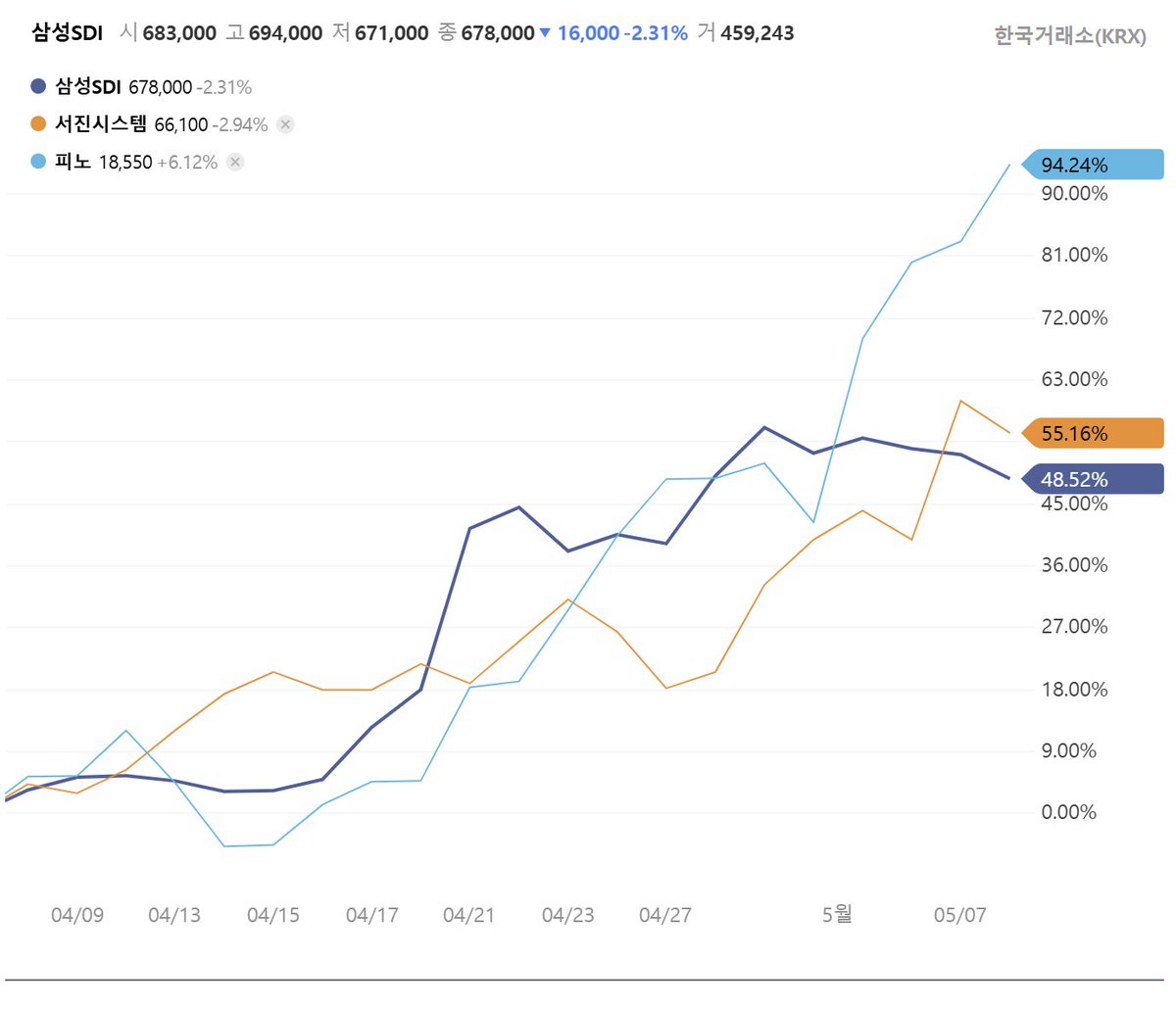
삼성SDI, 서진시스템, 피노
셋다 좋은 퍼포먼스를 보여주고 있음
4월 5일 이후 상승률을 보면
- 삼성 SDI: 48%
- 서진시스템: 55%
- 피노: 94%
이란 전쟁 이후 에너지 안보 측면에서 ESS 수요가 급증하기 시작했다면, 이번에는 데이터센터 쪽에서도 구조적인 변화가 오고 있음
힌트는 플로언스에너지의 컨콜!
---
플루언스 1Q26 컨콜 요약
1) 수요 구조 재편 및 의사결정 가속화
- 유틸리티/디벨로퍼 중심에서 빅테크 하이퍼스케일러 메인으로 수요축 변경
- 파일럿 테스트에서 실제 발주까지 1~2년 소요되던 리드타임이 1개 분기 수준으로 극적 압축
2) 필수 인프라로 BESS의 가치 격상
- AI 데이터센터의 핵심 페인포인트인 전력 품질(안정성 및 일관성) 관리를 해결할 최적의 솔루션
- 단순 보조 발전을 넘어 빠른 전력 공급과 전력망 제어를 담당하는 메인 인프라로 진화하며 장기 공급 계약 증가
3) 수주-매출 전환 사이클의 획기적 단축
- 하이퍼스케일러의 빠른 CAPEX 집행 특성상 수주 잔고가 실적(매출)으로 치환되는 속도가 훨씬 빠름
---
즉, BESS도 데이터센터 붐과 함께 또 한번의 변곡점을 맞이하는 순간으로 보면 될 듯 (어찌보면 AI 내러티브 확대되는 조선과 비슷?)
셋다 좋다고 생각하지만, 개인적으로는 서진시스템의 포텐셜을 조금 더 기대하고 있는데
1) 플루언스에너지 매출 비중이 크고
2) 블룸에너지 신규 수주 전망이 있으며
3) 올해가 본격적인 턴어라운드하는 연도이기 때문
플루언스에너지 어닝콜 이후 슈팅을 한번 줘서 지금은 조정을 기다리는게 좋음
증권사 리포트를 보니 이번 1Q 실적발표에는 어닝쇼크를 예상하고 있기 때문에, 이때 주가가 떨어지면 마지막 줍줍 찬스이지 않을까? 라고 생각 중
개인적으로 그리는 그림은
루멘텀 - RF머트리얼즈
블룸에너지 - 비나텍
샌디스크 - 파두
플루언스에너지 (블룸에너지) - 서진시스템
이런 식의 페어링을 보고 있음
#ESS #서진시스템 #삼성SDI #피노
4
5
21
3,243


May 25
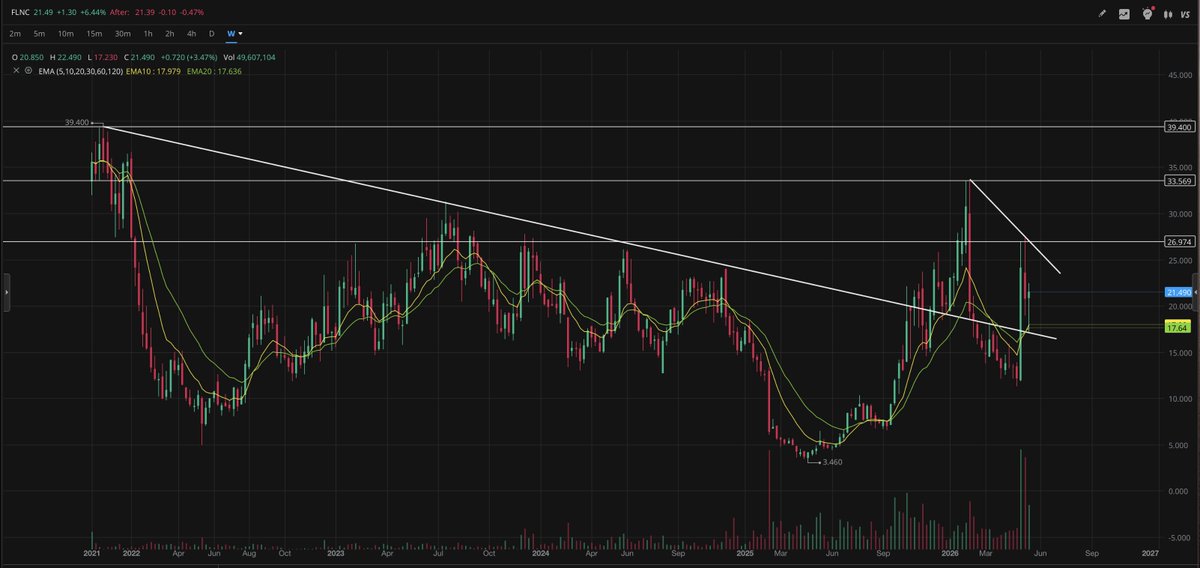
$FLNC weekly chart shows lots of potential above for some massive move to the upside
The real winners are the ones powering the entire grid revolution. Fluence Energy ($FLNC) the Siemens AES-backed leader in intelligent battery energy storage systems (BESS) that's exploding right alongside hyperscale data centers.
Why I think $FLNC is a monster and it'll go up much. higher :
1) Data Center Deals: Fresh master supply agreements with major hyperscalers. AI power demand is insatiable, these guys are enabling faster deployments and grid stability so data centers can come online now, not years from now
2) Strong Price Momentum: The stock already ripping 350% off the lows, up big recently on order acceleration and analyst upgrades (Roth to Buy, Citi PT hikes, etc.). Backlog is strong, FY2026 guidance reaffirmed at ~$3.4B revenue
3) Massive Tailwinds: Renewables AI = epic storage demand. Fluence's modular Smartstack and Gridstack solutions deliver higher density, smarter optimization, and real world performance.
24.32% Short Interest
May 22

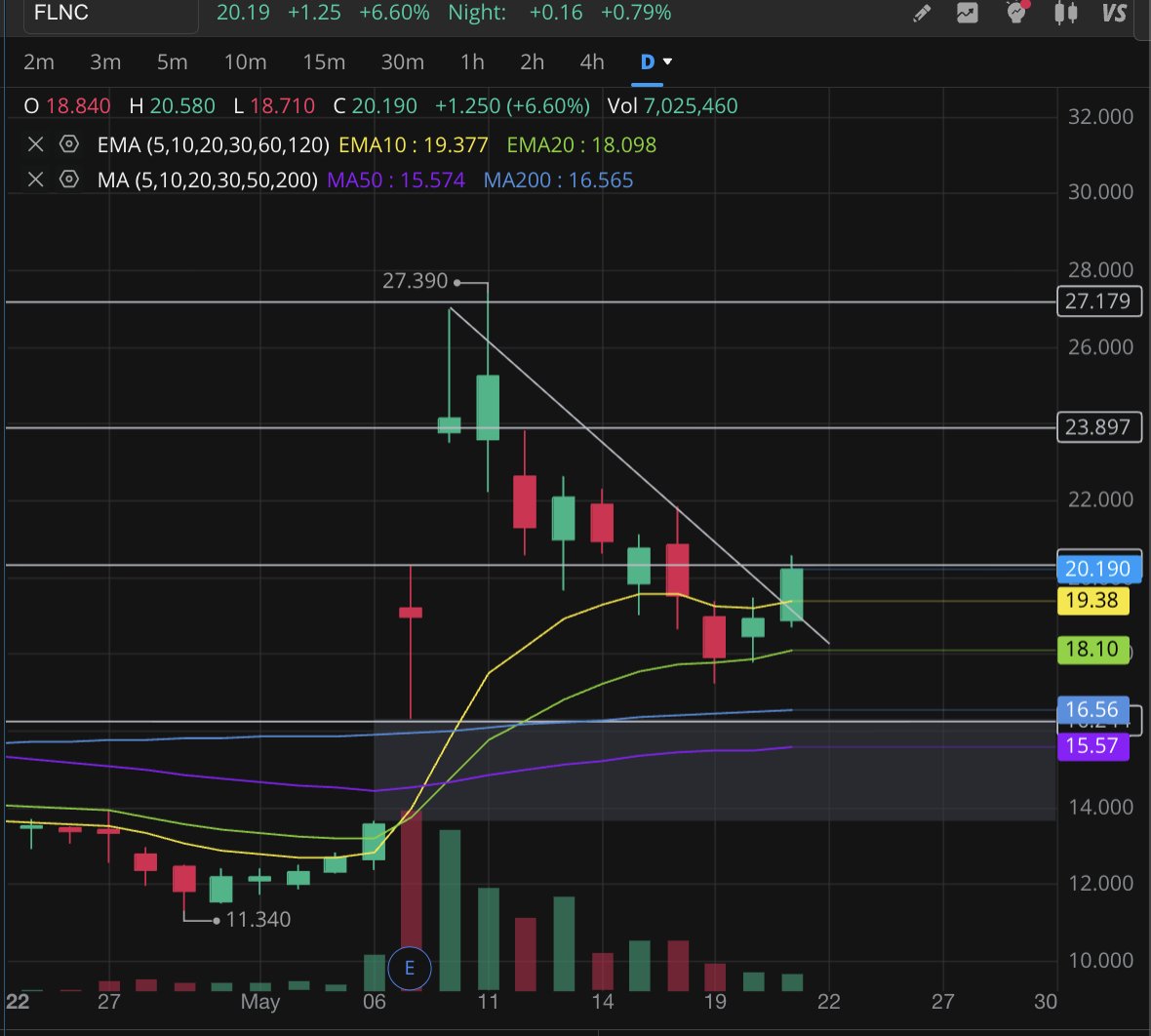
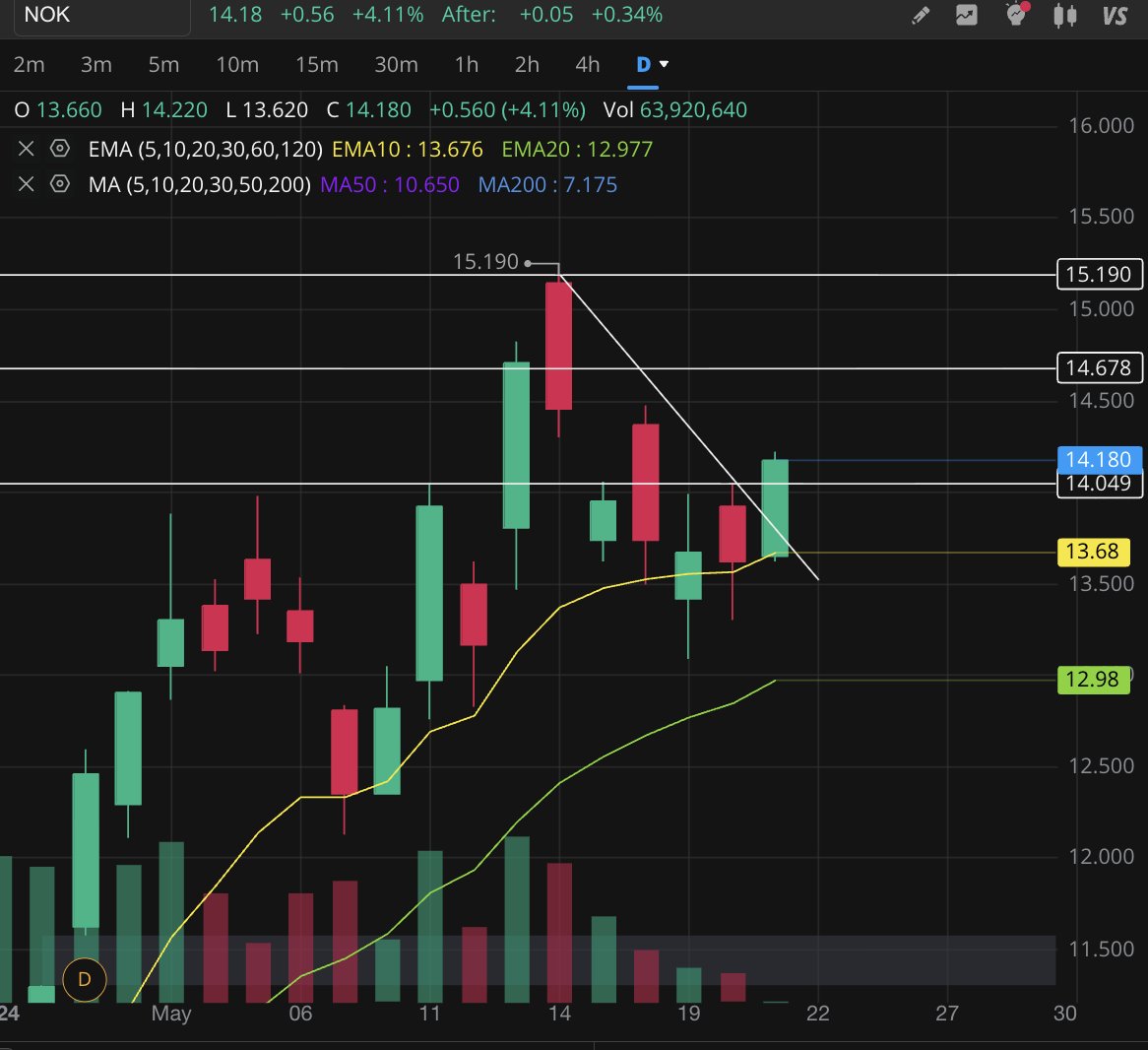
Here are some top names to watch into tomorrow with option flows :
$FLNC 27c 8/21/2026 $475k
$NOK 15.5c 6/18 $235k
$AMD 450c 5/29 $8.2M
$AMZN 280c 5/29 430k
Pretty much all names looks primed for a break out higher tomorrow if they break above today highs
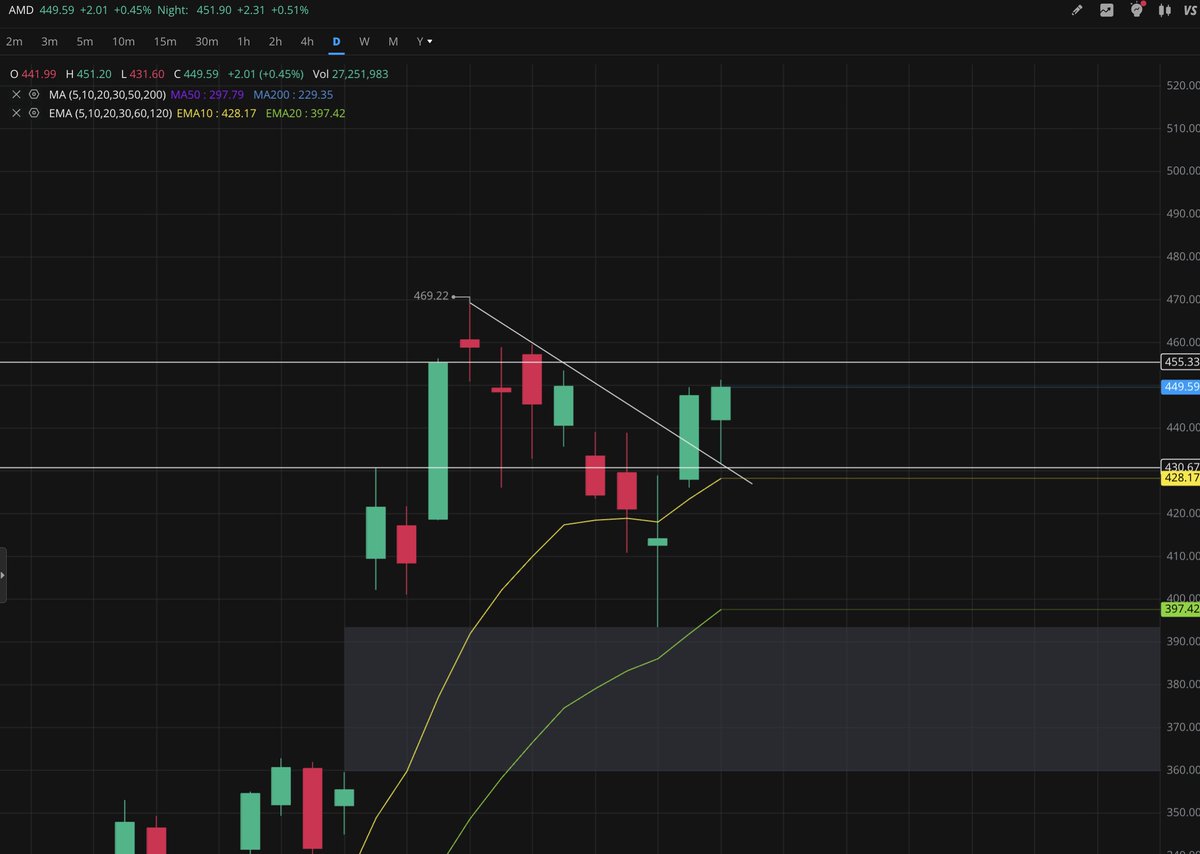
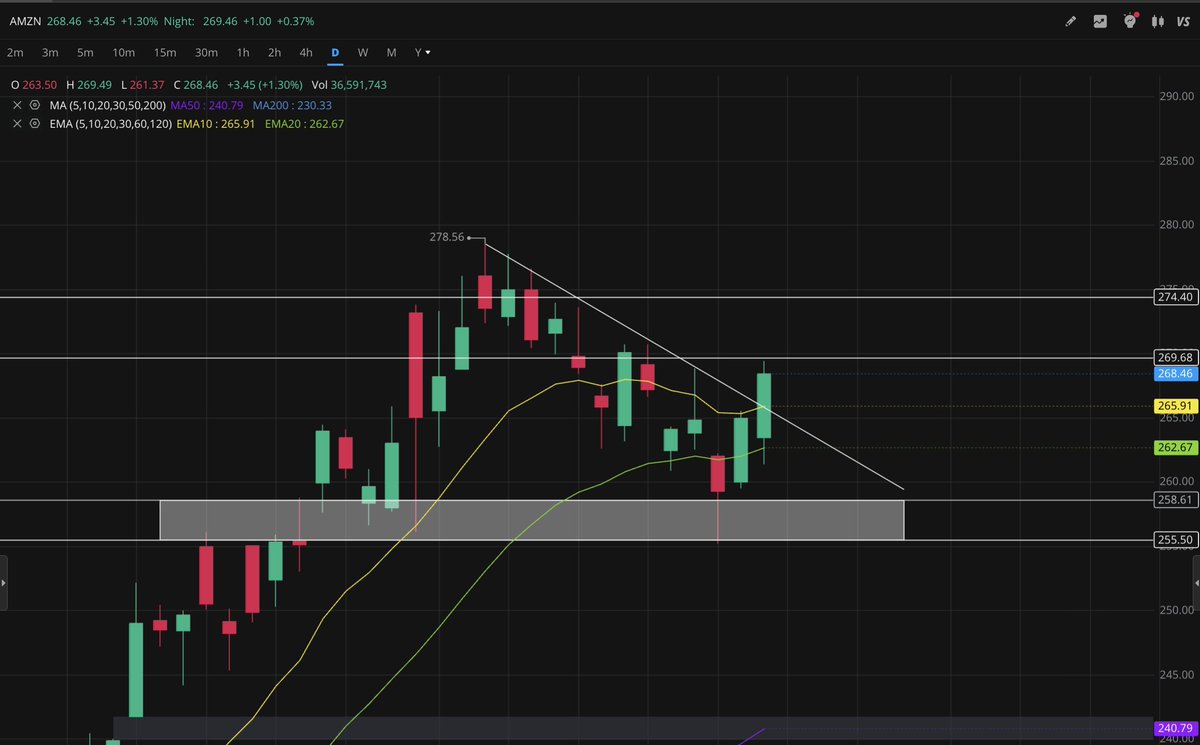
2
2
12
8,289

May 20
Fun fact about $FLNC:
It uses liquid-based coolant to keep its lithium-ion batteries at a reasonable temperature.
The liquid continuously goes past the battery cells through a system of thermal loops.
This prevents the batteries from overheating and rapid degradation.
The Gridstack Pro platform monitors the state of the batteries in real time.
If a node gets hot, the software scales the chillers and recalibrates the load. But even if a hardware failure happens, $FLNC designs its systems in a way to isolate that node.
Is there a catch?
Yes.
Liquid cooling is complex in design and capital intensive.
But the payoff is the high energy density which you can see in $FLNC’s Smartstack. It packs 7,5 MWh of capacity into several boxes only a few meters long (designed for easy shipping and scaling).
Use several Smartstack systems together and you can power a datacenter or a utility grid.
Long $FLNC.
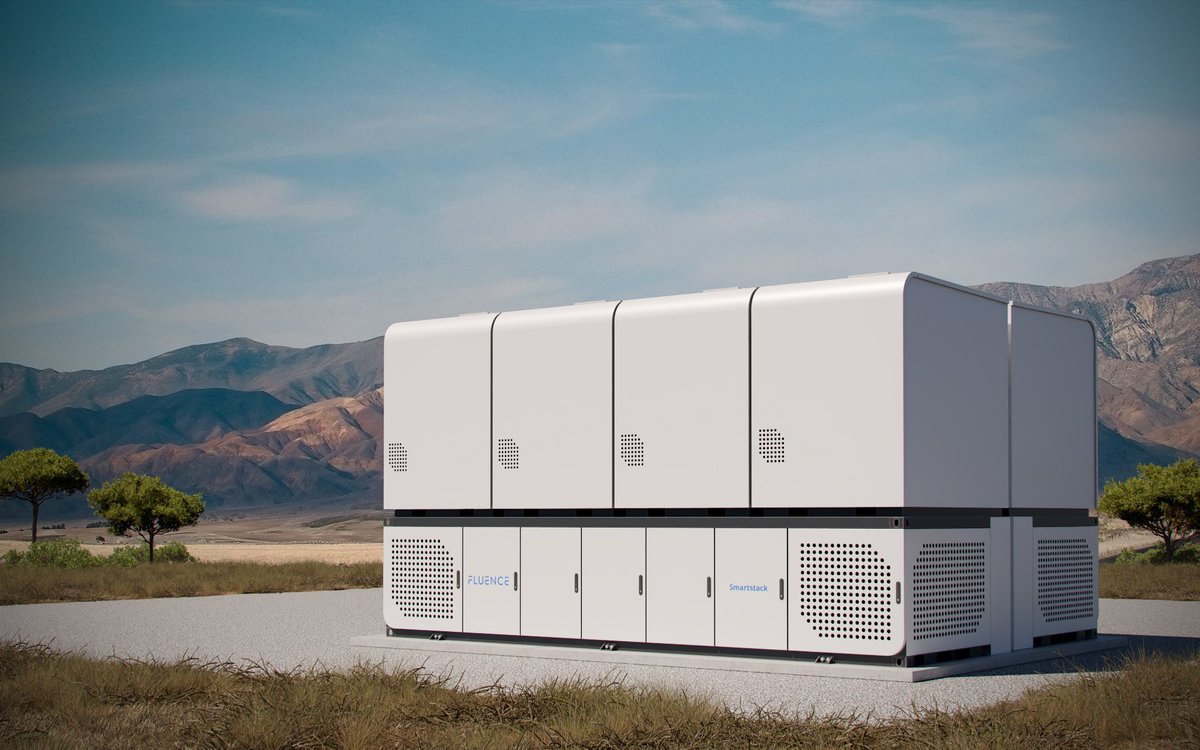
2
6
1,274

May 12
I'm not a trader, but since i got the tools for it, let me just try.
SAFi is bullish, which is the first criteria.
$TOSHI just went into an uptrend. Second criteria.
Now if it dips below the blue line on smartstack, you can put a long on it. You decide stop loss and all of that.
When you get the long position, you either exit when $TOSHI goes into a negative trend or hits your stop loss.
You can apply this same methodology to other coins as well, but be careful about which you select.
Please go check the performance for this yourself. Don't just blindly go into this, or anything for that case. Your understanding of the risk relative to reward is very important.
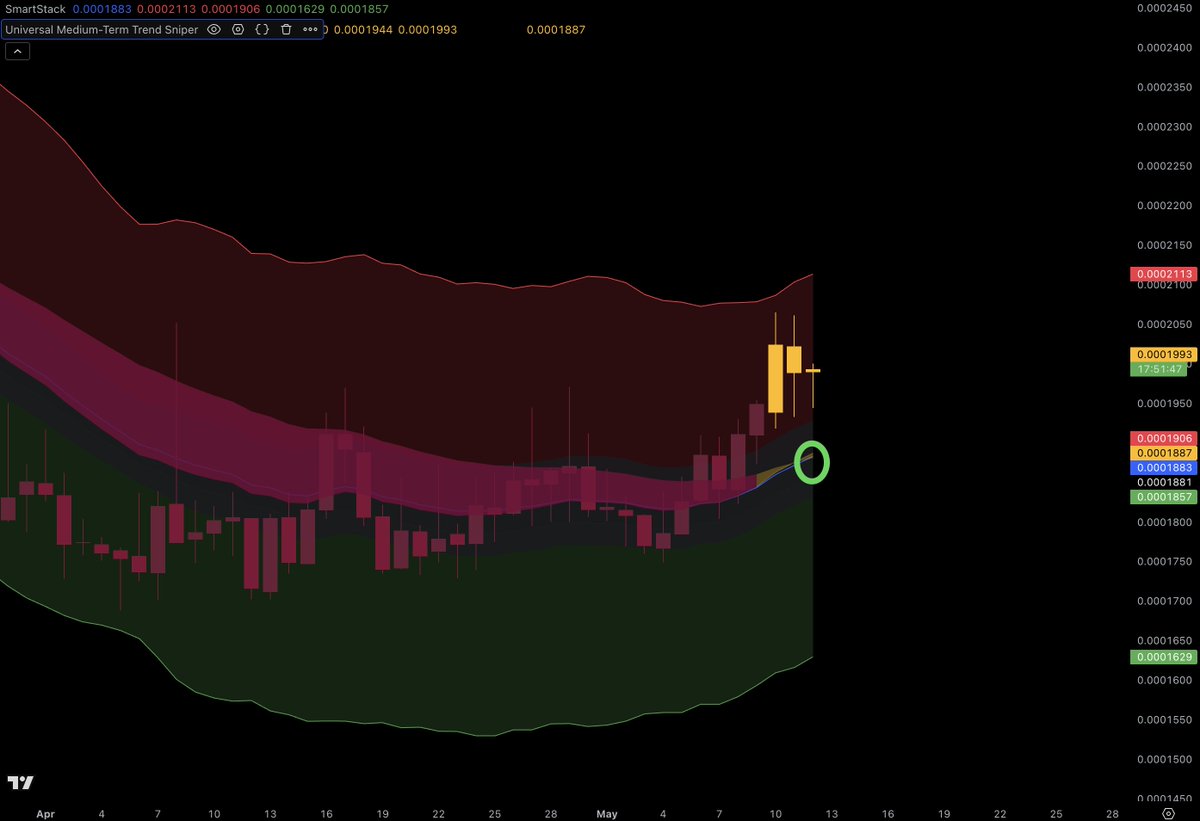
6
498

May 9
$FLNC $QS The 800V AI Inflection: The Hidden Synergy Between QuantumScape and the Fluence Hyperscale Buildout
The narrative in AI infrastructure has shifted from computing capacity to power delivery. We are currently witnessing a massive structural bottleneck as legacy data center power architectures fail under the load of next-generation compute. Nuclear, generators, grid, and now batteries are central to the solutions. This is creating a high-conviction opening for a technology pivot that connects QuantumScape (QS) and Fluence (FLNC) in a way the market is only just beginning to price in.
The Power Bottleneck: Real Estate and The Shift to 800V DC
Modern AI factories, driven by hardware like NVIDIA’s Blackwell, have outgrown traditional 54V power delivery systems. The industry's debate over AC vs. DC misses the biggest constraint: the rack's internal real estate. As operators pack more GPUs closer together, bulky power conversion hardware and thick copper cabling are actively competing with compute for physical space.
Simultaneously, the macro grid is failing these hyperscalers. The electrical grid is fundamentally a hundred-year-old technology, and getting a new mega-project onto the grid today can take a decade of waiting in interconnection backlogs. Data centers simply cannot afford to wait. They are increasingly bypassing macro-interconnection altogether and building power directly on-site to tightly couple generation and storage with their extreme loads. This explains the appeal and surge of companies like $BE.
To solve the internal facility bottleneck, the industry is standardizing around 800V Direct Current (VDC) architectures. This move mirrors the high-performance EV market because it is the only way to safely deliver megawatt-scale rack power while shrinking the conductors, minimizing thermal loss, and reclaiming rack space for actual processing.
Fluence’s Hyperscale Integration and The Role of the "Smartstack"
Hyperscalers need immediate power resilience, which is where Fluence Energy steps in. Fluence operates as the established systems integrator, which means they do not manufacture raw battery cells themselves. Instead, they procure cells and integrate them into massive, software-managed modular hardware platforms designed expressly for hyperscale reliability, voltage support, and islanded operations during grid disruptions.
In their May 2026 earnings call, Fluence dropped a massive catalyst: they signed Master Supply Agreements (MSAs) with two major hyperscalers, with initial orders hitting in Q3 2026. To serve this specific AI data center demand, Fluence recently reached substantial completion on the first delivery of their new purpose-built hardware platform: the Smartstack.
While Fluence currently utilizes conventional Lithium Iron Phosphate (LFP) cells for their exterior, utility-scale deployments, the physical constraints of next-generation AI data centers necessitate a massive leap in cell technology.
Future iterations of rack-adjacent or in-facility storage will absolutely require the exact specifications that solid-state batteries (SSBs) provide. Legacy lithium-ion systems are bottlenecked by severe limitations, such as flammable liquid electrolytes that present catastrophic thermal runaway risks indoors, practical limits on energy density that eat up valuable compute space, and a reliance on graphite supply chains. Future data center products demand the density and absolute fire safety of a solid-state architecture.
This technical necessity suggests a putative endgame for the strategic alliance between Fluence and QuantumScape. While formal disclosures naming specific hyperscale deployments remain pending, the active nature of this 2022 partnership points toward a massive structural bridge into the stationary market. One can infer that by aligning QuantumScape’s 800V native cells with the modular hardware blueprints currently being optimized for AI compute, the two entities are pre-engineering the fire-safe, high-density backbone required for the next generation of decentralized infrastructure.
The QuantumScape Edge: Native 800V Architecture and QSE-5
This is why QuantumScape’s QSE-5 platform is a native infrastructure play. During the Q1 2026 earnings update, CEO Siva Sivaram explicitly connected the dots to the 800V data center shift, noting the company generated its first-ever customer billings from ecosystem partners:
"We believe our high-performance solid-state design has compelling attributes to address the evolving energy storage needs of AI data centers, where conventional lithium-ion technology faces safety and performance limitations. Driven by massive compute demand, data centers are transitioning to 800-volt DC designs and adopting power systems architecture and technology from the electric vehicle industry. We see this as a natural fit for our no-compromise solid-state battery."
Sivaram further emphasized why QS cells are uniquely suited for these multi-billion-dollar racks, highlighting the geopolitical and safety advantages of their anode-free design:
"Combined with the superior safety of our solid-state design, this is a highly attractive combination for these advanced applications. Our anode-free architecture also has supply chain benefits for these customers. Conventional lithium-ion batteries require graphite that is almost exclusively sourced from China."
CTO Tim Holme’s Vision: "Batteries Everywhere"
QS Co-founder and CTO Tim Holme has been the consistent pulse for this transition, frequently taking to X to discuss the massive scaling required and the immediate need for decentralized power.
His core message is that the world is entering a new era of energy density, and the Eagle Line manufacturing throughput, which recently completed installation to serve as QS's pilot-scale production facility, is the key that unlocks it.
As he shared in the company's strategic roadmap:
"The world is going to need terawatt-hours of batteries across many applications, from mobile devices and EVs to the grid and data centers. I hope that solid-state batteries will be part of that mix and that QuantumScape's technology will be key."
Holme is intensely focused on the necessity of batteries to fix the calcified grid. On X, he recently highlighted exactly why this infrastructure pivot is non-negotiable:
"This isn't a political issue: why aren't we deploying the world's cheapest form of power literally everywhere we possibly can and then just putting batteries everywhere. There just should be batteries everywhere... this is a really critical problem, not just to manage power load on the grid but to power all of the things we need to power the next generation of innovation."
Furthermore, Holme is mapping out the long-term economics of these cells in stationary applications. He recently pointed to the shifting strategy of second-life grid storage, tweeting:
"Sustainability! 'We can put batteries into grid storage for a little while to really extract all of the energy storage and power delivery value they have, and then go on to recover the critical minerals from them and regenerate fresh cathode material'."
The Defense & AI Catalyst: Securing the Supply Chain
The strategic maneuvering at the board level perfectly aligns with this infrastructure pivot. In April 2026, QuantumScape added Dr. Mark Maybury to its strategic advisory board. Dr. Maybury is the former Chief Scientist of the U.S. Air Force and VP of Commercialization, Engineering and Technology at Lockheed Martin. You do not bring in an expert in Air Force procurement and defense contracting unless you are preparing to scale into high-security, mission-critical infrastructure.
The Department of Defense and major hyperscalers share the exact same core requirement: secure, domestically viable (graphite-free), fire-safe, high-density energy storage.
The Verdict: Waiting for the Confirmation
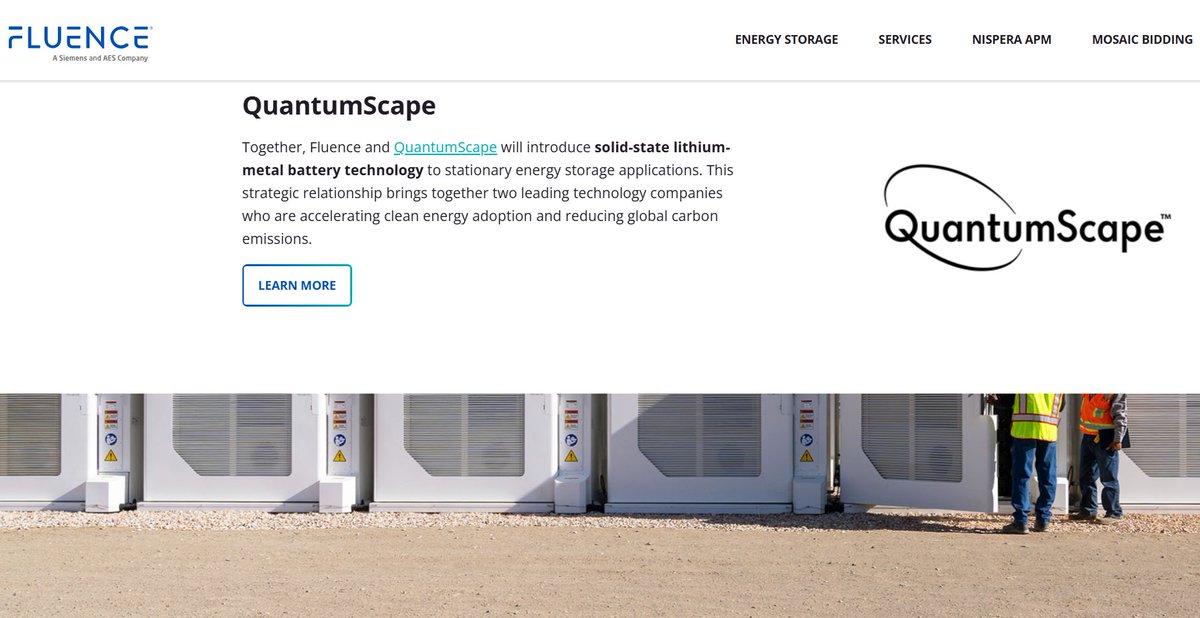
This brings the entire thesis together: Fluence operates as the established systems integrator, and QS is positioning itself as the elite cell supplier for this exact matrix. The strategic partnership between Fluence and QuantumScape remains active today, officially listed as a joint initiative to introduce solid-state lithium-metal battery technology to stationary energy storage applications, but we have not heard much recently, except that they are certainly the storage company listed in QS's investor deck, as the partnership is well-known and public.
We are likely currently in a quiet phase of validation. Fluence has just locked in Master Supply Agreements with two major hyperscalers, and QuantumScape is ramping up production of the QSE-5 cells on the Eagle Line that fit those specific 800V, graphite-free requirements perfectly.
I am waiting to hear more regarding the shipment of B-sample cells specifically designated for non-automotive partners in the coming quarters. I suspect we will see an official confirmation of a stationary storage pilot that finally bridges the gap between Fluence's hyperscale AI rollouts, Tim Holme’s push to put "batteries everywhere," and the AI power crisis. When that narrative hits the mainstream, the EV-only story for QS will likely be a thing of the past.
Given the Q3 2026 delivery window for those Fluence MSAs, do you think we will see a formal "joint validation" announcement from QS? Time will tell. Given Tim Holme's public tweets about grid storage and Sivaram's excitement about data centers, it's hard not to draw some exciting conclusions about what is likely to hit the news in the future.

May 9

$QS $FLNC Don’t forget Fluence doesn’t make the batteries. They partnered with QuantumScape because they know solid-state is the real step up for grid-scale storage.
$FLNC gives you the grid infrastructure layer.
$QS gives you the battery breakthrough that will power the next generation of that infrastructure.
Grid demand is only going one direction. AI, electrification, data centers, renewables, resilience. The world needs better storage, and solid-state is the obvious upgrade path.
Buy the infrastructure. Buy the batteries. $FLNC $QS
13
19
168
47,263
May 9
$FLNC provides battery-based energy storage systems for utilities like datacenters.
Datacenters don’t tolerate power spikes or interruptions. $FLNC’s Gridstack Pro and Smartstack systems provide almost instantaneous backup power.
$FLNC also sells software for optimizing energy use (Mosaic) and predicting battery failures (Nispera). As of Q1 2026 (ending December 31, 2025), they accounted for 5% of $FLNC revenue. 95% came from battery solutions.
The company ran into problems in 2025 due to tariff uncertainty and staffing and technical calibration issues. Its revenue dipped and the stock fell by 80% from its peak valuation.
Toward the end of 2025, things improved. The earnings report in February 2026 was not spectacular, but it was also not a disaster.
Nevertheless, $FLNC stock fell by 34% on the earnings date and lost another 38% over the next two and a half months.
The main problem was margin compression due to unexpected expenses related to two projects. The adjusted gross margin was 5,6% in Q1 2026, down from 12,5% in Q1 2025.
For Q2 2026, I wanted to see margin improvement (ideally toward 13%) and a recovery of those additional expenses.
In addition, I wanted to see backlog growth. $FLNC said in February it had expanded its pipeline by 30% to $30 billion while the backlog was $5,5 billion.
How much of that $30 billion is turning into contracted backlog?
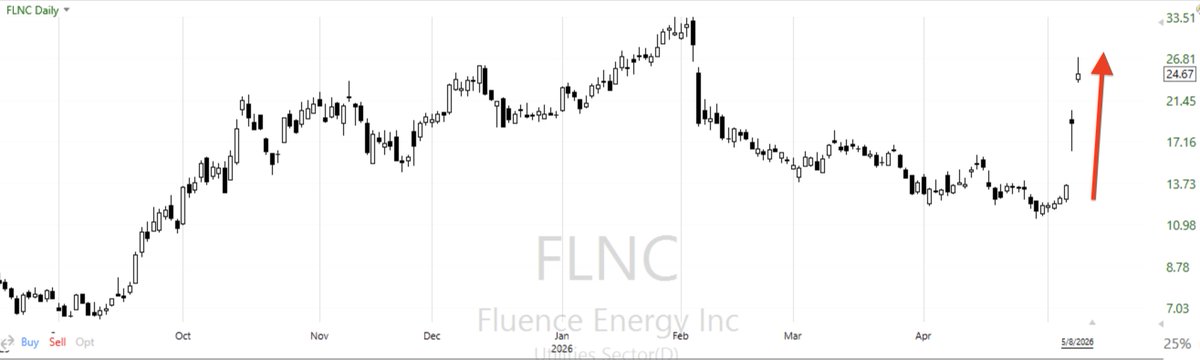
Well, $FLNC f*cking crushed earnings on May 6.
Revenue up 7% YoY
Net loss $29,2 million
Adjusted gross margin 11%
Order intake $2 billion
Backlog $5,6 billion
Total liquidity including cash $900 million
So yes, $FLNC improved the backlog and gross margin. Now the entire 2026 revenue guidance is covered by the backlog.
It’s this line from the earnings report that warms my heart:
“Our customer expansion strategy is gaining momentum: we have signed master supply agreements with two hyperscalers and expect to convert our first order soon.”
I don’t care who the hyperscaler is (Microsoft, Meta, Amazon, etc.), this result shows the demand is there.
And just like that, the stock more than doubled within one week from the April lows.
The funny thing is UBS downgraded the stock to sell 5 days before the report.
The final point is the monetization of tax credits due to the One Big Beautiful Bill Act. $FLNC manufactures its products in the US, which means they qualify for tax credits.
Long $FLNC.
5
2
9
1,801