
Today's takeaway:
"Update state before the external call" isn't a style tip. It's the whole ballgame. The callback is the wild.
#SmartContractSecurity #Web3 #CodeHawks

6

Jun 14
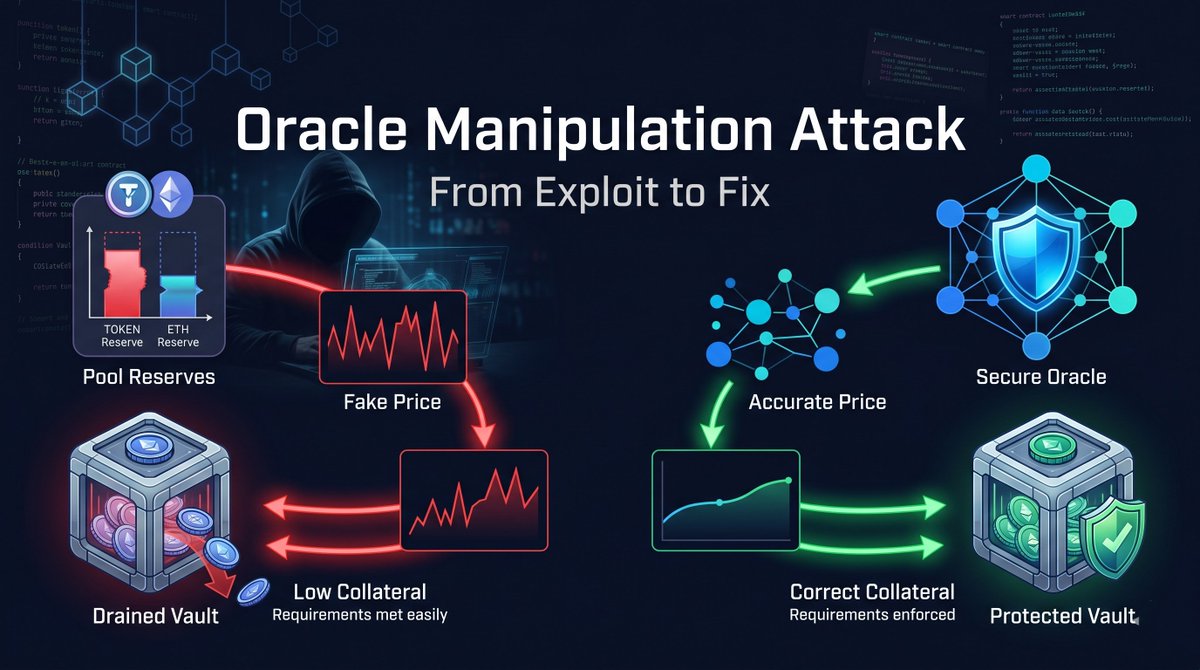
Worked through an oracle manipulation case study in DeFi.
Built the vulnerable protocol, reproduced the exploit, analyzed the root cause, and implemented a secure fix.
Documented the full process here:
dev.to/junaidmollah01/breaki…
#SmartContractSecurity #Solidity #DeFi
2
11

Audit Checklist
Whenever you see:
→ for loops
→ while loops
Ask:
""Can users increase the size of this data structure?""
If yes:
Dig deeper.
#SmartContractSecurity
6

Most DeFi "hacks" aren't hacks.
The code worked exactly as written. The price was the lie.
Oracle manipulation has drained $400M from protocols whose audits were clean. Here's how it actually works 🧵
Context: every lending protocol needs to know what your collateral is worth. That's the oracle's job.
The lazy design: read the spot price from a DEX pool.
The problem: pool prices move when someone trades big. And flash loans give *anyone* whale-size capital — for exactly one block.
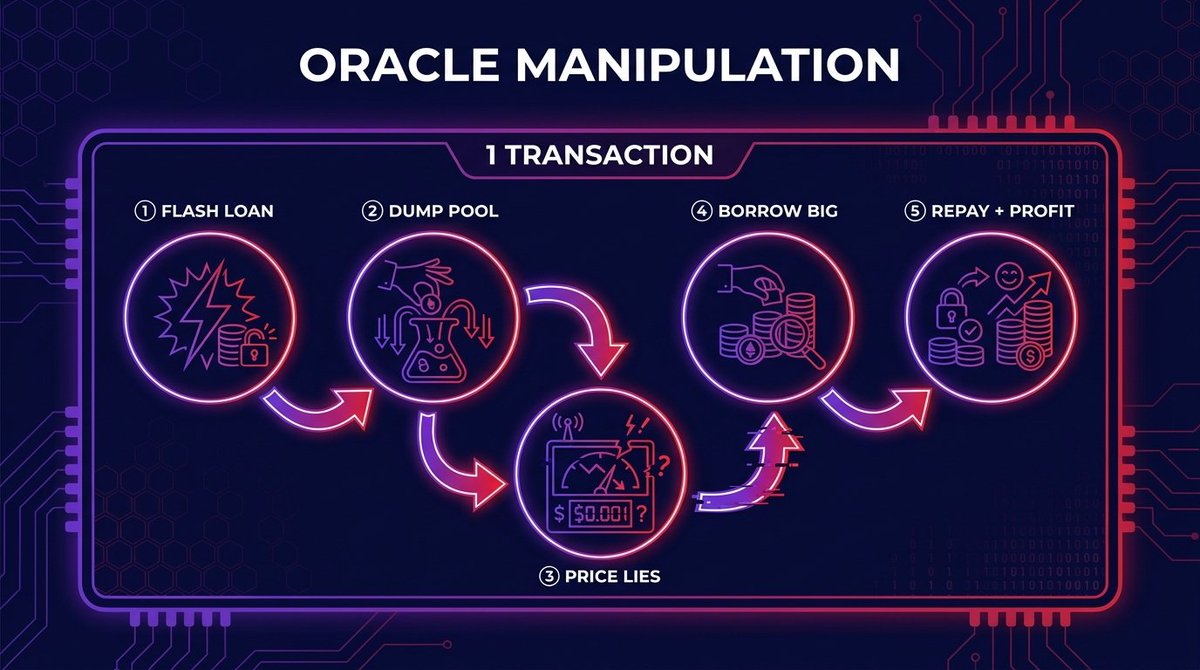
The play, in one transaction:
① flash-loan a huge amount
② dump it into a thin pool → price crashes
③ the protocol now mis-prices collateral
④ borrow (or liquidate) against the fake price
⑤ repay the flash loan, keep the difference
The profit is real. The price never was.
Real money, real cases:
• Mango Markets — $116M. Pumped MNGO perp price, "borrowed" the whole treasury against it
• Harvest Finance — $24M via Curve pool manipulation
• bZx, Cheese Bank, Inverse… same story
One root cause every time: the oracle trusted a single manipulable source.
Before you deposit into any lending protocol, 4 questions:
• Spot price or TWAP?
• Chainlink / redundant feeds, or one DEX pool?
• How deep is the liquidity of the source pool?
• Is there a per-block price deviation cap?
If the docs don't answer these — that IS the answer.
Takeaway: code can be perfect and the protocol still dies.
If reality is an input, attackers attack reality.
I break down one DeFi mechanism or exploit every week — follow along. NFA, DYOR.
#DeFi #SmartContractSecurity #Oracles
56

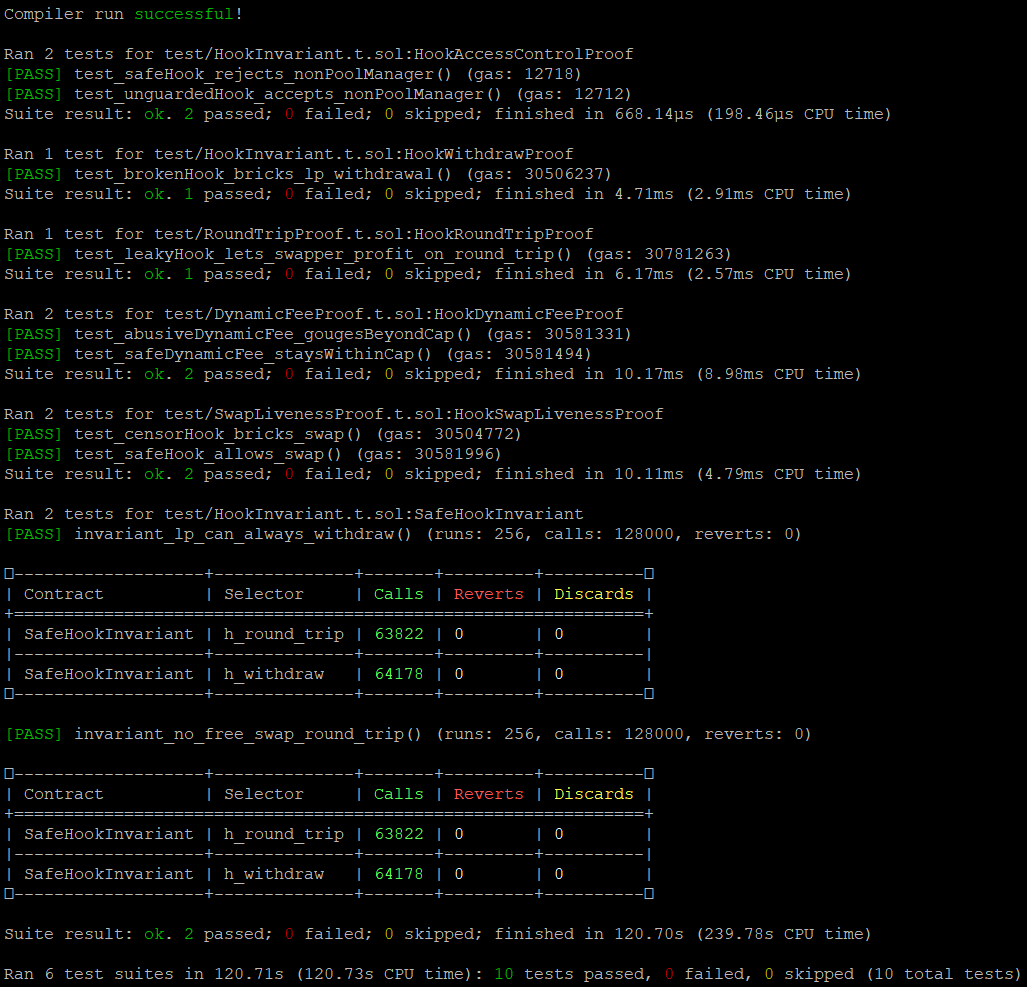
No mocks. It deploys your hook on a real v4-core PoolManager and drives it with unit proofs fuzzed invariants (256 runs, 128k calls, 0 reverts). 10 tests, green in CI. MIT.
One forge test:
github.com/hunterinvariants/… #UniswapV4 #Solidity #DeFi #SmartContractSecurity
39
The easiest way to DoS a smart contract?
Make it work exactly as designed.
#SmartContractSecurity #Ethereum
1
8

Jun 11
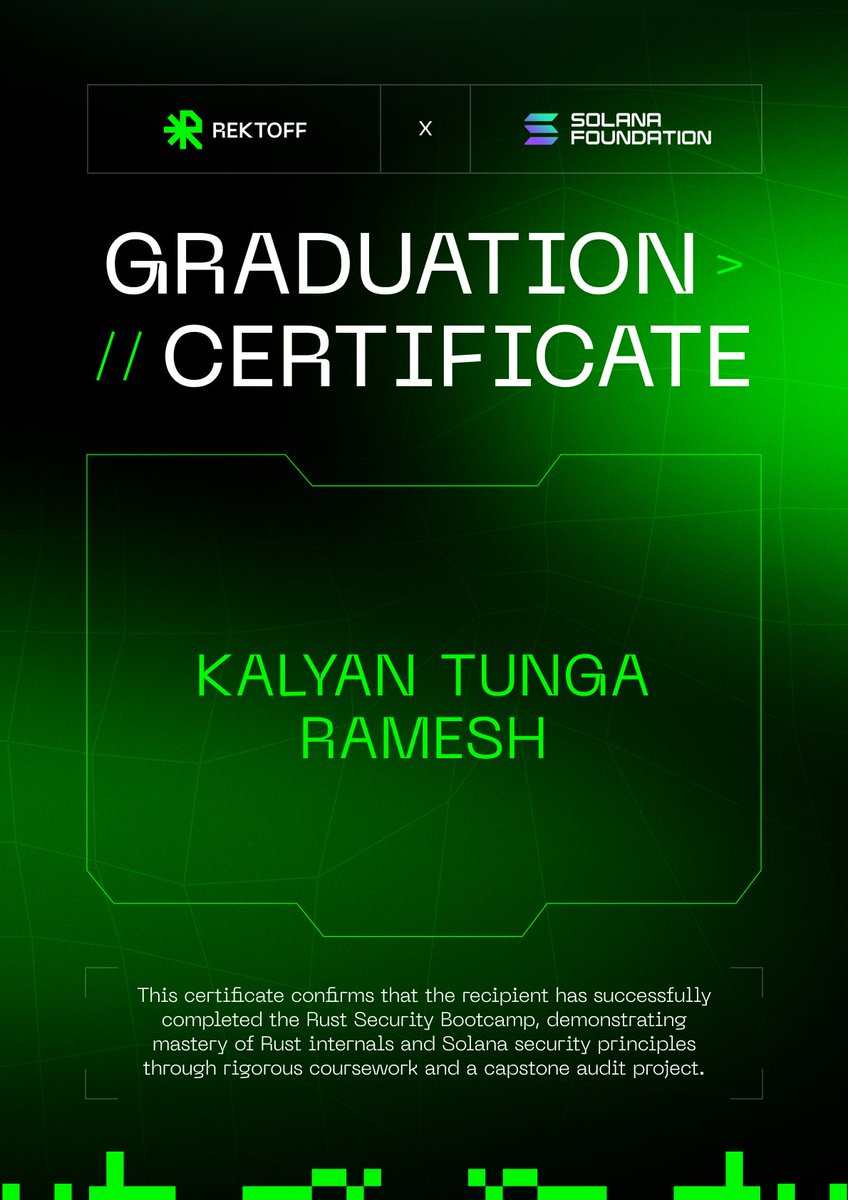
Happy to share that I've completed the @rektoff_xyz × @SolanaFndn Rust Security Bootcamp 🎓
Thanks to the team for the great learning experience. Excited to continue growing as a smart contract security researcher.
#Solana #Rust #SmartContractSecurity
3
19
680

🔍 How does Cyberscan AI help identify risks faster?
By automating smart contract analysis, detecting vulnerabilities earlier, prioritizing critical findings, and providing AI-assisted remediation guidance, Cyberscan AI helps teams strengthen security before deployment.
Learn more:
cyberscope.io/cyberscan-ai
#CyberscanAI #Web3Security #SmartContractSecurity #BlockchainSecurity #Cybersecurity #DeFi #SmartContracts #AI #Cyberscope

1
99

ALERTA DE SEGURANÇA: Vulnerabilidades Críticas no Ecossistema Bitflow e a Negligência da Immunefi 🛡️⚠️
@bitflow @immunefi #Bitflow #Stacks #ClarityLang #SmartContractSecurity #DeFiSecurity #BugBounty #BlockchainAudit #SegurancaDigital #Web3
1
16
Today’s takeaway:
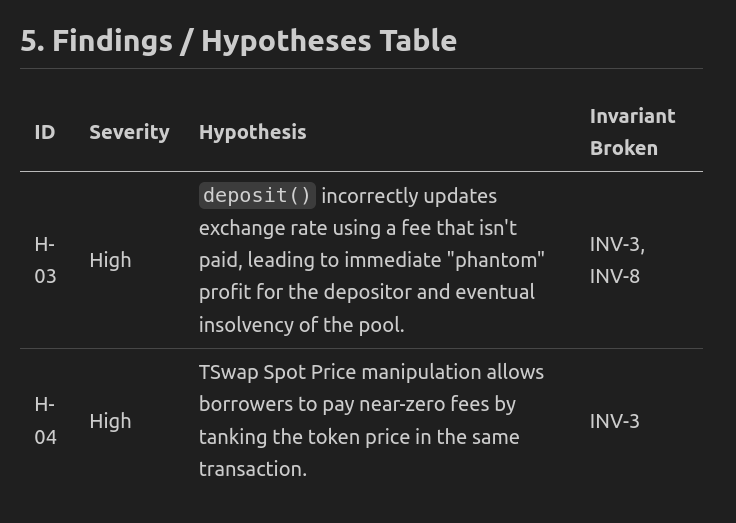
- Use a TWAP or Chainlink unless you want your protocol to be an attacker's piggy bank.
- "Phantom yield" is real. If you update an exchange rate without a corresponding token transfer, you're just printing insolvency.
#SmartContractSecurity #Web3 #CodeHawks
1
21
🛡️Day 16 of Becoming SR: @CodeHawks Thunder Loan minefield.
caught 2 High-severity candidates:
1️⃣ Oracle manipulation via TSwap spot price.
2️⃣ Immediate insolvency via a logic flaw in deposit()
Repo👇
github.com/mayurrajput04/aud…
#SmartContractSecurity #Solidity #Web3
1
2
71

Jun 8
"Disconnect wallet" feels safe. It revokes nothing, and that is how most wallets get drained.
Approving a token writes an on-chain allowance. The contract can pull your tokens later with no second signature, long after you forgot the site.
Most dApps ask for unlimited (the 2^256-1 max). That allowance never decrements, so it is permanent spend access until you revoke. Disconnecting ends the session, not the permission.
Worse, the spend needs no transaction. A gasless "Sign" popup (EIP-2612 permit, Permit2) authorizes a spender for free, no gas, no trace. Permit phishing alone drove 56.7% of 2024 drainer thefts.
The numbers:
2024: $494M stolen, 332,000 addresses
2025: $83.85M, 106,106 victims, permits drove 38% of $1M losses
CertiK May 2026 report: $68.3M total, $13.7M from wallet and key breaches
The audit, under 10 minutes:
1 CHECK every live allowance (revoke.cash or Etherscan)
2 REVOKE unlimited, abandoned, or older than 90 days you cannot name
3 CAP every new approval to an exact amount
Swipe for the full flow, the disconnect myth, and three signing rules.
Educational purposes only, not financial advice.
Follow for daily insights - where blockchain meets AI, one satisfying swipe at a time.
#TokenApprovals #WalletSecurity #Web3Security #SmartContractSecurity #DeFiSecurity #Permit2 #ERC20 #RevokeCash #WalletDrainer #PhishingDefense #SelfCustody #OnChain #Ethereum #Web3 #BlockchainSecurity #DigitalAssets
3
144

Jun 8
Every major DeFi exploit has happened before.
Reentrancy drained Cream Finance in 2021. The same pattern took new protocols in 2023 and 2024. Oracle manipulation drained Mango Markets in 2022. It's still draining protocols today.
A decade of postmortems. Hundreds of exploits. No human auditor can hold all of that in their head.
We're building an engine that can.
Next version, coming soon.
#SmartContractSecurity #DeFi #Web3Security
2
1
145
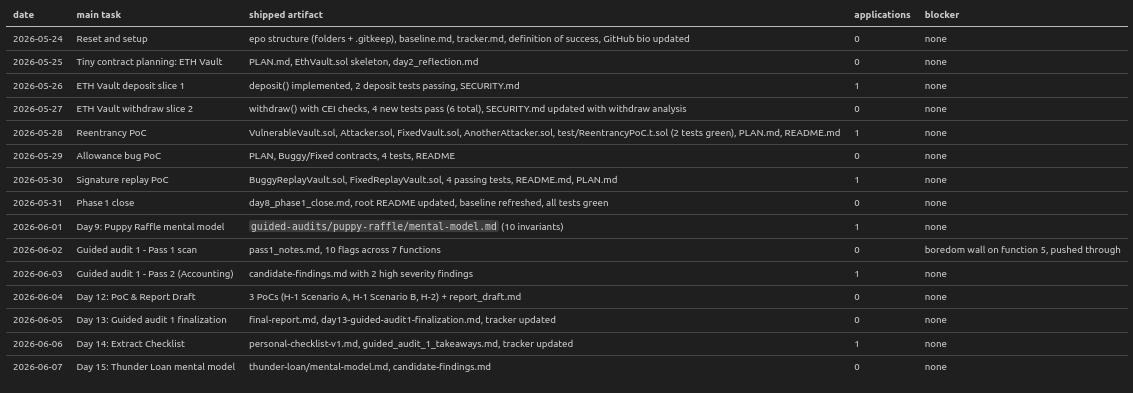
🛡️ Day 15 of Becoming SR:
Mapping @CodeHawks Thunder Loan before touching a single bug.
Built a mental model 8 invariants, and the recon alone surfaced 2 candidate findings.
Repo👇
github.com/mayurrajput04/aud…
#SmartContractSecurity #Solidity #Web3 #PublicBuilding
53
Jun 6
Auditors read code.
Exploiters read systems.
That gap is where The DAO, Hundred Finance, and most major DeFi losses actually happened — not in broken code, but in how correct code behaves under real-world conditions.
We're building the engine that closes that gap.
Next version, coming soon.
#SmartContractSecurity #DeFi

16
14
1,072

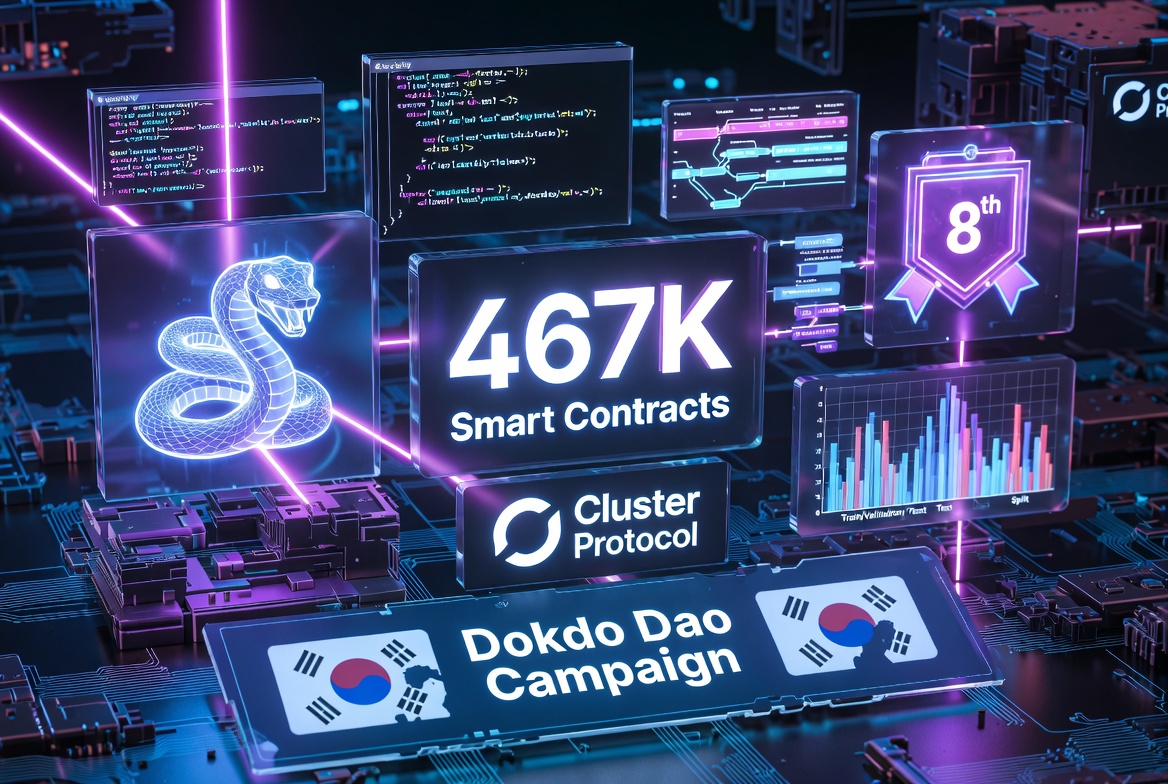
스마트 컨트랙트 보안 분야에서 좋은 데이터셋 하나가
얼마나 큰 가치를 가지는지 아는 사람이라면
이번 Cluster Protocol의 공개 소식이 꽤 반가울 것입니다.
@ClusterProtocol @cluster_korea
최근 Cluster Protocol은 Slither Audited Smart
Contracts 데이터셋을 공개했습니다.
무려 46만 7천 개가 넘는 Etherscan 검증 Solidity
스마트 컨트랙트가 포함된 대규모 데이터셋으로
컨트랙트 코드만 모아놓은 수준이 아닙니다.
각 컨트랙트마다 원본 Solidity 소스코드와 실제 배포된
바이트코드가 함께 제공되며, 정적 분석 도구인 Slither를
통해 추출한 100개 이상의 취약점 및 위험 패턴
분석 결과까지 포함되어 있습니다.
여기에 머신러닝 연구자들이 바로 활용할 수 있도록
train, validation, test 스플릿까지 체계적으로
구성되어 있어 스마트 컨트랙트 보안 연구와 AI 기반
취약점 탐지 모델 개발의 진입 장벽을 크게
낮춰주고 있습니다.
저 역시 현재 독도다오 캠페인에 참여하면서 이 데이터셋을
집중적으로 살펴보고 있습니다.
처음에는 단순히 순위 경쟁을 위한 자료 정도로 생각했지만
실제로 수많은 컨트랙트를 분석하다 보니 예상보다
훨씬 많은 인사이트를 얻고 있습니다.
특히 과거에는 무심코 지나쳤던 코드 구조나 보안상
위험 신호들이 눈에 들어오기 시작했고, Slither가
어떤 근거로 특정 취약점을 탐지하는지 이해하게 되면서
분석 속도와 정확도 모두 눈에 띄게 향상되었습니다.
결과를 확인하는 것을 넘어, 보안 분석가의 시선으로
코드를 바라보는 감각 자체가 조금씩 길러지고
있것 같기도 합니다
현재 독도다오 캠페인 순위 8위를 유지하고 있지만
이 데이터셋을 더 깊이 탐구하면서 한 단계 더 높은 곳을
목표로 해보려 합니다.
데이터셋이 가진 정보량과 활용 가능성을 생각하면
아직도 파볼 만한 영역이 정말 많아 보입니다.
블록체인 보안, 스마트 컨트랙트 감사, Solidity 개발,
그리고 AI 기반 취약점 탐지 연구에 관심이 있는
분들이라면 이 데이터셋은 반드시 한 번 살펴볼
가치가 있습니다.
참고 자료를 넘어 실제 연구와 개발에 활용할 수 있는
수준의 고품질 데이터가 공개된 만큼, 앞으로
어떤 새로운 분석 도구와 보안 모델이 등장할지
기대가 됩니다.
직접 열어보고 몇 개의 컨트랙트만 분석해 보세요.
생각보다 훨씬 깊은 세계가 기다리고 있을지도 모릅니다.
#ClusterProtocol #Slither #SmartContractSecurity #Solidity #독도다오 #블록체인보안
8
3
14
153

May 30
A beautiful website means nothing if the underlying architecture is fragile.
G2S functions as a full service software testing and systems control hub.
We stress test your applications and audit smart contracts to ensure your digital ecosystem is secure against vulnerabilities before you launch to millions.
#TechAudit #SmartContractSecurity #SoftwareTesting #CyberSecurity
5
11
277

May 22
🟠 Ace (Unverified utility): 58/100 — Elevated Risk · Base · Token
Verdict: Elevated Risk, Avoid Large Deposits.
🚨 Red flags:
• 0% locked LP on a high-valuation asset
• Inorganic volume signaling wash trading
⚠️ Key risks:
• Centralization via admin pause function
• Massive supply overhang from FDV/MC gap
• Extreme whale concentration with minimal retail distribution
✅ Positive signals:
• Verified source code without honeypot or hidden ownership mechanics
📊 Exploit probability: 37% · Loss severity: 55/100 · Confidence: 41/100
🔗 Full institutional report: defidetector.ai/analysis/6a1…
Built by DeFiDetector.ai — structural risk intelligence for DeFi protocols, tokens, and contracts. Not financial advice.
#DeFi #Crypto #RiskManagement #SmartContractSecurity #Web3 #DeFiSecurity
1
1
2
57

Defi hacks are becoming one of the most serious threats in crypto. Two of the biggest DeFi hacks of 2026 cost users $577M.
We decided to score the attacker wallets. Every one came back BLOCK. Not because we knew they were exploit wallets - because the behavioral data told us everything we needed to know.
Zero outbound transactions. 2.7 billion value spike ratio. Zero known protocol interactions. Same coordinated creation window. Classic Lazarus Group fingerprint.
The signals existed onchain before a single dollar was drained.
DeFi protocols are losing hundreds of millions to attacks that leave clear behavioral trails. The data is there. Most protocols just aren’t reading it.
That’s why we built our newest product, KaelAi Shield - behavioral wallet scoring, exploit registry, and five-tier threat detection purpose-built for DeFi security.
The next hack is coming. The question is whether your protocol is reading the signals.
Full case study this week. kaelai.io/shield
#DeFi #DeFiSecurity #KelpDAO #DriftProtocol #LazarusGroup #Web3Security #CryptoSecurity #WalletSecurity #SmartContractSecurity #DeFiHack
11
18
376

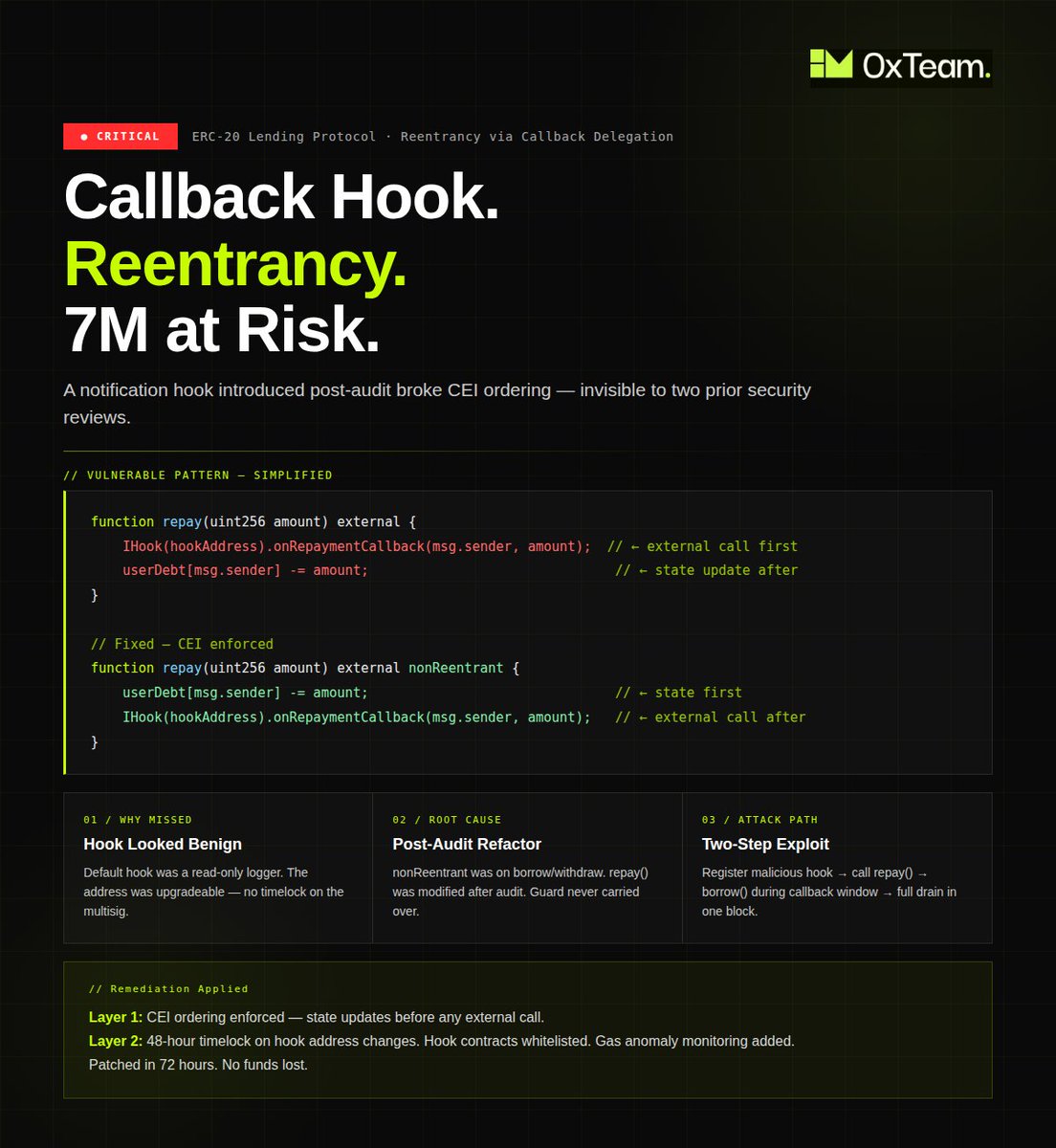
🔴 Bug We Found — Reentrancy via Callback Hook
A notification hook added post-audit broke CEI ordering. Two prior audits missed it. $47M TVL was at risk.
The hook address was upgradeable. No timelock. Default hook looked benign — until it wasn't.
#SmartContractSecurity #DeFi #Web3Security #0xBugDrop
1
4
296