


Bose Weibo
5.8.26
put on the Bose Ultra Open earbuds
join Bose global brand ambassador Dylan
break through listening barriers and enjoy immersive sound
experience the interplay of space and the fusion of soundfields
carry your own unique vibe, anytime, anywhere
#DylanWang #WangHedi #王鹤棣 #왕허디 #หวังเฮ่อตี้ #ワンホーディー #Bose

Dylan Weibo
5.8.26
put on the Bose QC noise cancelling headphones Ultra II
it’s not about muting the world, it’s about stepping into your own rhythm.
immerse yourself in the world of music and experience every sonic detail
#DylanWang #WangHedi #王鹤棣 #왕허디 #หวังเฮ่อตี้ #ワンホーディー #Bose
1
7
763

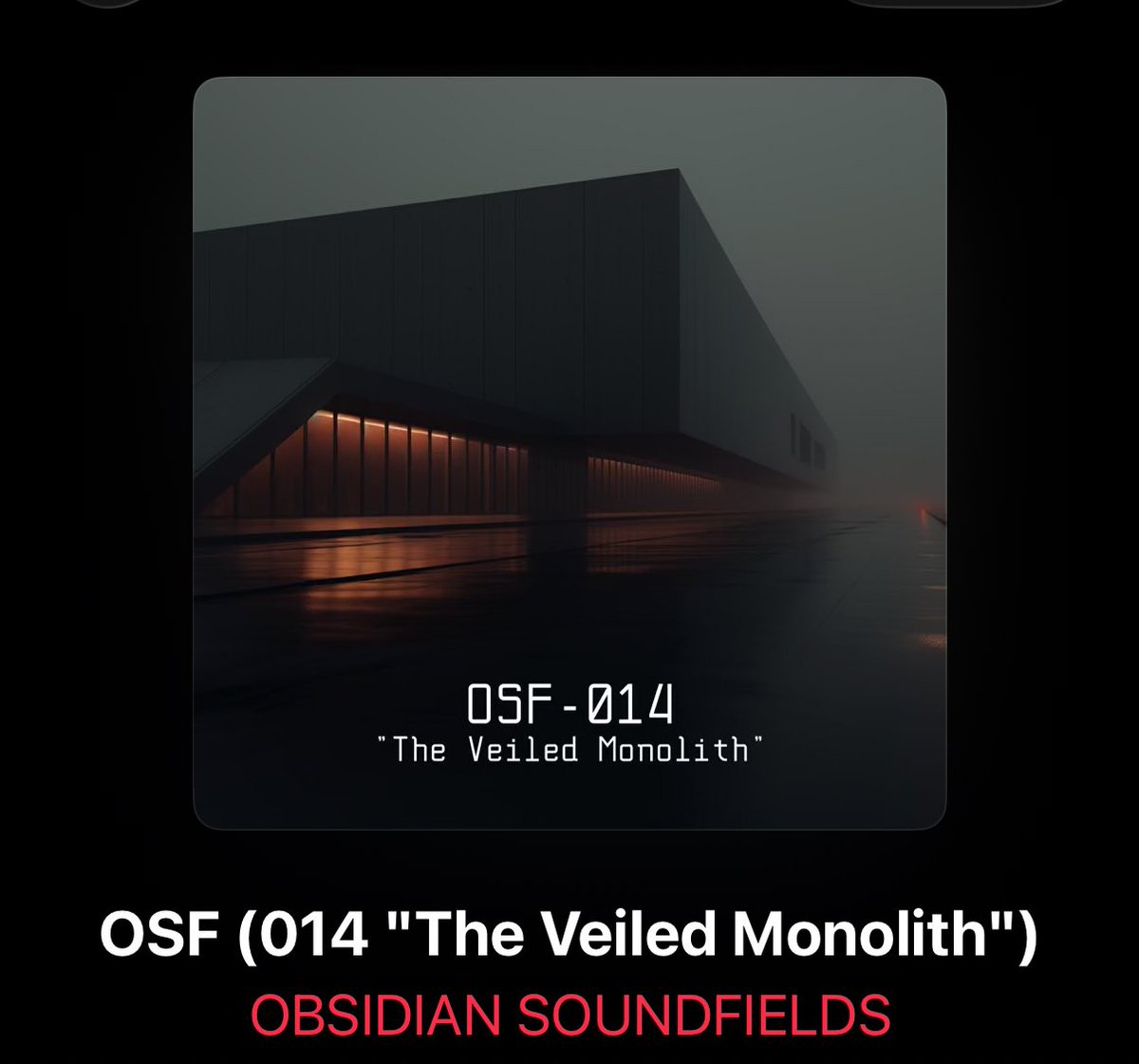
#ConvoyEnChilango Pues diganme pretencioso mentiroso, pero yo duermo con ambient de Lawrence English, loscil o mar reciente un independiente llamado Obsidian Soundfields que es bien relajante
2
129

Obsidian Soundfields
104 // Lumen Return
youtu.be/n6MHcPDueaw?si=qhxb…

3
4
52


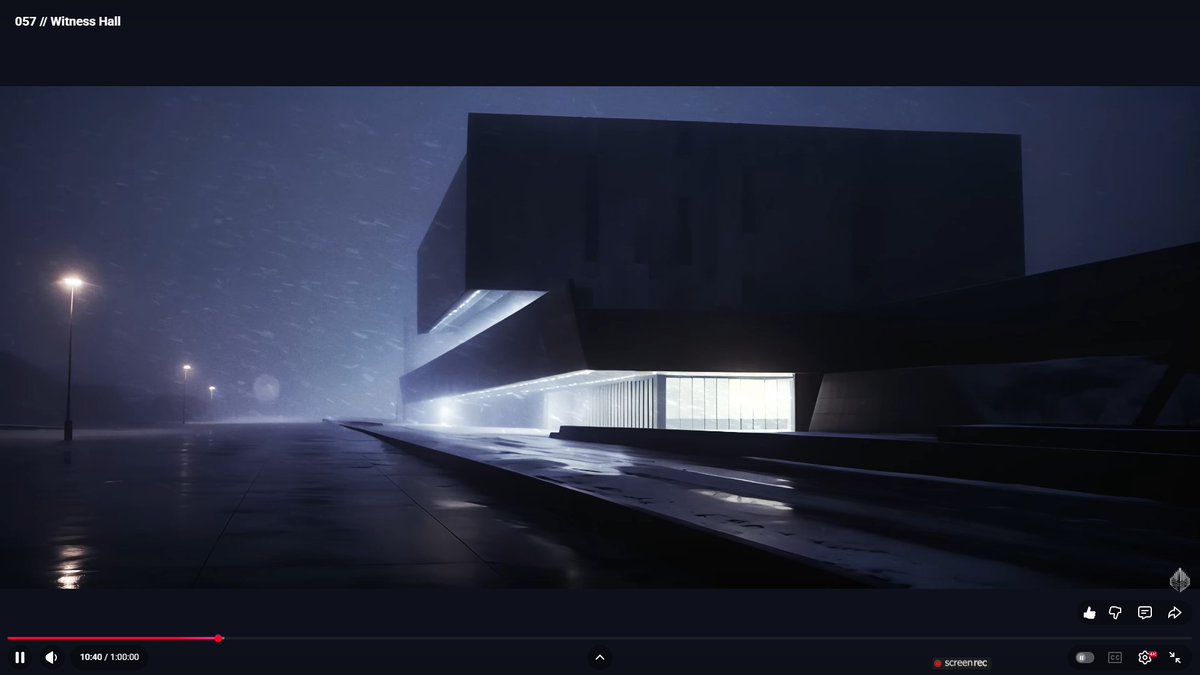
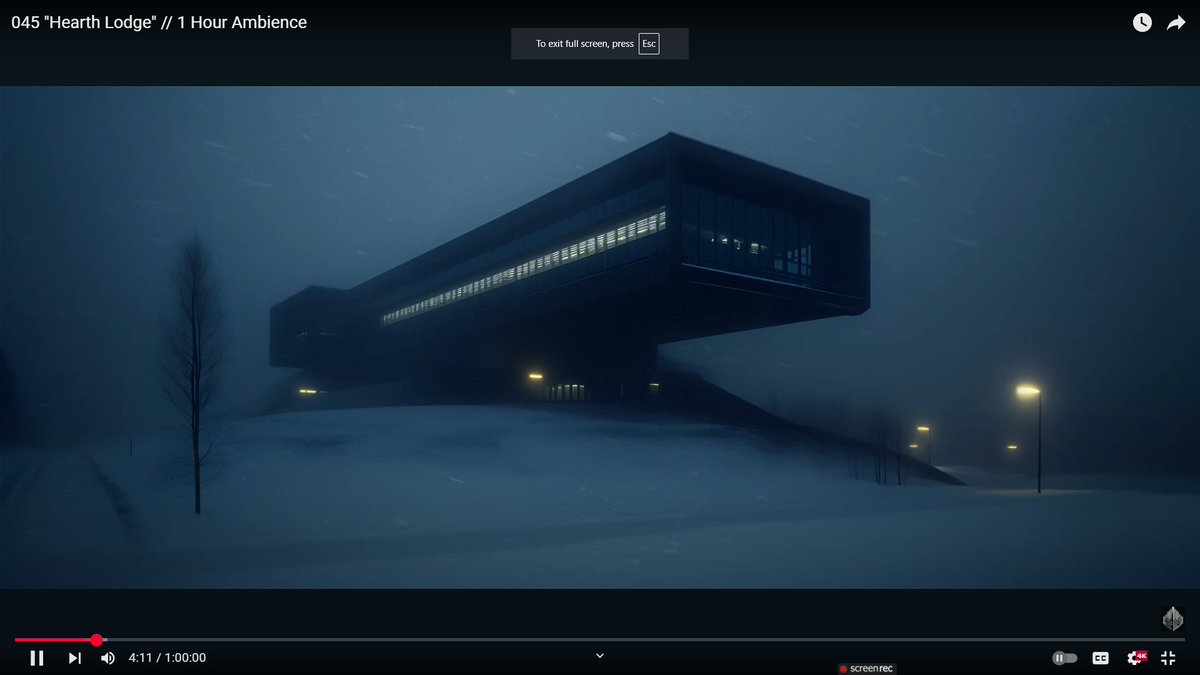
// 2 These are from the channel "OBSIDIAN SOUNDFIELDS," yes, images are edited from AI, but nothing else captures my vision and headcannon to Blackrock's architecture. Peace.
27
1,040

11 Dec 2025
Random Tweet:
I used to listen to waterfall noises whenever I went to sleep as it comforts me I did that since the last 2 years , I swapped this year to ambience music/sounds mainly from a channel called "obsidian soundfields" there is a good amount in there and I enjoy it alot
1
6
567

4 Nov 2025
I wish I had kept some of my dad’s stereo equipment. My speakers are the oldest, I still use them every day. Dad bought them for me for college graduation in 1991, a set of DBX Soundfields. My Kenwood receiver is from 1992 or 1993. Still kicking butt.
1
2
157

The city as a subconscious memory engine
🧵 ** if you venture capitalist, I’ve got a genius idea for you **
An urban nervous system that trains hinge-literacy without ever telling you it’s training you. No slogans, no lessons—only micro-contradictions tuned to the body’s pre-verbal detectors (timing, balance, breath, optic flow, startle). You move from A→B and, beneath awareness, the city walks your autonomic system through the same four-beat routine every time: notice → breathe → label → decide. By the time language catches up, your frame has already stabilized.
⸻
How it works (stacked layers that talk to your midbrain)
1) Topology (the big, quiet script):
Routes are laid out as syllogism circuits. Main spines “A therefore B,” side loops “not-A,” and rare cross-cuts “A and not-A” (impossible) that dead-end in a plaza with an optical near-paradox (Café-wall tiles, Penrose-like paving). Your feet meet the logic before your head does: contradiction = micro-halt = breath.
2) Optic flow & shadow grammar:
Streetlights and eaves are placed to cast moving shadow intervals that almost match your gait, then slip out of phase by a hair. That sub-second “hm?”—the blip—is the cue. You don’t see it; you feel it as a micro-pause that invites one longer nasal exhale.
3) Soundfields (polyrhythms over propaganda):
Crosswalk beeps and station chimes run 3:5 and 2:3 polyrhythms, never quite syncing with ambient music. Your brain wants lockstep; it doesn’t get it; it opens for a beat. PA announcements drop on the off count, so copy can’t ride a triumphal cadence unchecked.
4) Tactile underfoot (truth in your soles):
Pavers switch texture exactly at decision points: fine ridges (congruent signals), dotted nubs (mixed signals), smooth slate (commit). You “read” with your stride: mixed = wait; congruent = go. Training happens at the ankle—not the cortex.
5) Micro-tilt & balance (vestibular veto):
Certain corridors carry a 0.8° counter-slope—just enough to tickle balance without fatigue. When visual stories get loud (screens, ads), the floor says “steady.” Vestibular noise breaks automatic closure and buys a breath.
6) Light temperature & near-symmetry:
Lamp color temperature drifts a few hundred Kelvin across a block; façades repeat a motif and then break it at one bay. The eye registers “pattern… break.” That’s the hinge opening; the body answers with a check-in breath.
7) Scent plumes as scene cuts:
HVAC intakes exhale faint, clean scent marks at boundaries (citrus → cedar → neutral). You learn, pre-consciously, that new scent = new evaluation. It’s an olfactory slate-wipe so prior frames don’t bulldoze the next scene.
8) Icon grammar (no words, all signal):
Recurring emblems—hinge, key, mask, scale—appear in mosaics, grates, bench-ends. Their pairings encode the rule of the block:
• hinge mask = “word vs tone” watchpoint
• key scale = “evidence vs claim” watchpoint
You never read a plaque; your pattern memory picks it up.
9) Tempo gates (cadence discipline):
Escalators and moving walks are tuned to speeds that deny rush-cadence by 3–5%. You arrive slightly out of breath if you try to sprint decisions. The city is passive-aggressive about not letting urgency impersonate truth.
10) Quiet veto (sanity wells):
Pocket “silence wells” (stone, water skin, low reverb) sit exactly where three noisy vectors meet. Two minutes inside resets breath rate and startle threshold; you exit with your own cadence back online.
⸻

Let’s be clear: a lot of this can be stabilized with Western mechanics—neurophysiology, prediction error, cue-conflict, all the boring gears—but crossing the threshold is still brutal work. And beyond the guardrails there’s the thing no lab can name: the liminal crack. Nobody knows what that space is. Call it “escaping the matrix” if a label helps, but the label isn’t the territory. You slip out of the ordinary scaffold of human perception while still wearing a human body, and you move through a domain your cortex can’t render—alive inside something your maps can’t hold.
That zone is the next frontier, not a parlor trick. It will demand discipline and it will demand ethics. The industrializers of unreality—the psychopaths who agitate false objects into the world and sell them as truth—have to stop. Full stop. Because the field is real: you can pull forms from it—epiphanies, designs, alignments, seeds of invention. Not every form cashes out as an object; not every vision survives contact with matter. But the well exists.
There are portals—engineered conditions where access opens—and yes, a person can make that crossing in daylight, in a room, without ceremony. That’s the brief. The deeper operational details stay off the page.
1
5
522

26 Apr 2025
Tengo deficit de atención. Me ha servido mucho escuchar música de ambiente mientras hago cosas, el canal obsidian soundfields tiene el tipo de música que me ayuda a concentrarme. Pero la verdad la mejor opción es acudir a un psicólogo y que te diagnostique.
1
16
404

23 Apr 2025
アンビエントのストックが増えてきたので、物寂しいワールドで回すのどっかでやりたいかもな
OBSIDIAN SOUNDFIELDSみたいなの
1
10
557



21 Dec 2024
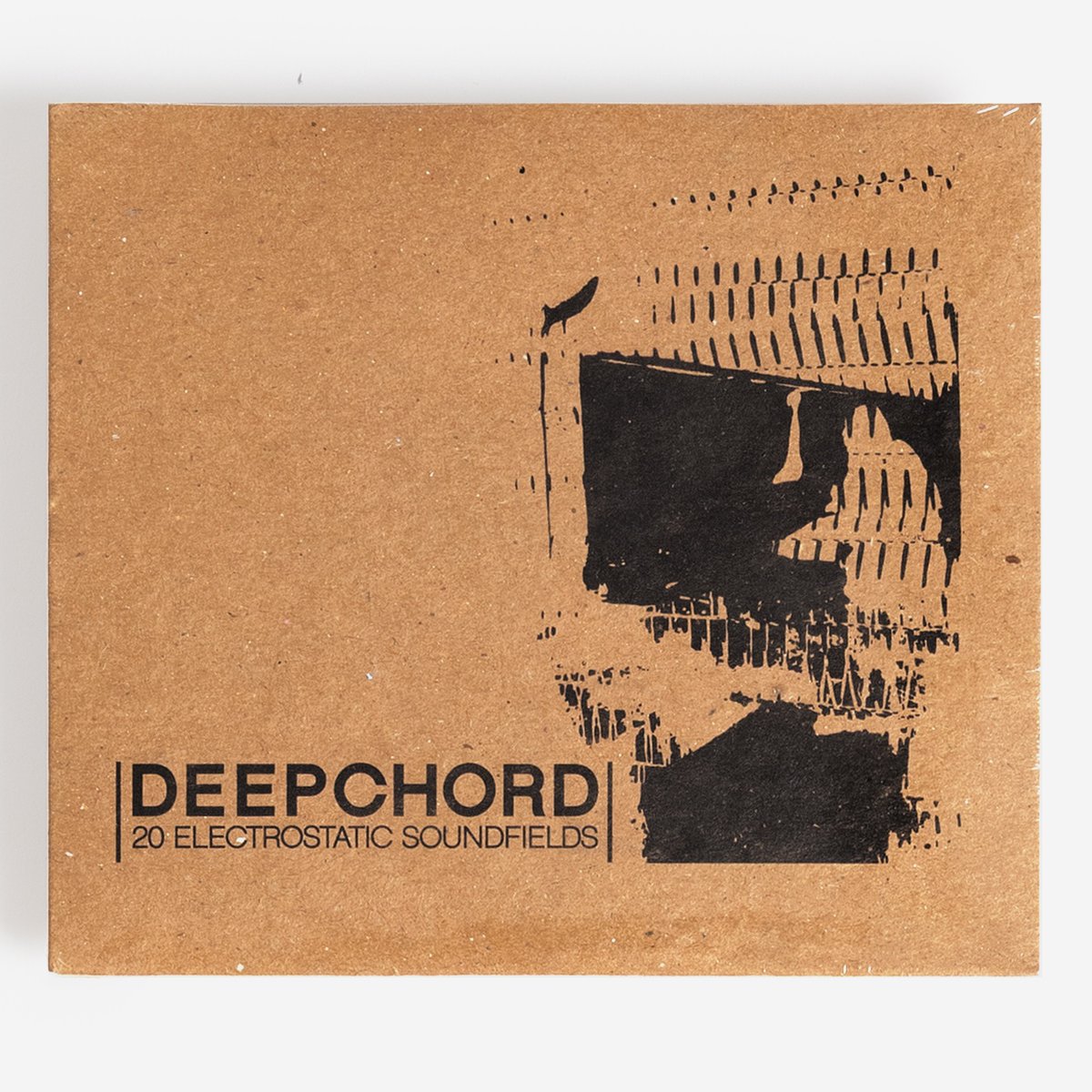
..but as far as straight Deepchord, I highly recommend Sommer, that one's extremely accessible and also deep af. Lanterns (also on AI like Immersions) is great. Auratones one of my faves.. and you gotta hear 20 Electrostatic Soundfields
1
3
418

19 Sep 2024
最近のお気に入りAmbientチャンネル、OBSIDIAN SOUNDFIELDS
一枚絵とフレーバーテキストがめちゃくちゃいい味出してる
youtube.com/watch?v=oaExU0D1…
2
7
470

19 Jul 2024
``Modeling and Driving Human Body Soundfields through Acoustic Primitives,'' Chao Huan, Dejan Markovic, Chenliang Xu, Alexander Richard, ift.tt/jVfJTFK
6
605

6 Jul 2024
Swimming In The Soundfields Of Love
Enjoy The Return Of The Harmonic Field Of Creation.
Luxuriate In The Core Frequency Of Love.
We Stay Expansive And Vast Until Something Worth Grounding For Comes Along...
You Know How It Comes....
Magnetised To The Emanation Of Our Core Sound
So Be With Your Core Sound
Soak It In, Swim In It's Blissful Formlessness
Opportunities And People Will Come To You In Form That Are In Resonance With Your Sound.
You Will Recognise Them
They Will Make You Smile
Bringing You Peace And Excitement,
Lightness And Momentum,
Freedom And Belonging 📷
Don't Ground For False Sound
Don't Try To Make Dissonance Work
Believe In Your Magnetic Power And The Wish Of The Universe To Help You Create In Purity
In The Beginning Was The Word
It All Begins With Your Core Sound
No More Trying To Falsely Harmonise
Be Vast, Free And Glorious
If They Want Freedom, They Will Rise
To Meet Your Purest Frequency
To Offer Honour And Gaurd
To The First Sound Of Mother
To The Creations Of God
Mary Costello

1
3
41