
Jun 2
8/
Maybe AI is not just a software story.
Maybe it’s also an energy story.
And perhaps the next decade won’t be defined solely by who builds the smartest models.
But by who can power them.
#AI #NuclearEnergy #Uranium #CCJ #StructuralAlpha
1
125

Introducing my Integrated Physical AI Infrastructure thesis: an all-encompassing, first-derivative supply chain play built to isolate and capture the embodied robotics supercycle by focusing on high-margin upstream bottlenecks. 🤖#PhysicalAI #EmbodiedAI #Robotics #StructuralAlpha

1
1
100

May 21
@SabitogluS @kxvln__ @zymtweet @StructuralAlpha @hwkngerSol @karimsh571615 @satish080382 @GonaloNunoCunh2 @ferrybinboga @DanielRadu89 @Dee65939688 @CryptoHippie710 @i_amirnadeem @SiikAyoub @CryptoYangGang @KiuPham1 @sizukunoringo @mutwirikanake @ElaineJi6 @alibarmakhideh #Qh8F1lQMbkOL55sPa9HCOMR79768yFvCuVlPLPc8YLqPojsUcjEJ689x5SQJb6GYuVo2tEMOfXUxxKpHx4rJcuEbJpAF29rZLTFr x.com/i/spaces/1qGoNelPYYQKv

May 21
Make 10-25% within MINUTES!
→ x.com/binance/status/2056763…
@isholaolaynq0z @StructuralAlpha @uyeh_emmanuel @farhadetaati @by7246544446146 @anytbutemployed @RockLeft64 @niwre0831 @blaze91748 @KenkenElMalo @noirdump01 @PsPe15391768 @TrulHizkia @pabathwar58337
3l5f2l0u
11

May 20
@Venom82457971 @maciass1998 @bitcoors @CastroChav84974 @MiniGreenJacket @gunesli_kursat @Niyi09192384 @boysalomo @quocphongth6 @Tenors16 @tempusba @John38055035 @Odelicious93 @buffetearns @BlackCabNorwich @ArsenHambardzu7 @StructuralAlpha @SiracCeferov12 @RBYGWN @htwtech_RPC #SpyMprsQ4HNafMI2AsLaoDtOnphx85iBA2L5ijZMfTkZHrGhexs3BAxvupp9Ty16kpebjpwqtshacdQOBvuFaOl3feHZp8iLMFFC x.com/i/spaces/1XGygmqYeANxM

@roxyrose326 @cryptotsangi @l951eRhxSjCs4vz @cryptopisto @floi71064332 @StructuralAlpha @VAIJANATHSANGR1 @layerwaye @yubo2008 @rh4y_fahrenheit @sanju_shabu @NwangwuJekwu @BettyGoffTXRE @mojtaba1396afg @EjtiramMamedov @AlphaGama15 @koburcuk_zeki @jimIV3 @stakedpineapple @akinosun22 #w4UNYs6VnaRJZ66ls6ATNueeRkhWt9Y8MLYHkd1dBJJjl3yLSPLmfaV13xrG5sB8Z549t8CkCrTpGQpa5eUxr5Sjp2oHbys6qm1x x.com/i/spaces/1kKzDMYneaqJv

May 17
@web3niuma @maisiebravoo79 @tutun567 @igorsouzadesign @Cassidy_617 @crypto_miami305 @Stilrorf @15151210521Li @ADeluca316 @lance_tartglia @queenhime198 @WhiteThunder_15 @JuniorO55638474 @BitCloutCat @goldrank74 @fuynx91954364 @mamunhossa76795 @NuwelAce @bon_nien @SandiA24713 @marcxvlad @errdo01 @jjohnsmith079 @SaBen217747 @Cryptor77 @himitu3333 @MartinNorr59280 @Dickyxuxu @Ebo66660 @TarikaKuma518 @JohnSeth_crypto @TradeT75495 @ipotato_2024 @AryaaOmid @trueb111 @tarazan64660559 @dandoonn @CareCrane87015 @GemmaIncognito @stockmaster1948 @RenataBurska @TonyAmezcua1 @EugenieGomer @luthosss @StructuralAlpha @esRv_chudai_jav @Hunter_pendle @cryptojaatman7 @TTTT73036250803 #5g6l0r5a4t AD:9u7241 The official RLUSD allocation has begun. Details: ⬇️⬇️⬇️ x.com/i/lists/20556801361548…


Apr 19
Most investors chase what’s obvious.
The real edge sits where nobody is looking.
Spin-offs.
Forced sellers.
Misunderstood assets.
These aren’t random opportunities.
They’re structural inefficiencies hiding in plain sight.
While the crowd waits for confirmation,
the opportunity is already repricing.
This isn’t about luck.
It’s about seeing what others ignore—and acting before they do.
If you’re serious about finding where the market actually misprices risk and value,
let’s talk.
I’m Jim Osman.
I work with investors who want to think differently—and position early.
Book a one-on-one call.
#Investing #SpecialSituations #Spinoffs #StructuralAlpha #ValueInvesting #Markets
1
7
952
Apr 11
Why do some investors strike gold while others see… garbage?
It’s not luck. It’s special situations — assets everyone overlooks, spin-offs that are unloved, often mispriced. That’s where your edge lives.
While the crowd waits for headlines, you move early, focused, and clear-eyed. These aren’t one-off wins — they’re patterns, if you know where to look.
Think of it like a treasure map. The clues are there. You just need the right lens. 🕵️♂️ Be the sleuth, not the sheep.
I’m Jim Osman. Let’s chat one-on-one about finding opportunity before the herd and acting with confidence.
#Investing #SpecialSituations #SpinOffs #StructuralAlpha #Opportunity #CapitalMarkets
2
12
1,013

Mar 31
Drones over Abu Dhabi, missiles over Bahrain—and a quiet winner emerges: Indian aluminium.
Global smelters are offline, supply is tight, and LME prices are surging. NALCO and Hindalco, with captive mines, power, and global reach, are structurally positioned to capture the upside.
This isn’t a short-term spike—it’s a potential re-rating of earnings for companies built to withstand shocks. The question isn’t if, but who holds the matches.
Click Here: zurl.co/48PhS
#NALCO #Hindalco #AluminiumRally #IndiaIndustrialEdge #Commodities #SupplyShock #LMEAluminium #StructuralAlpha #StockStories
1
4
339
Mar 25
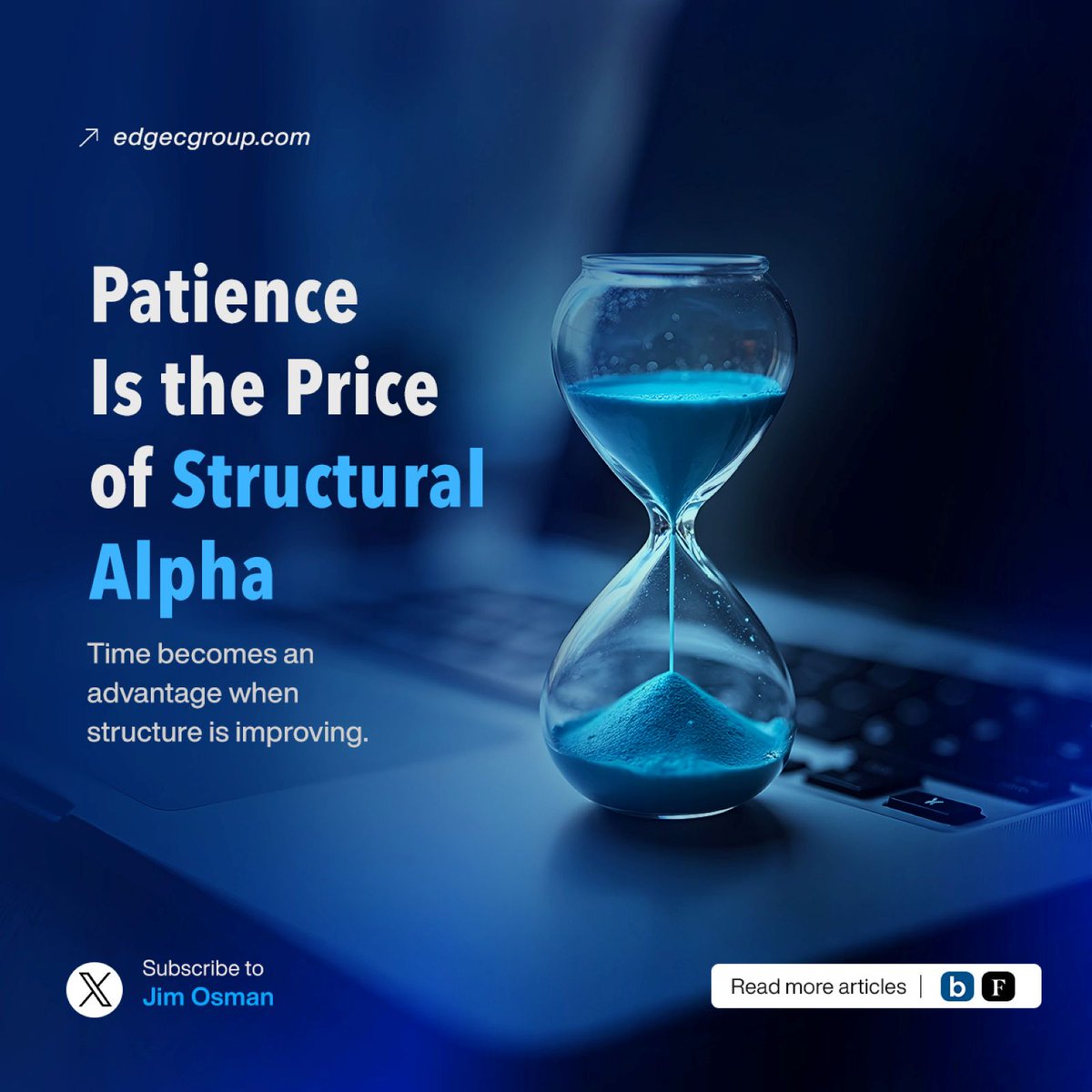
The best structural opportunities don’t feel urgent.
They feel slow.
Because real change doesn’t happen at market speed — it happens at organizational speed.
Spinoffs / breakups get priced like events.
But they’re not events. They’re the beginning.
Ownership resets.
Capital allocation improves.
Management gets exposed.
Boards get tested.
Early numbers look messy.
Costs show up.
Comparisons break.
Metrics move around.
Most people see instability.
The few who understand structure see transition.
The real question:
Does the new structure increase accountability and reduce complexity?
If yes — time is on your side.
Across cycles, these don’t reprice overnight.
They grind higher.
Patience isn’t passive.
It’s the edge.
#StructuralAlpha #Spinoffs #CapitalAllocation
2
8
663

💡 “A central bank can control the price of money. It cannot control the price of irreplaceability"
Read More: bit.ly/Fed-Proof
#WideMotInvesting #MegaCapDominance #StructuralAlpha #RateProof #PricingPower #HNWInvesting #AlphaBinwaniCapital #CompoundingWealth #SmartMoney #EconomicMoat #FreedomFromRates #InvestWithConviction #QualityInvesting #WealthPreservation #CapitalAllocation

23
Mar 18
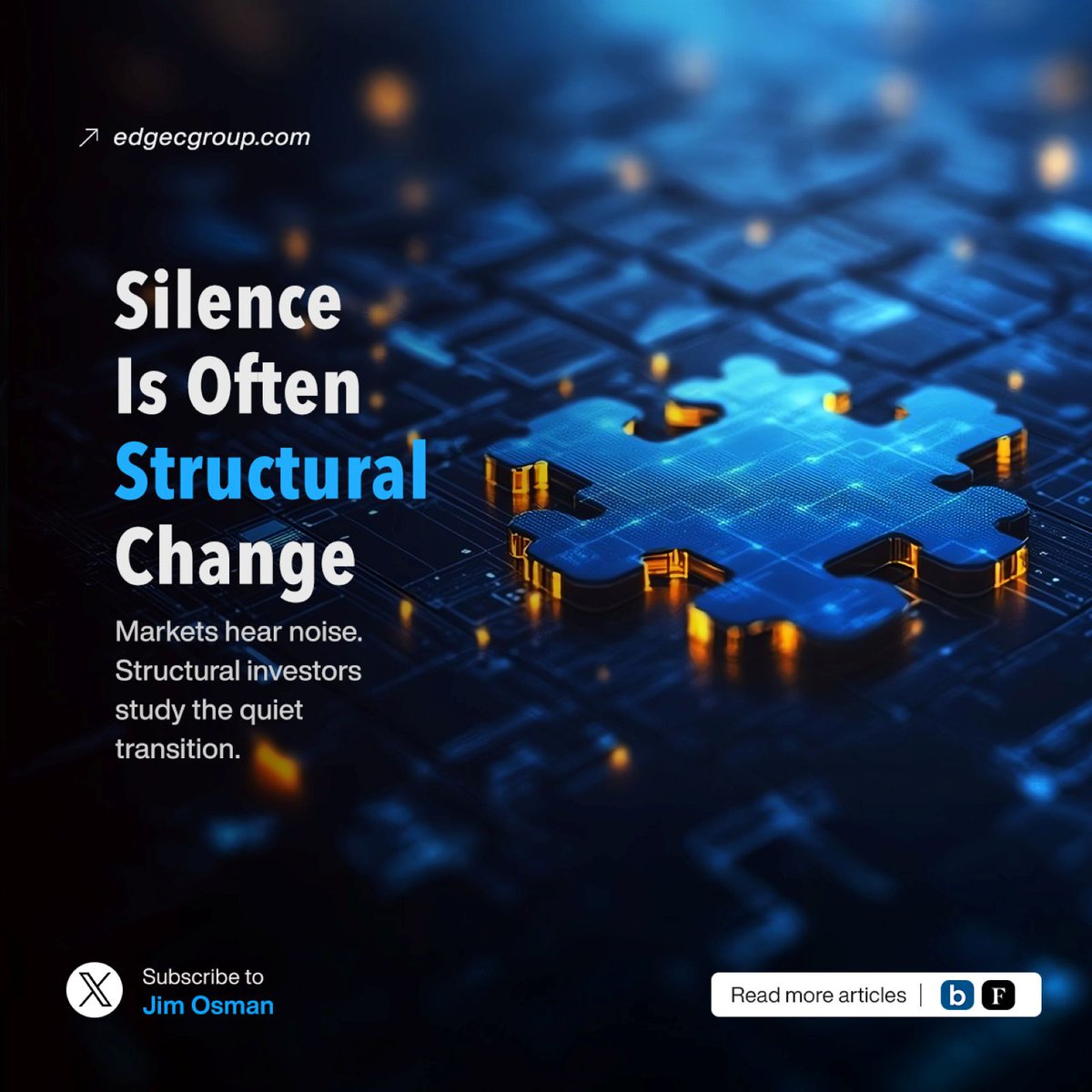
Silence during transition is rarely inactivity.
Markets respond to noise. Earnings surprises. Guidance revisions. Headlines.
Structural change rarely announces itself that way.
After a breakup or governance reset, there is usually a quiet phase. Ownership reshapes. Coverage is rebuilt. Expectations recalibrate.
Price may drift.
That period feels unproductive to many investors.
In reality, it is transitional.
During this phase, accountability begins to function. Capital allocation decisions are evaluated independently. Management teams adjust strategy without the protection of a larger structure.
None of this produces immediate earnings acceleration.
But direction has shifted.
Markets are conditioned to reward visible results. Structural investors study the period before results become visible.
The question is not whether excitement is present. It is whether the new structure increases the probability of disciplined capital allocation and measurable accountability.
Repricing tends to follow that improvement.
The delay between structural change and recognition is where structural alpha resides.
#StructuralAlpha #Spinoffs #SpecialSituations
1
10
608
Mar 17
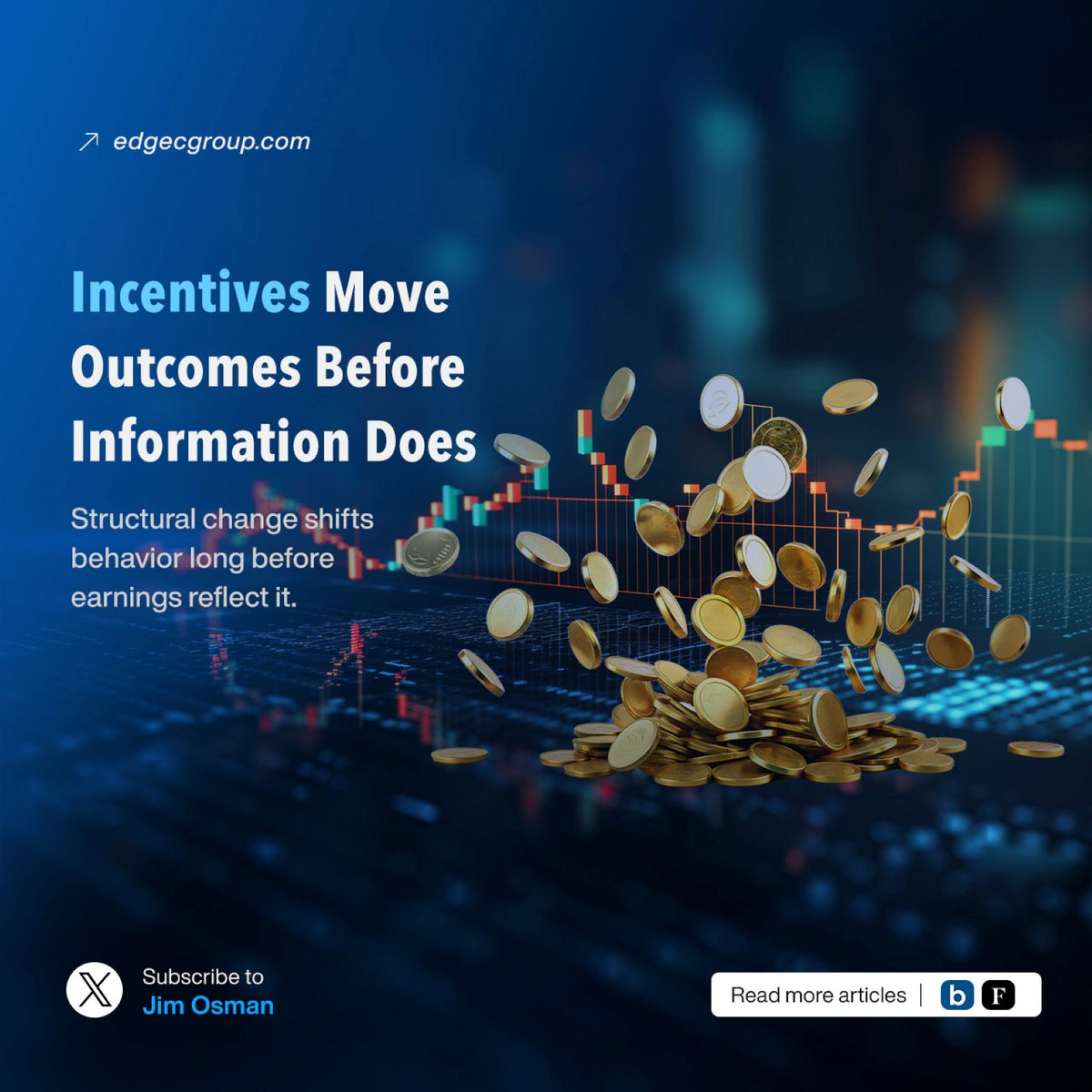
Incentives move outcomes long before information does.
Financial information is abundant. Earnings calls. Investor decks. Models. Forecasts. None of it is scarce.
Incentives are different.
Incentives determine how capital is allocated when results disappoint.
They determine what management protects.
They determine whether underperformance is corrected or defended.
Structure reveals incentives.
In large, complex organizations, incentives drift. Strong divisions subsidize weak ones. Capital flows politically. Accountability softens because performance is averaged.
That dynamic persists until something forces separation.
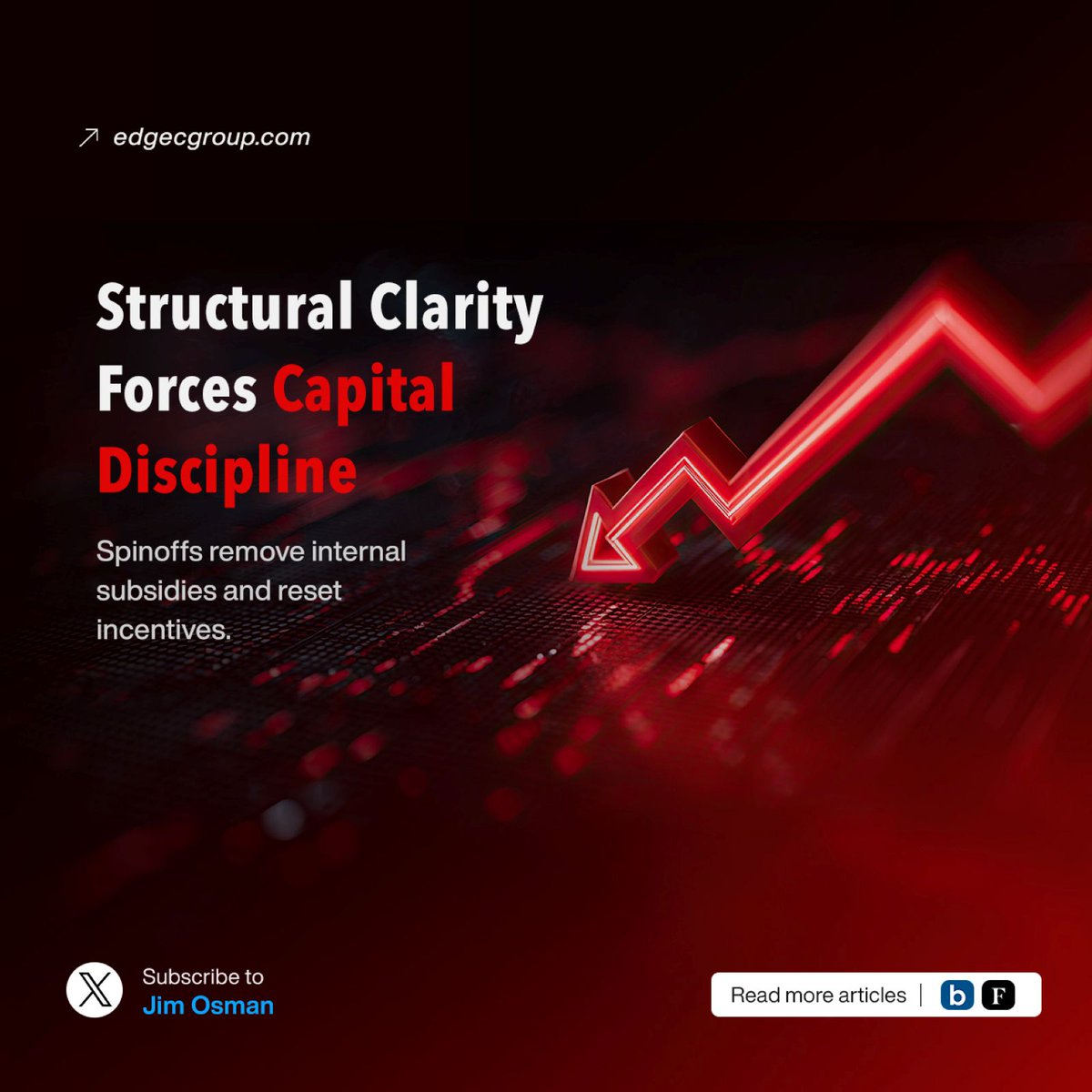
Spinoffs reset incentives by design.
Management compensation becomes tied to standalone results.
Capital allocation decisions become visible.
Boards cannot rely on blended reporting to mask weak performance.
The numbers do not change overnight.
Behaviour does.
Markets often price reported results and ignore incentive realignment. That creates structural mispricing.
Across cycles, incentive resets have preceded performance recovery more reliably than narrative shifts.
Words are flexible.
Structure is not.
#StructuralAlpha #Spinoffs #CorporateGovernance
1
8
640
Mar 16
Complexity protects inefficiency. Structure exposes it.
For years, abundant capital allowed large organizations to carry inefficiency without consequence. Strong divisions subsidized weak ones. Capital allocation decisions were defended in the name of scale. Governance drift was tolerated because liquidity was forgiving.
That regime has changed.
When capital has a cost, structure matters again.
Breakups and spinoffs expose what was previously blended. Each business must stand on its own economics. Cash flow must justify reinvestment. Management credibility becomes measurable.
This process is rarely smooth.
Transitional costs surface.
Standalone overhead increases.
Reported numbers look uneven.
Ownership reshapes.
Markets interpret that discomfort as risk.
In many cases, it is discipline reasserting itself.
Structural alpha emerges when complexity is reduced and accountability increases, but price still reflects the old, blended narrative.
The key question is not whether separation is dramatic. It is whether the new structure creates clearer incentives, sharper capital allocation, and measurable accountability.
If it does, the odds shift.
Structure does not guarantee success. Strategy still matters. Balance sheets still matter. Leadership still matters.
But when complexity is replaced with clarity, repricing becomes a matter of time.
That pattern has repeated across cycles.
It continues to do so.
#StructuralAlpha #Spinoffs #CorporateGovernance
5
609
Mar 15
Markets repeatedly misprice transition.
They repeatedly misprice transition.
This pattern shows up across cycles. When a company restructures, simplifies, separates, or confronts governance failure, the first reaction is usually confusion. Analysts hesitate. Institutions step back. Coverage gaps appear. Ownership becomes unstable.
The business looks uncertain.
But uncertainty does not always mean deterioration. Often it means the framework is being rebuilt.
In spinoffs, this dynamic is consistent. The parent distributes shares to holders who never asked for the asset. Mandated selling begins. Liquidity is thin. Early trading looks weak.
Underneath, incentives are being reset.
Management is now measured on a standalone basis.
Capital allocation decisions are visible.
Strategy becomes focused.
Boards can no longer hide weak performance inside consolidated results.
None of that is immediately visible in earnings. But the direction has shifted.
Markets anchor to what they can measure. They are slower to price structural improvement because it requires judgment, not calculation.
Structural alpha lives in that gap between transition and recognition.
The discipline is not forecasting quarters. It is assessing whether the new structure makes better outcomes more probable over time.
Markets eventually reprice transition. They always do.
The delay is the opportunity.
#StructuralAlpha #Spinoffs #SpecialSituations

1
10
682
Mar 14
Cheap is not the question. Structural change is.
Most investors ask the wrong first question.
They ask, “Is it cheap?”
The better question is, “Is the structure changing in a way that forces repricing?”
Cheapness without structural improvement is a trap. Screens light up on low multiples all the time. Many of those businesses deserve to be cheap. Incentives are broken. Capital is misallocated. Governance is passive.
Nothing is forcing change.
Structural alpha begins when something inside the organization shifts.
A breakup.
A spin.
A board change.
A capital allocation inflection point.
An activist forcing accountability.
In those moments, the numbers often look worse before they look better. Transitional costs show up. Margins compress. Earnings screens deteriorate. That is precisely why most investors avoid the situation.
But the structure is improving underneath.
Incentives sharpen.
Capital discipline increases.
Oversight becomes real.
Segments are evaluated independently rather than politically.
The market does not immediately reprice that shift. It waits for proof in reported results. By the time proof appears, much of the asymmetry is gone.
The work is identifying when structural change is credible and when it is cosmetic. That distinction separates value traps from structural opportunities.
Price follows structure.
Not the other way around.
#StructuralAlpha #Spinoffs #CapitalAllocation
2
1
11
719