StonksOfWallStreet retweeted

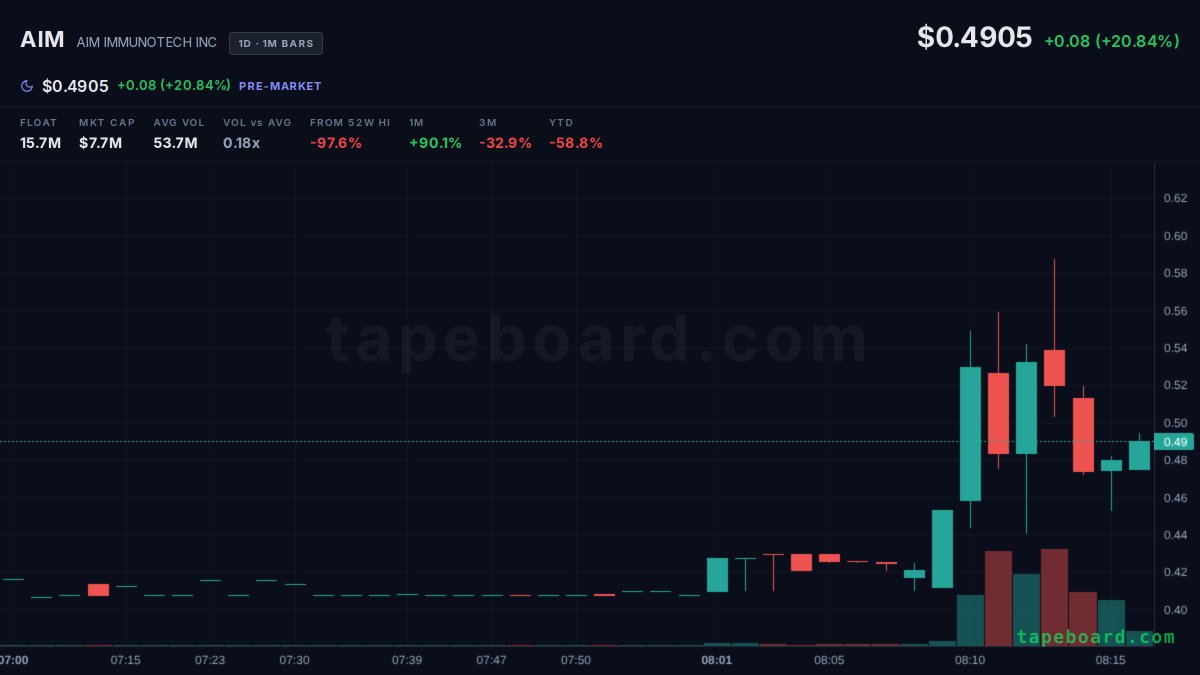
$AIM grinding up premarket, month chart already up 90% and now tacking on another 5.7%. these slow-burn names can keep squeezing or roll over fast. watching to see if the .49 level holds into the open or this
1
1
73

Its blocking freedoms pure and simple agre they is things to young for kids
This tacking more powers away from them
1
Gentil retweeted

Modern western governments are excellent at what you might call political tacking. The ability to take problems they cause & use them to force a population into a direction that will further harm them. It's now ubiquitous.
2
4
22
298


Dude I’m not going to waste my time tacking down these videos that you should have already seen they all went viral on X. I’m not lying they’re all real including George Soros on CNN/Victoria Noodle/C14
You’re a brainwashed idiot!
Here C14 19 days before SMO!
17 Sep 2023

C14 Nazi terrorist leader brags about his plans as the US helps him.
1
12

You aren’t! Another example of inventing a problem and ‘fixing ‘ it instead of tacking a serious issue like defence etc
1
1
4

Ridiculous. It should be down to parents not the government to dictate what a child does online. Why don’t you focus on tacking child predators instead of taking away the freedoms of the internet from innocent children?
151

Spending our money to tell us that we cannot see the crime epidemic in London? Even getting to London is an ordeal of anxiety. Maybe tacking the crime would be a more useful endeavor -or would that upset his buddies in their squashed frog position of submission?
1
38

NYC discovered it was underfunding the pension plan since 2012. A plan was made to repay the shortfall $1.6 billion per year for 20 years. Mamdani decided he just wouldn't pay the $1.6 billion. Instead tacking on another 5 years of payments to replace this one till 2037.
1
20

Could you cite where the idea of him tacking all this debt on comes from? I've heard the sentiment many times, yet I haven't heard any proof of him doing this. And what do you mean by 1.6B shortfall?
1
1
21

Africa has produced 5 fintech S-curves in 20 years. That is the entire list.
They are: mobile money, NIBSS-anchored Nigerian payments, digital credit in Kenya, pockets of neobank growth, and the M-Kopa enforcement model in asset finance. Everything else the discourse calls an inflection point is either a growth story or a category that hasn't fired.
I've spent recent months in conversations with operators, investors and executives running the largest financial businesses on the continent. The same unease keeps surfacing: what is actually next? A lot of the energy is going into riding existing curves harder, or tacking sub-scale opportunities onto businesses that have already found their shape. Neither feels like the answer.
To predict the future, it helps to understand the past.
Drawing from Zvi Griliches' 1957 work on hybrid corn diffusion and Jeffrey Rohlfs' theory of network goods, four conditions show up in every African curve that has inflected. A mass existing behaviour to digitise. A 10x cost collapse against the incumbent rail. Distribution that already reaches the mass. A solution to the critical-mass problem where the product is interactive.
These conditions ruled in five categories. They rule out a lot more.
The right question is rarely what technology is next. It is which existing behaviour, currently running on which expensive rail, is about to have its critical-mass problem solved by which forthcoming catalyst. That question generates a much shorter and more defensible list than the open-ended one.
The forward map is uncomfortable. The strongest predictions for the coming decade pave existing behaviour with cheaper or denser distribution. The weakest candidates are the ones the industry most wants to work.
Read the full article and subscribe to Frontier Fintech for in-depth analysis on how technology is shaping finance in Africa.

1
3
3
336



Look at the evidence:
• Is POC shifted higher/lower
• Delta expanded with volume/or without
• Volume increased in terms of OI(if you are tacking it)
• Price accepted above opening price(in this case)
The market was communicating strength.
The zeros were just footprints left behind.
1
71
