

Mar 5
What I am very concerned about is given another election we'd get a blending of both the Biden times and the current Trump times, with all the techstate crap they are rolling out, only continued to God knows what degree. That is truly a disturbing dystopia. With all the elections and all the administrations, what have we gotten for all that? You know the definition of insanity right? We're in quite the pickle.
3
15

This framing amplifies emotion before facts.
It’s worth separating genuine governance failures from attention driven escalation otherwise analysis collapses into noise. If Orwell is the reference point, it’s worth applying the lens consistently as the US techstate ecosystem shows many of the same traits, and often at much larger scale overspilling into the rest of the world!
1
2
3
1,864

Jan 17
Nerozpadá, transformuje na techstate→ čipovou totalitu.
Včera postoval Ivan Derer, že mu knížka od Tangera přijde nosná v info, já jsem to doplnil předpokladem, že hlavní aktéři změn jsou duo Thiel Vance, a trošku naznačil proč.
Liberální demokracie rozhodně je v US v ohrožení.
3
643

29 Sep 2025
Lol...the Escalator was colluding with the Teleprompter! Must be the "Deep TechState"...those dang Liberal devices with minds of their own!!! Geesh!!!
2
9

30 Aug 2025
If the rumors are true and Trump is dead...get ready for the Dark Enlightenment at warp speed under Peter Thiel's puppet JD Vance
#CurtisYarvin
#DarkEnlightenment
#TechState
1
2
790

2 Dec 2023
I don't think it's an easy thing to predict.
1. Business leadership wants to use AI to replace the most expensive and most replaceable labor first, as much as possible -- corps don't want to create more jobs, they want to destroy as many jobs as they can to expand their profit.
2. AI companies want to build systems that can replace as much labor as possible, as fast as possible with the fewest errors and no unfavorable disruption or catastrophic impact on existing systems. <-- the most chaotic and unknowable
3. Government wants economic growth and a broader tax base to drive more spending and beneficial inflation. They also don't want other countries to get access to that technology and don't want tech corporations consuming their share of power.
4. Labor wants plentiful high paying and secure jobs that are fulfilling and have a good work/life balance so they can afford a mortgage, car payment, petty luxuries, and save/invest for the future.
I think it follows from this that labor is furthest downstream and will be forced to adapt to whatever business leaders decide that governments enforce. As AI replaces more jobs, the shrinking pool of human jobs will find a glut of overqualified people looking for work, driving wages down. Anger, wage/inflation migration, unionizing, pressure on legislators should grow along with the misery index. Deflation in consumer goods should continue as discretionary income disappears. Either you figure out how to independently earn money, accept a criminally low wage, or leave the country to find employment in another, more human-based economy. AI is advancing too fast for most people to even grasp it let alone adapt to benefit from it. At the point that we can plug in our brain directly to a computer and have our own AI organ attached to us far in the future, that will change (see neuralink) assuming that AI labor starving out meat brain wage labor doesn't entirely destroy the birth rate by that point.
If the majority of the labor pool doesn't have money to pay for anything, then companies which depend on them as customers should suffer or collapse as prices fall due to elasticity of demand changes unless AI adoption and automation allows those products to be produced far more cheaply elsewhere. There should be a big lag between goods prices falling faster than production costs that hurts retailers and producers/manufacturers in particular.
The money that businesses save from having to employ fewer humans save on infrastructure and use that savings to continue fueling the arms race with competitors for AI-driven marketshare. They will have the buying power to gobble up assets formerly owned by wage earners and the failed companies that used to serve them. Those corporations, like "robber barons" of the past will gobble up everything and anything they can, and will also be able to wield significant political power everywhere as a result.
They will fight taxation and regulation structures proposed by the government as much as possible, but since AI is of national security importance, the state will pull rank and highly regulate or restrict advancements which they want to keep from competitors. This is probably why government and corporations are becoming more and more interlinked, producing a unipolar ruling techstate class as threats from global nations, companies, rogue elements, and "loose" AI programs threaten the entire system.
The AI arms race fuels more spending on the AI arms race, which means AI will be used more and more to make the supply chain and infrastructure of the communications and energy systems more efficient and profitable. Innovation, capital, commodities will all converge on this network of networks because that's where all the demand, profit, and returns will be. Pluralities (mini-singularities) will form in each nation state, then the singularity will emerge from mutually assured destruction eventually.
1
1
3
244

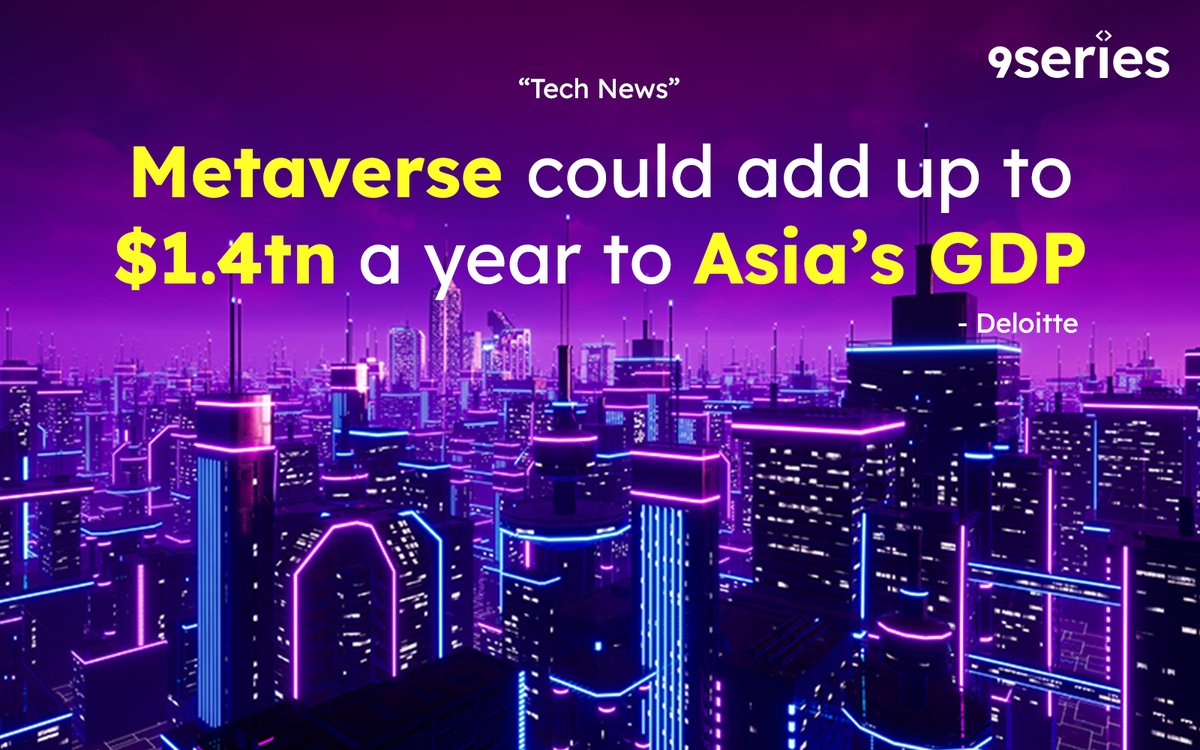
The metaverse could contribute between S$0.8tn and $1.4tn per year to Asia’s GDP by 2035 if investments in the technology are sustained in the next five to 10 years, according to research by Deloitte.
#Metaverse #Asia #GDP #Technology #Tech #News #TechNews #TechFect #TechState
6
6

"ভবিষ্যতের বাংলা সমাজ সুরক্ষিত করুন" প্রশ্ন: আমরা সত্যের না মিথ্যের পূজারী? আজ জন্মাষ্টমী, নিজের বিবেককে জিগ্যেস করে উত্তর দিন। এই নিজেদের আকচা আকচি বন্ধ করে, আসুন বাংলাকে আবার ভবিষ্যতের আধুনিক রাজ্যে পরিণত করুন। ধর্ম বা শ্রেণীবিভাগ ছাড়া বাংলাকে গড়ে তুলুন। #উপলব্ধি #TechState
2
8

Federal subsidy beneficiary EM may be buying the bird app, and sure, fine, celebrate free speech all you want, but if your account is anticorruption, antiauthoritarian, anti-imperialist, and anti-zionist you will still have the TechState boot on your neck.
1

6 Feb 2022
📢Busy start to 2022 means I'm catching up on #TechState news summariese succinctly by @tortoise @AlexiMostrous & @LukeGbedemah
A cracking summary of the movers, shakers & law makers with all the big #tech players covered 🧐👇
tortoisemedia.com/2022/01/26…
2

Tesla can now claim to be the fifth-largest technology company on the planet in terms of market capitalization.
Time to call it? Is #Tesla a #TechState?
🖊️ @LukeGbedemah & @AlexiMostrous
torto.se/3FsucvC
1
Tesla can now claim to be the fifth-largest technology company on the planet in terms of market capitalization.
Time to call it? Is #Tesla a #TechState?
🖊️ @LukeGbedemah & @AlexiMostrous
torto.se/3FsucvC
2
Tesla can now claim to be the fifth-largest technology company on the planet in terms of market capitalization.
Time to call it? Is #Tesla a #TechState?
🖊️ @LukeGbedemah & @AlexiMostrous
torto.se/3FsucvC
2
Tesla can now claim to be the fifth-largest technology company on the planet in terms of market capitalization.
Time to call it? Is #Tesla a #TechState?
🖊️ @LukeGbedemah & @AlexiMostrous
torto.se/3FsucvC
1
Tesla can now claim to be the fifth-largest technology company on the planet in terms of market capitalization.
Time to call it? Is #Tesla a #TechState?
🖊️ @LukeGbedemah & @AlexiMostrous

2

Congrats to Grain Weevil for winning the @farmbureau Innovation Challenge! Nebraska had three of the top four finalists and Nebraska company Bird's Eye Robotics was runner up! @NEFarmBureau
fb.org/newsroom/grain-weevil… #agribusiness #innovation #agtech #techstate #techjobs #agjobs
1
12
Tesla can now claim to be the fifth-largest technology company on the planet in terms of market capitalization.
Time to call it? Is #Tesla a #TechState?
🖊️ @LukeGbedemah & @AlexiMostrous
torto.se/3FsucvC
2
Tesla can now claim to be the fifth-largest technology company on the planet in terms of market capitalization.
Time to call it? Is #Tesla a #TechState?
🖊️ @LukeGbedemah & @AlexiMostrous
torto.se/3FsucvC
1
5