
May 25
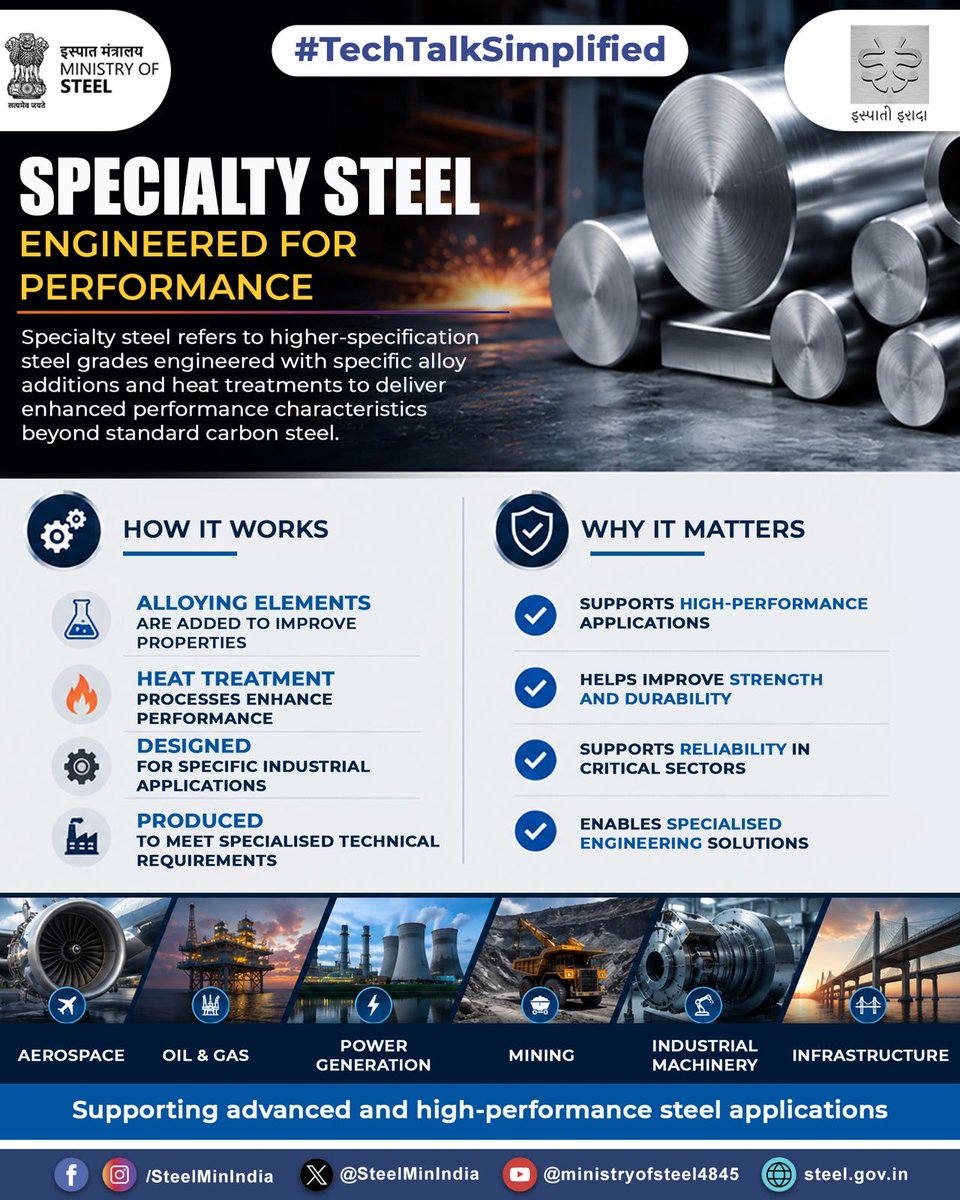
Specialty steel refers to advanced steel grades engineered with specific alloy additions and heat treatments to deliver enhanced performance beyond standard carbon steel.
These steels are designed for specialised applications requiring improved strength, durability, corrosion resistance or high-temperature performance.
Supporting advanced and high-performance steel applications.
#TechTalkSimplified #SpecialtySteel #AdvancedMaterials #Manufacturing #SteelSector
3
13
271
May 18
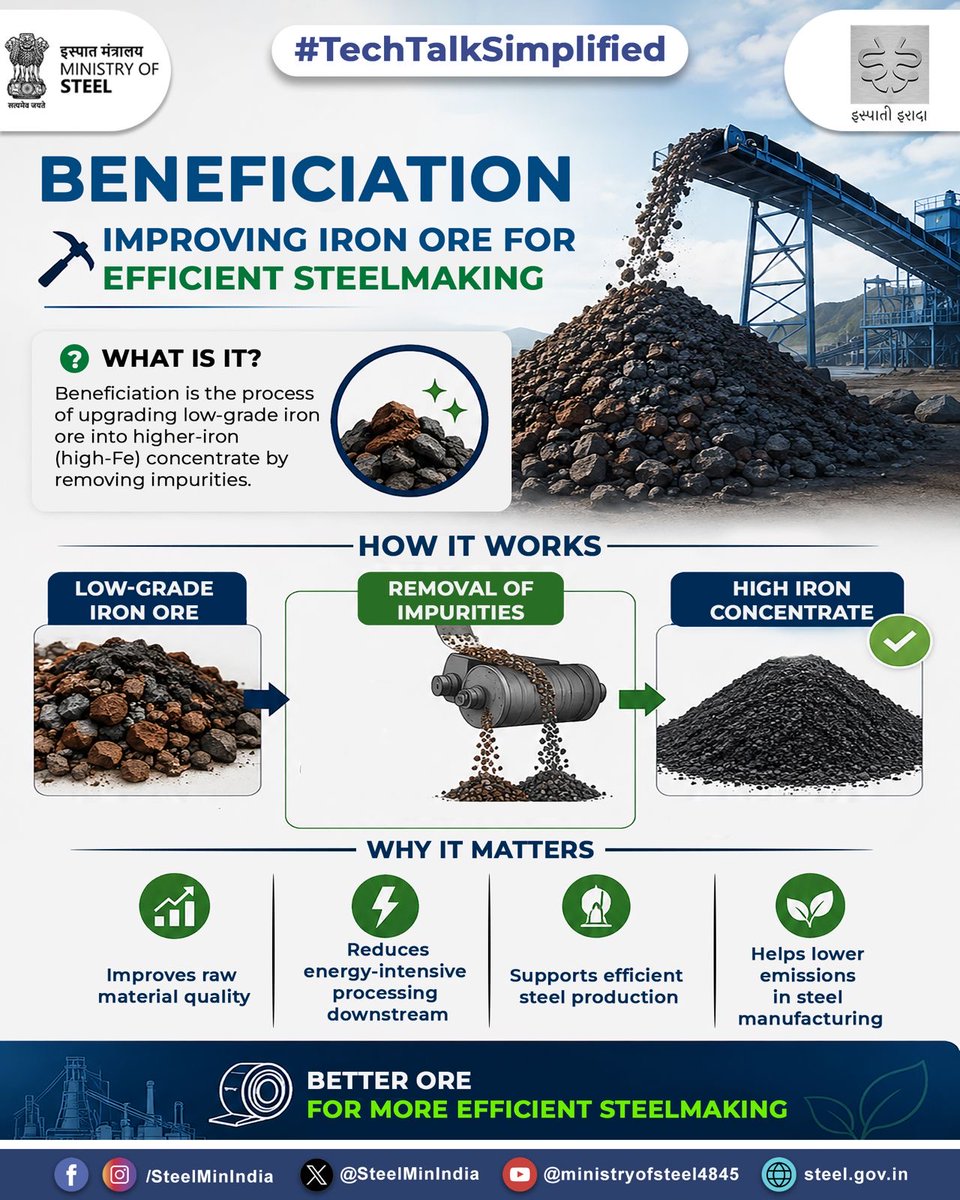
Better Raw Materials For Better Steelmaking.
Beneficiation improves iron ore quality, supports efficient processing and helps reduce energy-intensive operations in steel manufacturing.
#TechTalkSimplified #Beneficiation #SteelIndustry #Efficiency #GreenSteel
1
9
138
May 13
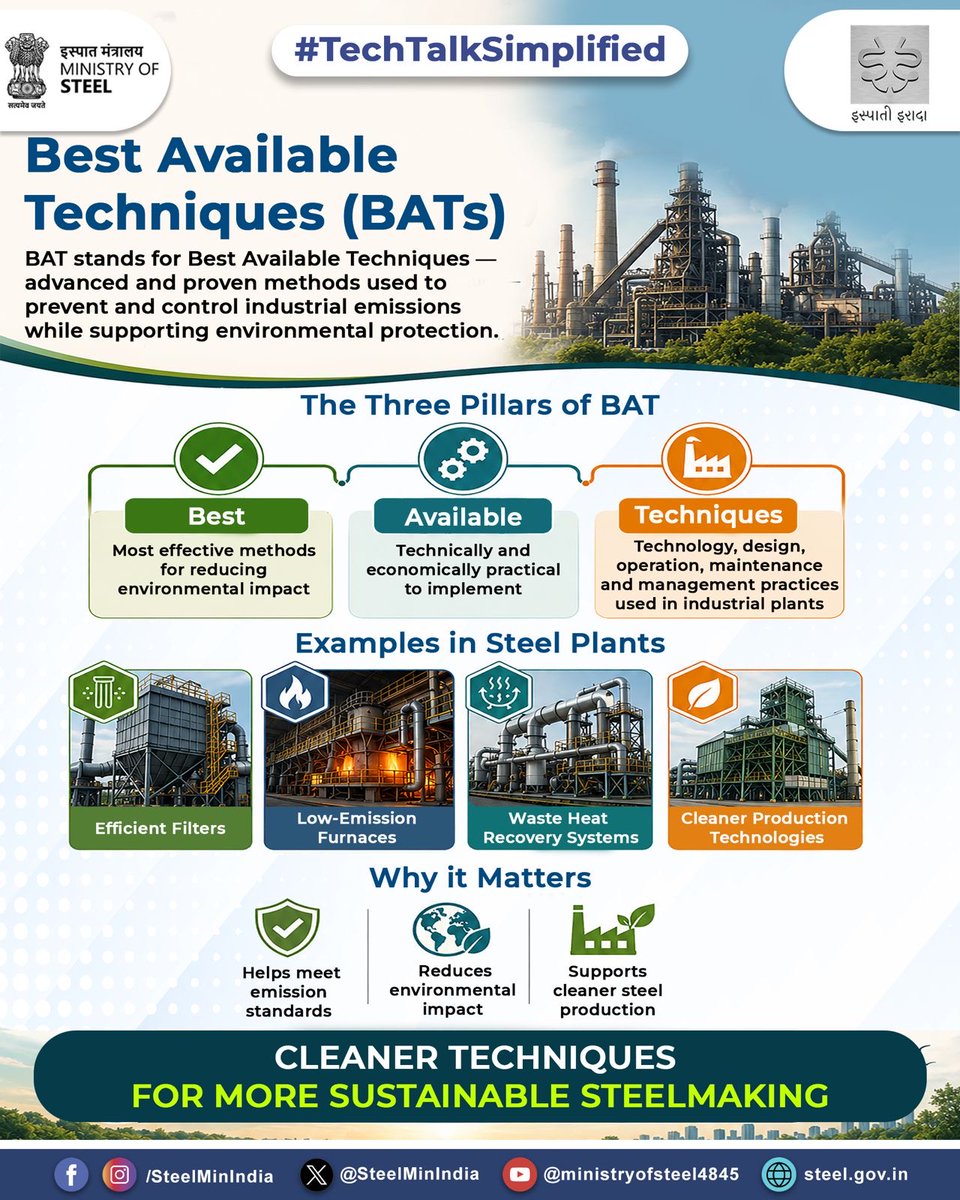
Best Available Techniques (BATs) help steel plants use advanced and practical technologies to reduce emissions and improve environmental performance while balancing efficiency and feasibility.
#TechTalkSimplified #CleanerSteel #IndustrialSustainability #GreenTransition
2
6
139
Apr 29
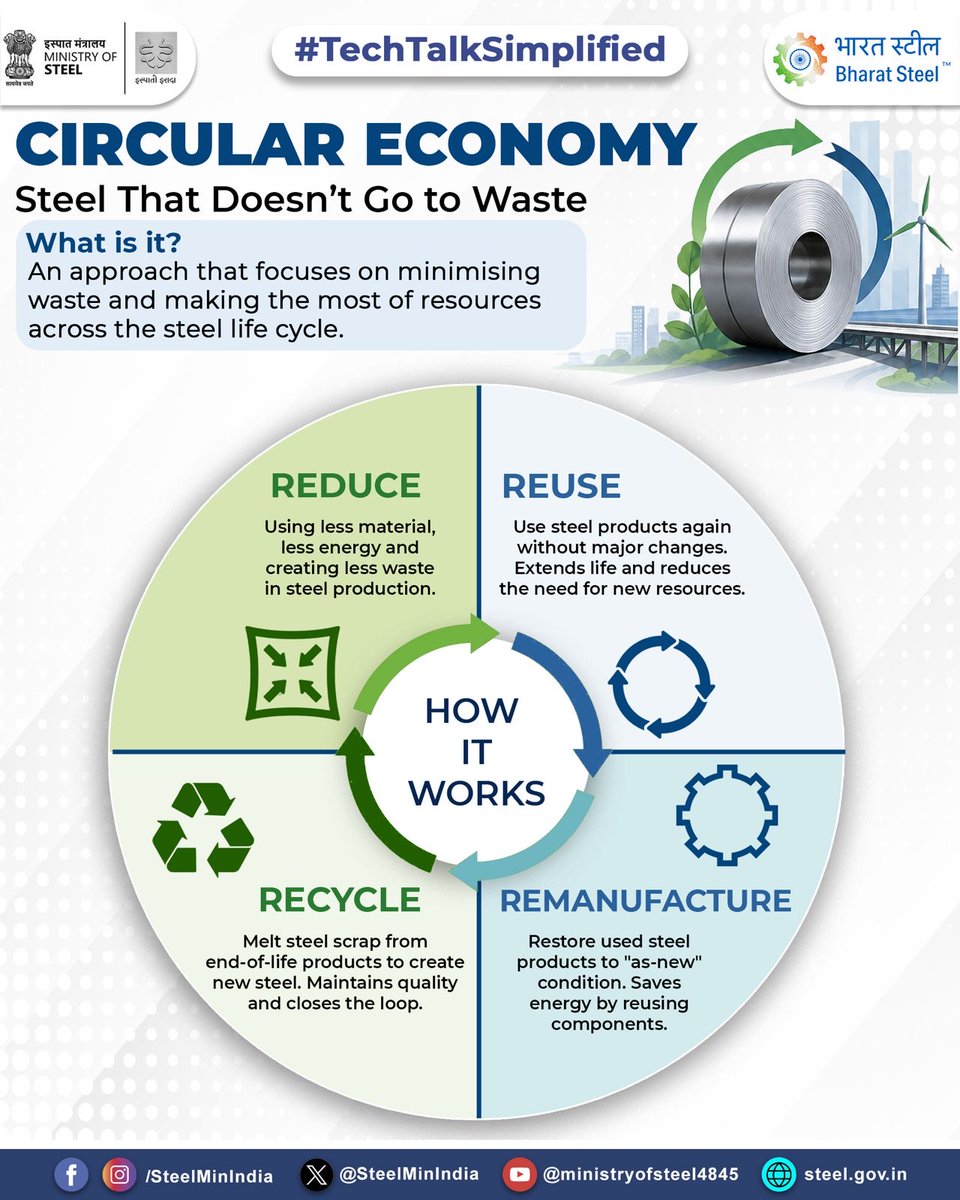
Steel plays a key role in the circular economy—staying in use through reuse, remanufacturing and recycling, while helping reduce resource use and environmental impact.
#TechTalkSimplified #CircularSteel #SustainableFuture #LowCarbon #NetZero
2
6
175
Apr 20
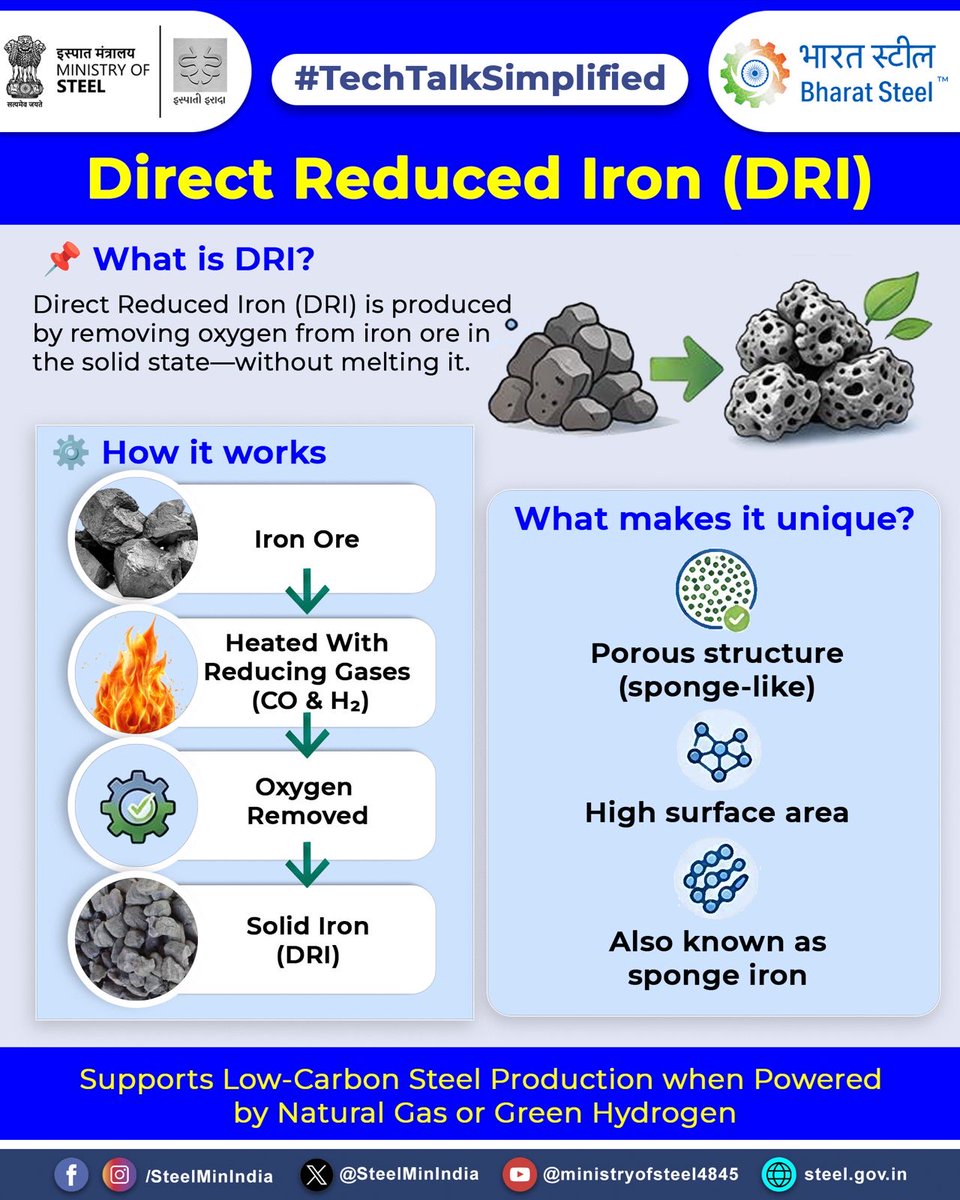
Direct Reduced Iron (DRI) supports cleaner steel manufacturing by using lower-emission fuels like natural gas or hydrogen, reducing energy use in the process and enabling integration with electric arc furnaces—contributing to a more sustainable steel pathway.
#DRI #SustainableSteel #LowCarbon #SteelManufacturing #CleanEnergy #TechTalkSimplified
2
7
235
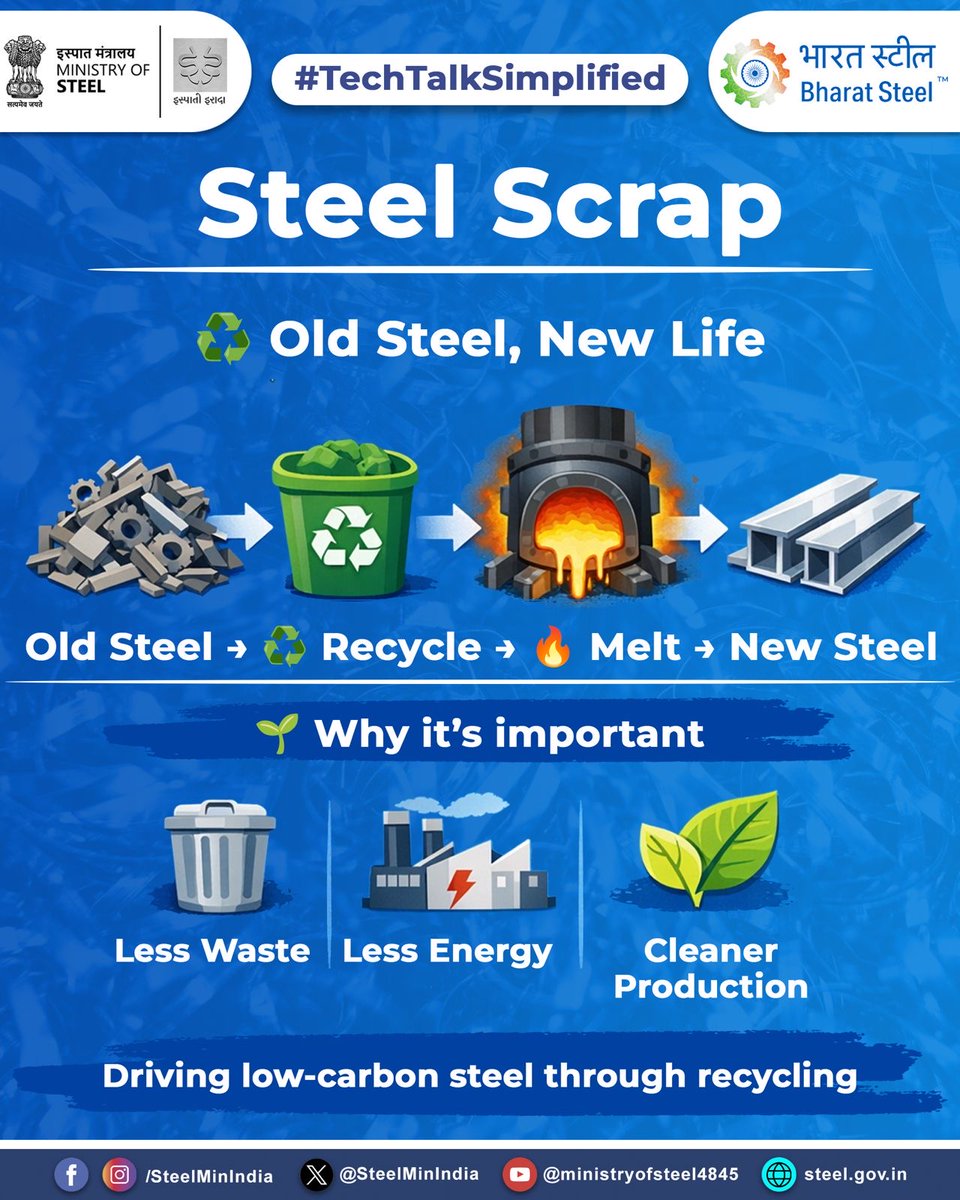
Steel scrap is a valuable resource in steel manufacturing—helping reduce waste, save energy and support the transition towards low-carbon steel production.
#TechTalkSimplified #SteelGyaan #SustainableSteel #Recycling #NetZero
4
7
193
Mar 31
#TechTalkSimplified makes complex steel processes easy to understand.
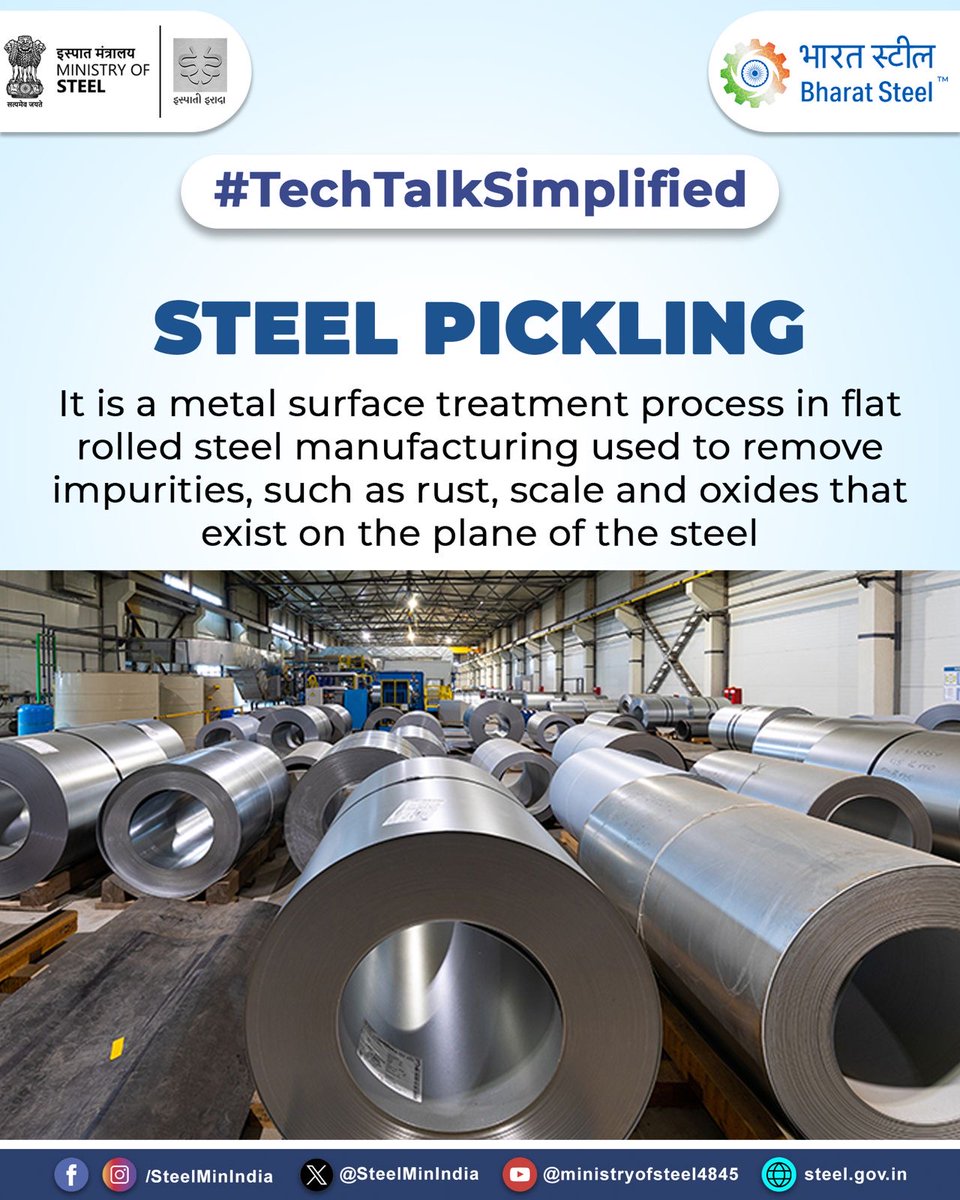
Steel pickling is a surface treatment process that removes rust, scale and oxides using acid solutions, resulting in a clean and smooth surface. This step prepares steel for further processes like coating, galvanizing or painting, ensuring better quality, appearance and performance of final products.
#TechTalkSimplified #SteelPickling #SteelProcessing #SteelIndustry #Manufacturing
4
12
192
Mar 29
#TechTalkSimplified makes complex steel concepts easy to understand.
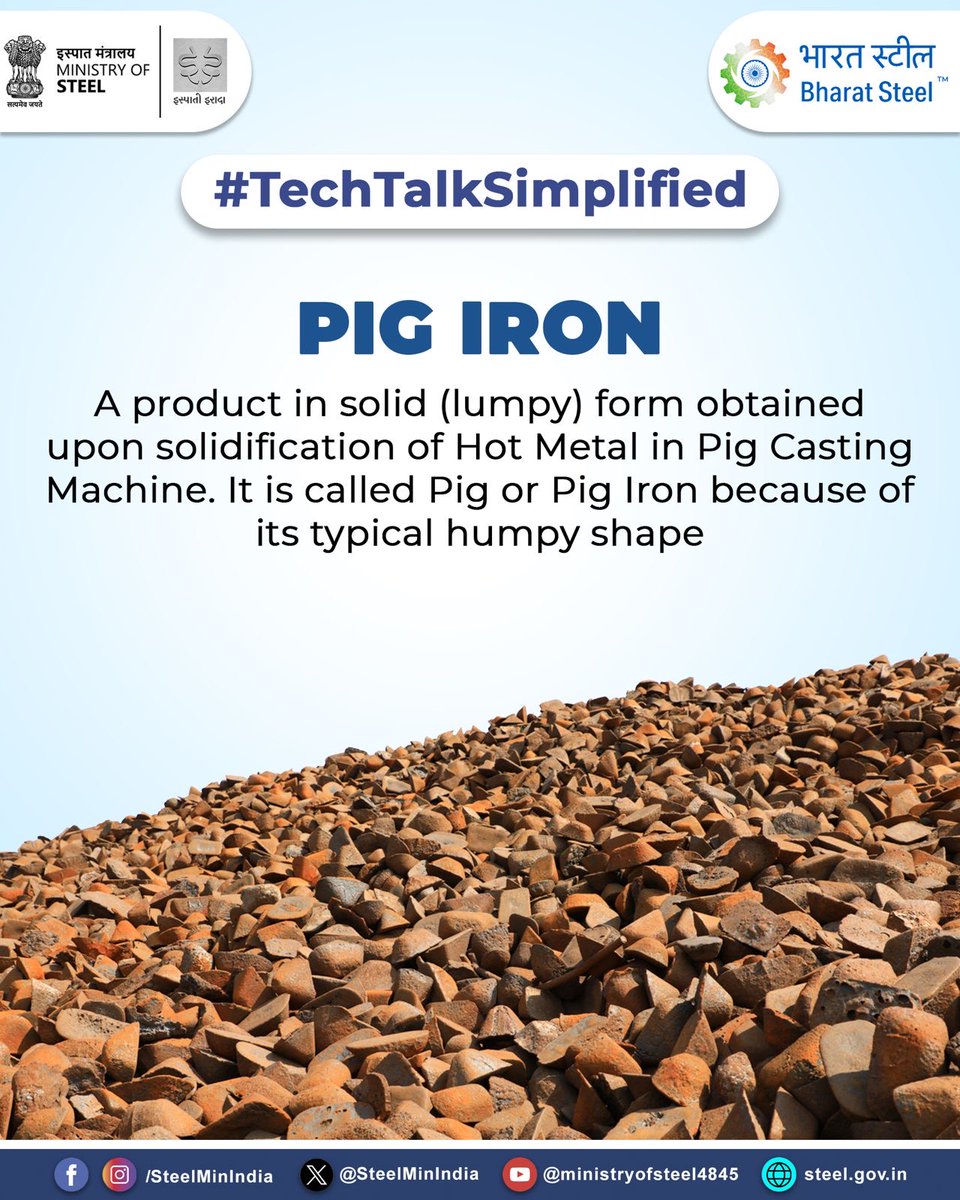
Pig Iron is a primary product obtained by solidifying molten iron into lumpy shapes. It serves as a key raw material for both cast iron production in foundries and steelmaking processes, forming an essential link in the steel value chain.
#TechTalkSimplified #PigIron #SteelProduction #SteelIndustry #Manufacturing
2
5
190
Mar 27
#TechTalkSimplified makes complex steel concepts easy to understand.
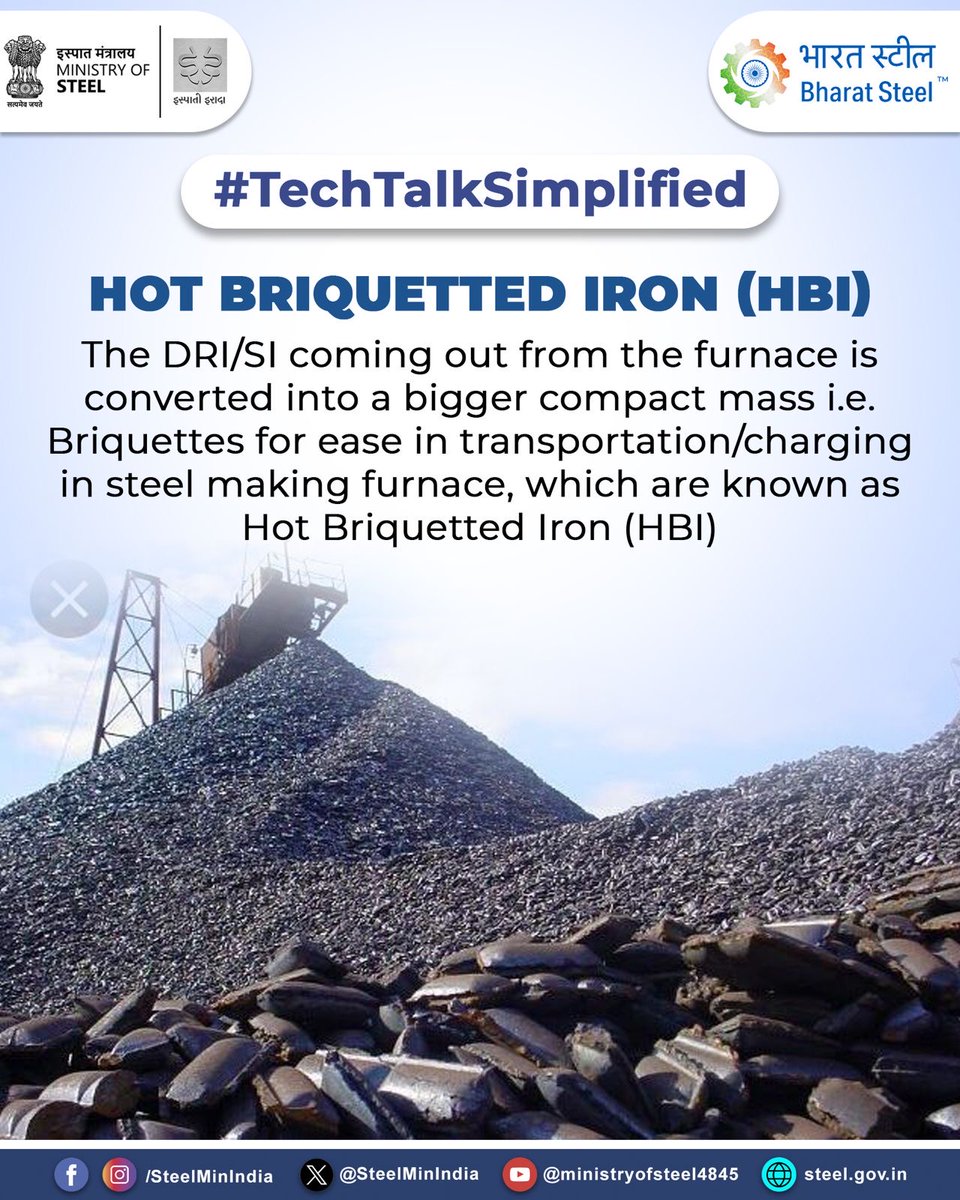
Hot Briquetted Iron (HBI) is formed by compressing DRI into compact briquettes, making it safer to transport, store and use in steel production while improving overall efficiency.
#TechTalkSimplified #HBI #DRI #SteelProduction #SteelIndustry
3
6
179
Mar 25
#TechTalkSimplified makes complex steel concepts easy to understand.
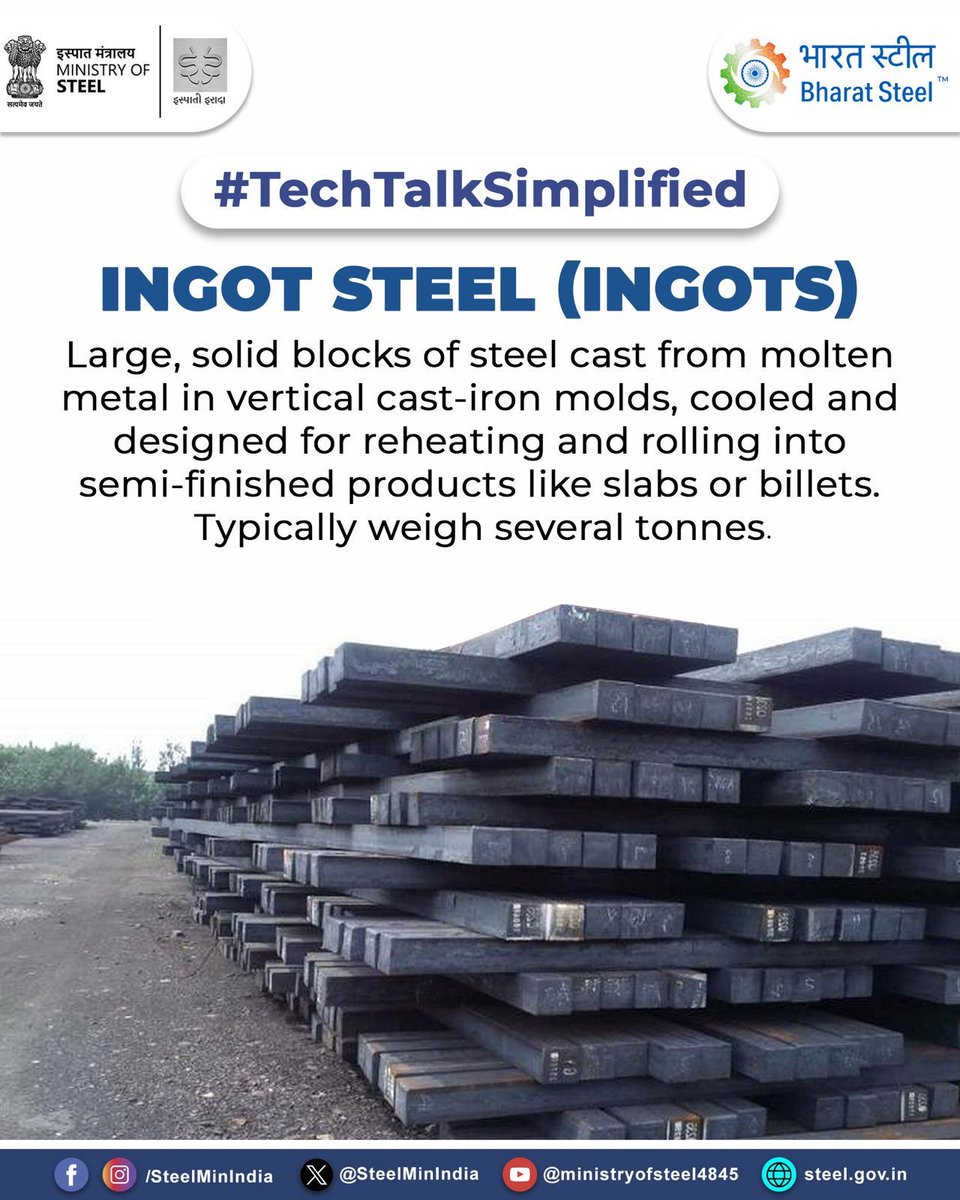
Ingot steel is cast as large solid blocks from molten metal and later reheated and rolled into semi-finished products like slabs and billets. This traditional method forms the foundation for further steel processing in many applications.
#TechTalkSimplified #IngotSteel #SteelProduction #SteelIndustry #Manufacturing
3
7
159
Mar 23
#TechTalkSimplified makes complex steel concepts easy to understand.
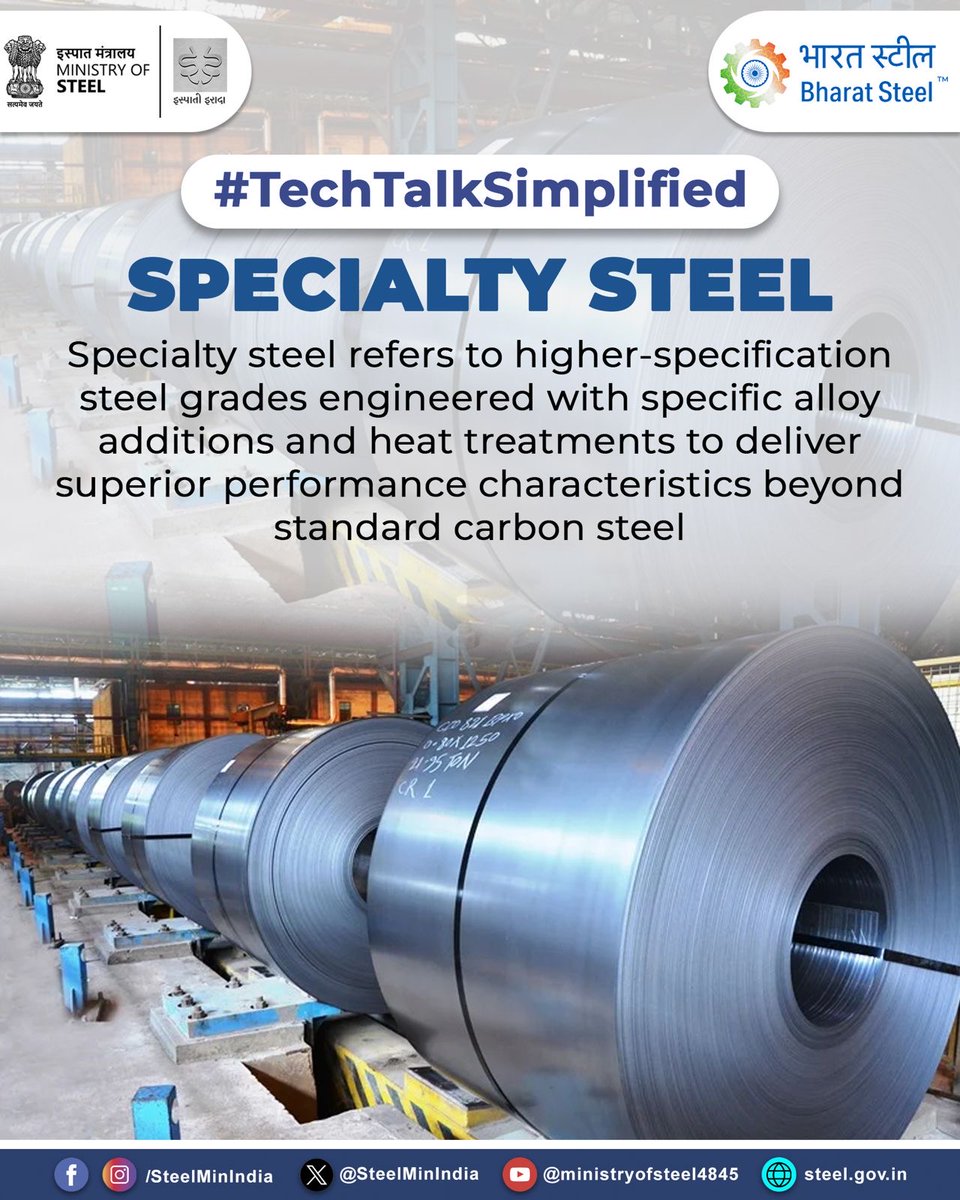
Specialty steel refers to high-performance steel grades engineered with specific alloying elements and heat treatments to deliver enhanced properties such as strength, durability, corrosion resistance and fatigue performance. These steels are essential for critical applications across automotive, aerospace, energy and advanced manufacturing sectors.
#TechTalkSimplified #SpecialtySteel #AdvancedMaterials #SteelIndustry #HighPerformanceSteel
2
9
177
Mar 19
#TechTalkSimplified makes complex low-carbon steel concepts easy to understand.
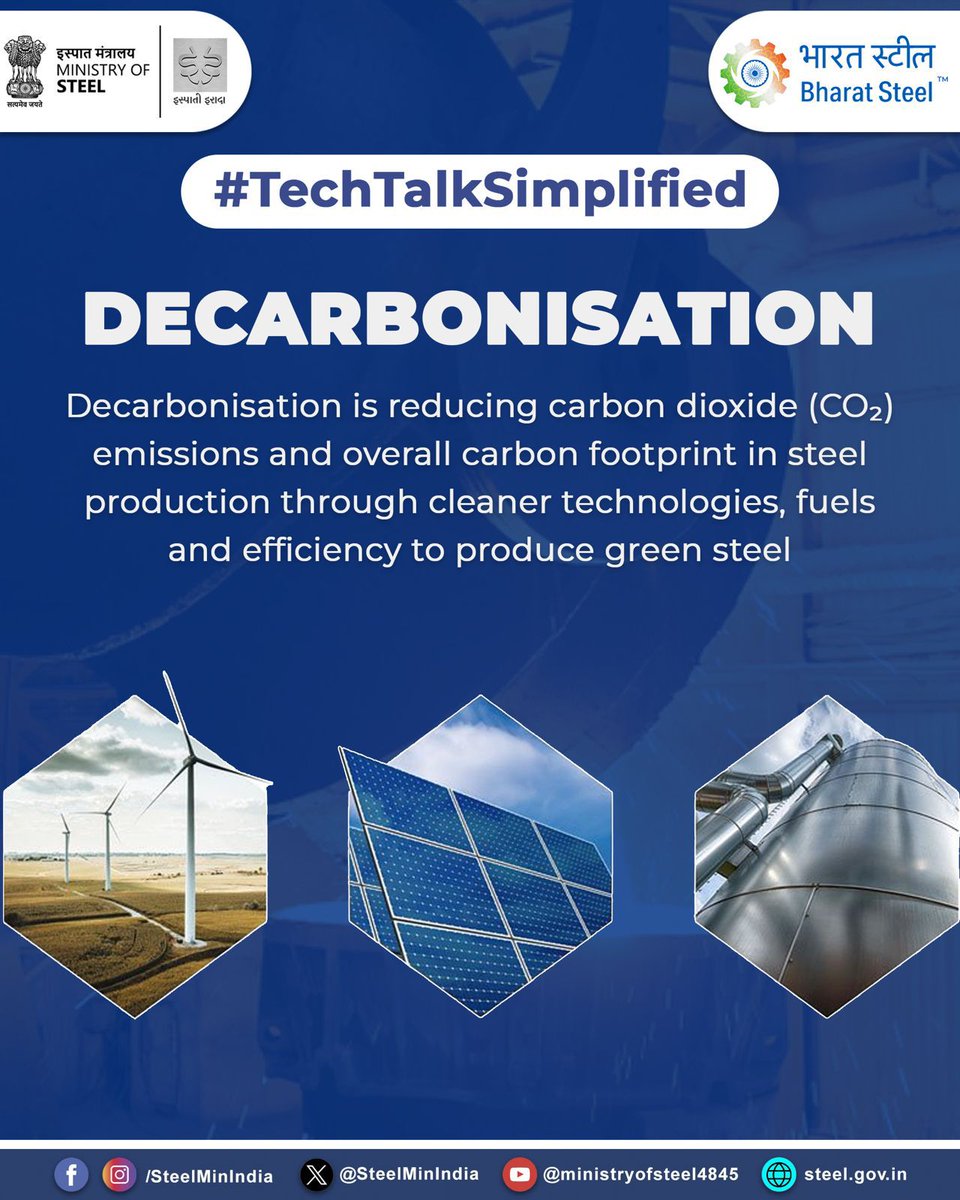
Decarbonisation in steel focuses on reducing CO₂ emissions and overall carbon footprint by adopting cleaner technologies, alternative fuels and improved efficiency—paving the way for green steel production.
#TechTalkSimplified #Decarbonisation #GreenSteel #LowCarbonSteel #SteelIndustry #SteelDecarbonisation
5
10
216
Mar 17
#TechTalkSimplified makes complex low-carbon steel concepts easy to understand.
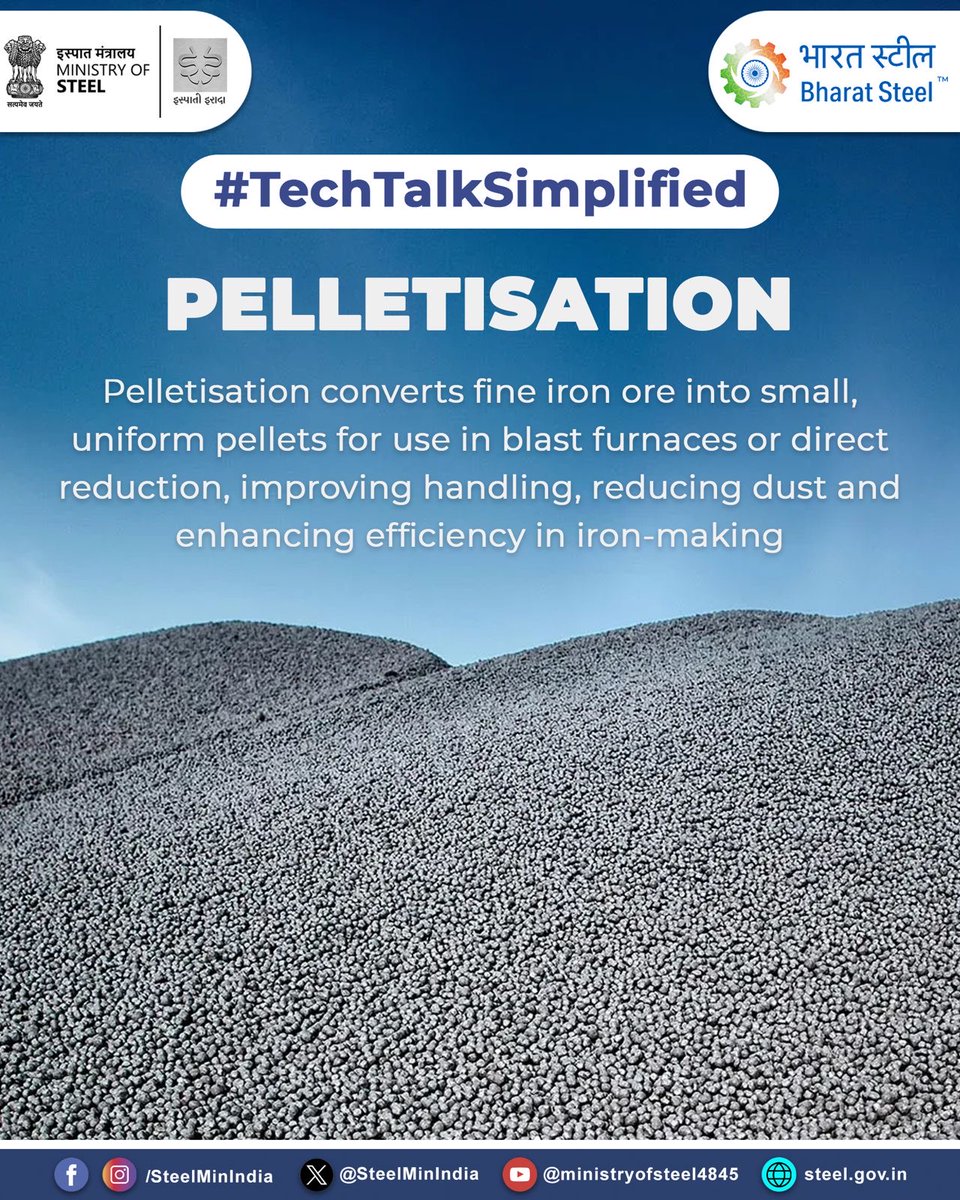
Pelletisation converts fine iron ore into small, uniform pellets that are easier to handle and ideal for iron-making processes. Their consistent size and strength improve furnace efficiency and support cleaner, more stable steel production.
#TechTalkSimplified #Pelletisation #LowCarbonSteel #SteelIndustry #SteelDecarbonisation #GreenSteel
2
15
279
Mar 13
#TechTalkSimplified makes complex low-carbon steel concepts easy to understand.
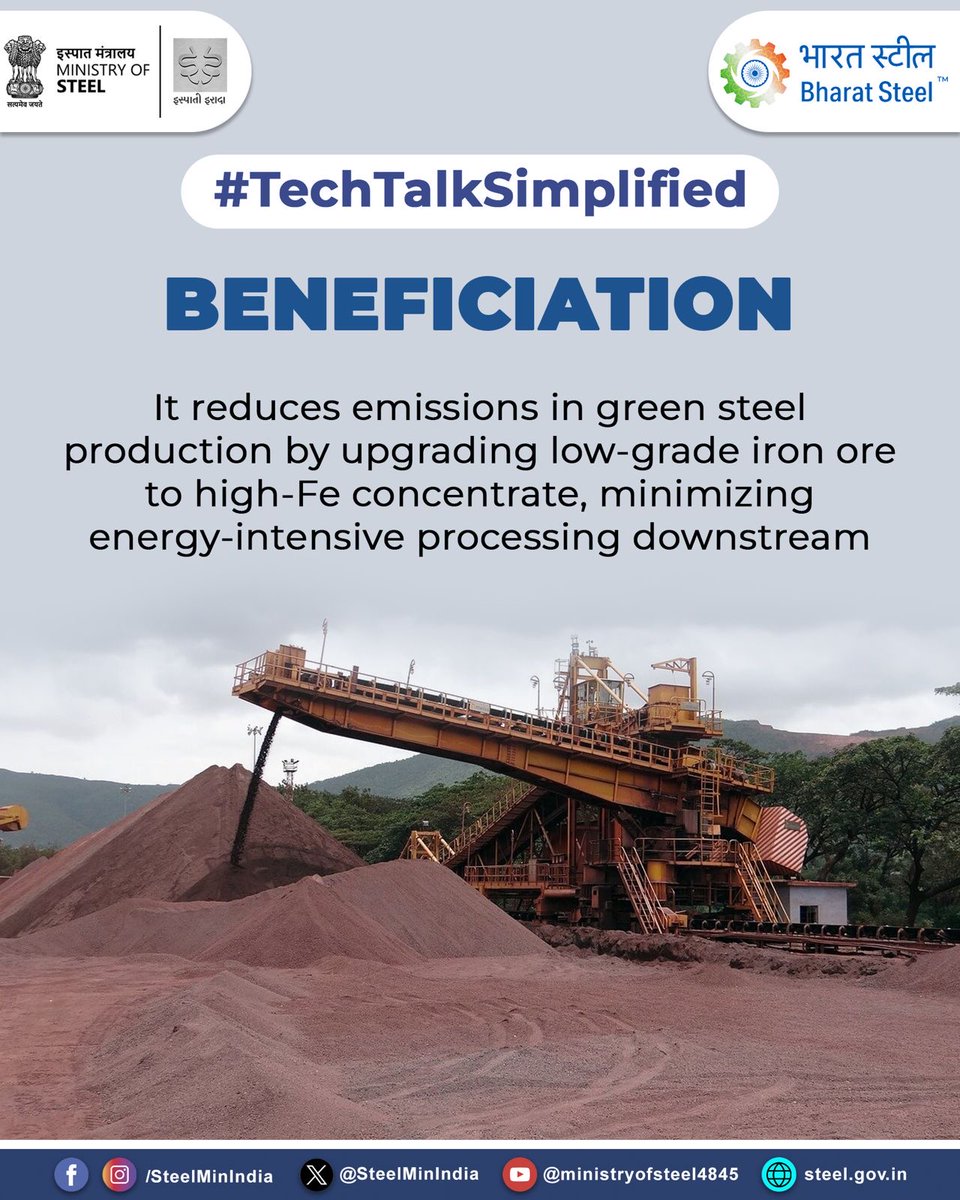
Beneficiation improves the quality of low-grade iron ore by removing impurities such as silica, alumina, and phosphorus. By increasing the iron content of the ore, this process helps reduce energy use, slag generation, and emissions during steel production, supporting more efficient and lower-carbon steelmaking.
#TechTalkSimplified #Beneficiation #LowCarbonSteel #GreenSteel #SteelIndustry #SteelDecarbonisation
1
6
234
Mar 11
#TechTalkSimplified makes complex low-carbon steel concepts easy to understand.
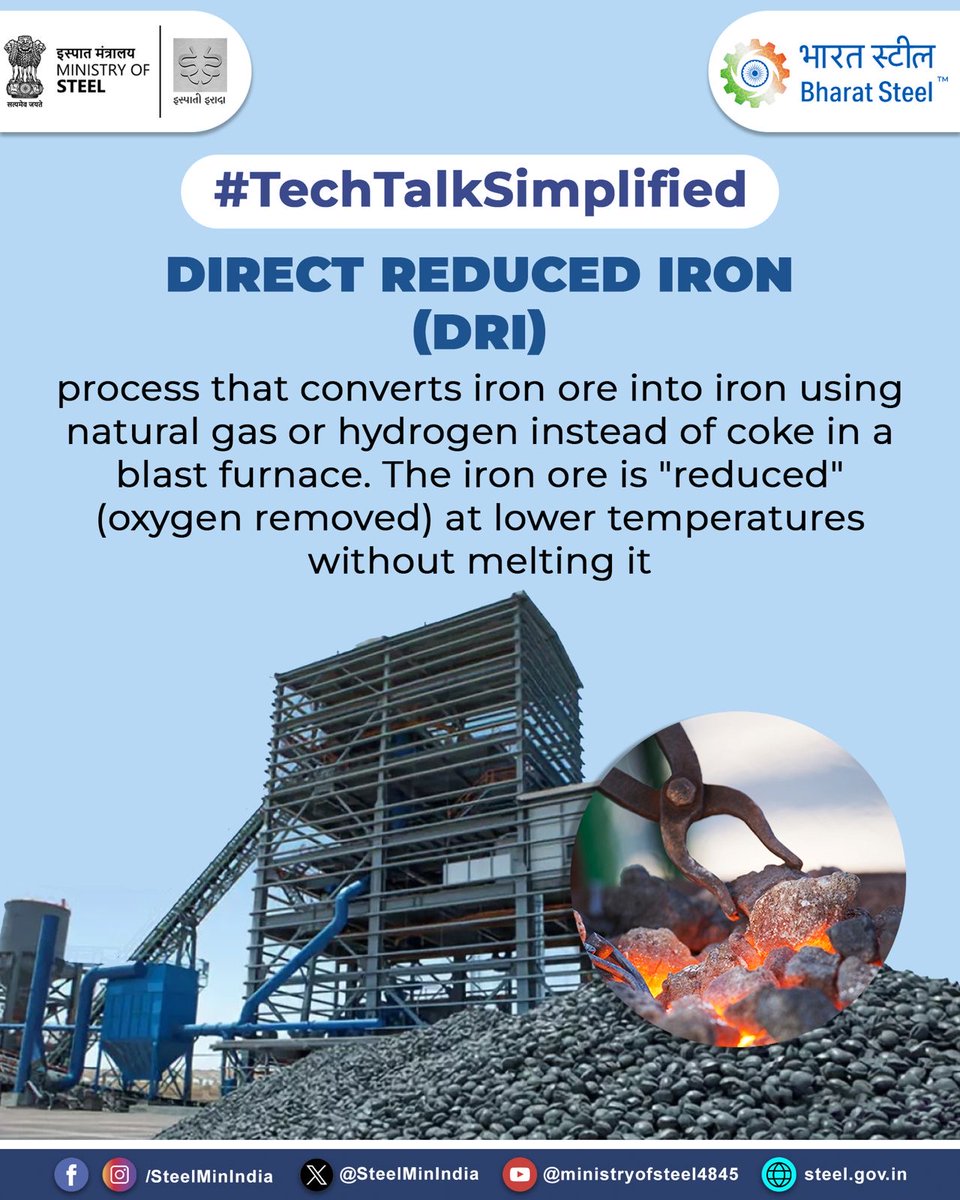
Direct Reduced Iron (DRI) is a process that converts iron ore into iron using natural gas or hydrogen instead of coke, removing oxygen at lower temperatures without melting the ore. This approach supports more flexible and potentially lower-emission pathways in iron making.
#TechTalkSimplified #DRI #DirectReducedIron #LowCarbonSteel #SteelIndustry #SteelDecarbonisation
1
6
167
Mar 10
#TechTalkSimplified explains emerging technologies shaping the future of steel manufacturing.
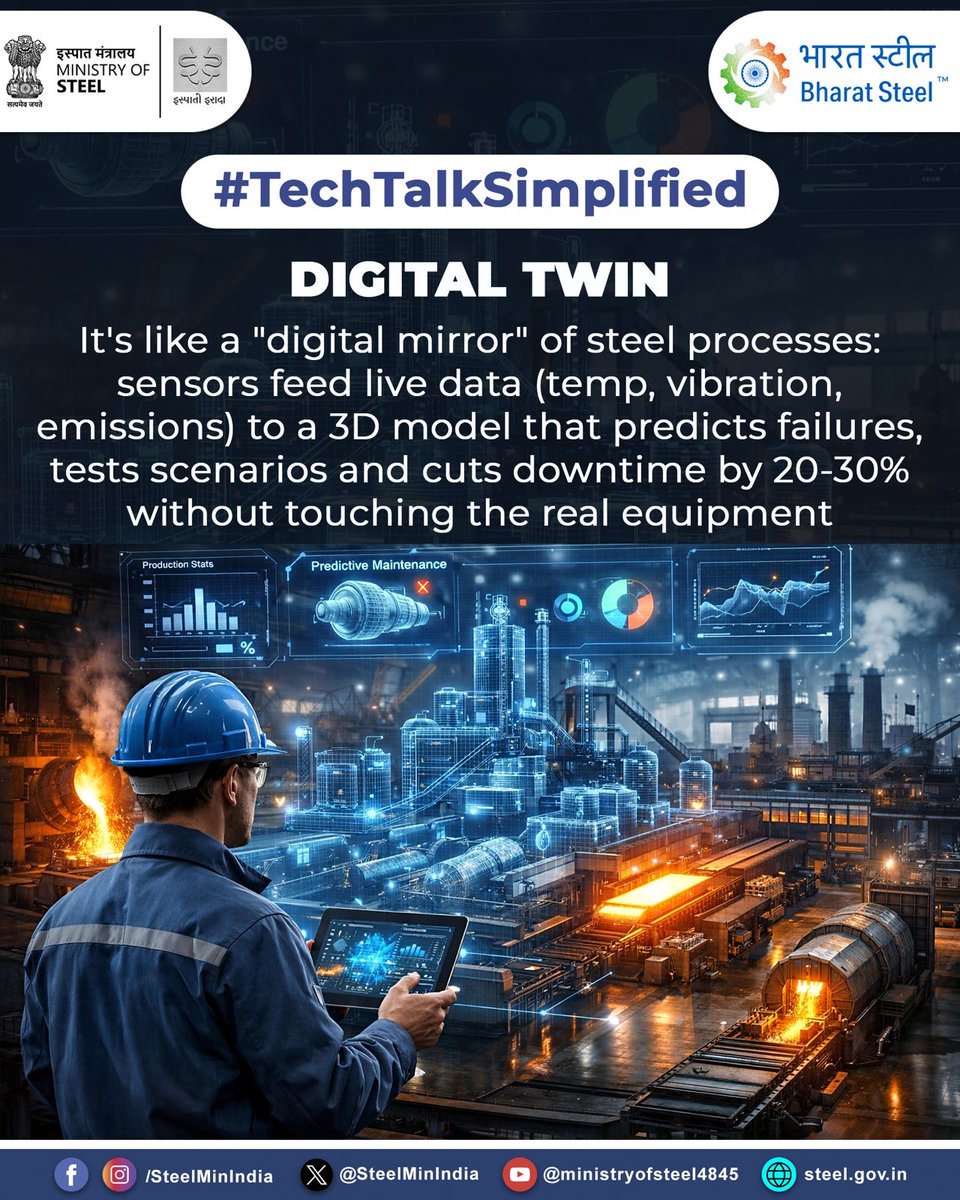
Digital Twin technology creates a virtual model of machines or production processes using real-time data from sensors and connected systems. In steel plants, it helps monitor equipment performance, predict maintenance needs, improve operational efficiency and reduce unexpected downtime.
#TechTalkSimplified #DigitalTwin #SmartManufacturing #SteelIndustry #Industry4.0
2
4
9
225
#TechTalkSimplified breaks down complex terms related to low-carbon steel production.
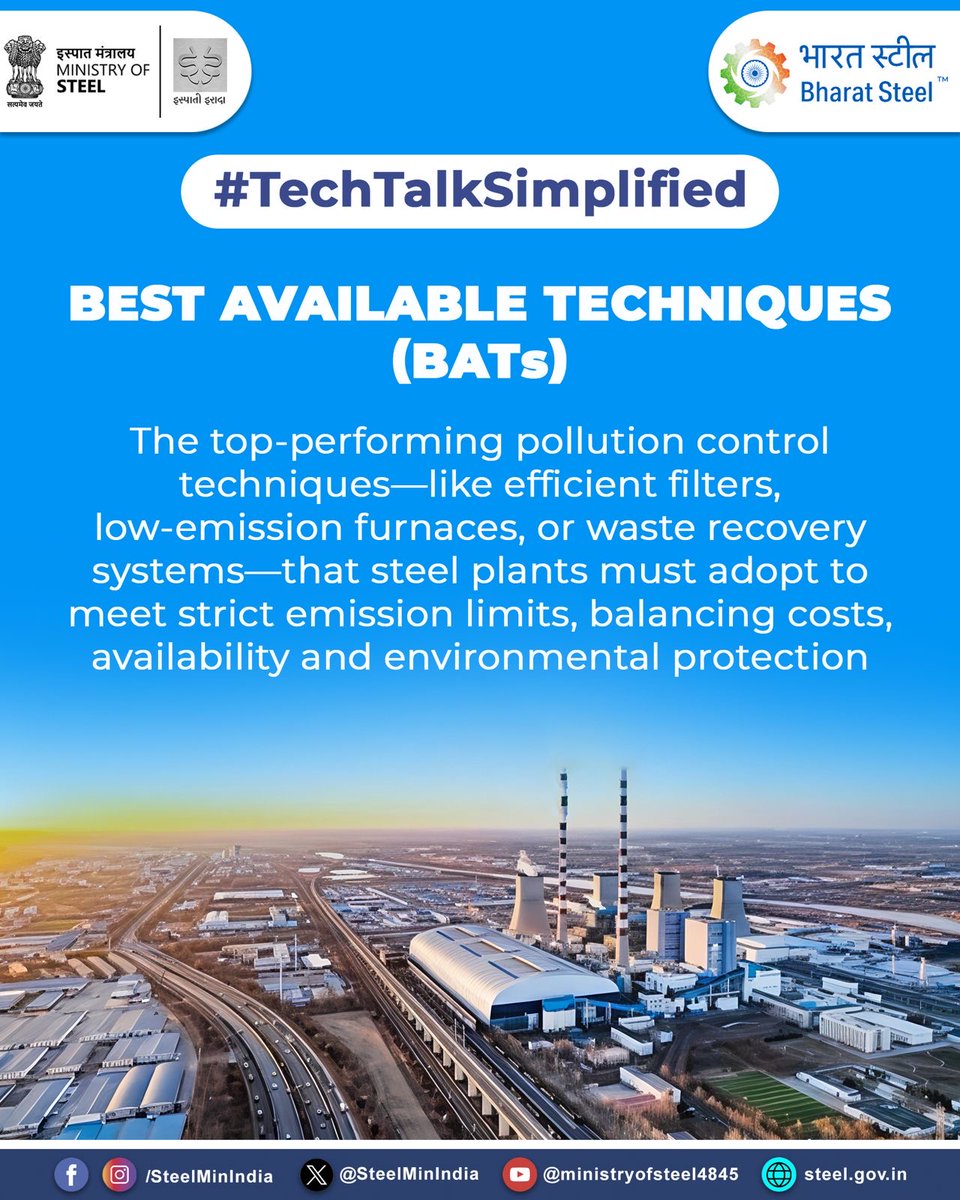
Best Available Techniques (BATs) refer to the most effective and advanced technologies used by industries to control pollution and reduce emissions. In the steel sector, this includes solutions such as efficient filtration systems, low-emission furnaces and waste recovery processes that help plants meet environmental standards while improving operational efficiency.
#TechTalkSimplified #BAT #LowCarbonSteel #IndustrialDecarbonisation #SteelIndustry
1
1
7
204
#TechTalkSimplified makes complex low-carbon steel concepts easy to understand.
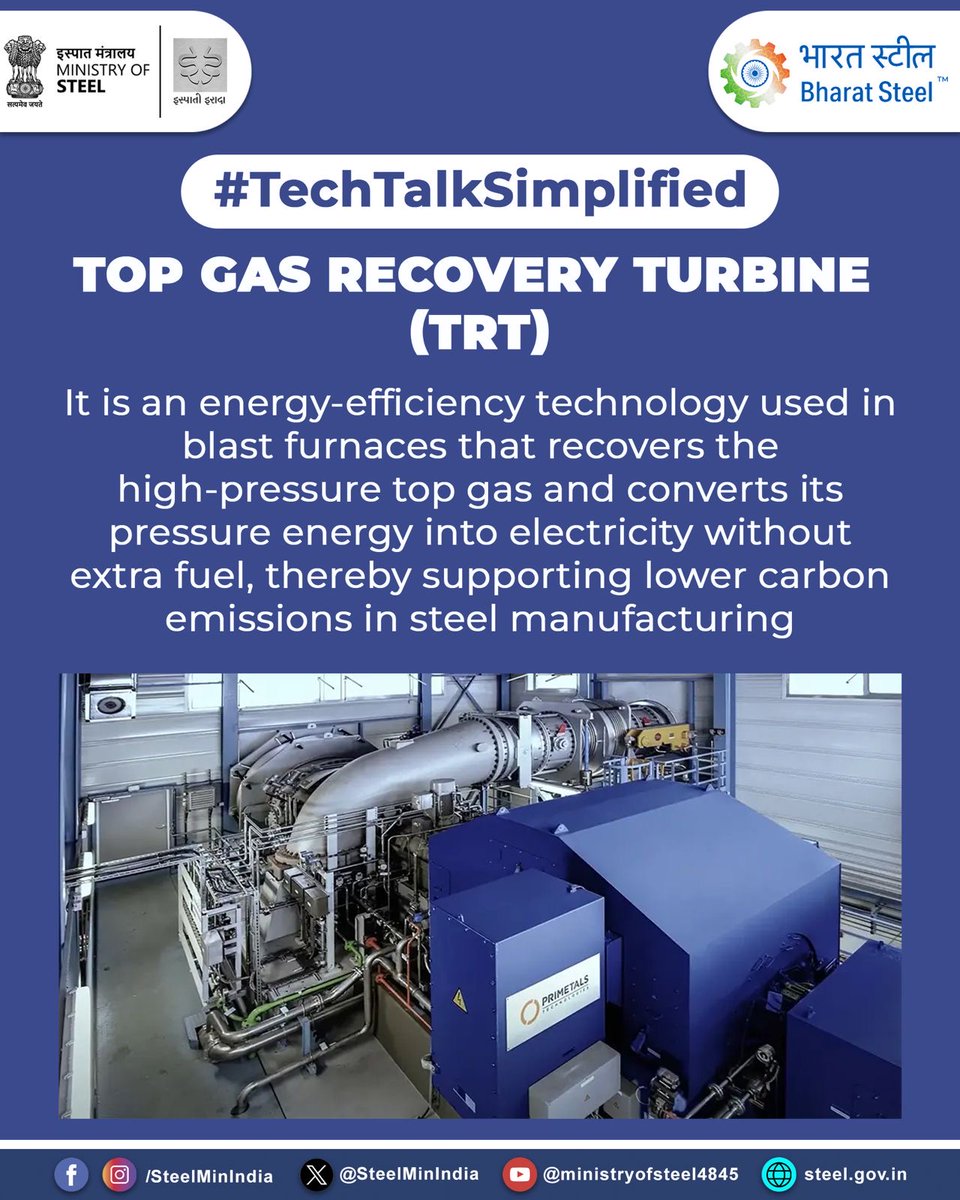
Top Gas Recovery Turbine (TRT) is an energy-efficiency technology used in blast furnaces that converts the pressure of high-temperature top gas into electricity—without additional fuel—helping reduce energy consumption and carbon emissions in steel manufacturing.
#TechTalkSimplified #TopGasRecovery #EnergyEfficiency #LowCarbonSteel #SteelDecarbonisation #SteelIndustry
2
3
173
#TechTalkSimplified makes complex low-carbon steel concepts easy to understand.
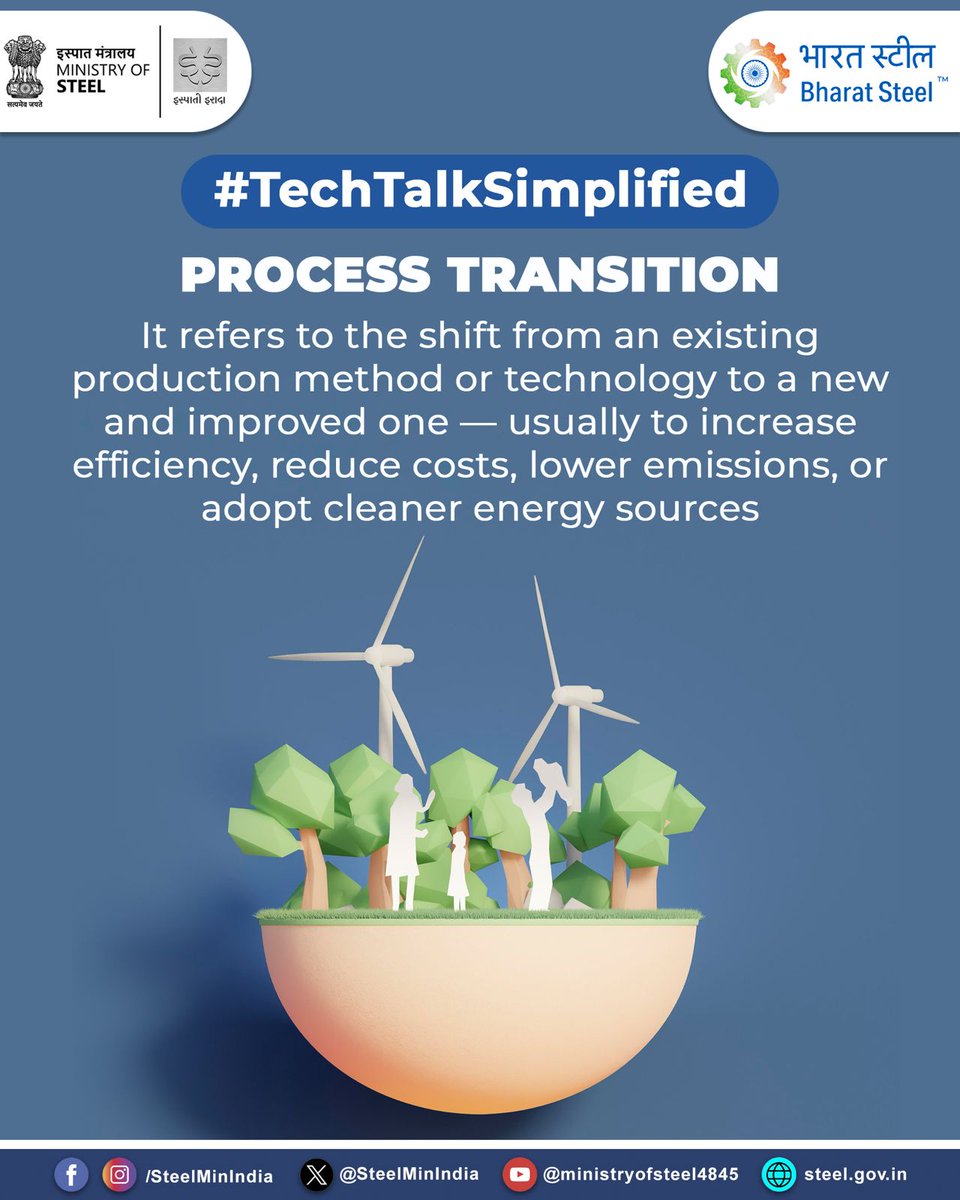
Process transition means moving from conventional production technologies to cleaner, more efficient alternatives—helping the steel industry cut emissions, optimise costs and modernise operations.
#CircularSteel #ProcessTransition #LowCarbon
3
6
188
#TechTalkSimplified makes complex low-carbon steel concepts easy to understand.
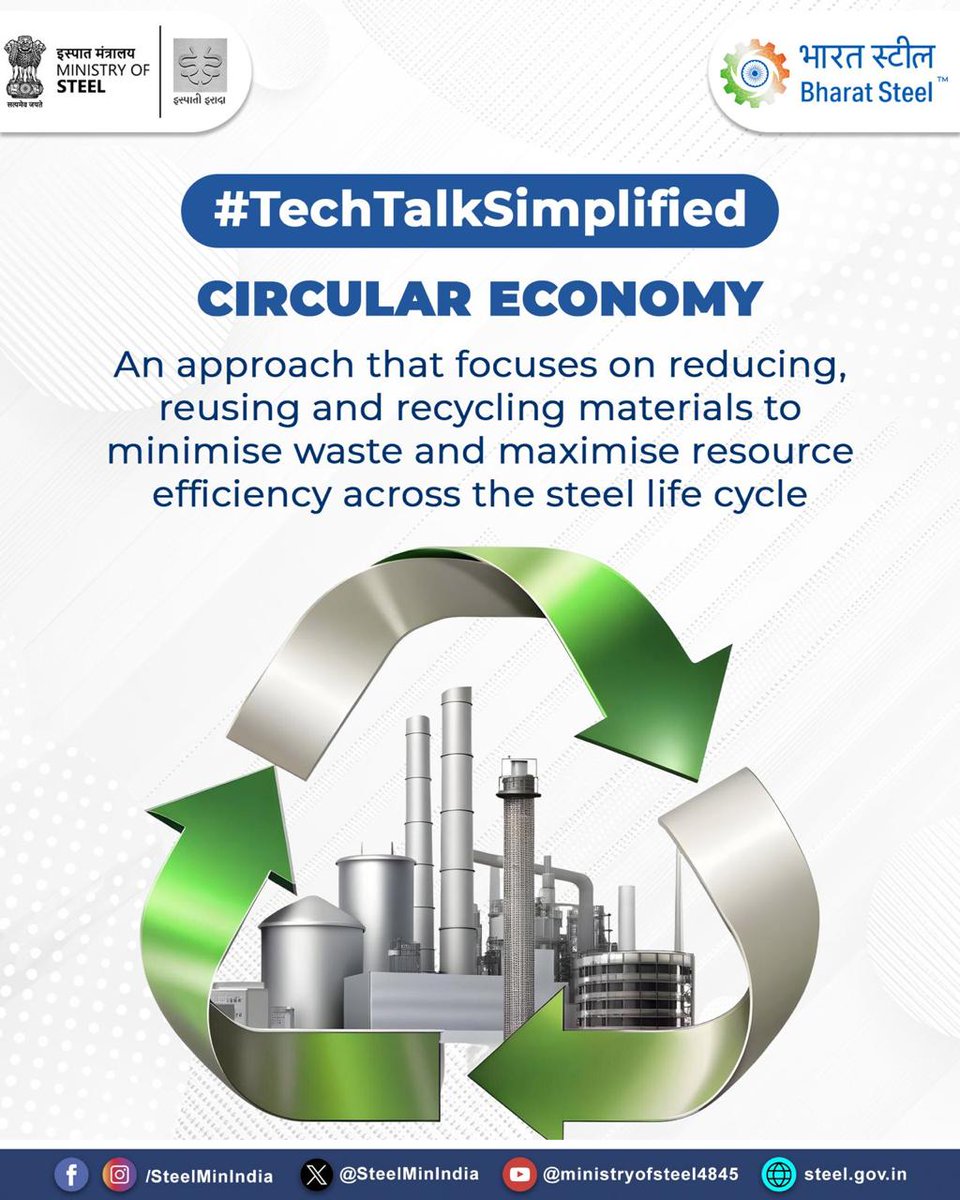
A circular economy promotes reducing, reusing and recycling materials in steel production to minimise waste, conserve resources and lower environmental impact.
#TechTalkSimplified #CircularEconomy #LowCarbonSteel #SteelSustainability #SteelIndustry
2
8
167