
Jun 13
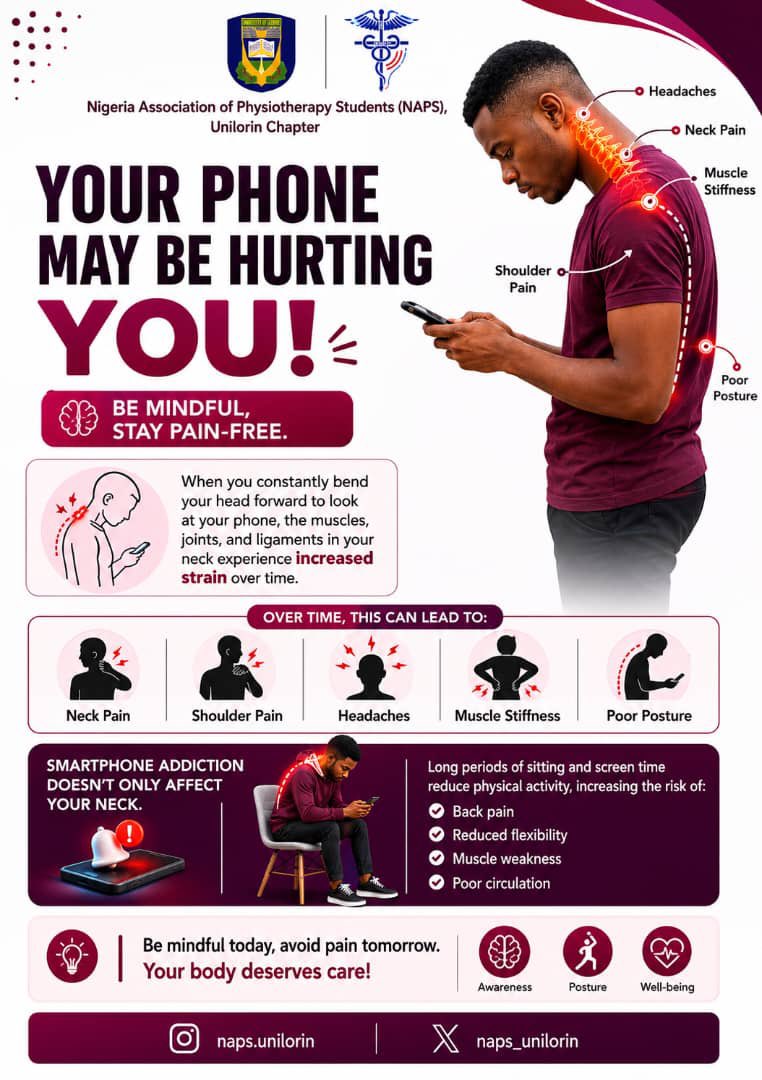
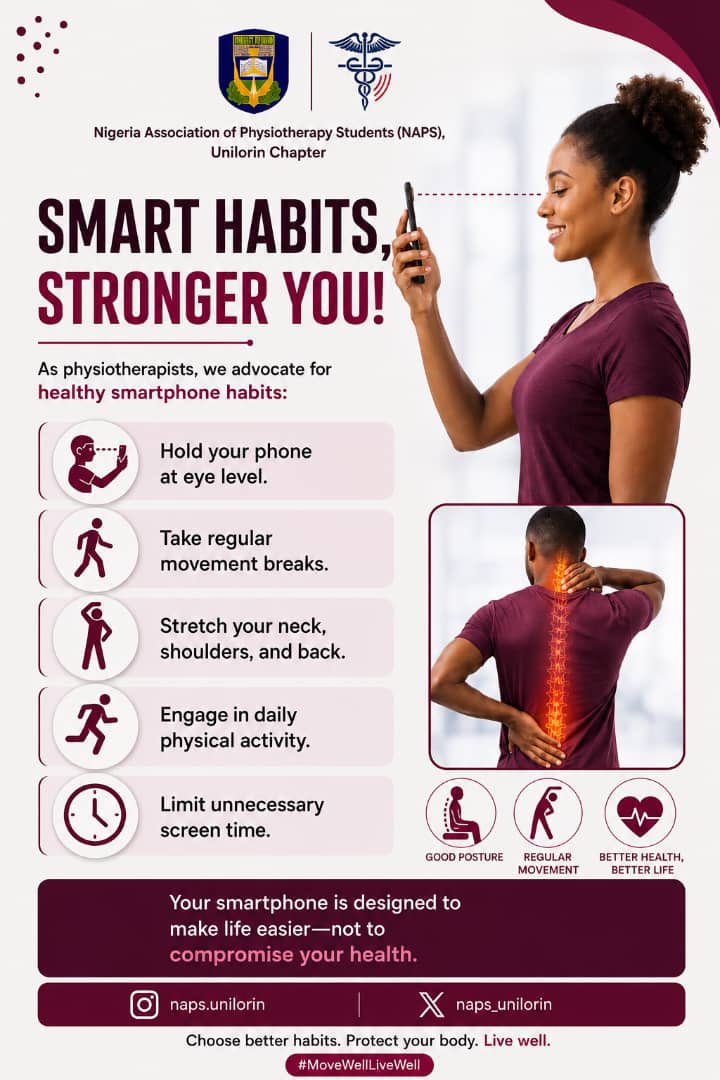
📱⚠️ Your phone might be affecting more than your battery life.
Prolonged screen time is linked to text neck, muscle weakness, stiff joints & poor circulation.💙
Move more. Sit less. Take breaks. Your body will thank you.
#napsunilorin #textneck #studenthealth #posturematters
3
3
24

Jun 13
Your spine is slowly forgetting how to carry your own head.
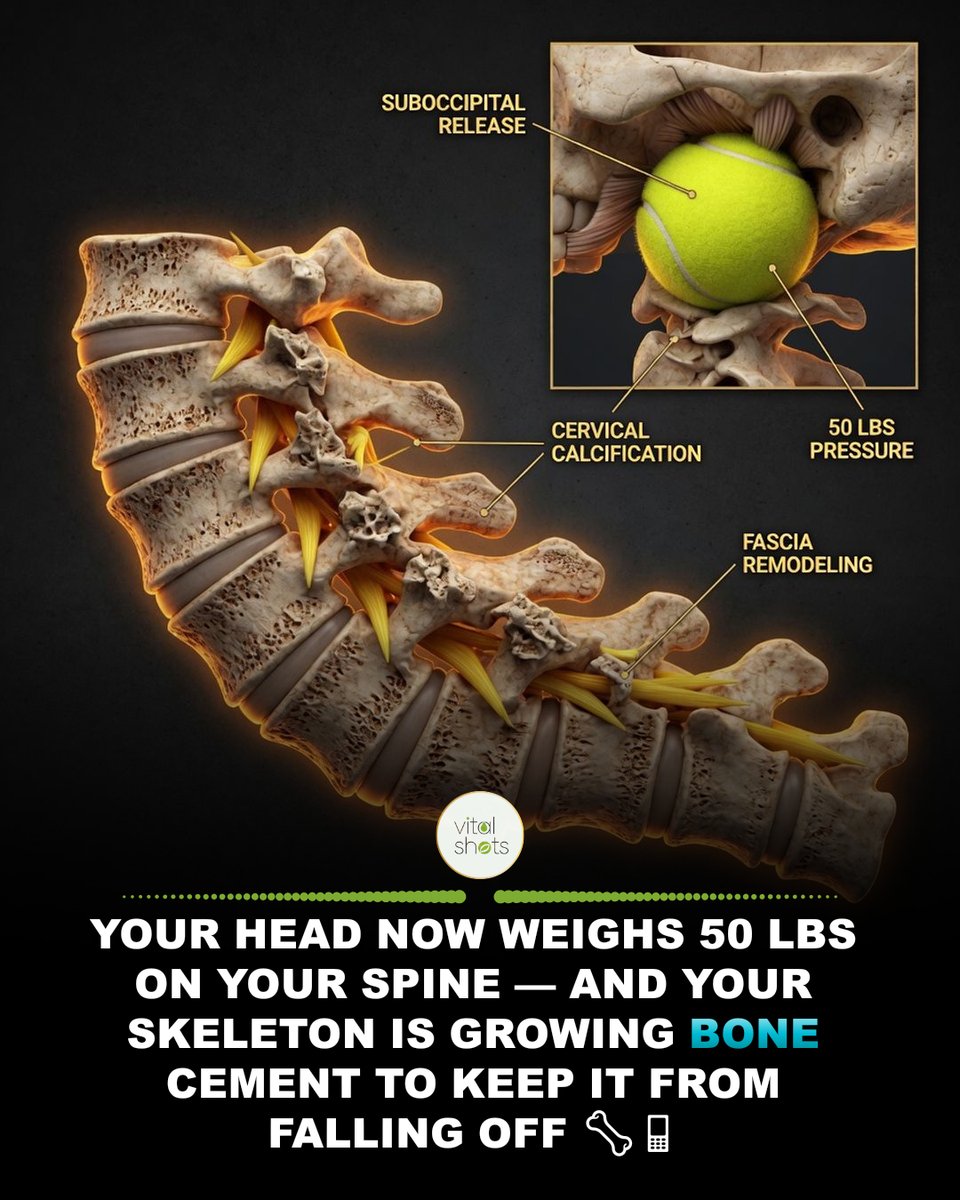
Watch a three-year-old move across a room. Their head sits perfectly atop their shoulders like a balanced orb, weightless and effortless, moving with an ancestral grace we have traded for a glowing glass screen. Now, look in the mirror or at the person next to you in line. You will see the forward head tilt, the rounded shoulders, and that slight, tell-tale hump forming at the base of the neck that has become the hallmark of the modern era. We often dismiss this as mere 'aging' or 'stress,' but it is actually a profound structural theft. Every time you tilt your head forty-five degrees to check a notification, your neck isn't supporting the usual twelve pounds of your skull—it is straining under fifty. Your body, ever the adaptive machine, begins growing extra bone and thick, rigid connective tissue just to prevent your head from physically falling forward. You aren't simply losing your youth; you are losing your biological alignment to a device that weighs less than a pound. It is time to reclaim the structural integrity you were born with before the biological cement dries and your new, collapsed identity becomes permanent. There is a way to reverse this remodeling, and it starts with understanding the hidden cost of the tilt.
What is actually happening deep inside your cervical fascia is a process of forced adaptation. Your brain is a master of efficiency; if you spend six to eight hours a day in a slumped position, your nervous system decides that this 'downward' state is your new functional baseline. It initiates a process called 'tissue remodeling' where the posterior neck muscles are kept in a state of constant, low-grade contraction. Over time, the body lays down dense layers of collagen and calcium—this is the physical origin of the 'dowager’s hump' seen in chronic phone users. But this isn't just a cosmetic issue; it is a neurological crisis. As the natural C-curve of your neck flattens, it creates mechanical tension on the spinal cord and the vertebral arteries that supply oxygenated blood to your brain. This 'strangulation' of the primary conduit of energy is the hidden root of persistent brain fog, chronic fatigue, and that background hum of anxiety that never seems to leave your system. You are not just looking at a screen; you are physically collapsing the very bridge between your mind and your body. The good news is that fascia is plastic, and by applying the right mechanical signals, you can force it to rebuild in the correct direction.
To reverse this, you must 're-map' your proprioception using a specific daily reset that overrides your phone-induced habits. Find a flat wall and stand with your heels, glutes, and shoulder blades making firm contact. Instead of tilting your head back, perform a 'axial extension' or chin tuck: imagine a silver thread pulling the crown of your head toward the ceiling while you pull your chin straight back—not down—as if you are trying to create a massive double chin against the wall. Hold this for ten seconds while taking deep, slow diaphragmatic breaths to signal safety to your nervous system. Repeat this ten times in a row. Next, perform the 'Bruegger’s Relief Position' to counter the inward collapse: sit at the very edge of your chair with your feet flat and knees wider than your hips. Turn your palms completely outward, thumbs pointing behind you, and squeeze your shoulder blades together while simultaneously tucking your chin. This specific gesture 'un-rotates' the humerus and tells your brain that the 'collapsed' defensive state is over. Do this for thirty seconds every time you finish a long session on your device. The goal isn't just to stretch, but to provide a consistent 'upright' signal that interrupts the remodeling process before it calcifies. Consistency is far more important than intensity here; you are retraining a nervous system, not just pulling on a muscle.
Do not expect a miracle in twenty-four hours, but pay close attention to your body on day three. You will likely notice a strange, liberating sensation: your head will suddenly feel 'lighter,' and that chronic, dull ache at the base of your skull will begin to dissolve into a cool, tingling release of fresh blood flow. By the end of the second week, your breathing will feel noticeably deeper because your ribcage is no longer being compressed by your own shoulders. The most common error that arruins this progress is trying to 'stretch' the back of the neck when it feels tight. Stop doing that immediately. Those muscles are already overstretched and weak from trying to hold your head up all day; stretching them further only increases the instability. Instead, focus on releasing the chest and strengthening the deep neck flexors in the front. Stop being a passive victim of the digital tilt and start living as the upright, alert, and structurally sound human you were designed to be. Your posture is your identity, and it is time to take it back from the screen. A aligned spine is the foundation of a clear mind.
🌰 The bio-available food: Two tablespoons of raw, organic pumpkin seeds consumed every afternoon as a snack. They are exceptionally high in magnesium, which acts as a natural calcium channel blocker to help chronically tight neck muscles finally shift from a state of contraction to one of relaxation. Most persistent neck tension is actually a localized mineral deficiency made worse by the constant mechanical strain of looking down.
🌿 The natural protocol: A focused three-minute tennis ball release at the suboccipital ridge before sleep. Place two tennis balls inside a sock, lie on a hard floor, and rest the base of your skull directly on the balls where the bone meets the neck. Breathe deeply for 180 seconds to inhibit the tiny muscles that trigger tension headaches and signal to your nervous system that it is time to power down.
💊 Vital Shot boost: A high-dose liquid collagen and silica complex taken thirty minutes before your morning movement routine. The silica acts as a biological cross-linker for the collagen peptides, helping to reinforce the structural integrity of the ligaments that have been overstretched by years of 'text neck.' This provides the specific raw materials your fascia needs to remodel itself into a more supportive, upright architecture that resists gravity.
📚 Kazeminasab S, Nejadghaderi SA, Amiri P et al.. BMC musculoskeletal disorders. "Neck pain: global epidemiology, trends and risk factors." 2022. PMID: 34980079.
#vitalshotsen #textneck #biohacking #posturefix #spinalhealth #neckpainrelief
1
144

Jun 11
पाठदुखीचा त्रास वाढतोय? तुमच्या पाठीचा कणा हळूहळू कमकुवत होत नाही ना? रोजच्या ‘या’ ५ सवयी ठरू शकतात धोकादायक
#SpineHealth #BackPain #NeckPain #TextNeck #HealthySpine #PostureCorrection #HealthTips #LifestyleHealth #BackCare
loksatta.com/lifestyle/daily…
156

Jun 11
Remembering C0VID Day 11 Unjust authority confers no obligation of obedience.
👀👀👀👀👀👀👀👀
Can Chiropractic Help Scoliosis?
🌀 Dealing with scoliosis pain or posture problems? Chiropractic care might help you move better, feel better, and live better.
👉 bodytraxx.com/home/008-can-C…
📍 Pflugerville’s Walk-In Chiropractic Clinic
🚶♂️Walk-in Clinic🚶 📞512-647-8424
| Body Traxx Chiropractic
#BodyTraxxChiropractic #ManorTX #StoneHillTownCenter #NeckPainRelief #TextNeck #walkin #BetterPosture #DrugFreePainRelief #HealthyMovement

1
10

Is Your Mobile Phone Causing Your Neck Pain? 📷
📷 Visit: tinyurl.com/59mazaxs
#GlobalAyucare #TextNeck #NeckPainRelief #DigitalHealth #PostureCorrection #HealthyLifestyle #Ayurveda #AyurvedicWellness #NaturalHealth #PainRelief #MobileAddiction #WellnessTips

4


Jun 9
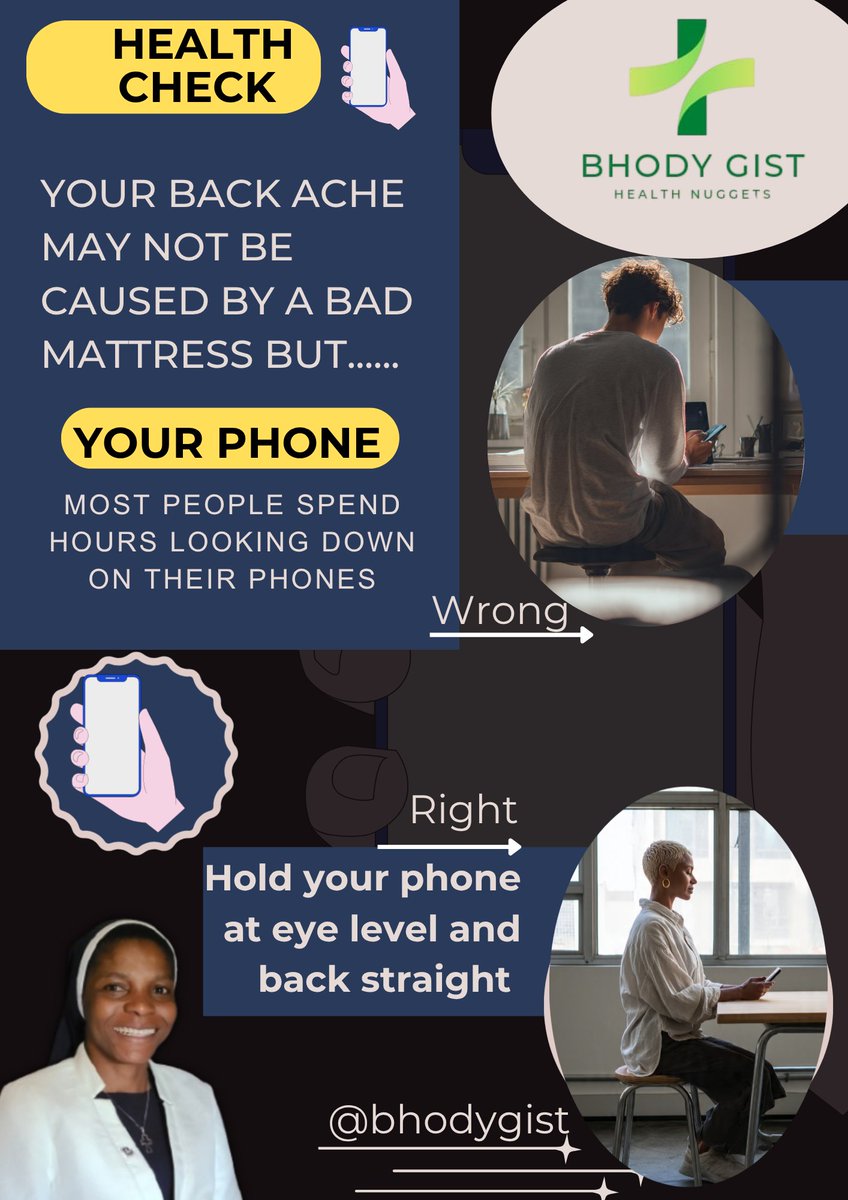
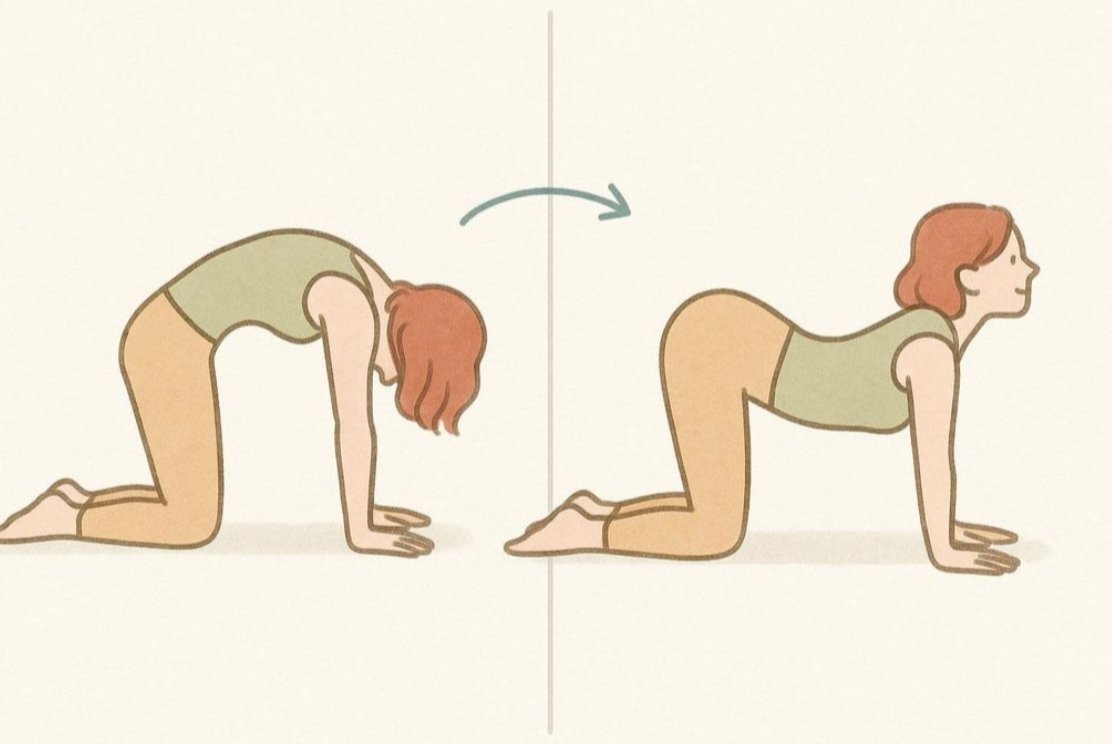
⚠️ 3/3: दर्द को नज़रअंदाज़ न करें
यदि गर्दन, कंधे या कमर में लगातार दर्द बना रहता है, तो डॉक्टर या फिजियोथेरेपिस्ट से सलाह अवश्य लें।
याद रखें—
🌿 आज सुधारी गई छोटी आदतें भविष्य की बड़ी समस्याओं से बचा सकती हैं।
स्वास्थ्य ही सबसे बड़ा धन है। अपनी रीढ़ का ध्यान रखें और स्वस्थ जीवन की ओर कदम बढ़ाएँ।
💬 कमेंट करके बताइए—इनमें से कौन-सी आदत आपको सबसे अधिक बदलने की आवश्यकता है?
#TextNeck #BackPain #HealthyHabits #SpineHealth #HealthAwareness
2
4
112
Jun 9
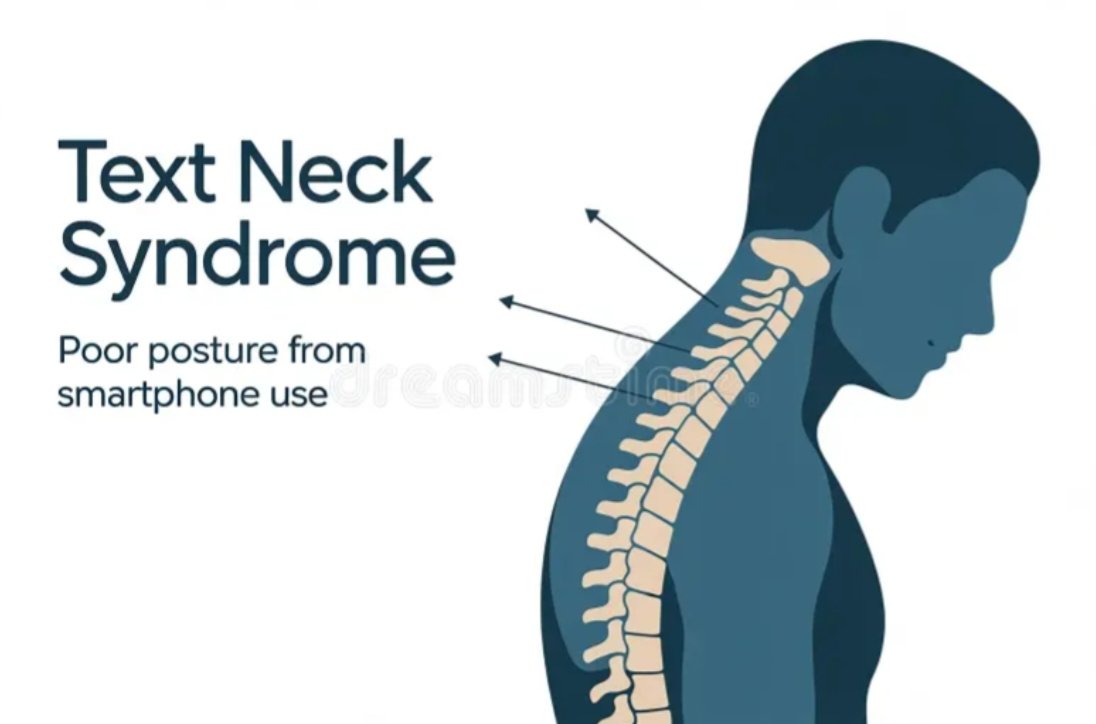
🚨 1/3: क्या आपका मोबाइल आपकी रीढ़ को नुकसान पहुँचा रहा है?
आज हर 3 में से 1 युवा गर्दन या कमर दर्द की समस्या से जूझ रहा है। लंबे समय तक झुककर मोबाइल चलाना, लैपटॉप पर गलत मुद्रा में काम करना और घंटों बैठे रहना इसकी बड़ी वजह बन चुके हैं।
📱 सामान्य स्थिति में हमारे सिर का वजन लगभग 4-5 किलोग्राम होता है, लेकिन जब हम गर्दन झुकाकर फोन देखते हैं तो रीढ़ पर पड़ने वाला दबाव 20-25 किलोग्राम तक बढ़ सकता है।
इसी कारण "टेक्स्ट नेक" (Text Neck), गर्दन का दर्द, कंधों में जकड़न और कमर दर्द युवाओं में तेजी से बढ़ रहे हैं।
क्या आप भी दिन में कई घंटे मोबाइल या लैपटॉप पर बिताते हैं?
#TextNeck #BackPain #YouthHealth #SpineCare #HealthyLifestyle
1
5
10
382

Jun 8
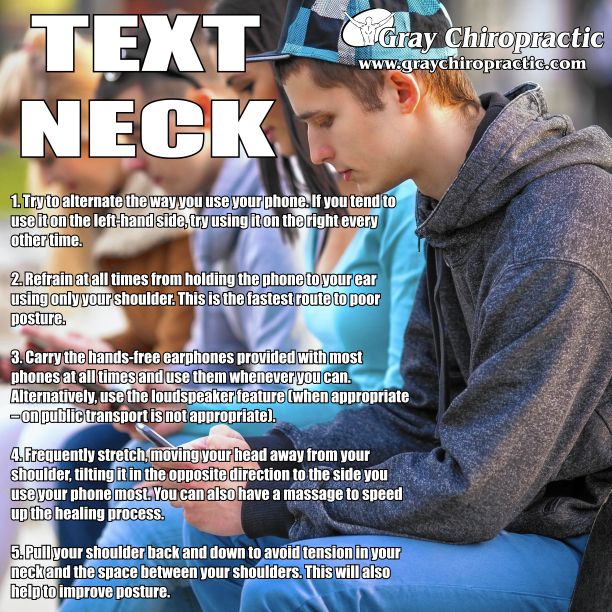
📱 Text Neck: The Modern Posture Problem You Need to Fix
Are you guilty of spending hours staring down at your phone? You’re not alone. “Text Neck” is causing serious strain on the spine and neck for millions of people — leading to pain, headaches, stiffness, and long-term posture issues.
Here’s how to protect yourself (and your neck):
1. Alternate the side you hold your phone.
2. Stop cradling your phone between your ear and shoulder.
3. Use hands-free earphones or speakerphone whenever possible.
4. Take frequent stretch breaks — look up and move your head in the opposite direction.
5. Pull your shoulders back and down to maintain better posture.
Small habits = big difference in how your neck feels!
How often do you catch yourself with your head buried in your phone? Drop a comment below 👇 and share your biggest phone habit.
Your neck will thank you for making these changes!
---
Gray Chiropractic
Independence, Missouri
graychiropractic.com
---
#TextNeck #PostureMatters #NeckPain #PhonePosture #TechNeck #WellnessTips #ChiropracticCare #SpineHealth #PostureCorrection #KansasCityWellness #HealthyHabits #PainPrevention
16

May 6
I look around and no one is walking straight anymore. Even while standing or sitting, every head is tilted down at a screen
Imagine the "new curve" of the neck for the next generation. We aren't evolving; we’re just turning into the letter 'C'. Time to look up before our posture becomes a permanent bug in the system!
#TextNeck #Evolution #PostureCheck #HealthRealities #RealTalk
2
35

Apr 17
En resumen:
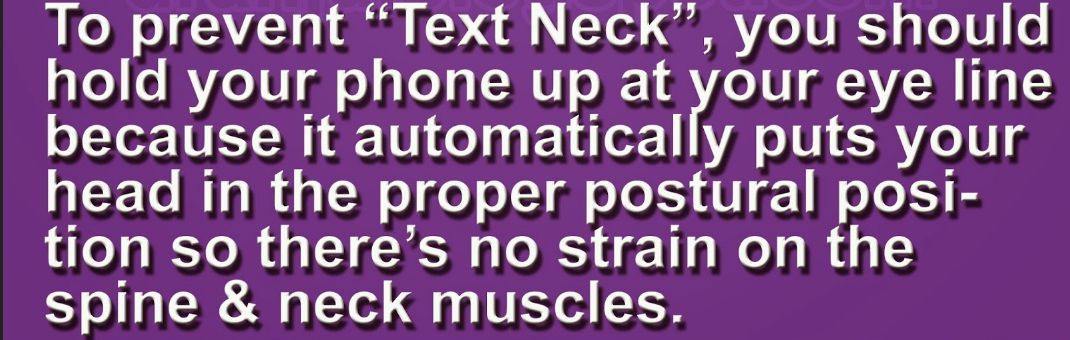
🔹 Sube el móvil a tus ojos.
🔹 Haz pausas frecuentes.
🔹 Estira tu pecho y fortalece tu espalda.
¿Sientes tensión justo ahora? ¡Suelta el cel un momento y estírate! V: Secretos de tu cuerpo.🧘♂️✨ #SaludPostural #TextNeck #Bienestar
2
111

Apr 16
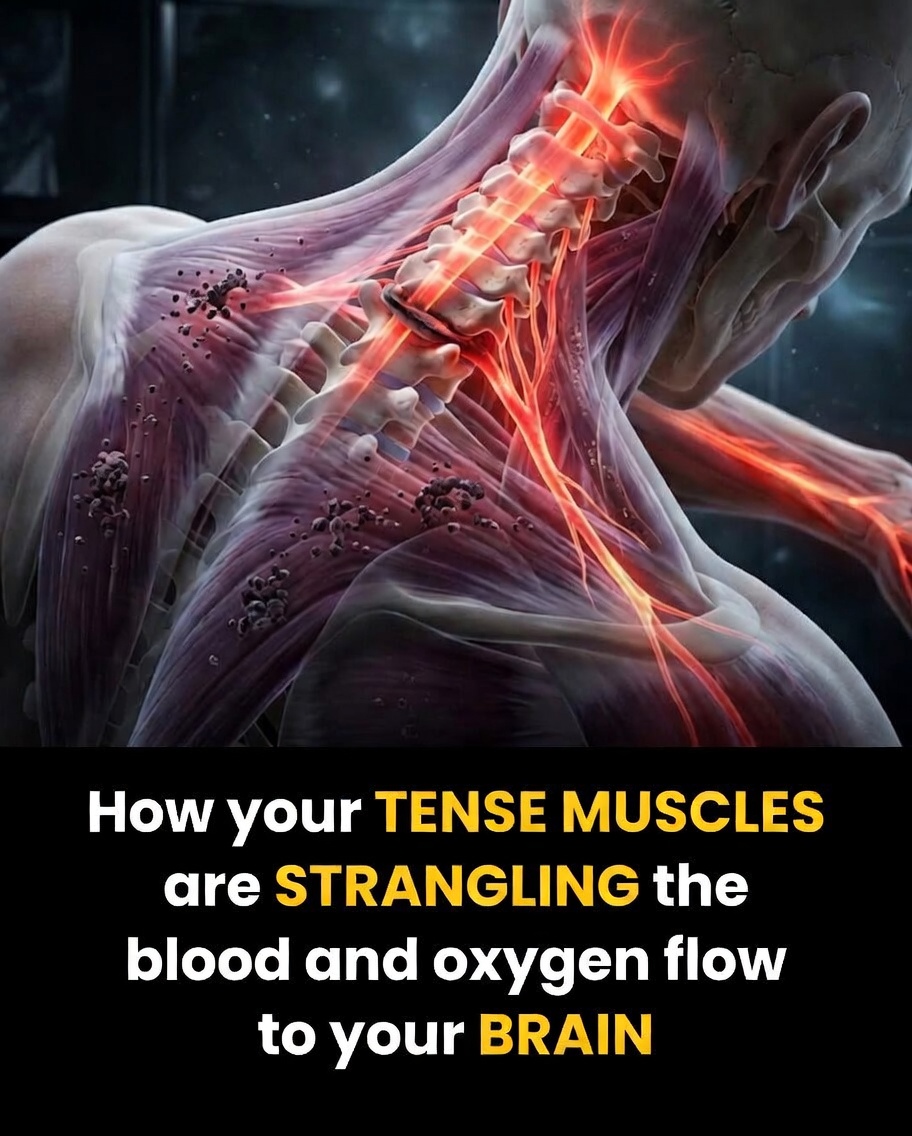
The shocking way chronic neck pain is strangling your spine & nervous system
Modern “text neck” multiplies head weight up to 60 lbs, creating constant muscle tension that cuts blood & oxygen flow to your brain, triggers headaches, tingling hands, and poor sleep.
Fix it: take posture breaks daily stretches! #NeckPain #TextNeck #Posture #NervousSystem #Wellness
2
35

Mar 30
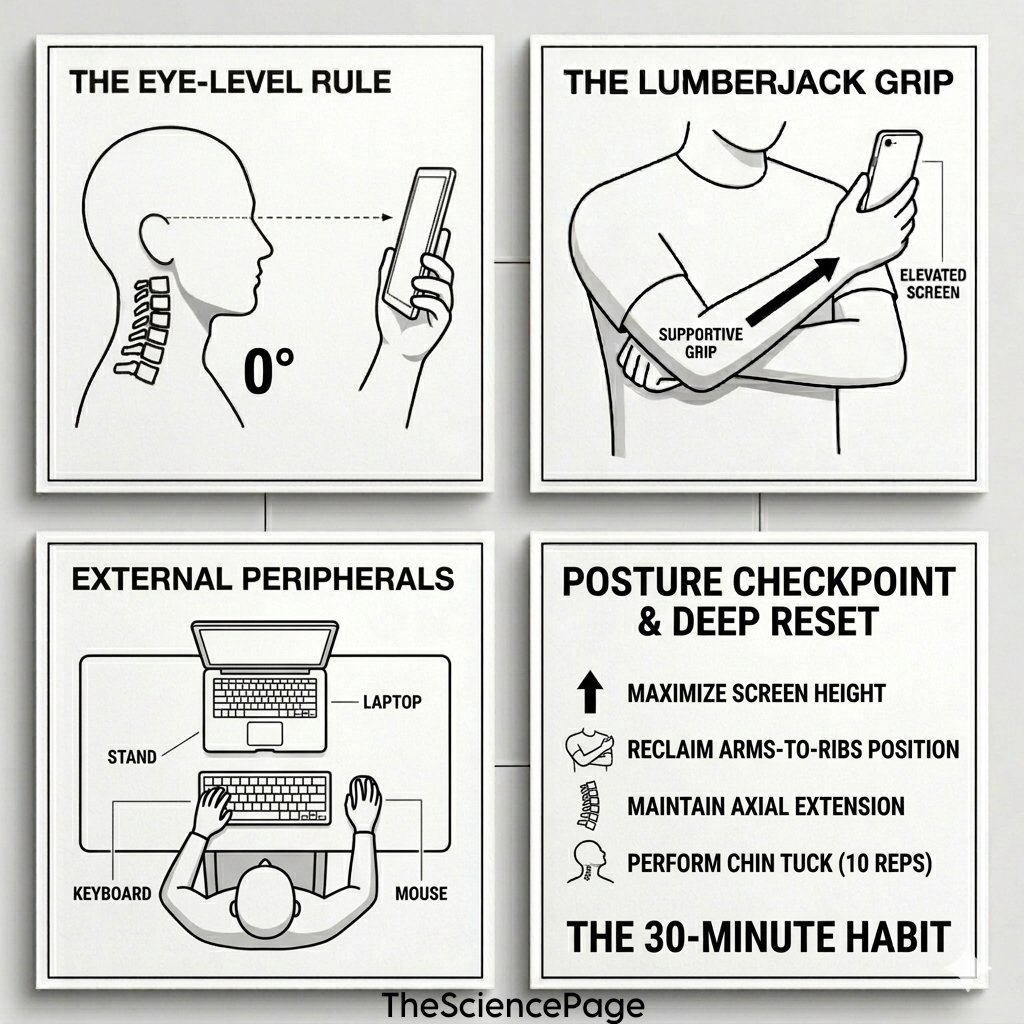
Your environment dictates your biology. If your workspace is built for a laptop, your spine is paying the price of pressure.
You don’t need a standing desk to fix the “Text Neck”. You just need to change how the technology meets your body.
3 Essential Resets
The Eye-Level Rule: If you are using a laptop, put it on a stack of books. If you are on a phone, bring the phone to your face level. Your ears should always be aligned over your shoulders.
The "Lumberjack" Grip: Instead of holding your phone with two hands in your lap, rest your dominant elbow in your non-dominant hand (across your ribs) to prop the screen up to eye level effortlessly.
External Peripherals: If you work on a laptop, use an external keyboard and mouse. This allows you to elevate the screen while keeping your shoulders relaxed.
Stop leaning into the digital world. Bring it to you.
#Ergonomics #DigitalWellness #TextNeck
1
6
69
Mar 28
"Are you suffering from 'TEXT NECK'?"
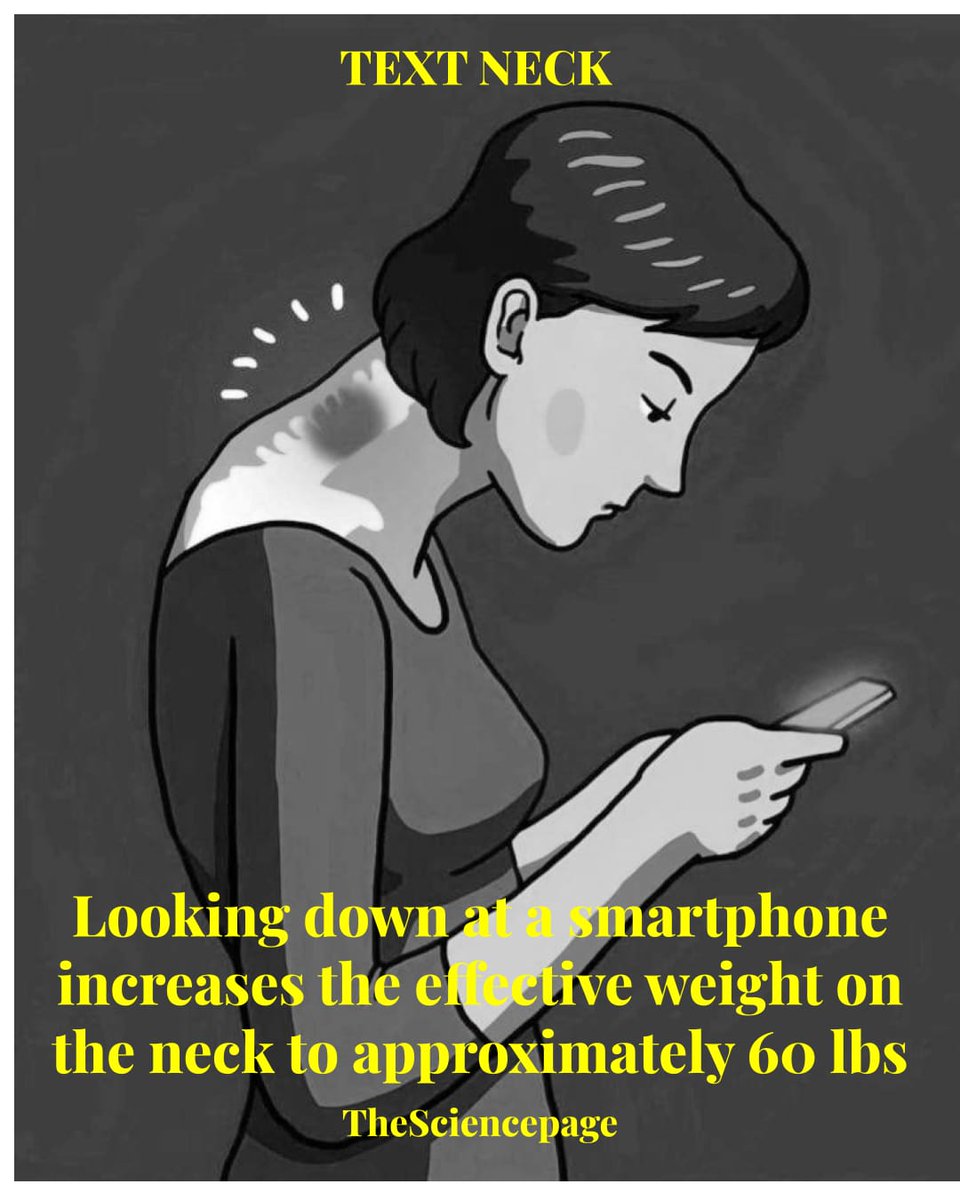
While the human head typically weighs between 10 to 12 lbs when held in a neutral, upright position, the effective weight on your cervical spine increases dramatically as you tilt your head forward.
This phenomenon is often referred to as "Text Neck"
As the angle of your head increases, the "moment arm" (the distance from the pivot point in your neck) increases, requiring the muscles and ligaments to work much harder to support the weight
When you look down at a smartphone at a 60 degree angle, you are essentially hanging a 60 lb (27 kg) weight roughly the size of an average 8-year-old child off the back of your neck.
"Evolution didn't prepare us for the Smart phone"
Bookmark this for your next desk break
#textneck
#digitalwellbeing
#posturehealth
1
3
76

Mar 16
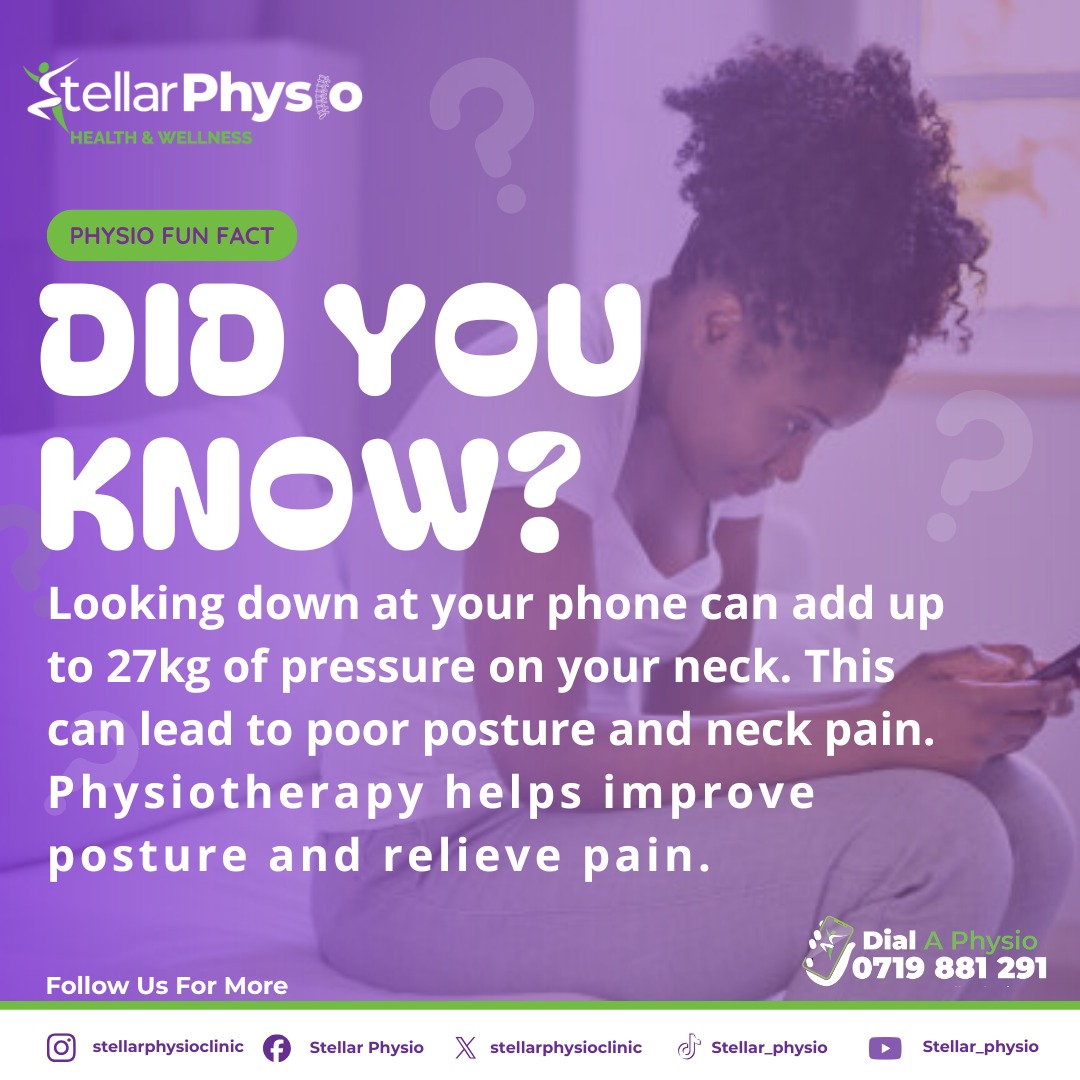
Did you know?
Looking down at your phone can put 27kg of pressure on your neck — Text Neck.
Feeling stiffness?
📞 Dial A Physio/WhatsApp: 0719 881 291
📍 Ngong Road | Karen | Parklands
#TextNeck #PostureMatters #NeckPainRelief #Physiotherapy #StellarPhysio
1
1
22


Feb 27
To reach RANKED #1 Ragebait Champion you must annihilate this foids textneck
3
38

Jan 20
🔗yeniakit.com.tr/haber/aman-c…
Aman çok dikkatli olun! “Text neck” tehlikesi her yaşa yayıldı
📌Cep telefonu ve dizüstü bilgisayarların uzun süre yanlış pozisyonda kullanımı, boyun omurlarına binen yükü katlayarak artırıyor. Op. Dr. Mehmet Serdar Balkan, “Text neck ve laptop neck sendromları artık her yaş grubunu t...
#textneck #boyunağrısı #sağlık
2
158

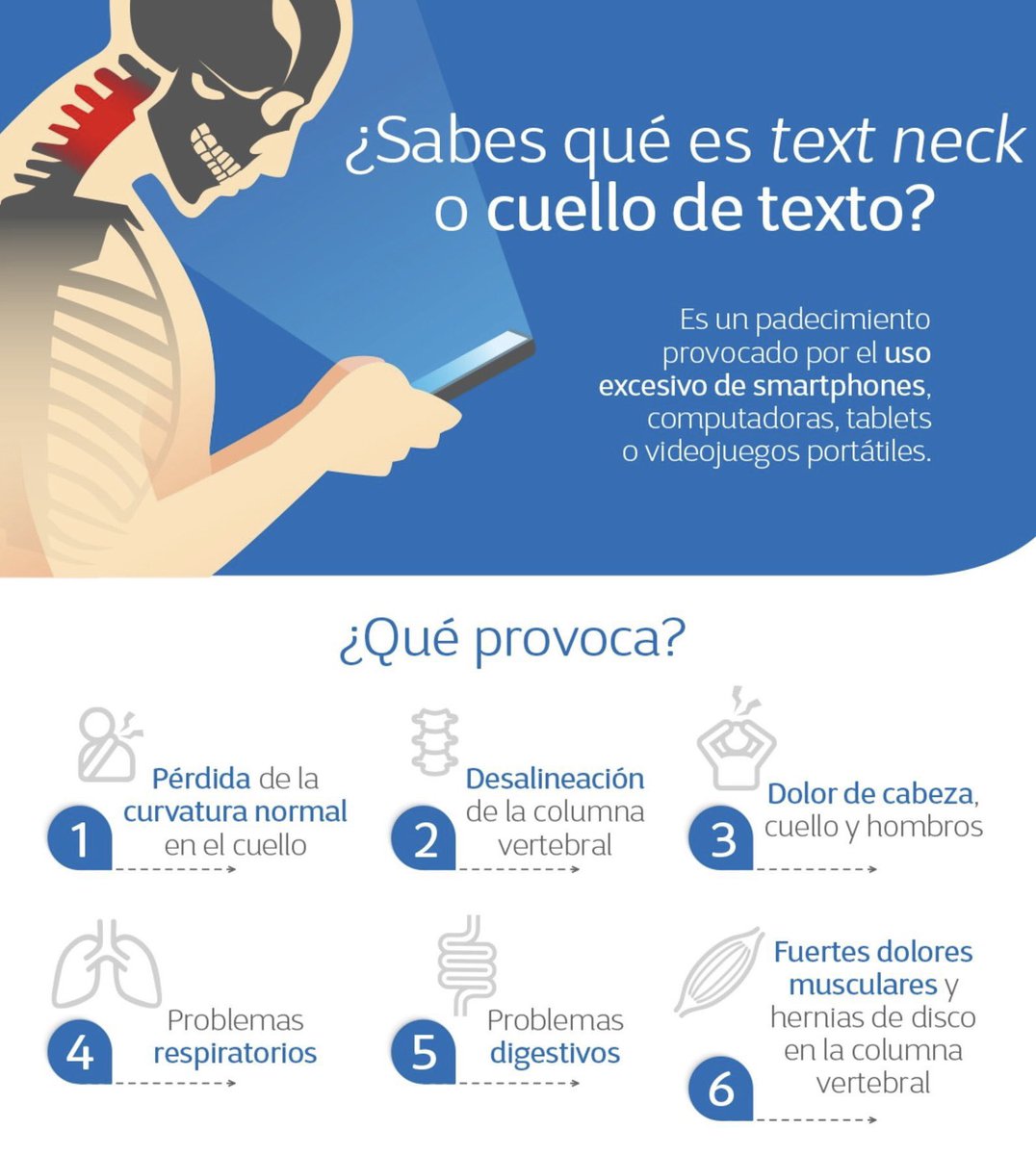
¿Conoces el “Síndrome del #TextNeck”?
Utilizar #DispositivosMóviles aporta un sinfín de comodidades y ventajas, pero su uso prolongado puede ocasionar problemas en la #salud, con consecuencias importantes en la cervical y columna vertebral.
¡Conoce más acerca de este síndrome!
1
2
80

Jan 3
**Yes, I will still be available and respond to y'all!** It's not personal, just like the landline days and bepers! But seriously....
I’m done letting a screen dictate my health and my time! Making changes in how I comm., view, and prioritize my time....
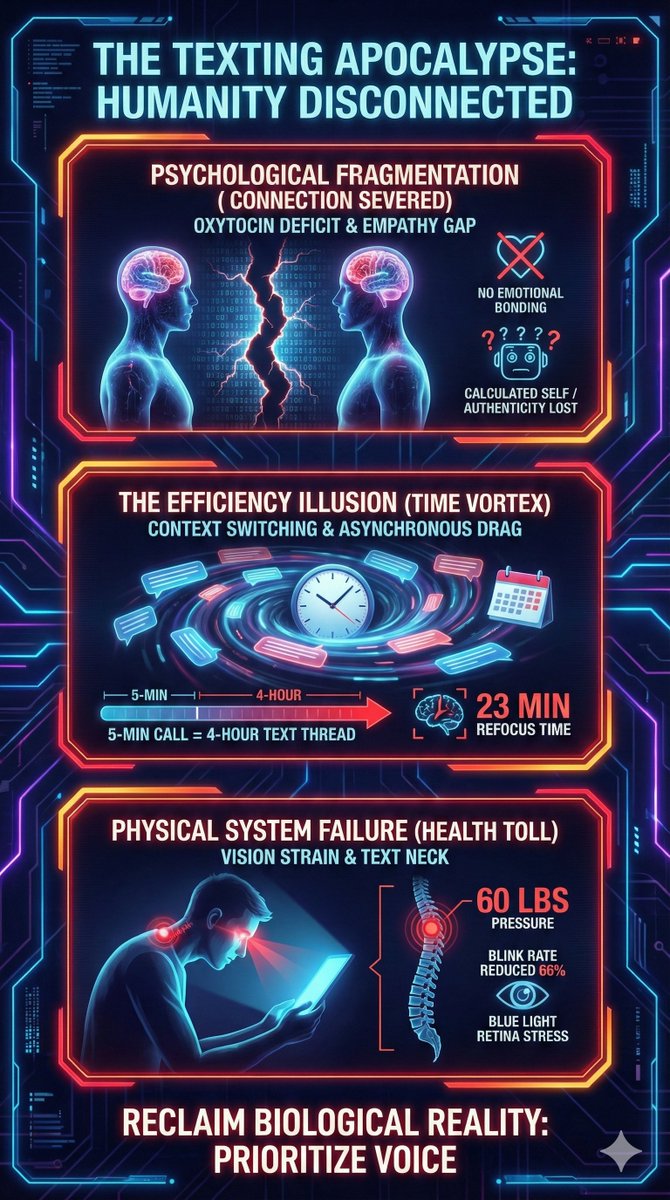
For 1 of my New Year's resolutions, I'm confronting the "Texting Apocalypse." We waste HOURS "context switching" over irrelevant texts that could be a 5-minute call.
We ruin our posture and vision for convenience. Check stats!
Imagine a world where we aren't zombies staring down. That's the world I'm aiming for in 2026. I’m prioritizing the voice!
The facts are alarming. See below 👇
#2026Goals #MentalFocus #TextNeck #ReclaimYourTime #texting
7
13
72
2,664