
كرر مايكل سايلور، رئيس Strategy، قناعته بأن شركته لا يجب أن تكون “بائعاً صافياً” للبيتكوين، حتى في فترات التقلب.
الفكرة بالنسبة له بسيطة: أي عملية بيع محدودة تقابلها عمليات شراء أكبر، بهدف زيادة الحيازة الصافية من البيتكوين بمرور الوقت، وليس تقليلها.
المصدر: TheDavidLinReport
1
12
2,405

Feb 26
▶️ Watch the full interview and gain deeper insight into the subtle, though powerful shifts reshaping the global financial order:
youtube.com/watch?v=30nudpHr…
#GoldInvesting #DeDollarization #MarketShift #SafeHaven #TheDavidLinReport #TheBigLong
2
1,539
Feb 18
📺 Want to understand the bigger picture behind this quiet but historic transition?
▶️ Watch the full, thought-provoking interview here: youtube.com/watch?v=30nudpHr…
Stay curious. Stay informed. 🧠
#MonetaryReset #VRIC2026 #TheDavidLinReport
1
8
1,597
Feb 15
📌Want the complete macro framework and the bigger picture behind this structural shift?
▶️ Watch the full, thought-provoking interview here:
youtube.com/watch?v=30nudpHr…
The tectonic plates are moving slowly, though unmistakably. 🔛
Stay informed. Stay ahead. 🧠
#SoundMoney #AlternativeAssets #FinancialRepression #NewGoldPlaybook #WealthManagement #VRIC2026 #TheDavidLinReport
1
1
5
2,090
Feb 13
🎥 Want the full macro framework and deeper insights into what’s quietly unfolding behind the headlines?
▶️ Watch the complete interview here: youtube.com/watch?v=30nudpHr…
Stay informed. Stay ahead. 🧠
#DebtCrisis #Treasuries #SovereignBonds #SoundMoney #MonetarySystem #MacroTrends #EconomicInsights #VRIC2026 #TheDavidLinReport #InGoldWeTrust #TheBigLong
6
1,854
Feb 10
🖼️ Want the full picture?
▶️ Watch the complete, thought-provoking interview and dive deeper into the forces reshaping the global monetary landscape:
youtube.com/watch?v=30nudpHr…
Stay curious. Stay informed. 🧠
#MacroTrends #InvestmentInsights #MonetaryReset #FiatCurrencies #WealthPreservation #InstitutionalCredibility #TheBigLong #InGoldWeTrust #IGWT25 #VRIC2026 #GoldConference #TheDavidLinReport
1
8
1,844

2 Jul 2025
億萬富翁雙胞胎:不要買房!用租的!【邦妮區塊鏈】feat. @GrantCardone @garycardone @TheDavidLinReport youtu.be/Bpxqj7w1pRQ?si=X8ON… via @YouTube
2
5
18
10,512

24 Sep 2024
Catch up with the full conversation and even more insights on TheDavidLinReport Podcast here: youtu.be/Vx4p3X-ZpYs?si=bgHA…
1
141
24 Sep 2024
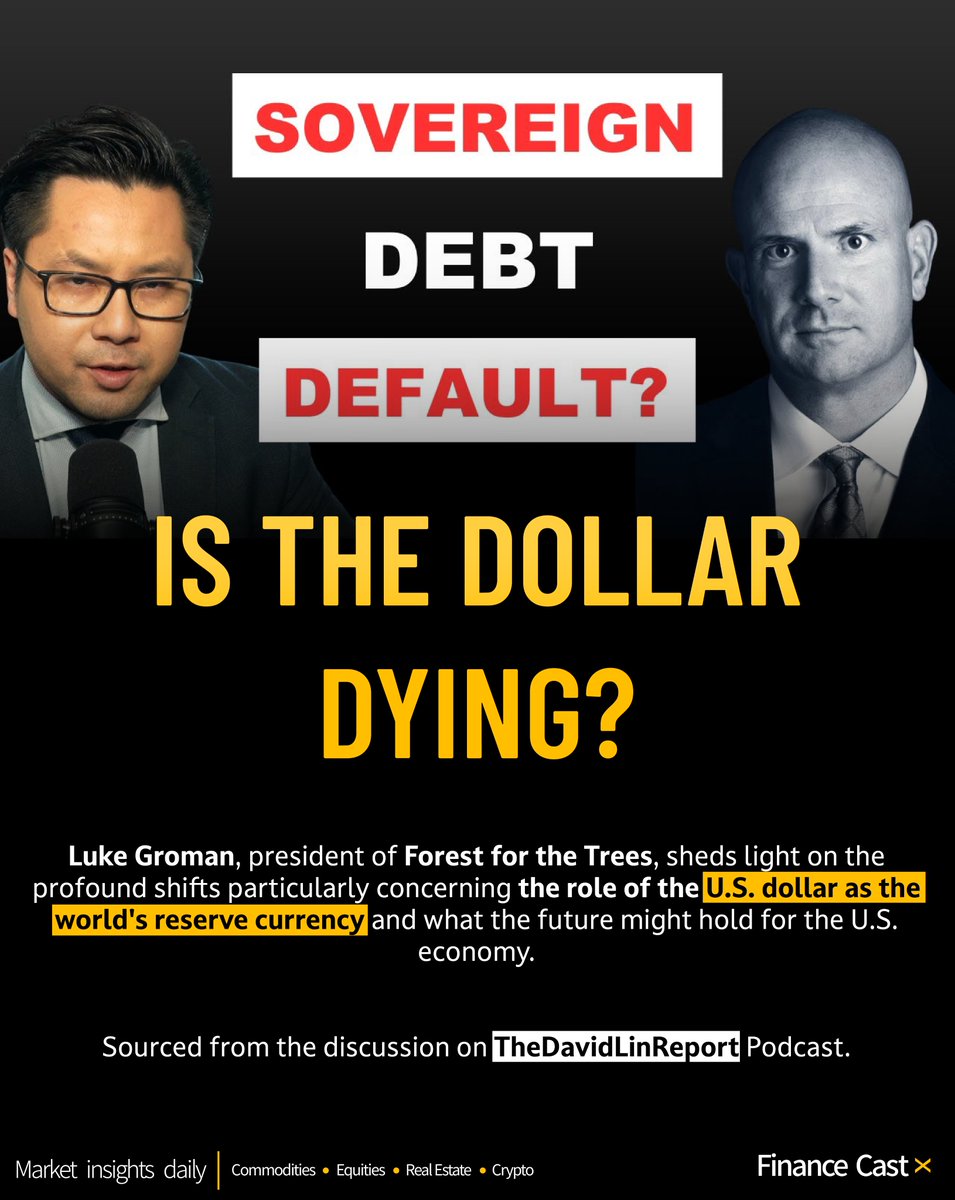
U.S. Can ‘No Longer Afford Debt’: Only One Way To Avoid Biggest Default In History
• Sovereign Debt Crisis
• End of Dollar Dominance
• Triffin Dilemma
Luke Gromen hosted by David Lin
(5min read) 🧵
In an era where economic stability often hinges on the delicate balance of fiscal policies, international trade, and monetary systems, Luke Gromen (@LukeGromen), Founder and President of Forest For The Trees, offers a sobering analysis of what might be the United States' most significant economic challenge yet.
His insights, shared in a recent video interview on TheDavidLinReport Podcast (@davidlin_TV), paint a scenario where the U.S. could be on the brink of an unprecedented financial crisis due to its overwhelming sovereign debt.
1. The Looming Shadow of U.S. Debt
The United States has long enjoyed the privilege of its currency being the world's reserve currency, allowing it to accumulate debt with fewer immediate consequences than other nations might face.
However, Gromen warns that this era might be nearing its end.
With the national debt ballooning past $35 trillion, the U.S. finds itself in a precarious position where the traditional methods of managing debt, like keeping real interest rates negative, are becoming unsustainable.
This approach, while temporarily staving off default, systematically erodes the dollar's value, pushing the nation toward an economic precipice.
2. The Triffin Dilemma and Its Repercussions
The core of the issue lies in what economists call the Triffin Dilemma.
When a national currency like the U.S. dollar also serves as the global reserve currency, the issuing country faces a paradox.
It must supply enough of its currency to meet global demand for reserves, yet this can lead to trade deficits and increased debt, which might eventually undermine the currency's value.
Gromen articulates that this system, which has underpinned global finance since the early 1970s, is showing signs of irreversible strain.
3. A Global Shift Away from the Dollar
The interview underscores a pivotal shift in global financial strategies.
Central banks around the world are not just holding onto dollars anymore;
they're diversifying.
The move towards gold and away from U.S. Treasury bonds indicates a loss of confidence in the dollar's long-term stability.
Moreover, nations like China and Russia are pushing for de-dollarization in commodity markets, aiming to conduct trade in their own currencies or gold, thereby reducing the omnipresence of the dollar in international transactions.
4. The Dire Need for a New Financial Architecture
Gromen's solution to this looming crisis isn't about tweaking the edges but fundamentally restructuring the global financial system.
The U.S. might need to consider a transition from being the world's banker to adopting a more pluralistic approach where multiple currencies share the stage.
This shift, however, requires not just economic adjustments but a geopolitical realignment, challenging decades of established financial norms.
Conclusion:
Facing the Inevitable
The conversation with Luke Gromen isn't just about economic theory; it's a wake-up call.
The U.S. stands at a crossroads where continuing down the path of unchecked debt accumulation could lead to the largest default in history.
Conversely, embracing change, albeit painful and complex, could pave the way for a more balanced and sustainable global economic system.
As the world watches, the decisions made by U.S. policymakers in the coming years will not only determine the economic fate of America but also shape the contours of global finance for generations to come.
The challenge is enormous, the stakes are high, and as Gromen suggests, there might indeed be only one way to avoid the biggest default in history—a complete rethink of how the world does finance.
1
3
7
3,989
14 Sep 2024
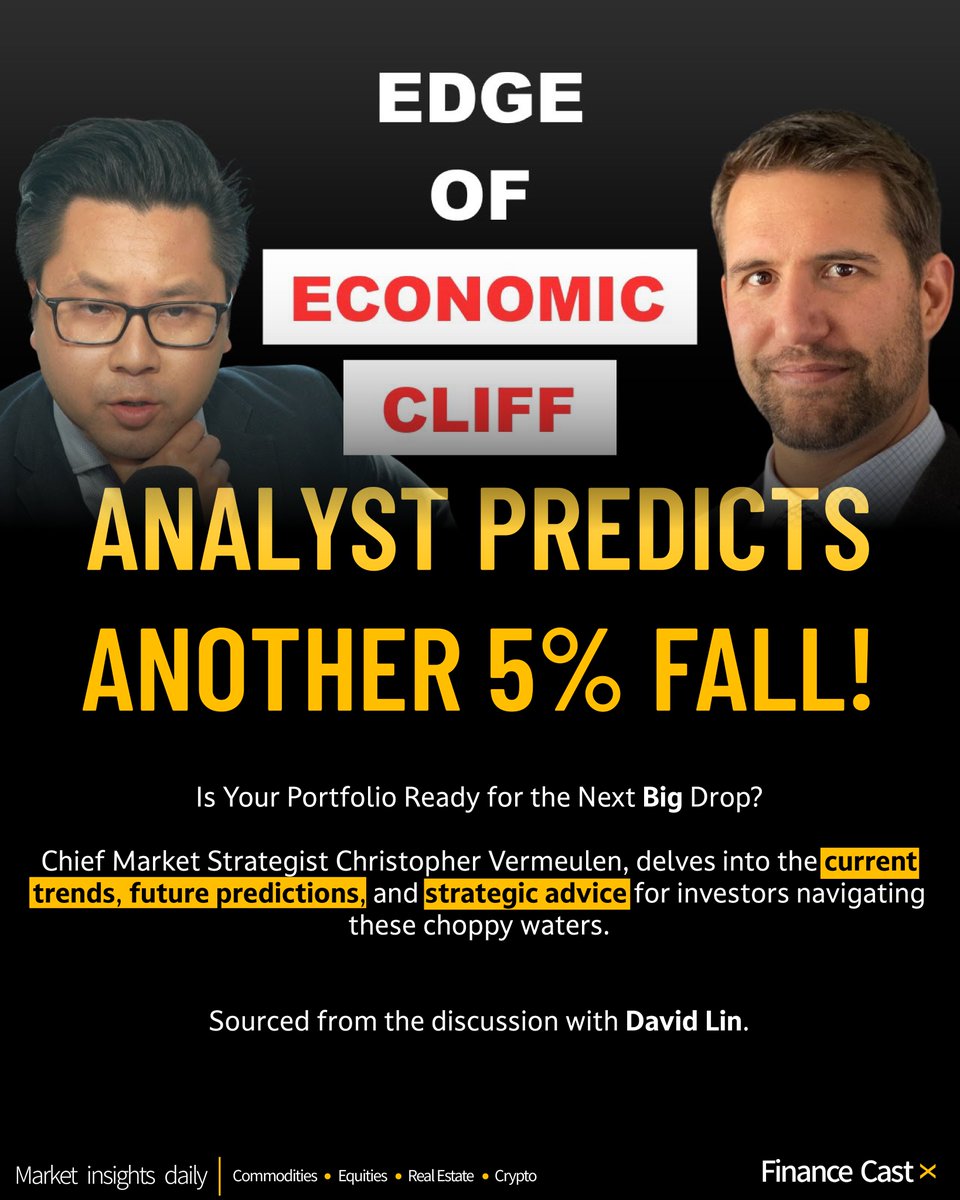
Navigating Through Economic Turbulence | Chris Vermeulen
(5 in read) 🧵
The financial landscape as of September 12, 2024, presents a complex picture characterized by market volatility, shifting investor sentiment, and economic indicators hinting at potential downturns.
This report, guided by insights from Chief Market Strategist Chris Vermeulen (The Technical Traders) on TheDavidLinReport Podcast, delves into the current trends, future predictions, and strategic advice for investors navigating these choppy waters.
Current Market Trends
Stock Market Movement:
- S&P 500: Experienced a decline of 1.4%, reflecting investor caution.
- NASDAQ: Saw a drop of 1.1%, influenced by tech sector sensitivity to economic forecasts.
- Treasury Yields: Have declined, suggesting a move towards safer investments.
- Gold and US Dollar: Remained relatively stable, with gold acting as a traditional safe haven.
- CPI Data Reaction:
Inflation rose by only 0.2%, leading to an annual rate of 2.5%, which was lower than expected. This has recalibrated expectations for Federal Reserve actions, with a consensus leaning towards a modest 25 basis points rate cut instead of the previously hoped-for 50 points, causing market disappointment.
Market Predictions
Short-term Outlook:
Vermeulen predicts another 4-5% drop in stock indices, suggesting that despite these downturns, the major uptrend might not be over for the S&P 500.
Economic Indicators:
Rising unemployment and decreasing job openings are red flags for a potential recession, influencing market sentiment negatively.
Sector Analysis
- Equities: Currently struggling, with indications pointing towards a sharper correction.
- Bonds: Bullish sentiment as they are likely to perform well in a declining stock market environment.
- Gold: Positioned as a defensive play, expected to surge to $2700/oz before any significant pullback.
- Silver: Exhibiting mixed signals, behaving more like an industrial metal than a monetary one, which could affect its performance in the near term.
Macro-Economic Context
Interest Rates:
With economic pressures mounting, the upcoming Federal Reserve meeting could see a recalibration of rate cut expectations, potentially stabilizing or further unsettling markets depending on the decision.
Unemployment:
The increase in unemployment rates alongside high credit card delinquencies paints a gloomy picture for near-term economic health.
Investment Strategy Outlook
Vermeulen advises a strategic pivot:
Asset Reallocation:
Investors should consider shifting from equities to more defensive assets like bonds and gold. This move is not just about seeking safety but also about capitalizing on the opportunities these assets present during downturns.
Gold Investment:
Gold's role as a hedge against inflation and market instability is emphasized, with short-term price targets set ambitiously high.
Market Vigilance:
Investors are encouraged to focus on price action and technical analysis over economic data alone, as these provide more immediate insights into market directions.
Conclusion
The current economic environment is fraught with challenges but also opportunities for the astute investor. Christopher Vermeulen's analysis suggests a cautious yet proactive approach:
- Adaptability: Investors must adapt to the changing tides, focusing on sectors and assets that show resilience or growth potential in the face of economic downturns.
- Strategic Patience: While the immediate future might see further declines, the overarching market structure might still support long-term growth, suggesting that panic selling might not be in the investor's best interest.
- Diversification and Defense: A balanced portfolio that includes gold, bonds, and carefully selected equities could provide both defense against downturns and participation in any unexpected recoveries.
In these times of uncertainty, Vermeulen's insights remind us that while the markets may be unpredictable, strategic planning and an understanding of broader economic indicators can guide investors through the storm towards potentially calmer waters.
1
4
136
12 Sep 2024
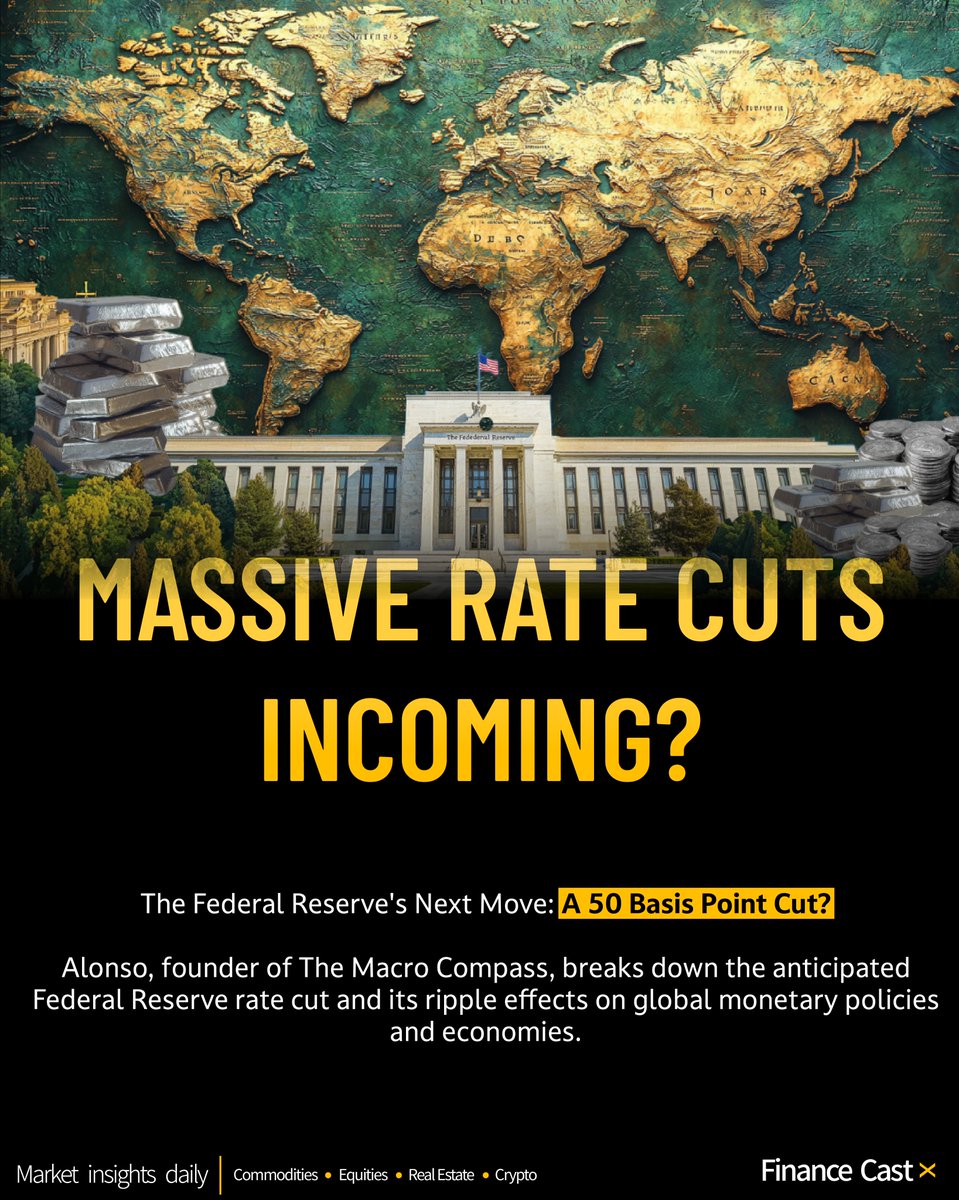
The Federal Reserve's Next Move: A 50 Basis Point Cut?
(4 min read)
In an insightful discussion with Alonso, founder of The Macro Compass (on TheDavidLinReport Podcast), we gain a panoramic view of the global economic landscape as it stands in mid-2024.
This report synthesizes the key economic insights from Alonso's analysis, focusing on China's economic downturn, anticipated actions by central banks, particularly the Federal Reserve, and the resultant shifts in investment strategies.
China's Economic Conundrum
China's economy, once a powerhouse of global growth, now faces significant headwinds. This slowdown is not merely a domestic issue but has far-reaching implications:
Commodity Market Impact:
The decline in China's demand has led to a steep drop in commodity prices, with iron ore plummeting by 39%. This reflects not just a decrease in construction and manufacturing activities but also signals broader economic distress.
Policy Response:
Unlike past strategies, current Chinese economic policies appear to lean towards managed deleveraging, particularly in the real estate sector, without substantial fiscal stimulus. This approach echoes Japan's lost decade In the 90s, raising concerns about long-term growth prospects.
Global Deflationary Export:
As China struggles, its reduced consumption could lead to an export of deflation. Countries like Australia, Brazil, and Canada, which are economically intertwined with China through commodity exports, are at risk of economic contraction.
Monetary Policy Shifts
Federal Reserve:
Amidst signs of economic cooling, the Fed is poised for a significant policy shift. Alonso forecasts a 50 basis point rate cut in September, a move aimed at preempting a deeper economic slowdown. This decision could rejuvenate market sentiment if communicated effectively.
Global Central Bank Responses:
Following the Fed's lead, other major central banks like the ECB, Bank of England, and Bank of Canada are expected to adjust their rates downwards, potentially leading to a global liquidity increase.
Investment Strategy Amidst Economic Shifts
The evolving economic scenario calls for a strategic reassessment.
Bond Markets:
With interest rate cuts on the horizon, bonds in Europe, the UK, and Australia might offer more attractive yields compared to U.S. bonds. Investors are advised to consider these markets for better performance.
Equities and Commodities:
While U.S. equities might see a temporary boost from rate cuts, the broader commodity sector remains volatile. However, specific commodities like silver could present unique investment opportunities due to their historical resilience in times of economic uncertainty.
Sector Focus:
Investors should pivot towards sectors that are less dependent on Chinese demand and more resilient to global economic fluctuations. Technology, renewable energy, and healthcare could be sectors to watch.
Conclusion
As we navigate through 2024, the global economic environment is marked by significant challenges but also by opportunities for those who can read the signs.
China's economic slowdown, while a concern, also sets the stage for a reevaluation of global investment strategies.
The anticipated rate cuts by the Federal Reserve and other central banks might offer a cushion against economic downturns but require investors to be nimble and informed.
Alonso's insights remind us that in times of economic change, understanding macroeconomic indicators and central bank policies is crucial.
Investors who adapt to these changing dynamics, focusing on diversified portfolios with an eye on international bond markets and resilient sectors, might not only weather the storm but could also find paths to growth in this new economic landscape.
1
1
5
1,755

15 Dec 2023
Financial Reset In 2024: ‘Everything Will Sell Off’ Except This > tinyurl.com/34e36kf9
#climatescience #stocks #investing #money #inflation #commodities #silver #gold #TheDavidLinReport #SP500 #crudeoil #Russell2000 $IWM $SPY
1
2
407

5 Sep 2023
Are Violent Market Moves On The Horizon? > tinyurl.com/5n87pvr8
#SP500 #stocks #usdollar #TheDavidLinReport #investing #money $SPY $SSO $SDS $UUP
1
90

24 Jun 2023
How FOMO and Hindsight Kill Profits and Expectations > tinyurl.com/3n6hf4rr
#FOMO #TheDavidLinReport #investing #putcall #SP500 #money #stockmarkets #TheTechnicalTraders
2
42

Joined @davidlin_TV on his #TheDavidLinReport
We talked about a bunch of things, including CBDC, crypto regulation, Bitcoin adoption, monthly Proof-of-Reserve program that we do, and how big banks are getting involved in crypto. Really enjoyed the conversation
Thanks for having me on your new show 😁🤝
31 May 2023

18
12
42
266,140

26 Apr 2023
"If high net worth individuals see that they can get a five handle on that money market fun, you are going to see a continued slow run…"
#TheDavidLinReport
hubs.ly/Q01MST_F0
9
2
47
14,018