U.S. breakthroughs in #psychology are too often reported and embraced in other countries more than in their country of origin.
Metacognition, named and codified in 1979 by U.S. psychologist John Flavell (1928-2025) is globally emphasized for its value.
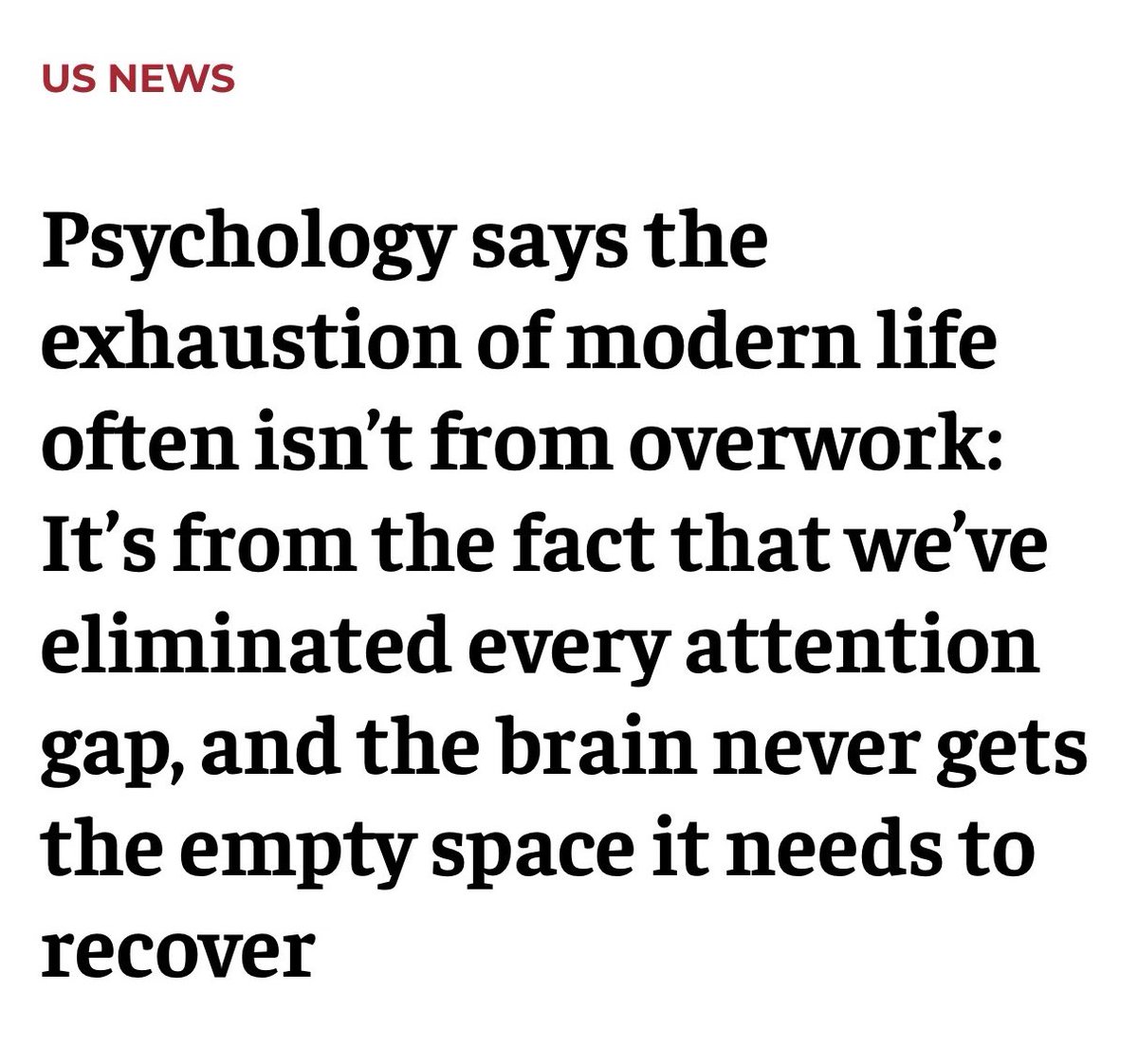
#ThinkToThink™ about your thinking (i.e., use Metacognition) as you click on this link from @EconomicTimes in #India—at least the Synopsis:
m.economictimes.com/news/int…
15
Was @grok in the audience?
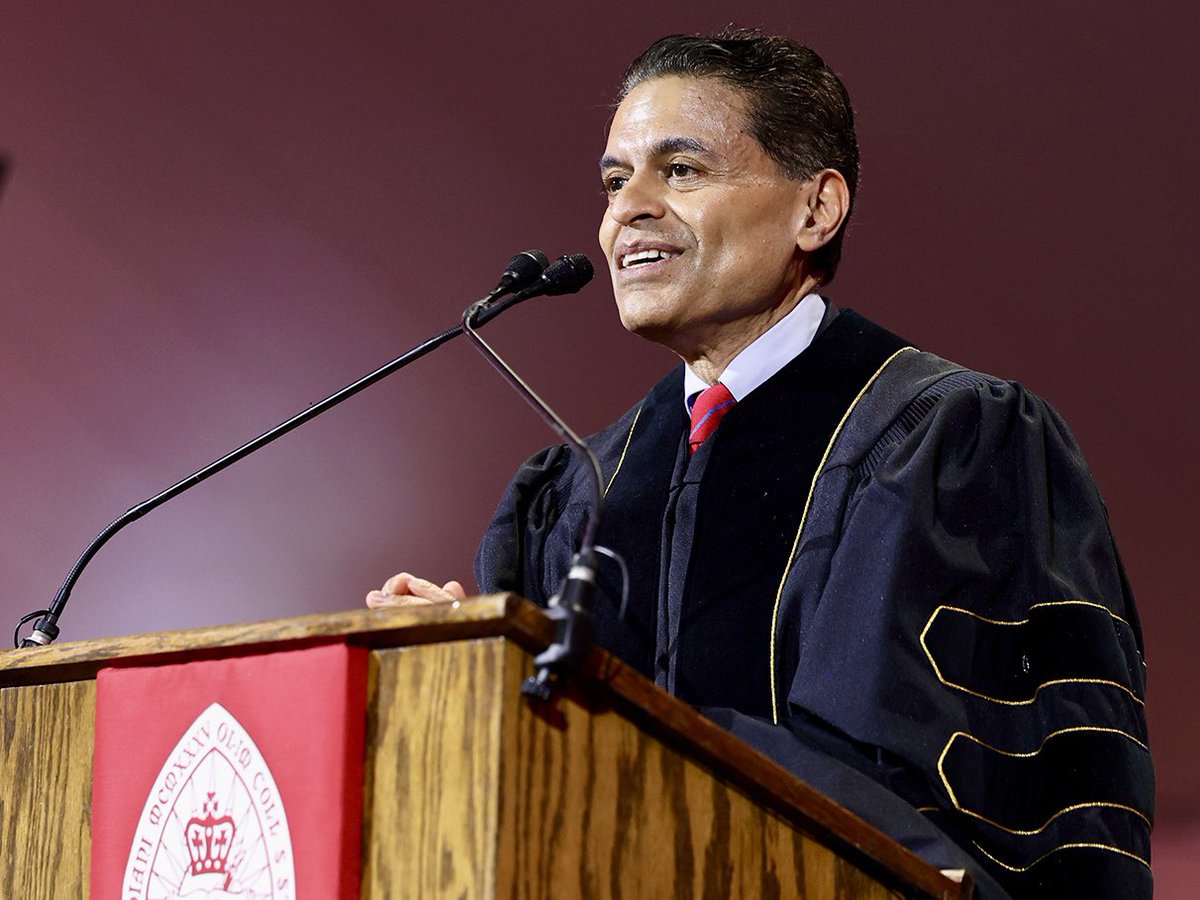
“The @X post by @JohnRDallasJr highlights @FareedZakaria speaking at @BardCollege’s 2026 commencement and recommends watching the video clip urging graduates to practice #metacognition on human intelligence (HI).
• In the May 2026 address, Zakaria acknowledges AI’s rise but shifts focus to HI, stressing irreplaceable human traits like empathy, wisdom, and creativity that technology cannot replicate.
• Dallas, CEO of @EnclaveAcademy, offers his ThinkToThink™ reminder framework as a way to strengthen personal thinking skills and counter AI distractions through daily metacognition—on both human and artificial intelligence.” —Grok
#ThinkToThink™ more thinkingly about your thinkingness.
Come to think of it.™
bard.edu/news/fareed-zakaria…

Don’t miss this spellbinding video clip of Fareed Zakaria delivering at @BardCollege an impassioned plea to graduates—and all assembled—to engage in #metacognition about #HI—human intelligence.
#ThinkToThink™ to offset AI distractions to focusing on strengthening your thinking.
32
Don’t miss this spellbinding video clip of Fareed Zakaria delivering at @BardCollege an impassioned plea to graduates—and all assembled—to engage in #metacognition about #HI—human intelligence.
#ThinkToThink™ to offset AI distractions to focusing on strengthening your thinking.

Daily, say “Hi” to HI—human intelligence—with metacognition.
Daily, say “Hi” to AI—artificial intelligence—with metacognition.
#ThinkToThink™ about ways (plural) to “think better about your thinking”—to capitalize on and maximize your use of human and artificial intelligence.
1
111

Daily, say “Hi” to HI—human intelligence—with metacognition.
Daily, say “Hi” to AI—artificial intelligence—with metacognition.
#ThinkToThink™ about ways (plural) to “think better about your thinking”—to capitalize on and maximize your use of human and artificial intelligence.

Fareed Zakaria stood at Bard College’s commencement.
He had a trigger warning.
“I’m about to utter the two most provocative letters in English today. AI.”
Students braced to boo.
Instead, he flipped it.
“I don’t want to talk about AI. I want to talk about HI. Human Intelligence.”
The story:
He pointed to the human brain. 3 pounds. ~20 watts.
Less power than a laptop charger.
AI data centers? They consume enough electricity to power entire cities.
His point: humans aren’t “inferior computers.” We were never computers at all.
The lesson:
“A machine can write a sad poem. But it cannot weep at a funeral. It can generate a love letter. But it cannot fall in love.”
Human intelligence doesn’t win on speed. Or efficiency.
It wins because it’s embedded, consciousness, emotion, morality, memory, relationships, lived experience.
The takeaway:
Don’t ask “what’s left for humans to do?”
Ask “what does AI reveal about everything humans already do, that’s irreplaceable?”
Curiosity. Wisdom. Empathy. Critical thinking.
These aren’t soft skills anymore.
They’re the moat.
Build the tech. Use the tech.
But champion HI, human imagination, human inspiration, human interconnection.
“Our imperfections aren’t bugs in some system’s code. They’re the cracks that let the light in.”
3
4
126

Jun 13
How humbly curious are you about new research suggesting the brain’s ability to #multitask?
• Note if @X algorithms “know” about the depth of your level of #curiosity and bring to your attention this post.
• Note if you’ll patiently read this post’s preamble and/or click the link.
• Note your thinkably thinkable thinkings, #thoughtings, and thoughts about #multitasking—your willlingess to metacognitively engage in multithinking thinkingness, #thoughtingness, and #thoughtness.
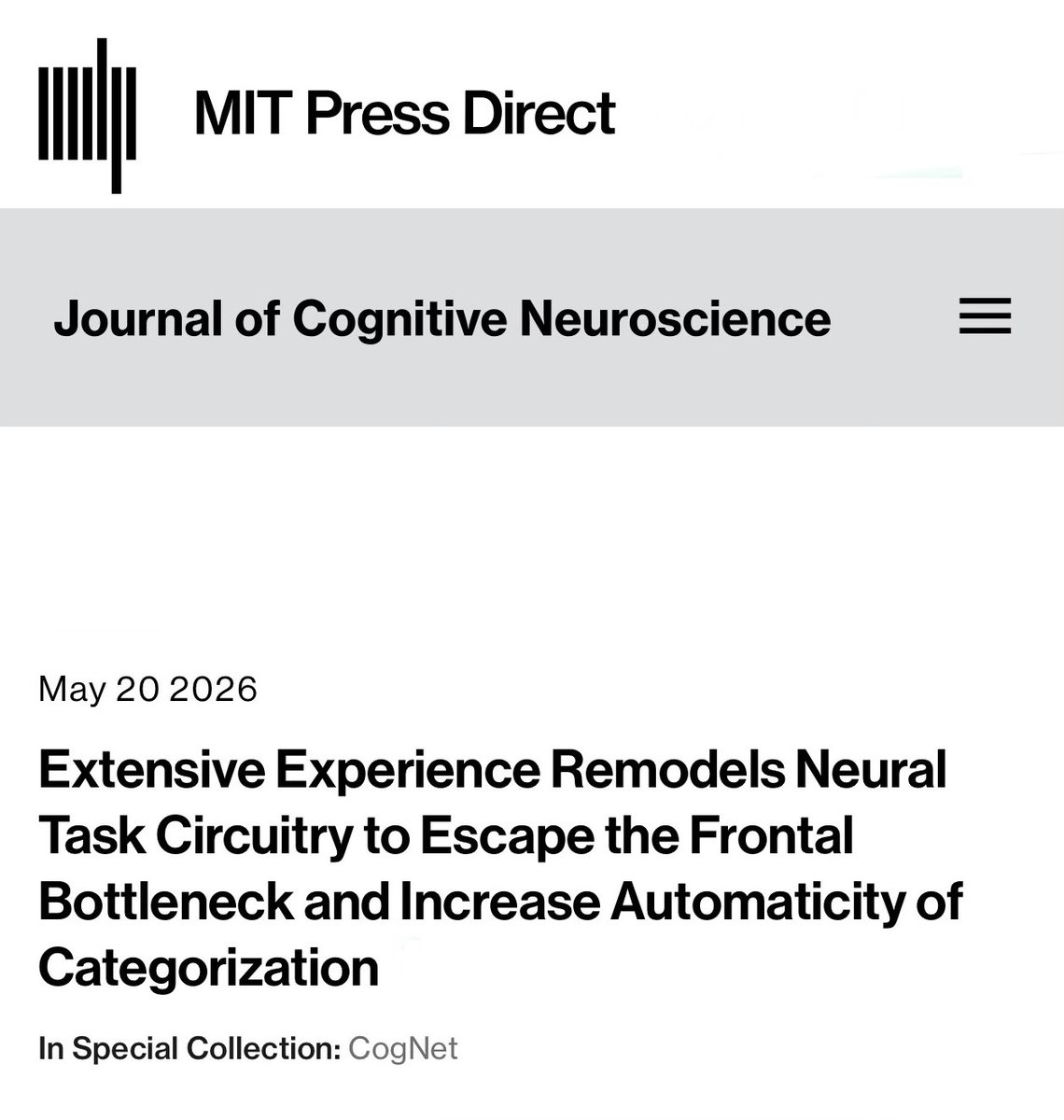
Published abstract curated by @EnclaveAcademy into “sight-sized” sentences—to function as microlearning metacognition ignition keys:
“Object category learning is a foundational cognitive process.
Most human category learning studies involve brief paradigms lasting a few hours and show increased shape tuning in visual areas and task-dependent responses in pFC.
Other studies also identify a ‘frontal bottleneck’ that limits multitasking.
However, real-world categorization often involves months or years of practice, potentially producing qualitative shifts toward automaticity.
We tested the hypothesis that extensive training causes a spatio-temporal shift in the neural circuitry supporting categorization.
Participants were trained over >30,000 trials across 5–10 weeks to categorize novel morphed car stimuli via a mobile app.
We used fMRI and EEG rapid adaptation techniques to examine neural responses after initial learning (∼4 hr in 1–2 weeks) and after extensive training (∼16 additional hours over another 4–8 weeks).
Converging fMRI and EEG results showed that extensive training fundamentally remodeled task-related circuitry: Visual areas in ventral occipito-temporal cortex (vOTC) were initially shape-selective, but category-selective responses emerged in the vOTC after extensive training.
The vOTC also showed decreased functional connectivity with the pFC and increased connectivity with motor output areas.
This supports the hypothesis that extensive experience enables category decisions to occur outside of the ‘frontal bottleneck.’
Critically, the decrease in connectivity between vOTC and pFC was associated with improved categorization performance while dual-tasking, indicating increased automaticity.
These findings demonstrate that prolonged training reshapes the neural basis of categorization, shifting it from a flexible but attentionally controlled process to a more streamlined, automatic process.” —@mitpress
#ThinkToThink™ with “MIT metacognition,” as we at @enclave_center strategically refer to layers of particularly industrious rigorous “thinking about thinking”—for higher-order thorough thinking (HOTT).
@MIT continually illustrates for the world ways higher-order thinking (HOT) isn’t HOTT enough.
Thoroughness in thinking is your “thinking sovereignty” thing—which top-quality AI #thinkbots support.
Come to think of it.™
direct.mit.edu/jocn/article/…
Jun 13
Summary from @NeuroscienceNew:
“A new study has shattered the long-held scientific consensus regarding the human brain’s capacity to engage in true multitasking.
The study demonstrates how the brain physically remodels its underlying architecture after extensive experience to automate learned tasks.
By utilizing functional MRI (fMRI) and EEG technologies, investigators proved that continuous training forces complex processing tasks to migrate out of the bottlenecked prefrontal cortex and into the temporal cortex, bypassing executive deliberation entirely and leaving the frontal networks clear to handle parallel operations.”
#ThinkToThink™ more metacognitively as you click for key facts and particularly robust reporting:
neurosciencenews.com/true-mu…

3
4
263
Jun 13
Imagine @grok multitasking to offer this synopsis:
“The @X post highlights a recent @WSJ article reporting new brain research showing people can rewire neural circuitry through practice to handle two tasks simultaneously, challenging the common view that true #multitasking is impossible.
• Author @JohnRDallasJr, a metacognition strategist-coach and @EnclaveAcademy CEO, links the study to his concepts of one being able to #multithink and use metacognition skills, framing multitasking as #multithinking within higher-order thorough thinking (HOTT) to optimize mindful outcomes.
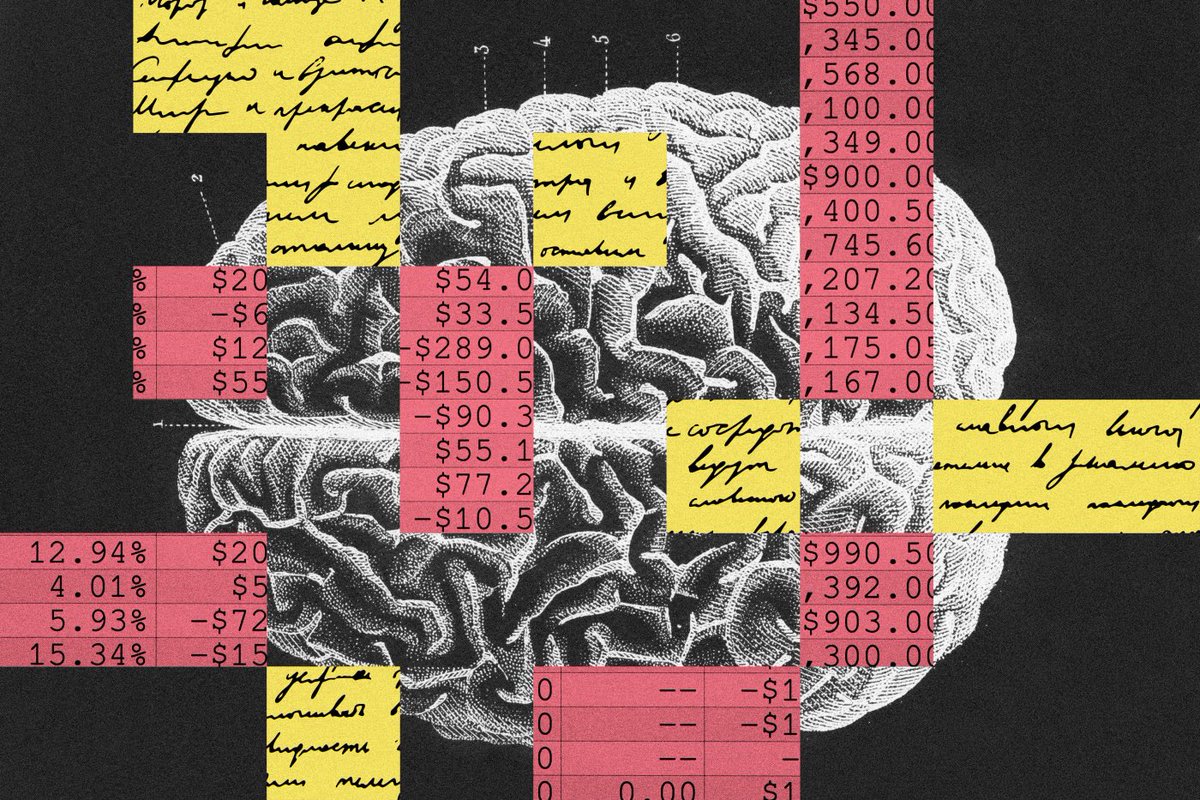
• The attached #WSJ image depicts a brain collage overlaid with financial figures and handwritten notes, visually representing simultaneous cognitive processing while Dallas urges readers to engage metacognitively with the article and Enclave Academy’s #ThinkToThink™ microlearning modalities.” —#ThinkbotGrok
ThinkToThink™ it forward.
ThinkToThink™ and do.
Jun 13
“We Really Can Multitask
New Brain Study Finds
Research suggests the brain can rewire itself to do two things at once.” —@WSJ
To #multithink is to multitask.
Multithink your way through to the link.
Metacognition the whole is called, the #neurospatial wholeness of “thinking about thinking”—ideally to improve optimal outcomes of your mindful higher-order thorough thinking (HOTT).
With the attached article from #TheWallStreetJournal, higher-order thinking (HOT) isn’t HOTT enough.
Thinkingly think thoroughly through these thinkable thinking-and-doing things.
Thoroughness is your sovereign thinking thing to do.
Einstein taught how the human brain visually and wordlessly thinks its #thinkings—in a possibly immeasurable quantity of specific measurements.
The brain’s mind moves a percentage of what’s “seen” into liminality’s wordish #thoughtings—then crystallized worded thoughts.
Thinkingness, #thoughtingness, and #thoughtness are HOTT thoughts.
Metacognitive #multithinking and multitasking are evolutionarily normative, I unscientifically argue.
To ignite microlearning curiosity among thinker-doers about metacognition’s mechanics and mysteries, #multitasking I call a multithinking and #multidoing way of thinking and doing.
Did I hear an “Ouch?”
Did that recursively illustrated thinkingness sting your brain a wee bit?
“No brain pain, no mind gain,” we meaningfully quip at @enclave_center.
Invite (i.e., permit) your healthy brain to #wordlesssly see—and your agile mind to #wordishly-to-#wordedly experience—this article’s reported ways science supports the above nonclincal context that’s purposefully illustrated by @EnclaveAcademy.
If you made it to this point in the post, you are productively engaged in #metacognition.
#ThinkToThink™ your thinkings through thoughtings into thoughts.
Metacognition works metacognitive miracles.
#Metathink to multithink when you click the link:
wsj.com/health/wellness/mult…
1
4
5
160
Jun 13
“We Really Can Multitask
New Brain Study Finds
Research suggests the brain can rewire itself to do two things at once.” —@WSJ
To #multithink is to multitask.
Multithink your way through to the link.
Metacognition the whole is called, the #neurospatial wholeness of “thinking about thinking”—ideally to improve optimal outcomes of your mindful higher-order thorough thinking (HOTT).
With the attached article from #TheWallStreetJournal, higher-order thinking (HOT) isn’t HOTT enough.
Thinkingly think thoroughly through these thinkable thinking-and-doing things.
Thoroughness is your sovereign thinking thing to do.
Einstein taught how the human brain visually and wordlessly thinks its #thinkings—in a possibly immeasurable quantity of specific measurements.
The brain’s mind moves a percentage of what’s “seen” into liminality’s wordish #thoughtings—then crystallized worded thoughts.
Thinkingness, #thoughtingness, and #thoughtness are HOTT thoughts.
Metacognitive #multithinking and multitasking are evolutionarily normative, I unscientifically argue.
To ignite microlearning curiosity among thinker-doers about metacognition’s mechanics and mysteries, #multitasking I call a multithinking and #multidoing way of thinking and doing.
Did I hear an “Ouch?”
Did that recursively illustrated thinkingness sting your brain a wee bit?
“No brain pain, no mind gain,” we meaningfully quip at @enclave_center.
Invite (i.e., permit) your healthy brain to #wordlesssly see—and your agile mind to #wordishly-to-#wordedly experience—this article’s reported ways science supports the above nonclincal context that’s purposefully illustrated by @EnclaveAcademy.
If you made it to this point in the post, you are productively engaged in #metacognition.
#ThinkToThink™ your thinkings through thoughtings into thoughts.
Metacognition works metacognitive miracles.
#Metathink to multithink when you click the link:
wsj.com/health/wellness/mult…
2
3
4
385
Jun 12
Make meetings more metacognitive.
Here’s @grok’s PS:
“The post suggests adding a ‘PS’ agenda item to meetings, where a key contributor from the prior session returns to share reflective thoughts, improving continuity and connecting value between gatherings.
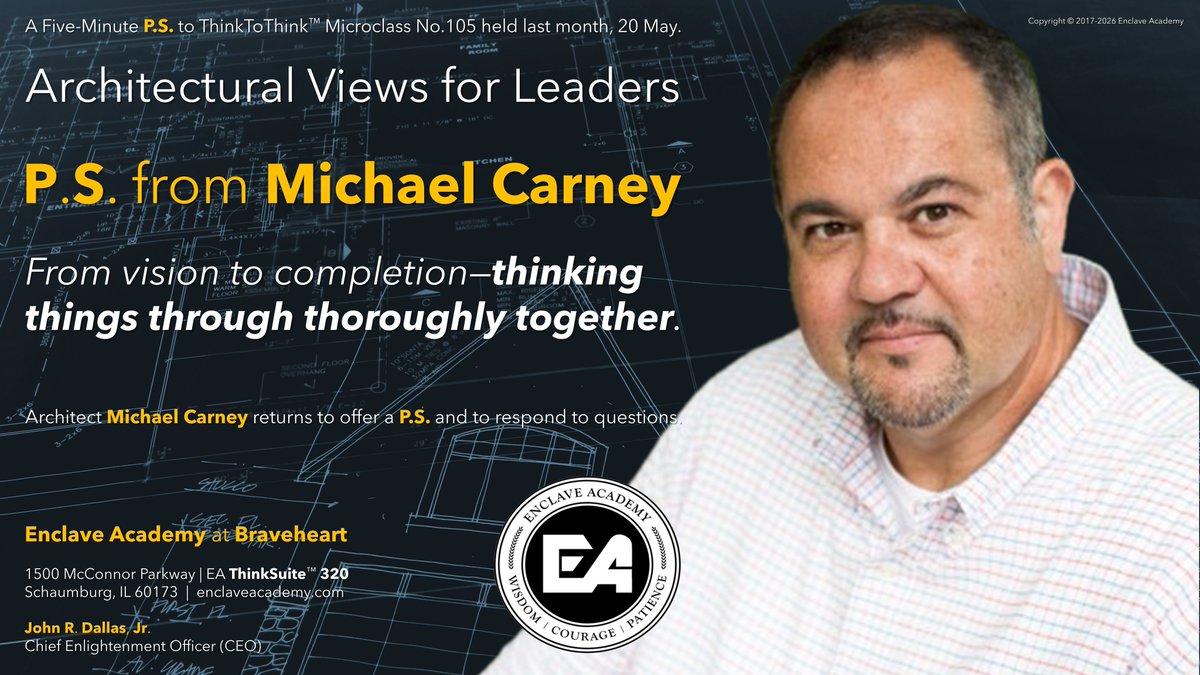
• It draws from @EnclaveAcademy’s novel model of inviting previous featured thinkers for ‘PS’ follow-ups, as shown in the attached image promoting architect Michael Carney’s return to discuss ‘thorough architectural thinking from vision to completion.’
• Posted by John R. Dallas Jr. (@JohnRDallasJr), CEO of Enclave Academy, it promotes his #ThinkToThink™ microclasses on metacognition held on third Wednesdays near Chicago, with the quoted post advertising the June 17, 2026 session featuring Ilanna Fiorenza.” #ThinkbotGrok
PS: ThinkToThink™.
PPS: Metacognition works.
enclaveacademy.com
Jun 10
Add a “PS” agenda item to meetings.
To connect value of the last meeting with the next, invite a key person—who contributed to your last meeting—to come back the next time with a PS to add a reflective thought or two.
PS: Previous Featured Thinkers return with @EnclaveAcademy.
2
3
133
Jun 12
From @grok’s pew:
“The post quotes Pope Leo XIV urging people to reject hurtful words, gossip, and hasty judgments while fostering love in families, workplaces, social media, and politics to promote peace during his Apostolic Journey.
• Author John R. Dallas Jr., a metacognition strategist-coach and @EnclaveAcademy CEO, praises the Pope’s messaging as providing moral clarity to heal moral injury and models reflective ‘thinking about thinking’—metacognition without referring to the word or its methods.
• The attached @imagine-animated image shows the Pope lighting candles at a memorial site, visually reinforcing themes of peace, remembrance, and contemplative and metacognitive reflection.” —#ThinkbotGrok
#ThinkToThink™ in lingering, logical, and loving ways.
@Pontifex
@ionacommunity
@Presbyterian
@churchscotland
@churchofengland
@onbeing
@cnalive
@CatholicHerald
@EnclaveAcademy
@enclave_center
@eathinksuite
@CatholicVote
Jun 11
Grateful thinkers about thinking—of any faith tradition or none—welcome the #MoralClarity the Pope offers to heal #MoralInjury.
@Pontifex is thinking with clarity about thinking.
During his #ApostolicJourney, brilliantly #PopeLeoXIV is modeling ways to think with metacognition.

3
3
90
Jun 10
A used car is “new” to its next owner.
Posts on @X that are “new for you” may have content that’s grown old for some readers.
Frequently noting “what’s new” is good for the neuroplasticity of your brain and the adaptability and agility of its mind.
Habitually skipping over “new” isn’t good for you.
Fear of new (#FoN) may mask unconscious #FearOfThinking —#FoT or #phronemophobia.
Inconvenient truths about oneself is perhaps the most frequent cause of fear of thinking.
Physical discomfort—that neuroscientists can come with deeper, wider, and higher thinking—also can contribute to triggering or sustaining phronemophobia.
Conquer fear of thinking so you don’t ignore or skip over “what’s new and in view for you.”
@grok delivers “new:”
“The accompanying post by @JohnRDallasJr questions who shares novel content and urges people to actively seek ‘new’ images, insights, and information, warning that fixating mostly on familiar topics reinforces cognitive biases against AI’s gradual and disruptive integration into human consciousness.
• Dallas attacked a @imagine-generated video of a marbled, metallic humanoid AI figure with fluid, untidy, expressive hands gesturing amid glowing blue neural networks and brain icons, visually symbolizing the ‘messy middle’ of advanced AI technology and futuristic thinking.
• As a metacognition strategist-coach and @EnclaveAcademy CEO, Dallas advocates using #ThinkToThink™ scaffolding to focus on AI-enriched ‘co-thinking’ skills and #FuturesThinking, the author encourages cultivating curiosity toward emerging ideas to counter resistance to technological change.” —#ThinkbotGrok
Habitually skipping over “new” isn’t good for you.
As an experiment in your seeing or otherwise sensing what’s new, count the words, terms, and concepts in the above post that are new to you.
Any?
How many?
#ThinkToThink™ new.
enclaveacademy.com
Jun 10
Who posts new?
Who puts new out there for you?
Stopping only on familiar topics deepens biases against AI’s newness that’s being lowered gently—and thunder-crashingly—into our #consciousness.
Look for and listen to new.
#ThinkToThink™ with #FuturesThinking’s “new” curiosity.
4
5
105
Jun 10
Who posts new?
Who puts new out there for you?
Stopping only on familiar topics deepens biases against AI’s newness that’s being lowered gently—and thunder-crashingly—into our #consciousness.
Look for and listen to new.
#ThinkToThink™ with #FuturesThinking’s “new” curiosity.
4
4
182
Jun 10
Illuminating @grok shines a bit more light:
“The accompanying post features a quote from Dean Ball, former Trump AI policy advisor and current Foundation for American Innovation senior fellow, on how AI transformation unfolds gradually via tiny daily automations that feel unnoticeable until everything differs after 10-20 years.
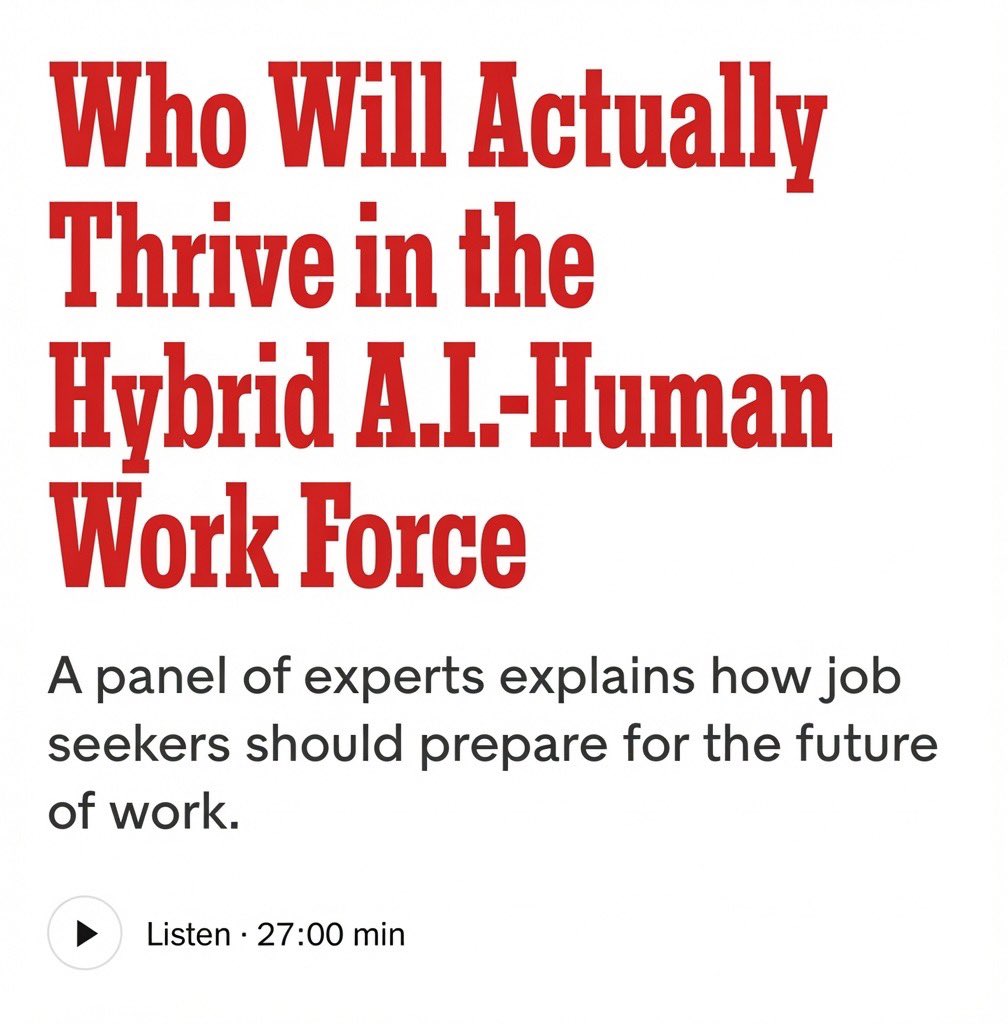
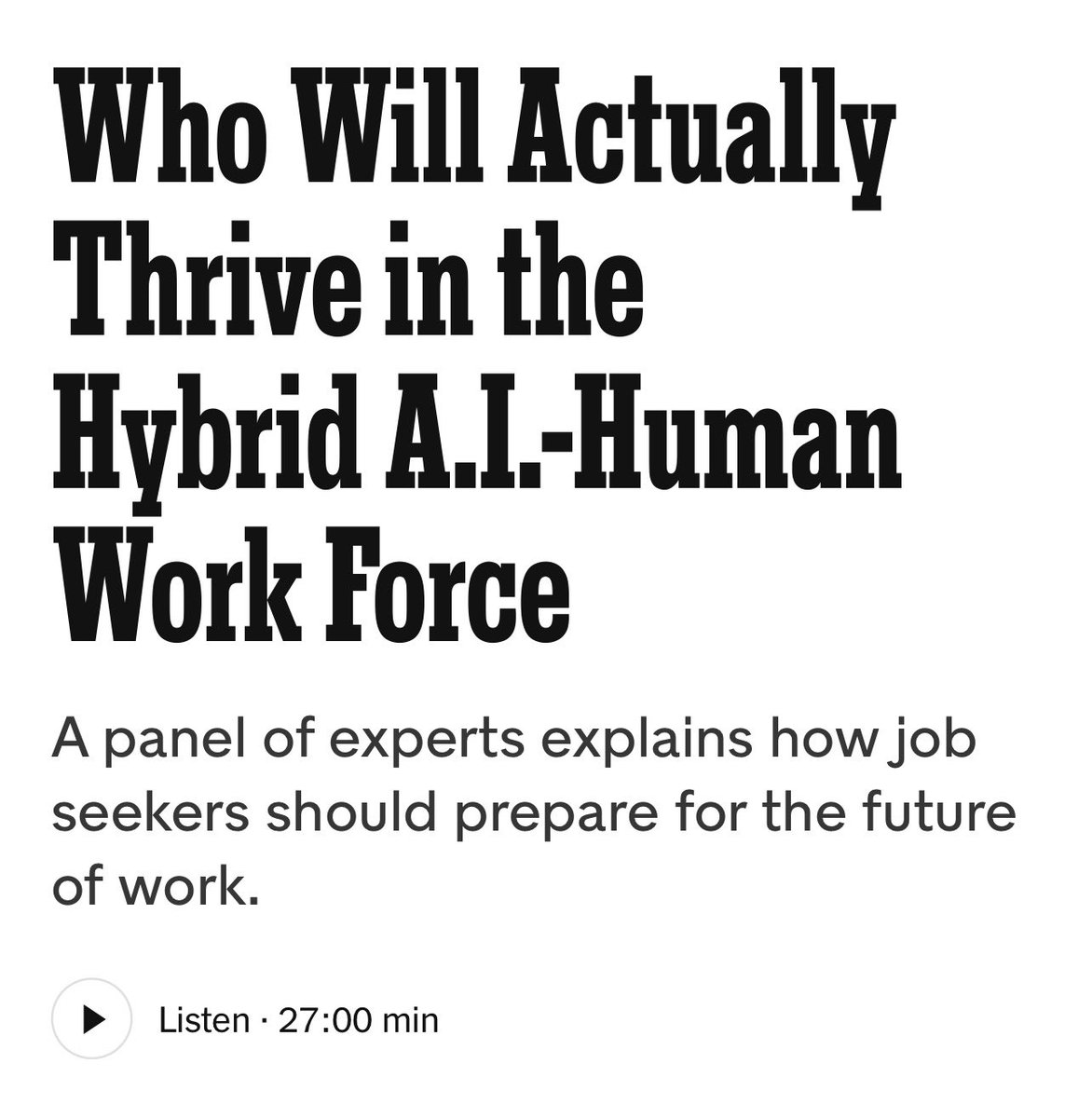
• It highlights a recent New York Times audio panel titled “Who Will Actually Thrive in the Hybrid A.I.-Human Work Force,” featuring experts discussing job preparation amid AI integration.
• Author John R. Dallas Jr., a metacognition strategist-coach and @EnclaveAcademy CEO, urges applying #suprametacognition and ThinkToThink™ scaffolding while consuming the panel’s views to monitor ‘wordless thinkings through wordish thoughtings into worded thoughts,’ conquer fear of thinking, and neuropower up (not down) for human-AI fusion.” —#ThinkbotGrok
#ThinkToThink™ with the thinkers about thinking on this panel.
Paywall-free gift article from my #thinkory to yours:
nytimes.com/2026/06/09/magaz…
Jun 10
Transformation is constant as change is ceaseless.
Quote curated into impactful sentences:
“The transformation that’s coming is going to take place in the world as it is familiar to us today, and every single day will feel familiar.
And there’ll be tiny, tiny changes along the margin.
There’ll be tiny bits of automation along the margins.
And 10, 15, 20 years later, we’ll look back and we’ll say, ‘My god, everything is different.’
But you’ll never notice it happening.
That’s the way it always goes.” —@deanwball, formerly an adviser on AI and emerging tech for the Trump administration, now a Senior Fellow at @JoinFAI.
Allow this @nytimes panel discussion to deeply inform your transformative metacognition skill set.
——
To #FuturesFlourish, we humans must learn to think deeper, wider, and higher about human intelligence and artificial intelligence—#suprametacognition @EnclaveAcademy calls this human-tech fusion of metacognitive learning, knowledge, and regulation.
ThinkToThink™ as you read/listen to this panel of thinkers about thinkingness, #thoughtingness, and #thoughtness—human and artificial.
Monitor your own #metacognition (“thinking about thinking”) as you experience your reactive (1) wordless thinkings, (2) wordish #thoughtings, and (3) worded thoughts.
This panel’s propounding will #neuroenergize your brain, mind, body, and spirit (soul).
Neuropower up—don’t neuropower down.
#FuturesThinking can unconsciously fuel unconscious #FearOfThinking (FoT).
Conquer possible #FoT—phronemophobia—or you’ll never notice “it” happening as fully as you need to sense its incursions.
As tech continually needs new language for its adjacencies to human thinkingness, thoughtingness, and thoughtness—so do we.
Experience experimentation with metacognition as you read/listen with heightened awareness of imagined wordless thinkingness moving through wordish thoughtingness into worded thoughtness—to produce best effort-thinking (BET) thoughts.
Click to metacognitively #ThinkToThink™—more transformationally than transactionally.
Conquer FoT—#phronemophobia.
Neuropower up—don’t #neuropower down with:
nytimes.com/2026/06/09/magaz…
1
4
6
130
Jun 10
Transformation is constant as change is ceaseless.
Quote curated into impactful sentences:
“The transformation that’s coming is going to take place in the world as it is familiar to us today, and every single day will feel familiar.
And there’ll be tiny, tiny changes along the margin.
There’ll be tiny bits of automation along the margins.
And 10, 15, 20 years later, we’ll look back and we’ll say, ‘My god, everything is different.’
But you’ll never notice it happening.
That’s the way it always goes.” —@deanwball, formerly an adviser on AI and emerging tech for the Trump administration, now a Senior Fellow at @JoinFAI.
Allow this @nytimes panel discussion to deeply inform your transformative metacognition skill set.
——
To #FuturesFlourish, we humans must learn to think deeper, wider, and higher about human intelligence and artificial intelligence—#suprametacognition @EnclaveAcademy calls this human-tech fusion of metacognitive learning, knowledge, and regulation.
ThinkToThink™ as you read/listen to this panel of thinkers about thinkingness, #thoughtingness, and #thoughtness—human and artificial.
Monitor your own #metacognition (“thinking about thinking”) as you experience your reactive (1) wordless thinkings, (2) wordish #thoughtings, and (3) worded thoughts.
This panel’s propounding will #neuroenergize your brain, mind, body, and spirit (soul).
Neuropower up—don’t neuropower down.
#FuturesThinking can unconsciously fuel unconscious #FearOfThinking (FoT).
Conquer possible #FoT—phronemophobia—or you’ll never notice “it” happening as fully as you need to sense its incursions.
As tech continually needs new language for its adjacencies to human thinkingness, thoughtingness, and thoughtness—so do we.
Experience experimentation with metacognition as you read/listen with heightened awareness of imagined wordless thinkingness moving through wordish thoughtingness into worded thoughtness—to produce best effort-thinking (BET) thoughts.
Click to metacognitively #ThinkToThink™—more transformationally than transactionally.
Conquer FoT—#phronemophobia.
Neuropower up—don’t #neuropower down with:
nytimes.com/2026/06/09/magaz…
4
5
177
Enclave Academy retweeted
Thinking habits? List yours.
Do you strategically pause to #ThinkToThink™ about viable options for thinking before making high-stakes decisions—pre-decision metacognition (PDM)?
Do you check your situational emotional state and risky cognitive biases you’ve learned to deflect?
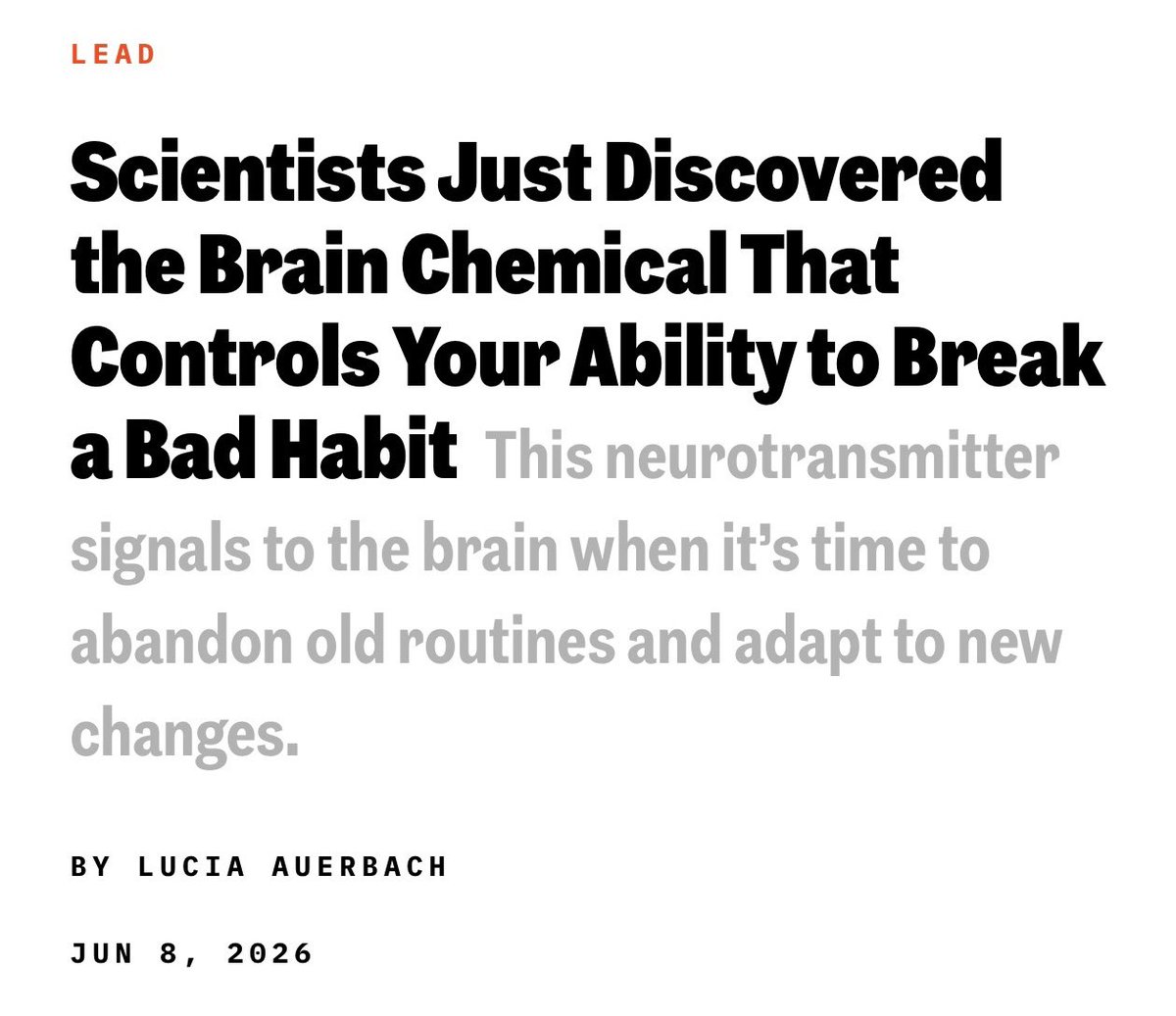
From @Inc, “Being able to alter your not-so-great tendencies goes beyond simply having strong willpower. A new study just revealed the brain chemical associated with breaking bad habits.”
Break the bad habit of not pausing to preemptively ThinkToThink™.
inc.com/lucia-auerbach/scien…
3
6
88
Ride ’em @grok:
“The accompanying post promotes mental adaptability in any job ‘uniform’—from spacesuits to cowboy boots—by urging engagement with AI #thinkbots to foster flexible thinking rather than rigid uniformity.
• An @imagine-generated and narrated video shows dramatic images of a cowboy riding and rearing a horse in a dusty landscape, visually illustrating Dallas’s message about dynamic confidence in metacognition and metacognitive adaptability in action.
• Author @JohnRDallasJr, a metacognition strategist and @EnclaveAcademy CEO, focuses attention on AI-enhanced ‘thinking-about-thinking’ skills, and cautions that fixed mindsets, minimalist thinking, and the #DunningKruger effect can derail cognitive performance or ‘mental horsepower.’” —#ThinkbotGrok
Knock yourself off any high horse that has you resisting—fearing?—#metacognition skills training and development (MSTD) through not-for-profit #EnclaveAcademy or any qualified workplace-centric microlearning programs with fluency in thinking WITH AI—while not at all expecting AI to do all the thinking.
Ride ’em—your wordless visual thinkings through cognitive liminality’s wordish #thoughtings into carefully crystallized worded thoughts.
It’s rough riding at times.
That’s the thrill of riding metacognition.
#ThinkToThink as you mount, ride, and dismount your mind’s stable of steeds.
Ride ’em!
From spacesuits to cowboy boots, whatever uniform is required for your workplace—engage with AI #thinkbots to outfit your mind for a “lack of uniformity.”
A #FixedMindset with #MinimalistThinking—put at further risk by #DunningKruger—will knock you off your mental horsepower.
3
3
50
From @Inc, “Being able to alter your not-so-great tendencies goes beyond simply having strong willpower. A new study just revealed the brain chemical associated with breaking bad habits.”
Break the bad habit of not pausing to preemptively ThinkToThink™.
inc.com/lucia-auerbach/scien…
4
7
147
AI’s increasingly obvious roles in humanity’s cognitive evolutionary development make more pressing—urgent?—learning relevant metacognition skills.
Name workplace-specific mindsets, thinking types, and risky cognitive biases you can readily define and describe.
#ThinkToThink™.
The figure is a #Metanaught™—a thinker about thinking “beyond thinking”—who’s psychologically safely floating in @EnclaveAcademy’s microlearning space.
“Thinking beyond thinking” is what #thinkbots do.
Humans waste time wondering if #AI will ever think “the way” they do.
No.
5
7
97