
figured we'd be able to @ threads by name or at least project. coming soon, or am I just missing something?
currently if I want thread1 in projectA to tell something to thread2 in projectB, I'm contextmenu-copying the session id of the thread2 and giving it to thread1. not ideal

32

Zamfara Banditry: A Thread1/ The oldest known bandit incident in Northwest Nigeria dates to 1901; a trade caravan of 12,000 camels was raided and 210 traders killed. This wasn't new.The land has always had a violent underbelly.But what happened a century later would be far worse
195

#Thread1
@hospaz has commenced its 2026 Membership Coordination Meetings with Mash East members in Marondera
Participants emphasized that #PalliativeCare is for everyone and shared how communities are supporting patients despite resource challenges.
@APCAssociation @MoHCCZim


1
1
7

Zamirahthias retweeted

Thread1/10
Most traders only see the final swap
What they don't see is the work happening behind the scenes to find the best route
That's exactly what @odosprotocol is built for
Why the Solana launch matters and how Odos helps traders get more from every swap
$DOS #Solana #DeFi

7
2
9
284




Jun 10
Learnt this the hard way long back.
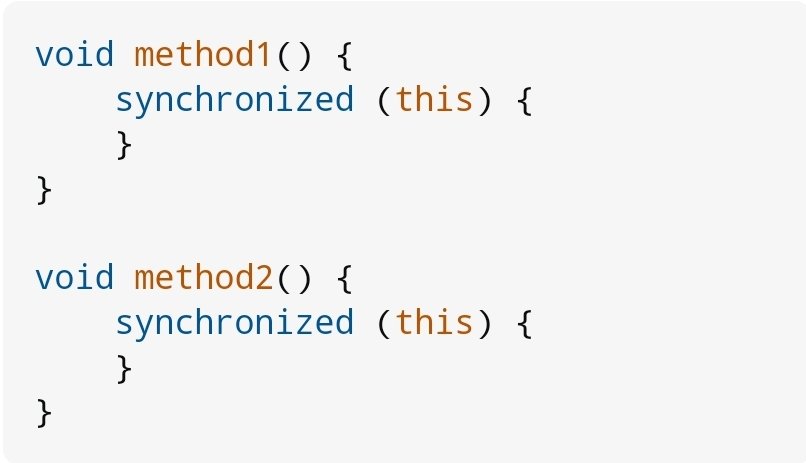
synchronized locks the object instance to a thread. So Thread2 will remain in BLOCKED status even if it enters method2. Once Thread1 releases it, Thread2 will acquire the lock on the object, in this case, "this"
2
176


Jun 10
Yes, they can. Synchronized in Java locks per object instance. If Thread1 holds method1 and method2 is synchronized separately, thread2 can run method2 unless the synchronization shares the same lock. The real complexity emerges when you realize synchronized methods all lock the same object instance (this). So if both are synchronized, thread2 must wait for thread1 to release the lock. Method boundaries don't create separate locks; the object does. Most teams discover this late: they add synchronized to everything for 'safety', then production performance craters under load because all threads serialize on one lock. The cascade effect is brutal, one lock contention point stops the entire application. The fix was atomic operations on primitives, separate ReentrantLock instances for different concerns, and understanding that 'synchronized' is a mutual exclusion strategy, not a universal safety device. Context matters.
2
580

Jun 10
No, not on the same object instance...
Both methods are synchronizing on:
synchronized(this)
which means they use the same monitor lock.
If Thread1 enters:
method1()
and acquires this lock, then Thread2 trying to execute:
method2()
on the same object will block until Thread1 releases the lock...
1
2
417