
May 21
Mary called herself God’s servant, showing us the beauty of humility. St. Alphonsus says, “She never wished for honors, only to serve God faithfully.”
Lord, make us humble like Mary! 🙌
#HandmaidOfTheLord #TrueHumility #MonthOfMary #DevotionToMary #MotherofGod #rkleiden
6

May 14
That is true humility that credits the #testimonyofGod- that believes because He has spoken it- that rests in the #blood and #righteousness and ALL #sufficiency of #Jesus, because He has declared that "whoever believes in Him shall be #saved."
#Winslow #truehumility #faith
34

Mar 28
* Christians have nothing to be smug about;
** we are not righteous people trying to correct the unrighteous.
*** Just one beggar telling another beggar where to find bread.
- R.C. Sproul
#truehumility
#spiritualwarfare
#speakthetruthinlove
1
8

🔯 Name 34/72 — Lamed He Jet
This name teaches us how to break and dismantle our ego. By destroying our arrogant self-importance, it makes room for divine grace and humility.
#Kabbalah #TrueHumility

6


Feb 3
There is no person as strong as the person who realizes how weak, spiritually bankrupt and in need of Jesus they are.
#TrueHumility
11

Jan 29
إِنَّا لِلّٰهِ وَإِنَّا إِلَيْهِ رَاجِعُونَ
News has reached us of the passing of the Great Shaykh Ahmad Bashir ar-Rashidi al-Kindi رحمه الله. It is a loss that weighs heavily on the hearts of many. A shaykh of the Idrīsī ṭarīqah, an embodiment of truehumility and care,

1
10
56
3,518

When you didn’t know you were smarter than
—EVERYONE.
#TRUEhumility.
🤣💅🏾✨
1
1
88



~ God's Faithful Servant ~ Watch
~ mgf ~ #God #WatchThis #TrueHumility #GodBlessPresidentTrump #GodsFaithfulServant #gooddeeds #forthoseinneed #GodBlessAmerica #godblessmelaniatrump #POTUS #MAGA #RealLeadership
~ facebook.com/reel/1777489756…
7
14 Dec 2025
There’s no person as strong as the person who realizes how weak, spiritually bankrupt, and in need of Jesus they are.
#TrueHumility
7

13 Dec 2025
Human Blueprint to Understanding Self: Liberating the Mind from Its Own Confines
Author’s Note: This book weaves philosophical, psychological, linguistic, and societal threads into a framework for self-liberation. Ideas interconnect neutrally, with self-awareness as the escape hatch. Depersonalization detaches ego from thoughts, vulnerability admits limits, and critical thinking shatters the “lexical mind prison”—language’s perceptual cage—unleashing unbiased insight. Practically, it pivots from ego-isolated realities to collective consciousness, birthing self-love, unity, and growth. Concepts collaborate equally for wholeness.
Introduction: The Prison Within
Born into words, we trap ourselves in language’s cage, echoing Nietzsche and Sapir-Whorf: binaries like “success/failure” stifle nuance. Generational traumas breed self-deception, deepening isolation. Self-understanding—cognizant of our full humanity—frees us via depersonalization and vulnerability, dissolving ego biases for interconnected, non-judgmental self-love. Cyclically: awareness detects traps, analysis (via literacies) dissects, action reforms—yielding peace.
Chapter 1: Mapping the Lexical Mind Prison
Language confines: “Us vs. them” divides politics; prosperity myths hide economic decay, per Jameson’s violence. Ideology freezes history, fueling perceptions of corruption. Escape: Self-aware questioning sans ego. Therapy example: Depersonalize family norms (“yelling=love”) as patterns, vulnerably admitting falsity—unleashing humility and ancestral empathy.
Chapter 2: Depersonalization
Thoughts as neutral tools, not ego property—echoing Buddhist anatta, Sartre. Frees collaboration. Apply: Flaws as data. Brown’s shame-sharing: “Not me, but conditioned”—vulnerability blooms. Admit generational anger cycles ego-free; isolation breaks, family seen as strugglers. Yields collective wisdom, bias-cure, compassionate self-love.
Chapter 3: Vulnerability
Admits limits, per Aurelius, Bataille—exposing word-spells’ flaws (“entitlements” divide). With awareness: Truth-tell. Faith healing: Confess “curses” (poverty mindsets) as history, not fate—depersonalized. Self-lies crumble; objective views of struggles emerge. Societally: Admit shared inefficiency for unity, humility, humanity-embraced self-love.
Chapter 4: Critical Thinking and Literacies
Neutral evidence-probing, fused with media/digital/civic skills (e.g., 2025 Florida debates)—surpassing Gadamer/Chomsky limits. Blueprint: Aware, depersonalized use. UNESCO programs: Headline analysis admits echo chambers, collaborates unbiased ideas. Generational: Journal enabling truths, halt lies—escape isolation, honest self-love.
Chapter 5: Self-Understanding
Grasps humanity’s mess, curing prison—Heidegger/Fowles style. Exposes ego-personalization; vulnerability expands. Depersonalize narratives: Nicaraguan sign-language evolves collectively, ego-free. Therapy: “Flawed like lineage”—shatters false realities, sparks empathetic self-love in universal imperfection.
Chapter 6: Unity, Peace, Progress
Synthesis: Awareness humbles, truth-tells division (partisanship) into unity—per peace theories, Anthropoetics. Scales equity, no isolations. Apply: Forums’ vulnerable reforms (inefficiency audits). Family cycle-breakers truth-build legacies; global decolonization connects unbiasedly for peace.
Conclusion: Liberation
Simple profundity: Awareness depersonalization/vulnerability frees lexical bonds for unbiased thought, self-love. Shared humanity escapes ego-realms, fosters unity/progress. Start: Vulnerably reflect on your “word-trap.”
#HumanBlueprint #LexicalMindPrison #SelfLiberation #TrueHumility
2
27

25 Nov 2025
#Be #Nothing: #TheSecret of #SpiritualPower and #TrueHumility #QandA.
📷For donations:
mysticmeditation.com/product…
📷New Islamic App:
nurmuhammad.com/app
l.facebook.com/l.php?u=https…
#SMC #ShaykhNurjanMirahmadi

16

22 Nov 2025
An Illustrative Story on Silence vs. Humility. #SilenceAndHumility
#LessonsOnHumility
#PowerOfSilence
#TrueHumility
#LifeLessons
#WisdomStories
15

18 Nov 2025
True humility isn’t self-doubt—it’s confidence in God’s mercy.
Small in your own eyes. Bold in His grace.
In church, it’s easy to feel pressure.
To perform. To prove.
To be “the prophet on stage.”
But humility says:
“I’m small. He’s big.”
It’s not about your ability—
it’s about His mercy.
God doesn’t need your perfection.
He wants your posture.
Low to the ground.
High in trust.
Stay connected:linktr.ee/codypersell
#FreedomPathways #TrueHumility #CodyPersell #TogetherInBattle #BiblicalAuthority #ConfidenceInMercy #PropheticPosture #ChurchLeadership #SpiritualMaturity
5
9 Nov 2025
Escape the Lexical Mind Prison: Dive Deeper into Narcissistic Behaviors & Path to Freedom 🗝️✨
Concept by Paul Murdock Lindsay II: Our minds, twisted by sin (Biblical Fall), get caged by words—rigid stories that divide, isolate, & feed ego. Narcissism is a core “ego wing”: Inflated self via chants like “I’m superior,” “I deserve more,” or “Others threaten me.” Behaviors include:
• Grandiosity: Word-traps build false superiority, e.g., “I’m the hero” narratives mask inadequacy fears, echoing Eden’s shame.
• Need for Admiration: Constant craving praise as “must-haves,” repeating societal “me-first” lies, pulling from empathy.
• Lack of Empathy/Entitlement: Phrases like “They owe me” exploit others, hardening isolation walls via family-passed “winning at all costs.”
• Manipulation/Envy/Arrogance: Twisting stories to be “victim” or “top,” amplifying sin-stained group-pleasing paths, blocking God-connections.
Compassionately: Shared brokenness, not blame—modern culture amps “status-boosting lies.”
Way Out: Faith-loop powered by God’s grace:
1. Wake Up: Spot traps via Holy Spirit prayer (Job 33:4).
2. Let Go: Release ego-grips as “floating leaves” (Phil 2:7).
3. Open Up: Confess vulnerabilities (Psalm 51).
4. Think Clearly: Challenge biases w/ Bible wisdom (1 Thess 5:21).
5. Know Yourself: Heal in Christ (Gen 1:27).
6. Grow in Peace: Foster empathy/community (Matt 5).
Repeat: Wake → Let Go → Open → Clear → Know → Peace. Narcissism fades to humble love. Pray: “Reveal my traps, guide me out.”
Full paper: Bible-blended escape for authentic self. #LexicalMindPrison #SelfLiberation #TrueHumility
58

11 Oct 2025
#pride,#TrueHumility,#ProverbsChallenge,#WisdomofProverbs
God sees you. And He loves you. The Lord Jesus has marvelous plans for you. Just ask Him. I love you.
*Proverbs 11:2 NASB20 — When pride comes, then comes dishonor; but with the humble, there is wisdom.
The original Hebrew language of Proverbs has pride as arrogance, presumptousness, and insolence. When pride is allowed to be my front man, it is followed by dishonor. Dishonor translates as shame, confusion, and disgrace. None of those things are what I want to experience. Yet I battle personal pride every single day. It's like I want to inflate my importance or image. But with the humble, the modest, there is wisdom. Wisdom here is translated as skill for war, shrewdness, and prudence. Make no mistake, the battle with pride is spiritual warfare.
Philippians chapter two is a beautiful playbook for overcoming pride in this struggle. Taking Jesus as my example, as He existed before His human birth. He was, is, and is to come, Jesus is God. Yet, His example is the perfect example of humility. Jesus set aside His divine rights and took on the form of a servant. In His humility, Jesus executed the will of the Father and defeated hell, death, sin, and the grave. Final word: Philippians 2:3-4 NASB20 — Do nothing from selfishness or empty conceit, but with humility consider one another as more important than yourselves; do not merely look out for your own personal interests, but also for the interests of others. I love you.
1
40

29 Sep 2025
Are we willing to let go of self and say, ‘Lord, I need you’? Let’s pray for a heart that’s desperate for Him. #TrueHumility #ChildlikeFaith #DependenceOnGod
2

22 Sep 2025
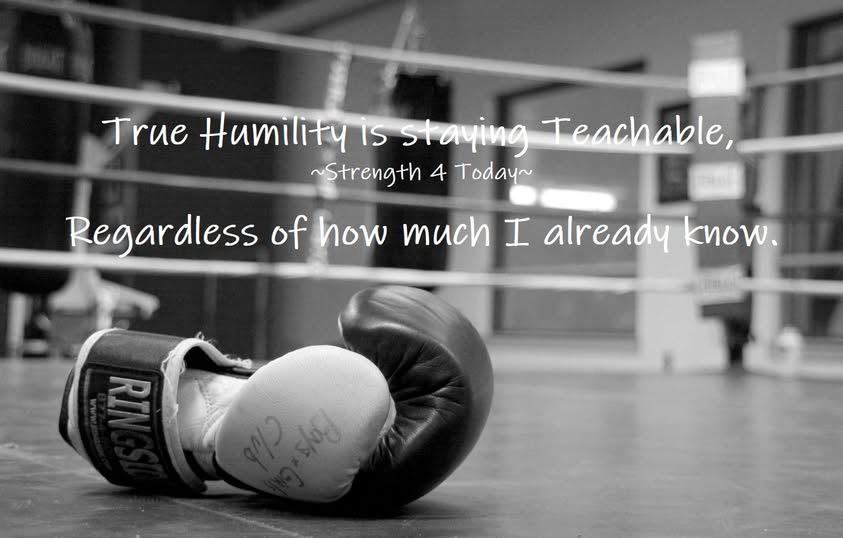
True Humility Is Staying Teachable,
Regardless of How Much I Already Know.
#Humility #Regardless #TrueHumility #Teachable #RecoveryPosse #Strengthfor2day
1
10