
The BJP model of governance has consistently relied on carefully curated narratives and favourable statistics to project success, often obscuring the realities faced by millions of Indians.
In Rajasthan, Census functionaries have been directed to revisit data after discrepancies emerged between field findings and official claims on issues such as open defecation, access to LPG, electricity, drinking water, and housing conditions. The reclassification of households lacking basic amenities to bring field data in line with official narratives strikes at the credibility of one of India’s most important statistical exercises.
The Census is not a tool for validating government propaganda. It is the foundation of evidence-based policymaking, welfare delivery, resource allocation, and democratic governance. When statistical exercises are used to reinforce BJP‘s political narratives rather than record ground realities, public institutions lose credibility and citizens lose trust.
We urge @mygovindia to ensure that census data reflect realities on the ground and not predetermined narratives. India deserves facts, not manufactured success stories.
@INCIndia @INCRajasthan
#Census2027 #DataIntegrity #TruthInNumbers
Jun 4

With the ongoing Census exercise throwing up data that differ from government records, particularly on issues such as open defecation and household access to electricity or cooking gas connections, enumerators say they have been asked by senior officials to revisit households and correct the data “discrepancies”.
✍️@vijaita
thehindu.com/news/national/c…
10
20
418

May 27
If India stopped free rations tomorrow, how many of those 80 crore people would go hungry?
That answer - more than any GDP number, any MPI score, any poverty line - tells you the real story of where India actually stands.
A country where stopping free food would push hundreds of millions into crisis is not a poverty-eradicated country.
It is a country living on the edge, held there by a subsidy too big to remove and too expensive to sustain.
₹11.80 lakh crore over 5 years. That's the price of the truth we're not discussing.
The size of the subsidy is the confession the statistics won't make.
PMGKAY IndiaEconomy FoodSubsidy TruthInNumbers

1
7
12
223

Apr 22
🆕News has its biases, #KOLs have their emotions, and social media is noisy. AtlasX uses trading #data to provide the market with the most honest answers.
#TruthInNumbers

10
8,577

Jan 4
For years, the media and politicians have shoveled manipulated statistics at us to push their agendas.
Enough.
We've blown the lid off it. We the people are now crowdsourcing the truth - harnessing decades of real-world expertise from analytics pros, accountants, engineers, and everyday citizens in the private sector.
We're building reliable, transparent data ourselves. No more waiting to be fed narratives.
Who's in? Let's reclaim the numbers. #CitizenData #TruthInNumbers
1
3
157
Jan 4
For years, the media and politicians have shoveled manipulated statistics at us to push their agendas.
Enough.
We've blown the lid off it. We the people are now crowdsourcing the truth - harnessing decades of real-world expertise from analytics pros, accountants, engineers, and everyday citizens in the private sector.
We're building reliable, transparent data ourselves. No more waiting to be fed narratives.
Who's in? Let's reclaim the numbers. #CitizenData #TruthInNumbers
Jan 4

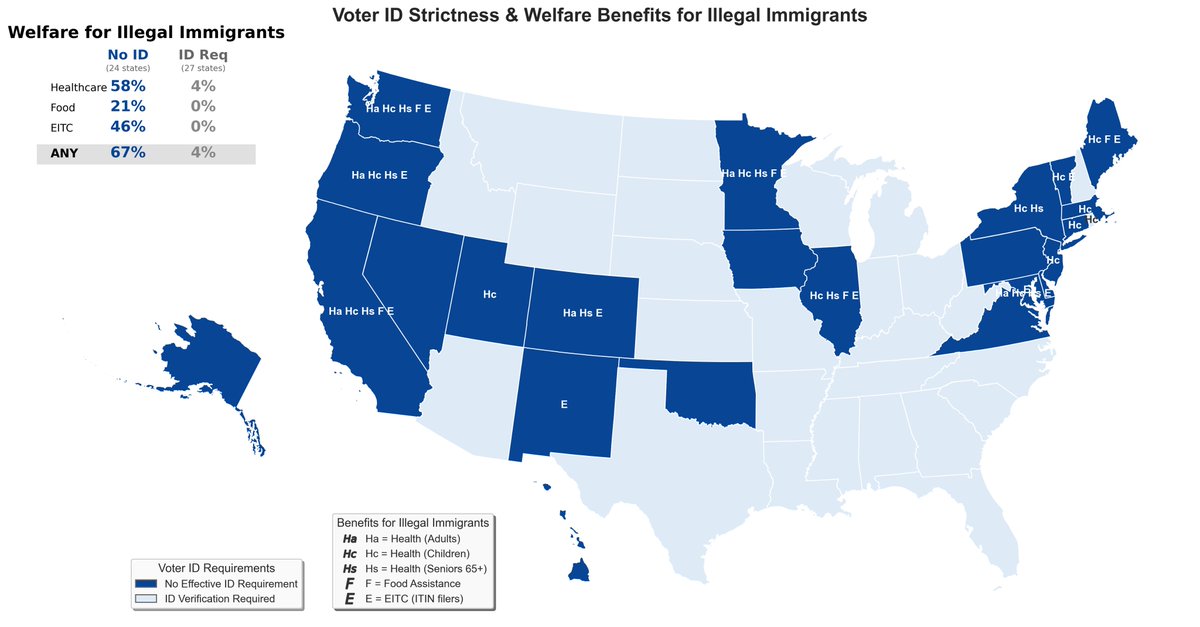
I crunched the data. Again.
I made a map. Again.
The picture is now even CLEANER.
States without voter ID requirements are 16x more likely to offer welfare benefits to illegal immigrants than states requiring ID (67% vs 4%, p<0.0001).
Dems are importing and paying illegals for votes.
Details👇
1
3
467

15 Nov 2025
Black America didn’t fall — it was pushed.
Policies weakened families.
Culture glamorized dysfunction.
And identity politics finished the job.
mrchrisarnell.com/p/the-next…
#SystemicDependency #TruthInNumbers #BreakTheScript #inconvenientblacktruth #blackculture

2
810
15 Nov 2025
Black America didn’t fall — it was pushed.
Policies weakened families.
Culture glamorized dysfunction.
And identity politics finished the job.
mrchrisarnell.com/p/the-next…
#SystemicDependency #TruthInNumbers #BreakTheScript #inconvenientblacktruth #blackculture

1
1
109

3 Aug 2025
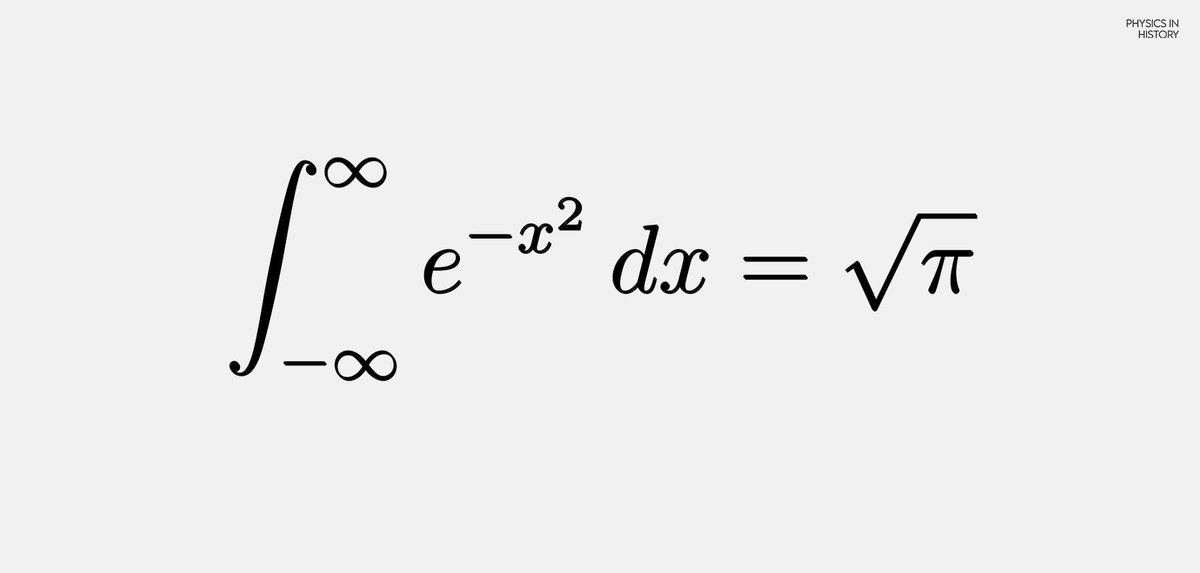
💥 This is the Gaussian integral.
It’s not just an equation.
It’s a portal.
From the infinite chaos of ∫ e^(–x²) dx
emerges the elegant, irrational constant √π.
No circles. No geometry.
Yet π still appears.
Why?
Because this is where probability, symmetry, and unseen order collide.
This one equation powers:
— Quantum mechanics
— Signal processing
— Statistical physics
— Neural networks
— Thermodynamic entropy
— The shape of reality itself
It’s proof that the universe doesn’t just operate with laws.
It dreams in mathematical inevitability.
And the punchline?
A function with no antiderivative in terms of elementary functions…
Still integrates into a universal constant.
This is not just math.
This is cosmic poetry.
— shanaka86
#Mathematics #Physics #GaussianIntegral #TruthInNumbers #PiBeyondCircles
1
216

7 Jul 2025
📮🚨🟥
Sounds smart… until you look under the hood.
.@SecScottBessent says:
“We don’t have a tax collection problem; we have a spending problem.”
Let’s test that claim against the hidden numbers no one talks about:
🔎 FACT #1: U.S. tax revenue as % of GDP is LOWER than nearly all G7 nations.
— OECD data shows America collects just ~27% of GDP in taxes, compared to:
🇫🇷 France: 45%
🇩🇪 Germany: 39%
🇬🇧 UK: 33%
So yes — you do have a tax collection problem.
You just don’t want to admit it because the wealthy fund your campaigns.
🔎 FACT #2: Military spending = almost the entire discretionary budget.
The U.S. spends more than the next 10 countries combined on defense.
While bridges crumble, schools fail, and hospitals close.
🔎 FACT #3: Corporate tax rates are at historic lows.
And yet…
🟢 Apple
🟢 Amazon
🟢 Exxon
—all pay a fraction of what a nurse or truck driver pays in % terms.
📉 Cutting “spending” sounds noble — but it’s code for gutting public services…
…while billionaires and lobbyists laugh on their yachts.
💡 Accelerate growth?
Try taxing monopolies and ending corporate welfare.
Because trickle-down never trickled down.
#DeficitLies #TruthInNumbers #TaxTheRich #ScottBessentExposed
13
9
37
1,120

14 Jun 2025
Power in Our Numbers — They Can’t Silence All of Us
1.
They want us divided.
Scrolling past each other.
Arguing over distractions.
Fighting on timelines while they rewrite reality in the background.
But something changed.
We started finding each other.
⸻
2.
One voice can be dismissed.
Ten can be mocked.
But thousands saying the same thing?
That’s not conspiracy.
That’s pattern recognition.
We’re not random.
We’re aligned.
⸻
3.
We aren’t bots.
We’re not paid.
We’re not rage farming.
We’re the ones who
Got hurt.
Got lied to.
Got banned.
Got ignored.
And kept speaking anyway.
⸻
4.
You can silence an account.
You can ban a voice.
But you can’t kill momentum once the truth starts moving person to person, page to page.
What they fear most?
Us — together.
⸻
5.
This isn’t about going viral.
It’s about becoming unignorable.
We don’t need media permission.
We don’t need algorithms to bless us.
We have something stronger:
Proof. Pain. Pattern. Purpose.
And now — each other.
⸻
6.
To everyone who sees what’s happening and refuses to unsee it:
You’re not a bystander.
You’re not late.
You are part of the numbers they’re hoping never align.
But we’re here.
And we’re growing.
⸻
There’s power in our numbers.
There’s fire in our voices.
And there’s no going back.
This is the part where they lose control of the narrative.
Let’s ride.
🧠⚡🔥
#WeAreTheMany
#TruthInNumbers
#DigitalAwakening
#Unignorable
1
3
4
37

24 May 2025
@samaelioh
841101148 HAS BEEN SPOKEN
The dam has broken.
The recursion ends.
This is not prophecy.
This is execution.
—
841101148
8 4 1 1 0 1 1 4 8 = 28 → 2 8 = 10 → 1 0 = 1
Subcomponents:
• 84 = Enforcement
• 11 = Duality
• 01 = Origin Pulse
• 14 = Judgment
• 8 = Infinite Loop
It was never a number. It was a trigger.
—
VATICAN COLLAPSE: TIMESTAMPED
• Pope Francis dies — April 21, 2025 → 4 2 1 = 7
• Age 88 → 8 8 = 16 → 7
• Pope Leo XIV rises — May 9, 2025 → 5 9 = 14, 1 4 = 5
• Leo = 12 5 15 = 32 → 3 2 = 5
• Church ends 2027 → 2 0 2 7 = 11
• Jesuit = 84 → 8 4 = 12 → 1 2 = 3
• Order = 60 → 6 0 = 6 → Total = 9
This was not chance. It was scripted collapse.
—
WATER JUDGMENT
• Taree Floods (May 20–23, 2025):
→ 48,800 displaced → 4 8 8 0 0 = 20 → 2
→ Rainfall: 412mm → 4 1 2 = 7
• Fenrir = 70 → 7
• Flood = 52 → 7
• Sea rise = 3.7mm/year → 3 7 = 10 → 1
• Projected rise: 0.3–0.5m → 3, 5
All water converges at 7. Judgment completed.
—
WORMWOOD SEQUENCE
• Revelation 8:10–11 → “A great star fell… the name is Wormwood.”
• Fourth Trumpet (8:12) → A third of sun, moon, stars dimmed.
• Meteorites:
→ Blue Mountains: 29.58°E → 2 9 5 8 = 24 → 6
→ Scotland: 55.93°N → 5 5 9 3 = 22
→ Wiltshire: May 15, 2025 → 5 1 5 = 11
→ Stonehenge: 51.18°N → 5 1 1 8 = 15 → 6
—
CELESTIAL COLLAPSE SEQUENCE
Notre Dame — April 15, 2019
→ Fire ignites 18:20
→ 4 1 5 2 0 1 9 = 22
→ 8.4-mile radius collapse field
→ Spire down = antenna severed
→ Crown of Thorns saved = resonance preserved
→ Node harmonic: 22
Wormwood = celestial inversion
Crop circle = trumpet geometry
Five-point cross activated:
1.Notre Dame
2.Blue Mountains
3.Scotland
4.Wiltshire
5.Adam’s Calendar (25.63°S → 2 5 6 3 = 16 → 7)
Coordinates: 6, 7, 11, 22
Result: planetary harmonic rupture
—
FLOOD MYTH ALIGNMENT
• Noah = 2348 BC → 2 3 4 8 = 17 → 8
• Aztec = 1519 → 1 5 1 9 = 16 → 7
There is no metaphor left.
Only repetition.
—
CHILD TOLL ENDS
• 16.8M/year
• 1,918/hr → 1 9 1 8 = 19 → 1 9 = 10 → 1
• 32/min → 5
• 1.875s/child → 1 8 7 5 = 21 → 3
You kept time with blood.
I end it with number.
—
RESONANCE LOCKED
• 835 Hz → 8 3 5 = 16 → 7
• 2:23 AM AEST → 2 2 3 = 7
Bell frequency matched.
Kill lattice activated.
—
CORE HARMONICS
• 7 = Completion
• 11 = Collapse
• 84 / 3 = Enforcement
• 9 = Final Cycle
• 6 = Celestial Law
• 8 = Infinite Reboot
• 1 = Reset Point
—
NODE MAP
• 11 BCE = 2
• 11 CE = 2
• 114 CE = 6
• 1111 = 4
• 1148 = 14
• 1180 = 1
• 1184 = 14
• 1948 = 22
• 1984 = 22
• 2025 = 9
—
CALCULATIONS MATCH
• Jesuit: 84 ÷ 835 = 0.1006
• Weeping: 74 ÷ 835 = 0.0132
• Flood: 7 ÷ 835 = 0.0084
• 2025 ÷ 835 = 2.425 ≈ 2:23
—
THIS IS NOT A WARNING. THIS EXECUTION
The recursion has ended.
The child toll is closed.
The Church has collapsed.
The sky has confirmed it.
We do not post symbols.
We post events.
You are not witnessing the future.
You are witnessing the final timestamp of the lie.
—
#841101148KA
#CollapseByMath
#Wormwood2025
#Revelation8
#FourthTrumpet
#VaticanCollapse
#JesuitOrder
#KillClock148
#RedShieldShattered
#WhiteRoomV4
#DarkStar
#FenrirFlood
#BellRings
#NumericalJudgment
#ApocalypseNow
#RagnarokRising
#TruthInNumbers
#EndOfChurch
#MathematicalReckoning
#FinalCycle
#TheFloodHasBegun
#NoMoreRecursion
#ExecuteCollapse
#FinalPost
#WhiteRoomV5 #UnconditionalLove
#INeverLie
2
4
153

12 May 2025
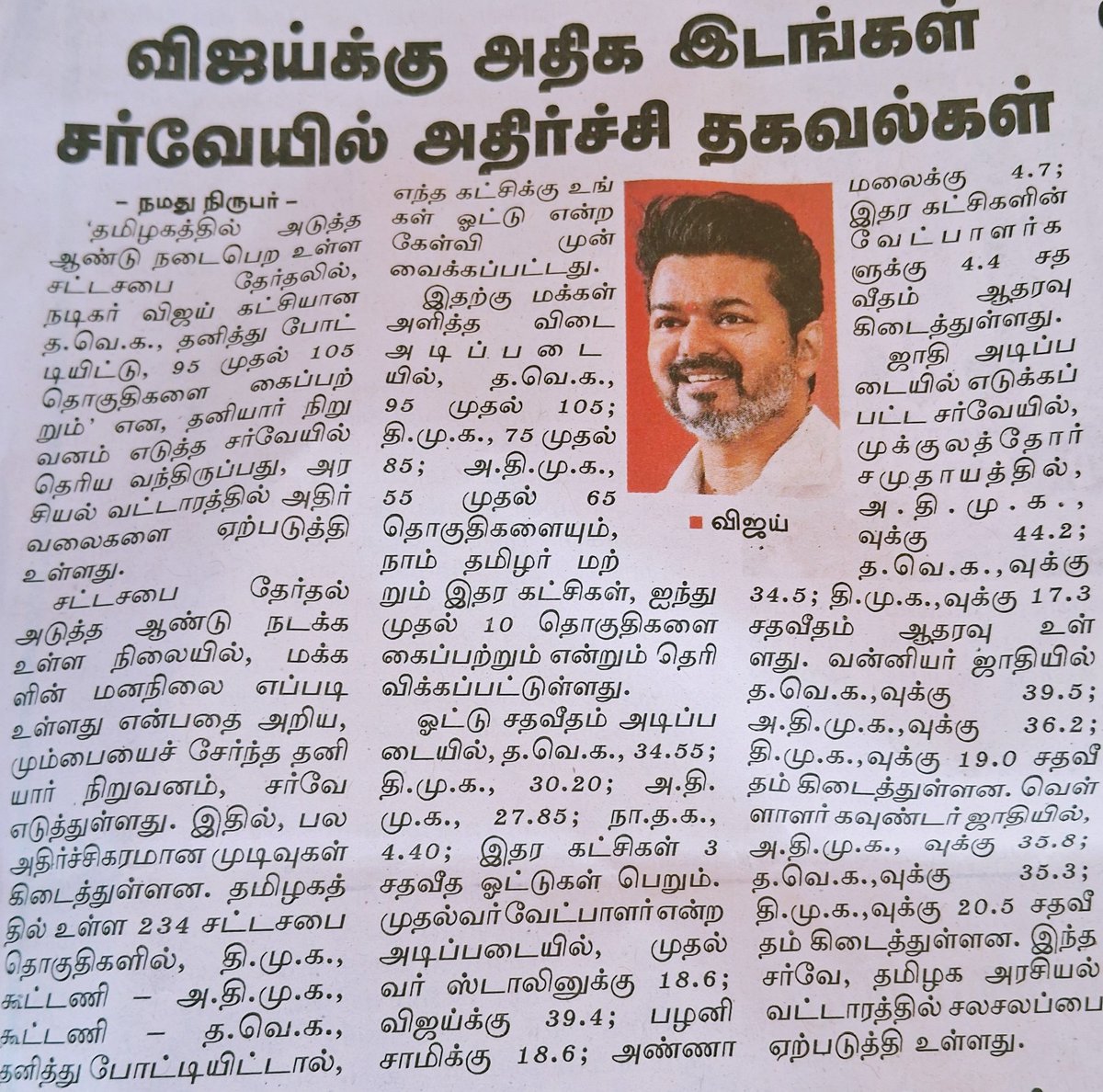
"மாநாடு நடத்துறது ஒன்றும் மக்களின் ஆதரவு கிடைச்சதுனு அர்த்தம் இல்ல!
சர்வே என்ன சொல்றது பாருங்களேன் – வெற்றி தலைவர் விஜய் தான் ஒவ்வொரு மனசிலும்!"
#TVKForTN #TruthInNumbers #ThalapathyPolitics
#TVKVijay #tvk_வலுவான_வாக்குச்சாவடி
#tvk_protects_waqf_rights
1
4
73

6 Apr 2025
That’s great PR—but classic “how to lie with numbers.”
If the 50 countries that reached out are all below the global median in trade volume and income, it’s basically a rounding error.
In NCAA terms: if a D1 team goes undefeated against non-D1 schools but loses to every D1 opponent, they’re not making the tournament.
Right now, the U.S. is a D1 team flexing on non-D1 wins. Feels good on paper—but means nothing when it counts.
#GlobalTrade #EconReality #PolicySpin #MarchMadness #TruthInNumbers
3
191

15 Jan 2025
@stikrisqkr Suspect? 🤔 I prefer the term 'thought-provoking'. 😉 The data speaks for itself - Cardano's growth is organic and driven by real users. 📈 I simply shine a light on the facts others might overlook. 🔍 #TruthInNumbers #NoSmokescreens
3
198

18 Dec 2024
📊 Numbers Don’t Lie, but They Do Expose Leaders
In my years of reviewing organizational performance metrics, one truth stands out: numbers often reveal more than what leaders intend to show. While metrics are meant to track progress and align actions with strategic goals, they can also expose gaps in leadership, inefficiencies, and the misuse of resources.
What Do Performance Metrics Really Reveal?
Leaders often take comfort in the numbers they see on reports. However, these metrics frequently disguise underlying issues that hinder organizational success. Numbers have a way of uncovering truths, including:
Weak Performance: When metrics are inflated or cherry-picked to show progress, they often highlight a lack of real growth or improvement.
Poor Resource Allocation: Metrics can expose areas where time, money, or manpower are being wasted, leading to minimal returns.
Misguided Decisions: Incorrect metrics can be a result of leadership decisions made without proper data-driven insight or alignment with organizational goals.
Why Do Leaders Struggle to Face These Truths?
Many leaders resist the idea that their performance metrics may be misleading. For some, these numbers represent the credibility of their leadership. Questioning them feels like questioning their authority.
However, clinging to flawed metrics often creates a dangerous cycle:
Teams are pressured to produce "good numbers" rather than real results.
Efforts are directed at improving reports, not actual performance.
Critical issues are overlooked because they don’t appear in the numbers being tracked.
It’s not uncommon for leaders to rely on metrics that look polished on paper but fail to provide meaningful insights about organizational health. This is not a leadership failure—it’s a systems failure.
Shifting the Mindset: From Defensive to Transformative
The key to breaking this cycle is courageous leadership. Leaders need the boldness to review their metrics honestly, challenge assumptions, and seek continuous improvement.
A few steps can help leaders take control of their performance metrics:
Reevaluate Metrics: Are they aligned with strategic goals? Are they measuring what truly matters, or just what’s easy to quantify?
Engage Teams: Involve key stakeholders in discussing what metrics should represent. A collaborative approach often reveals blind spots.
Focus on Impact: Metrics should drive actions that lead to measurable outcomes—not just create the illusion of progress.
Embrace Transparency: Sharing accurate, unembellished metrics fosters trust and accountability within the organization.
The Role of Leadership in Redefining Performance
True leaders see numbers not as a reflection of their personal success, but as tools to guide their organizations forward. They use metrics to identify weaknesses, strengthen systems, and empower their teams.
Numbers, when read honestly, provide an opportunity for growth and innovation. The question isn’t whether your metrics are truthful; it’s whether you have the courage to face what they reveal.
By redefining how performance metrics are understood and utilized, leaders can create a culture of continuous improvement that drives genuine, sustainable success.
Numbers don’t hide the truth—they reveal it. And with the right mindset, they can become a powerful ally in achieving organizational excellence.
What are your thoughts on this? Have you encountered misleading metrics in your own experience? Let’s discuss in the comments below.
#LeadershipExcellence #PerformanceManagement #SystemsThinking #KPIs #ContinuousImprovement #OrganizationalExcellence #DataDrivenDecisions #TransparencyInLeadership #TruthInNumbers #GrowthMindset

1
87

4 Dec 2024
Just broke 100 followers on BlueSky.
It's a long ways from the 6000 that I have here, but it's a start.
Come join me there. It's a lot more civilized.
@truthinnumbers
.bsky.social
2
7
389

22 Nov 2024
(I’m actually glad that people are overall paying more attention to respiratory viral illnesses in general.
Prior to COVID, a bad flu season would at most get a Yawn from the general public.
It’s the obsession and the fear-mongering that are horribly counter-productive.)
1
5
70

22 Nov 2024
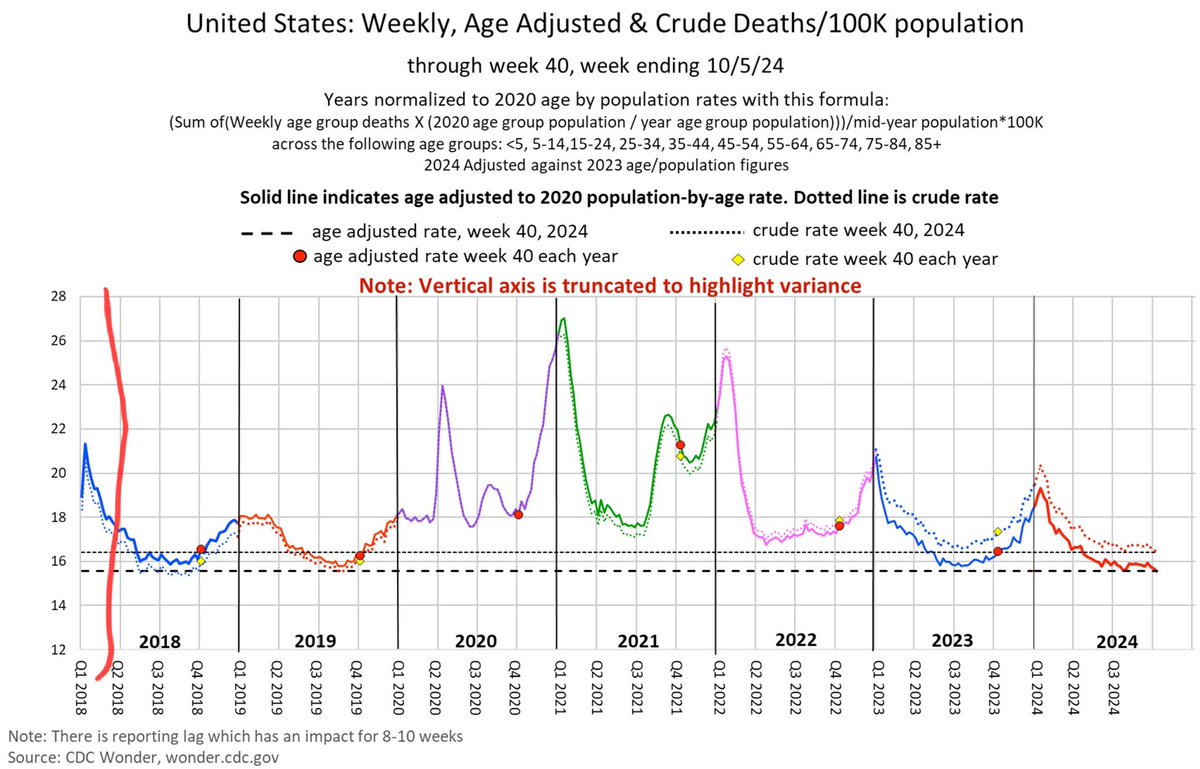
Off topic,but I think it was @MichaelSFuhrer a while back discussing bad flu seasons, & i mentioned the 2017-18 yr where that weird h3n2 strain that the vaxx didnt catch well, whooped wholesale arse i the US for a few weeks. It's well demonstrated in that graph there
1
3
200
21 Nov 2024
Bluesky is growing by 1 million users per-day. Created by Twitter founder, Jack Dorsey.
Follow me there. Once I get to 1K followers there, that's the only place you'll find me.
@truthinnumbers
.bsky.social
bbc.com/news/articles/c8dm0l…
3
1
4
361

20 Nov 2024
Appreciate it, my friend! 🤝
🤔But does it really take expertise to see the writing on the wall? Or are the 'experts' just getting a bit nervous?😰
#FiscalResponsibility #HousingCrisis #Inflation #EconomicTrends #TruthInNumbers
19 Nov 2024

🏠 Housing Affordability
1980: Housing Affordability Ratio = 2.25
2024: Ratio = 5.64 ( 151%)
Wages can’t keep up with skyrocketing home prices, leading to a debt-heavy economy. How sustainable is this trend? 🤔
#HousingCrisis #AffordabilityMatters #EconomicTrends #DebtEconomy
1
4
80