
Jun 11
Do ONE thing well - trendsolutions.net
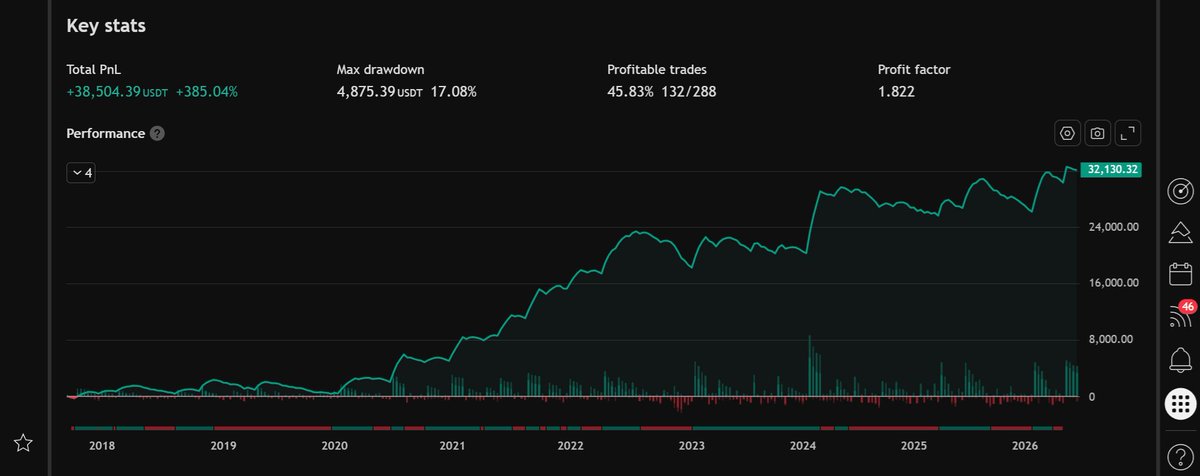
Daily timeframe ETHUSDT trading. Deep backtests with 200 ticks slippage, 0.1% commission shows a drawdown of only 14-18% over 8 years, and a PnL of 250-385% with 1.5% risk, datafeed dpndg.
#trading #turtletrading #tradingview #crypto
52

No esperaba este resultado...😳
📺youtu.be/jyBh-MIUV7Q
⚠️Advertencia: El trading conlleva alto riesgo de pérdida de capital. La información es solo informativa.
#TradingConIA #ClaudeAI #BotsDeTrading #TradingAutomatico #InteligenciaArtificial #RichardDennis #TurtleTrading
1
2
49

Why "The Turtle Traders" became legends. 🐢📖
In "The Complete TurtleTrader" by Michael Covel, we learn that a group of beginners were taught a simple rule-based system and made millions.
The "Turtles" didn't have special brains; they had a special Process. They followed their rules even when it was difficult. Consistency is the only "holy grail" in this market.
#TurtleTrading #TrendFollowing
6
58

8 Nov 2025
Turtle trading: a classic trend-following strategy for commodities! 🐢
Enter on breakouts, adjust size by volatility, manage risk, and trail your exit.
Ready to try Turtle trading? Open your account with Deriv ➡️ deriv.link/4qUO43p
#TurtleTrading #Commodities #Deriv
Your capital is at risk. Not investment advice.




5
1
6
408

5 Sep 2025
Way of the Turtle
Original: trade-hermit.com/blog/a-rand…
Today’s book is Way of the Turtle by Curtis Faith, one of Richard Dennis’s legendary “Turtle Traders.”
Faith reveals how trading rules—once a secret experiment—turned novices into million-dollar traders:
• Traders vs Investors—traders buy risk, investors buy business value.
• The Turtle method: mechanical rules, support/resistance, 20-day & 55-day breakouts, strict stop-loss.
• Why systems fail long term: Trader Effect (too many copycats), Randomness, Overfitting.
• Insights from Nobel laureates: Eugene Fama’s Efficient Market Hypothesis vs Robert Shiller’s Market Bubble theory.
• Key lesson: no trading system lasts forever—markets evolve, but principles like discipline & risk control endure.
This isn’t just trading history—it’s a timeless reminder that systematic thinking beats emotion.
Check the full blog for details, and follow for more book breakdowns!
#Trading #Investing #TurtleTrading #StockMarket #Futures
9
12
663

8 Aug 2025
⚡️Donchian Channels
🏛️ Donchian Channels for breakout trading!
Upper Channel = Highest high of n periods Lower Channel = Lowest low of n periods.
Breakout above upper = Buy signal Breakout below lower = Sell signal
Popular in turtle trading system!
#DonchianChannels #Breakout #TurtleTrading
4
119

27 Apr 2025
🧵 Thread: Unlocking the Secrets of Successful Trading with the Turtle Trading Method! 🐢💰
1/10 🌟 क्या आपने कभी सुना है कि 23 आम लोग रातों-रात करोड़पति बन गए? ये अविश्वसनीय जर्नी शुरू हुई थी Richard Dennis और उनके अनोखे training methods से!
#TurtleTrading #SuccessStory
1
7
95


13 Oct 2024
Trade Legend 1: Richard Dennis
Richard Dennis, the legendary trader behind the Turtle Trading Experiment, achieved average annual compound returns of over 80% during the experiment and overall, 120% compound returns over 19 years.
Dennis turned a modest $400 investment into a staggering $200 million fortune, proving that anyone can achieve remarkable success with the right strategy and mindset
Key learnings from him:
1. Trend Following:
Dennis believed in the principle that "the trend is your friend." His strategy involved buying assets when they broke out of a defined range and selling when the trend reversed
2. Position Sizing:
He used a method called the 1% risk rule, where traders risked no more than 1% of their account balance on any single trade
3. Disciplined Risk Management:
Dennis emphasized strict risk management, with predetermined rules for entry and exit points to minimize losses
4. Scientific Method:
He encouraged traders to approach trading scientifically, by formulating hypotheses, testing them, and analyzing the results
5. Emotional Discipline:
Dennis stressed the importance of avoiding impulsive decisions based on emotions or subjective judgments
"His humble beginnings to becoming a trading titan continues to inspire traders worldwide".
-Pushkar Anand
#RichardDennis #TradeLegend #BourseAcademy #TurtleTrading

2
2
223

8 Jul 2024
🐢 The Turtle Trading experiment with Richard Dennis was a groundbreaking project to see if trading skills could be taught. Despite Eckhardt's skepticism, the experiment was a success, turning novices into $100 million earners! #TurtleTrading #ExperimentSuccess

ALT https://www.turtletrader.com/ @Covel
1
1
13

13 Jun 2024
The Turtle Trading System is a trend-following strategy developed in the early 1980s by Richard Dennis and William Eckhardt. Designed as an experiment to prove that anyone could be taught to trade successfully, the Turtle Trading System became legendary for its simplicity and effectiveness. However, markets have evolved significantly since then, raising questions about the system's relevance today.
1️⃣ History of the Turtle Trading System
The Turtle Trading System was born from a bet between Richard Dennis and William Eckhardt. Dennis believed that successful trading could be taught, while Eckhardt was skeptical. To settle the debate, they recruited a group of novices, dubbed "Turtles," and trained them using a straightforward trend-following strategy.
The original system was based on breakout trading. Turtles would enter trades when prices moved beyond a specific range over the past 20 or 55 days. They would exit positions using a shorter 10 or 20-day range. The system's rules also included risk management through position sizing and stop-losses. This method proved highly successful, with many of the Turtles becoming highly profitable traders.
2️⃣ The Edge in the Original Concept
The original Turtle Trading System's edge lay in its simplicity and strict adherence to rules. By focusing on price breakouts, the system capitalized on strong market trends. Its mechanical nature eliminated emotional trading decisions, ensuring discipline and consistency.
Furthermore, the system employed robust risk management. Position sizes were determined by market volatility, with larger positions in less volatile markets and smaller positions in more volatile ones. This approach minimized risk and maximized potential returns, providing an edge that was well-suited to the market conditions of the time.
3️⃣ Changes in Market Dynamics
Since the 1980s, market dynamics have changed significantly. Increased market efficiency, high-frequency trading, and the proliferation of algorithmic strategies have reduced the profitability of simple trend-following systems, especially those anchored in breakout trading (now one of the least profitable approaches to FX markets for example.). Additionally, markets are now more interconnected, with events in one market affecting others globally.
Volatility patterns have also shifted, with more frequent and unpredictable spikes. These changes necessitate adjustments to traditional trading strategies, including the Turtle Trading System, to maintain their effectiveness.
4️⃣ Relevance of the Original System Today
Despite changes in market dynamics, several aspects of the Turtle Trading System remain relevant. The principles of trend following, disciplined rule-based trading, and robust risk management are timeless. These elements can still provide a solid foundation for a successful trading strategy.
However, the original breakout rules may need modification. Traders might consider using more sophisticated entry and exit signals based around retracements to averages or trendlines, incorporating additional technical indicators and fundamental/sentiment analysis to enhance their decision-making process.
5️⃣ Modernizing the Turtle Trading System
To modernize the Turtle Trading System, you can incorporate contemporary tools and techniques. One approach is to integrate additional technical indicators, such as moving averages, Stochastics, RSI, or MACD, to refine entry and exit points. For example, you could combine a 55-day breakout with a moving average crossover to confirm trend direction and buy the pullback.
6️⃣ Creating a Strategy Around the Concept
Developing a modern trading strategy based on the Turtle Trading System involves several steps:
1.Define Market Universe: Choose a diverse set of markets, including equities, commodities, forex, and bonds, to ensure broad exposure and risk diversification.
2. Select Entry and Exit Criteria: Use modern technical indicators to complement the original breakout rules.
3. Risk Management: Maintain the original risk management principles but adapt position sizing to current market conditions. Use ATR (Average True Range) for volatility-based position sizing if so desired or just use our bullet theory for scaling in.
4. Backtesting and Optimization: Rigorously backtest the strategy on historical data to ensure robustness. Optimize parameters to find the best combination of indicators and timeframes.
7️⃣ Case Study: Adapting Turtle Trading to Forex Markets
To illustrate, consider adapting the Turtle Trading System to forex markets. Forex markets are known for their liquidity and trendiness, making them suitable for trend-following strategies.
1. Entry and Exit Signals: Use a 55-day breakout for entry conditions on the pullback to either MAs or broken structure and a 20-day low for exit, combined with a 50-day moving average to filter trades.
2. Risk Management: Employ position sizing based on the ATR of the currency pair, ensuring that no single trade risks more than 2% of the trading capital.
3. Monitoring and Adjustments: Regularly monitor trades and adjust the strategy as needed based on market conditions. For example, during periods of high volatility, reduce position sizes and widen stop-loss or damage control levels to accommodate larger price swings.
By blending the timeless principles of the Turtle Trading System with modern tools and techniques, traders can develop a robust strategy suited to today's dynamic markets. The Turtle Trading System remains a powerful example of disciplined, rule-based trading. While market dynamics have evolved, the core principles of the system still hold value.
#Trendfollowing #TurtleTrading #ForexTrading #Thursdaymorning #thursdaymotivation

1
5
231

11 Jun 2024
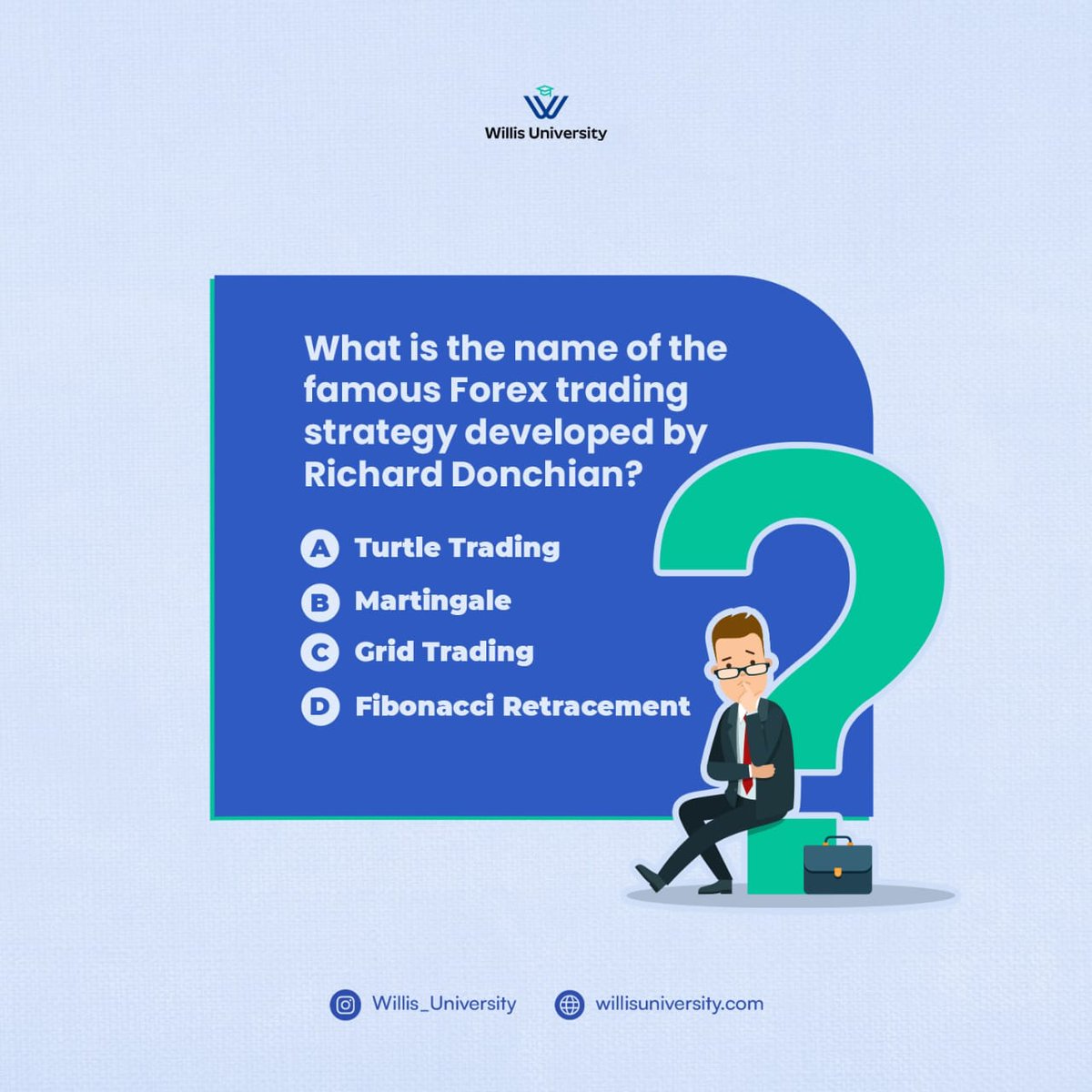
Test your trading knowledge! 📊🔥
What's the famous Forex strategy developed by Richard Donchian? 🤔
Drop your answer in the comment section and let's see who's a trading pro! 💸👊
#Trading #Forex #RichardDonchian #TurtleTrading #GodMorningTuesday #GalaxyZFlip5
6
4
7
303

18 May 2024
William Eckhardt is renowned for his work in trading psychology and system trading and for his collaboration with Richard Dennis on the famous #TurtleTrading experiment.
1
1
168

15 May 2024
Kıvanç Hocam ( @kivancozbilgic) her şeyi paylaşmaz, mutlaka okumanızı öneririm arkadaşlar.
Kalemine sağlık @burak_kesmeci kardeşim 👏
#Borsa #TeknikAnaliz #TurtleTrading
15 May 2024

Traderlık doğuştan gelen bir yetenek midir?
Yoksa hiç bilmeyen birine bile sonradan öğretilebilir mi?
TURTLE TRADING:
youtube.com/watch?v=GavFyqgC…
📈Turtle Trade Channels Indicator TUTCI
💻Matriks:
drive.google.com/drive/folde…
🛜TradingView:
tr.tradingview.com/script/pB…
2
5
48
14,535

24 Apr 2024
Further Scope:
TurtleTrading performance is promising. Adding regime filters and short-side strategies could yield even better results.
Caution: Avoid excessive parameter tweaking to prevent curve fitting.
Credit: Due credit to TurtleTrading creator and Tradingview.
Scroll down 👇
1
2
850
24 Apr 2024
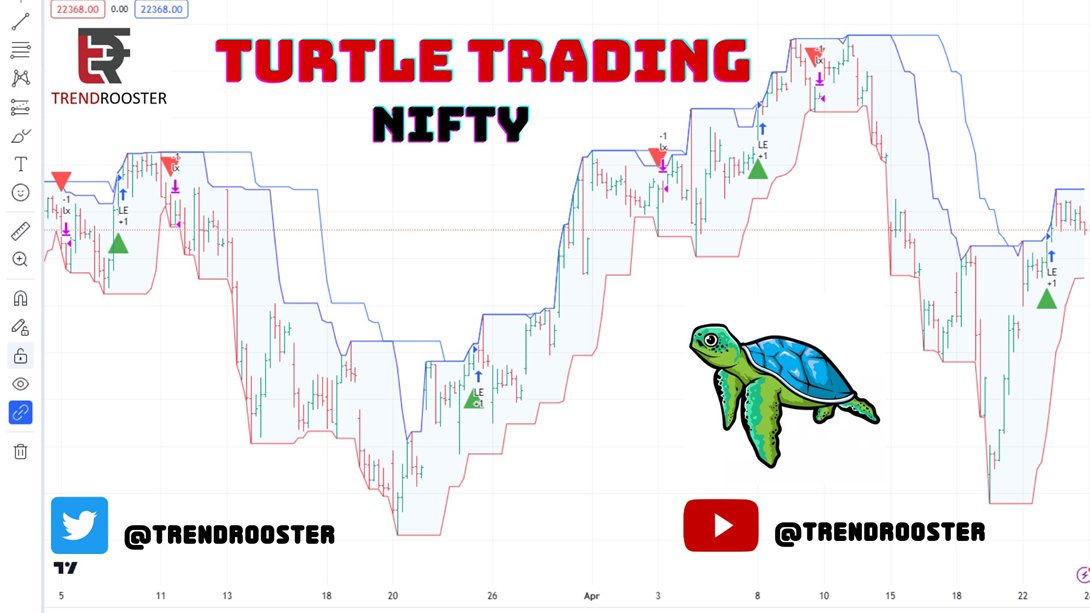
Trend following got you intrigued? Let's dive into the legendary Turtle Trading strategy!
Rules? Performance? Can it conquer Indian markets? Buckle up, this thread's got the answers!
Turtle Trading Quantified strategies: Thread 🧵
#Trendrooster #trading #TurtleTrading #Nifty
Scroll down 👇
4
9
35
3,498

Thank you @Covel for all the material you have put out there on #TrendFollowing #TurtleTrading and so much more!🙏

2
163

20 Nov 2023
Turtle Trading... A blueprint for Forex success? Read more here: facebook.com/photo/?fbid=354…
Want to know how to use Turtle Trading Strategies? CLICK HERE 👉🏼 wa.link/706mkm
#invytesolutions #financialliteracy #financialeducation #turtletrading #turtletradingfx

3
3
14

20 Oct 2023
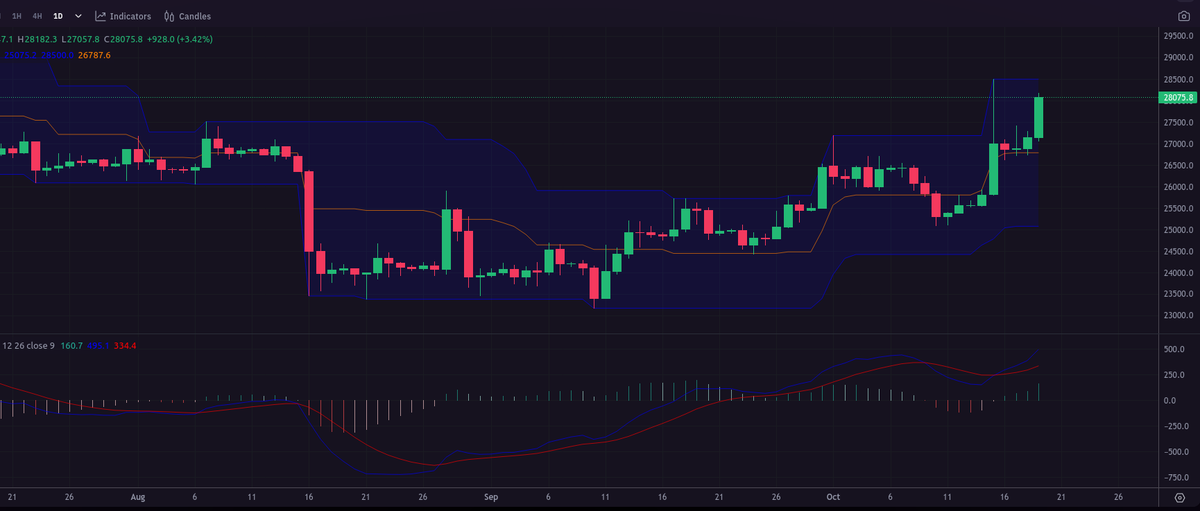
🐢📈 Wake up, #Bitcoin traders 🚨 The Turtle Strategy is your ticket to success. 🚀 Buy the breakout, sell on retracement. Ride the trend like a pro! 🌊📉 #BitcoinTrading #TurtleTrading #BTC 💰 $BTC #plebs #TradingStrategy #TRADINGTIPS
#btceur price 28K , 24H Chang 4.52%🧨
1
252

20 Aug 2023
Lessons from #TurtleTrading:
Trade with an edge: The system must have a positive expectancy over the long run
Manage risk: Control risk so that you can benefit from the positive expectancy
Be consistent: Execute consistently
Keep it simple.
quantifiedstrategies.com/tur…
4
1,724