Julie Karand Honored with Faculty Award for Excellence in Teaching
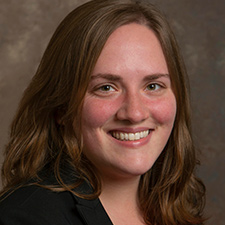
Please join us in congratulating Dr. Julie Karand, Associate Professor of Biomedical Engineering, on receiving the College of Engineering Faculty Award for Excellence in Teaching!
Her dedication to global engineering and accessible design enriches our curriculum and empowers our students every day. @UDengineering
#UDel #BiomedicalEngineering #TeachingExcellence #AccessibleDesign
1
6
160

🎥 New video! Inside the @sensifylab, we design human-centered AI and interactive systems for social good—spanning health, sustainability, and education. youtu.be/Ycm_w06XGMM?si=FB2W…
Learn more at:🔗 sensifylab.org
#HCI #HumanCenteredAI #SocialGood @UD_CIS @UDengineering
1
3
231

5 Dec 2025
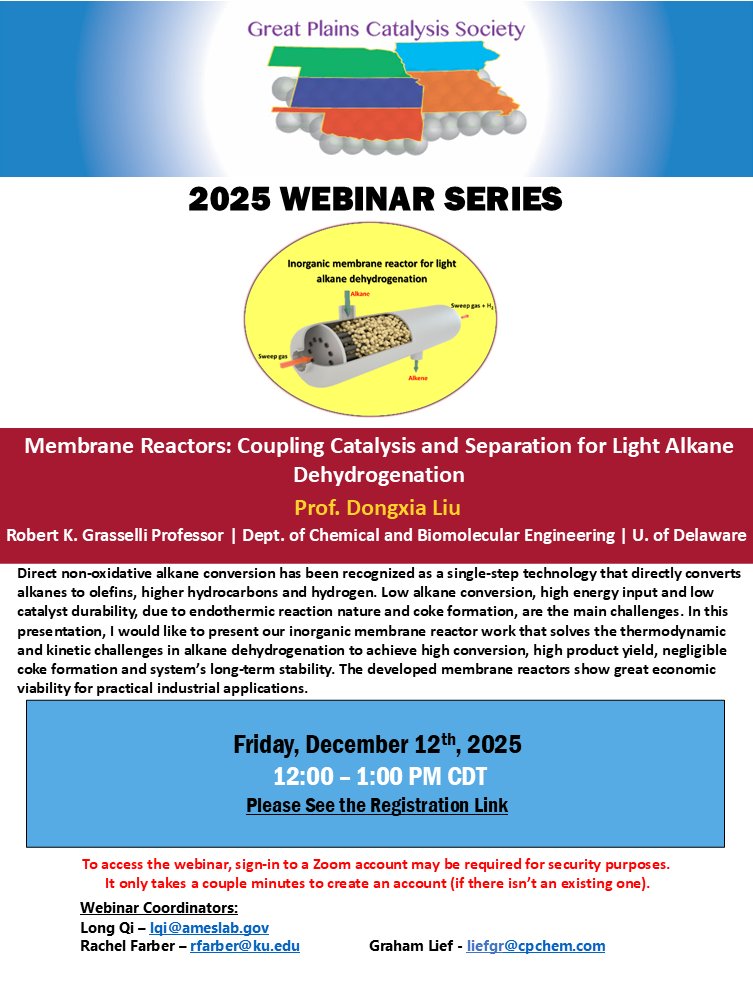
Please join us for our next webinar by Prof. Dongxia Liu of the University of Delaware on December 12. If you are not a member but still want to join the webinar, use the following registration form:
greatplainscatalysis.org/web…
@UDChBE @UDengineering
2
120

1 Dec 2025
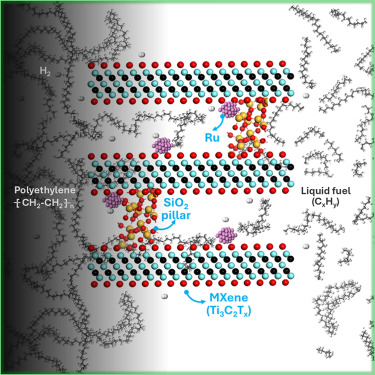
Plastic-waste hydrogenolysis over two-dimensional MXene-supported ruthenium catalysts with tunable interlayer spacing.
Dongxia Liu (@Udengineering) & co-workers
@ChemCatalysis #F25MRS hubs.li/Q03Wf9cY0
1
2
1,928

15 Oct 2025
Thank you to @UDaily for this article summarizing my lab's recent PNAS publication that describes the influence of the protein corona on the biological fate of membrane-wrapped nanoparticles (@TheDayLab @EricSterin @udbme @UDengineering): udel.edu/udaily/2025/october…
2
19
729

19 Sep 2025
Congratulations to Sunita Chandrasekaran, director of UD’s new First State AI Institute, named the 2025 ACM SIGHPC Emerging Woman Leader in Technical Computing Award recipient.
Read more: brnw.ch/21wVURJ
#UDEngineering #HPC
1
3
134

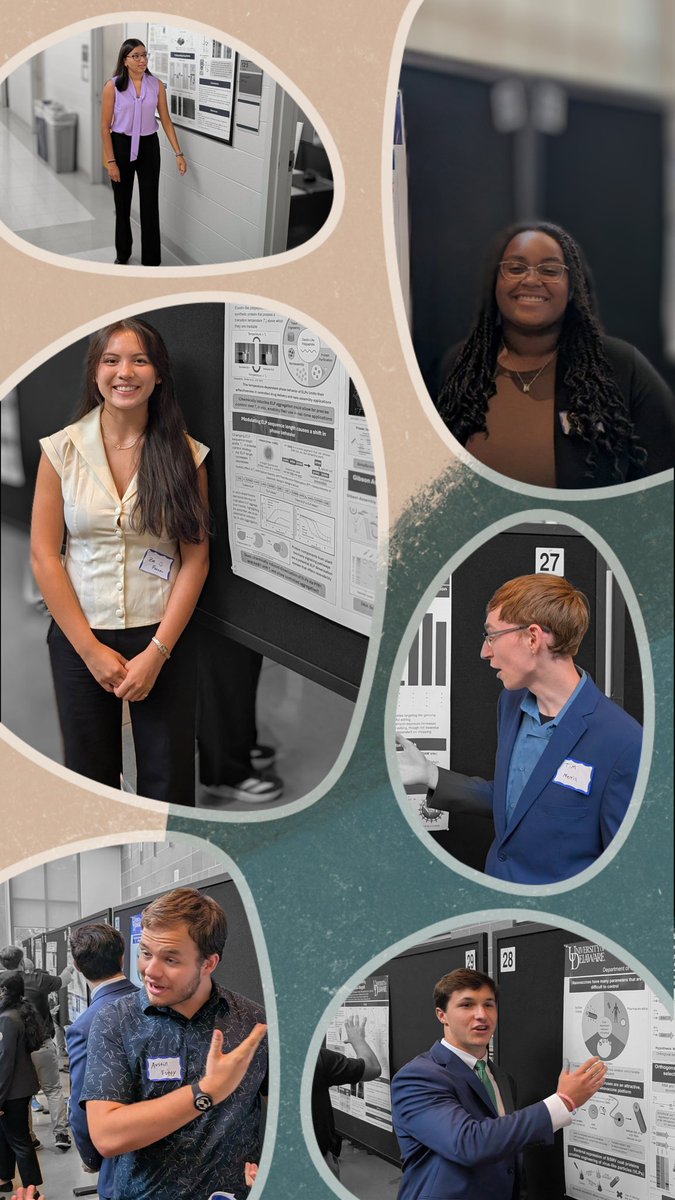
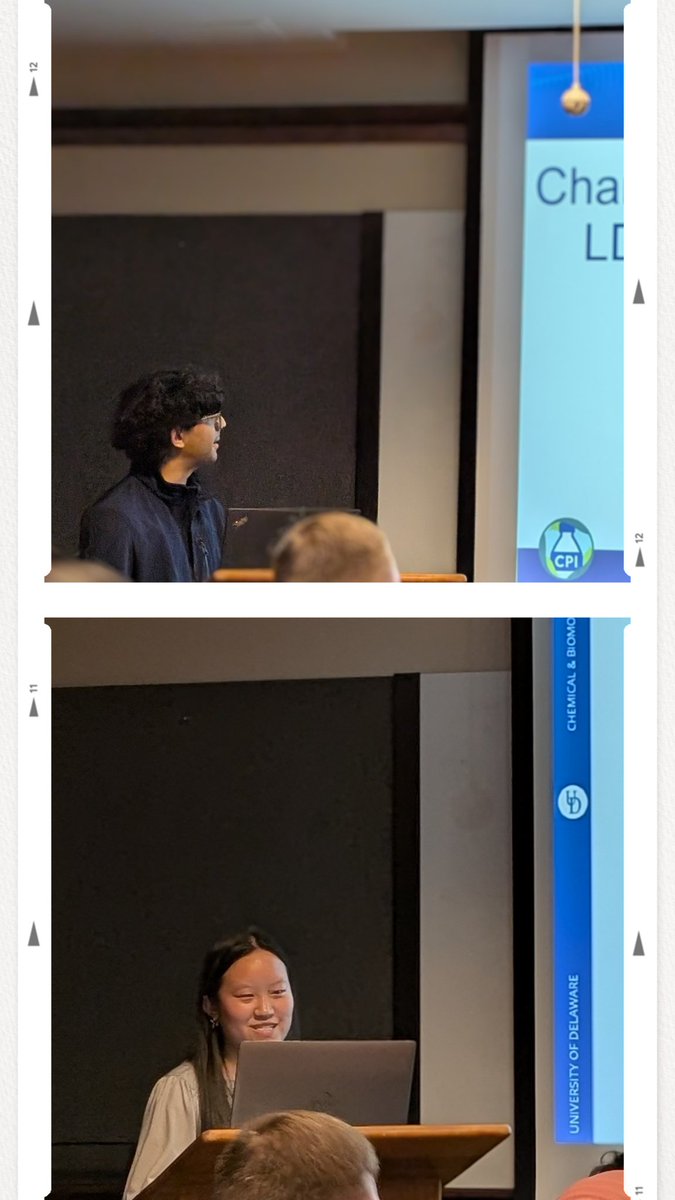
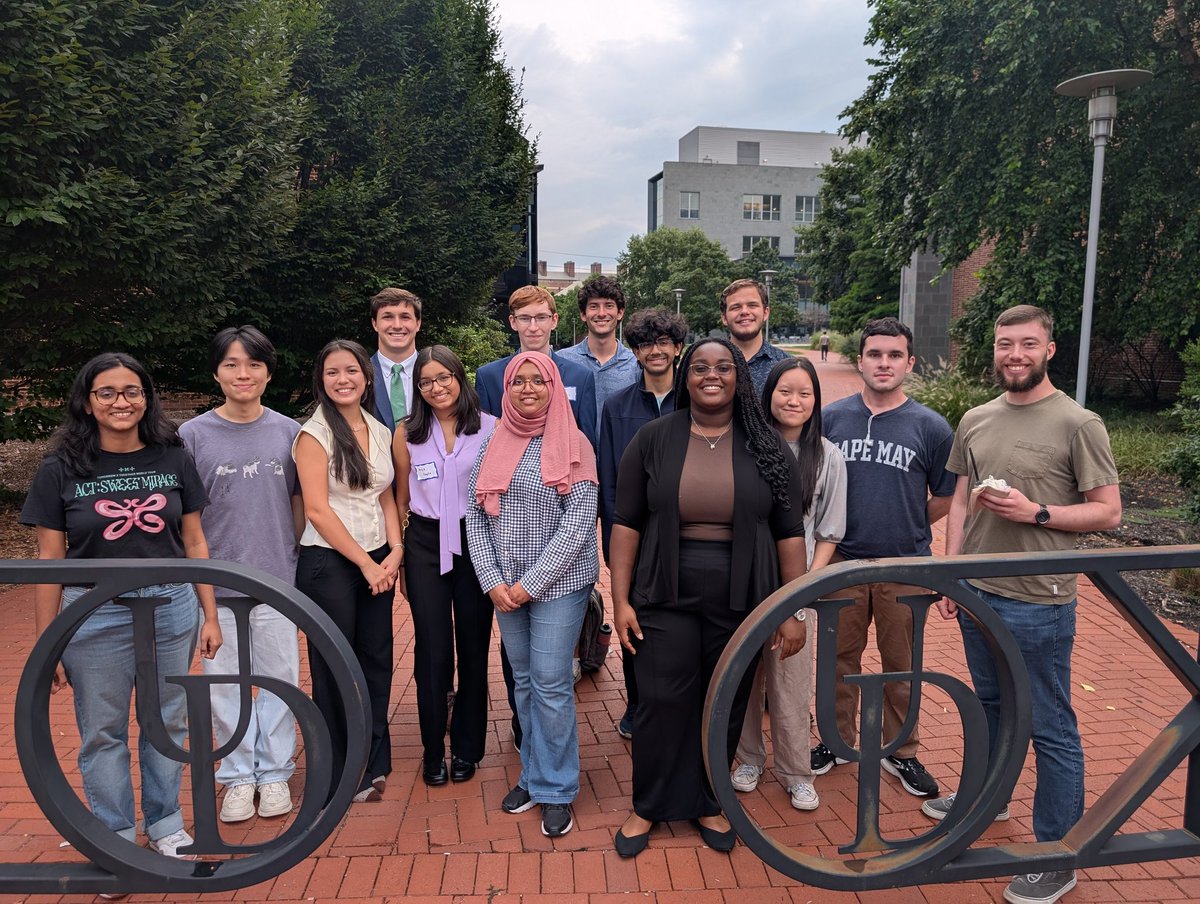
Always a pleasure to help develop the next generation of scientists and celebrate their accomplishments! Kudos to Austin, Bo, Agni, Meredith, Jasmine, Zoe, Arya, Tim, and mentors @mruthularm, Ming Hung, Rob, Samiha, Nathan, Ben for a productive summer! @UDChBE @UDengineering
3
410

12 Aug 2025
New Publication! 📢
Dr. Sarah I. Rooney collaborated with Dr. Jenny Amos at UIUC to publish an editorial in Biomedical Engineering Education detailing the design and outcomes of the 5th Biomedical Engineering Educational Summit, held in May 2024.
The Summit brought together over 300 faculty from more than 100 institutions to discuss key issues in biomedical engineering education. In the editorial, the authors share strategies for session facilitation, pre- and post-Summit training for session co-chairs, and scholarly dissemination, including tools that supported the publication of 8 peer-reviewed articles resulting from the event.
The piece serves as both a behind-the-scenes look at this national convening and a practical guide for future academic event planning.
Read it here: rdcu.be/exUh0
@SarahIRooney, @jennyamos_uiuc, @UDengineering, @UDalumni
1
3
239

14 Jul 2025
Could carrying extra weight be silently damaging your joints by drying them out from the inside?
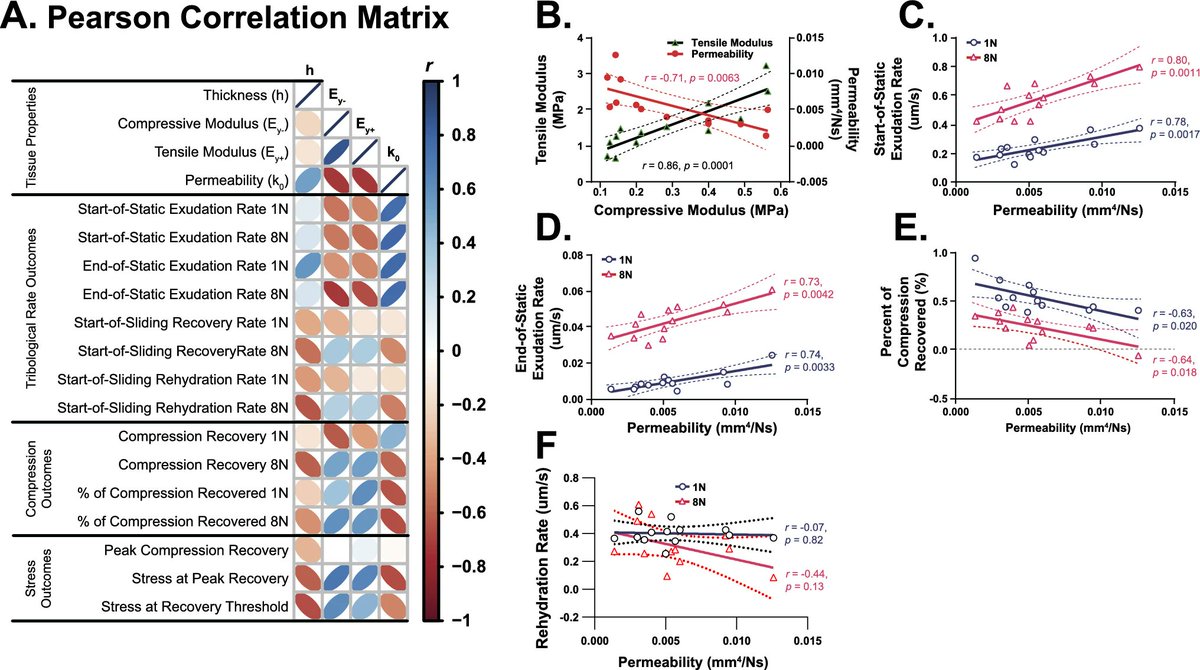
Obesity is a known risk factor for osteoarthritis (OA), but the precise mechanical reasons have remained unclear. Seeking to understand these mechanisms, researchers used a novel lab-based testing method on joint tissue to examine how sliding speed, contact stress, and tissue properties affect the tissue’s ability to rehydrate under load.
They found that while elevated contact stress and prolonged loading reduced rehydration, cartilage maintained its lubricity. This suggests that sustained compression and strain, not friction, may be the key driver of dysfunction in obesity-related OA.
By identifying how mechanical stress disrupts cartilage recovery, this work opens the door to new strategies for preserving joint health in people with obesity.
𝗥𝗲𝗮𝗱 𝗺𝗼𝗿𝗲: link.springer.com/article/10…
𝗦𝘁𝘂𝗱𝘆: Elevated Contact Stresses Compromise Activity-Mediated Cartilage Rehydration but not Lubrication
𝗔𝘂𝘁𝗵𝗼𝗿𝘀: @Shamimur_A, @meghankup, Arnab Bhattacharjee, Jamie Benson, David L. Burris, and Christopher Price
@UDelaware
@UDengineering
@udbme
𝗦𝘂𝗯𝗺𝗶𝘁 𝘆𝗼𝘂𝗿 𝗺𝗮𝗻𝘂𝘀𝗰𝗿𝗶𝗽𝘁: link.springer.com/journal/10…
3
170
4 Jul 2025
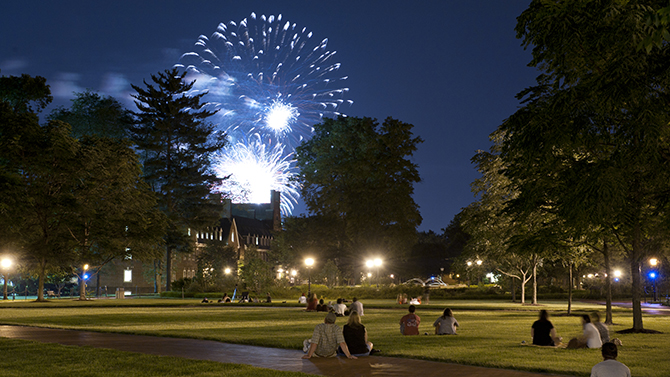
Happy Fourth of July from UD College of Engineering!
Wishing our students, faculty, and alumni a safe, restful holiday. Whether you're working, traveling, or just relaxing, enjoy the long weekend and a bit of summer freedom!
#FourthOfJuly #UDengineering #BlueHens
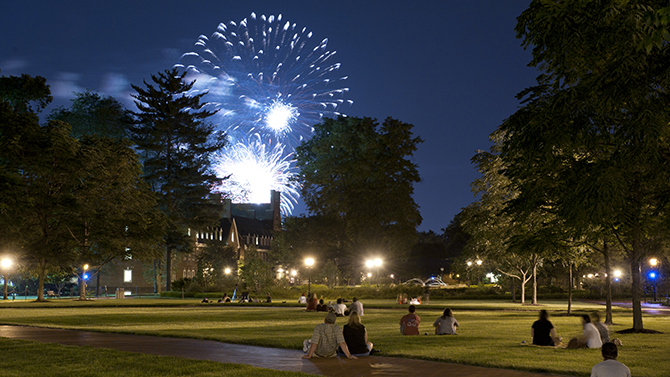
ALT Students sit on the Green watching fireworks over a campus building.
3
89
4 Jul 2025
Happy Fourth of July from UD College of Engineering!
Wishing our students, faculty, and alumni a safe, restful holiday. Whether you're working, traveling, or just relaxing, enjoy the long weekend and a bit of summer freedom!
#FourthOfJuly #UDengineering #BlueHens
3
111
23 Jun 2025
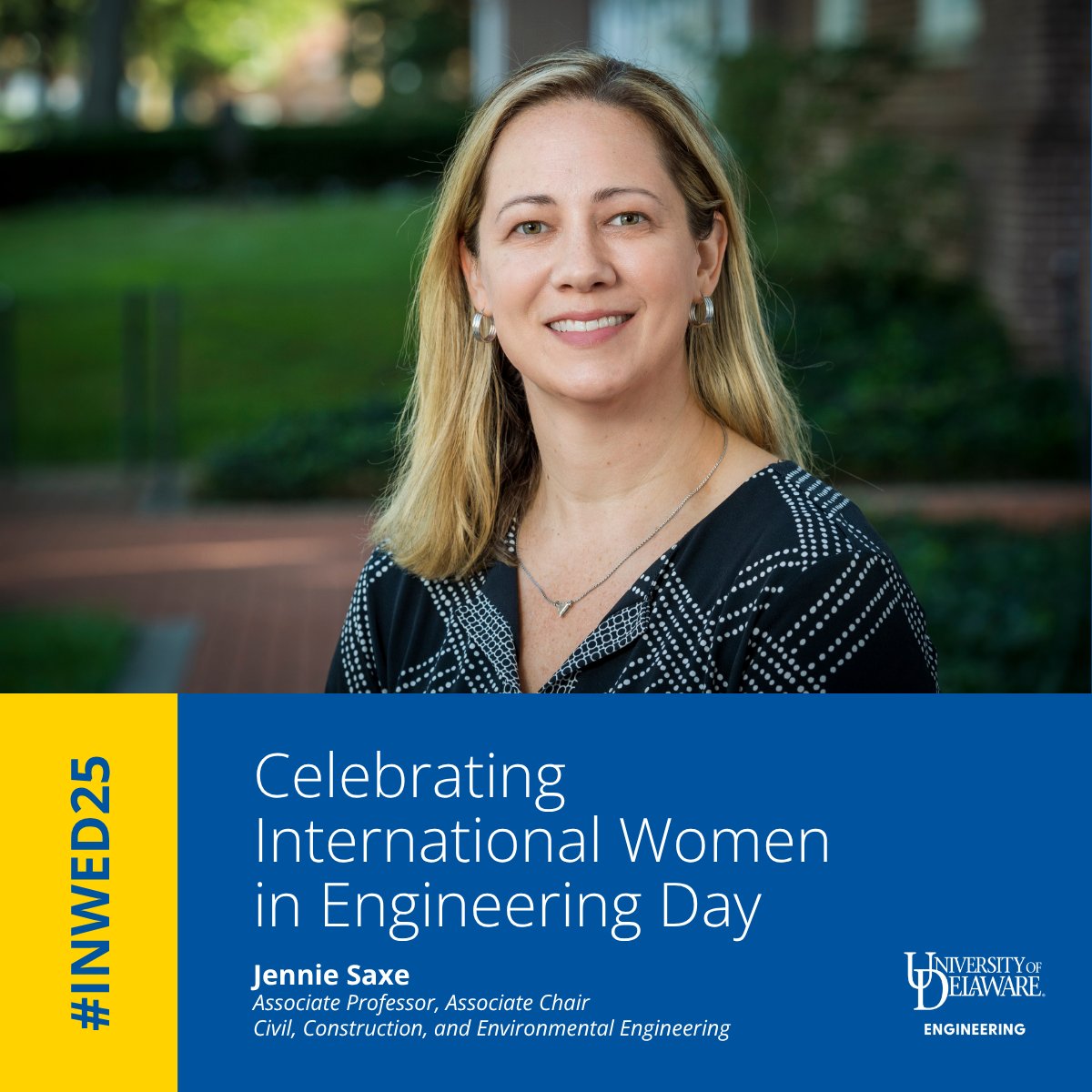
We’re proud to celebrate the women making an impact @UDengineering. Join us in recognizing #INWED2025. #WomenInEngineering #STEMLeadership
2
102
23 Jun 2025
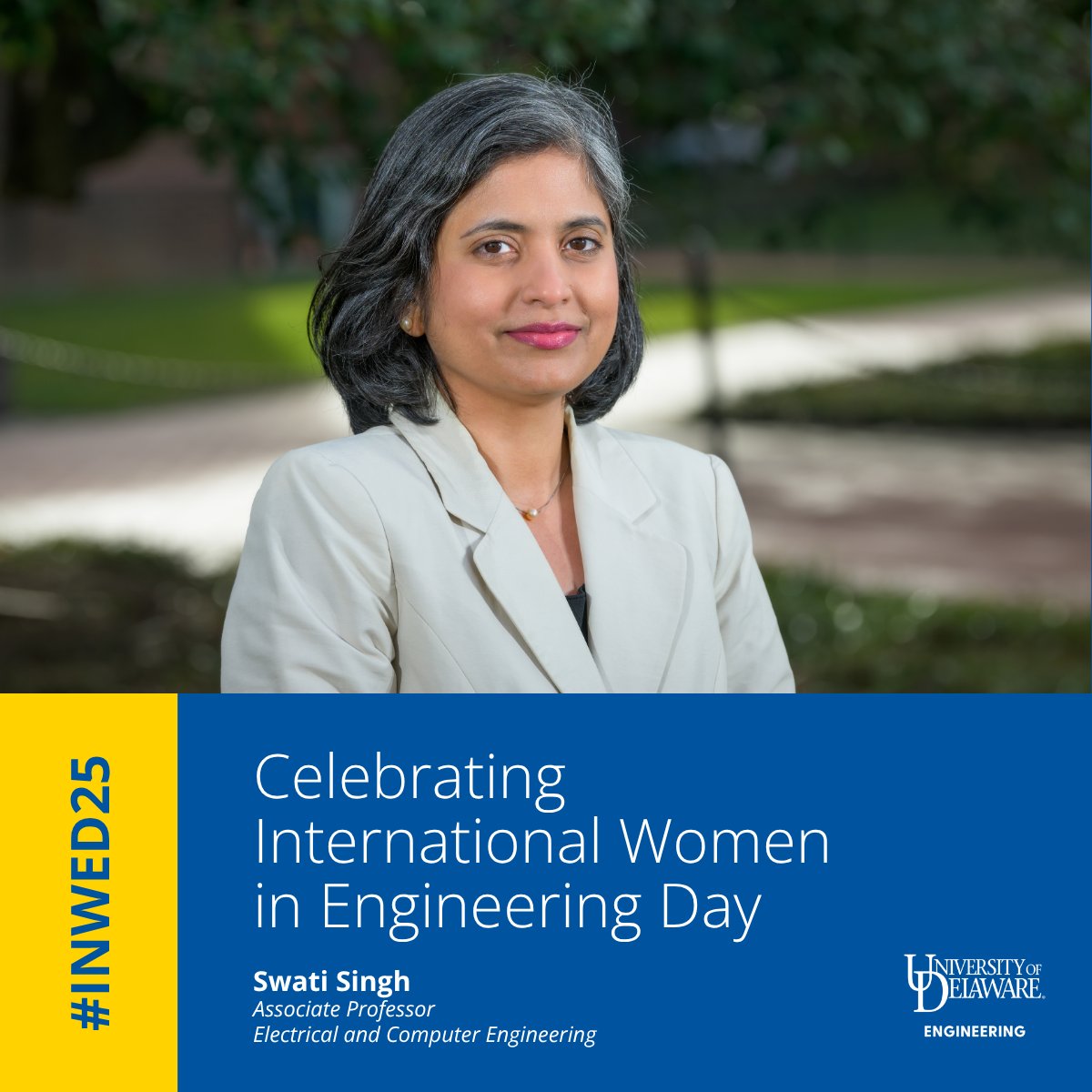
June 23 is International Women in Engineering Day, a time to recognize the women @UDEngineering shaping the future of engineering through innovation, leadership, and mentorship. #INWED2025 #WomenInSTEM #Hengineers
4
149
2 Jun 2025
Congratulations to Prof. Antony Beris, named the 2025 Bingham Medalist by the Society of Rheology.
His research has transformed how we model the flow of complex materials like toothpaste, polymers, liquid crystals, and even blood.
#UDengineering #Rheology #BinghamMedal

4
138

14 May 2025
Thanks to you @BrianDiSab and @EDiSCompany for your support of our Blue Hens! Turning winners into champions together - Go Hens!
1
2
134

22 Apr 2025
High school students, ready to explore autonomous driving? Join UD’s Autonomous Driving Academy Pre-College Summer Program! Learn robotics, AI & more. Early bird discount by May 15!
Learn more and apply today: pcs.udel.edu/autonomous-driv…
#UDEngineering #PreCollege
1
2
97

1 Apr 2025
onlinelibrary.wiley.com/doi/…. In @angew_chem we hope to increase conversation btw. #STEM & #psychology to improve #mentalhealth in #academia and student well-being & retention for a healthier climate in #science. @udmseg @LeibnizWGL #LIR @AvHStiftung @UDengineering
1
5
459

Hear talks on the innovative research being done by UD graduate students at the spring Spark! Symposium, Wednesday, April 9, 4-7 p.m., at the Audion on UD’s STAR Campus. RSVP for this free event: delaware.ca1.qualtrics.com/j…
@UDelaware @UDengineering
2
6
245
14 Mar 2025
Frances Megson (nee Cummins) was the first woman to major in engineering at #UD, graduating in 1946 with a degree in electrical engineering. She overcame challenges & inspired future women in STEM.
#WomenInEngineering #UDengineering #STEM

4
109