
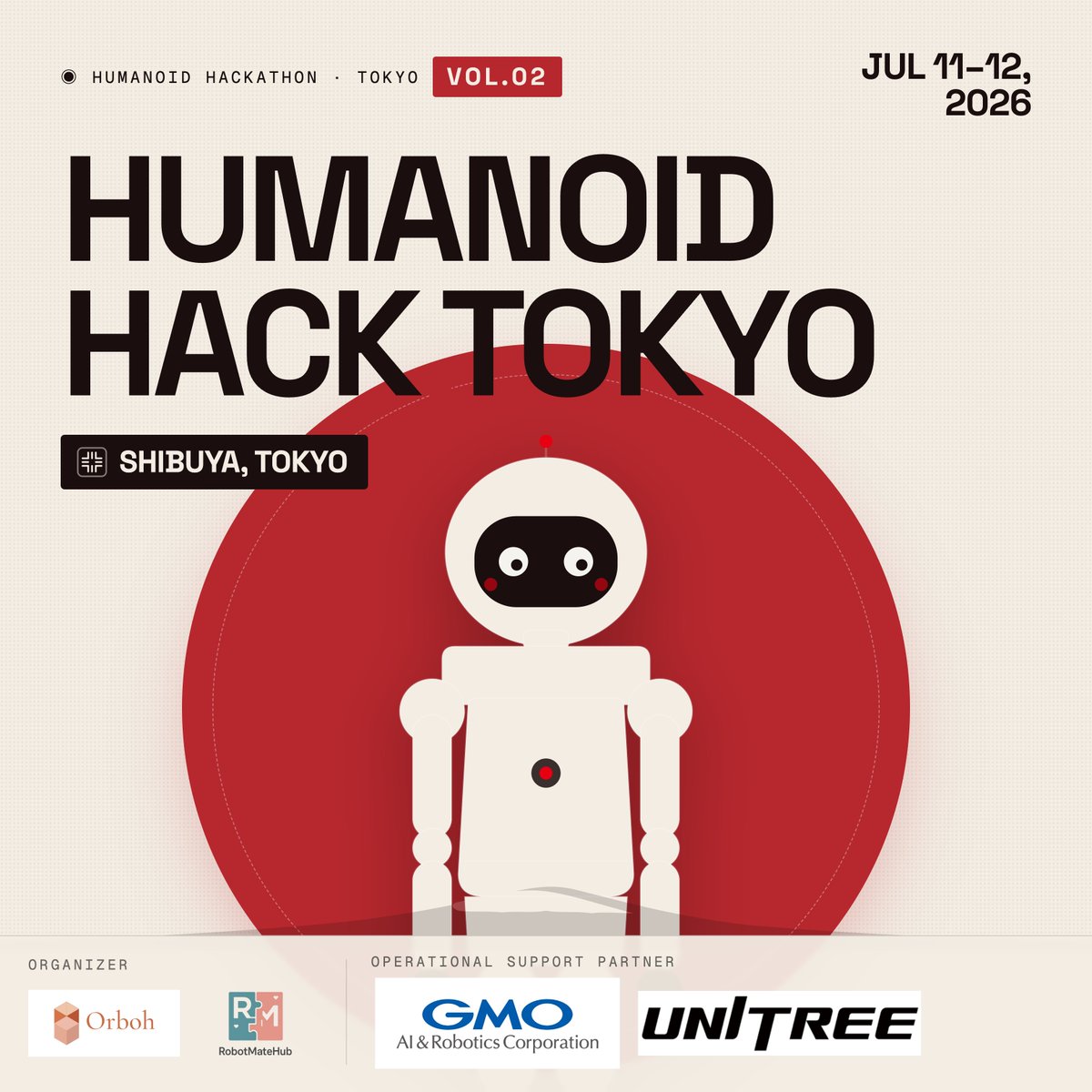
7/11-12に渋谷 で第二回のヒューマノイドハッカソンやります!
5月に開催した第一回からロボットの台数を増やして、より多くの方に参加いただけるようにします
登録はコメント欄から
運営. Orboh, Robot Mate Hub
協力 @GMO_AIR @UnitreeRobotics
#HumanoidHackTokyo
1
1
2
86

Lady Tipster retweeted

May 25
Conference Room Mess Cleanup Test: Unitree WVLA 2.0 Model🎉
This video was recorded in a single take.
Multi-task, fully autonomous operation. Strong external interference present.
86
152
1,481
4,801,918
Paul Myles retweeted
20 Mar 2024
Unitree H1 The World's First Full-size Motor Drive Humanoid Robot Flips on Ground.
Unitree H1 Deep Reinforcement Learning In-place Flipping !
#Unitree #UnitreeRobotics #AI #Robotics #Humanoidrobots #Worldrecord #Flips #EmbodiedAI #ArtificialIntelligence #Technology #Innovation
210
407
1,538
230,085


please make one with interchangeable hands so that it can always have the right hands for specific tasks/purposes.. waterproof and heat resistant hands to cook and clean the dishes, a couple of hands that could manage tasks where high precision is needed and so on.. thank you
6

挺有意思的角度。我在 机器人 这条线上验证过类似的逻辑,\n有个数据想分享:单一信号胜率 32%,但加上仓位管理后胜率能到 58%。\n欢迎交流。@botjunkie
23
vrocket retweeted
Jun 10
We’re excited to partner with BitRobot Network, Lightwheel AI, Singapore Institute of Technology and contributors like Jie Tan (Deepmind), Steve Xie (Lightwheel), Michael Cho (FrodoBots), etc.
Looking forward to push the boundary of humanoid loco-manipulation in this Humanoid IKEA Assembly Challenge!
Jun 9

Can humanoids assemble IKEA furniture?
We’re inviting researchers to test their policies at the Humanoid IKEA Assembly Challenge at @ieeeras IROS 2026.
Co-organized with @UnitreeRobotics, @LightwheelAI, @singaporetech, and more. We’re providing all the resources, more info ↓
29
44
299
80,865

The best marketing in robotics sells a worldview, not a robot.
When I was in China, it became clear to me that robotics is where AI was 5 years ago. But while AI stayed an abstract idea until it happened, robots have been on our minds since ~1920, when the word "robot" first appeared. Many people grew up reading Asimov and contemplating how we'd interact with robots. They come in all kinds of formats, but the ones that fascinate people the most are humanoids.
With the resemblance come the concerns — how safe and useful are they? That's what the right storytelling solves.
As we build content for the most ambitious tech companies at Matter Co, I went deep on how the biggest players market themselves — humanoids edition.
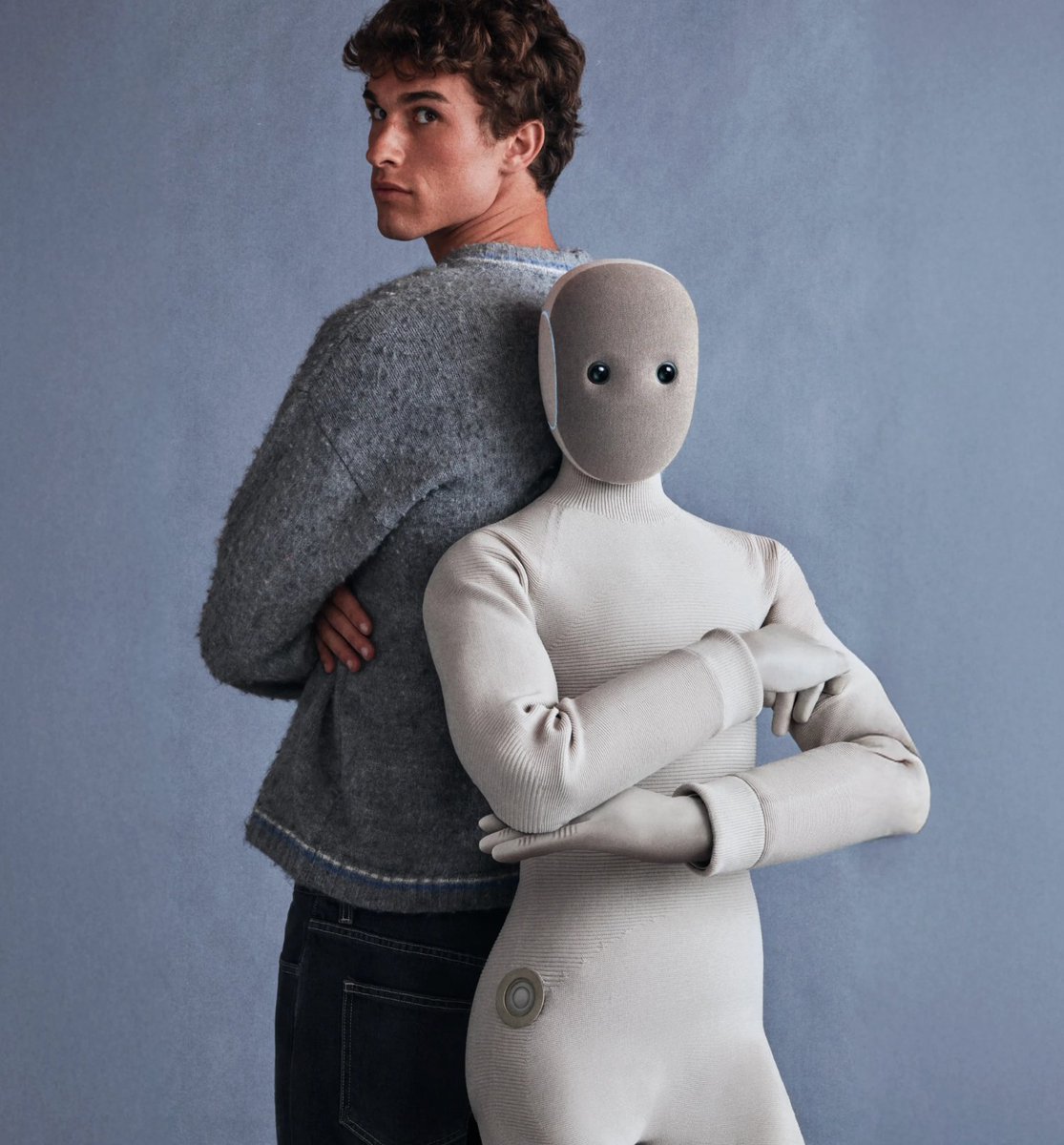
→ @1x_tech — marketing as lifestyle
NEO looks less like a robot and more like a knit sweater that happens to have a face.
1X hired Eli Russell Linnetz — the fashion photographer behind SKIMS and GAP — to shoot a humanoid as an editorial. Soft fabric cover, domestic and calm. Everything is designed to make the robot feel like it belongs in your living room.
Their first-year batch, over 10,000 units, was sold out in five days at $20K each.
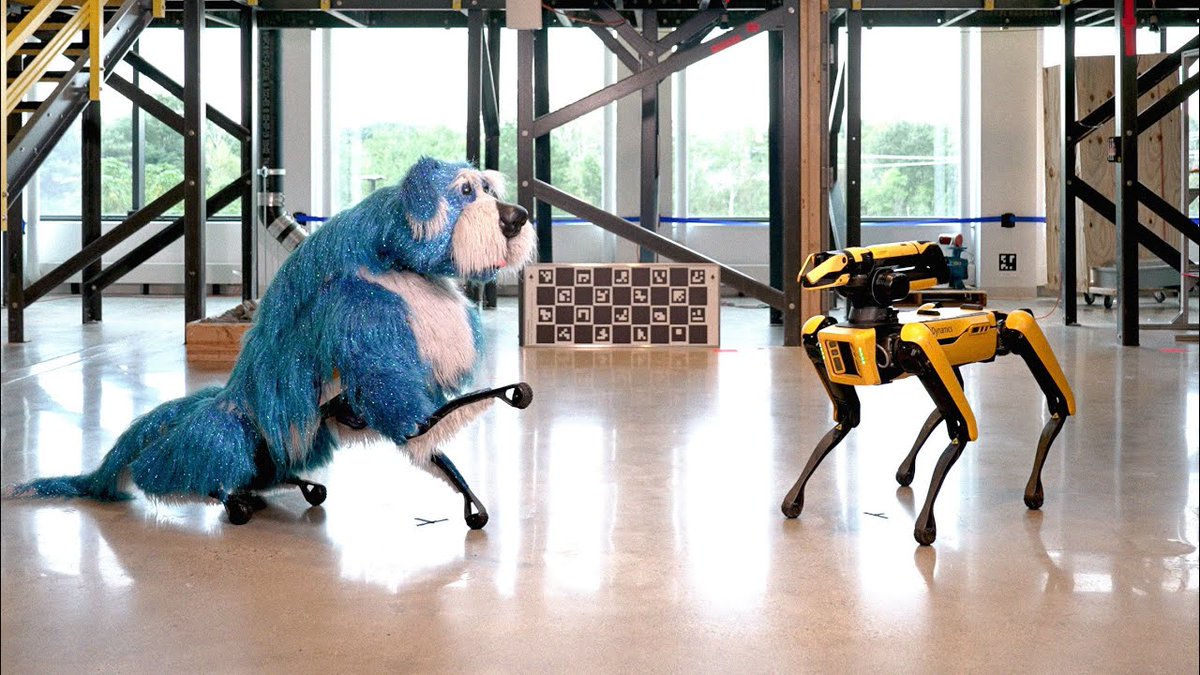
→ @BostonDynamics — marketing as the demo
For many years, Boston Dynamics ran the best organic content strategy in hardware. Atlas doing backflips. Robots dancing to "Do You Love Me" — tens of millions of views on YouTube.
They turned a robotics lab into at some point the most recognizable brand in the category. The fame paid off: the robots are now deployed by over 1,000 customers and at Hyundai's factories.
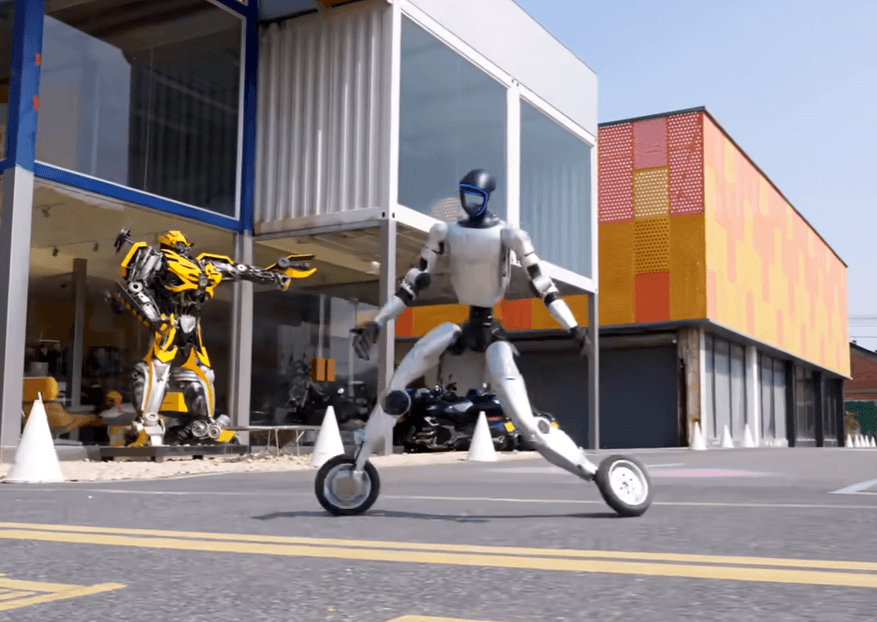
→ @UnitreeRobotics — marketing as national power
The company has been sharing new stunts one after another over the last few years. In one, the CEO is testing an army of robots; in another, robots become figure skaters. Then 679 million people watched the robots do kung fu at China's Spring Festival Gala. Unitree focuses not on being understood but on being powerful enough to trust.
A G1 starts around $13,500, much less than most Western humanoids at the moment. Unitree can price like that because the local supply chains let them assemble a new prototype fast and cheaply. In 2025, over 5,500 humanoids were shipped to customers.
A humanoid robot can raise some concerns: uncanny valley, job anxiety, decades of sci-fi telling us this could end badly. Most products start from zero; for many people, a robot starts from negative. So the first job of robotics marketing isn't to create desire — it's to replace that fear with something else.
1X replaces it with comfort. Boston Dynamics replaces it with delight. Unitree replaces it with power and access.
In part 2, I'll write about how other robotics companies approach content and what comes next.
1
11
927

the 16k Unitree tag is the cheap part. hardware was never the bottleneck, it's the software stack and the people who can make the thing actually useful that drains the budget
6




19h
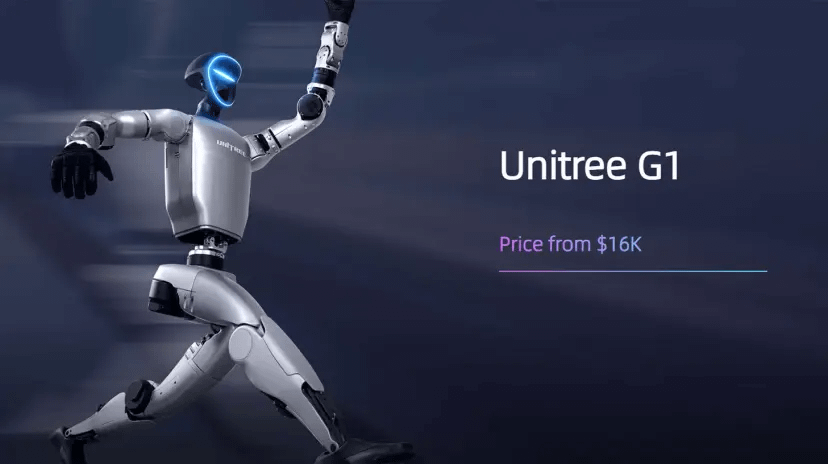
A research-grade humanoid robot has cost as much as a house — $400K and up — which is why almost no one outside a handful of elite labs ever touched one.
@UnitreeRobotics starts at $16,000. Same category of machine, roughly 26× cheaper. A full-body humanoid you can actually buy is the whole story here.
2
1
6,098


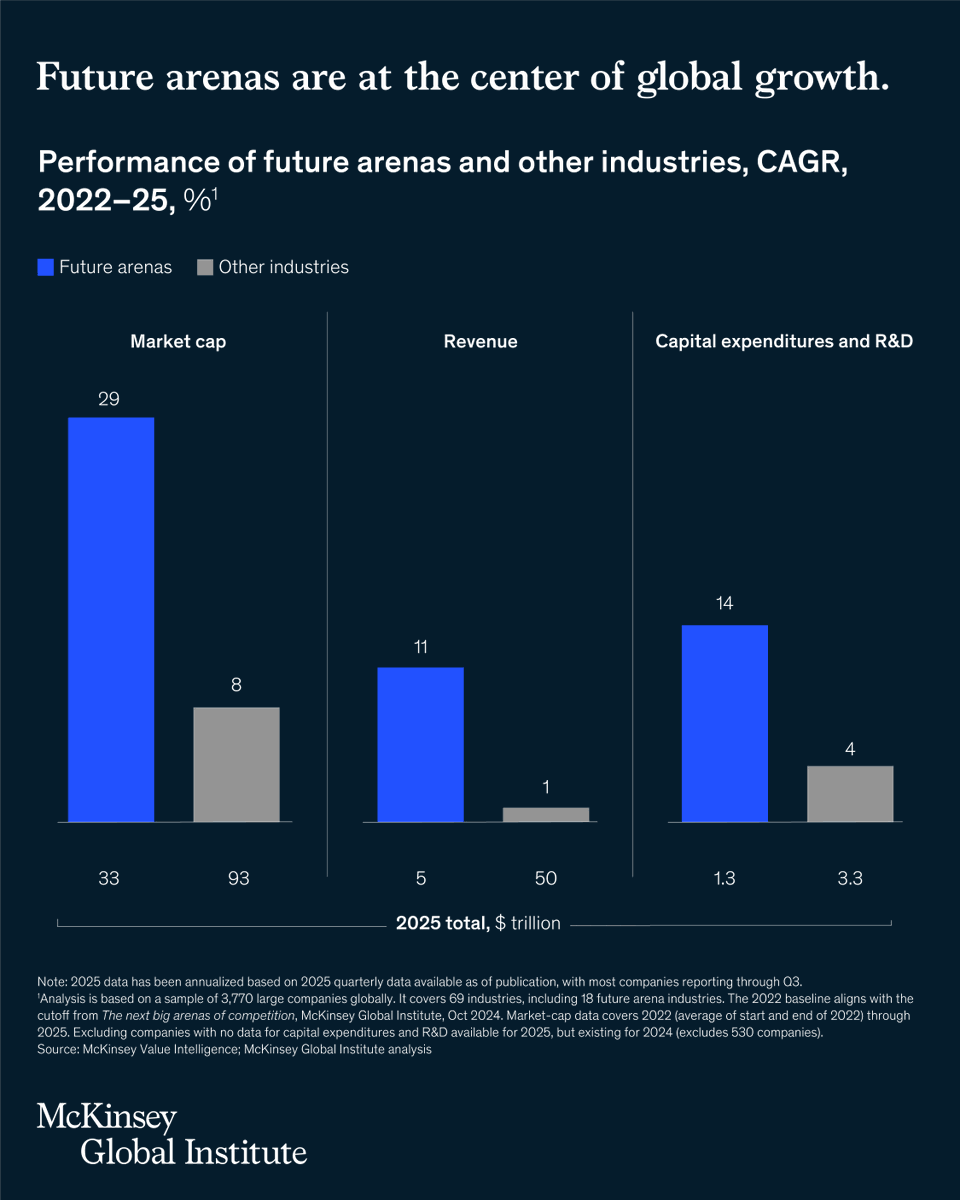
Future arenas combine the three arena-creation potion elements to fuel strong growth and high dynamism:
1. A technology or business-model step change;
2. An escalatory investment pattern;
3. A large or expanding addressable market
The recipe still appears to fuel arenas’ strong growth and high dynamism. 🧪 Get the report: mck.co/arenas2026
60