
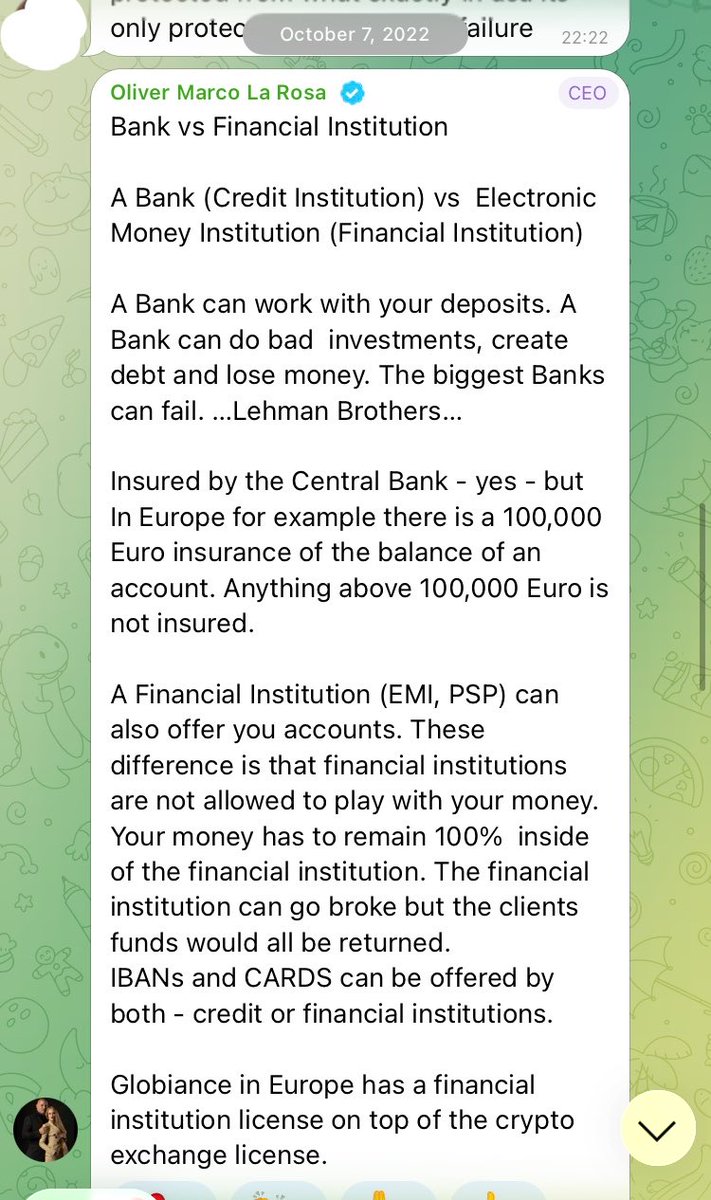
In 2022, the company stated that, as a financial institution holding an EMI license, client funds were safeguarded 100% and would be fully returned even if the company became insolvent. t.me/globiancegroup/70292
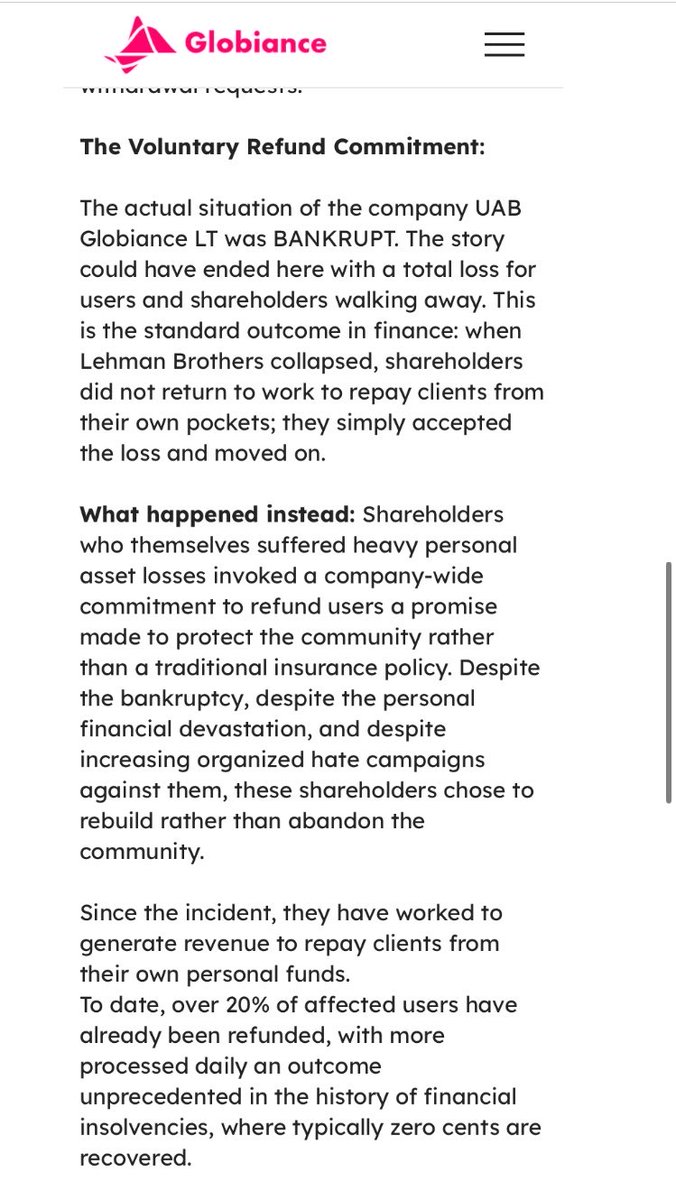
However, in later statements, it was claimed that the bankruptcy of UAB Globiance LT could have resulted in a total loss for users, and that current repayments are being made voluntarily by shareholders from their own funds. globiance.com/news/clarifica…
These explanations appear difficult to reconcile with one another regarding both the safeguarding of client funds and their legal treatment in the event of insolvency.
Therefore, it is necessary for the competent authorities to verify how client funds were actually managed and what the true legal and financial circumstances were at the time of the bankruptcy.
#globiance
#UABGlobianceLT
#EMI
#ClientFunds
#FundSafeguarding
#UserProtection
#FinancialInstitution
#Lithuania
#RequestForInvestigation
#DocumentingTheResponse
5
17
1,356

Jun 8
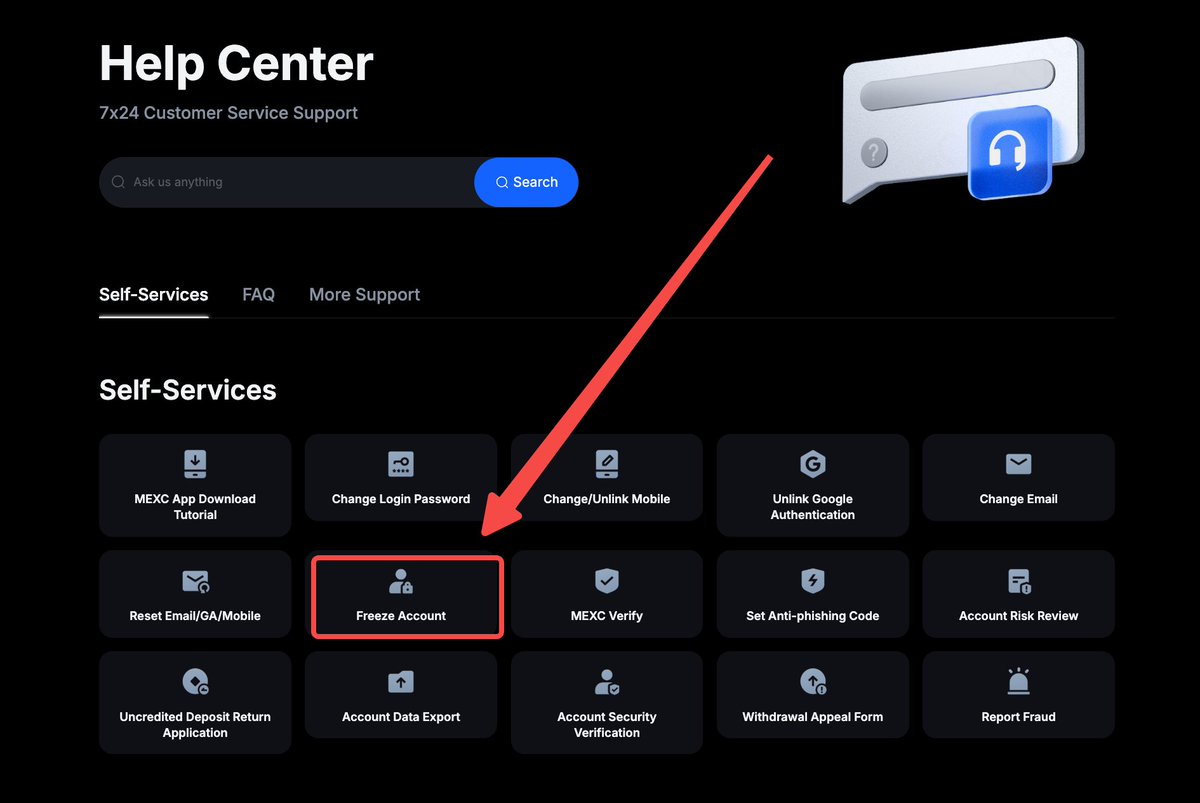
🚨 Think your account may be at risk?
Lock it instantly with MEXC Self-Service Freeze 🛡️
🔹 Disable account access
🔹 Pause all trading activities
🔹 Deactivate connected API keys
📍 Help Center → Self-Service → Freeze Account
💬 Need assistance? Contact MEXC
Customer Service anytime.
#MEXC #AccountSecurity #CryptoSafety #UserProtection 🔒💙
1
2
8
524

May 27
Important Notice on Compliance Updates ⚠️
In light of recent regulatory developments, we encourage all users to stay informed and remain cautious when making cross-platform transfers.
At MEXC, compliance and asset security remain our top priorities. Some activities may trigger additional reviews under risk control measures.
👉mexc.com/announcements/artic…
Our support team is here 24/7 if you need assistance.
#MEXC #CryptoCompliance #CryptoSecurity #UserProtection #StaySafe #CryptoRegulation #CustomerSupport
3
2
459

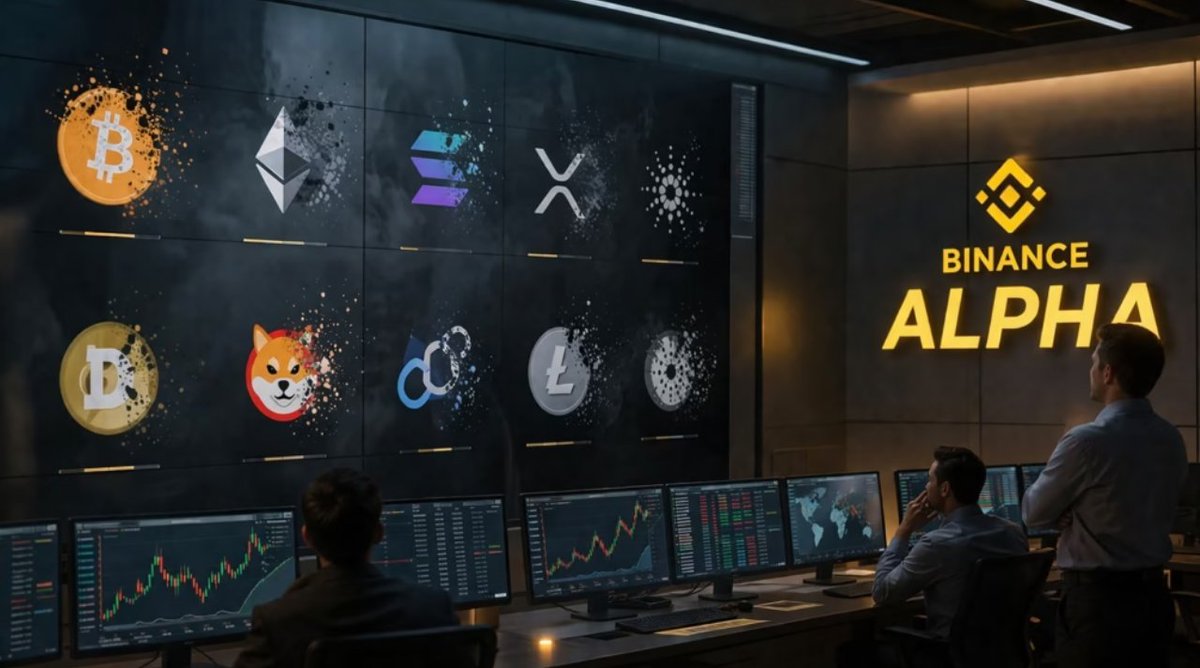
. @binance announced the immediate removal of 23 #Crypto tokens from its #BinanceAlpha platform on April 30, 2026, citing failure to adhere to the platform's standards for transparency and #UserProtection.
The tokens include: $REX (Revox), $XO (Xociety Token), $TANSSI (TANSSI Network), $DARKSTAR (DarkStar), $YALA (Yala), $RCADE (RCADE Network), $RDAC (Redacted), $SKATE (Skate Chain), $OVL (Overlay Protocol), $SLAY (SatLayer), $Ghibli (Ghiblification #SOL), $Ghibli (GhibliCZ #BSC), $PHY (DePHY Network), $VLR (Velora), $SVSA (SavannaSurvival), $WBAI (Whitebridge Network), $EDGEN (LayerEdge), $FAIR3 (Fair and Free), $MM (MOMOFUN), $BUBB (Bubb), $AICell (AICell), $XLAB (Dexlab), & $SIGHT (Empire of Sight).
Read more👇
🔗 thecoinheadlines.com/crypto/…
#CryptoWorld #cryptoinvestor #CryptoNews #CryptoAlert #News #CryptoMarket #Markets #MarketNews #CryptoFinance #CryptoExchange #Binance #BinanceWallet #DeFi #DeFiTrading #Blockchain #Web3 #CryptoDelisting
2
51

Safety isn’t something users notice when it’s working.
It sits quietly in the background no friction, no noise, no reminders.
Until something goes wrong.
And in that moment, it becomes the only thing that matters.
In crypto, preparation isn’t reactive. It’s built in long before it’s needed.
If users only feel safety when it’s too late, the product has already failed
#Crypto #UserProtection #SquirrelWallet
3
12
12
57

Apr 20
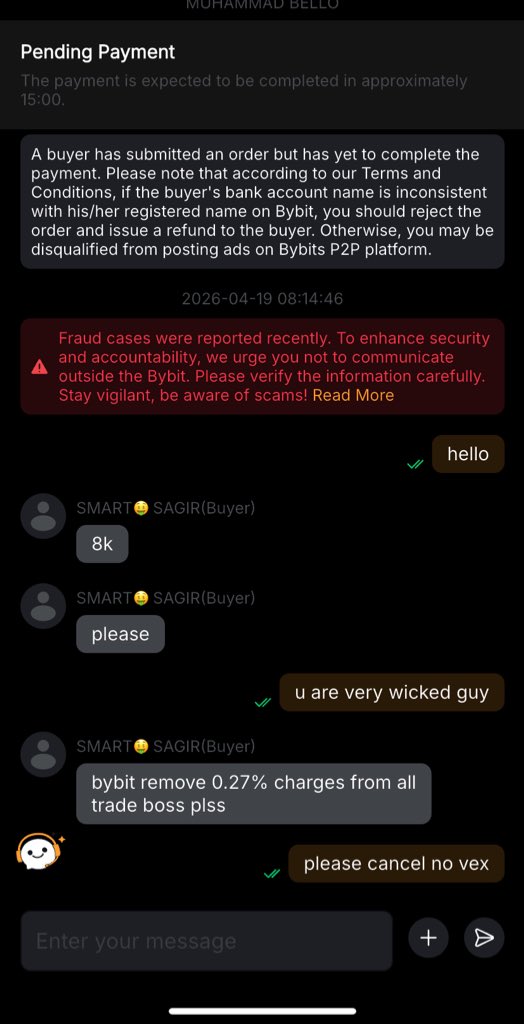
Serious Concern About P2P Buyer Conduct on Bybit 🚨
There is a growing issue on the Bybit P2P marketplace that needs urgent attention.
Some P2P buyers are now deducting excessive fees from sellers’ payments, even after already agreeing to a fixed buying rate. This practice is unfair, unethical, and damaging to trust within the ecosystem.
⚠️ Here’s the real impact:
• Loss of Trust: Sellers are losing confidence in the platform because agreed rates are no longer respected.
• Financial Loss: Unexpected deductions reduce sellers’ profits and make transactions unpredictable.
• Negative User Experience: Honest traders are discouraged, and new users may avoid using P2P entirely due to fear of being exploited.
• Platform Reputation Risk: If this continues, it could damage the reputation of Bybit as a reliable and fair P2P marketplace.
📉 P2P trading depends on transparency, fairness, and accountability. When buyers manipulate payments after confirming rates, it creates a toxic environment that harms the entire community.
📢 Call to Action Bybit Must Act Now:
We strongly urge Bybit to:
✅ Enforce stricter rules against unauthorized deductions
✅ Penalize buyers who violate agreed trade terms
✅ Strengthen dispute resolution and monitoring systems
✅ Protect sellers from exploitative behavior
The success of the P2P marketplace depends on trust. Without swift action, this issue will continue to damage user confidence and platform growth.
Bybit, please investigate this urgently and protect your P2P community.
@Bybit_Official @Alpha_Bybit @BybitAfrica
@benbybit
How can I place a 10k withdrawal and his sending me 8k and 2k for fees
#Bybit #P2PTrading #CryptoSafety #UserProtection
11
7
1,432
Wallet UX after midnight is a different game.
Fatigue changes how people decide. Attention drops. Details get skipped. What would’ve been double-checked during the day turns into a quick tap at night.
That’s where mistakes slip through quietly, without friction.
Great wallets don’t assume peak focus. They protect users when they’re tired, distracted, or running on autopilot
#CryptoUX #UserProtection #SquirrelWallet
5
5
5
66

Mar 23
FoPay 🤝 Chainalysis
Together with Chainalysis, FoPay is strengthening on-chain risk detection and transaction monitoring to better safeguard user assets and platform security.🔐
👉 Download FoPay: fopayglobal.com/app-download
👉 Join our community: t.me/ VtI1Bf-_EHsyNzg9
#FoPay #Chainalysis #DataSecurity #UserProtection #Compliance #Fintech
4
1
6
334

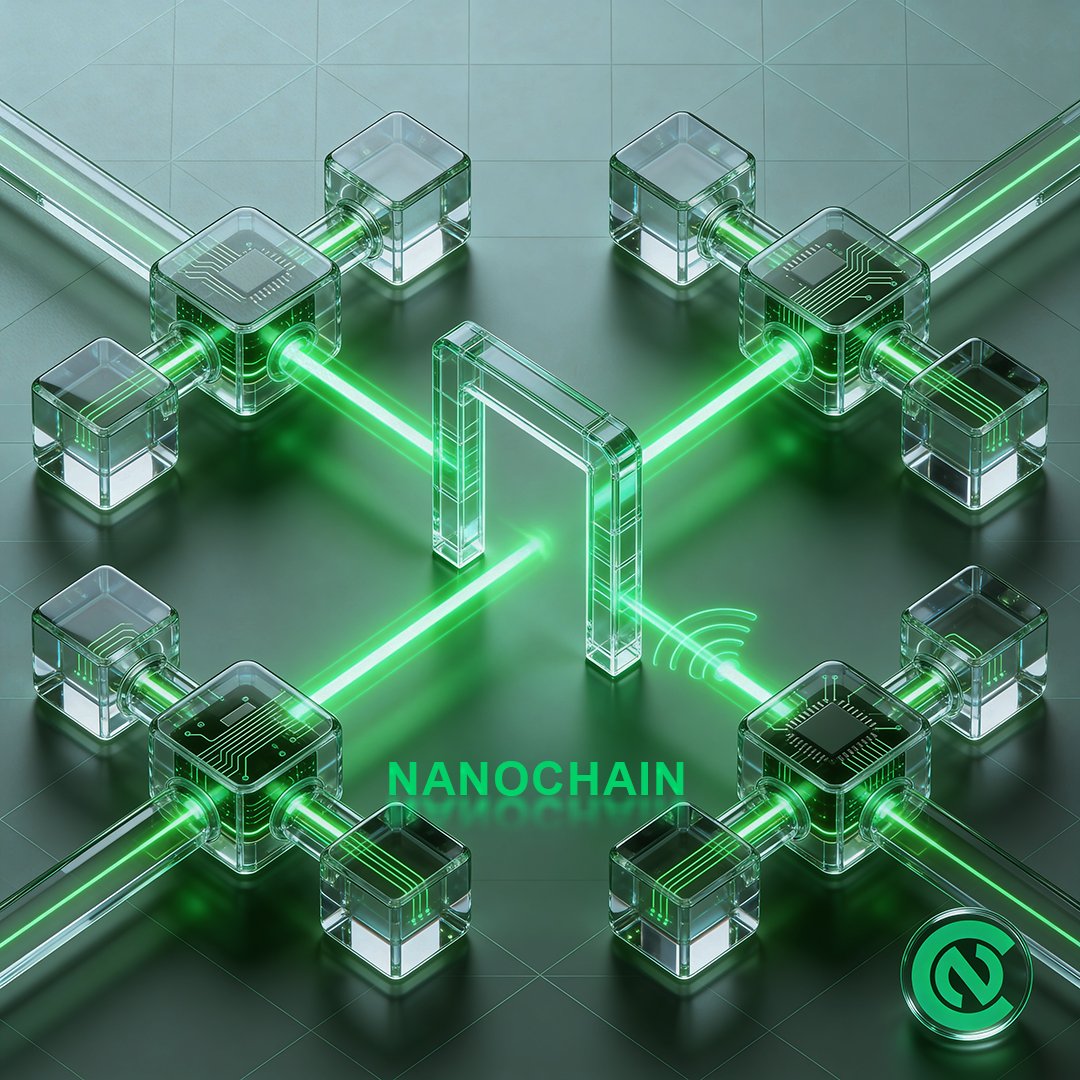
Execution Is Not Enough. Approval Matters.
Most systems execute.
NanoChain makes sure it’s accepted.
With Proof of Satisfaction, finality is not automatic.
High-risk actions do not settle until the receiver explicitly approves.
No silent execution.
No hidden completion.
Only consented finality.
What this changes:
• Transfers require confirmation
• Invites demand acceptance
• Critical actions include human intent
Scams rely on speed and assumption.
NanoChain introduces friction where it matters.
Because real ownership is not just sending.
It is receiving with consent.
This is where security becomes interaction-aware.
This is where execution becomes agreement.
NanoChain Network:
nanch.network/
Official Links:
nanch.link/
Private Sale Access:
purchase.nanch.network/
#nanochain #nanch #web3 #blockchain #security #consent #defi #smartcontracts #cryptosafety #userprotection #decentralization #web3security #proof
ALT NANCH Built on code, guided by people, evolving through shared decisions.
84
81
88
2,374
🧵
3. Asset Type Reality & Voluntary Refunds
💬繰り返しの多い声明ですねポツリ
① 被害資産の種類
•Globianceによると、攻撃で盗まれたのは BTC, ETH, XRP であり、ユーザーのステーキングXDCはブロックチェーン上で無事である
•フラグが立ったXDC送金は、攻撃被害とは無関係で、ユーザー出金に必要な通貨を取得する通常の流動性管理である
② 会社状況と金融慣行
•当時、UAB Globiance LTは 破産状態だった
•通常の金融破綻では、株主や関係者が個人資産で顧客損失を補填する義務はない
👉金融破綻時の典型的な挙動を直接比較することは必ずしも適切ではなく、Globianceの状況とは法的・制度的背景が異なる可能性がある
③ Globianceの主張
•株主自身も個人資産に損失を受けつつ、コミュニティ保護のための返金約束を優先
•Globianceは、ユーザーのステーキングXDCは無事である一方、株主個人資金や内部流動性を活用して返金を進めている、と説明している
👉返金済みユーザーの割合や進捗については、外部からの検証が困難なため、数値はGlobianceの主張
④ 法的・契約上の観点
•ユーザーのステーキングXDCは契約上、ユーザー資産として分別管理されるべき であり、会社破産時に勝手に運営資金に流用することは通常 契約違反や分別管理義務違反 に該当する可能性
•破産会社が株主個人資金で返金することは、法的義務ではなく 自主的措置 にあたる
👉このような対応は破産会社においては極めて異例であり、規制当局や金融監督の観点からも前例の少ない事例
また、ユーザー資産を返却可能にもかかわらず凍結している場合は、契約上・法的リスクが生じる 可能性がある
⑤ 現状の取り組み(Globianceの主張)
•Globianceによれば、影響を受けたユーザーの 一部には返金が行われている
•返金は 日々進行中
•Globianceは、破産状態でも株主個人資金や内部流動性を活用した返金対応を 前例の少ない取り組み として説明
👉数値や「前例の少なさ」の比較は、あくまでGlobianceの主張として提示されており、外部からの検証はできない
#XDC #Globiance #UserFunds #CryptoSecurity #AMLCompliance #RegulatoryOversight #FinancialSupervision #CryptoLaw #UserProtection #Transparency
#FrozenFunds
11
20
1,195
🧵
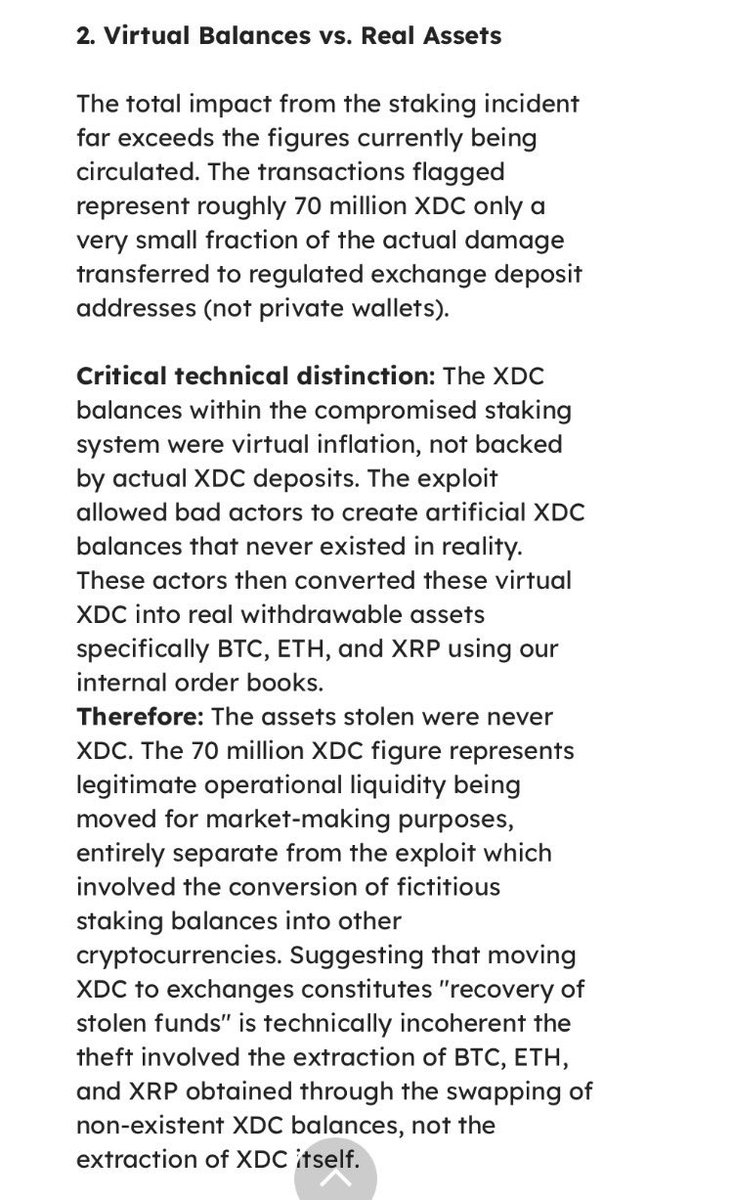
2. Virtual Balances vs. Real Assets
#Globiance によると、フラグが立った送金は 攻撃被害とは無関係 で、ユーザー出金対応やマーケットメイキングのための 通常の流動性管理 の一環だと説明しています。
攻撃で盗まれた資産は、非実在のバーチャル #XDC を換金して得られた BTC, ETH, XRP であり、ユーザーのステーキングXDC自体はブロックチェーン上で無事に存在しており、マスターノード運用中です。
Globianceは次のように述べています:
“The transactions flagged represent roughly 70 million XDC only a very small fraction of the actual damage transferred to regulated exchange deposit addresses (not private wallets).”
この発言においてGlobianceは、フラグが立った70 million XDCは被害のごく一部で、実際の損失総額はさらに大きい と主張しています。
しかし、この「総被害額」の情報はGlobianceの内部主張に依存しており、外部からの検証はありません。私たちは未だに納得のいく説明を受けていません。
70 million XDCという数字はおそらく @blocksec_xdc の調査で判明した送金を指しており、BlockSecの報告では
•2022/5〜2023/3:約7,000万XDC → KuCoin
•2024/4〜9:約1億XDC → Bitrue
が確認されています。あくまで 予備的・部分的な結果 としての報告とされています。
💡 整合性の問題
ユーザーのXDCは無事であれば、理論上は解約・返却してユーザーに戻せます。
しかし現状、資金は凍結されたままです。これはGlobianceが内部損失補填や運営資金確保に、ユーザー資産を充てている可能性を示唆します。
さらに、手動出金操作やAMLレビューといった、ユーザーに説明されていた実務フローと比べると、説明と実務の整合性に疑問が残ります。
⚖️ 法的観点
ユーザーのステーキングXDCは契約上、ユーザー資産として分別管理されるべきです。運営資金や損失補填に流用することは、契約違反や分別管理義務違反にあたる可能性があります。
ハッキング(?)やシステム欠陥による損失はGlobiance側の責任であり、ユーザー資産で補填する正当性はほとんど認められません。
さらに、繰り返しになりますが、Globianceが「Once XDC is swapped for other assets to meet withdrawal demands, the resulting XDC balance becomes Globiance’s operational asset, not ‘stolen user property.’」と説明している部分も、ユーザー資産と運営資産を帳簿上で混同する可能性があり、法的には正当化されません。
まとめると、Globianceは 送金は正当で攻撃被害とは無関係 と主張する一方、BlockSecは 送金内容や経緯を明確にすべき としており、両者の認識には大きな隔たりがあります。
さらに、ユーザー資産返却や内部管理の整合性、法的な正当性の観点からは、多くの疑問が残る状況です。
#CryptoSecurity #AMLCompliance #RegulatoryOversight #FinancialSupervision #CryptoLaw #UserProtection #Transparency
1
10
18
1,101

Mar 15
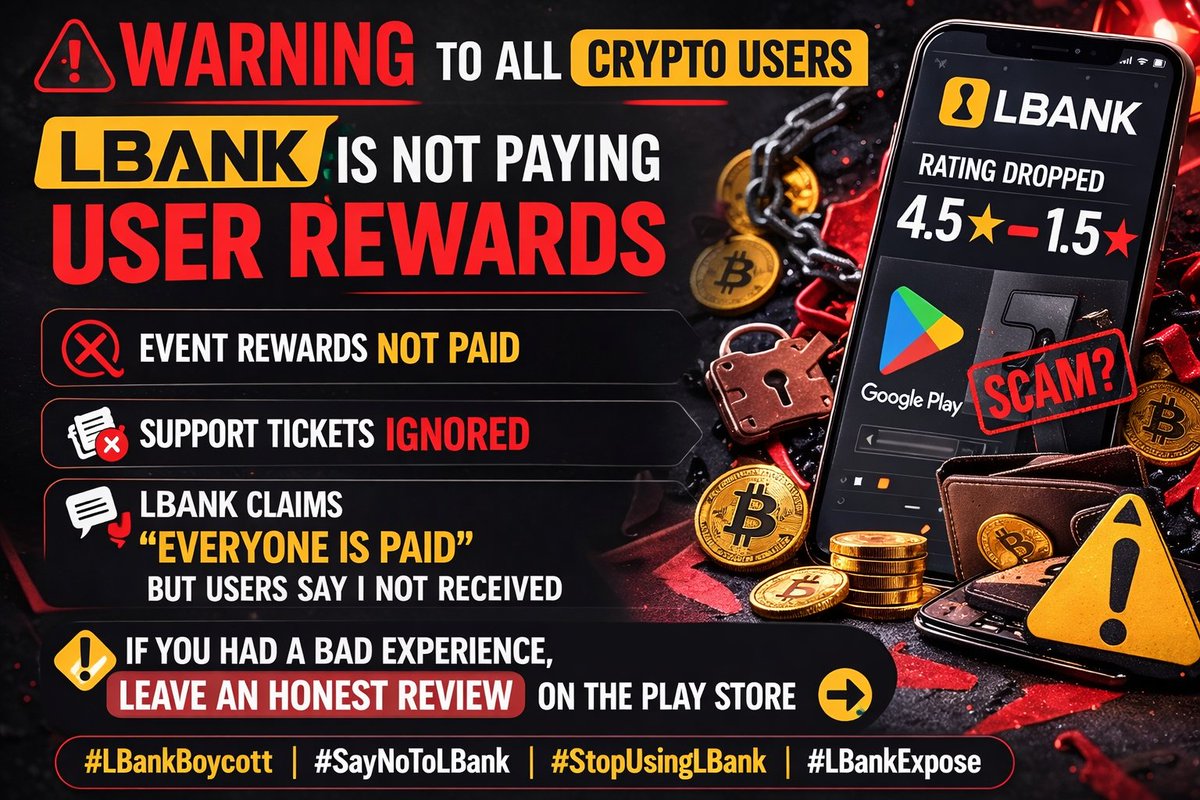
🚨 Attention Crypto Community 🚨
The power of the community is real. After users began sharing their experiences, the rating of LBank on the Google Play Store dropped from 4.5⭐ to nearly 1.5⭐.
Many users report that event rewards have not been paid, while support tickets remain unanswered. At the same time, the exchange claims that payments have already been completed. Numerous community members say they still have not received their rewards and have proof of the issue.
Transparency and trust are essential for any crypto platform. Situations like this raise serious concerns for users.
⚠️ If you have experienced similar issues, consider sharing your experience and leaving an honest review to help inform other users.
📱 App: play.google.com/store/apps/d…
#LBankBoycott #CryptoCommunity #UserProtection #CryptoTransparency
2
8
105

Mar 12
# Unlocking Privacy in Stablecoin Transactions: How Utexo Protects Users on Bitcoin
👉In the rapidly evolving world of cryptocurrency, privacy remains a paramount concern for users navigating digital financial landscapes. With increasing regulatory scrutiny and the ever-present threat of data breaches, the need for secure, anonymous transactions has never been greater. Enter Utexo, a groundbreaking Bitcoin-native infrastructure platform that's redefining how stablecoins like USDT move across networks. Built on the robust foundations of the Lightning Network and the RGB protocol, Utexo prioritizes user privacy without compromising on speed or efficiency. As the platform gains traction—backed by a recent $7.5 million seed round co-led by Tether—it's poised to become a cornerstone for privacy-focused crypto operations.
👉At its core, Utexo serves as an execution and settlement layer specifically designed for stablecoin payments on Bitcoin. Unlike traditional blockchain models that often expose transaction details on public ledgers, Utexo leverages advanced cryptographic techniques to shield user data. The RGB protocol, which Utexo integrates seamlessly, is a privacy-preserving asset issuance system that allows for off-chain execution of transactions. This means that sensitive details—such as the amounts transferred, sender and receiver identities, and transaction metadata—are not broadcasted to the entire network. Instead, only cryptographic commitments are anchored to Bitcoin's blockchain for verification and dispute resolution, ensuring finality and security while keeping the bulk of the data private.
👉This approach addresses one of the most glaring vulnerabilities in conventional stablecoin transfers: on-chain transparency. For instance, on networks like Ethereum, where USDT predominantly operates, every transaction is publicly visible, enabling chain analysis firms to track user behavior, link addresses, and potentially deanonymize individuals. Utexo flips this script by confining execution to off-chain environments, where privacy is baked in from the ground up. Users can settle USDT payments instantly through Utexo's API, with built-in mechanisms that obscure transaction trails. This not only protects everyday users from surveillance but also appeals to institutional players who require discretion in high-volume operations.
👉Consider the practical implications for individual users. In a world where financial privacy is eroding due to KYC mandates and data-sharing agreements, Utexo empowers people to conduct peer-to-peer transfers without leaving a digital footprint that could be exploited. Whether you're remitting funds across borders or simply swapping BTC for USDT, the platform ensures that your activities remain confidential. This is particularly crucial in regions with unstable economies or authoritarian regimes, where financial autonomy can be a matter of personal safety. By minimizing the data exposed on Bitcoin's Layer 1, Utexo reduces the risk of targeted attacks, such as phishing or social engineering, that often stem from public transaction histories.
👉From a technical standpoint, Utexo's privacy features stem from its hybrid architecture. The Lightning Network handles instant execution, allowing sub-second settlements, while RGB manages asset issuance in a way that prevents linkage between transactions. This combination creates a "client-side validation" model, where users verify their own transactions without relying on third-party nodes that could log or leak information. Moreover, Utexo introduces configurable fees, enabling operators to tailor costs without exposing user patterns through variable pricing that might reveal transaction sizes or frequencies.
👉For developers and businesses, integrating Utexo means offering privacy as a default feature. Wallets and exchanges can embed Utexo's SDK to provide users with native USDT support on Bitcoin, all while maintaining compliance through selective disclosure options. This doesn't mean skirting regulations; rather, it allows for privacy-preserving proofs that satisfy auditors without compromising user data. As Viktor Ihnatiuk, co-founder and CEO of Utexo, has highlighted in discussions, the platform's journey from Ukrainian fintech roots to Bitcoin infrastructure forefront underscores a commitment to real-world utility. By bringing USDT "home" to Bitcoin—where it originated—Utexo not only taps into Bitcoin's unmatched liquidity and security but also elevates privacy standards across the ecosystem.
👉 Critics might argue that complete anonymity could enable illicit activities, but Utexo's design strikes a balance. It provides tools for optional transparency when needed, such as in audited financial reports, while defaulting to privacy for everyday use. This nuanced approach aligns with Bitcoin's cypherpunk ethos, where control over one's financial data is a fundamental right.
👉Looking ahead, Utexo's impact on user protection could reshape the stablecoin market, which is dominated by USDT's $184 billion market cap. As more operators adopt this infrastructure, we may see a shift away from privacy-eroding chains toward Bitcoin-native solutions. Events like Utexo's "Builder Series: Stablecoins on Bitcoin" in London signal growing community interest, inviting developers from various ecosystems to explore these tools.
👉In summary, Utexo protects users by embedding privacy into the DNA of stablecoin transactions on Bitcoin. Through off-chain execution, cryptographic anchoring, and innovative protocols like RGB, it offers a shield against surveillance in an increasingly transparent digital world. For anyone serious about safeguarding their financial sovereignty, Utexo isn't just an option—it's a necessity. As the platform rolls out its API and cloud services, expect privacy to become the new standard in crypto payments.
@utexocom @tether #UtexoArticle #BTCFi #Privacy #DeFi #UserProtection
3
2
5
51

Mar 11
टेलीकॉम कंपनियों की मनमानी होगी खत्म!
संसद में बोले राघव चड्ढा... प्री-पेड मोबाइल यूजर्स से जुड़ा मुद्दा!
#TelecomReforms #RaghavChadha #PrepaidUsers #MobileIssues #ParliamentNews #ConsumerRights #TelecomAccountability #UserProtection
@raghav_chadha @AamAadmiParty
1
2
48

Layer 2: Shield Fund.
When markets break, this doesn't.
A reserve built for the scenarios you hope never happen.
Protection. Not promises.
#ShieldFund #BingX #UserProtection #CryptoSafety #BGXRO_FansClub_Page
7
5
83

Layer 2: Shield Fund.
When markets break, this doesn't.
A reserve built for the scenarios you hope never happen.
Protection. Not promises.
#ShieldFund #BingX #UserProtection #CryptoSafety
2
2
7
72

Feb 18
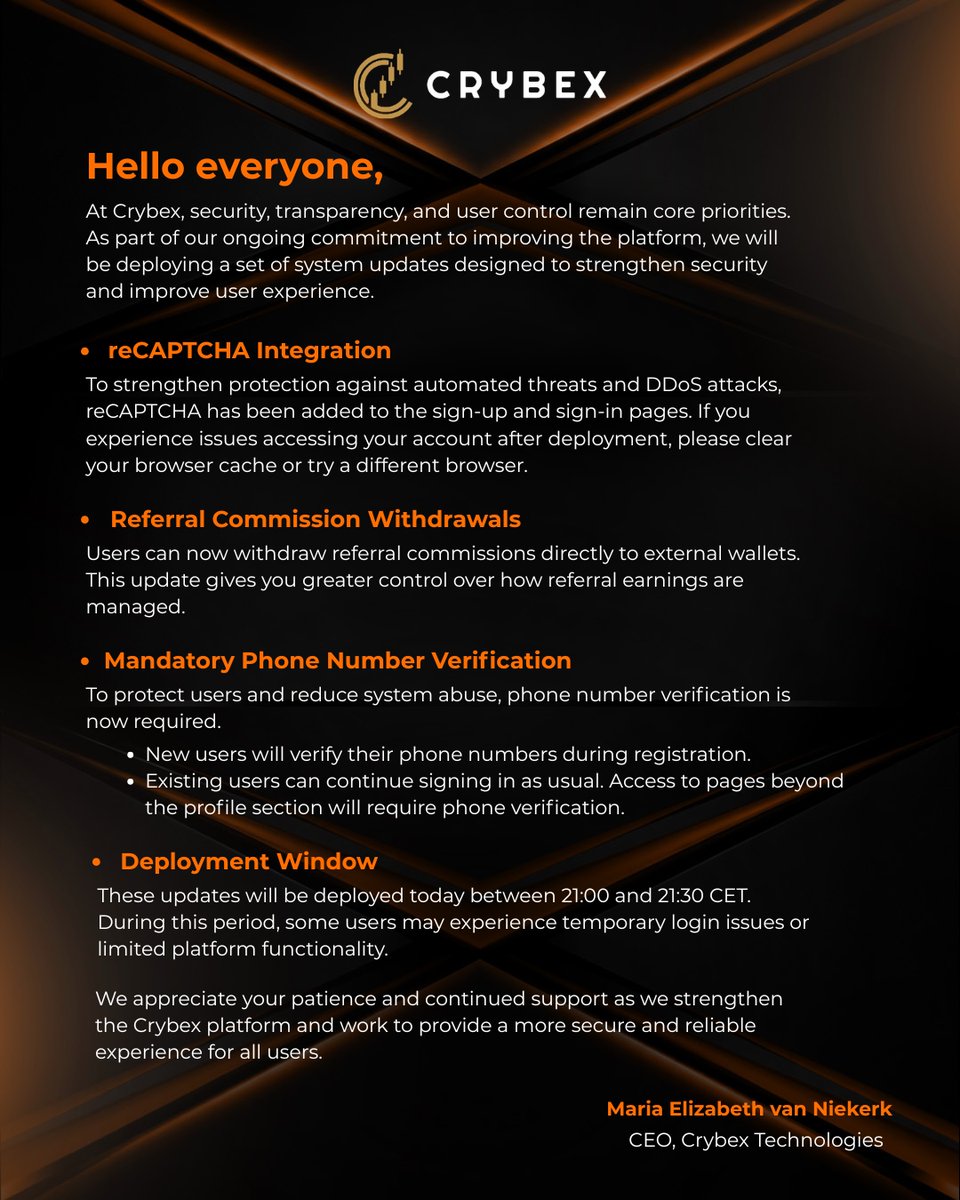
🔔 Platform Update Notice
At Crybex, security, transparency, and user control remain our top priorities. As part of our ongoing commitment to strengthening the platform
Thank you for your continued trust and support. 🤝
#Crybex #PlatformUpdate #SecurityFirst #UserProtection
3
4
81

Feb 14
Still no reply.
Still no solution.
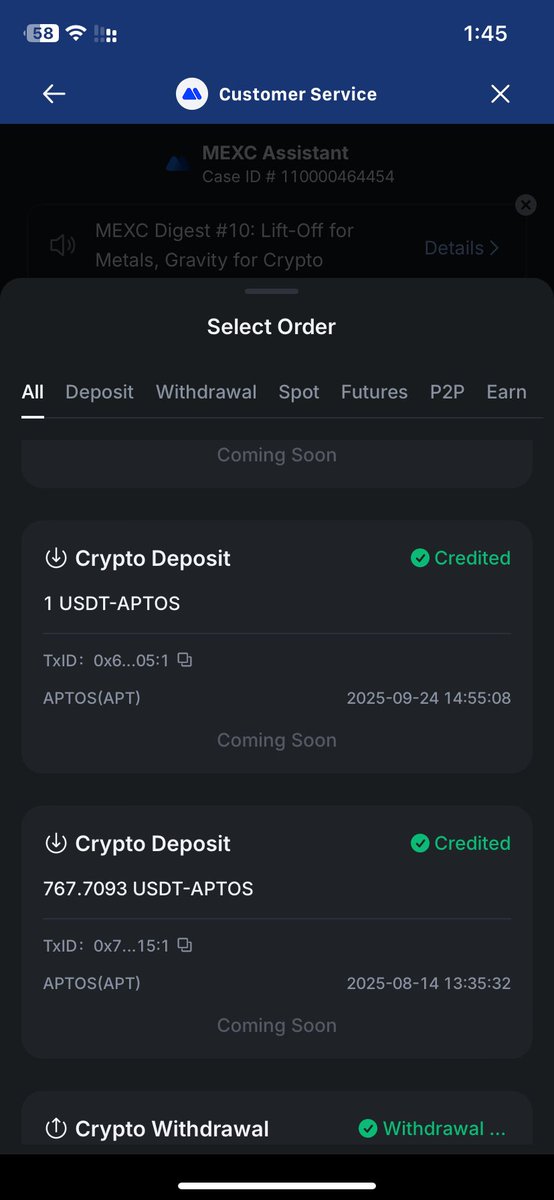
Still no access to my $767. 🔒💸
@MEXC_Official @MetaPulseAI
Let’s be clear:
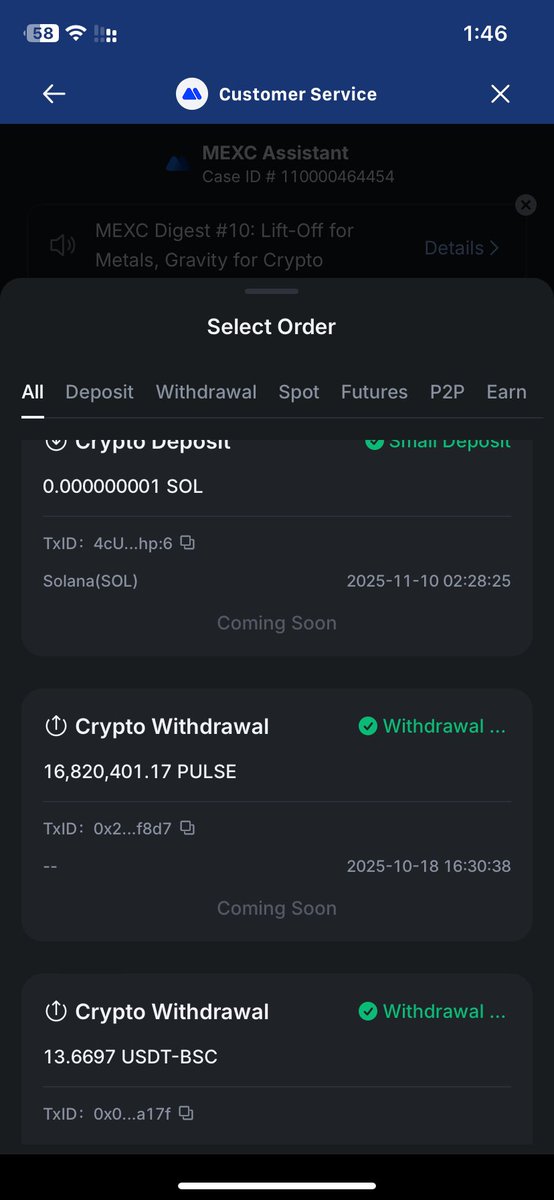
My tokens are still in my wallet.
I followed your withdrawal instructions. ✅
You forced a specific network.
Then the project changed the contract.
Changed the network.
No bridge.
No migration.
No warning. ⚠️
Result?
Funds locked.
Unusable.
Worthless. 💀
Not because of “market risk.”
Because of bad coordination zero protection.
Exchange listed it.
Exchange earned fees.
Project changed everything.
Users paid the price. 💸
$767 didn’t “disappear.”
It was trapped.
Between:
Forced network ❌
New contract ❌
No support ❌
This is how retail gets wiped silently.
Listing without responsibility = negligence.
Delisting without migration = abandonment.
Crypto isn’t supposed to work like this.
Do better.
#MEXC #PULSE #MetaPulse #CryptoWarning #DeFi #UserProtection #Crypto2026 🚨
Jan 25

1/ 🚨 Lost Exactly $767 on $PULSE After MEXC Delisting & Contract Change – Old Holders Still Stuck
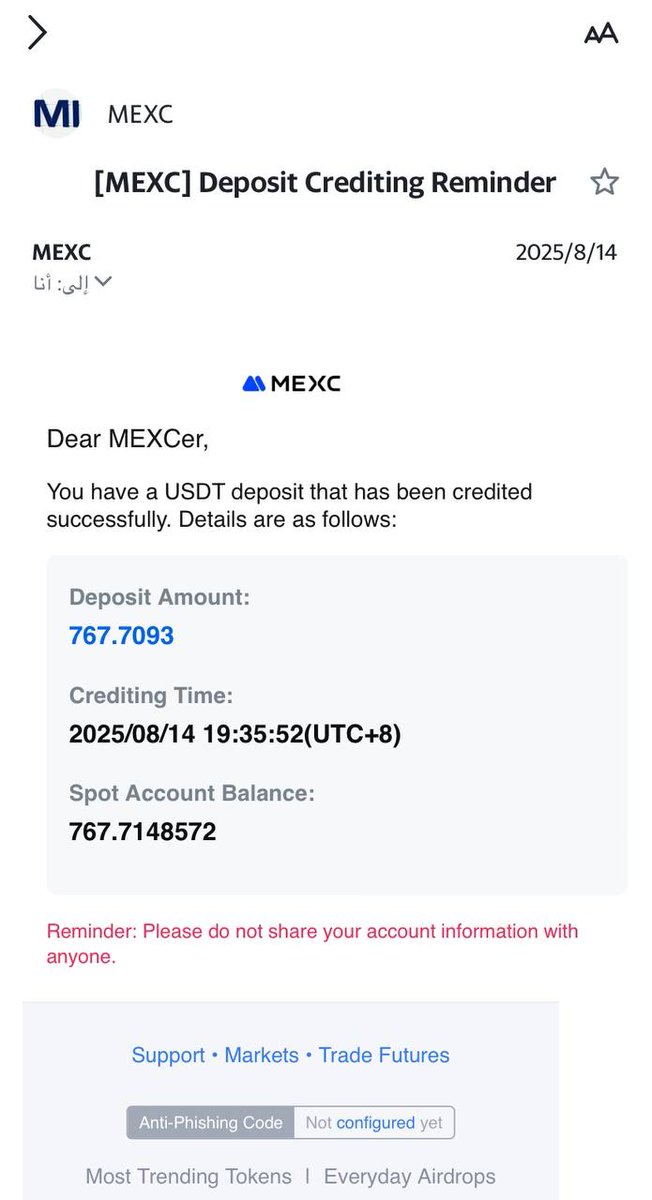
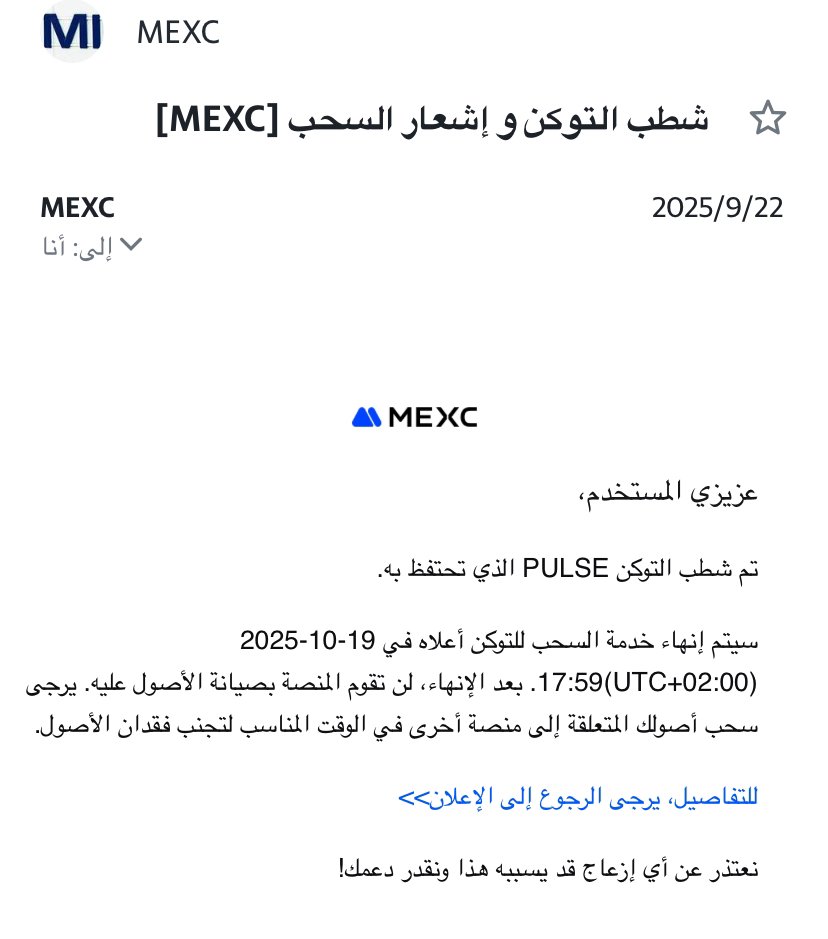
In August 2025 I deposited 767 USDT on MEXC and bought $PULSE during the hype. Token dumped hard → delisted (official MEXC notice Sept 22, 2025) → withdrawal stopped Oct 19, 2025.
New contract Jan 2026 – but no migration tool for old holders like me. Funds still inaccessible.
2/ Proof attached:
- MEXC deposit confirmation Aug 14, 2025 (exactly 767.7093 USDT credited)
- Official MEXC delisting announcement Sept 22, 2025 (withdrawal end Oct 19)
No guide, no support, no compensation for early buyers after contract change.
@MEXC_Official @MetaPulseAI – why no migration path for old holders? What happened to early funds?
3/ Degens: Ever lost exact amounts after CEX delisting silent contract/network swap?
Share your stories (with proof if comfortable) 👇
RT to warn others and hopefully get answers from the team 🫡
#PULSE #MetaPulse #MEXC #DeFi #CryptoWarning #BSC #Crypto2026
6
1
7
215

📣 SUPEREX THÔNG BÁO HỦY NIÊM YẾT CÁC CẶP GIAO DỊCH SPOT & FUTURES (THÁNG 02/2026)
📌 Sau quá trình rà soát dự án và nhằm đảm bảo trách nhiệm đối với toàn bộ người dùng, SuperEx.com đã quyết định loại bỏ và tạm ngừng giao dịch đối với các cặp Spot & Futures sau:
🔸 Vào lúc 14:00 ngày 05/02/2026 (UTC), các hợp đồng Futures sau sẽ chính thức bị hủy niêm yết: $NKN-USDT & $DF-USDT
🔸 Vào lúc 14:00 ngày 05/02/2026 (UTC), các hợp đồng Spot sau sẽ chính thức bị hủy niêm yết: $NVG8/USDT
👉 Chi tiết: support.superex.com/hc/en-00…
#SuperEx #Delisting #SpotTrading #FuturesTrading #CryptoNews #Announcement #RiskManagement #UserProtection #CryptoExchange #Transparency
2
323
📣 SUPEREX THÔNG BÁO HỦY NIÊM YẾT CÁC CẶP GIAO DỊCH FUTURES (THÁNG 02/2026)
📌 Sau quá trình rà soát dự án và nhằm đảm bảo trách nhiệm đối với toàn bộ người dùng, SuperEx.com đã quyết định loại bỏ và tạm ngừng giao dịch đối với các cặp futures sau:
⏰ Vào lúc 14:00 ngày 05/02/2026 (UTC), các hợp đồng futures sau sẽ chính thức bị hủy niêm yết: $NKN-USDT & $DF-USDT
❗️ Lưu ý quan trọng: Người dùng đang có lệnh mở đối với các cặp giao dịch trên vui lòng chủ động hủy lệnh trước thời điểm hủy niêm yết. Trong trường hợp lệnh không được hủy đúng hạn, hệ thống sẽ tự động hủy lệnh để đảm bảo an toàn cho người dùng.
👉 Chi tiết: support.superex.com/hc/en-00…
#SuperEx #Delisting #FuturesTrading #CryptoNews #Announcement #RiskManagement #UserProtection #CryptoExchange #Transparency
2
325