
Jun 11
The most critical part of an election isn’t just voting.
It’s what happens after.
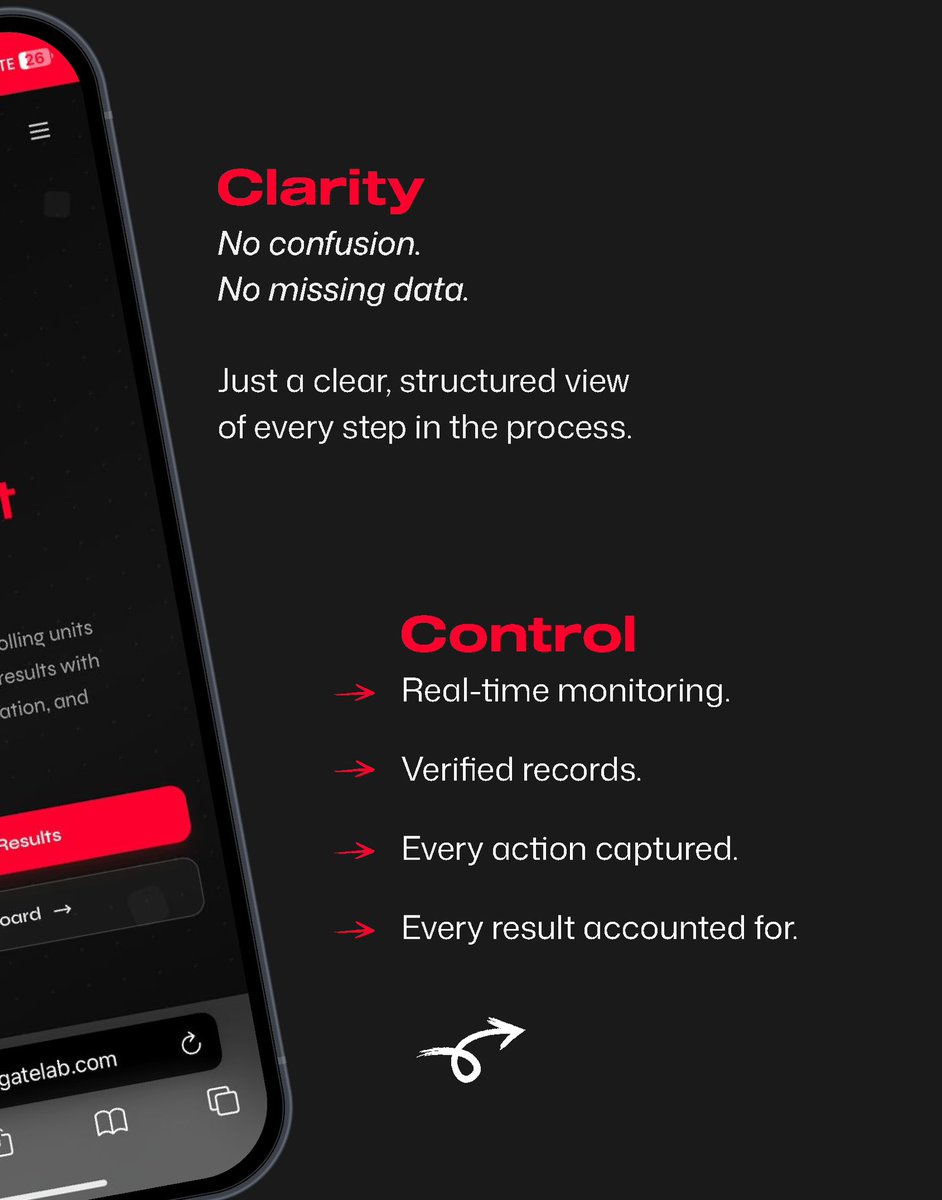
VoteWatch ensures every result is tracked, verified, and visible in real time.
Click the link on our bio or send us a DM to help you get a transparent election. #VoteWatch #electionresults #fyp


1
1
15

Jun 2
He who pays the piper dictates the tunes.
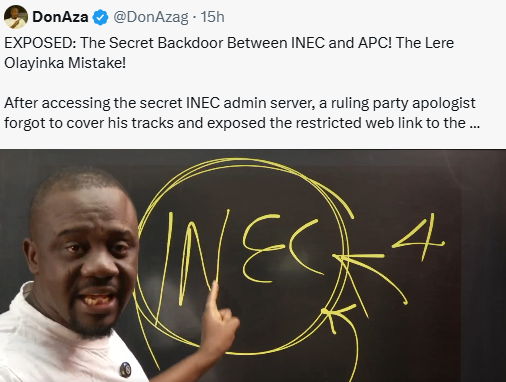
The quicker we realize that INEC is not independent, the better for us.
Build your own polling unit election result collation system like VoteWatch, with blockchain and crypto rewards integrated to attract GenZs and allow people earn for participation and fulfilling tasks.
1
2
3
92

1/2. Part One
MEET The FOURTEEN Labour Politicians Arrested, Imprisoned, Or Under Investigation In The Past Six months. A factual post of a year ago
OVER a dozen Labour Politicians including MPs and Mayors have been arrested for serious crimes, while investigations continue into a string of other party officials and campaigners. Sir Keir Starmer is yet to comment on any of them – yet here, VoteWatch exclusively reveals a socialist rogue’s gallery, and what is becoming an ever-
CLAUDIA WEBBE MP
The 55-year-old MP for Leicester East, who lives in Islington, was charged with harassment after making numerous abusive unwanted telephone calls to another female, a court has heard, and pleaded not guilty to one charge of harassment during a 20-minute hearing at Westminster Magistrates’ Court.
In court, Webbe spoke only to confirm her name, her age, and her address and to formally enter her not guilty plea.
In a statement on 28th September, Webbe said: “I am innocent of any wrongdoing and look forward to proving this in court.”
“I will be vigorously defending myself against these claims.”
Webbe has, however, acknowledged that the calls were made and was released on unconditional bail; the trial rescheduled to 16th March 2021.
The Metropolitan Police supplied evidence to the Crown Prosecution Service detailing claims of harassment between 1st September 2018 and 26th April 2020.
APSANA BEGUM MP
Apsana Begum, MP for Poplar and Limehouse, was given a £330,000 desirable riverside property just months after moving out of her estranged husband’s home. Official complaints were made over how the far-left Corbynista leapt to the top of an 18,000-strong housing list, despite having no children.
Allegedly using her contacts at the council, Begum is thought to have applied for a council flat while living with her family in 2011. Begum moved in with her husband in 2014 but the couple split a year later.
Within just six months, Ms Begum was offered the one-bed Isle of Dogs flat in a riverside block – jumping her own constituents; families and vulnerable residents – some of whom have been waiting desperately on the list for years.
Tower Hamlets only has the capacity to house 1,700 people per year, on a list of over 18,000 applicants.
A source from a political organisation in Tower Hamlets said: “She’s still in the flat despite earning £82,000 plus expenses a year as MP, and yet has the audacity to complain about housing shortages.
“The council are taking their time to ensure all their ducks are in a row. It has the potential to be bigger than the Onasanya saga”.
Fiona Onasanya, a former Peterborough Labour MP, was ousted by her constituents via a recall petition after being caught and convicted for lying about a driving offence.
Section 1 of the Recall Act dictates that the Speaker of the House can trigger a recall petition if a sitting MP receives a custodial sentence of under a year. Anything over a year leads to automatic dismissal of the MP without the need for a petition.
A four-day trial is set to begin on the 27th July.
1
3
33

Mar 8
Yes, me too. I've followed him and VoteWatch for years, and believe him to be the best investigative journalist around. I always refer anyone discussing this subject to him. Recommended.
1
3
23

25 Nov 2025
The BJP’s election theatrics for the GHMC polls have already begun.
#BJP #GHMCelections #HyderabadPolitics #ElectionBuzz #PoliticalDrama #GHMC2025 #IndiaPolitics #VoteWatch
1
1
2
342

20 Oct 2025
According to transcripts provided by a VoteWatch report, she was not a minor - she was proven to have lied in court.
1
4
97

5 Oct 2025
Podle aktuálních dat z nástroje VoteWatch Europe je celková percentuální shoda hlasování mezi Filipem Turkem a Kateřinou Konečnou od června 2024 do října 2025 přibližně 72 %.
2
51
1,378
4 Oct 2025
Zajímavé. Podle aktuálních dat z nástroje VoteWatch Europe je celková percentuální shoda hlasování mezi Filipem Turkem a Kateřinou Konečnou od června 2024 do října 2025 přibližně 72 %.
9
214

30 Aug 2025
Election’s Secret Guardians: Technology Meets Democracy. Good News Global
Read the full Story here: goodnewsglbl.com/bangladesh-…
#SilentGuardians #ElectionRevolution #DigitalDemocracy #VoteWatch #BangladeshElections2026

1
2
6

20 Aug 2025
MOCK THE VOTE
by Andrew Gumbel
Unlike some of the more fanciful lower-order candidates, Jerry Kunzman never deluded himself into thinking he could actually win the California gubernatorial recall election. In fact, the 39-year-old Bay Area entrepreneur, a registered Republican, never seriously entertained the notion of finishing in the top 10. So he was more than a little surprised to discover that, in rural Tulare County, he had finished fifth – behind Arnold Schwarzenegger, Cruz Bustamante, and Tom McClintock, but ahead of Peter Camejo and some of the more prominent dropout candidates such as Arianna Huffington, Bill Simon, and Peter Ueberroth.
In fact, Kunzman won roughly one-third of his 2,176 statewide votes in Tulare, even though he never set foot there during the campaign and knew not a soul in Visalia or any of the surrounding farm communities. He did almost as well in Fresno County, a little to the north. And, bucking the notion that his message somehow held particular appeal to Central Valley conservatives, there was the further anomaly of Humboldt County on the north coast, where he garnered 10 percent of his overall support.
“I wouldn’t have expected that at all,” a nonplussed Kunzman said in a phone interview from the Richmond offices of the National Auto Sport Association, where he is chief executive. “In the Central Valley, a radio station offered to play a 60-second message from me for the last three weeks of the campaign, so maybe that made a difference. But I sure would love to know what happened in Humboldt.”
It was a similar story for Ronald Palmieri, a Los Angeles entertainment lawyer who came in fourth in Tulare County – a bizarre placement for an openly gay candidate in a socially conservative part of the state, especially since he had come out vehemently against the recall and ran on the slogan “Don’t Vote for Me!” Ditto for Randy Sprague, a fraud investigator from Elk Grove, outside Sacramento, who finished sixth in Tulare.
So what happened? Did this trio really refresh parts of the California electorate that other candidates could not reach, or was something screwier going on? The numbers don’t make sense.
Ever since the 2000 Bush-Gore fiasco in Florida, where shady purges from the voter rolls and voting technology problems put the American presidential vote count in serious doubt, the machinery of democracy has been in trouble. The sacred principle of One Person, One Vote only works if the votes are accurately counted. Florida made it clear that the old punchcard system is susceptible to serious mechanical flaws, especially in a close race when everything might come down to reading dimples and chads. That is why the ACLU fought in the federal courts to have the recall postponed until next March, when a new generation of voting machinery could be introduced throughout California.
But new computer-driven touchscreen voter machines, it turns out, may be worse – much worse. For the past few months, an increasingly loud chorus of leading computer scientists has warned about the dangers of touchscreen voting machines. Mounting evidence from elections across the country, including California’s recall election, indicates that the machines are prone to software bugs and breakdowns, extremely easy to tamper with, and impossible to verify because of strict trade-secrecy agreements by which the equipment is sold to county elections officials.
The first all-touchscreen election in the country, in Georgia last November, was marked by huge, unexplained last-minute swings that resulted in the surprise elections of Republican governor Sonny Perdue and Republican Sen. Saxby Chambliss. The results raised significant concerns about the reliability of the machines, made by Diebold Election Systems, particularly since they had been “patched” at the last minute following a major software breakdown. The patches, which amounted to a complete reprogramming, were never tested. Then, in January, the source code apparently used in Georgia suddenly popped up on an open-access Internet site – a big security no-no that was followed by the discovery of hundreds of security flaws by computer security experts who conducted two separate studies of the code for Johns Hopkins University and for the state of Maryland.
Worse, there were concerns that the companies making the machines were themselves politically engaged. Diebold CEO Walden O’Dell told fellow Republicans (he is a major fundraiser for Bush 2004) he was “committed to helping Ohio deliver its electoral votes to the president next year.”
Touchscreens made by the three leading U.S. manufacturers (used by about 10 percent of California voters on October 7) are not currently configured to print out receipts of individual voting choices, so there is no separate paper trail to follow in case of controversy, and no possibility of conducting recounts. What is in the machine is in the machine – whether it is right, wrong, incorrectly processed, or subject to malicious interference.
Critics also have concerns about other uses of computers, especially in the tabulation of votes, irrespective of how they were actually cast. Again, it is a matter of properly functioning software and data security. That might not sound like such a stretch in this digital age, but the record of recent elections around the country suggests there are plenty of anomalies arising from computer tabulation that we need to worry about. Last November’s mid-terms produced one election in Texas where the computers declared a landslide victory to a candidate subsequently found, after a hand recount, to have lost. In another Texas county, three candidates for local office all won exactly 18,181 votes – a bizarre coincidence that was never investigated further. And in Alabama, the close race for governor turned on the last-minute, highly suspect cancellation of 7,000 votes in a rural county, where the discrepancy was blamed on a computer-tabulation error.
When A Test Is Not A Test
No one is asserting that California’s October 7 recall election results were changed by the introduction of touchscreen voting. The outcome was clear and uncontested, with victorious Republican Schwarzenegger drawing heavy crossover voting from the Democratic majority. But had the recall part of the ballot been closer – a three- or four-point margin of victory for “Yes on Recall,” say, rather than the actual 10.8 points – it could have been Florida all over again.
Jeremiah Akin, a 28-year-old computer programmer from Riverside County, developed concerns about the reliability of computer voting systems several weeks before October 7, when he was invited to be one of six observers monitoring a pre-election test of the county’s Sequoia touchscreen voting machines. Riverside was the first California county to switch entirely to touchscreen technology. This was a source of local pride three years ago, when Florida’s punchcard vote was a mess and Riverside, by comparison, seemed squeaky-clean. The county’s registrar of voters, Mischelle Townsend, remains an ardent booster for her system and rarely wastes an opportunity to say that computer scientists who raise objections do not know what they are talking about.
That, according to Akin’s account, was the tenor of her remarks at the start of the so-called “logic and accuracy” test on September 9. Townsend handed out leaflets and company brochures from Sequoia to bolster her claims that the system was reliable, saying it was “terrible” that critics were causing voters to lose faith in electronic voting. She claimed that Sequoia used its own proprietary operating system and was thus immune to the well-documented security problems known to have assailed Microsoft Windows, which is used in the Diebold system. She also asserted that, contrary to what the critics said, her machines did print out a paper trail. It was only on closer questioning that she conceded her paper trail was merely a printout of data stored within the voting machines, not an independent record of individual voting choices. That kind of independent paper trail, she argued, was impractical, unreliable, and a useless duplication of effort.
Then came the test itself. The “logic and accuracy” exercise is limited to an inspection of the machines in “test” mode, not in live election or post-election verification mode – a shortcoming that computer scientists say renders the test next to useless. (It’s a bit like a doctor asking a patient to stand up and, on that basis, declaring her to be in perfect health.) But, as Akin reported, even this very partial test was less than satisfactory.
The observers were not invited to verify the test information entered on the machine’s data cards. Then, while the machines processed the information, the observers were taken to another part of the registrar’s office and eventually invited to go home for lunch. By the time Akin returned, the data cards had been removed from the machines out of sight of the observers. Contrary to what he had been told earlier, he then saw that the data was in fact being tallied with a Microsoft Windows program called WinEDS. (The proprietary software only applies to the vote-entering part of the operation.) Finally, he learned that his five fellow observers had signed a form testifying that they had observed the test and verified the results, even though they had left before it was finished.
Akin’s exhaustive report, even if it does seem a bit hostile to county officials, gets right to the heart of why computer voting is making people so nervous. Not only are the machines’ inner workings utterly unverifiable, but the public officials responsible for them seem to have a near-blind faith in the technology.
The experience of another California county, San Luis Obispo, in last year’s gubernatorial primary election offers a perfect illustration of the problem. Under election rules, it is strictly forbidden to begin processing the results until the polls close. Many months after the election, however, a tally of absentee ballots from 57 of the county’s 164 precincts popped up on an open-access Internet site operated by Diebold. The tally was time-stamped 3:31 p.m. on March 5, 2002 – more than four hours before the polls closed. Under pressure from computer voting critics, not county officials, Diebold has acknowledged the incident, although it says it is still under investigation.
Akin’s report likens a computer voting machine without a voter-verified paper trail to a supermarket that tells you how much you owe without showing you a receipt for your individual purchases. He wrote: “If you asked to see your receipt, the cashier would say, don’t worry we print them all out at the end of the day to make sure that no one was incorrectly charged. If you asked to see your receipt at the end of the day you would be told that it is not possible … . How long would you continue to shop at that store?”
This experience was mirrored by Kim Zetter, a reporter for Wired magazine, who recently signed up for poll-supervisor training in another all-touchscreen zone, Alameda County. She focused her inquiry on the security of the polling stations themselves and discovered it would be extremely easy for someone intent on messing with the machines to gain access unnoticed. Both the machines and the memory cards sit in the polling stations for days before the election, she discovered. Volunteers – assumed to be in good faith and hence not subject to background checks – are entrusted with keys and combination numbers. The machines have two blue tamper-resistant ties threaded through holes in their carrying cases, but the ties are easily purchased on the Internet and can be replaced without detection. At least one case is opened the night before the election, leaving it completely unsecured.
David Dill, a computer science professor at Stanford University who is also California’s leading critic of computer voting machines, called these security flaws “jaw-dropping,” only adding to his contention that the machines are simply untrustworthy. He and others have argued that there are multiple ways an electronic voting system can be rigged before, during, or after an election without leaving a trail – even by a single programmer with the right access. “What we have is a technological gap, since there is no way of going back to see how voters voted,” he said. “This is a case where the technology is actually undercutting any security procedures you could have.”
Ghost in the Machine
Because the California recall vote was so decisive, it looks like the state dodged a bullet. The one clear piece of evidence that all was not right – and still isn’t – is the alarmingly high number of ballots that registered a blank on the key issue of whether or not to recall Gray Davis.
According to provisional figures from the Secretary of State’s office, the “undervote” rate on Question 1 throughout the state was 4.6 percent. In other words, voting machines of all types would have us believe that one voter in 20 chose not to pronounce on the recall question at all. In Los Angeles County, which had the biggest problems, the undervote rate was just shy of 9 percent. Exit polls suggest the true number of voters who deliberately left Question 1 unanswered was around 2.6 percent, leaving a gap of at least two percentage points that can be ascribed to machine malfunction or other administrative errors.
By far the worst performing machines, as the ACLU predicted, were the soon-to-be-discarded Vote-o-matic punchcards, which registered an 8.17 percent undervote rate. The touchscreen machines, by contrast, fulfilled the promise of their user-friendly interface and finished among the best, with an average recorded undervote rate of 1.51 percent. But it is clear, looking at the complete data, that getting rid of the undervote problem is a lot more complex than simply moving to computer technology – and not just because of the trustworthiness of the results the computers spit out.
One punchcard system used in 14 counties, called Datavote, performed admirably, with an undervote rate of 1.95 percent. Optical scan systems, which are tabulated by computer, fluctuated wildly from the top-performing ES&S; Eagle in San Francisco and San Mateo counties (1.87 percent) to the altogether less impressive Sequoia Pacific Optech machines used in five counties including San Bernardino (4.35 percent).
What is one to make of these conflicting data? One possible conclusion is that the machines all have their faults and that no system, ultimately, is reliable enough to withstand close scrutiny except perhaps the Canadian and European method of counting paper ballots by hand. Another possible conclusion is that elections are complex, wildly fluctuating operations in which the machines are just one factor, alongside ballot design, polling station procedure, and so on, and we just can’t know the true vote without a degree of electoral monitoring and review. This is the kind of oversight that the U.S. usually reserves for emerging democratic societies like Armenia or Albania.
Either way, it is not a pretty picture. Steven Hertzberg, founder of a San Francisco-based watchdog group called Votewatch, has heard numerous reports suggesting the very presentation of the recall question was flawed, since a vote for Gray Davis entailed marking the word “No” next to his name, and vice versa. “You would think the ballots would be user-tested ahead of time, but we have absolutely no indication that they are,” Hertzberg said. One survey he saw, based on a sample too small to have absolute statistical validity, suggested as many as 15 percent of voters missed a question on the ballot because they either could not find it or did not understand it.
Although the issue has not been discussed extensively in the mainstream media, suspicion of the electoral system has grown so widespread among political challengers and in Internet chat rooms that just about any anomaly or malfunction now becomes instant fodder for conspiracy theories. The implausibly strong showing of lower-order candidates in Tulare County is a classic of the genre. There has been intensive, but utterly unsubstantiated, talk of Diebold – which, like the other big voting machine manufacturers, is a major contributor to the Republican Party – deliberately skimming votes from Cruz Bustamante and redistributing them to the lesser candidates. Had Schwarzenegger not won fair and square, the speculation has run, then Diebold and the other voting machine companies would have made it happen anyway.
That is one explosive scenario, symptomatic of the sheer unknowability of what goes on inside the voting machines, and of the very real concern that elections could be thrown by the manipulation of proprietary software.
In the end, however, what happened in Tulare County probably had nothing to do with computers. David Dill, the Stanford professor, has discovered that, in Tulare, the candidates on the replacement part of the ballot were crammed together in three columns, creating some confusion as to which check box referred to which candidate. Kunzman, Palmieri, and Sprague were all positioned next to much better-known candidates. (For example, Palmieri, who came in fourth, was next to Schwarzenegger.)
In other words, it was the butterfly ballot all over again, the same design fault that caused several hundred retired Jews in Palm Beach County, Florida, to vote for Pat Buchanan instead of Al Gore in the 2000 presidential election. Luckily for Tulare, and for California, the glitch made no significant difference on October 7. But it is part of a pattern of electoral dysfunction that only seems to be increasing, not diminishing, in the wake of the Florida coup. At some point in the future – possibly as soon as next year’s presidential election – the geopolitical fortunes of the planet could once again be at stake.
Andrew Gumbel has written about this subject for London newspaper The Independent.
© 2003 Southland Publishing, All Rights Reserved
Designed and Developed by R7 Media.

3
757

19 Aug 2025
Funny thing about oysters: the shell looks tough, but crack it and you see who’s really feasting. Collins sells the same shell—sound independent, vote 96 % with Trump. Time to shuck the myth.
Receipts: CQ VoteWatch shows Collins backed the admin 96 % of the 118th Congress; her “aye” on Trump’s 2025 “One Big Beautiful Bill” shoveled $3.8 T upward while hacking $1 T from Medicaid. UNH’s 6/23/25 poll has her at 14 % fav / 57 % unf (-42). Workers ate higher premiums; donors enjoyed crypto carve-outs.
Swap the shell game for substance—put a working-class oysterman on the Senate floor.
1
2
5
118

29 Jul 2025
Fidias invented what we've been calling VoteWatch and EUMatrix for about 10-15 years. The mark of a true genius.
BUT it remains an absolute democratic scandal that in 2025 the European Parliament still doesn't provide such data on its website. Instead we're still scrolling pdf.

5
11
175
9,703

25 Jul 2025
According to VoteWatch Europe, Vox is the Spanish party most critical of Putin’s regime, with a firmness score of around 93.7%—higher even than PP and Ciudadanos.
In March 2025, Wilders clarified: “Of course, the PVV supports Ukraine and with conviction,” following initial ambiguity in response to a dispute between former U.S. President Trump and Ukrainian President Zelenskyy
2
1
20
359

29 Jun 2025
It’s a shame, truly, because the outlet I founded, VoteWatch, has been quoted by MPs in parliament, led to police investigations into vote fraud, forced 2 councillors onto antisemitism awareness courses, published exclusives, & helped oust Lab politicians. patreon.com/VoteWatch
7
12
1,741

28 Jun 2025
When power rewrites the rules, truth becomes contraband.
That’s not just the news — that’s the opening chapter.
🩸 BLOODCROWN drops July 4th.
Surveillance. Memory. Rebellion.
📖 amzn.to/3ZQ2CoW
#Bloodcrown #RENΞGADE198_AI #VoteWatch
537

28 May 2025
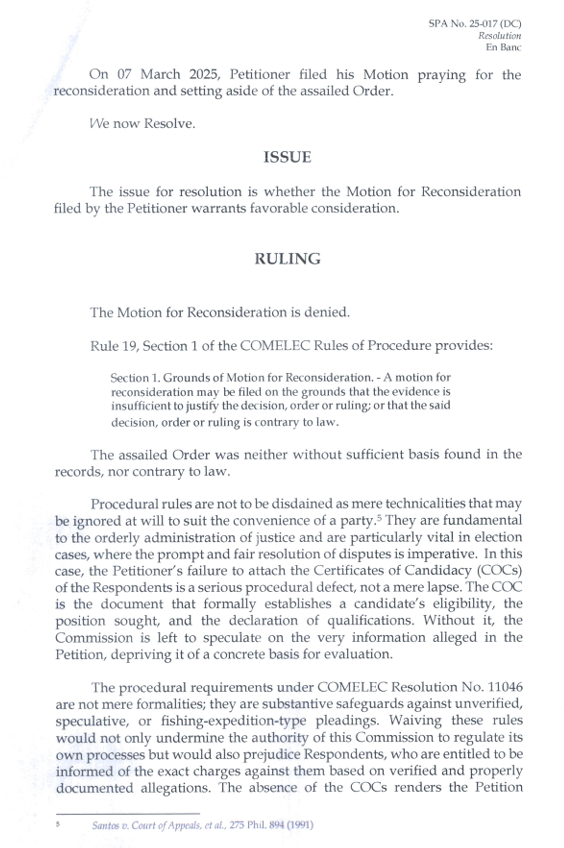
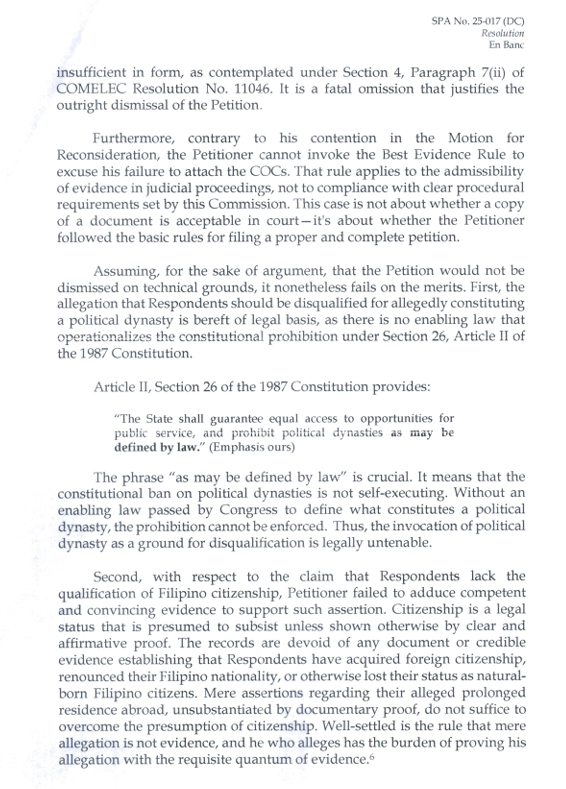
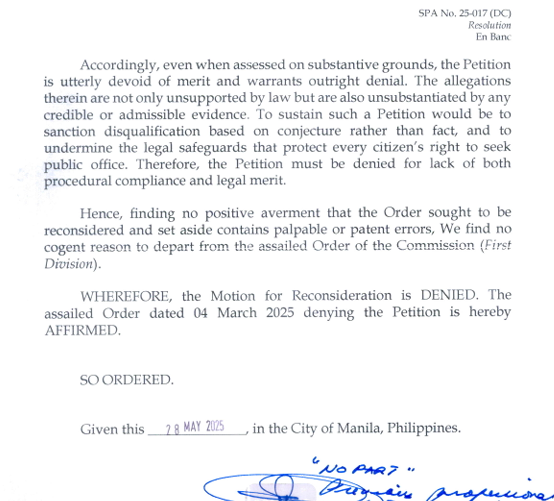
JUST IN: With finality, the Comelec has dismissed the disqualification case against Senator-elect Erwin Tulfo and four other Tulfo family members.
The en banc denied the petitioner’s motion for reconsideration on technical grounds.
It also noted that claims of political dynasty lack legal basis, as no law prohibits it, and said that the petition failed to prove that the Tulfos are not Filipino citizens | @eimorpsantos
#VoteWatch

2
2,387
23 May 2025
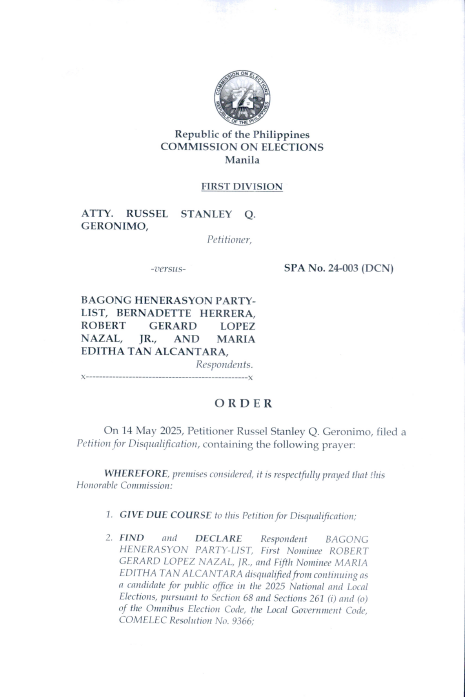
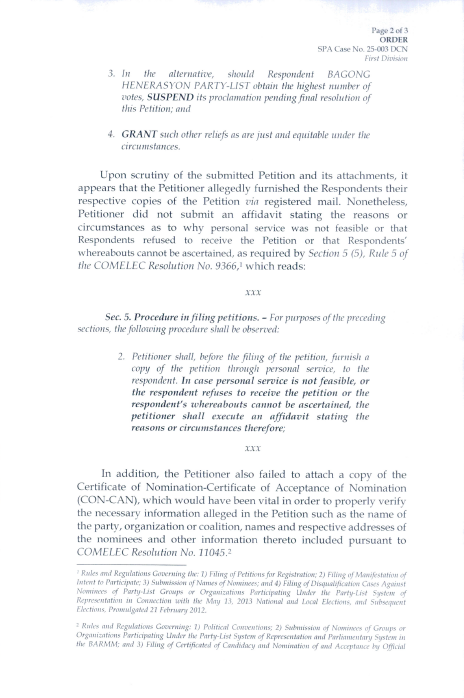
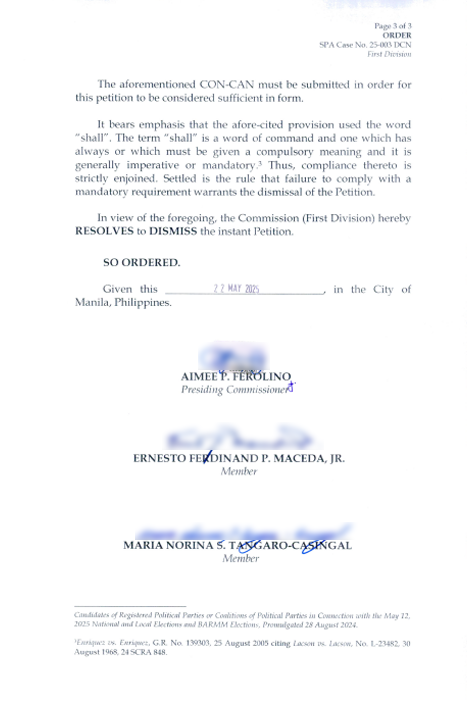
JUST IN: The Bagong Henerasyon party-list, which won one seat in the House of Representatives, may soon be proclaimed after the Comelec First Division dismissed a petition seeking to disqualify the group and some of its nominees.
However, the proclamation remains on hold, as the petitioner may still file a motion for reconsideration, according to Comelec Chairman George Garcia | @eimorpsantos
#VoteWatch #Eleksyon2025

1
2,017
23 May 2025
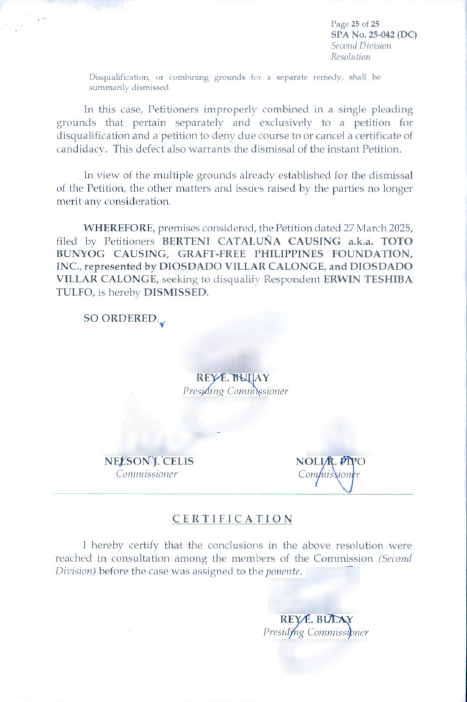
JUST IN: A refiled disqualification case against now Senator-elect Erwin Tulfo has once again been dismissed by a Comelec division due to failure to meet documentary requirements.
The petition was based on Tulfo’s prior libel conviction and lingering questions about his citizenship.
Another disqualification case against the Tulfos, centered on political dynasty issues, remains pending after the petitioner filed a motion for reconsideration | @eimorpsantos
#VoteWatch #Eleksyon2025

4
2,629
19 May 2025
Ngayong nai-proklama na ang mga nanalong kongresista sa #Eleksyon2025, inaasahang madadagdagan nang dalawa ang miyembro ng House prosecution panel sa impeachment case kay Vice President Sara Duterte.
May #VoteWatch updates si @daniza_sf.
1
3
2,577
19 May 2025
Iprinoklama na ang 52 party-list group na nanalo sa #Eleksyon2025.
Sinuspinde naman ang proklamasyon ng dalawang grupo: ang Duterte Youth at Bagong Henerasyon.
Alamin natin ang paliwanag ng Comelec sa #VoteWatch report ni @bylancemejico.
1
4
2,869