

🚀 Tired of low engagement? UGC videos are 2.4X more trusted & achieve 4X higher CTR! Start your campaign today with Cubicles Coders 👉 cubiclescoders.com/
#CubiclesCoders #TechSolutions #WebDevelopment #DigitalMarketing #UGCVideos

1

req.ip showing the wrong IP in Express? You're behind a proxy.
Fix: app.set('trust proxy', 1)
The number 1 = proxy hops to trust. Setting it to true trusts all hops, a spoofing risk.
#NodeJS #ExpressJS #WebDevelopment
2
Troy_✨ retweeted

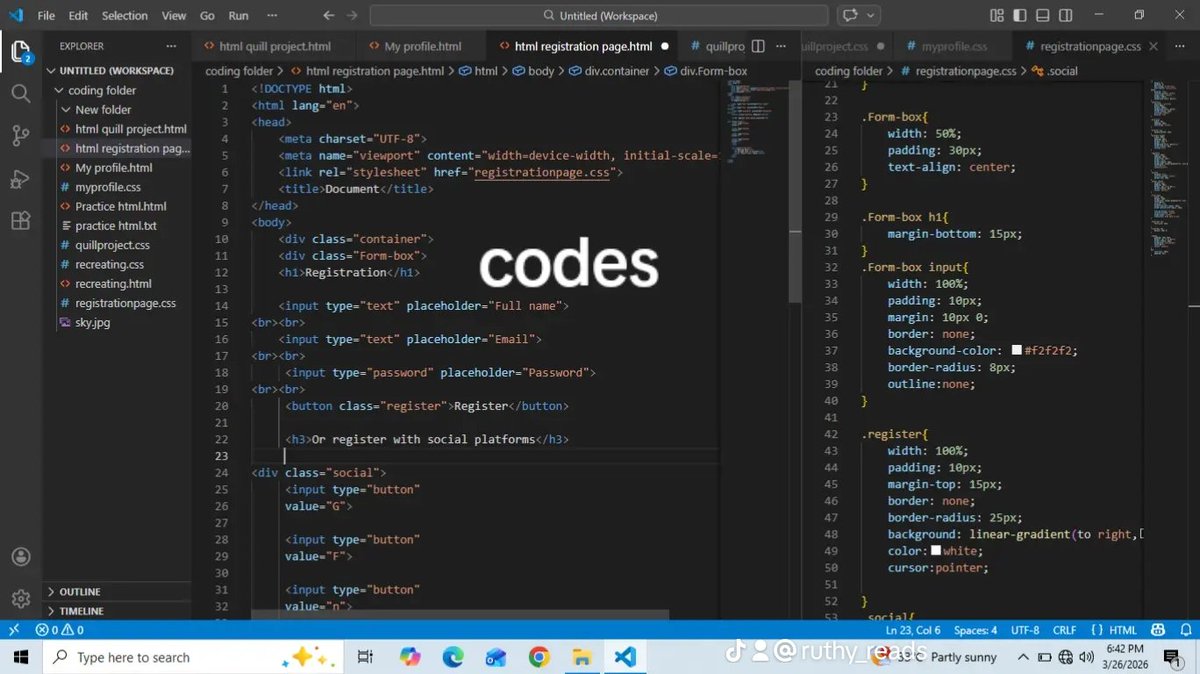
Another day to show up in this space. ❤️
Short Tech Girl ❤️
#webdevelopment
#frontenddevelopment
#coding

1
1
3
10

Hey
@X
I'm looking to #connect with people interested in:
- Frontend
- Backend
- Full stack
- Data Science
- UI/UX
- #Freelancing
- #Startup
- Saas
AI Agents
Say hello & Let's grow together
#WebDevelopment #AI
2
4
37

The Biggest Mistake New Developers Make: They Learn Frameworks Before Learning How Systems Work
When I started coding, I thought becoming a better developer meant learning more frameworks.
React.
Flutter.
Spring Boot.
Node.js.
Every new technology felt like a shortcut to becoming a great engineer.
But over time, I realized something important:
Frameworks change.
The fundamentals stay.
A developer who understands how the internet works, how databases scale, how APIs communicate, and how servers handle millions of requests will always have an advantage.
Think about what happens when you open an application:
You click a button.
A request travels through the internet.
A server receives it.
A backend processes the logic.
A database stores or retrieves information.
The response travels back to your screen.
Behind one simple click is an entire ecosystem of technologies working together.
This is why I believe every developer should spend time learning:
• Operating systems
• Computer networks
• Database internals
• System design
• Cloud infrastructure
• Security basics
• How APIs actually work
Learning a new framework might help you get your next job.
Understanding the system behind the framework can build your entire career.
The best engineers I have seen are not the ones who know the most libraries.
They are the ones who can understand problems from the browser all the way down to the server.
Technology will continue to evolve.
The fundamentals will remain.
So instead of asking:
"What new framework should I learn next?"
Maybe the better question is:
"What part of computing do I still not understand?"
That question can change your career.
#SoftwareEngineering #Programming #SystemDesign #WebDevelopment #BackendDevelopment #TechCareer
14

🚀 Elevate Your Digital Experience with TheCandyMan.llc! 🍬
Are you a content creator or app developer looking to take your projects to the next level? Look no further than TheCandyMan.llc! Here’s why you should join our sweet community:
1️⃣ **Tailored Solutions**: We understand that every project is unique. Our team works closely with you to provide customized app development and content strategies that align with your vision.
2️⃣ **Cutting-Edge Technology**: Stay ahead of the curve! We leverage the latest tech trends and tools to ensure your app not only meets industry standards but exceeds them.
3️⃣ **Creative Collaboration**: At TheCandyMan.llc, we believe in the power of teamwork. Our creative minds are ready to brainstorm, innovate, and bring your ideas to life!
4️⃣ **Dedicated Support**: Our commitment doesn't end with delivery. Enjoy ongoing support and updates, ensuring your app remains relevant and user-friendly.
5️⃣ **Proven Results**: Join countless satisfied clients who have transformed their ideas into successful apps and content with our help. Your success story is just a click away!
Don’t let your vision fade away—let's create something extraordinary together! 💡✨
👉 Ready to sweeten your digital journey? Visit us at TheCandyMan.llc and let's chat!
#AppDevelopment #ContentCreation #TheCandyMan #DigitalSuccess #Innovation #CreativeCollaboration #TechTrends #JoinUs #YourAppYourWay #ElevateYourProject #AppDeveloper #AppDevelopment #MobileApp #TechNews #SoftwareEngineering #Programming #Coding #DevCommunity #TechStartups #WebDevelopment #iOSDevelopment #AndroidDevelopment #TechInnovation #DeveloperLife #SoftwareDev #TechTrends #CodeNewbie #Developers #ProgrammingLife #DevTalk #AppDesign #TechForGood #OpenSource #WebApp #SoftwareDevelopment #DevTips #TechCommunity #AppDevJourney #MobileDevelopment #BuildInPublic
5
Nginx Explained: The Silent Engine Behind Millions of Websites
When we open a website, we usually think about the frontend, the backend, or the database.
But there is another powerful component working behind the scenes that makes modern web applications fast, scalable, and reliable.
That component is Nginx.
What is Nginx?
Nginx (pronounced "Engine-X") is a high-performance web server that can also work as a reverse proxy, load balancer, API gateway, and caching server.
It was created to solve a major challenge known as the C10K problem — handling thousands of simultaneous connections efficiently.
Today, many of the world's largest applications rely on Nginx because of its speed and scalability.
---
1. Nginx as a Web Server
At its simplest, Nginx can serve static files such as:
- HTML
- CSS
- JavaScript
- Images
- Videos
Instead of sending every request to your backend application, Nginx can directly serve these files, reducing server load and improving response time.
Example:
A user requests:
"example.com/logo.png"
Nginx can return the image immediately without involving Node.js, Java, or Python servers.
---
2. Nginx as a Reverse Proxy
This is one of the most common use cases in modern applications.
A user's request first reaches Nginx.
User
|
Nginx
|
Backend Application
(Node.js / Spring Boot / Django)
Nginx receives the request, forwards it to the backend server, and returns the response back to the user.
Why use a reverse proxy?
- Hides internal backend servers
- Improves security
- Handles SSL certificates
- Provides better request management
- Enables scaling
---
3. Load Balancing with Nginx
Imagine your application receives millions of users.
One backend server may not be enough.
You can run multiple backend instances:
Nginx
|
-----------------------
| | |
Server 1 Server 2 Server 3
Nginx distributes incoming traffic across these servers.
Benefits:
- Better performance
- High availability
- Fault tolerance
- Easier horizontal scaling
---
4. SSL Termination
Nginx commonly manages HTTPS connections.
Instead of every backend server handling encryption and decryption, Nginx handles the SSL communication and forwards normal HTTP traffic internally.
This reduces complexity in backend services.
---
5. Caching
Many requests are repeated.
For example:
Thousands of users may request the same image or API response.
Nginx can store frequently requested data in a cache and serve it quickly, reducing database and backend workload.
---
6. Why Developers Love Nginx
Nginx provides:
✓ High performance
✓ Low memory usage
✓ Excellent scalability
✓ Easy configuration
✓ Security features
✓ Load balancing
✓ Reverse proxy capabilities
This is why Nginx is a common part of production architectures.
---
A Real-World Example
Consider a social media application:
A user's request might follow this path:
User
|
Nginx
|
Application Server
|
Database
As the application grows:
Users
|
Nginx
|
-------------------
| | |
App 1 App 2 App 3
\ | /
Database
Nginx ensures that traffic is distributed efficiently while users continue to experience a fast and reliable application.
---
Final Thoughts
Many developers focus only on writing application code, but understanding infrastructure is what separates a good developer from a great engineer.
Learning tools like Nginx teaches us how real production systems handle millions of requests, improve performance, and remain available 24/7.
The next time you visit a website, remember that there is a good chance Nginx is silently working behind the scenes to make that experience smooth.
#Nginx #BackendDevelopment #SystemDesign #DevOps #SoftwareEngineering #WebDevelopment
15

Day 10 of #100DaysOfCode 🧩
Currently building a list of major web browsers as part of my Semantic HTML module — using proper tags like <ul>, <li>, and <article> instead of generic divs.
Small steps, but the structure is clicking 💪
#WebDevelopment #LearnToCode #HTML
2

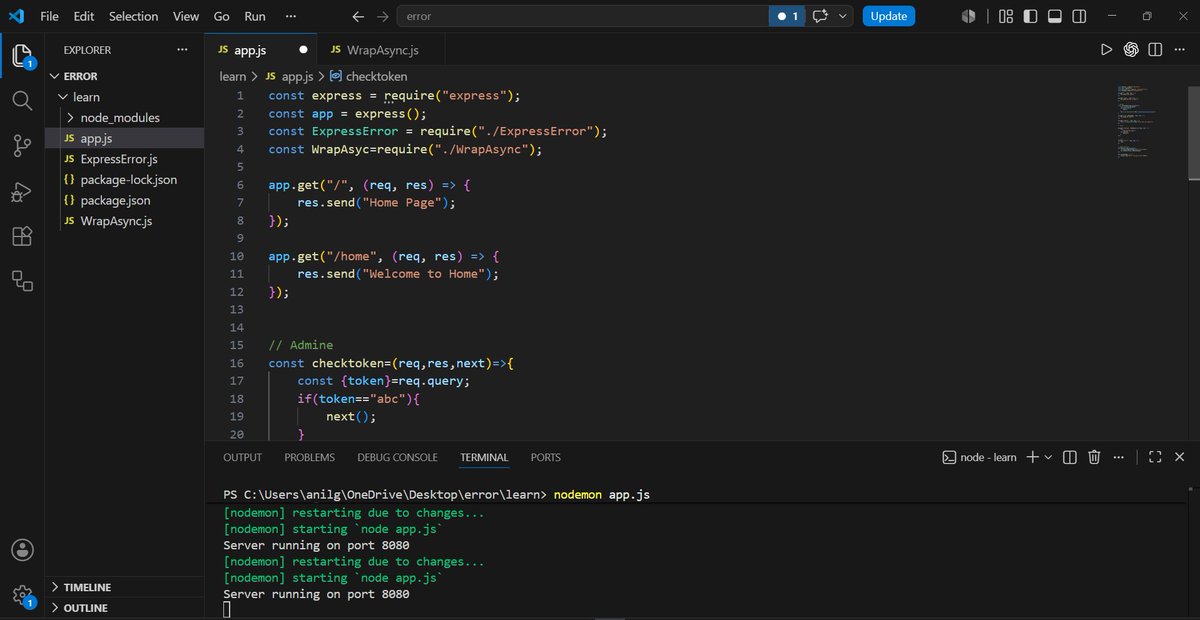
Today I learned how to create a custom error class in Express.js
#NodeJS #ExpressJS #JavaScript #WebDevelopment #Coding
3

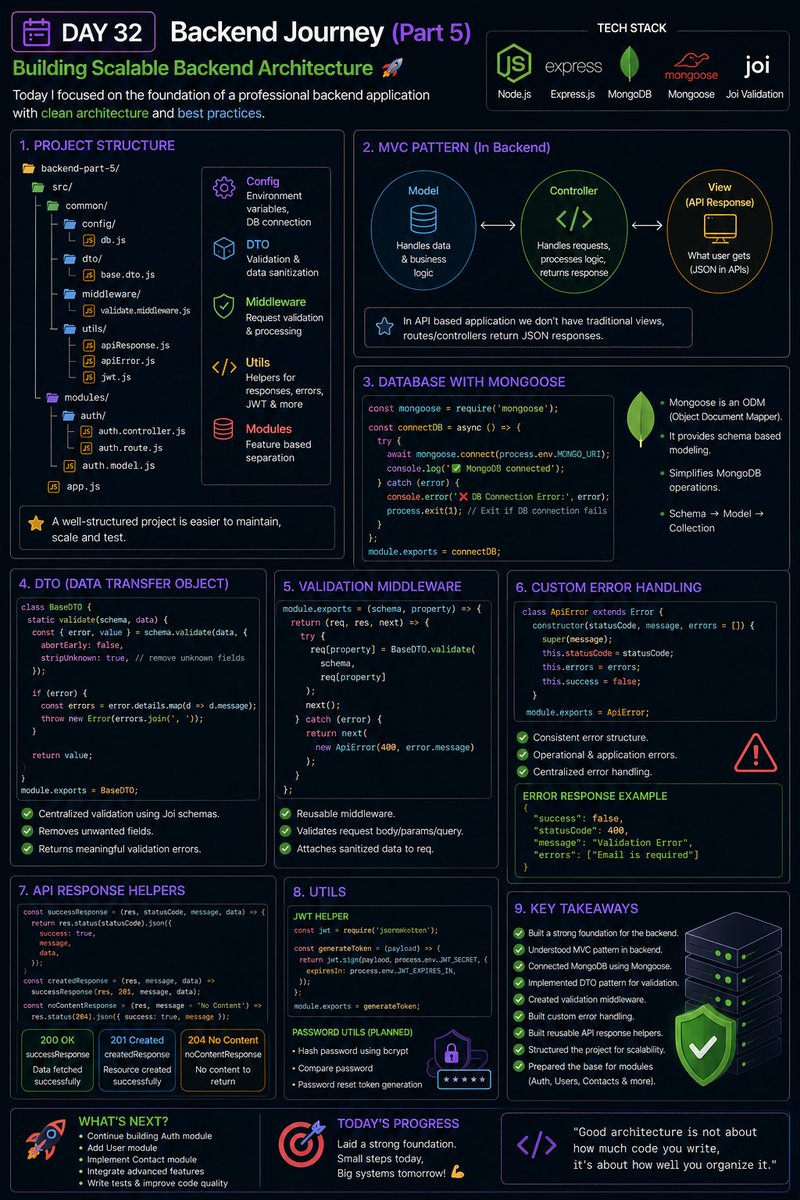
🚀 Day 32 - Restarting My Full-Stack Journey
Today I moved beyond building APIs and started learning how professional backend applications are structured.
This session was less about creating endpoints and more about understanding architecture, scalability, validation, and clean project organization.
📚 What I learned today:
✅ Backend Project Architecture
* Organizing applications into modules
* Separation of concerns
* Building maintainable codebases
✅ MVC Pattern
* Models
* Controllers
* API Response Layer
Understanding how responsibilities are divided inside real-world applications.
✅ Mongoose
* Connecting MongoDB with Mongoose
* Understanding ODM concepts
* Managing schemas and database interactions
✅ Environment Configuration
* Using `.env`
* Managing secrets securely
* Database configuration
✅ DTO Pattern (Data Transfer Objects)
* Creating reusable DTO classes
* Request validation
* Data sanitization
✅ Joi Validation
* Runtime validation
* Custom validation schemas
* Returning meaningful validation errors
✅ Custom Middleware
* Request validation middleware
* Reusable request processing
✅ Error Handling
* Custom API Error classes
* Standardized error responses
* Cleaner backend architecture
✅ API Response Helpers
Creating reusable response utilities for:
* 200 OK
* 201 Created
* 204 No Content
🛠️ Practical Work
Built a modular backend structure that includes:
✅ Mongoose Configuration
✅ DTO Layer
✅ Validation Middleware
✅ API Response Utilities
✅ Custom Error Handling
✅ Authentication Module Foundation
💡 Biggest takeaway:
Today felt like a transition from learning backend concepts to learning backend architecture.
Building features is important, but organizing code properly becomes even more important as applications grow.
Every day the backend world starts making a little more sense 🚀
Tomorrow I'll continue expanding this project with more modules, features, and backend concepts.
#100DaysOfCode #FullStackDevelopment #BackendDevelopment #NodeJS #ExpressJS #MongoDB #Mongoose #Joi #WebDevelopment #LearningInPublic #ChaiCode #day11 #DAY1 #DAY32
@Hiteshdotcom @piyushgarg_dev @nirudhuuu @surajtwt_ @yntpdotme @ChaiCodeHQ
Jun 13

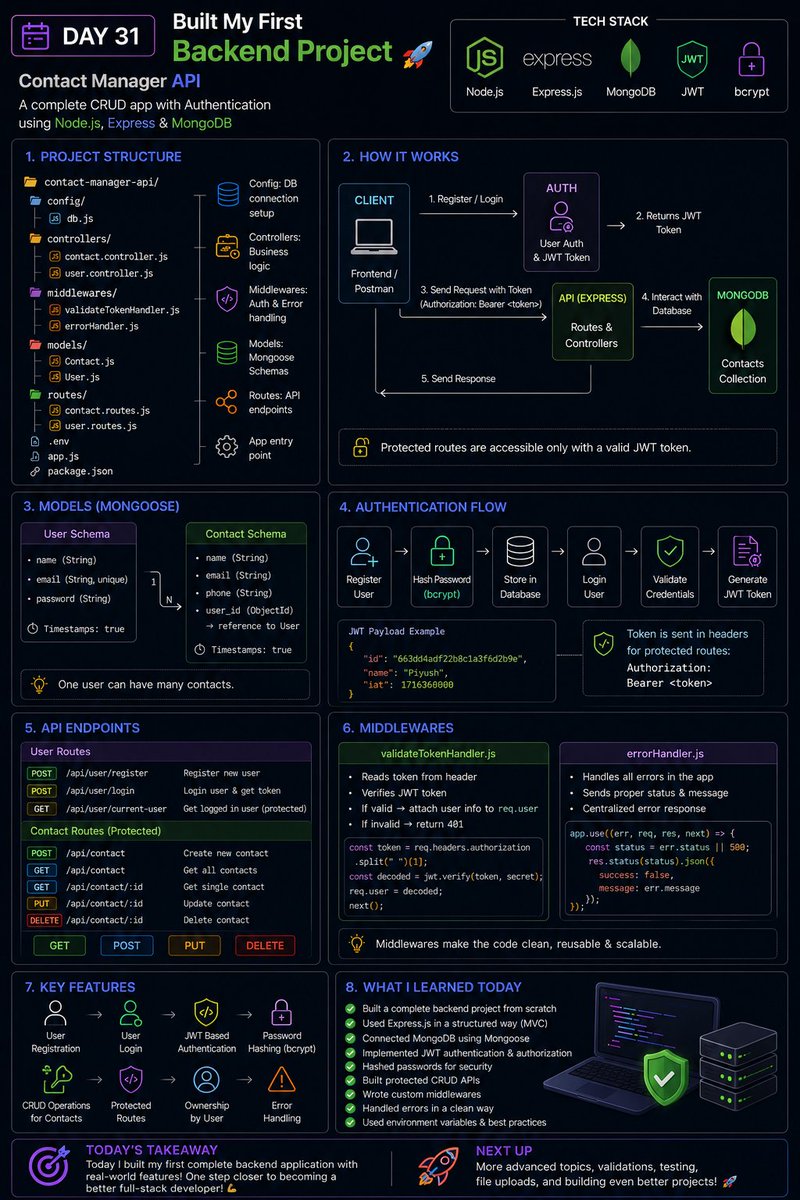
🚀 Day 31 - Restarting My Full-Stack Journey
Today was one of the most exciting milestones in my backend journey so far.
Instead of learning isolated concepts, I built a complete backend project and connected multiple technologies together to create a real-world API.
🛠️ Project Built:
📇 Contact Manager API
Built using:
* Node.js
* Express.js
* MongoDB
* Mongoose
* JWT Authentication
* bcrypt
📚 What I learned today:
✅ Express Project Structure
* Routes
* Controllers
* Models
* Middleware
* Config Files
✅ MVC Architecture
* Separating business logic from routes
* Writing cleaner and scalable code
✅ MongoDB & Mongoose
* Creating Schemas
* Creating Models
* Performing CRUD Operations
* Database Relationships using ObjectId references
✅ User Authentication
* User Registration
* User Login
* Password Hashing with bcrypt
* JWT Token Generation
✅ Authorization
* Protected Routes
* Token Validation Middleware
* Accessing authenticated user information
✅ Custom Middleware
* Authentication Middleware
* Centralized Error Handling Middleware
✅ Environment Variables
* Storing secrets securely
* Database connection strings
* JWT secret keys
🛠️ Features Implemented:
✅ Register User
✅ Login User
✅ Generate JWT Token
✅ Create Contact
✅ Get All Contacts
✅ Get Single Contact
✅ Update Contact
✅ Delete Contact
✅ Protected API Routes
💡 Biggest takeaway:
Today was the first time I felt like I was building a real backend application instead of just experimenting with APIs.
Understanding how authentication, databases, middleware, controllers, and routes work together gave me a much clearer picture of how modern backend systems are structured.
From simple Express servers to a complete authenticated CRUD API , the journey is getting more exciting every day 🚀
#100DaysOfCode #FullStackDevelopment #BackendDevelopment #NodeJS #ExpressJS #MongoDB #Mongoose #JWT #WebDevelopment #LearningInPublic #ChaiCode
@Hiteshdotcom @piyushgarg_dev @yntpdotme @surajtwt_ @ChaiCodeHQ @nirudhuuu
2

🚀 Small win today!
Added automated email notifications to my Flask web app. Learned a lot about Gmail SMTP, App Passwords, secure credential management, and cleaner project architecture.
Every feature built = another lesson learned.
#Python #Flask #WebDevelopment #Coding
4

The project is now open for testing and feedback:
🌐 smart-clinic-j3lp.onrender.c…
Feel free to explore it and share your thoughts.
@m13v_
@Mindlarz
#BuildInPublic
#Laravel
#PHP
#WebDevelopment
#SoftwareEngineering
#HealthTech
1
29

🚀 One of our latest web projects: a modern, responsive website for a luxury chauffeur service in Dubai.
Built for speed, seamless booking, and a premium user experience. 💻✨
#WebDevelopment #UIUX #WordPress

1
5

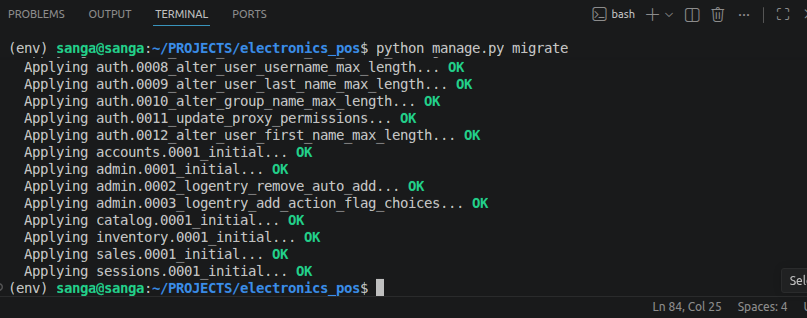
Finally got my Django migrations working after a long debugging session.
From PostgreSQL connection issues to missing database errors — it all came down to setup and environment details.
Feels good to see everything finally syncing properly.
Back to building the EcoHope POS system properly this time, step by step.
#Python #Django #PostgreSQL #BuildInPublic #WebDevelopment
1
3
23

That moment you realize building modern software isn't just HTML and CSS 😭😂
The list of skills keeps growing...
Got a business idea? You can spend years learning it all, or let us build it while you focus on growing your business 🚀
#WebDevelopment #SoftwareEngineering #Tech

2

The HTML5 Course: From Basic to Advanced
⏱️ 2.1 hours
⭐ 4.22
👥 216,708
🔄 Jun 2026
💰 $17.99 → 100% OFF
comidoc.com/udemy/interactiv…
#HTML5 #WebDevelopment #Coding #udemy

11

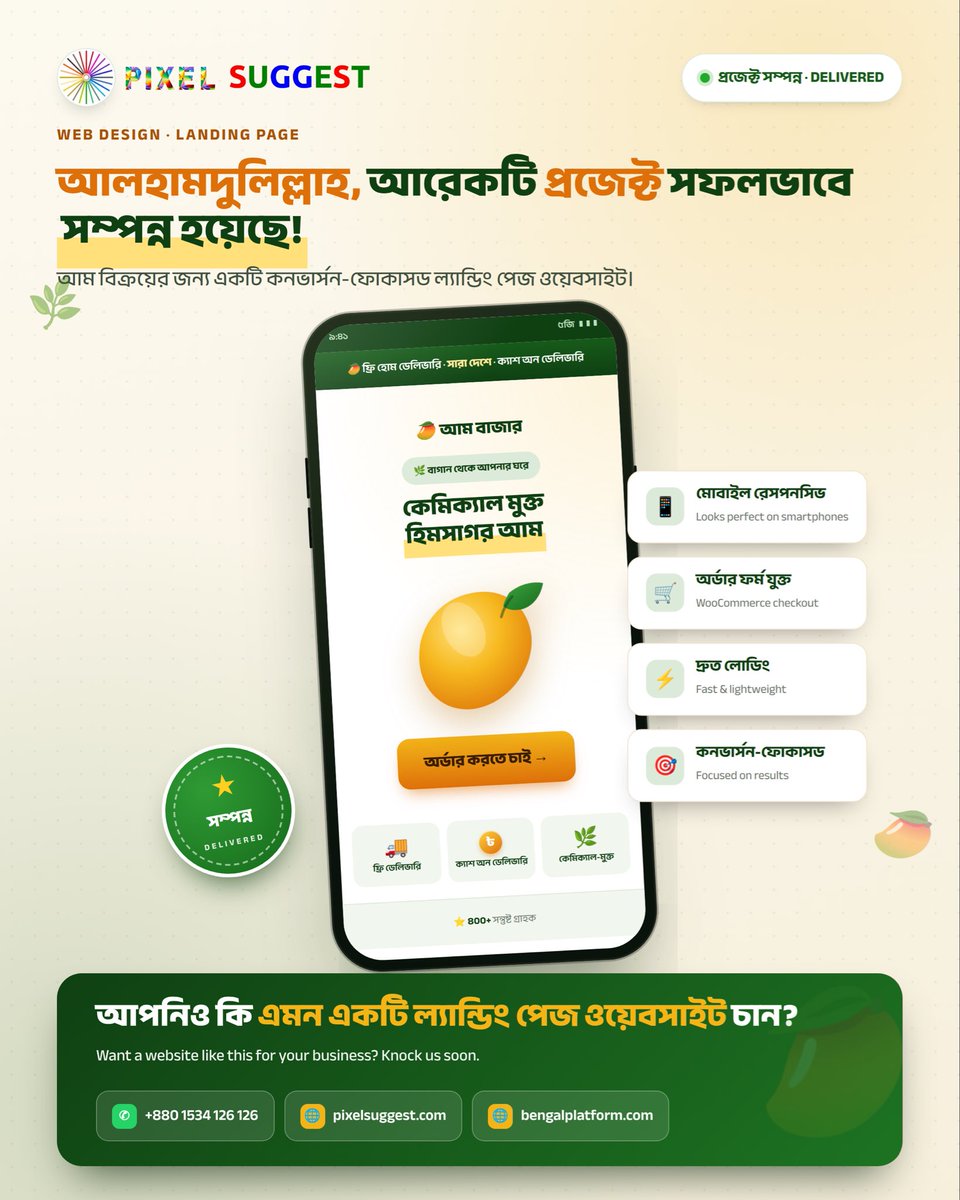
আপনার ব্যবসার জন্য কি প্রফেশনাল, কনভার্সন-ফোকাসড ল্যান্ডিং পেজ ওয়েবসাইট প্রয়োজন?
📞 কল / হোয়াটসঅ্যাপ: 880 1534 126 126
🌐 pixelsuggest.com | bengalplatform.com
#WebDesign #LandingPage #EcommerceBD #PixelSuggest #WebDevelopment
2