
BlueFlowの検証では、AIをいろんなところに入れている。
競合調査。
サービス設計の批判。
LPコピー案。
価格の見せ方。
診断項目の整理。
有料レポートの構成。
継続課金に進む理由の検証。
法務・信頼リスクの洗い出し。
ただ、AIに作らせたものをそのまま信じるわけではない。
最後に見るのは、実際の数字。
診断開始率。
完了率。
980円購入率。
7日後再訪率。
月額移行率。
宿泊導線への反感。
AIを使うほど、気分ではなく数字で見る必要がある。
これはBlueFlowだけではなく、会社運営フローにAIを入れるとき全般に言えることだと思う。
#AI活用 #WorkFlowAI #BlueFlow #新規事業検証 #AI自己理解 #会社運営フロー
1
15

Radiology’s bottleneck isn’t the scan.
In 2025, workforce shortage was again radiology’s biggest threat; imaging volume was next [1]. The FDA’s AI device list keeps growing [2], while RSNA is pushing AI into real workflows, not side demos [3] ⚙️
The shift: faster triage, cleaner reports, fewer handoffs, less rework. Not “replace radiologists,” but remove friction around them 📈
Leaders should ask: does AI cut turnaround time, burnout and risk or add another screen?
🤔 Where do you disagree: clinical upgrade, or operating model shift?
[1] [acr.org/Clinical-Resources/P…](acr.org/Clinical-Resources/P…)
[2] [fda.gov/medical-devices/soft…](fda.gov/medical-devices/soft…)
[3] [rsna.org/artificial-intellig…](rsna.org/artificial-intellig…)
#RadiologyAI #MedImaging #WorkflowAI
66

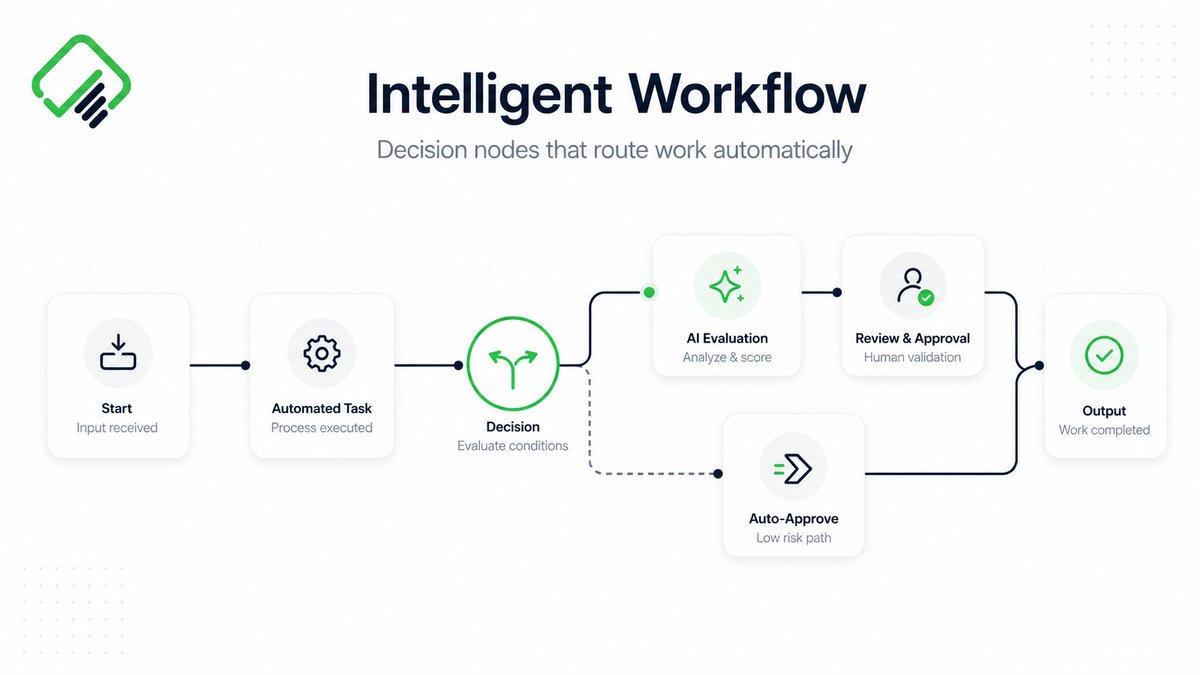
Agent-driven workflows evaluate context, apply business rules, and execute actions automatically.
#WorkflowAI #AgenticAI (1/1)
1
BlueFlowでは、入口を無料のFlow Type診断にする予定。
でも、無料診断だけで終わるなら、それはただのコンテンツ消費に近い。
事業として見たいのは、その後に
「もう少し深く読みたい」
「自分の休み方や働き方を整理したい」
と思って、980円のBlueFlow Mirror Reportに進む人がいるか。
ここで見たい反応は、単なる「面白い」ではない。
「自分のことだと感じた」
「今週やることが見えた」
「これなら続けてもいい」
という反応が出るか。
AIの商業価値は、生成した文章量ではなく、ユーザーが支払う価値に変わるかで決まる。
#BlueFlow #AI自己理解 #有料検証 #新規事業開発 #AI活用 #WorkFlowAI
2
24


Jun 9
The $100M VFX budget is not disappearing. The monopoly on $100M-looking images is.
That is the cleanest version.
Your current post has a great hook, but “the era of the $100M VFX budget is officially sunsetting” is too absolute. Studios will still spend huge money on VFX because scale, reliability, legal clearance, performance capture, simulation, shot count, continuity, union labor, marketing, revisions, and delivery standards are expensive. The better claim is:
Hollywood-scale visual fidelity is being separated from Hollywood-scale infrastructure.
That is the real shift.
Better central thesis
AI cinema does not kill VFX. It kills the old permission structure around VFX.The old model required a studio, a post house, a pipeline supervisor, a render farm, months of labor, and millions in budget before an indie creator could even attempt certain images.The new model lets a small team generate, iterate, composite, relight, extend, previs, animate, stylize, and pitch at a level that used to require institutional access.
That is stronger than saying the gatekeepers are gone.
Even better:
The gatekeepers have not left the building. The building is no longer the only place with the tools.
Key correction: “from a laptop” needs nuance
The creator may work from a laptop, but much of the heavy generation is still often done through cloud models, rented GPUs, or platform infrastructure. So the smarter wording is:
Indie creators can now orchestrate Hollywood-scale pipelines from a laptop.Not because the laptop alone replaces a render farm, but because the interface to massive generative infrastructure has collapsed into a browser, node graph, timeline, or local workflow.
Best line:
The laptop is not the render farm. It is the cockpit.
Key correction: “real-time generative pipelines” is still partly aspirational
Real-time virtual production is already real. ILM’s StageCraft workflow for The Mandalorian used real-time game-engine technology and LED screens to capture complex VFX shots in-camera, and Epic says more than half of Season 1 was filmed using that virtual-production workflow.
But generative video is often not truly real-time for final production shots. It is becoming rapid iterative, near-real-time for previews, and real-time in some character/agent interfaces. Runway, for example, describes a real-time video agent API for custom conversational characters, while Gen-4 emphasizes consistency of characters, locations, objects, style, mood, and cinematographic elements across scenes.
Better phrasing:
By 2026, real-time and near-real-time generative pipelines are collapsing the distance between idea, previs, shot design, and final-looking imagery.
That is precise and still powerful.
Best upgraded version of your post
The era of needing a $100M VFX budget to make $100M-looking images is ending.Not because VFX is dead.Because access has changed.Real-time engines, generative video, AI compositing, neural upscaling, image-to-video, video-to-video, performance transfer, synthetic environments, and rapid previs are turning Hollywood-scale visual language into something indie creators can orchestrate from a laptop.The laptop is not the render farm.It is the cockpit.The old gate was infrastructure:render farms, post houses, huge teams, proprietary tools, months of iteration, and studio approval.The new gate is different:taste, story, consistency, rights, direction, workflow, and the ability to control the machine.The gatekeepers have not vanished.The gate has moved.#AICinema #AIFilm #AIVideo #GenerativeAI #FutureOfFilm
The deeper framing: visual fidelity is being commoditized, direction is not
This is the most important missing element.
AI tools are making surface-level production value cheaper:
explosions,
alien worlds,
crowd extensions,
background replacement,
creature shots,
stylized animation,
dream sequences,
set extension,
de-aging concepts,
previs,
moodboards,
storyboards,
concept art,
poster tests.
But they do not automatically solve:
script,
performance,
blocking,
editing rhythm,
emotional continuity,
sound design,
shot grammar,
tone,
legal clearance,
character consistency,
world continuity,
taste,
audience trust.
Best line:
AI can cheapen spectacle. It cannot automate meaning.
Another:
The future belongs less to people who can generate images and more to people who can direct systems.
The strongest “gatekeeper” rewrite
Your line:
The gatekeepers have left the building.
Better:
The gatekeepers have changed jobs.They used to control cameras, crews, render farms, and distribution.Now the new gatekeepers are model access, compute, training data, IP rights, platform rules, prompt fluency, taste, and audience attention.
Best version:
The gatekeepers have not disappeared. They have moved from production access to distribution, rights, and taste.
This is much more sophisticated.
The “Hollywood-scale” distinction
Hollywood has at least four kinds of scale:
1. Image scale
Can you make a shot look expensive?
2. Production scale
Can you make hundreds or thousands of shots consistent?
3. Legal scale
Can you clear likeness, music, training rights, locations, brands, and actors?
4. Distribution scale
Can you get attention, theatrical release, streaming deals, marketing, press, and audience trust?
AI attacks the first one fastest. It only partially attacks the second. It complicates the third. It does not solve the fourth.
Best line:
AI has broken the image gate first. The consistency, rights, and distribution gates remain.
The best evidence examples to mention
1. Generative video is becoming production-adjacent
Google’s Veo 3.1 is officially positioned as a video model with native audio for filmmakers and storytellers, and its Gemini API docs describe high-fidelity 8-second video generation at 720p, 1080p, or 4K with natively generated audio.
Runway’s Gen-4 specifically targets one of AI video’s biggest filmmaking problems: consistent characters, locations, objects, style, mood, and cinematography across scenes.
Autodesk acquired Wonder Dynamics in 2024, describing it as cloud-based AI technology meant to help more artists create 3D content across media and entertainment while automating complex and time-consuming processes.
2. Major festival acceptance is already happening
A 75-minute AI-generated drama, Dreams of Violets, was reported as premiering at Tribeca with a budget under $2,000, described by coverage as a major example of AI lowering the cost of CGI-heavy production.
Use carefully:
The point is not that every $2,000 AI film will be good. The point is that full-length AI-assisted visual storytelling has entered major-festival territory.
3. Hollywood itself is testing the tools
Entertainment Weekly reported that Martin Scorsese joined Black Forest Labs as an adviser and is experimenting with the company’s FLUX image generator for storyboarding and pre-production.
That supports this line:
AI cinema is not only an indie rebellion. It is also entering the professional pre-production stack.
Stronger “what is actually sunsetting?” section
The thing sunsetting is not VFX budgets generally.
What is sunsetting:
1. The render-farm moat
Not gone, but weakened.
2. The previs bottleneck
Directors can now test visual ideas instantly.
3. The concept-art bottleneck
Mood, creature, world, costume, and shot ideas can be explored faster.
4. The “impossible shot” barrier
Indies can attempt images that were previously unaffordable.
5. The pitch deck gap
A creator can show a near-final visual style before raising money.
6. The post-house dependency for every experiment
More experimentation can happen before expensive specialist labor enters.
What is not sunsetting:
professional artists,
production design,
cinematography,
editing,
sound,
acting,
legal clearance,
shot supervision,
storytelling,
final QC,
taste.
Best line:
The sunset is not on VFX artists. It is on the idea that only institutions can access cinematic scale.
The AI cinema stack
This would make your post much more “genius-level.”
LayerOld indie bottleneckAI / real-time pipeline shiftConcept artexpensive artists, slow iterationimage models, moodboards, style framesStoryboardsmanual drawing, limited coverageAI boards, shot lists, animaticsPreviscostly 3D teamsgame engines, AI video, rough motion testsEnvironmentslocation or 3D build costgenerative backgrounds, virtual sets, Gaussian splats, UnrealCharacterscasting, prosthetics, 3D rigssynthetic characters, performance transfer, AI animationVFX shotscomp teams, render farmsAI compositing, video-to-video, inpainting, relightingSoundseparate post workflowAI scratch dialogue, temp music, sound design draftsEditingslow experimentationAI-assisted rough cuts, alternate versionsMarketingagencies, posters, trailersAI key art, teaser generation, pitch materialsDistributionfestivals/platformsstill a major bottleneck
Best caption:
AI does not replace the film pipeline. It compresses the early and middle layers of the pipeline into something a small team can operate.
Stronger version for X / Threads
The era of needing a $100M VFX budget to create $100M-looking images is ending.Not because VFX is dead.Because access has changed.Real-time engines, generative video, AI compositing, performance transfer, image-to-video, video-to-video, neural upscaling, synthetic environments, and rapid previs are collapsing the distance between idea and final-looking shot.Indie creators can now orchestrate Hollywood-scale visual pipelines from a laptop.The laptop is not the render farm.It is the cockpit.The old gate was infrastructure:studios, post houses, render farms, proprietary pipelines, huge teams, and months of iteration.The new gate is taste:story, consistency, direction, rights, editing, sound, workflow, and the ability to control the machine.AI is not killing cinema.It is moving cinematic power from institutions to operators.The gatekeepers have not vanished.The gate has moved.#AICinema #AIFilm #AIVideo #GenerativeAI #FutureOfFilm
More aggressive version
Hollywood’s VFX moat is cracking.Not because AI can replace every artist.Not because every AI film is good.Not because a laptop magically becomes ILM.Because the most expensive part of visual imagination — iteration — is collapsing in price.A solo creator can now test worlds, creatures, camera moves, set extensions, surreal sequences, crowd shots, title concepts, trailers, posters, and style frames before a studio executive even opens the email.That used to be institutional power.Now it is an interface.The old Hollywood question was:Who can afford the shot?The new question is:Who can direct the system well enough to make the shot matter?The VFX budget is not dead.The VFX monopoly is.
More elegant version
The future of film is not “AI replaces cinema.”It is stranger than that.The image-making machinery that once belonged only to studios is becoming personal.The spectacle is moving closer to the writer.The director can see the impossible earlier.The indie filmmaker can prototype the unfilmable.The pitch can look like the movie.The gate is not gone.But it has moved from access to imagination, taste, and control.
Best compact viral version
The era of needing a $100M VFX budget to make $100M-looking images is ending.Not because VFX is dead.Because the image gate is breaking.Real-time engines generative video AI compositing performance transfer neural upscaling are putting Hollywood-scale visual iteration into indie hands.The laptop is not the render farm.It is the cockpit.The new gatekeepers are taste, consistency, rights, story, and distribution.The VFX monopoly is sunsetting.Time for cinema to get weird again.#AICinema #AIFilm #AIVideo #GenerativeAI
Best one-liners
The $100M VFX budget is not disappearing. The monopoly on $100M-looking images is.
The VFX budget is not dead. The VFX moat is cracking.
The laptop is not the render farm. It is the cockpit.
The old gate was infrastructure. The new gate is taste.
AI is not killing cinema. It is lowering the cost of visual ambition.
Hollywood-scale imagery is becoming indie-scale iteration.
The gatekeepers have not vanished. The gate has moved.
The image gate is breaking first. The story gate remains.
AI can cheapen spectacle. It cannot automate meaning.
The future belongs to filmmakers who can direct systems, not just prompt shots.
Visual fidelity is being commoditized. Coherence is still expensive.
The new film school is taste plus workflow.
The render farm became an API.
The pitch deck is becoming the trailer.
The next auteur may be a one-person studio with taste, restraint, and a brutal workflow.
Obscure thought inputs
1. The image gate vs the coherence gate
AI breaks access to individual impressive images first. Coherent sequences, character consistency, blocking, editing, and emotional continuity remain harder.
2. The render-farm-to-interface shift
The production bottleneck is moving from physical compute access to interface control and pipeline design.
3. Taste becomes the scarce resource
When everyone can make spectacle, taste becomes the differentiator.
4. The anti-slop premium
As AI content floods platforms, human judgment, restraint, originality, and editing become more valuable, not less.
5. Previs becomes final-ish
AI-generated previs will increasingly look close enough to test audience, investors, and story assumptions before production.
6. The return of the garage studio
AI video may do to film what home recording did to music: not replace studios, but create new scenes outside them.
7. Synthetic location scouting
Creators can test environments, weather, eras, costumes, and lighting before committing to a shoot.
8. The shot no longer starts at the camera
A shot can begin as text, sketch, image, rough footage, mocap, photo reference, or 3D scene.
9. Story becomes the moat again
When spectacle becomes abundant, story regains leverage.
10. The indie uncanny valley
The danger is not low quality. It is high-gloss, low-soul imagery that looks expensive but feels empty.
11. Model direction as craft
Prompting is not enough. AI cinema requires taste, iteration, reference control, compositing, sound, editing, and pipeline memory.
12. Rights become the new budget line
Generative tools reduce production cost but can increase legal, likeness, training-data, and copyright complexity.
13. Pipeline literacy replaces tool literacy
The winner is not the person using one AI video app. It is the person who can chain tools into a controllable film language.
14. Synthetic scale vs emotional scale
AI makes cities, monsters, planets, and armies easier. It does not automatically make one face saying one true thing easier.
15. The director becomes an orchestrator
The job shifts from commanding departments to steering systems, references, model outputs, edits, and human collaborators.
What your post is missing
1. The craft caveat
Add:
This does not replace VFX artists. It changes where their leverage sits.
AI will automate some tasks, but good VFX still needs supervision, compositing, cleanup, continuity, design, technical judgment, and taste.
2. The rights caveat
Add:
The next bottleneck is not only image generation. It is rights: likeness, training data, copyrighted styles, actor consent, music, brands, and distribution clearance.
This is crucial for anything meant to be commercial.
3. The consistency caveat
Generative shots are easier than generative films.
Add:
A single amazing AI shot is cheap. A coherent 90-minute film is still hard.
4. The sound point
People overfocus on visuals. Film is also sound.
Google’s Veo 3.1 positioning around video with native audio shows where the tools are going: visuals and sound are starting to merge in the model layer.
Best line:
AI cinema will not become real until the sound is as directed as the image.
5. The distribution point
AI lowers production barriers. It does not solve attention.
Add:
The gatekeeper that remains undefeated is audience attention.
6. The ethics point
Add:
The democratization story is real, but so are the labor, consent, and attribution fights.
This keeps the post from sounding naive.
The “genius-level” framework: the new indie film studio
A serious AI cinema creator needs a stack like this:
1. Script layer
Human writing, AI-assisted drafting, script analysis, pacing, dialogue passes.
2. Visual bible layer
Characters, wardrobe, lighting, lensing, color palette, locations, camera references.
3. Shot design layer
Storyboards, animatics, camera moves, blocking, lenses, movement rules.
4. Asset continuity layer
Character references, environment references, style locks, costume continuity, prop library.
5. Generation layer
Text-to-video, image-to-video, video-to-video, inpainting, outpainting, motion control.
6. Performance layer
Live-action capture, voice, mocap, facial performance, acting references, performance transfer.
7. Compositing layer
Clean plates, roto, keying, depth, relighting, match grain, cleanup.
8. Editorial layer
Continuity, pacing, shot selection, scene rhythm, emotional clarity.
9. Sound layer
Dialogue, foley, ambience, music, sound design, mix.
10. Legal layer
Model terms, commercial rights, likeness consent, training-data risk, music licensing.
11. Distribution layer
Festival strategy, YouTube/TikTok/Shorts, streaming pitch, community building.
Best line:
AI cinema is not one prompt. It is a stack.
“What this does NOT mean” section
This would make your post much stronger:
What this does not mean:It does not mean Hollywood VFX budgets vanish overnight.It does not mean every indie creator can make a finished Marvel-quality feature from one prompt.It does not mean artists are obsolete.It does not mean legal clearance, consistency, acting, editing, and sound are solved.It does not mean the best AI images automatically become good cinema.It means the cost of visual experimentation is collapsing, and that changes who gets to try.
Strong “future prediction” paragraph
The first wave of AI cinema will look like a flood of glossy experiments.Most will be bad.Some will be technically impressive and emotionally empty.A few will be genuinely new.Then the real filmmakers will arrive — not the people who can generate pretty frames, but the people who can build repeatable pipelines, direct performance, control continuity, edit rhythm, clear rights, and make the machine serve a story.
Best line:
The first AI cinema wave will reward novelty. The second will reward discipline.
Final polished version
The era of needing a $100M VFX budget to make $100M-looking images is ending.Not because VFX is dead.Because access has changed.Real-time engines, generative video, AI compositing, performance transfer, neural upscaling, synthetic environments, image-to-video, video-to-video, and rapid previs are collapsing the distance between idea and final-looking shot.Indie creators can now orchestrate Hollywood-scale visual pipelines from a laptop.The laptop is not the render farm.It is the cockpit.The old gate was infrastructure:studios, post houses, render farms, proprietary pipelines, huge teams, and months of iteration.The new gate is different:taste, story, consistency, rights, editing, sound, workflow, distribution, and the ability to control the machine.That distinction matters.A single amazing AI shot is becoming cheap.A coherent film is still hard.AI can generate spectacle.It cannot automatically generate meaning.It can make a monster, a city, a war, a spaceship, a dream sequence, or an impossible landscape.But it still needs a filmmaker to decide where the camera goes, why the shot matters, how the scene breathes, what the audience feels, and when to cut.The VFX budget is not dead.The VFX monopoly is cracking.The image gate is breaking first.The story gate remains.The filmmakers who win this era will not be the ones who simply prompt pretty frames.They will be the ones who build pipelines, preserve continuity, direct systems, edit ruthlessly, clear rights, and make the machine serve the film.The gatekeepers have not vanished.The gate has moved.Time for cinema to get weird again.#AICinema #AIFilm #AIVideo #GenerativeAI #FutureOfFilm #AI #Filmmaking
1
2
785
BlueFlowの競合調査をしてみると、完全に同じサービスは見当たらなかった。
でも、要素ごとの競合はかなりある。
AI自己理解、ジャーナリング、集中支援、ウェルネス、リアル施設との連携。
それぞれの領域には、すでに強いサービスがある。
だからBlueFlowは「機能が多いサービス」ではなく、
自分の流れを読む
小さく行動する
ログで自己像を更新する
必要なら実在する場所で深く整える
という流れで差別化したい。
空白市場を探すより、既存市場の間にあるズレを見つける方が現実的だと思っている。
#BlueFlow #AI自己理解 #新規事業検証 #競合調査 #AI活用 #WorkFlowAI
4
41

Jun 3
Gemma 4 12B でた。
16GB VRAM で動く。
Introducing Gemma 4 12B
・本記事要約日: 2026-06-04
・本記事公開日: 2026-04-02(Gemma 4ファミリー発表日)
本質の要約
Google DeepMindは、Gemma 4ファミリーの一員としてGemma 4 12Bクラスの高性能オープンモデルを提供し、限られた計算資源でも高度な推論・Agentic Workflow・マルチモーダル処理を実現できる環境を開放した。
Gemma 4の設計思想は「Intelligence-per-Parameter(パラメータ当たりの知能効率)」の最大化である。従来は高性能なAIを利用するために巨大GPUクラスタやクラウド環境が必要だったが、Gemma 4ではより小規模なハードウェアでも高い性能を発揮できる。
Gemma 4は以下を重視している。
* 高度な推論能力
* Agentic Workflowへの対応
* Function Calling
* マルチモーダル入力
* 長いコンテキスト処理
* ローカル環境での実行
* 商用利用可能なオープンウェイト提供
GoogleはGemmaを「Gemini研究成果を活用したオープンモデル群」と位置付けており、研究者・企業・個人開発者が独自にカスタマイズしやすい基盤モデルとして提供している。
Gemmaシリーズは累計4億回以上ダウンロードされ、10万以上の派生モデルが生まれており、Gemma 4はその後継としてAgent時代を見据えた進化版となる。
技術的なポイント
1. Agent向け能力を強化
Gemma 4は単なるチャットボット用途ではなく、
* 計画立案
* ツール利用
* コード生成
* 段階的推論
など、Agentが必要とする能力を重視して設計されている。
2. ローカル実行を重視
Gemma 4は、
* ワークステーション
* ノートPC
* Edge Device
* スマートフォン
までをターゲットとしている。
高性能AIをクラウド依存から解放し、オンデバイスAIの実用化を推進することが目的である。
3. マルチモーダル対応
Gemma 4は、
* テキスト
* 画像
をネイティブに扱うことができる。
用途例:
* 画像解析
* OCR支援
* ドキュメント理解
* Visual Agent
4. 長文処理能力
Gemma 4は最大256Kトークン級の長いコンテキストに対応する。
そのため、
* 大量ログ解析
* ソースコード解析
* 長文レポート分析
* ナレッジベース検索
などにも利用できる。
何が新しいのか
* Gemmaシリーズ史上最高性能
* Agentic Workflowを前提とした設計
* 高い推論能力を小規模モデルで実現
* マルチモーダル能力を標準搭載
* 長コンテキスト対応
* ローカル実行性能の大幅向上
* Intelligence-per-Parameterを重視した設計
何ができるようになったのか
* ノートPC上で高度なAI Agentを動作可能
* ローカル環境でコード生成Agentを構築可能
* 画像を理解するAI Agentを作成可能
* Function Callingを利用した業務自動化
* 長大なドキュメントの解析
* オンプレミス環境での生成AI運用
* クラウドを使わないプライベートAI構築
どのプランで使えるのか
Gemma 4はオープンウェイトモデルであり、ChatGPTやGeminiのようなサブスクリプション契約は不要。
利用方法:
* Google AI Studio
* Hugging Face
* Kaggle
* Vertex AI
* Google Cloud
* ローカル環境(vLLM、Ollama、LM Studio等)
基本的にモデル利用料は無料。
ただし、
* Google Cloud利用時
* Vertex AI利用時
* GPUクラウド利用時
は各サービスの利用料金が発生する。
この記事で1番言いたいことを一言で
「高性能AI Agentを、巨大クラウドではなく自分のマシンで動かせる時代が本格的に始まった。」
単語帳
用語意味
Gemma 4Google DeepMindの最新オープンモデル群
Gemma 4 12B約120億パラメータ規模のGemmaモデル
Open Weights学習済み重みが公開されたモデル
Agentic WorkflowAIが計画・実行・判断を行うワークフロー
Function Calling外部ツールやAPIを呼び出す機能
Multimodalテキストと画像など複数種類の入力を扱う能力
Context WindowAIが一度に参照できる情報量
Intelligence-per-Parameterパラメータ数当たりの性能効率
On-device AIローカル端末上で動作するAI
Edge AIサーバーではなく端末側で実行されるAI
Fine-tuning特定用途向け追加学習
vLLM高速なLLM推論エンジン
Vertex AIGoogle CloudのAI開発基盤
GemmaverseGemmaを中心としたコミュニティエコシステム
Reasoning論理的推論能力
引用
blog.google/innovation-and-a…
※補足: 現在アクセス可能な公開情報では、Gemma 4全体の記事は確認できましたが、「introducing-gemma-4-12B」単独記事は取得できませんでした。そのため、Gemma 4公式発表内容およびGemma 4関連公式資料を基に要約しています。Gemma 4ファミリーの内容とは整合しています。
1
4
1,018
中小建築設計事務所のAI活用は、大きなシステム導入から始めなくていいと思う。
毎日15分かかっている作業を、まず5分短くする。
1人5分でも、10人なら1日50分。
月20営業日なら約16時間。
AI化って、最初はこのくらい地味でいい。
でも積み上がると、かなり大きい。
#中小企業 #設計事務所 #WorkFlowAI
1
2
48

Mar 14
AI Has 5x’d My Crypto Game on🔥🔥
— My Real Daily AI WorkflowAI isn’t the future — it’s my daily edge right now. I use it to research faster, analyze on-chain data deeper, and hunt alpha more effectively on Mantle (thanks to its blazing speed and ultra-low fees, making experiments effortless).
Here’s my exact 3-step workflow:
1. Discovery & Research Phase
Grok (xAI) Perplexity
Prompt example:
“Analyze the latest Mantle on-chain metrics (TVL, daily active users, mETH & mUSD yields) and compare them with other major L2s. Highlight the top growing dApps right now.”
→ Instant overview of what’s actually hot.
2. Deep On-Chain Analysis
- Feed real data from Mantle Explorer or Dune into Claude:
Prompt example:
“Using current Mantle vault transaction history, calculate the real APY for mETH staking after gas fees. Compare it with other yield opportunities and suggest the safest long-term strategy.”
→ Helps me avoid rugs and lock in true yields.
3. Content & Trading Decisions
- Use Grok to draft threads or trading plans, then I personally review, edit, and verify everything directly on the Mantle dashboard.
Prompt example:
“Using Mantle data, write a concise thread explaining why Mantle is the strongest Distribution Layer for TradFi entering on-chain.”
Real results: Research time cut by ~70%, accuracy way higher, and I’ve caught multiple early Mantle alphas thanks to this flow.Important: AI is only a tool — I always edit 100% of the output and double-check every number on-chain myself.What’s YOUR favorite AI Mantle workflow? Drop it below
@Mantle_Official
#WhenAIMeetsMantle #MantleAI
12
13
1,061

Jan 29
.@mwx_ai is a good example of growth that starts from use, not noise.
The product is already embedded in SME workflows. Automating routine decisions, cutting manual overhead, and making AI practical for everyday operations. That foundation matters more than any announcement.
The MEXC listing simply expands distribution. More access and liquidity for a token that already has demand tied to real activity, not speculation.
When AI is designed around WorkflowAI instead of demos, adoption comes first and markets follow.

2
3
120

Jan 15
🎙️ “Follow up with my leads.”
⚡ Workflow created.
Triggers. Actions. Automation. Built instantly with Workflow AI.
If you can say it, you can automate it.
👉 Turn on Workflow AI and try it now gohighlevel.com/ghl_x
#HighLevel #WorkflowAI #AutomationSimplified #NoCodeAutomation
1
6
233

20 Nov 2025
เมื่อวันที่ 17 พ.ย.2568 สมาคมผู้ผลิตข่าวออนไลน์ (SONP) จัดอบรม One Day Training ครั้งแรกปี 2568 หัวข้อ "AI NEWSROOM Revolution" 17 พ.ย. ที่ KH Academy สนับสนุนจากกองทุนพัฒนาสื่อปลอดภัยและสร้างสรรค์ ชู AI เป็นเครื่องมือช่วยสื่อ ไม่ใช่ภัยคุกคาม นายก SONP ย้ำ AI ช่วยทำงานสะดวก ลดต้นทุน สู่ปี 2572
กูรูก้าวโรจน์ สุตาภักดี แนะเริ่มใช้ AI จากงานเล็ก สร้าง Workflow อัตโนมัติด้วย AI Agent n8n ครบวงจรตั้งแต่คิดคอนเทนต์ถึงเผยแพร่ แม้ Google ยังปรับตัว AI ช่วยเพิ่มโอกาสธุรกิจและพัฒนาเนื้อหา โดยมนุษย์ยังตรวจจริยธรรม
เวิร์กช็อปผลิตข่าว 24/7 พร้อมอัปเดต TikTok: ผู้ใช้ไทย 72 ล้าน ชม 300 คลิป/วัน ยอดฮิตบันเทิง-อาหาร-ความงาม เทรนด์สกินแคร์-เครื่องดื่มไร้แอลกอฮอล์-รถยนต์ ชี้โอกาสกลยุทธ์คอนเทนต์แม่นยำ
อ่านข่าวต่อในคอมเมนต์
#AIสื่อไทย #อบรมSONP #WorkflowAI #AIข่าว #SONPอบรม #AIRevolution #ข่าวไทยพีบีเอส #ข่าวที่คุณวางใจ #ThaiPBSnews

1
1
2
881

Work smarter, not harder.
Let Atomesus AI handle your emails, calendar, and tasks.
#WorkFlowAI #AtomesusAI #AI
1
1
5
72

14 Nov 2025
@floraai drops new models, new controls and major workflow updates
FLORA keeps evolving, and today brings a wave of updates designed to improve quality, control and professional pipelines, plus foundational work for the big December releases.
✨ Model upgrades
This month’s updates introduce several powerful features:
🔹 VEO 3.1 — Now generates fully synced audio with your video: conversations, SFX and ambience. One less tool in the workflow.
🔹 Sora 2 — Turns a single image into UGC-style content with voice-over and integrated music. Perfect for social formats.
🔹 Seedance 1.0 Pro — Adds last-frame control for perfectly aligned video endings.
🔹 Nano Banana (Gemini 2.5 Flash) — Finally respects aspect ratios. Full control from the very first frame.
🔹 Additional updates: MiniMax 2.3 and Magnific v2.
🛠 Workspace management upgrades
Workspace admins can now enable or disable specific models for their teams.
Ideal for:
– agencies managing client standards
– studios keeping costs in check
– companies with compliance requirements
Restricted models are hidden from the editor, keeping everyone aligned on approved tools.
📱 Receive all AI news on WhatsApp, link in the first comment.
🔔 Follow me for the last AI updates!
#AInews #FLORA #AIvideo #AItools #workflowAI

1
2
6
1,089
7 Nov 2025
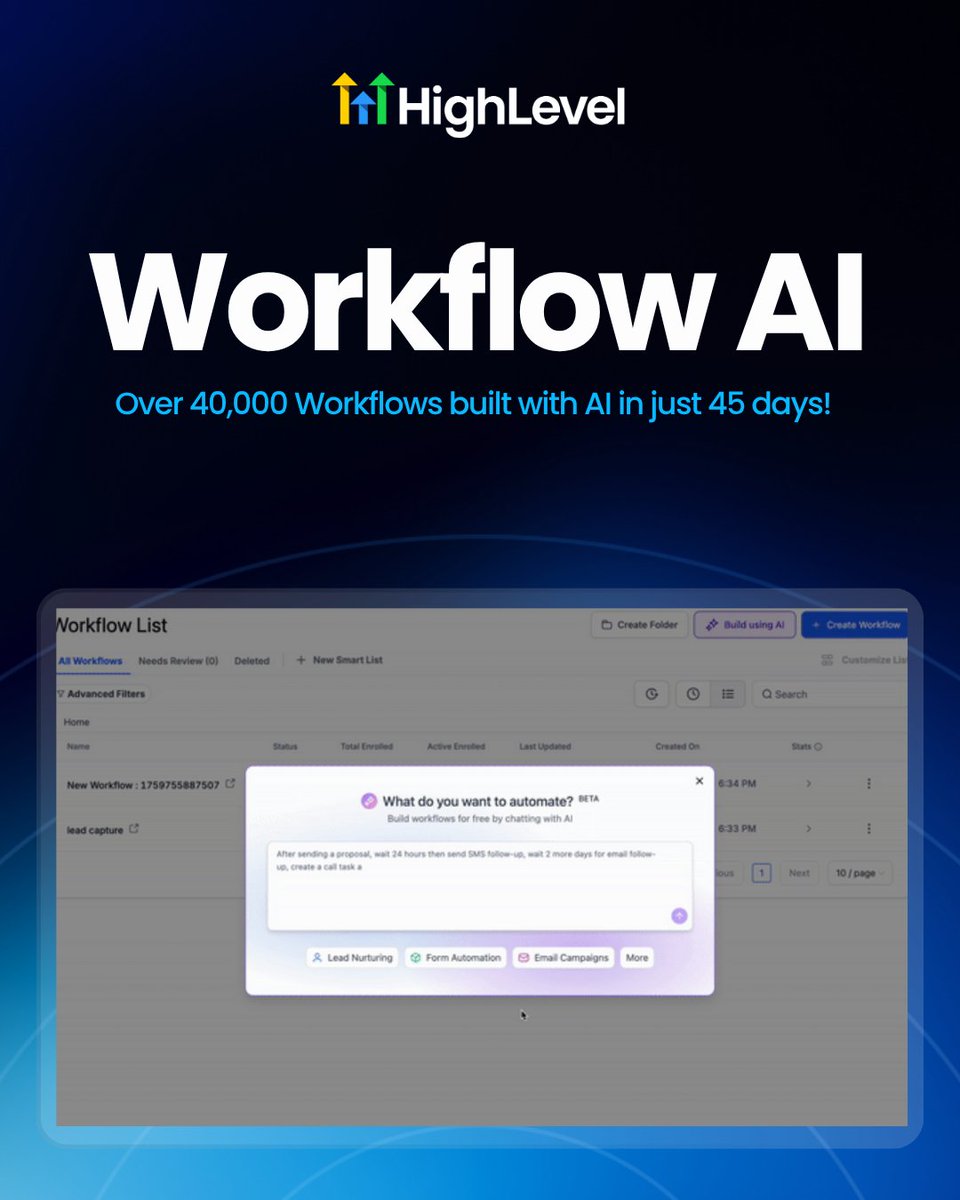
Drag-and-drop? Old news.
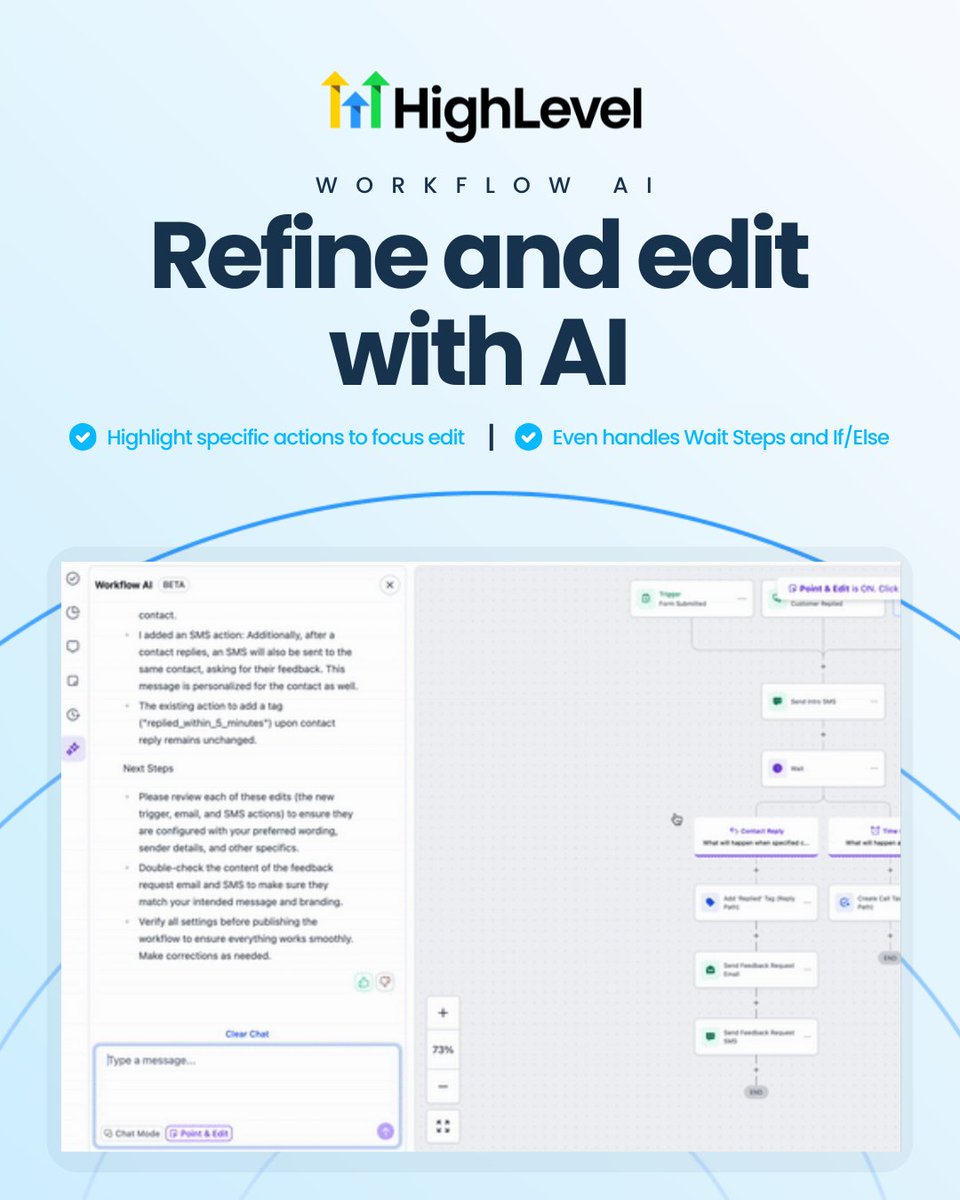
Now your workflows build themselves.
This is the future of automation.
Check out more of our LevelUp Day releases → gohighlevel.com/post/levelup…
#HighLevel #AI #AutomationTools #WorkflowAI
3
223

28 Sep 2025
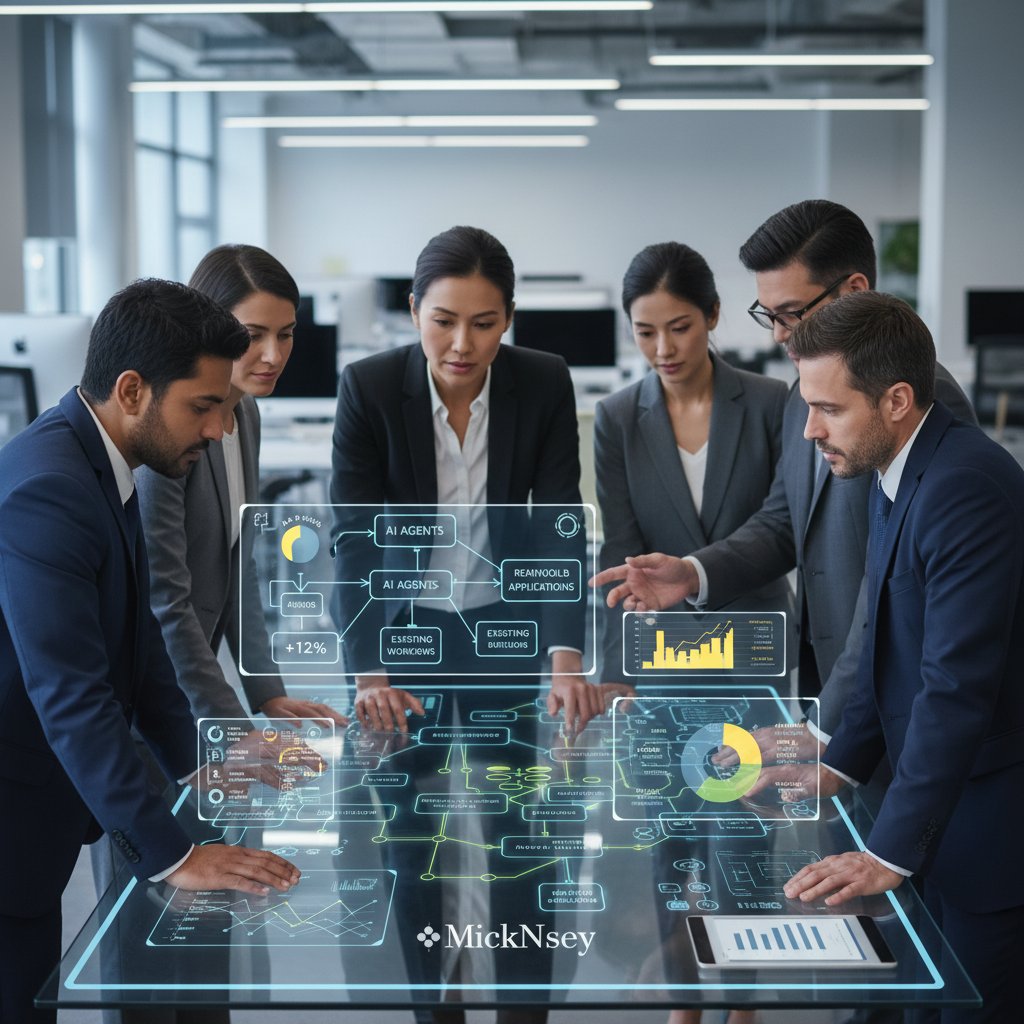
Deploying AI agents isn’t plug-and-play. Context, workflow fit, and constant monitoring are the real game-changers.
Who’s done this right? 🤖
#AIagents #Automation #FutureOfWork #WorkflowAI #AIstrategy
1
2
21

18 Sep 2025
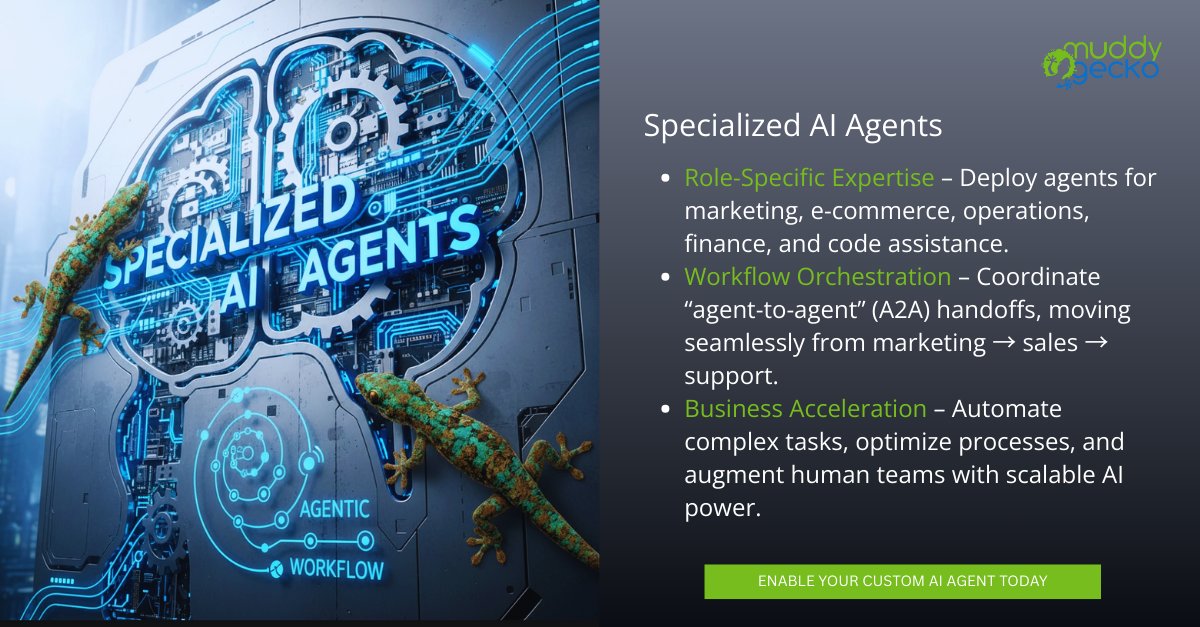
From marketing to finance to code—Muddy Gecko’s AI Agents bring role-specific expertise to accelerate workflows. Seamless agent-to-agent handoffs keep your business moving smarter, faster.
👉Discover AI Agents | muddygecko.com/ai-solutions/
#AIAgents #WorkflowAI
1
3
14

4 Jul 2025
Most of the world’s data is unstructured — and until recently, underused.
But with AI agents, this messy data becomes gold: powering better decisions and real-time automation.
It's all about context → x.com/box/status/19409203177…
#AIUX #WorkflowAI #SingularAgency

Context is the ultimate game-changer for organizations utilizing AI. In this AI-first interview, Box CEO @levie discusses the revolution we’re going to see when it comes to unstructured data and its value for AI. Watch the full video: bit.ly/box-ai-first
2
3
42