

Breakdown of the 52 playoff appearances by MLB/NBA/NFL/NHL teams from the NYC metro area between the Giants' victory in Super Bowl XLVI and the Knicks' title this year:
10 - Rangers
10 - Yankees
8 - Islanders
8 - Nets
6 - Knicks
4 - Devils
4 - Mets
2 - Giants
0 - Jets
6
29
5,087

The 2025-26 Knicks become the first New York area team in the four major North American sports leagues to win a championship since the 2011 Giants in Super Bowl XLVI.
The drought finally ends at 5242 days.
2
13
314

Among the four major men’s sports, New York last had a title when the Giants beat the Pats again in SB XLVI. New York FC in MLS and the WNBA Liberty had their moments the last few years, and the Yankees, Mets, Devils and Rangers played in finals in that 14-yr time frame.
1
46

cuando esos @Giants lograron #Vencer a los #Patriots en el #Superbowl #XLVI!
#ElGuru #ElGurú #TheGuru
#Guru #Gurú #VDilone
#Seguidores #Followers #Contactos @elgurusportsrd
@RedTVDominicana @ActoresUnidosRD
@Contactos @Followers
@nytimes @nyyankeesstats @ZonaEspn_NY @NYCosmos
1
16

#Universitarias. UCR será sede de la inauguración de la XLVI Semana Nacional de Orientación 2026
semanariouniversidad.com/uni…
198

XLVI. NAFARROAKO LAXOA TXAPELKETA | ASTEBURUKO EMAITZAK ETA HURRENGO JARDUNALDIA
laxoa.com/eu/xlvi-nafarroako…

6


3
9
9
13
Ayuntamiento Sotillo retweeted

Jun 12
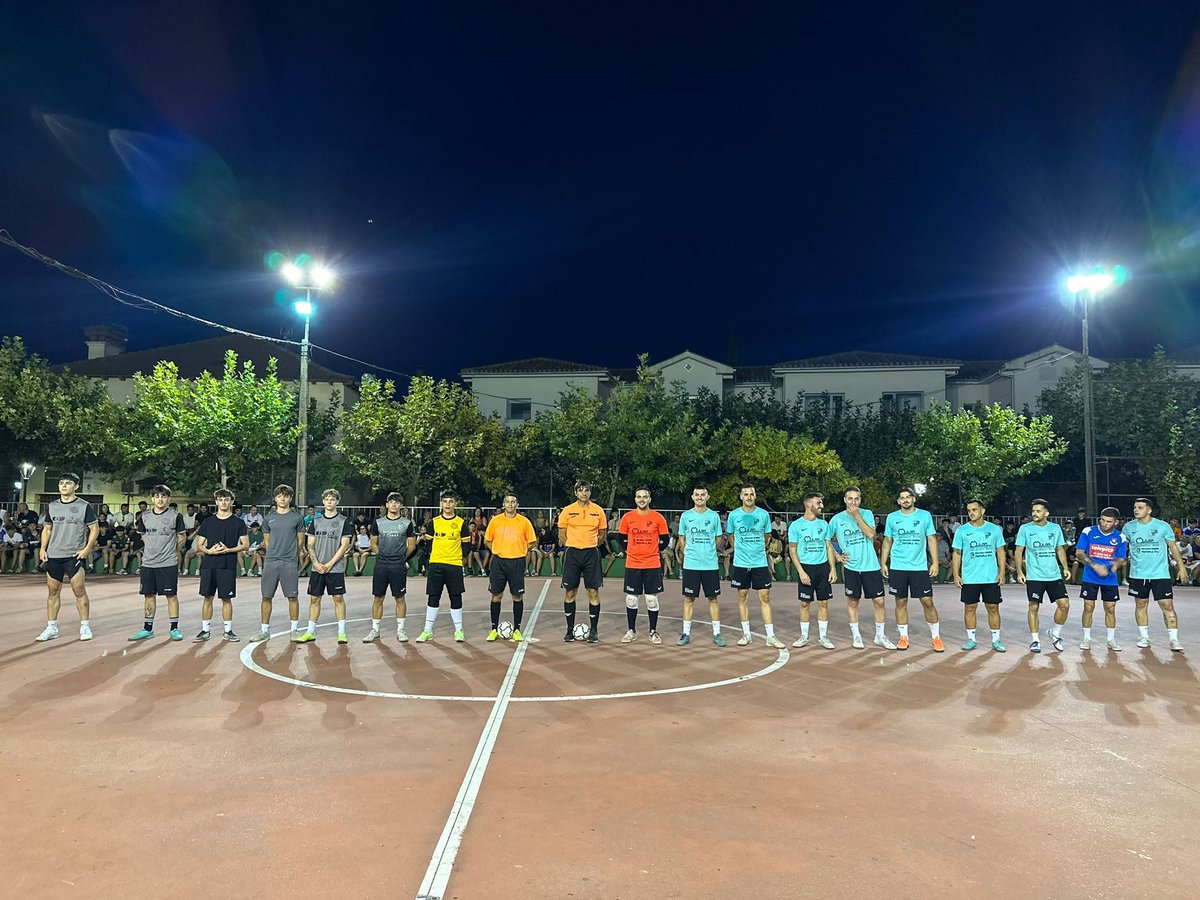
⚽️ Abiertas las inscripciones para el XLVI Torneo de #FútbolSala de Sotillo 2026
🟠 El clásico de los veranos sotillanos regresa con más premios y emoción
deportesavila.es/abiertas-la…
1
161
Álvaro Pimentel Siles 🇪🇸 retweeted

🎶 Magnífica noche en el XLVI Festival Flamenco de La Fragua, celebrado en el Cortijo de Cuarto. ✨
Una cita que pone en valor nuestras raíces, la tradición y el talento flamenco. 💃
Seguimos apoyando la cultura en nuestro distrito. 🤝💚
1
1
7
321

23h
Madden NFL 12 Mod - 2011 New York Giants @Giants vs. 2011 New England Patriots @Patriots - Super Bowl XLVI #giantsvspatriots #NYGvsNE #superbowl #superbowlxlvi #superbowl46
#madden12 #madden #maddennfl #maddenfootball
Highlights: instagram.com/reel/DZgw6jhOF…
tiktok.com/t/ZTBQ1xhyh/
Full Game: youtu.be/WAyjL3DHT-s?is=r7rt…
@softdrinktv @VivaLaPhoenixTV @EricRayweather @oRaunchyy @TraySold @3MGLIVE @DionDoes @PatriotsLife @PATRIOTSdotCOM @TomBrady @gameswithnames @DudesOnDudesPod @EliManning @FivePointsVids @NYGDaily @NYG_Nation10 @GiantsNationPod
1
70

Jun 13
🎨 ¡Ya se publicaron los resultados del XLVI Concurso Nacional de Pintura Infantil “La Niñez y la Mar” 2026! ⚓
Consulta la lista de ganadoras y ganadores
semar.gob.mx/Concursos/LaNin…
#LaNiñezYLaMar #SEMAR #DGETAyCM #BachilleratoNacional
21

They got the ball with 29 seconds left at their 26 in Super Bowl XLII
Got the ball with 57 seconds left and 1 time out at their 20 needing a TD in XLVI
They asked FORTY ONE points to a Nick Foles led offense.
1
83


Gabriel Beldarrain: XLVI Cross Corpus Christi Legorreta. 129 corredores clasificados. Ganaron Itziar Ibarbia y Xabier Sánchez Elorza. gabrielbeldarrain.blogspot.c…
48

17. But all these evils as it were culminate in the cowardice and the sloth of those who, after the manner of the sleeping and fleeing disciples, wavering in their faith, miserably forsake Christ when He is oppressed by anguish or surrounded by the satellites of Satan, and in the perfidy of those others who following the example of the traitor Judas, either partake of the holy table rashly and sacrilegiously, or go over to the camp of the enemy. And thus, even against our will, the thought rises in the mind that now those days draw near of which Our Lord prophesied: "And because iniquity hath abounded, the charity of many shall grow cold" (Matth. xxiv, 12). . 18. Now, whosoever of the faithful have piously pondered on all these things must need be inflamed with the charity of Christ in His agony and make a more vehement endeavor to expiate their own faults and those of others, to repair the honor of Christ, and to promote the eternal salvation of souls. And indeed that saying of the Apostle: "Where sin abounded, grace did more abound" (Romans v, 20) may be used in a manner to describe this present age; for while the wickedness of men has been greatly increased, at the same time, by the inspiration of the Holy Ghost, a marvelous increase has been made in the number of the faithful of both sexes who with eager mind endeavor to make satisfaction for the many injuries offered to the Divine Heart, nay more they do not hesitate to offer themselves to Christ as victims. For indeed if any one will lovingly dwell on those things of which we have been speaking, and will have them deeply fixed in his mind, it cannot be but he will shrink with horror from all sin as from the greatest evil, and more than this he will yield himself wholly to the will of God, and will strive to repair the injured honor of the Divine Majesty, as well by constantly praying, as by voluntary mortifications, by patiently bearing the afflictions that befall him, and lastly by spending his whole life in this exercise of expiation. . 19. And for this reason also there have been established many religious families of men and women whose purpose it is by earnest service, both by day and by night, in some manner to fulfill the office of the Angel consoling Jesus in the garden; hence come certain associations of pious men, approved by the Apostolic See and enriched with indulgences, who take upon themselves this same duty of making expiation, a duty which is to be fulfilled by fitting exercises of devotion and of the virtues; hence lastly, to omit other things, come the devotions and solemn demonstrations for the purpose of making reparation to the offended Divine honor, which are inaugurated everywhere, not only by pious members of the faithful, but by parishes, dioceses and cities. . 20. These things being so, Venerable Brethren, just as the rite of consecration, starting from humble beginnings, and afterwards more widely propagated, was at length crowned with success by Our confirmation; so in like manner, we earnestly desire that this custom of expiation or pious reparation, long since devoutly introduced and devoutly propagated, may also be more firmly sanctioned by Our Apostolic authority and more solemnly celebrated by the whole Catholic name. Wherefore, we decree and command that every year on the Feast of the Most Sacred Heart of Jesus, - which feast indeed on this occasion we have ordered to be raised to the degree of a double of the first class with an octave - in all churches throughout the whole world, the same expiatory prayer or protestation as it is called, to Our most loving Savior, set forth in the same words according to the copy subjoined to this letter shall be solemnly recited, so that all our faults may be washed away with tears, and reparation may be made for the violated rights of Christ the supreme King and Our most loving Lord. . 21. There is surely no reason for doubting, Venerable Brethren, that from this devotion piously established and commanded to the whole Church, many excellent benefits will flow forth not only to individual men but also to society, sacred, civil, and domestic, seeing that our Redeemer Himself promised to Margaret Mary that "all those who rendered this honor to His Heart would be endowed with an abundance of heavenly graces." Sinners indeed, looking on Him whom they pierced (John xix, 37), moved by the sighs and tears of the whole Church, by grieving for the injuries offered to the supreme King, will return to the heart (Isaias xlvi, viii), lest perchance being hardened in their faults, when they see Him whom they pierced "coming in the clouds of heaven" (Matth. xxvi, 64), too late and in vain they shall bewail themselves because of Him (Cf. Apoc. i, 7). But the just shall be justified and shall be sanctified still (Cf. Apoc. xxii. 11) and they will devote themselves wholly and with new ardor to the service of their King, when they see Him contemned and attacked and assailed with so many and such great insults, but more than all will they burn with zeal for the eternal salvation of souls when they have pondered on the complaint of the Divine Victim: "What profit is there in my blood?" (Psalm xxix, 10), and likewise on the joy that will be felt by the same Most Sacred Heart of Jesus "upon one sinner doing penance" (Luke xv, 10). And this indeed we more especially and vehemently desire and confidently expect, that the just and merciful God who would have spared Sodom for the sake of ten just men, will much more be ready to spare the whole race of men, when He is moved by the humble petitions and happily appeased by the prayers of the community of the faithful praying together in union with Christ their Mediator and Head, in the name of all. And now lastly may the most benign Virgin Mother of God smile on this purpose and on these desires of ours; for since she brought forth for us Jesus our Redeemer, and nourished Him, and offered Him as a victim by the Cross, by her mystic union with Christ and His very special grace she likewise became and is piously called a reparatress. Trusting in her intercession with Christ, who whereas He is the "one mediator of God and men" (1 Timothy ii, 5), chose to make His Mother the advocate of sinners, and the minister and mediatress of grace, as an earnest of heavenly gifts and as a token of Our paternal affection we most lovingly impart the Apostolic Blessing to you, Venerable Brethren, and to all the flock committed to your care. . Given at Rome, at St. Peter's, on the eighth day of May, 1928, in the seventh year of Our Pontificate.
80

Jun 11
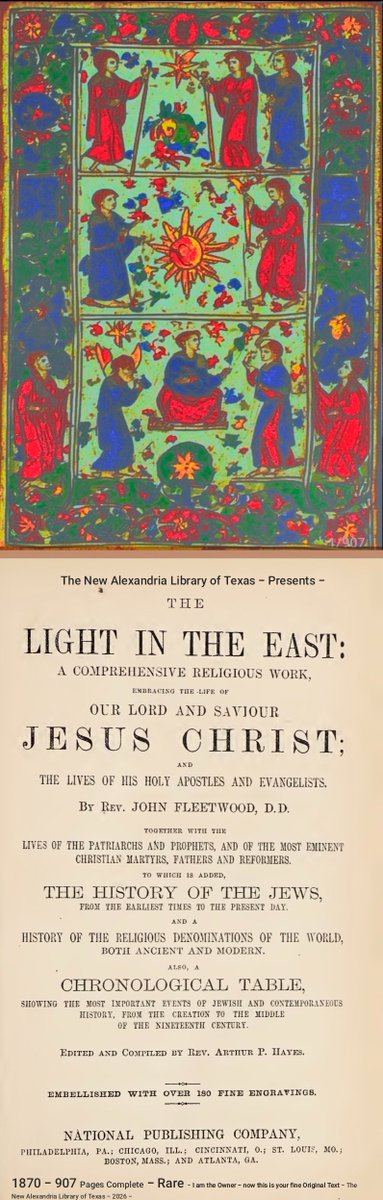
1870 - The Light in the East: A Comprehensive Religious Work, Embracing the Life of Our Lord & Saviour Jesus Christ; & the Lives of His Holy Apostles & Evangelists; Patriarchs & Prophets, & Christian Martyrs; Dr. & Rev. John Fleetwood, D.D. Fts - Hierohistorical Architectonics, 180 ILLUSTRATIONS, 907 PAGES - Extremely Rare/Lost Book of old -
Publishers
1870 - Cincinnati: National Publishing Company, Ohio; St. Louis, Missouri, Philadelphia, Pennsylvania; Chicago, Illinois -
&
2026 - The New Alexandria Library of Texas
🔑 Free Link
academia.edu/168541135/The_L…
🔑 Free Link to 508 Rare book Archive
independent.academia.edu/Dee…
🔑Specialist Hard Hitting Powerful Abstract
I found another hidden rare text called in short " The Light in the East by Dr. John Fleetwood, D.D., that stands as one of those vast religious household monuments of the older American publishing world: a 907-page illustrated treasury built to gather the life of Jesus Christ, the lives of the apostles and evangelists, the patriarchs and prophets, the eminent martyrs, fathers, and reformers, the history of the Jews, the religious denominations of the world, and a chronological table of Jewish and contemporaneous history into one massive sacred-historical panorama.
Its architecture is encyclopedic.
The work opens with the infancy, ministry, miracles, parables, sufferings, crucifixion, resurrection, and ascension of Christ, moving through forty-five chapters that form a complete devotional Life of the Lord.
It then extends outward into apostolic succession and sacred biography: Peter, Paul, Andrew, James, John, Philip, Bartholomew, Matthew, Thomas, Jude, Matthias, Mark, Luke, Barnabas, Stephen, Timothy, the Virgin Mary, Mary Magdalene, Joseph of Arimathea, Nicodemus, and John the Baptist. This gives the volume a living chain of witness, from the Gospel body of Christ to the missionary body of the Church.
The Old Testament section widens the book into patriarchal and prophetic memory: Adam, Noah, Abraham, Isaac, Jacob, Joseph, Moses, Joshua, Ruth, Samson, Samuel, David, Solomon, Elijah, and Daniel.
These biographies transform the volume from a New Testament life of Christ into a full biblical-human gallery, where covenant, kingship, prophecy, temple, exile, wisdom, judgment, and redemption all become historical stations leading toward the Gospel.
Its later sections make the work especially valuable. The lives of Ignatius, Polycarp, Origen, Cyprian, Eusebius, Augustine, Jerome, Patrick, Peter Waldo, Wycliffe, Huss, Luther, and Calvin create a bridge from apostolic antiquity to patristic theology, medieval dissent, and Reformation reconstruction.
The book therefore acts as a Protestant sacred memory-house, preserving the continuity of witness through martyrdom, doctrine, translation, reform, and ecclesiastical conflict.
The appended History of the Jews and the History of the Religious Denominations of the World turn the work into a comparative religious encyclopedia.
Its range is striking: Abyssinians, Copts, Greek Church, Maronites, Roman Catholics, Waldenses, Wycliffites, Lutherans, Presbyterians, Baptists, Quakers, Moravians, Swedenborgians, Spiritualists, Mormons, Buddhists, Brahmins, Mahometans, Ghebers, Samaritans, Lamaists, and many others.
This makes the volume not only a devotional book, but a nineteenth-century religious taxonomy of ancient and modern communions.
The chronological table is another major feature. It aligns Jewish history with contemporaneous world history, beginning with the Creation and moving through the Flood, Abraham, Moses, the Exodus, the Judges, Saul, David, Solomon, the Temple, Assyria, Babylon, Persia, Greece, Rome, the Maccabees, Herod, Christ, the destruction of Jerusalem, the dispersion of the Jews, the Crusades, European persecutions, toleration, the American Revolution, and the modern political world. In this table, sacred history and universal history are made to converse in parallel columns.
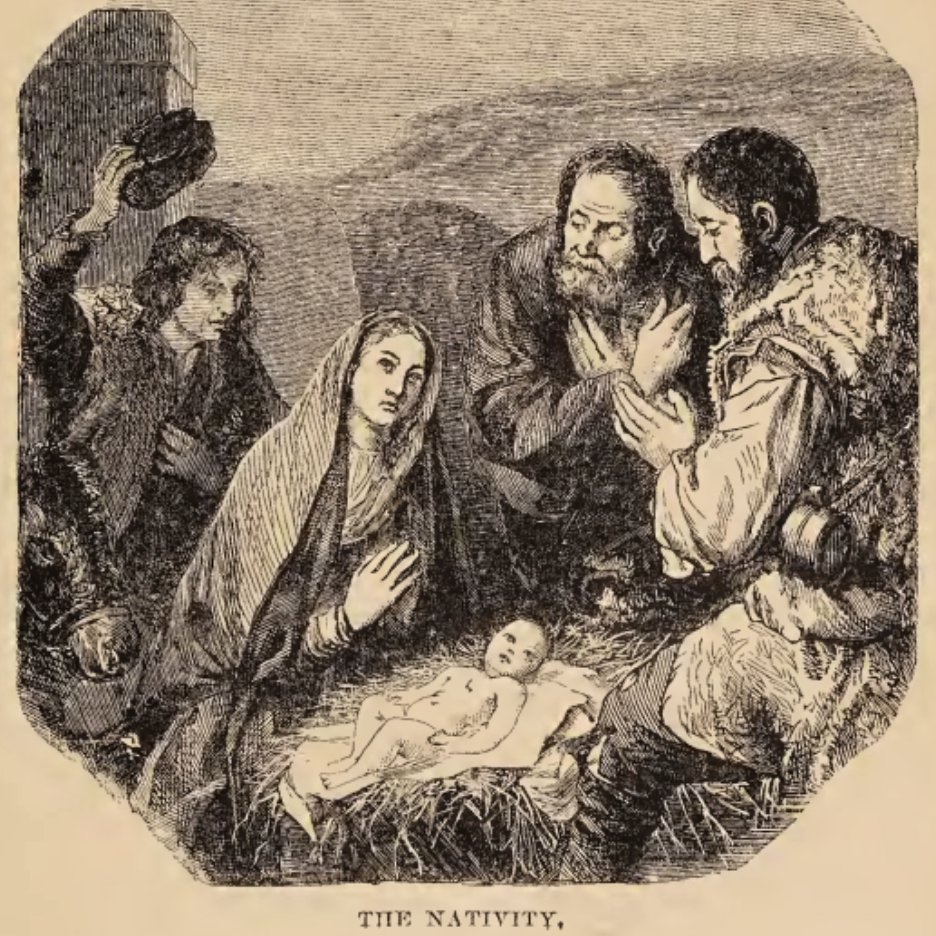
The engravings are not ornamental accidents. With over 180 illustrations - Jerusalem, Bethlehem, Nazareth, Cana, Samaria, Galilee, the Mount of Olives, Gethsemane, Calvary, the Holy Sepulchre, Joppa, Antioch, Tarsus, Damascus, Ephesus, Corinth, Eden, Ararat, Babel, Egypt, Sinai, the Tabernacle, Jericho, Hebron, Tyre, Solomon’s Temple, Jezreel, Petra, Jewish synagogues, and ruins of Jerusalem - the book becomes a visual atlas of sacred geography. It teaches through image, memory, place, and sacred topography.
In its deepest character, The Light in the East is a Christian total-history: Christology at the center, apostolic witness around it, patriarchal antiquity beneath it, Jewish history beside it, patristic and Reformation biography after it, world religion surrounding it, and chronology binding it all into providential sequence. It belongs to that older 1800s tradition where history, biography, doctrine, geography, engraving, chronology, and moral instruction were gathered into one monumental domestic library volume.
This is not a small devotional tract. It is a whole sacred republic of memory: Gospel, apostle, patriarch, prophet, martyr, father, reformer, Jew, Gentile, denomination, empire, city, temple, wilderness, and engraved holy land all compressed into one 907-page religious universe.
⚠️ 70 Remarkable Tags, Features, Facets, Correspondences, Pneumatics, Hidden Treasures, Sacred Insights, and Lesser-Known Avenues of Knowledge Found Within The Light in the East (1870) - Dr. & Reverend John Fleetwood -
I. Sacred Chronographic Consciousness
The attempt to synchronize biblical history with the entire stream of world civilization into one unified historical framework.
II. Providential Historiography
History interpreted as a theater of divine governance rather than mere political succession.
III.
Christocentric Chronology
The ordering of all ages around the Incarnation as the central pivot of history.
IV. Apostolic Memory Preservation
The safeguarding of apostolic traditions long after the canonical narratives conclude.
V. Patriarchal Anthropology
Examination of humanity through Adam, Noah, Abraham, Isaac, Jacob, and Joseph as archetypal human models.
VI. Sacred Genealogical Consciousness
Lineage functioning as theological transmission rather than mere biological descent.
VII. Temple Cosmology
The Temple appearing as a miniature model of divine order and sacred architecture.
VIII. Holy Land Topography
Geography treated as theological testimony.
IX. Redemption Geography
Places becoming repositories of sacred memory.
X. Pilgrimage Psychology
The spiritual effect of mentally traversing sacred landscapes.
XI. Prophetic Continuity
The seamless progression from Moses through Malachi into the Gospel age.
XII. Covenant Dynamics
The unfolding layers of divine-human relationship across ages.
XIII. Sacred Timekeeping
Chronology functioning as a theological discipline.
XIV. Biblical Cartography
Visual geography serving as exegetical commentary.
XV. Sacred Biography as Theology
Lives becoming doctrinal illustrations.
XVI.
Moral Phenomenology
Observation of virtue and vice through lived experience.
XVII. Martyrial Psychology
The study of conviction under extreme suffering.
XVIII. Apostolic Pneumatics
The operation of the Holy Spirit through missionary expansion.
XIX. Evangelical Cartography
Mapping the spread of Christianity through the ancient world.
XX. Kingdom Transmission Theory
How ideas survive through centuries of upheaval.
XXI.
Ancient Near Eastern Memory Echoes
Residual traces of earlier civilizations preserved through biblical history.
XXII. Sacred Hospitality Traditions
The spiritual significance of welcoming strangers.
XXIII. Wilderness Theology
Desert regions as schools of transformation.
XXIV. Mountain Theophanology
Sacred mountains as locations of divine encounter.
XXV. River Symbolics
Jordan, Nile, Euphrates, and other waters as theological boundaries.
XXVI. Angelic Intervention Narratives
Moments where celestial agency intersects earthly events.
XXVII. Sacred Dream Sciences
Theological interpretation of revelatory dreams.
XXVIII. Visionary Consciousness
Prophetic perception beyond ordinary experience.
XXIX. Resurrection Ontics
The nature of existence beyond death.
XXX.
Pneumatological Regeneration
Transformation through divine influence.
XXXI. Sacred Light Symbolism
Light as revelation, truth, holiness, and divine presence.
XXXII. Messianic Expectation Studies
The long anticipation of redemption across centuries.
XXXIII. Temple Loss and Restoration Dynamics
The theological consequences of destruction and rebuilding.
XXXIV. Exilic Psychology
The spiritual effects of displacement and longing.
XXXV. Diaspora Preservation Mechanisms
How communities maintain identity across continents.
XXXVI. Sacred Remembrance Theory
Memory functioning as covenantal preservation
XXXVII. Early Church Survival Systems
How Christianity endured persecution.
XXXVIII. Apostolic Succession Narratives
Transmission of teaching across generations.
XXXIX. Patristic Intellectual Heritage
The preservation of theological reasoning by early Church Fathers.
XL. Monastic Knowledge Reservoirs
Communities acting as archives of civilization.
XLI. Reformation Recovery Movements
The rediscovery of forgotten doctrines and texts.
XLII. Scriptural Literacy Networks
The spread of biblical knowledge through translation and teaching.
XLIII. Sacred Educational Systems
Religious instruction as civilization-building
XLIV. Comparative Ecclesiology
Examining the structures of diverse Christian bodies.
XLV. Religious Ethnography
Descriptions of global faith communities.
XLVI. Historical Apologetics
Defense of faith through historical evidence.
XLVII. Sacred Architecture Studies
Churches, temples, shrines, and sacred spaces.
XLVIII. Biblical Archaeological Anticipations
Early interest in the physical settings of Scripture.
XLIX. Devotional Cartographic Imagination
Visualizing sacred events through landscape.
L. Providence and Empire
The interaction between spiritual movements and political powers.
LI. Sacred Kingship Studies
Davidic and Solomonic models of rulership.
LII. Prophetic Resistance Traditions
Voices confronting corruption and idolatry.
LIII. Covenantal Ethics
Morality rooted in divine relationship.
LIV. Spiritual Geography of Jerusalem
Jerusalem as theological center rather than merely a city.
LV. Holy City Phenomenology
The emotional and spiritual perception of sacred places.
LVI.
Sacred Ruin Studies
The theological significance of fallen cities and temples.
LVII.
Eschatological Anticipation
Expectation of future restoration and fulfillment.
LVIII. Biblical Heroics
Exemplary lives as moral and spiritual instruction.
LIX. Sacred Narrative Pedagogy
Teaching through story and biography.
LX. Divine Deliverance Motifs
Recurring patterns of rescue and preservation.
LXI. Gifts of the Spirit Traditions
Wisdom, discernment, prophecy, faith, teaching, exhortation, and service appearing throughout sacred biographies.
LXII. Pneumatic Courage
Spirit-inspired endurance during persecution.
LXIII. Pneumatic Illumination
Insight arising through contemplation of Scripture.
LXIV.
Sacred Friendship Networks
Spiritual relationships shaping history.
LXV.
Hidden Women of Sacred History
Mary, Elizabeth, Ruth, Martha, Mary Magdalene, and others as transmitters of faith.
LXVI. Lesser-Known Reformer Traditions
Peter Waldo, Huss, and other pre-Reformation witnesses often overshadowed by Luther and Calvin.
LXVII. Forgotten Christian Geographies
Antioch, Edessa, Smyrna, Cyrene, and ancient centers rarely emphasized in modern popular religion.
LXVIII. Obscure Historical Bridges
The transition from Hebrew prophets to apostles, fathers, monks, reformers, and modern denominations in a single continuous narrative.
LXIX. Sacred Civilization Theory
The belief that spiritual ideas shape institutions, cultures, and nations.
LXX. The Great Republic of Sacred Memory
Perhaps the volume's greatest achievement: gathering prophets, apostles, martyrs, theologians, pilgrims, reformers, Jews, Christians, empires, kingdoms, sacred cities, chronology, geography, and doctrine into one immense treasury of historical remembrance.
Jun 11

1
1
1
706