Filter
Exclude
Time range
-
Near
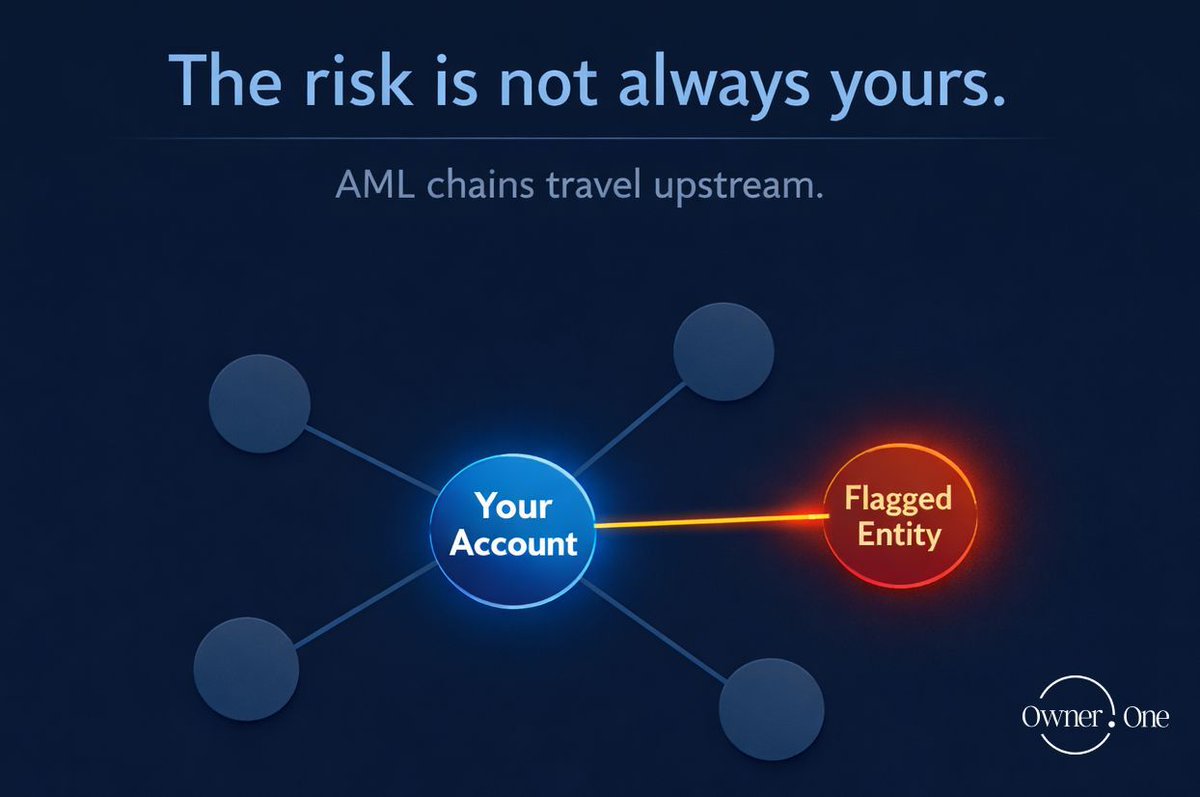
A bank can freeze your assets because of someone else's transaction. Most founders have no idea. There is a category of risk that most capital founders never encounter until it's too late to prevent: contamination through association. Banks and brokers operate under AML (Anti-Money Laundering) and CFT (Counter-Financing of Terrorism) frameworks that evaluate not just your transactions — but who transacted with you, and who transacted with them. Receiving $50,000 from a business partner who, unknown to you, also received funds from a sanctioned entity, can trigger a compliance review of your entire account. Not because you did anything wrong. Because the chain is connected. This is not theoretical. It is routine in jurisdictions with sophisticated AML monitoring — the EU, UK, UAE, Singapore, Switzerland. And it affects families at the transfer moment most acutely: heirs receiving inherited capital from a founder whose banking relationships were never fully documented face the highest scrutiny. They cannot explain transactions they never knew existed. The defense is not legal argument after the fact. It is documented Source of Wealth and clean, traceable transaction history built years in advance. Only 21.3% of capital founders consider the risks of incoming transactions. Even fewer think about outgoing ones. 🔗 owner.one/yansnotes/ #YansNotes #AML #KYT #SourceOfWealth #BankingRisk #ComplianceRisk #WealthProtection #CapitalFounders #OwnerOne
80
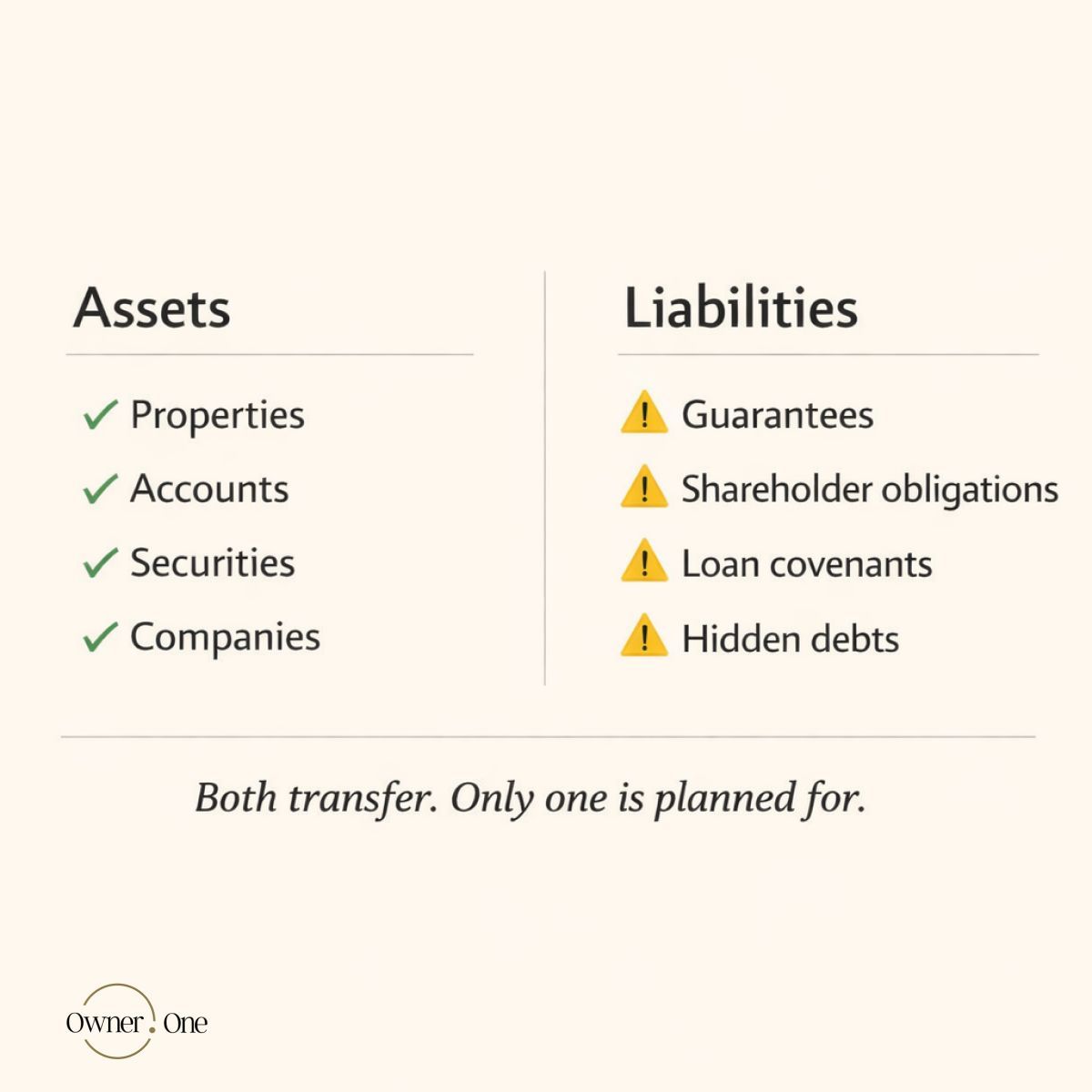
Liabilities don't wait for the funeral to arrive. Capital founders tend to think about what they will leave behind in terms of assets. Accounts, properties, companies, portfolios. What they rarely document is the other side of the ledger. Guarantees given to business partners. Shareholder agreements with buyback clauses. Options that trigger on death or incapacity. Loans with covenants tied to the founder's personal involvement. These are not uncommon. They are standard elements of any active business life. But the family rarely knows they exist — let alone how to respond when the lender or counterparty arrives with a claim. Penguin Analytics found that only 5.6% of heirs understand that inheritance is rarely partial: you inherit the liabilities alongside the assets. And in 61% of cases, debts only surface 12–18 months after the transfer — by which time distributions are locked and portfolios already restructured. The founder holds the map of the liabilities, too. The question is whether it will transfer. 🔗 owner.one/assets-and-attribu… #YansNotes #WealthTransfer #InheritanceRisk #FamilyWealth #Liabilities #CapitalFounders #PenguinAnalytics #OwnerOne
122
Yan's Notes: Why will trusted persons not replace you? Many who begin preparing their wealth for transfer quickly give up, postponing the task once again. Why? Among families with wealth up to $100 million, the penetration of family offices is only 1.46%. These offices manage non-executive administration for no more than 25% of a client’s assets. In the upper-middle-class segment, the penetration rate is even lower, just 0.73%. Capital founders are overly involved in administering 75%-100% of their assets, while family offices handle only the analytical and background work. The founder is the authorized representative in the external world and is often required to personally perform: visiting bank offices, writing emails to brokers, contacting regulators, and executing other verified actions. The founder faces a dilemma: continue managing the assets independently or delegate executive rights. It’s easier to “think about it tomorrow”, especially since managing wealth transfers is not something family offices typically want to handle. 🔗 Read more of Yan's Notes here: owner.one/yansnotes/why-trus… #TrustedPerson #WealthTransfer #HNWFamilies #UHNWFamilies #CapitalFounder #FamilyOffices #OwnerOne #YansNotes
1
1
312
Lose without playing When sending a payment today, one cannot be sure it will reach the addressee. The bank's client presses “send” and almost nothing depends on him. The myth of risks being scarce, with the worst being the bank simply returning the money, is in the past. Why might a bank reject a transaction? Someone in the chain of banks finds the transaction (KYT) or the customer’s profile (KYC) questionable. Most international payments follow the “bank - multiple correspondent banks - bank” route. Any bank in the chain has a wide action range: returning the funds and including the client in its stop-list, initiating the client’s dossier deterioration in World Check and analogues, or informing government agencies. If three banks executed a transaction and the last one stopped it, no bank will actively step up for the client. Rather, the client will be subject to an additional verification from his bank. 87.6% of affluent families do not analyze the aforementioned and do not take preventive measures. Read more in Yan's Notes here: owner.one/yansnotes/lose-wit… #FinancialRisk #PrivateBanking #Compliance #WealthManagement #CapitalProtection #KYC #KYT #CrossBorderBanking #AffluentFamilies #FamilyOffice #WealthTransfer #OwnerOne #YansNotes #ReputationRisk #KYC #KYT #BankingRisk #WealthWarning #ReputationRisk #GlobalPayments #OwnerOne #YansNotes #RiskManagement
1
96
Residential Banking Can we go to any bank in the world and open an account? Today we are not in 2000 or even 2010. The concept of residential banking, initiated by FATF, has become a significant hurdle for most foreign clients. When opening an account, we must show a connection with the country whether through citizenship or a residence permit. Yet, even this is often not enough. Banks also check secondary indicators that determine the substance, such as property ownership, rental agreements, municipal documents, and other proof of a strong local presence. We cannot open an account and not maintain its current status; compliance is an ongoing routine. At any moment, except in cases of single citizenship, banks can determine that a client no longer meets the residency criteria. This reality is grasped by a mere 2.98% of banking clients. While banks can still technically open accounts for non-residents, the extent of their liability often makes such opportunities rare. Regulatory frameworks are tightening rapidly, suggesting that soon, requirements will be as stringent as they now are in the EU. Explore Yan's Notes here: owner.one/yansnotes/resident… #ResidentialBanking #UHNW #YansNotes #PrivateWealth #SuccessionPlanning #WealthContinuity #NextGenWealth #AssetProtection #OwnerOne #PropertyOwnership #RentalAgreements #MunicipalDocuments
74
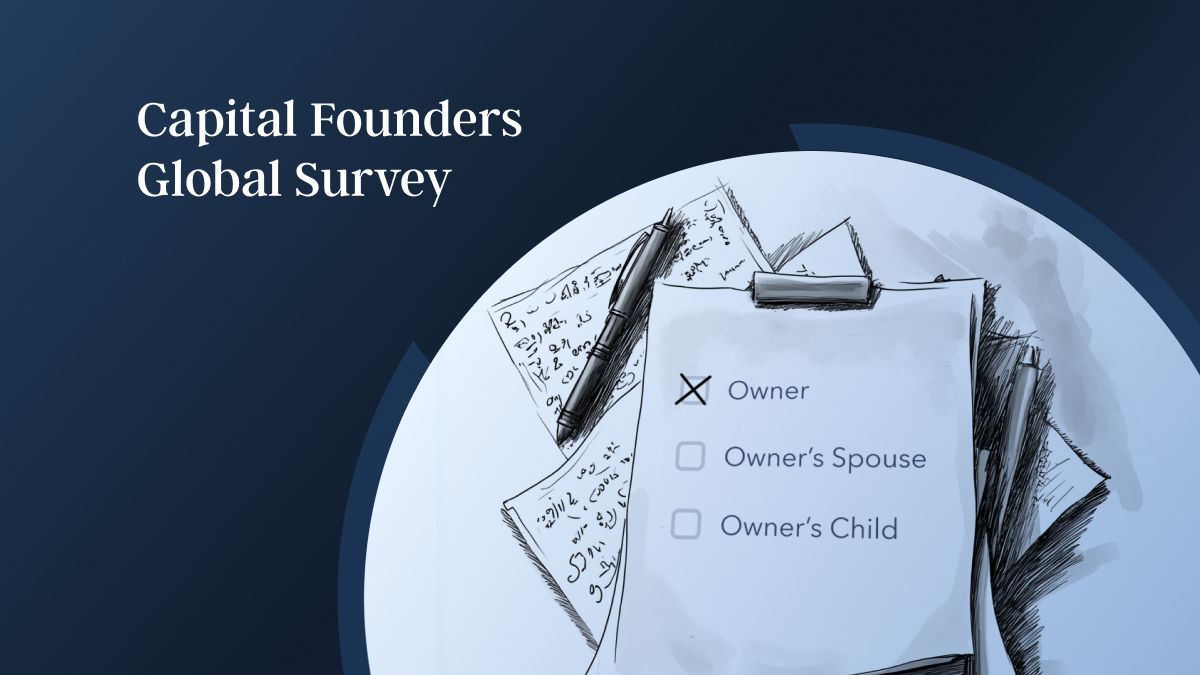
Imagine this: You’re at the South Pole. No signal. No contact. Just time, snow, and silence. You’ll make it back in a few months, but your family doesn’t know that. What happens to your assets in the meantime? What happens when no one knows what you own, where it is, or what to do with it? We’ve surveyed 13,500 families with $3M to $99M in assets. Most of them aren’t prepared — but they think they are. This 12-minute, 28-question survey will show whether your family capital structure is solid… or quietly vulnerable. Take the survey. Read the analytics. See how others like you are doing. 🧭 Start here: ownerone.surveysparrow.com/s… #WealthContinuity #FamilyCapital #InformationAsymmetry #SuccessionStrategy #HighNetWorth #AssetPreservation #LegacyPlanning #OwnerOne #BehavioralEconomics #WealthGovernance #PenguinAnalytics #YansNotes
29
A timeless classic in a new way In the event of an emergency, conveying all necessary details to family members can be challenging or impossible. Many believe that existing methods are either unreliable or cumbersome. However, the solution can be simple: grab a sheet of paper and a black marker. Write down a list of your assets, capital, and their locations. Make several copies of this document. Use a black marker to obscure different parts of the information on each copy (this can also be done digitally in MS Word). To ensure the information cannot be read through the redactions, photocopy these documents again. Distribute the lists to different family members. Now, your family has crucial information that they can use in a critical moment, but they will need to come together to combine the pieces of the puzzle. Risks: This method is not perfect, but is certainly better than having no plan at all. It works best if the family members are in reasonably good relationships with each other. Read more in Yan's Notes here: owner.one/yansnotes/a-timele… #WealthEmergencyPlanning #AssetVisibility #FamilyCapitalContinuity #PrivateWealthStrategy #LegacyReadiness #SuccessionPreparedness #WealthTransferTools # #FamilyOfficeSolutions #HighNetWorthFamilies #OwnerOne #YansNotes
38