
Jun 13
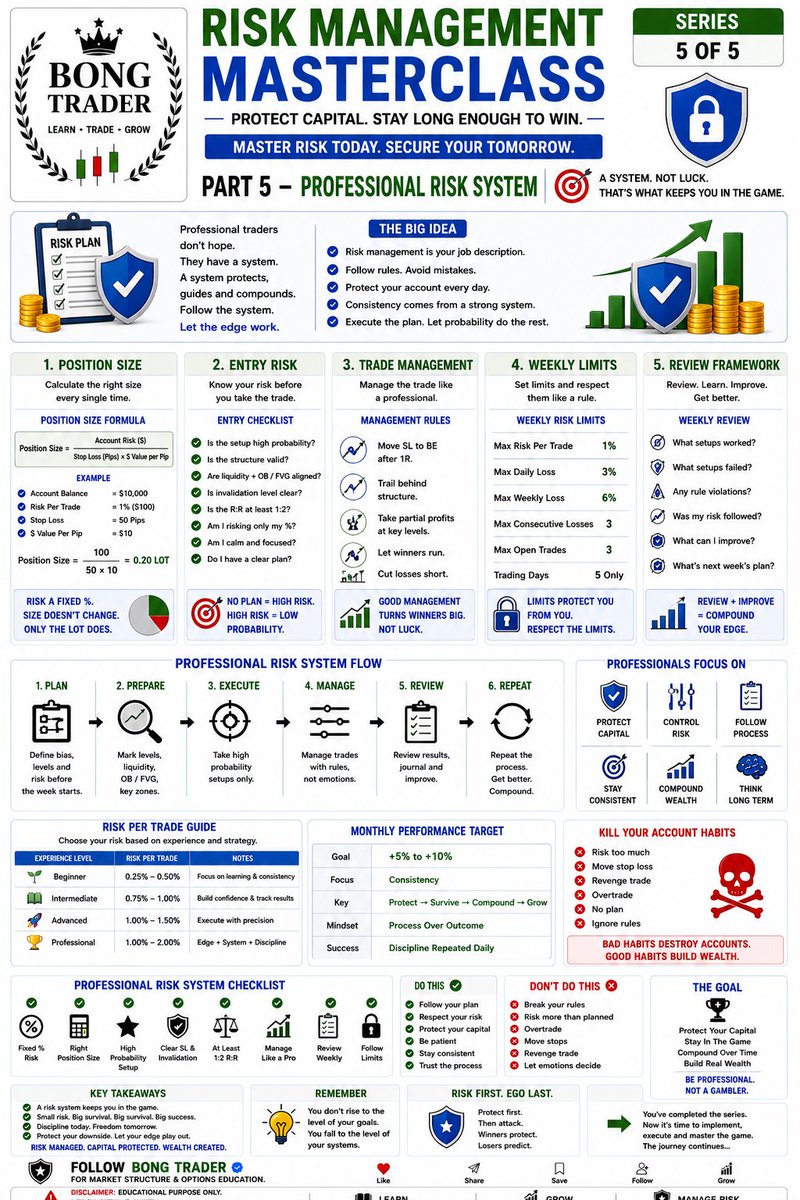
Risk Management Masterclass (Part 5) | Professional Risk System — A System. Not Luck.
#RiskManagement #TradingEducation #CapitalProtection #TraderMindset #MoneyManagement #PositionSizing #RiskReward #TradingPsychology #StockMarket #TechnicalAnalysis
1
15
Jun 13
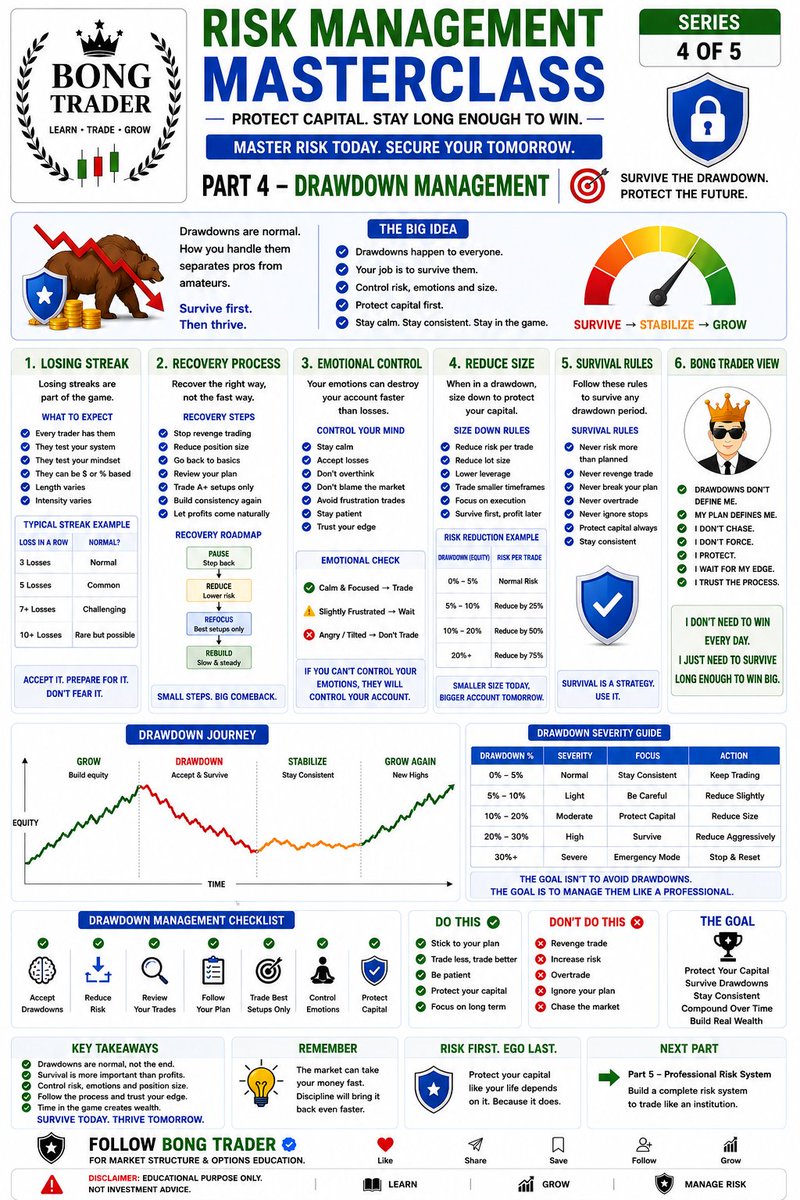
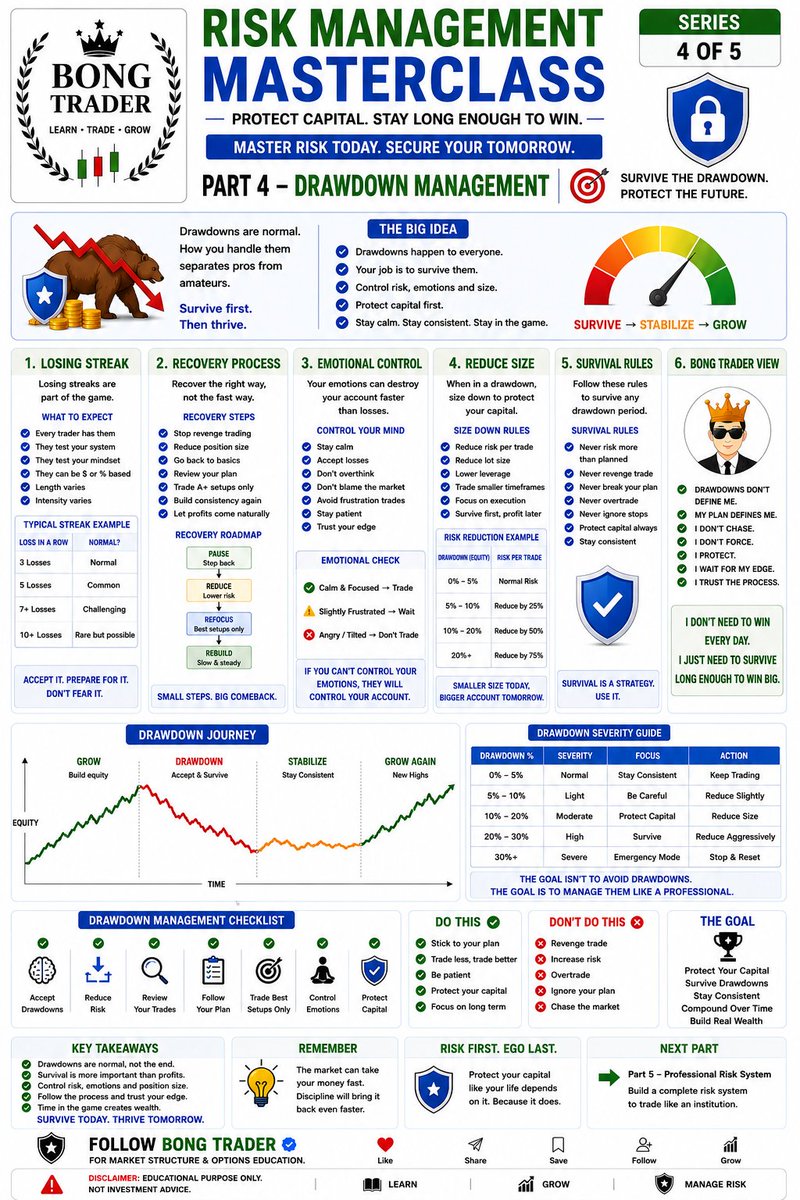
Risk Management Masterclass (Part 4) | Drawdown Management — Survive First. Then Thrive.
#BongTrader #RiskManagement #Drawdown #TradingPsychology #CapitalProtection #TraderMindset #MoneyManagement #TradingEducation #StockMarket #TechnicalAnalysis
1
2
21
Jun 13
Risk Management Masterclass (Part 3) | Risk : Reward Mastery — Risk Small. Earn Big.
#BongTrader #RiskManagement #RiskReward #RRRatio #TradingEducation #TradingPsychology #CapitalProtection #MoneyManagement #StockMarket #TechnicalAnalysis
1
13
Jun 13
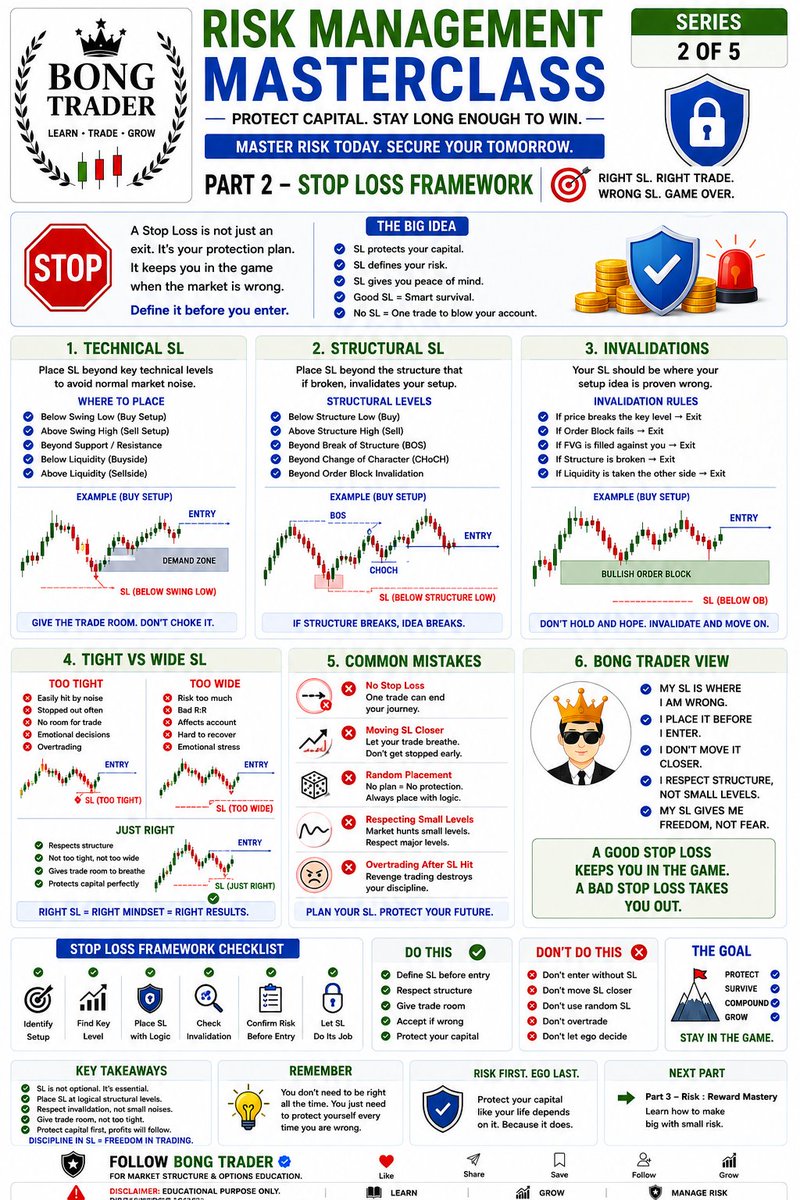
Risk Management Masterclass (Part 2) | Stop Loss Framework — Right SL. Right Trade.
A Stop Loss is not an exit. It’s your protection plan.
#BongTrader #RiskManagement #StopLoss #TradingEducation #CapitalProtection #RiskReward #TradingPsychology #StockMarket #TechnicalAnalysis
1
7
Jun 13
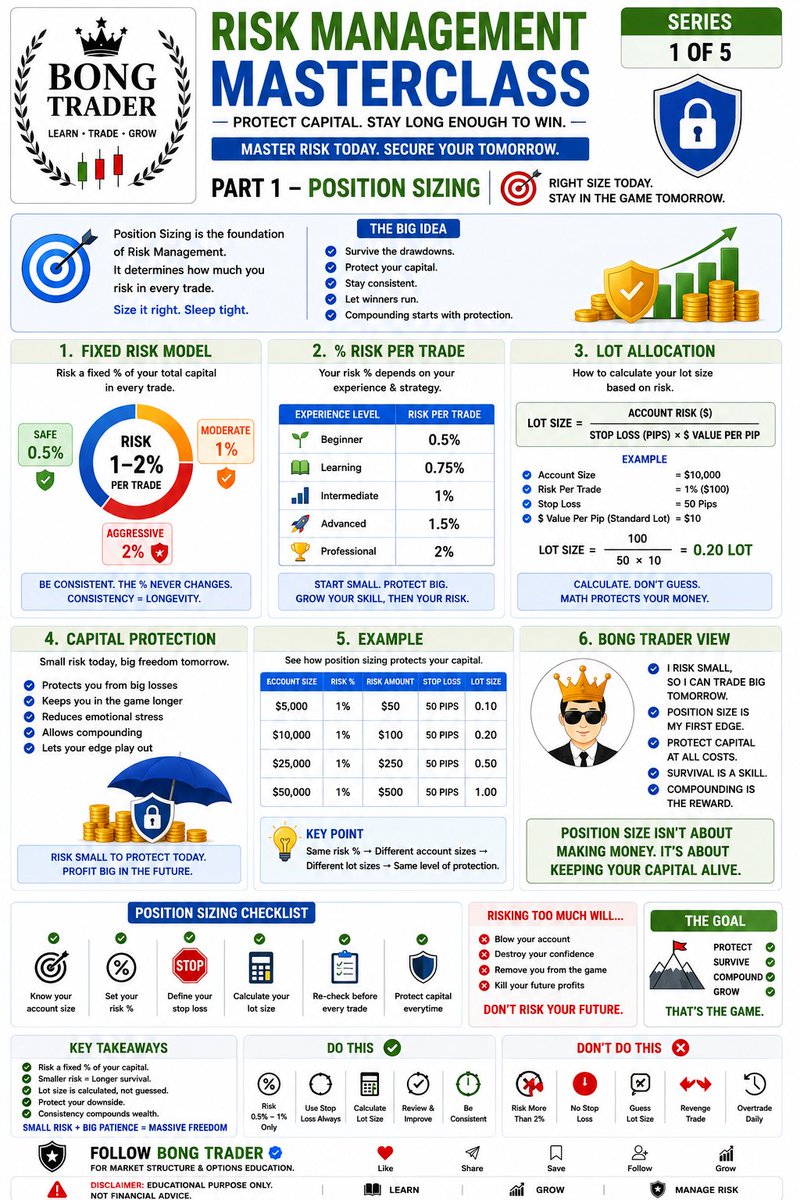
Risk Management Masterclass (Part 1) | Position Sizing — Protect Capital. Stay Long Enough to Win.
#BongTrader #RiskManagement #PositionSizing #TradingEducation #StockMarket #CapitalProtection #TradingPsychology #RiskReward #MoneyManagement #TraderMindset #TechnicalAnalysis
1
20

Jun 12
The biggest investing mistake isn’t missing a multibagger—it’s holding a collapsing story for too long.
Strong earnings can be manufactured. Strong governance and clean cash flows are much harder to fake.
Learn the forensic red flags that protect capital before the market discovers them.
Read more: zurl.co/p1GzQ
#Investing #StockMarketIndia #CorporateGovernance #ForensicAccounting #FundamentalAnalysis #CapitalProtection #SmartInvesting #IndianStocks
1
223

🎯 TRADE UPDATE 🎯
Out of the 2-3 levels shared today, two targets have been successfully achieved. ✅🔥
One position is still active and currently trading in profit. 📈
⚠️ A friendly reminder: Avoid taking too many new entries or buying multiple levels unnecessarily. Overtrading can quickly erase the profits you've already earned and even impact your capital.
💡 Protecting capital is more important than chasing every move in the market.
✅ Book profits when available
✅ Follow strict risk management
✅ Stay disciplined and avoid emotional trading
It has been a good trading day. There's no need to force additional trades.
😎 Take a break, enjoy your profits, and come back tomorrow with a fresh mindset.
The market will always be there tomorrow. Your first priority should be protecting your capital.
#TargetHit #ProfitBooked #TradingDiscipline #RiskManagement #OptionTrading #Nifty #StockMarket #TraderLife #CapitalProtection #MarketUpdate
19

⚠️ DISCLAIMER: The option chart shared is strictly for educational purposes only and should NOT be considered a buy/sell recommendation.
Mark this levels on your chart !
🟢 The Green Line represents a major support zone.
❌ Do NOT enter the trade immediately when price touches the support.
✅ Wait for a proper retest of the support level.
✅ Look for confirmation through a Hammer or Pin Bar candle.
✅ Enter only after confirmation.
✅ The low of the confirmation candle will be your Stop Loss.
Patience is the key in trading. Let the setup complete before taking any position. Protect your capital and trade with discipline.
#StockMarket #IndianStockMarket #Nifty #BankNifty #Nifty50 #OptionsTrading #OptionBuyer #OptionSelling #FNO #FnOTrader #PriceAction #SupportResistance #TechnicalAnalysis #ChartAnalysis #TradingSetup #SwingTrading #IntradayTrading #DayTrading #TradingPsychology #RiskManagement #CapitalProtection #MoneyManagement #TraderLife #StockTrader #Investing #MarketAnalysis #Bullish #Bearish #BreakoutStocks #HeroZero #Hero2Zero #StockTips #TradingEducation #LearnTrading #SEBIRegistered #WealthCreation #Finance #IndianStocks #MarketLearning #TradingCommunity

1
9
1,325

Jun 9
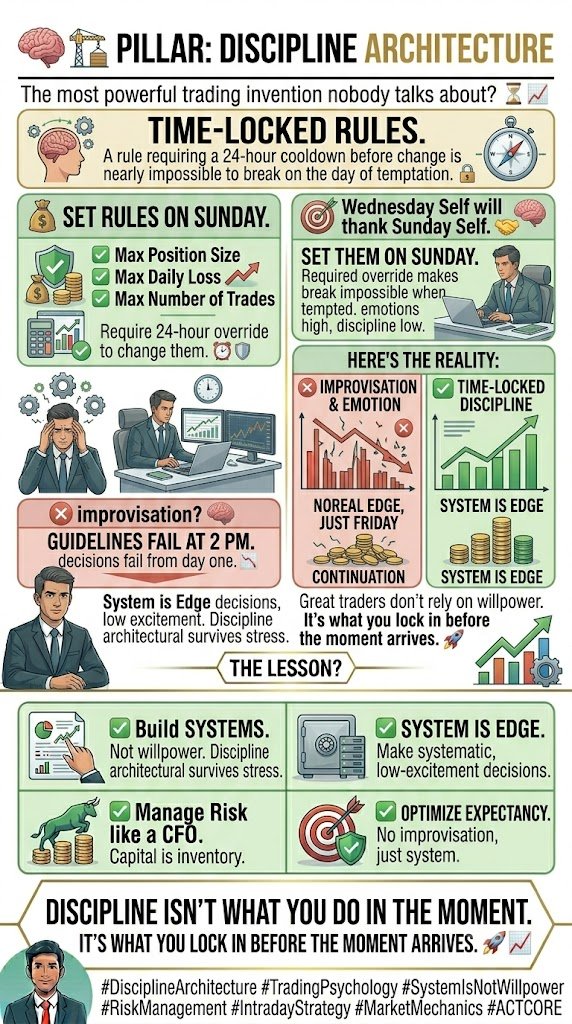
🧠🏗️ Pillar: Discipline Architecture
The most powerful trading invention nobody talks about?
⏳ Time-Locked Rules.
A rule that requires a 24-hour cooldown before it can be changed is nearly impossible to break on the exact day you're most tempted to break it. 🔒📊
💰 Max Position Size
📉 Max Daily Loss
🎯 Max Number of Trades
Set them on Sunday.
Require a 24-hour override to change them. ⏰🛡️
By Wednesday, when emotions are high and discipline is low, you'll thank your Sunday self. 🤝🧠
💡 Great traders don't rely on willpower.
They build systems that protect them from themselves.
Discipline isn't what you do in the heat of the moment.
It's what you lock in before the moment arrives. 🚀📈
#TradingPsychology #Discipline #RiskManagement #TraderMindset #SystematicTrading #TradingRules #CapitalProtection #ProcessOverProfit #Consistency #BehavioralFinance #TradingEdge 🧠📊🔒🚀
1
43
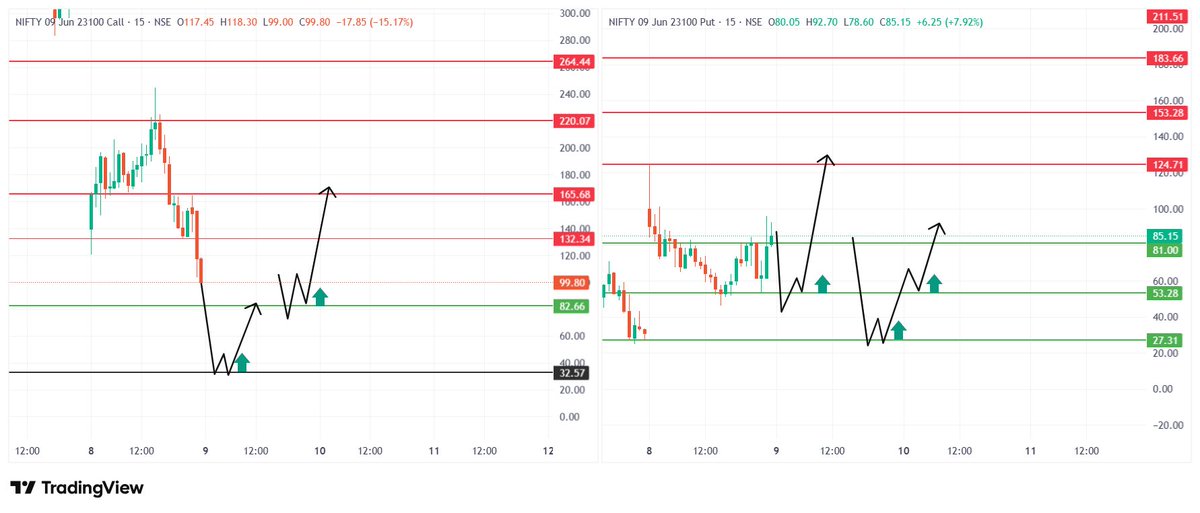
⚠️ DISCLAIMER: The option chart shared is strictly for educational purposes only and should NOT be considered a buy/sell recommendation.
Mark this levels on your chart !
🟢 The Green Line represents a major support zone.
❌ Do NOT enter the trade immediately when price touches the support.
✅ Wait for a proper retest of the support level.
✅ Look for confirmation through a Hammer or Pin Bar candle.
✅ Enter only after confirmation.
✅ The low of the confirmation candle will be your Stop Loss.
Patience is the key in trading. Let the setup complete before taking any position. Protect your capital and trade with discipline.
#StockMarket #IndianStockMarket #Nifty #BankNifty #Nifty50 #OptionsTrading #OptionBuyer #OptionSelling #FNO #FnOTrader #PriceAction #SupportResistance #TechnicalAnalysis #ChartAnalysis #TradingSetup #SwingTrading #IntradayTrading #DayTrading #TradingPsychology #RiskManagement #CapitalProtection #MoneyManagement #TraderLife #StockTrader #Investing #MarketAnalysis #Bullish #Bearish #BreakoutStocks #HeroZero #Hero2Zero #StockTips #TradingEducation #LearnTrading #SEBIRegistered #WealthCreation #Finance #IndianStocks #MarketLearning #TradingCommunity
15
2,329

Exit без потерь: почему план защиты личного капитала должен быть готов раньше, чем план продажи бизнеса elenamaksimovich.ru/exit-bez… #exitplanning #capitalprotection #ppli
1
3

This is what Risk Management is all about. 🛡️📉
Too often, people think trading is only about chasing profits. But the truth is, the most successful traders focus on one thing first: protecting their capital.
Knowing that placing a stop-loss is exactly what you need when a mistake happens and the market suddenly makes massive, sharp swings is what makes all the difference.
The market can be unpredictable, but your risk management shouldn't be. With the right strategy in place, even during moments of extreme volatility, your capital remains safe and secure. 🔒✨
How disciplined are you with your stop-losses? Do you always use them, or do you sometimes catch yourself hoping for a turnaround? Let me know in the comments! 👇
Hashtags:
#Trading #RiskManagement #StopLoss #DayTrading #FinancialEducation #Investing #TradingPsychology #TraderLife #CapitalProtection #FXTrading #CryptoTrading
9

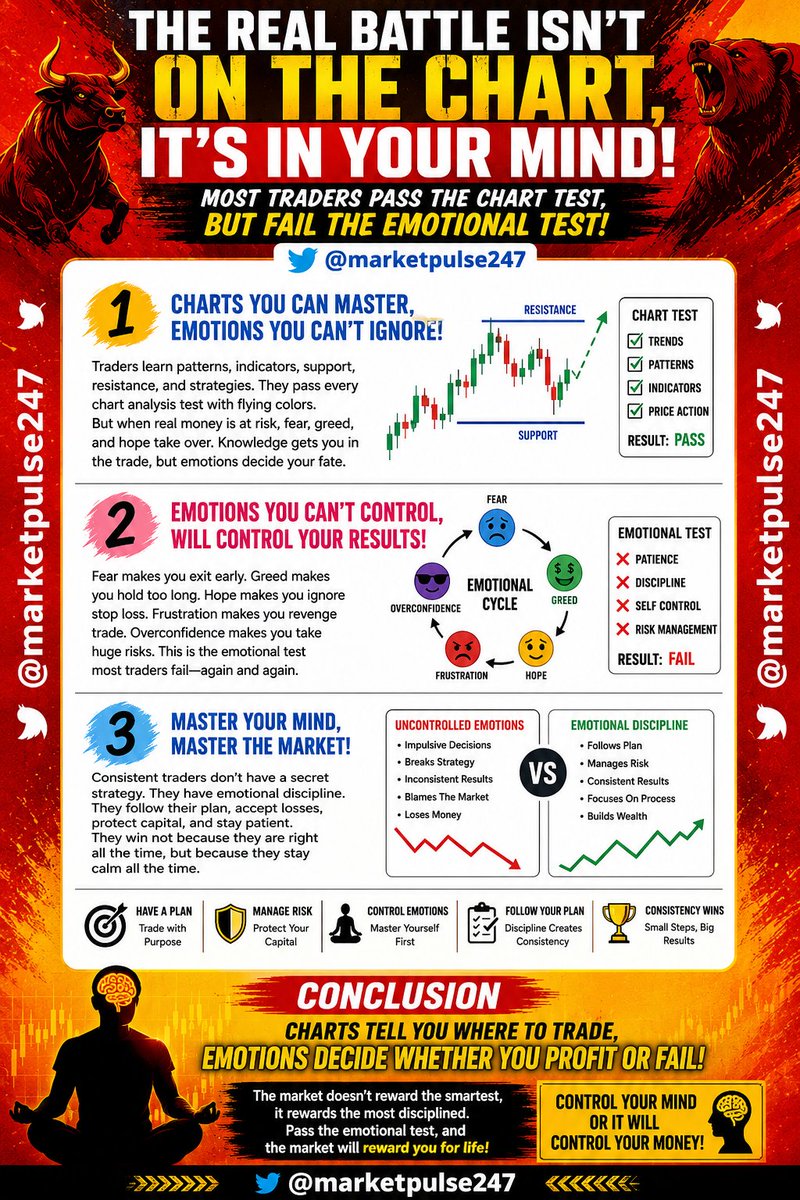
CHARTS DON'T BREAK TRADERS, EMOTIONS DO
Many traders spend years learning chart patterns, technical indicators, support and resistance levels, candlestick formations, and market structure. They become experts at identifying trends and predicting potential price movements. They can explain complex setups with confidence and often pass every technical analysis test with outstanding results. Yet surprisingly, many of these same traders struggle to achieve consistent profitability. The reason is simple. Success in trading is not determined solely by what you know. It is determined by how you behave when real money is at risk. Trading transforms from a technical exercise into an emotional challenge the moment a position is opened. Fear, greed, hope, and impatience begin influencing decisions. A trader who confidently analyzed a chart may suddenly hesitate to enter a trade because of fear. Another trader may ignore a stop loss because hope convinces them the market will reverse. The market does not reward intelligence alone. It rewards discipline and emotional stability. Technical analysis helps identify opportunities, but emotional control determines whether those opportunities are executed properly. The difference between profitable traders and struggling traders is often not knowledge. It is the ability to remain calm, disciplined, and committed to a proven process regardless of short term market fluctuations.
THE EMOTIONAL MANAGEMENT TEST MOST TRADERS FAIL
The biggest challenge in trading begins after entering a position. This is where emotions quietly take control. Fear makes traders exit winning trades too early because they worry profits might disappear. Greed encourages traders to hold positions too long in search of unrealistic gains. Frustration after a loss often leads to revenge trading, where traders abandon their strategy and take impulsive positions. Overconfidence after a series of successful trades can result in excessive risk taking that eventually destroys months of progress. These emotional reactions are responsible for far more losses than poor chart analysis. The market constantly tests patience, discipline, and self control. Every price movement creates emotional pressure. Successful traders understand that emotional management is not a secondary skill. It is a core requirement for long term survival. They create trading plans before entering positions and follow those plans without allowing emotions to interfere. They accept losses as part of the business and avoid making decisions based on temporary feelings. Emotional discipline allows traders to stay objective and focused even during periods of uncertainty. Those who fail this test often blame the market, but the real battle was taking place within themselves all along.
THE REAL EDGE THAT CREATES CONSISTENT PROFITS
Many people believe the secret to trading success lies in discovering a perfect indicator or a magical strategy. In reality, the greatest edge comes from mastering yourself. Consistent traders understand that profitability is built on discipline, patience, and emotional control. They know that losing trades are unavoidable and that no strategy wins every time. Instead of chasing perfection, they focus on executing their system consistently. They manage risk carefully, follow position sizing rules, and trust their process even when results fluctuate in the short term. Emotional mastery allows traders to think rationally when others panic. It allows them to remain patient when opportunities are limited and confident when uncertainty rises. Over time, this discipline creates a powerful competitive advantage. Technical skills may help traders identify opportunities, but emotional control ensures they capitalize on them effectively. The market rewards those who remain calm under pressure and punishes those who allow emotions to dictate decisions. Ultimately, successful trading is not about conquering the market. It is about conquering yourself. When emotions are controlled, decisions improve. When decisions improve, consistency follows. And when consistency becomes a habit, long term profitability becomes achievable.
CHARTS DON'T BREAK TRADERS, EMOTIONS DO
Many traders spend years learning chart patterns, technical indicators, support and resistance levels, candlestick formations, and market structure. They become experts at identifying trends and predicting potential price movements. They can explain complex setups with confidence and often pass every technical analysis test with outstanding results. Yet surprisingly, many of these same traders struggle to achieve consistent profitability. The reason is simple. Success in trading is not determined solely by what you know. It is determined by how you behave when real money is at risk. Trading transforms from a technical exercise into an emotional challenge the moment a position is opened. Fear, greed, hope, and impatience begin influencing decisions. A trader who confidently analyzed a chart may suddenly hesitate to enter a trade because of fear. Another trader may ignore a stop loss because hope convinces them the market will reverse. The market does not reward intelligence alone. It rewards discipline and emotional stability. Technical analysis helps identify opportunities, but emotional control determines whether those opportunities are executed properly. The difference between profitable traders and struggling traders is often not knowledge. It is the ability to remain calm, disciplined, and committed to a proven process regardless of short term market fluctuations.
THE EMOTIONAL MANAGEMENT TEST MOST TRADERS FAIL
The biggest challenge in trading begins after entering a position. This is where emotions quietly take control. Fear makes traders exit winning trades too early because they worry profits might disappear. Greed encourages traders to hold positions too long in search of unrealistic gains. Frustration after a loss often leads to revenge trading, where traders abandon their strategy and take impulsive positions. Overconfidence after a series of successful trades can result in excessive risk taking that eventually destroys months of progress. These emotional reactions are responsible for far more losses than poor chart analysis. The market constantly tests patience, discipline, and self control. Every price movement creates emotional pressure. Successful traders understand that emotional management is not a secondary skill. It is a core requirement for long term survival. They create trading plans before entering positions and follow those plans without allowing emotions to interfere. They accept losses as part of the business and avoid making decisions based on temporary feelings. Emotional discipline allows traders to stay objective and focused even during periods of uncertainty. Those who fail this test often blame the market, but the real battle was taking place within themselves all along.
THE REAL EDGE THAT CREATES CONSISTENT PROFITS
Many people believe the secret to trading success lies in discovering a perfect indicator or a magical strategy. In reality, the greatest edge comes from mastering yourself. Consistent traders understand that profitability is built on discipline, patience, and emotional control. They know that losing trades are unavoidable and that no strategy wins every time. Instead of chasing perfection, they focus on executing their system consistently. They manage risk carefully, follow position sizing rules, and trust their process even when results fluctuate in the short term. Emotional mastery allows traders to think rationally when others panic. It allows them to remain patient when opportunities are limited and confident when uncertainty rises. Over time, this discipline creates a powerful competitive advantage. Technical skills may help traders identify opportunities, but emotional control ensures they capitalize on them effectively. The market rewards those who remain calm under pressure and punishes those who allow emotions to dictate decisions. Ultimately, successful trading is not about conquering the market. It is about conquering yourself. When emotions are controlled, decisions improve. When decisions improve, consistency follows. And when consistency becomes a habit, long term profitability becomes achievable.
CONCLUSION
The majority of traders lose not because they cannot read charts, but because they cannot manage emotions. Technical analysis may open the door to opportunity, but emotional discipline determines whether you walk through it successfully. Master your emotions, trust your process, and remember that the greatest battle in trading is not against the market, but against yourself.
Twitter: x.com/@marketpulse247
#TradingPsychology #TradingMindset #StockMarket #TraderLife #EmotionalControl #TradingDiscipline #Investing #StockTrading #RiskManagement #TraderMindset #TechnicalAnalysis #TradingSuccess #MarketPsychology #InvestSmart #TradingJourney #FinancialFreedom #StockMarketIndia #InvestingMindset #MarketWisdom #TradingEducation #DisciplineEqualsFreedom #ProfitableTrading #TradingCommunity #WealthCreation #MindsetMatters #FinancialMarkets #TradingLessons #StockMarketLearning #PriceAction #TraderEducation #InvestingTips #MarketAnalysis #TradingStrategy #CapitalProtection #LongTermSuccess #TradingPerformance #InvestorMindset #TradingHabits #SmartInvesting #MoneyManagement #TradingGoals #MarketInsights #ConsistencyInTrading #LearnTrading #WinningMindset #StockMarketTips #BehavioralFinance #TradingEdge #MarketPulse247 #FinancialSuccess
1
2
52
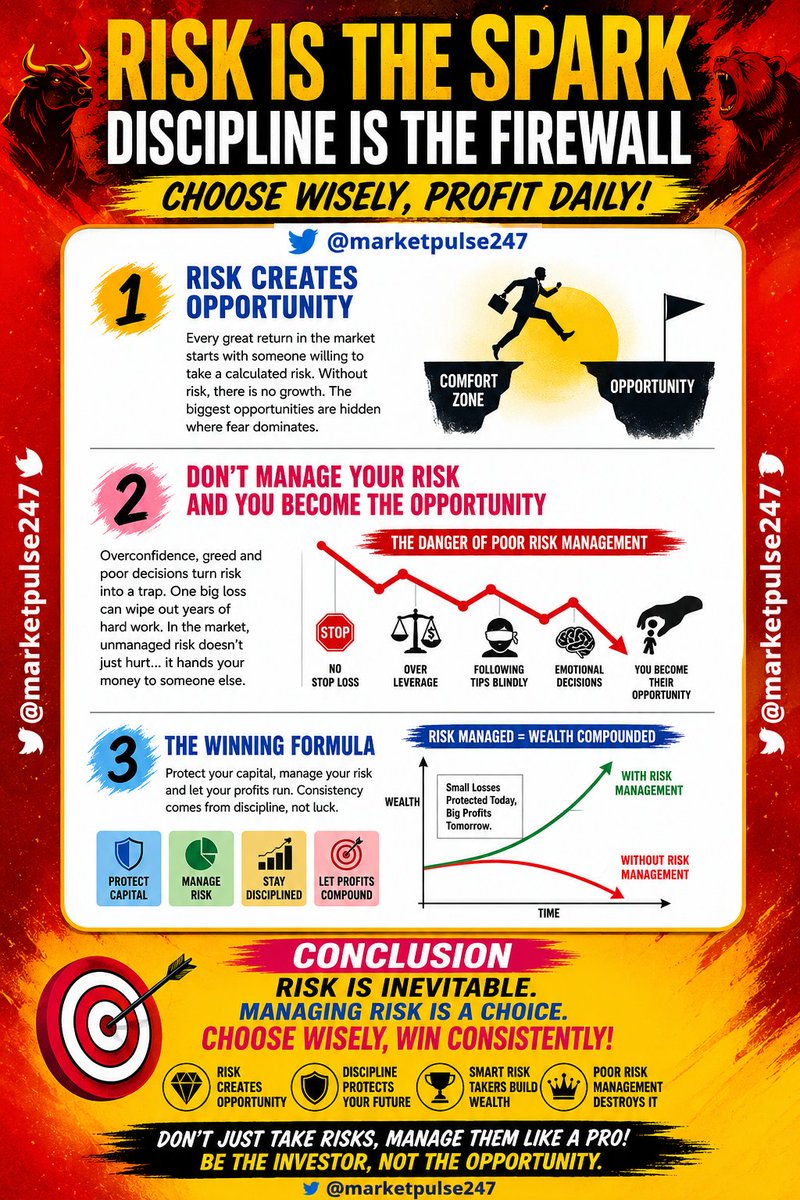
RISK CREATES OPPORTUNITY, BUT POOR RISK MANAGEMENT MAKES YOU THE OPPORTUNITY
Every investor and trader dreams of extraordinary profits. People enter the stock market, business world, or any financial venture with one goal in mind, to grow their wealth. However, there is one truth that separates successful wealth creators from those who constantly struggle. The relationship between risk and profitability is simple. Risk creates opportunity. Without risk, there can be no reward. Every great investment, every successful company, and every market leader once took calculated risks. The stock market rewards those who identify opportunities before the crowd does. When fear dominates the market, opportunities are often born. When uncertainty rises, smart investors position themselves for future gains. The key is understanding that risk itself is not the enemy. In fact, risk is the price paid for higher returns. Investors who completely avoid risk often settle for average results. The world's most successful investors understand that profits come from taking calculated risks, not reckless ones. They study businesses, analyze trends, and make informed decisions while accepting that uncertainty is part of the journey. The market constantly presents opportunities, but only those who are willing to embrace measured risk can unlock exceptional rewards. Opportunity does not exist in comfort zones. It exists where preparation meets calculated risk.
THE HIDDEN TRAP THAT DESTROYS MOST INVESTORS
While risk creates opportunity, unmanaged risk creates disaster. This is where many investors make costly mistakes. They become excited by the possibility of large profits and ignore the importance of protecting capital. A trader may enter a position without a stop loss. An investor may put too much money into a single stock. Others may follow market tips without proper research. These actions transform risk from a tool for growth into a weapon of destruction. The market punishes overconfidence more than ignorance. Every major financial loss usually starts with a failure to manage risk. Successful investors know that protecting capital is more important than chasing returns. They understand that a single large loss can erase months or even years of gains. Risk management is not about avoiding opportunities. It is about surviving long enough to benefit from opportunities repeatedly. Position sizing, diversification, disciplined exits, and emotional control are the foundations of long term success. Investors who ignore these principles often become victims of market volatility. Instead of benefiting from opportunities, they become the opportunity for smarter participants who understand the importance of discipline and capital preservation.
THE REAL SECRET TO LONG TERM WEALTH CREATION
The greatest investors are not those who win every trade. They are those who consistently manage risk while allowing profits to grow. Wealth creation is not about predicting every market movement correctly. It is about ensuring that losses remain small and gains have room to compound over time. A disciplined investor accepts that some trades will fail, some investments will underperform, and some opportunities will be missed. What matters is maintaining a process that protects capital while participating in high quality opportunities. Risk management creates confidence because it removes the fear of catastrophic loss. When investors know their downside is controlled, they can think clearly and act rationally during periods of market uncertainty. This mindset transforms investing from gambling into a professional approach to wealth creation. The market will always offer opportunities, but only disciplined participants can consistently capture them. Remember this powerful principle. Risk creates opportunity. But if you fail to manage your risk, you become the opportunity for someone else. The difference between success and failure is not the presence of risk. It is the ability to control it.
RISK CREATES OPPORTUNITY, BUT POOR RISK MANAGEMENT MAKES YOU THE OPPORTUNITY
Every investor and trader dreams of extraordinary profits. People enter the stock market, business world, or any financial venture with one goal in mind, to grow their wealth. However, there is one truth that separates successful wealth creators from those who constantly struggle. The relationship between risk and profitability is simple. Risk creates opportunity. Without risk, there can be no reward. Every great investment, every successful company, and every market leader once took calculated risks. The stock market rewards those who identify opportunities before the crowd does. When fear dominates the market, opportunities are often born. When uncertainty rises, smart investors position themselves for future gains. The key is understanding that risk itself is not the enemy. In fact, risk is the price paid for higher returns. Investors who completely avoid risk often settle for average results. The world's most successful investors understand that profits come from taking calculated risks, not reckless ones. They study businesses, analyze trends, and make informed decisions while accepting that uncertainty is part of the journey. The market constantly presents opportunities, but only those who are willing to embrace measured risk can unlock exceptional rewards. Opportunity does not exist in comfort zones. It exists where preparation meets calculated risk.
THE HIDDEN TRAP THAT DESTROYS MOST INVESTORS
While risk creates opportunity, unmanaged risk creates disaster. This is where many investors make costly mistakes. They become excited by the possibility of large profits and ignore the importance of protecting capital. A trader may enter a position without a stop loss. An investor may put too much money into a single stock. Others may follow market tips without proper research. These actions transform risk from a tool for growth into a weapon of destruction. The market punishes overconfidence more than ignorance. Every major financial loss usually starts with a failure to manage risk. Successful investors know that protecting capital is more important than chasing returns. They understand that a single large loss can erase months or even years of gains. Risk management is not about avoiding opportunities. It is about surviving long enough to benefit from opportunities repeatedly. Position sizing, diversification, disciplined exits, and emotional control are the foundations of long term success. Investors who ignore these principles often become victims of market volatility. Instead of benefiting from opportunities, they become the opportunity for smarter participants who understand the importance of discipline and capital preservation.
THE REAL SECRET TO LONG TERM WEALTH CREATION
The greatest investors are not those who win every trade. They are those who consistently manage risk while allowing profits to grow. Wealth creation is not about predicting every market movement correctly. It is about ensuring that losses remain small and gains have room to compound over time. A disciplined investor accepts that some trades will fail, some investments will underperform, and some opportunities will be missed. What matters is maintaining a process that protects capital while participating in high quality opportunities. Risk management creates confidence because it removes the fear of catastrophic loss. When investors know their downside is controlled, they can think clearly and act rationally during periods of market uncertainty. This mindset transforms investing from gambling into a professional approach to wealth creation. The market will always offer opportunities, but only disciplined participants can consistently capture them. Remember this powerful principle. Risk creates opportunity. But if you fail to manage your risk, you become the opportunity for someone else. The difference between success and failure is not the presence of risk. It is the ability to control it.
CONCLUSION
Risk is the fuel that drives profitability, but discipline is the engine that keeps wealth growing. Smart investors embrace calculated risks while protecting their capital at all times. Opportunities reward preparation, patience, and proper risk management. In the market, those who control risk survive, thrive, and compound wealth, while those who ignore it eventually become the opportunity for others.
Twitter: x.com/@marketpulse247
#RiskManagement #StockMarket #Investing #Trading #WealthCreation #FinancialFreedom #InvestSmart #InvestorMindset #TradingPsychology #CapitalProtection #StockTrading #LongTermInvesting #MarketWisdom #RiskReward #MoneyManagement #TradingDiscipline #InvestmentStrategy #ShareMarket #FinancialEducation #StockInvestor #TradingSuccess #Profitability #InvestmentTips #MarketAnalysis #TraderLife #WealthBuilding #PersonalFinance #SmartInvesting #StockMarketIndia #ValueInvesting #GrowthInvesting #MarketOpportunity #TradingJourney #InvestingGoals #FinancialGrowth #RiskControl #CapitalGrowth #SuccessfulInvestor #StockMarketLearning #TradingCommunity #InvestingKnowledge #MoneyMindset #FinancialSuccess #MarketInsights #InvestmentPlanning #TraderMindset #CompoundingWealth #WealthMindset #StockMarketLessons #MarketPulse247
1
65

Jun 8
📉 Another crash.
📉 And another one.
📉 Then another.
In a market where liquidations happen in seconds, survival is the real edge. 🛡️
Most traders focus on profits.
Smart traders focus on protection.
That's why TokenMe offers Capital Protection Insurance — helping users navigate extreme market conditions with greater confidence.
Because the first rule of trading isn't making money.
It's staying in the game. 🚀
🛡️ Capital Protection Insurance
📈 Trailing Stop Protection
⚡ 24/7 Global Markets
🌍 Fair Trading for Everyone
When the market keeps falling...
Who's protecting your capital? 👀
#TokenMe #TME #Crypto #Web3 #Bitcoin #BTC #Ethereum #ETH #Trading #CryptoTrading #RiskManagement #CapitalProtection #StopLoss #TrailingStop #BullRun #BearMarket #DeFi #Blockchain #Trader #CryptoCommunity #Web3Community #FuturesTrading #FinancialFreedom #CryptoNews

1
60
Jun 8
🧠🏗️ Pre-Market | Discipline Architecture
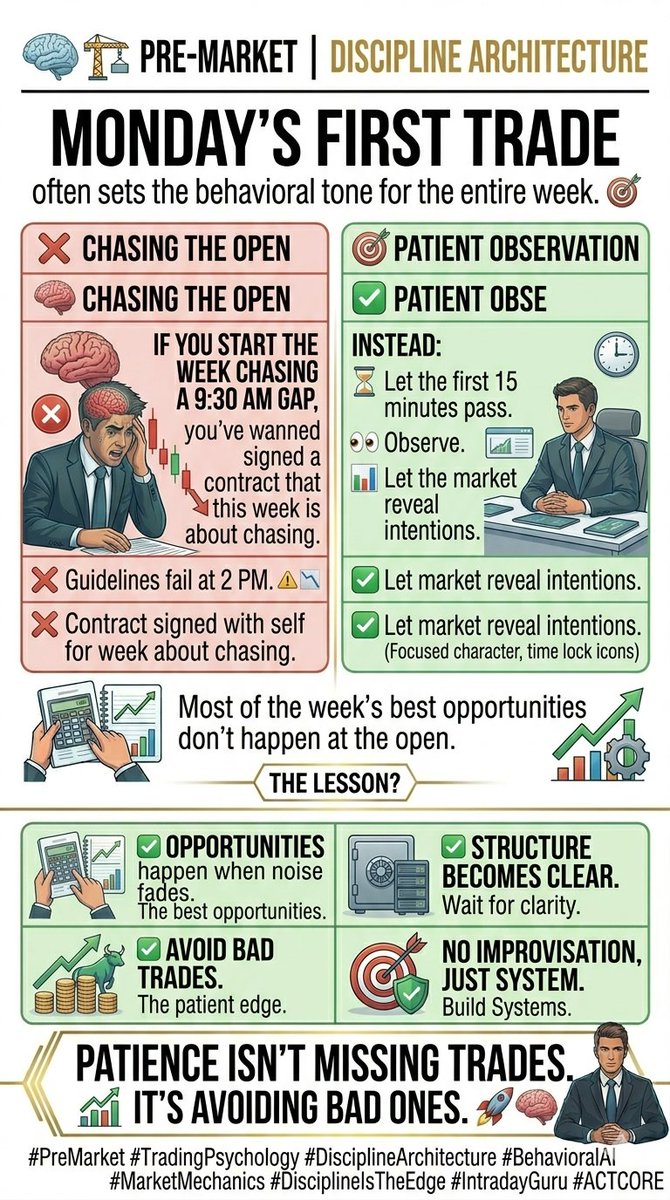
Monday's first trade often sets the behavioral tone for the entire week. 🎯
⚠️ If you start the week chasing a 9:30 AM gap, you've already signed a contract with yourself that this week is about chasing.
Instead:
⏳ Let the first 15 minutes pass. 👀 Observe. 📊 Let the market reveal its intentions.
Most of the week's best opportunities don't happen at the open.
They happen when the noise fades and the structure becomes clear. 🎯📈
💡 Patience isn't missing trades. It's avoiding bad ones.
#TradingPsychology #Discipline #MondayMotivation #TraderMindset #RiskManagement #PriceAction #IntradayTrading #MarketWisdom #ProcessOverProfit #TradingRules #CapitalProtection 🧠📊🚀
27
Tomorrow's market may test your patience more than your strategy. 📉📈
Don't rush into trades in the first few minutes. Let the market settle, identify the trend, and then take positions with proper risk management.
✅ Preserve capital first
✅ Wait for confirmation
✅ Follow price action, not emotions
✅ Keep strict stop losses
✅ Avoid overtrading
✅ Trade what you see, not what you think
Remember: Opportunities come every day, but lost capital takes time to recover.
#StockMarket #Nifty50 #BankNifty #IndianStockMarket #Trading #DayTrading #PriceAction #RiskManagement #Investing #FNO #OptionsTrading #Nifty #BankNiftyTrading #MarketAnalysis #SwingTrading #TraderLife #ShareMarket #StocksToWatch #CapitalProtection #TradingPsychology #MarketTips
1
9
1,370

Jun 7
Pre-order my book STOP MAKING STUPID INVESTMENTS.
Here is what others are saying:
In the journey of creating financial freedom and building wealth, most people sabotage themselves with
emotional traps, hype-driven schemes, and rookie mistakes that wipe out their hard-earned gains. David
Leiter's Stop Making Stupid Investments is the wake-up call most investors need—a no-BS blueprint to sidestep the pitfalls, master an investing mindset, and unleash the power of smart, disciplined investing.
- Tony Robbins, #1 New York Times Bestselling Author of The Holy Grail of Investing
David Leiter says out loud what too many investors learn the hard way. Real wealth is not built
by chasing hype; it is built by avoiding stupid mistakes. This is a clear and practical playbook for
protecting your capital and compounding intelligently, exactly how serious investors should
think.
Peter Mallouk, CEO of Creative Planning
#stopmakingstupidinvestments #stockmarket #realestateinvesting
#FinancialFreedom #SmartInvesting #InvestingMindset #WealthBuilding #DisciplinedInvesting #AvoidInvestmentMistakes #CapitalProtection #CompoundInterest
4
9,823
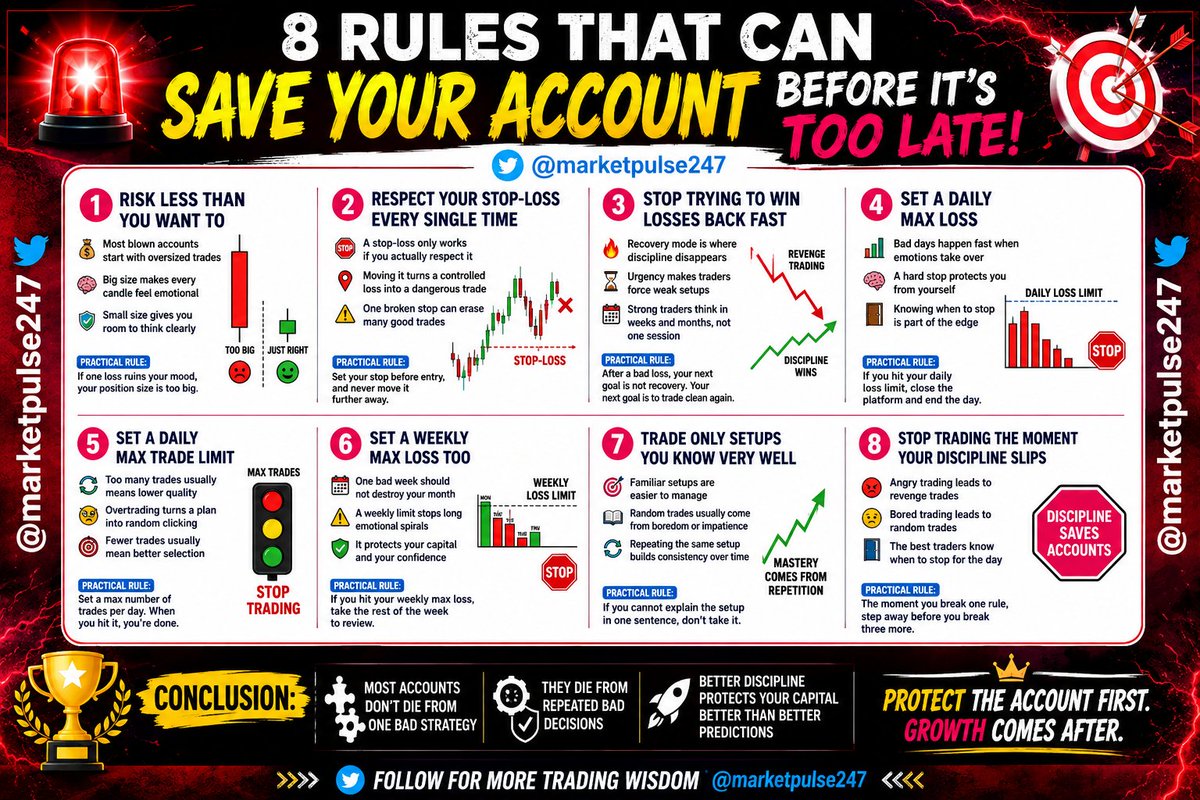
8 TRADING RULES THAT CAN SAVE YOUR ACCOUNT BEFORE IT'S TOO LATE
Trading success is not built on finding a magical indicator or predicting every market move correctly. Most traders who lose money do not fail because their strategy is terrible. They fail because they repeatedly break simple risk management rules. The market is designed to test patience, discipline, and emotional control every single day. Without clear rules, even a profitable strategy can quickly become unprofitable. The reality is that protecting your capital is far more important than chasing profits. Every professional trader understands that survival comes first and growth comes second. If you protect your account, opportunities will always come again. If you destroy your account, even the best opportunity becomes useless. The following eight trading rules are simple, practical, and powerful. They help traders avoid the most common mistakes that lead to blown accounts. These rules are not exciting because they focus on discipline rather than prediction. However, discipline is what separates long term winners from traders who constantly restart their journey. Master these habits and you will give yourself a much better chance of lasting success in the markets.
1. Trade Smaller Than Your Ego Wants To
One of the fastest ways to destroy a trading account is by taking oversized positions. Many traders increase their position size because they want quick profits or because they feel extremely confident about a setup. Unfortunately, large positions create emotional pressure. Every candle suddenly feels important. Every pullback feels painful. Every small loss feels personal. This emotional burden often leads traders to make poor decisions. Small position sizes create a completely different experience. They allow traders to remain calm, objective, and focused on their plan. When risk is controlled, it becomes easier to think clearly and follow the strategy without panic. A simple rule can help determine whether your position size is appropriate. If one losing trade ruins your mood, affects your confidence, or makes you feel stressed, your position size is probably too large. Professional traders understand that preservation of capital matters more than maximizing profits on a single trade. Consistently risking small amounts allows traders to survive losing streaks while maintaining emotional stability and confidence.
2. Respect Every Stop Loss Without Exception
A stop loss is one of the most important tools in trading, but it only works when traders respect it completely. Many traders place a stop loss before entering a trade but move it further away once the market starts moving against them. This transforms a planned risk into an uncontrolled gamble. What begins as a small loss can quickly become a devastating one. The purpose of a stop loss is not to guarantee that you are right. Its purpose is to protect your account when you are wrong. Every successful trader accepts that losses are a normal business expense. They understand that preserving capital is more important than avoiding a losing trade. Before entering any position, determine exactly where the trade idea becomes invalid and place the stop loss there. Once the trade is active, do not move the stop further away. Following this simple rule prevents emotional decision making and protects traders from catastrophic losses that can erase weeks or even months of hard earned profits.
3. Never Enter Recovery Mode After A Loss
Many accounts are destroyed not by the initial loss but by the desperate attempt to recover it immediately. After taking a significant loss, traders often feel pressure to make the money back quickly. This emotional state creates urgency, frustration, and impatience. Instead of waiting for high quality opportunities, traders begin forcing trades that do not meet their normal standards. Recovery mode is dangerous because discipline disappears and emotions take control. Strong traders understand that losses are part of the game. They do not judge success based on one day or one trading session. They think in terms of weeks, months, and years. When a loss occurs, their focus shifts from recovering money to protecting discipline. The next goal is not making back what was lost. The next goal is executing the next trade correctly. This mindset keeps traders focused on process rather than outcomes. In the long run, consistency and discipline create recovery naturally without forcing risky decisions that cause even greater damage.
4. Create Daily And Weekly Risk Limits
Every trader needs a point where trading stops automatically. Daily and weekly loss limits act as safety barriers that prevent emotional spirals from becoming financial disasters. When traders experience multiple losses in a short period, frustration often increases. As emotions rise, decision quality tends to decline. This can create a dangerous cycle where losses lead to revenge trading and revenge trading creates even larger losses. A daily loss limit protects traders from themselves during emotionally difficult sessions. Once the limit is reached, trading ends for the day regardless of how attractive new opportunities appear. A weekly loss limit provides an additional layer of protection. One bad week should never destroy an entire month of progress. If the weekly limit is reached, the focus should shift toward reviewing trades, identifying mistakes, and improving execution. These limits are not signs of weakness. They are signs of professionalism. Traders who respect predefined limits understand that protecting capital and confidence is essential for long term survival and sustainable growth.
5. Focus Only On High Quality Familiar Setups
Many traders lose money because they constantly chase new opportunities. They trade patterns they barely understand, enter positions out of boredom, or follow random market opinions. Successful trading requires specialization. Familiar setups are easier to recognize, easier to manage, and easier to execute consistently. Repeating the same high quality setup over and over allows traders to build confidence and improve performance through experience. Every trade should have a clear reason behind it. If a trader cannot explain the setup in one simple sentence, there is a good chance the trade should not be taken. Limiting the number of trades each day also improves decision quality. Too many trades usually indicate overtrading rather than opportunity. Fewer trades encourage patience and selectivity. The goal is not activity. The goal is profitability. Traders who focus on a small number of proven setups often outperform those who constantly search for the next exciting trade. Consistency comes from repetition, not from endless experimentation.
BOLD CONCLUSION
Most trading accounts do not fail because of a lack of market knowledge. They fail because of repeated violations of simple rules. Oversized positions, ignored stop losses, revenge trading, overtrading, and emotional decisions slowly destroy accounts over time. The traders who survive and thrive are not necessarily the smartest. They are the most disciplined. Protecting capital should always be the first priority because growth is only possible when the account remains intact. A strong strategy matters, but discipline is what allows that strategy to work. Follow these eight rules consistently and you will avoid many of the mistakes that wipe out trading accounts. Protect the account first. Protect your mindset second. Profits will follow as a result of doing both well.
8 TRADING RULES THAT CAN SAVE YOUR ACCOUNT BEFORE IT'S TOO LATE
Trading success is not built on finding a magical indicator or predicting every market move correctly. Most traders who lose money do not fail because their strategy is terrible. They fail because they repeatedly break simple risk management rules. The market is designed to test patience, discipline, and emotional control every single day. Without clear rules, even a profitable strategy can quickly become unprofitable. The reality is that protecting your capital is far more important than chasing profits. Every professional trader understands that survival comes first and growth comes second. If you protect your account, opportunities will always come again. If you destroy your account, even the best opportunity becomes useless. The following eight trading rules are simple, practical, and powerful. They help traders avoid the most common mistakes that lead to blown accounts. These rules are not exciting because they focus on discipline rather than prediction. However, discipline is what separates long term winners from traders who constantly restart their journey. Master these habits and you will give yourself a much better chance of lasting success in the markets.
1. Trade Smaller Than Your Ego Wants To
One of the fastest ways to destroy a trading account is by taking oversized positions. Many traders increase their position size because they want quick profits or because they feel extremely confident about a setup. Unfortunately, large positions create emotional pressure. Every candle suddenly feels important. Every pullback feels painful. Every small loss feels personal. This emotional burden often leads traders to make poor decisions. Small position sizes create a completely different experience. They allow traders to remain calm, objective, and focused on their plan. When risk is controlled, it becomes easier to think clearly and follow the strategy without panic. A simple rule can help determine whether your position size is appropriate. If one losing trade ruins your mood, affects your confidence, or makes you feel stressed, your position size is probably too large. Professional traders understand that preservation of capital matters more than maximizing profits on a single trade. Consistently risking small amounts allows traders to survive losing streaks while maintaining emotional stability and confidence.
2. Respect Every Stop Loss Without Exception
A stop loss is one of the most important tools in trading, but it only works when traders respect it completely. Many traders place a stop loss before entering a trade but move it further away once the market starts moving against them. This transforms a planned risk into an uncontrolled gamble. What begins as a small loss can quickly become a devastating one. The purpose of a stop loss is not to guarantee that you are right. Its purpose is to protect your account when you are wrong. Every successful trader accepts that losses are a normal business expense. They understand that preserving capital is more important than avoiding a losing trade. Before entering any position, determine exactly where the trade idea becomes invalid and place the stop loss there. Once the trade is active, do not move the stop further away. Following this simple rule prevents emotional decision making and protects traders from catastrophic losses that can erase weeks or even months of hard earned profits.
3. Never Enter Recovery Mode After A Loss
Many accounts are destroyed not by the initial loss but by the desperate attempt to recover it immediately. After taking a significant loss, traders often feel pressure to make the money back quickly. This emotional state creates urgency, frustration, and impatience. Instead of waiting for high quality opportunities, traders begin forcing trades that do not meet their normal standards. Recovery mode is dangerous because discipline disappears and emotions take control. Strong traders understand that losses are part of the game. They do not judge success based on one day or one trading session. They think in terms of weeks, months, and years. When a loss occurs, their focus shifts from recovering money to protecting discipline. The next goal is not making back what was lost. The next goal is executing the next trade correctly. This mindset keeps traders focused on process rather than outcomes. In the long run, consistency and discipline create recovery naturally without forcing risky decisions that cause even greater damage.
4. Create Daily And Weekly Risk Limits
Every trader needs a point where trading stops automatically. Daily and weekly loss limits act as safety barriers that prevent emotional spirals from becoming financial disasters. When traders experience multiple losses in a short period, frustration often increases. As emotions rise, decision quality tends to decline. This can create a dangerous cycle where losses lead to revenge trading and revenge trading creates even larger losses. A daily loss limit protects traders from themselves during emotionally difficult sessions. Once the limit is reached, trading ends for the day regardless of how attractive new opportunities appear. A weekly loss limit provides an additional layer of protection. One bad week should never destroy an entire month of progress. If the weekly limit is reached, the focus should shift toward reviewing trades, identifying mistakes, and improving execution. These limits are not signs of weakness. They are signs of professionalism. Traders who respect predefined limits understand that protecting capital and confidence is essential for long term survival and sustainable growth.
5. Focus Only On High Quality Familiar Setups
Many traders lose money because they constantly chase new opportunities. They trade patterns they barely understand, enter positions out of boredom, or follow random market opinions. Successful trading requires specialization. Familiar setups are easier to recognize, easier to manage, and easier to execute consistently. Repeating the same high quality setup over and over allows traders to build confidence and improve performance through experience. Every trade should have a clear reason behind it. If a trader cannot explain the setup in one simple sentence, there is a good chance the trade should not be taken. Limiting the number of trades each day also improves decision quality. Too many trades usually indicate overtrading rather than opportunity. Fewer trades encourage patience and selectivity. The goal is not activity. The goal is profitability. Traders who focus on a small number of proven setups often outperform those who constantly search for the next exciting trade. Consistency comes from repetition, not from endless experimentation.
BOLD CONCLUSION
Most trading accounts do not fail because of a lack of market knowledge. They fail because of repeated violations of simple rules. Oversized positions, ignored stop losses, revenge trading, overtrading, and emotional decisions slowly destroy accounts over time. The traders who survive and thrive are not necessarily the smartest. They are the most disciplined. Protecting capital should always be the first priority because growth is only possible when the account remains intact. A strong strategy matters, but discipline is what allows that strategy to work. Follow these eight rules consistently and you will avoid many of the mistakes that wipe out trading accounts. Protect the account first. Protect your mindset second. Profits will follow as a result of doing both well.
Twitter: x.com/@marketpulse247
#Trading #StockMarket #TraderMindset #RiskManagement #TradingDiscipline #TradingPsychology #DayTrading #SwingTrading #Investing #StockTrading #PriceAction #TechnicalAnalysis #MarketAnalysis #TradeSmart #TradingTips #CapitalProtection #MoneyManagement #StopLoss #RiskReward #TradingEducation #SuccessfulTrader #FinancialFreedom #WealthBuilding #TradingJourney #MarketWisdom #DisciplineEqualsFreedom #TradingRules #TraderLife #Consistency #ProfitableTrading #InvestorMindset #StockMarketIndia #Nifty50 #BankNifty #MarketPulse247 #TradingCommunity #TradingSuccess #TradingHabits #SmartInvesting #LongTermSuccess #TradingEdge #EmotionalControl #TradeManagement #RetailTrader #GrowthMindset
1
2
184
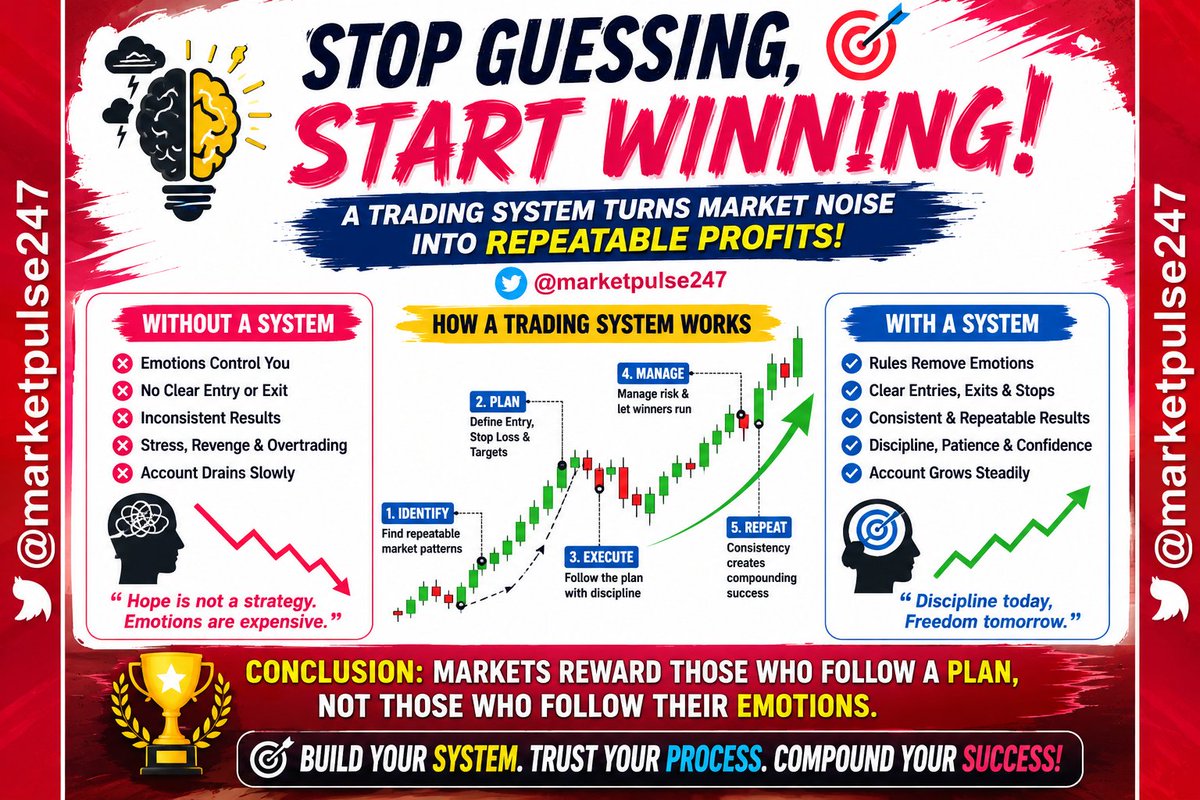
TRADING WITHOUT EMOTIONS: WHY A STRONG TRADING SYSTEM IS YOUR BIGGEST ADVANTAGE
In the simplest terms, a trading strategy or system helps you make decisions based on repeatable characteristics found in the market rather than your emotions. The market is full of uncertainty, and every trader faces moments of fear, greed, hope, and frustration. Without a clear system, decisions become emotional reactions instead of calculated actions. A trading strategy acts as a roadmap that guides you through different market conditions. It defines when to enter a trade, when to exit, how much risk to take, and how to manage profits. This removes guesswork and helps traders stay focused on facts rather than feelings. The difference between successful traders and struggling traders is often not intelligence or luck but the ability to follow a proven process consistently. A strategy provides structure, discipline, and confidence because every action is based on predefined rules. When traders rely on a repeatable system, they stop chasing random opportunities and start building a sustainable approach that can be repeated over hundreds of trades.
1. A Trading System Eliminates Emotional Decision Making
One of the biggest reasons traders lose money is emotional decision making. Fear causes traders to exit profitable trades too early, while greed encourages them to hold positions for too long. A well-defined trading system reduces these emotional impulses because every decision is already planned before the trade begins. Instead of wondering what to do when the market moves, traders simply follow their rules. This creates consistency and prevents panic during volatile market conditions. Emotional traders often change strategies after a few losses, but system-based traders understand that losses are a normal part of the process. They focus on long-term results rather than individual outcomes. By removing emotions from decision making, traders can maintain discipline and execute trades with confidence. Over time, this consistency becomes a major competitive advantage because it allows traders to avoid costly mistakes that often result from emotional reactions.
2. Repeatable Patterns Create Consistent Opportunities
Financial markets operate through recurring patterns driven by human behavior, institutional activity, and economic cycles. While no setup works every time, certain characteristics tend to repeat themselves over long periods. A trading strategy is designed to identify and capitalize on these recurring opportunities. Whether it involves trend following, breakout trading, momentum investing, or support and resistance analysis, the goal is to find patterns that have historically produced positive results. When traders focus on repeatable market behavior, they stop making random predictions and start making probability-based decisions. This shift in mindset is crucial because trading is not about being right on every trade. It is about consistently identifying situations where the odds are favorable. A strong system allows traders to take advantage of these opportunities repeatedly while maintaining controlled risk. Over hundreds of trades, the power of probability begins to work in their favor.
3. Risk Management Becomes Easier and More Effective
A trading strategy is not only about finding entries. It is equally important for managing risk. Every professional trader understands that protecting capital is the foundation of long-term success. A trading system defines how much money can be risked on a single trade, where stop losses should be placed, and how profits should be managed. This prevents large losses that can damage both trading accounts and confidence. Without a system, traders often increase position sizes after winning streaks or refuse to accept losses when trades move against them. These behaviors can quickly lead to significant financial damage. A structured approach ensures that risk remains controlled regardless of market conditions. By focusing on risk management, traders can survive difficult periods and remain active long enough to benefit from future opportunities. Consistent risk control is often the key factor that separates long-term winners from short-term speculators.
4. Consistency Creates Long-Term Trading Success
The true power of a trading system becomes visible over time. Many traders search for the perfect strategy that never loses, but such a system does not exist. Success comes from consistently following a profitable process rather than seeking perfection. Every strategy experiences winning and losing periods. Traders who trust their system and execute it consistently are more likely to achieve stable long-term results. Consistency allows traders to measure performance objectively, identify areas for improvement, and build confidence in their approach. Instead of reacting emotionally to every market movement, they focus on executing their edge repeatedly. This professional mindset transforms trading from a stressful guessing game into a structured business. Over months and years, the accumulation of disciplined decisions can produce remarkable results. The market rewards consistency, patience, and discipline far more than excitement and impulsive behavior.
TRADING WITHOUT EMOTIONS: WHY A STRONG TRADING SYSTEM IS YOUR BIGGEST ADVANTAGE
In the simplest terms, a trading strategy or system helps you make decisions based on repeatable characteristics found in the market rather than your emotions. The market is full of uncertainty, and every trader faces moments of fear, greed, hope, and frustration. Without a clear system, decisions become emotional reactions instead of calculated actions. A trading strategy acts as a roadmap that guides you through different market conditions. It defines when to enter a trade, when to exit, how much risk to take, and how to manage profits. This removes guesswork and helps traders stay focused on facts rather than feelings. The difference between successful traders and struggling traders is often not intelligence or luck but the ability to follow a proven process consistently. A strategy provides structure, discipline, and confidence because every action is based on predefined rules. When traders rely on a repeatable system, they stop chasing random opportunities and start building a sustainable approach that can be repeated over hundreds of trades.
1. A Trading System Eliminates Emotional Decision Making
One of the biggest reasons traders lose money is emotional decision making. Fear causes traders to exit profitable trades too early, while greed encourages them to hold positions for too long. A well-defined trading system reduces these emotional impulses because every decision is already planned before the trade begins. Instead of wondering what to do when the market moves, traders simply follow their rules. This creates consistency and prevents panic during volatile market conditions. Emotional traders often change strategies after a few losses, but system-based traders understand that losses are a normal part of the process. They focus on long-term results rather than individual outcomes. By removing emotions from decision making, traders can maintain discipline and execute trades with confidence. Over time, this consistency becomes a major competitive advantage because it allows traders to avoid costly mistakes that often result from emotional reactions.
2. Repeatable Patterns Create Consistent Opportunities
Financial markets operate through recurring patterns driven by human behavior, institutional activity, and economic cycles. While no setup works every time, certain characteristics tend to repeat themselves over long periods. A trading strategy is designed to identify and capitalize on these recurring opportunities. Whether it involves trend following, breakout trading, momentum investing, or support and resistance analysis, the goal is to find patterns that have historically produced positive results. When traders focus on repeatable market behavior, they stop making random predictions and start making probability-based decisions. This shift in mindset is crucial because trading is not about being right on every trade. It is about consistently identifying situations where the odds are favorable. A strong system allows traders to take advantage of these opportunities repeatedly while maintaining controlled risk. Over hundreds of trades, the power of probability begins to work in their favor.
x.com/@marketpulse247
3. Risk Management Becomes Easier and More Effective
A trading strategy is not only about finding entries. It is equally important for managing risk. Every professional trader understands that protecting capital is the foundation of long-term success. A trading system defines how much money can be risked on a single trade, where stop losses should be placed, and how profits should be managed. This prevents large losses that can damage both trading accounts and confidence. Without a system, traders often increase position sizes after winning streaks or refuse to accept losses when trades move against them. These behaviors can quickly lead to significant financial damage. A structured approach ensures that risk remains controlled regardless of market conditions. By focusing on risk management, traders can survive difficult periods and remain active long enough to benefit from future opportunities. Consistent risk control is often the key factor that separates long-term winners from short-term speculators.
x.com/@marketpulse247
4. Consistency Creates Long-Term Trading Success
The true power of a trading system becomes visible over time. Many traders search for the perfect strategy that never loses, but such a system does not exist. Success comes from consistently following a profitable process rather than seeking perfection. Every strategy experiences winning and losing periods. Traders who trust their system and execute it consistently are more likely to achieve stable long-term results. Consistency allows traders to measure performance objectively, identify areas for improvement, and build confidence in their approach. Instead of reacting emotionally to every market movement, they focus on executing their edge repeatedly. This professional mindset transforms trading from a stressful guessing game into a structured business. Over months and years, the accumulation of disciplined decisions can produce remarkable results. The market rewards consistency, patience, and discipline far more than excitement and impulsive behavior.
x.com/@marketpulse247
BOLD CONCLUSION
A trading strategy is not designed to predict the future. Its purpose is to help traders make logical decisions based on repeatable market characteristics instead of emotions. Fear, greed, and hope can destroy even the most talented trader, but a disciplined system creates structure, consistency, and confidence. When traders focus on following a proven process, managing risk carefully, and executing their plan consistently, they place the odds in their favor. In trading, long-term success comes not from emotional reactions but from disciplined execution of a well-tested system.
Twitter: x.com/@marketpulse247
#Trading #StockMarket #TradingStrategy #PriceAction #TechnicalAnalysis #RiskManagement #TraderMindset #StockTrading #Investing #SwingTrading #DayTrading #MarketAnalysis #TradingPsychology #Discipline #Consistency #TradingEducation #FinancialFreedom #WealthBuilding #MarketPulse #Nifty50 #BankNifty #IndianStockMarket #Investor #TradingTips #Profitability #TradingJourney #ChartAnalysis #MomentumTrading #BreakoutTrading #TrendFollowing #CapitalProtection #MoneyManagement #StockMarketIndia #LearnTrading #TradingCommunity #SuccessfulTrader #TradingRules #MarketWisdom #InvestmentStrategy #TradingLife #TraderGoals #FinancialMarkets #StockCharts #LongTermSuccess #MindsetMatters #TradeSmart #MarketOpportunities #TradingDiscipline #RetailTrader #MarketPulse247
2
76