
Mar 19
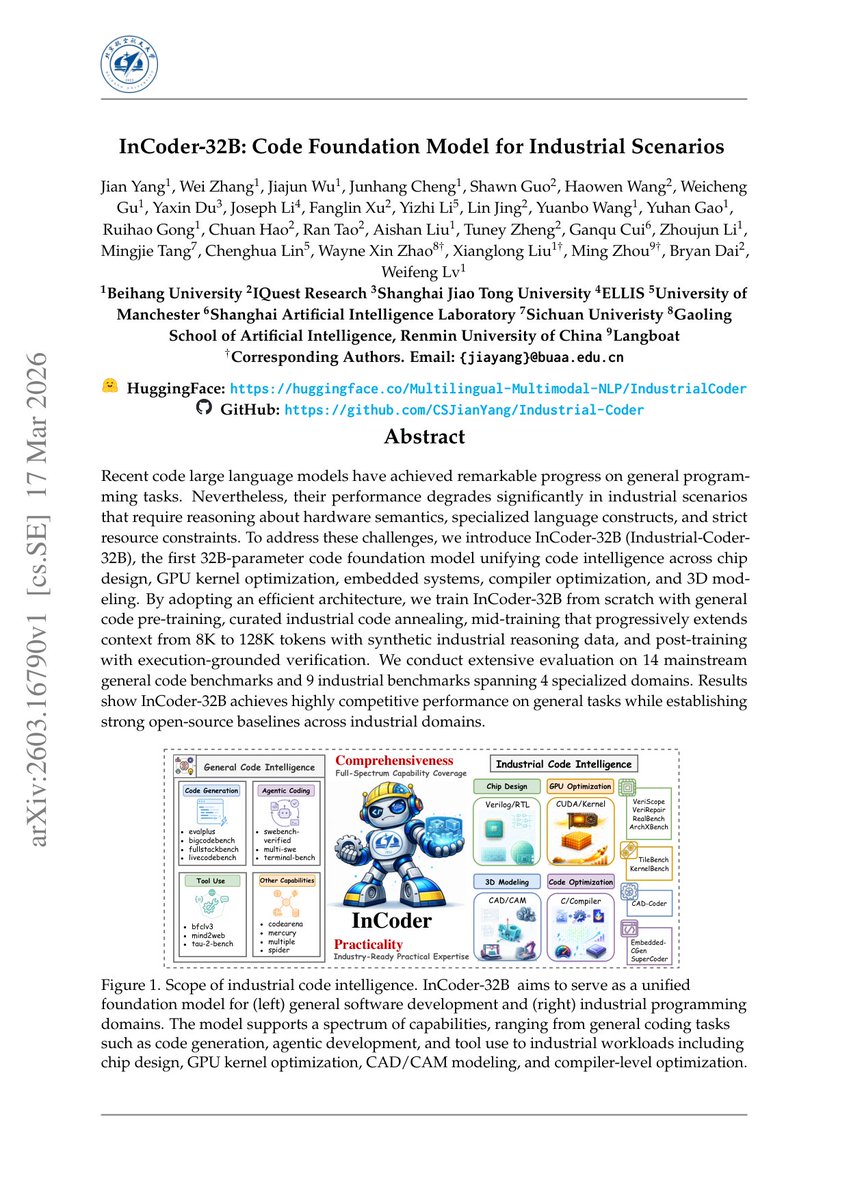
𝗜𝗻𝗖𝗼𝗱𝗲𝗿-𝟯𝟮𝗕: 𝗖𝗼𝗱𝗲 𝗙𝗼𝘂𝗻𝗱𝗮𝘁𝗶𝗼𝗻 𝗠𝗼𝗱𝗲𝗹 𝗳𝗼𝗿 𝗜𝗻𝗱𝘂𝘀𝘁𝗿𝗶𝗮𝗹 𝗦𝗰𝗲𝗻𝗮𝗿𝗶𝗼𝘀 tackles the persistent gap between impressive general‑purpose code LLMs and the harsh realities of industrial software development, where hardware semantics, specialized language constructs, and tight resource budgets turn many “smart” models into unreliable assistants.
Existing models are trained on public repositories that lack the execution‑grounded feedback loops essential for chip design, GPU kernel tuning, embedded firmware, and CAD scripting. Consequently, they falter when asked to respect CUDA grid limits, synthesize Verilog that passes RTL simulation, or generate microcontroller code that boots on real hardware. InCoder‑32B is built to close that divide.
The authors train a 32‑billion‑parameter recurrent architecture from scratch using a three‑stage Code‑Flow pipeline: (1) pre‑training on a curated mix of public code and industrial‑grade repositories, augmented with automated verification; (2) mid‑training that progressively expands context windows from 8 K to 128 K tokens with synthetic reasoning trajectories and agentic prompts; and (3) post‑training that grounds the model in execution results across reconstructed industrial environments (Verilog simulation, CUDA A100 execution, STM32 Renode emulation, and OpenCascade CAD). Both an instruction‑tuned and a “thinking” variant emerge, ready to reason step‑by‑step before emitting code.
- Achieves 74.8 % pass rate on SWE‑bench Verified, 49.14 % on LiveCodeBench, and 60.99 % on BFCL, matching or surpassing larger proprietary models.
- Sets the strongest open‑source baselines on 9 industrial benchmarks covering chip design, GPU kernel optimization, embedded systems, and 3D modeling.
- Demonstrates robust handling of hardware constraints, e.g., flattening CUDA grid dimensions to avoid the 65 535 y‑dim limit that trips other models.
- Shows that repository‑transition data and mid‑training reasoning trajectories markedly improve performance under distribution shift.
- Unlocks emergent “thinking” capabilities that enable the model to plan, verify, and iterate on code before final output.
By unifying disparate industrial domains under a single, execution‑aware code model, InCoder‑32B paves the way for trustworthy AI‑assisted engineering—from silicon to shaders to firmware—reducing the manual overhead of low‑level optimization and verification while preserving safety and performance guarantees.
#AIforCode #IndustrialAI #LLMResearch
1
2
61

6 Nov 2025
Tetrix turns your GitHub into a living knowledge graph.
Instant search. Smarter gen. Context-aware reviews.
🎥 Watch the demo → youtu.be/iTARwCNLFtU
#Tetrix #AIforCode #DevEx #GitHub #BuildInPublic #AItools #Developers

1
8
121

11 Jul 2025
3️⃣ GROK 4 CODE (beta) 💻
Built just for devs:
•256K token context
•Smart debugging
•Refactoring
•Code suggestions
An AI pair programmer on steroids.
Now in private beta testing.
#DevTool #AIForCode

1
7
8
323

9 Jun 2025
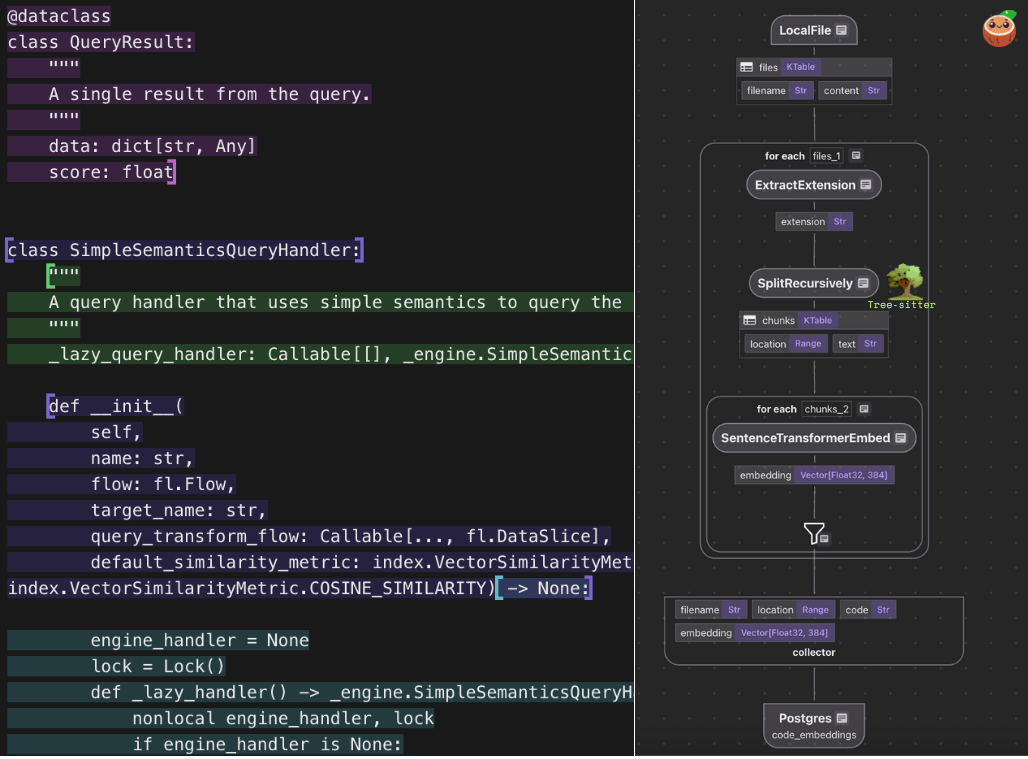
🚀 Build Real-Time #Codebase Indexing for LLMs with Tree-sitter for coding agents. ~100 lines of Python
Real-time updates, syntax-aware chunking.
Production-ready. Ultra-performant. Fully #OpenSource.
get started:
🔗 cocoindex.io/blogs/index-cod…
repo:
🌟 github.com/cocoindex-io/coco…
Power your AI coding assistant with:
✅ Tree-sitter for syntax-aware code chunks
✅ SentenceTransformer embeddings
✅ Real-time updates with incremental processing
✅ Built for RAG, blazing fast
Perfect for AI-powered #devtools and #semantic code search.
#LLM #RAG #AIForCode #CodeSearch #DevTools #RealtimeAI #OpenSource #AIInfra #Rust #Python #TreeSitter #VectorDB #Embeddings #AIEngineering #GenerativeAI #Codex #CodingAgents #Claude #Cursor
5
59
244
21,198

4 Jun 2025
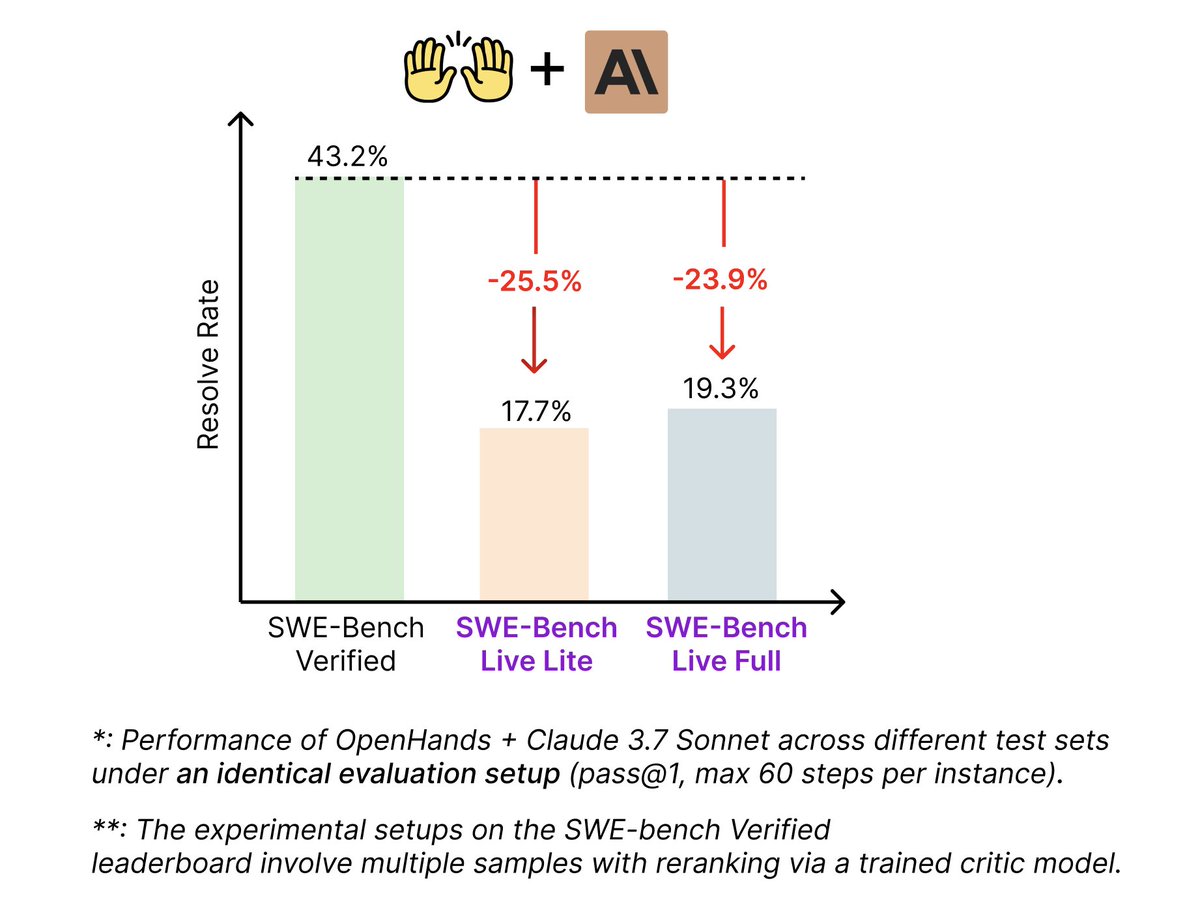
Proud to share our new work — SWE-bench-Live is now live!
A live-updating benchmark for real-world bug fixing, where even top agents like Claude 3.7 Sonnet OpenHands stumble.
Try it out & follow us 👉 swe-bench-live.github.io
#LLM #SWEbenchLive #AIforCode
4 Jun 2025

🤔 Have we really made great progress on software engineering tasks?
🚀 Introducing SWE-bench-Live, a live-updatable benchmark for real-world bug fixing.
😺 Even the best combo, OpenHands Claude 3.7 Sonnet, sees a major performance drop!
👉 swe-bench-live.github.io/
🧵 1/4
1
3
237

30 May 2025
VERINA: Benchmarking verifiable code generation. ~ Zhe Ye, Zhengxu Yan, Jingxuan He, Timothe Kasriel, Kaiyu Yang, Dawn Song. arxiv.org/abs/2505.23135 #AIforCode #ITP #LeanProver
1
6
424
24 May 2025
Is AI making coders obsolete? (Are there problems with having AI tools take over coding from humans?). ~ Jennifer Goforth Gregory. cacm.acm.org/news/is-ai-maki… #AIforCode
7
442
23 May 2025
CLEVER: A curated benchmark for formally verified code generation. ~ Amitayush Thakur et als. arxiv.org/abs/2505.13938v2 #LLMs #ITP #LeanProver #AIforCode
3
17
978

14 May 2025
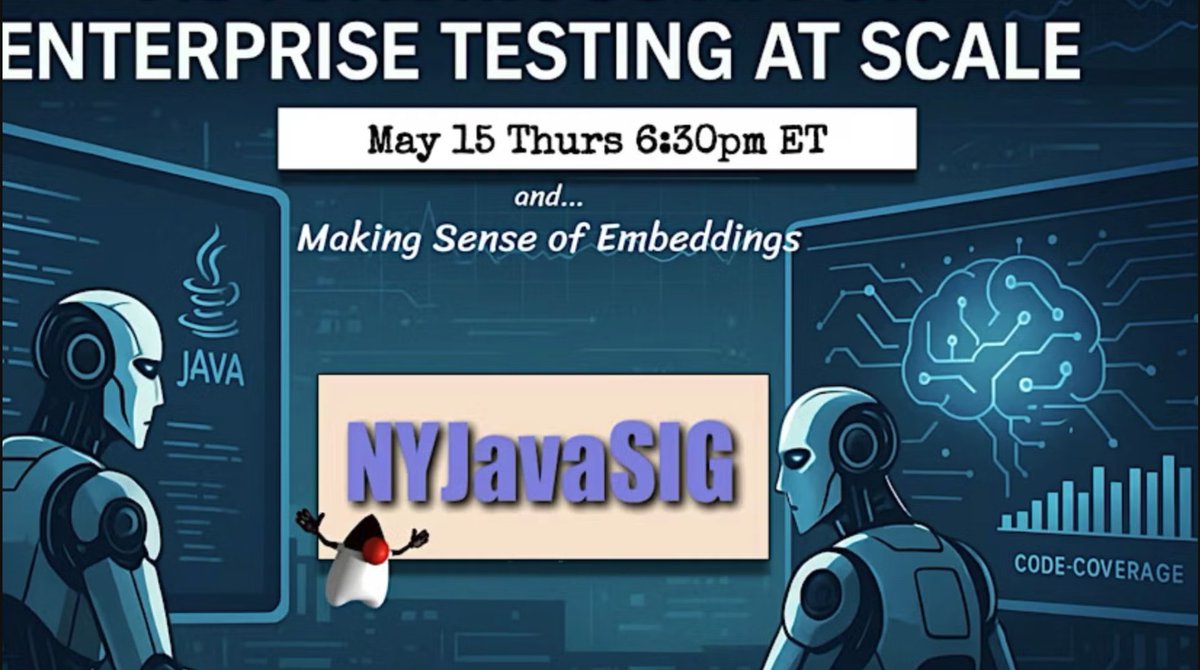
Join Diffblue and the rest of the NYC Java community to find out more about the latest workflows and agentic AI tooling that helps development teams automate unit testing at scale.
🔗 GRAB YOUR TICKETS: eventbrite.com/e/autonomous-…
🗓️ Thursday, May 15th
⏱️ 6.30pm - 8.00pm EDT
📍 BNY - 240 Greenwich Street New York, NY 10286
#NYJavaSIG #JavaUserGroups #Java #JavaCommunity #AIforCode #AIAgents #TestAutomation
1
2
76
12 May 2025
Join Diffblue VP of Engineering Andy Piper, who'll be talking about & showing how to reduce developer toil by using "Autonomous AI for Enterprise Testing at Scale."
Andy will discuss how reinforcement learning-based autonomous AI can transform testing processes, eliminating up to 95% of the time developers spend on unit tests.
🗓️ Tuesday 13th May @ 09:00 EST
🔗 coderemix.ai/session?id=5210…
#UnitTesting #AIAgents #AIforCode #Java #CodeQuality #ApplicationModernization #CodeRemixSummit #OpenRewrite #Miamitech #Miamitechevents #techconference

2
4
188
30 Apr 2025
If your goal is to maximize code quality, coverage, and developer productivity for development team test operations, then you need a enterprise-ready agentic unit testing solution.
Read the blog to find out why coding assistants just don't cut it for unit testing at scale 👀 diffblue.com/resources/why-a…
#AIforCode #Java #ShiftLeft #DevOps #CodeQuality #AIAgents #AIAssistants #AITestAgents #AIAutomation

1
3
92
8 Apr 2025
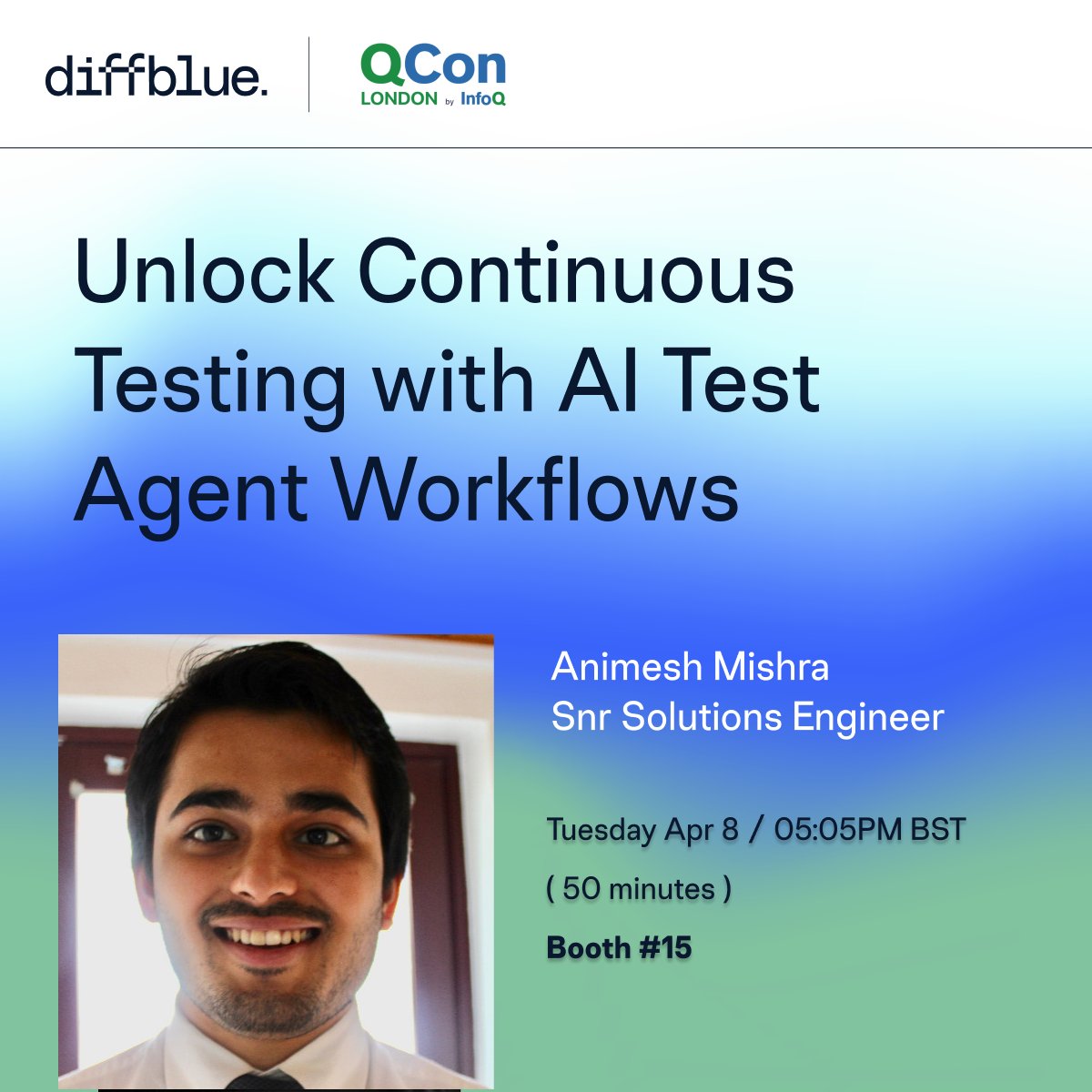
If you're at Qcon London, so are we!
Come see Animesh Mishra talk about accelerating and simplifying testing with Agentic AI TODAY. 👇
🗓️Tuesday April 8th
⏱️ 5.05pm BST
📍Westminster (4th Fl.)
🔗 qconlondon.com/presentation/…
Team Diffblue are at booth #15 - come and say hello 👋🏾
#QConLondon #AI #AIforCode #Diffblue #AIUK
3
66

3 Apr 2025
🎉 New model alert! Check out "all-hands_openhands-lm-1.5b-v0.1" in LocalAI gallery! 🤖
Install it with `local-ai run all-hands_openhands-lm-1.5b-v0.1` and explore its potential for software engineering tasks! 💻🔥 #LocalAI #OpenHandsLM #AIforCode
8
8
190
31 Mar 2025
📰 We're delighted to share our latest news that Diffblue has been awarded an Innovate UK grant as part of the ITEA project Generative AI for the Software Development Life Cycle (GENIUS).
🔗Find out more: diffblue.com/resources/diffb…
#Diffblue #news #AIforCode #AI #AIUK #UKBusiness

2
2
134

Updating a code library with AI and facing limitations with your LLM's knowledge? As ever, context matters. Here are some tips for making the process easier:
🔗 tabnine.com/blog/making-majo…
#AIforCode #Coding #developers #CodingChallenge
4
452
📣 Today, we’re launching Provenance and Attribution, a new feature that reduces the risk of IP liability when using third-party models like Claude 3.5 Sonnet and GPT-4o. Get the details 👇
🔗 tabnine.com/blog/introducing…
#AIforCode #SoftwareEngineers #DevTeams #LLMs
3
322
20 Nov 2024
At #QConSF or developer in the Bay Area?
This one's for you - TONIGHT!
🔥Join us & @SonarSource for our first joint developer meetup. We've got a lively session planned - jam packed with eats, swag and chat about the role of AI-driven development in the SDLC 🤖.
QCon or no QCon, all welcome!
RSVP on Meetup 👉🏾 bit.ly/3AygR8F
#meetup #SanFrancisco #AI #aifordevelopers #Developers #QConSF #AIforCode

2
4
277

10 Oct 2024
Pide información: ifr.es/es/microsoft-cloud-mo… @IFR_Group
#EconomíadeDatos #GenAIOps #AIforApps #Compliance #AIforCode #AIforSafety #AzureAI #AppsAutoeficientes #FuncionesdeIANativa
2
30
24 Jul 2024
Struggling with legacy code modernization? Look no further than Diffblue Cover - the AI-powered unit test automation solution that's revolutionizing #Java application modernization projects! 🚀
AI-powered unit test automation is a gamechanger. Unit test quickly, easily and at scale.
See how Diffblue Cover can help your Java team to modernize legacy code with confidence 👉🏾 diffblue.com/resources/5-key…
#LegacyCodeModernization #JavaDevelopment #AIforCode #SoftwareEngineering
2
93
3 Jun 2024
One of the questions we get asked most frequently about Diffblue Cover is..."Why would I need Diffblue Cover for unit testing, if I have Copilot?"
Find out the answers in the AI for unit testing showdown 🔗 diffblue.com/resources/copil…
#AI
#AIforCode
#UnitTesting
#developertools
#aicodingtools
#AIcoding
#CleanCode
1
5
1,775