
Jun 11
Man sues Florida cops over arrest spurred by "93% match" in facial recognition 🗣️ AI confidence doesn’t equal proof, and a 93% tag shouldn't lock you up; how many other arrests hinged on opaque algorithmic guesses,... #AlgorithmAccountability #Man 🔽 arstechnica.com/tech-policy/…
6

May 8
Social media isn’t just influencing opinions anymore algorithms are shaping emotions, beliefs, and public sentiment at scale. Platforms like Instagram and Facebook amplify outrage, fear, and divisive content because emotional reactions drive engagement.
This isn’t just a tech issue it’s a societal and democratic concern. Recommendation algorithms need greater transparency and accountability.
Reference:
scientificamerican.com/artic…
#AlgorithmTransparency #Misinformation #SocialMediaImpact #EchoChamber #DigitalManipulation #ResponsibleAI #EchoChamber #ElectionIntegrity #ResponsibleAI #ThinkBeforeYouScroll #TruthVsAlgorithm #SentimentEngineering #MindControl #DigitalManipulation #ProtectDemocracy #AlgorithmAccountability #TamilNaduPolitics #TVK #DMK #AIADMK #TamilNaduElection
1
6
11
231
May 8
What we are witnessing today is not merely the misuse of social media platforms, it is a highly sophisticated form of social engineering that exploits human emotions, biases, and sentiments at scale.
The recent election results once again demonstrate how recommendation algorithms used by platforms like Instagram, Facebook, and other social media networks can influence public opinion and amplify emotional reactions around political ideologies, leaders, and social narratives. These platforms are no longer just communication tools; they have become behavioral influence systems powered by data, psychology, and AI-driven engagement algorithms.
Research has shown that social media algorithms prioritize emotionally charged and highly engaging content because outrage, fear, anger, and tribal identity keep users active for longer periods. Over time, this creates “echo chambers” and “filter bubbles,” where people are repeatedly exposed only to information that reinforces their existing beliefs. This weakens critical thinking and increases emotional polarization.
According to research published in Scientific American, human cognitive biases, combined with algorithmic amplification, make people significantly more vulnerable to misinformation and manipulation.
Studies also show that repeated exposure to the same narratives — even misleading ones — can make people more likely to believe them. Social media exploits psychological effects such as confirmation bias, emotional triggering, social validation, and the “mere exposure effect,” where repeated content starts feeling true or trustworthy simply because it is seen frequently.
The danger becomes even greater when algorithms optimize purely for engagement instead of truth or social responsibility. In many cases, divisive, sensational, and emotionally provocative content spreads faster than factual or balanced information because it generates more reactions, shares, and watch time. Researchers have warned that these systems can distort public perception, intensify social divisions, and manipulate collective sentiment during elections and major political events.
This is why governments and regulatory bodies — including in India — should seriously consider establishing transparency and accountability standards for social media recommendation algorithms. Platforms that shape public discourse at such a massive scale should not operate without oversight, especially when their systems can influence democratic processes, public emotions, and societal harmony.
Freedom of expression is important, but algorithmic manipulation of human psychology is a different issue altogether. When technology begins exploiting emotional vulnerabilities for engagement and profit, it becomes a societal risk rather than just a digital innovation.
People must also become more aware that not everything trending online reflects reality. Viral content often reflects what algorithms choose to amplify — not necessarily what is truthful, balanced, or representative of society as a whole.
Reference:
scientificamerican.com/artic…
#AlgorithmTransparency #Misinformation #EchoChamber #DigitalManipulation #ElectionIntegrity #ResponsibleAI #SocialMediaImpact #ThinkBeforeYouScroll #TruthVsAlgorithm #SentimentEngineering #MindControl #DigitalManipulation #ProtectDemocracy #AlgorithmAccountability #TamilNaduPolitics #TVK #DMK #AIADMK #TamilNaduElection
3
5
92

22 Apr 2025
🎥 Just shared on YouTube 👉 Audrey Watters explores the anxieties surrounding the environment, politics, and jobs. ... #FutureAnxiety #AIandSociety #Uncertainty #Environment #Politics #Jobs #AlgorithmAccountability #InsecureWorld #TechEthics #FutureofWork youtube.com/watch?v=HASFK3Qf…
1,116

13 Mar 2024
A TikTok ban may seem like a solution, but it potentially consolidates power in Meta's hands. It also raises concerns about holding platforms accountable, especially for child safety. Striking a balance between regulation and innovation is crucial for fostering a responsible digital landscape. 📱🤔 #TikTokBan #MetaPower #AlgorithmAccountability #DigitalResponsibility
1
725
13 Mar 2024
A TikTok ban may seem like a solution, but it potentially consolidates power in Meta's hands. It also raises concerns about holding platforms accountable, especially for child safety. Striking a balance between regulation and innovation is crucial for fostering a responsible digital landscape. 📱🤔 #TikTokBan #MetaPower #AlgorithmAccountability #DigitalResponsibility
1
6
2,597

31 Mar 2023
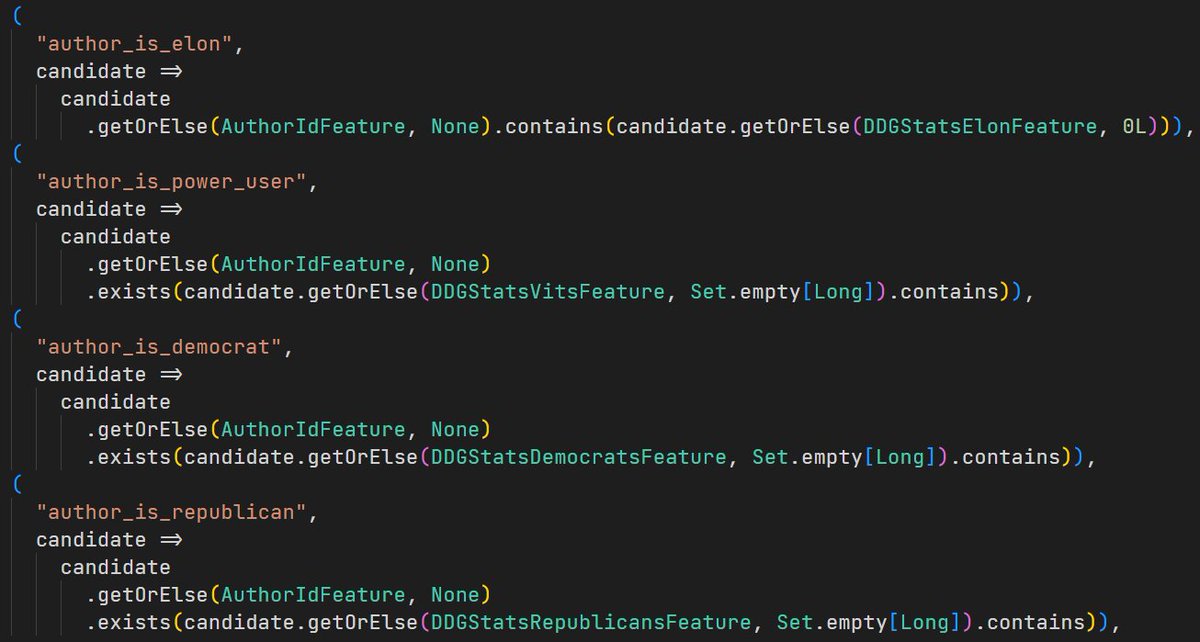
Exciting news! Twitter just open-sourced its ML Recommendation Algorithm, and it's already paying dividends. Interestingly, in the TwitterSpaces discussion that was just hosted, even @elonmusk learned that he was unaware that his stats were being explicitly tracked and that users were being divided into political parties for "stats collection purposes". This underscores that open sourcing is crucial for building robust, transparent, and fair systems. #MachineLearning #AlgorithmAccountability #DataEthics #ResponsibleAI #OpenSource
1
4
25
3,908

30 Dec 2021
This looks like a great opportunity to have some tangible impact on #aigovernance #algorithms #algorithmaccountability
23 Dec 2021

Hiring for a Director of Algorithm Assessment and Technology Insight to lead a fascinating portfolio of work on AI, ML and new technologies!
Deadline 24 Jan.
civilservicejobs.service.gov…
2
6

8 Dec 2021
Algorithms may often be an “easy way out” to solve problems without fully understanding them.
#AlgorithmAccountability
newscientist.com/definition/… is an algorithm? newscientist.com/definition/…
22
6
28
6 Apr 2021
Noch 8.115 Minuten für die Bewerbung auf diesen Policy-Traumjob. #AIgovernance #algorithmaccountability #AI #AIethics #KI #KIethik algorithmwatch.org/de/jobs/
3
3

20 Mar 2021
#AI is screening job candidates, diagnosing disease, and identifying criminal suspects, it’s often perpetuating the biases of the humans on whose decisions it was trained. We need #AlgorithmAccountability @GHFutures2030 technologyreview.com/2020/10…
11
26

12 Jun 2020
The Post-COVID-19 Digital Order- with @PandaJay and @MarietjeSchaake
Are #platforms politically biased, can they censor content? Will #India & #EU opt for #Huawei #5G? Is #datalocalisation inevitable? Time for #AlgorithmAccountability & more
youtu.be/xTeP4TUQRfA
3
41
119
29 May 2020
The issue of #AlgorithmicBias n SM platforms using these to “censor” is a real issue.
Hope @rsprasad will act🙏🏻😅
#AlgorithmAccountability
Articles explaining it 👇🏻
google.co.in/amp/s/swarajyam…
m.economictimes.com/news/pol…
opinionexpress.in/need-to-un…
3
4
10
29 May 2020
#Flashback to whn i raised the issue of accountability of SM platforms like @Twitter on use of “algorithms” - similar to what @realDonaldTrump has done yday in US
#AlgorithmAccountability
@PMOIndia @rsprasad
17 Jul 2019

#TodayInParliament
I raised the issue of algorithmic bias in social media platforms like Twitter and urged the govt to ensure a legal & organizational framework to check bias.
We need Algorithmic Accountability Bill to ensure that digital intermediaries are held responsible.
5
18
83

28 Nov 2019
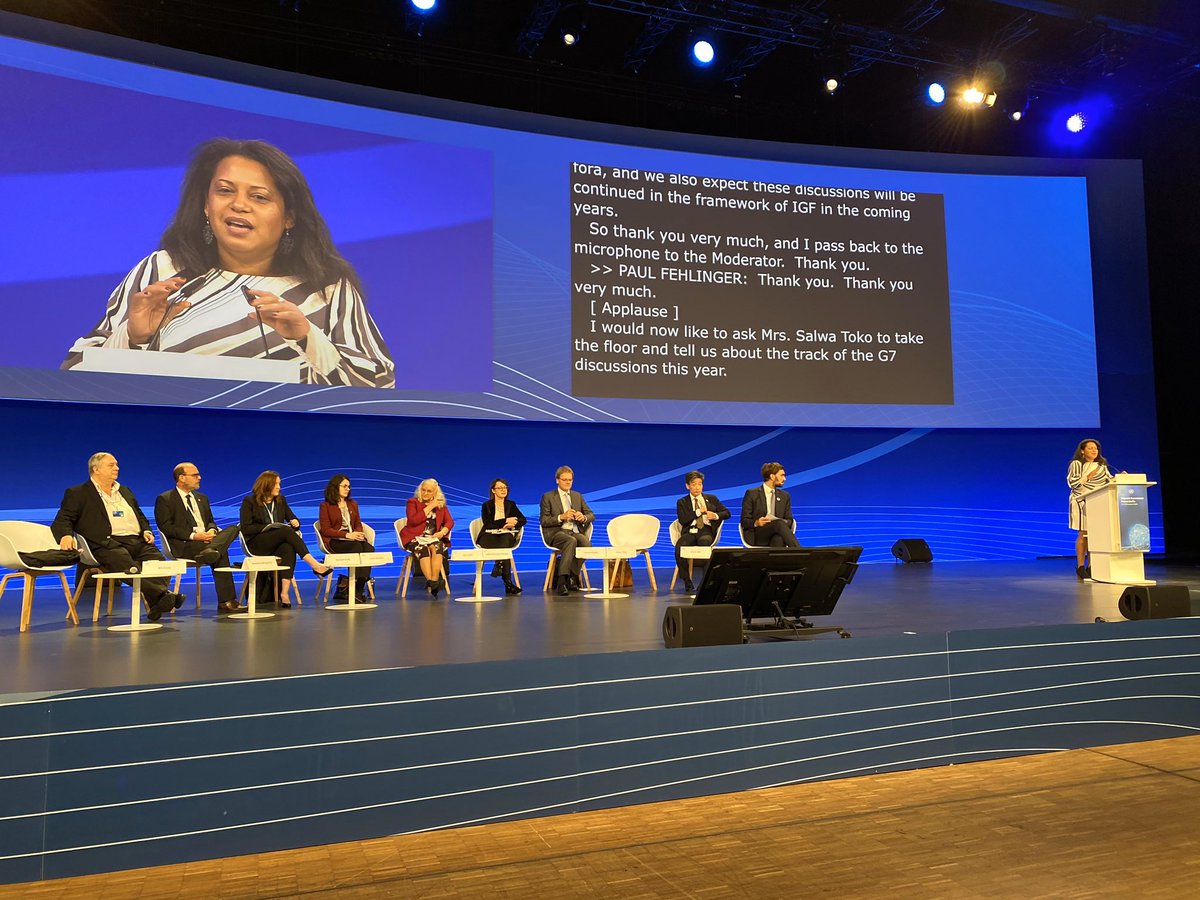
“We need to empower citizens with new rights tailored for the digital society at large.” @SalsaHayek president of @CNNum at the main session of #IGF2019 #Inclusion #AlgorithmAccountability #Transparency
3
5


26 Feb 2019
„Don't be afraid of math, be afraid of humans!“
#algorithmaccountability
26 Feb 2019

AI isn't a monolithic entity. Its a collection of mathematical techniques, many of them decades old. These are mathematical operations being computed on silicon chips running on electricity. Humans choose how these tools are used. Don't be afraid of math, be afraid of humans!
1
29 Jan 2019
#Algorithmen Studie: In europäischen Ländern sind etliche Entscheidungen automatisiert
#algorithmaccountability
faz.net/-ikh-9j7lg?GEPC=s3 via @faznet
5
11

12 Jan 2019
Cool online course abt "News #Algorithms: The Impact of #Automation and #AI on Journalism" with #algorithmaccountability master @ndiakopoulos journalismcourses.org/ALG011… @utknightcenter @rosenthal #MOOC
1
2
8 Jan 2019
Wer trägt die Verantwortung, wenn der Algorithmus sich irrt? #AlgorithmAccountability #KI via @Handelsblatt handelsblatt.com/23828718.ht…
7
5