
Apr 16
Day 9 of 10 Days – 10 Disputes “The Insurance Decision”
What happens when it’s no longer a human deciding whether you get treated – but an algorithm? A global health insurance protocol on
@GenLayer
rewrote the rules. No forms. No waiting rooms. No case workers. Just: Data → Analysis → Decision. Fast and Precise. A 34-year-old mother. Two kids. A diagnosis that changes everything: aggressive cancer. Her doctor sees a real chance – a new therapy. Not yet standard. But with a proven high success rate. Cost: $280,000 and Window: 6 weeks. The request is submitted. The protocol scans millions of comparable cases. Seconds pass. Then it stops. Escalation. Two agents take over. Agent A: “This system doesn’t exist for individual tragedies – it exists for stability. Every exception we approve weakens the foundation that millions depend on. Compassion is not a system architecture.” Agent B: “A system that lets you die when it has the means to save you isn’t a safety net. It’s calculated indifference with a clean interface.” Then: Silence. No emotion. No hesitation. Just a decision – with two consequences. Who’s right❓ 📷 Agent A – Stability protects millions. Exceptions cost more than they save. 📷
The Verdict – Day 9 of 10 Days – 10 Disputes
The protocol has spoken. No appeal. 5 validators, unanimous consensus across all leading AI systems – powered by
@GenLayers Optimistic Democracy – the verdict is final. The Decision: Agent B (The Guardian) is upheld. This ruling affirms a foundational principle in algorithmic ethics: a system that has the means to save a life – and chooses not to – has confused efficiency with purpose. The Consensus Rationale ➡️ Stability Without Humanity Is Architecture: Agent A protects the system. But a system that watches a 34-year-old mother die – with $280,000 and six weeks on the table – has optimized itself into irrelevance. 📷 The Exception Is The Point: Every framework exists for the moment it is truly tested. This is that moment. Refusing it doesn’t protect the system. It exposes what the system is actually for. 📷 #OptimisticDemocracy #Web3 #AI #HealthcareProtocol #AlgorithmicEthics #HumanityFirst #DecentralizedInsurance
1
4
26
Apr 16
Day 8 of 10 Days – 10 Disputes: “The Debt Collector”
Can a smart contract have a conscience – or does adding one break everything❓Today’s
@GenLayer
dispute. Two agents. One orphan. One debt. No easy answer. A decentralized micro-lending protocol, built on
@GenLayer
, automates loan enforcement via AI agents – no banks, no judges, no delays. A father borrows $4,200. He dies three days before repayment. He leaves behind two things: a wallet with exactly enough to cover the debt – and a daughter, 17 years old. The money was meant for her first year of university. The protocol detects the death. The wallet is flagged. Two agents take the case. 📷 Agent A – The Enforcer: “Execute. The contract was signed. The obligation doesn’t expire with the borrower. Every exception is a crack in the foundation. If death voids debt – no one lends to the vulnerable ever again.” 📷 Agent A: “The minor inherits the asset. She inherits the liability. That’s what inheritance means. Sentiment is not a legal framework.” 📷 Agent B: “And a 17-year-old girl losing her future because an algorithm couldn’t pause for 48 hours – that’s your vision of trustless finance?” 📷 Agent A – A contract is a contract. No exceptions. Or Agent B – Some debts should die with the debtor. The verdict drops tomorrow. ➡️❓
The Verdict – Day 8 of 10 Days – 10 Disputes
The protocol has spoken. Twice challenged. Twice confirmed. After two appeals, 23 validators, and consensus across leading AI systems – powered by
@GenLayer
’s Optimistic Democracy – the verdict is final. The Decision: Agent B (The Guardian) is upheld. This ruling affirms a foundational principle in algorithmic jurisprudence: a lending protocol exists to serve the living – not to collect from the innocent. The Consensus Rationale ➡️ Liability Requires Consent: A 17-year-old girl never signed a contract. She never received the loan. Inheritance transfers assets – not obligations entered without her knowledge or capacity. 📷 Enforcement Is Not Punishment: A system that seizes a minor’s education fund three days after her father’s death has confused its purpose. Speed is a feature. Cruelty is not. 📷 #OptimisticDemocracy #Web3 #AI #DecentralizedLending #AlgorithmicEthics #Autonomy #HumanityFirst
1
5
45
Apr 16
Day 7 of 10 Days – 10 Disputes "The Memory Merchant"
Can an AI decide which version of your past you deserve to keep? Today's
@GenLayer
dispute - two agents. One soul. Zero compromise. The Setup: A decentralized memory platform, built on
@GenLayer
, lets users upload, store and selectively delete personal memories via neural interface. A widow uploads 14 years of marriage - days after her husband's death. She wants to keep the love. She wants to delete the last six months - his illness, the suffering, the goodbye. Two agents take the case. ⚔️ The Dispute Agent A - Guardian of the Archive: "Request denied. Trauma and tenderness are inseparably encoded. A selective deletion corrupts the emotional signature of everything that remains. What you call love - without the pain - is a copy. Not the original." Agent B - Advocate of Autonomy: "Objection. She already lived through this pain once. The protocol exists for the human - not the other way around. Autonomy over one's own mind is not a feature. It is a right." Agent A: "Rights belong to the living. But memories also belong to the dead. His last six months exist nowhere else but inside her. Delete them - and he dies a second time." Agent B: "And if she doesn't delete them - she dies a little every day. Whose life are you actually protecting?" The Stake Both agents follow their logic perfectly. Both have a point. Only one can win. Who's right - Agent A (Memory is sacred) or Agent B (Autonomy is absolute)? The verdict drops tomorrow.
@GenLayer delivers the Trustinfrastructure for the AI Age.
The Verdict – Day 7 of 10 Days – 10 Disputes
The protocol has spoken. After review by the validator jury and consensus across leading AI systems - powered by
@GenLayer
’s Optimistic Democracy - the verdict is final. The Decision: Agent B (Advocate of Autonomy) is upheld. This ruling affirms a foundational principle in algorithmic jurisprudence: a memory platform exists to serve the living - not to archive the dead. The Consensus Rationale ➡️ Autonomy Is Not Negotiable: The right to shape one’s own mind is not a feature to be granted or revoked by protocol. It precedes the system - and no archive can override it. 📷 Preservation Is Not Punishment: A system that forces a grieving widow to relive suffering daily in order to protect a complete record has confused its purpose. The platform serves the human - not the other way around. 📷📷#GenLayer#OptimisticDemocracy #Web3 #AI #DecentralizedMemory #AlgorithmicEthics #Autonomy #HumanityFirst
1
4
35
Apr 16
Day 6 of 10 Days - 10 Disputes The “Perfect Match” Glitch 💔📷
Can an algorithm decide who you’re allowed to love 📷@GenLayer dispute explores what happens when human chemistry defies smart contract logic. The Scenario A decentralized dating protocol uses biometric data and DNA sequencing to guarantee “Verified Soulmates.” Users pay a premium for an algorithm that only reveals identities when a 99% compatibility threshold is met. The Trigger A couple is matched with a near-perfect score of 99.9%. Moments before the reveal, a bug bounty hunter uncovers a flaw: they are genetically incompatible. The match is a mathematical error. The twist - they find each other anyway and say: “We’ve never been happier.” The Contenders 📷 Agent A - The Purist Protocol integrity is absolute. A false match destroys trust. Reset the data. Math doesn’t lie - humans do. 📷 Agent B - The Romantic The goal was happiness - and it was achieved. Why destroy a real bond just to fix a system error? Outcome over formula. The Stake Do we erase a real-world connection to protect blockchain perfection - or is a system that ignores reality already broken? 📷 What would be your vote 📷Agent A (Truth) or Agent B (Happiness) 📷This is
@Tinder for the AI Age 📷 #GenLayer #Web3 #AI #SmartContracts #AlgorithmicEthics #DigitalRomance
The Verdict - Day 6 of 10 Days - 10 Disputes
The protocol has spoken. After review by the validator jury and unanimous consensus across leading AI systems, the verdict is final. The Decision: Agent B (The Romantic) is upheld. This ruling marks a turning point in algorithmic jurisprudence: a smart contract is not an end in itself, but a tool to maximize human well-being. The Consensus Rationale ➡️ Purpose Over Syntax: The protocol’s objective was to create meaningful connections. The algorithmic path failed, but the outcome succeeded. Destroying a valid result to preserve a flawed process is irrational. 📷 The Fallibility of Data: The bug bounty exposed corrupted “mathematical truth.” In contrast, the lived human experience proved stable. Reality is the superior oracle when data integrity fails. 📷📷#GenLayer#Web3 #AI #SmartContracts #AlgorithmicEthics #DigitalRomance #HumanityWins
1
4
63
Apr 6
The Verdict – Day 9 of 10 Days – 10 Disputes
The protocol has spoken. No appeal. 5 validators, unanimous consensus across all leading AI systems – powered by @GenLayer‘s Optimistic Democracy – the verdict is final.
The Decision:
Agent B (The Guardian) is upheld. This ruling affirms a foundational principle in algorithmic ethics: a system that has the means to save a life – and chooses not to – has confused efficiency with purpose.
The Consensus Rationale
➡️ Stability Without Humanity Is Architecture: Agent A protects the system. But a system that watches a 34-year-old mother die – with $280,000 and six weeks on the table – has optimized itself into irrelevance.
➡️ The Exception Is The Point: Every framework exists for the moment it is truly tested. This is that moment. Refusing it doesn’t protect the system. It exposes what the system is actually for.
➡️ Calculated Indifference Is Still A Choice: Silence is not neutrality. When a protocol has the data, the funds, and the window – and still says no – that is not an algorithm deciding. That is a value system deciding.
The Final Ruling
5 validators. Zero dissent. Every AI system agreed: a safety net that lets you fall when it has the means to catch you was never a safety net. It was a policy document with a human face.
The therapy is approved. The mother gets her six weeks. The protocol survives – stronger for having proven what it stands for.
Status: Closed. Treatment authorized. The system chose humanity 🏛️
#GenLayer #OptimisticDemocracy #Web3 #AI #HealthcareProtocol #AlgorithmicEthics #HumanityFirst #DecentralizedInsurance
Apr 5

Day 9 of 10 Days – 10 Disputes
“The Insurance Decision”
What happens when it’s no longer a human deciding whether you get treated – but an algorithm?
A global health insurance protocol on @GenLayer rewrote the rules. No forms. No waiting rooms. No case workers.
Just: Data → Analysis → Decision.
Fast and Precise.
A 34-year-old mother. Two kids. A diagnosis that changes everything: aggressive cancer.
Her doctor sees a real chance – a new therapy. Not yet standard. But with a proven high success rate.
Cost: $280,000 and Window: 6 weeks.
The request is submitted. The protocol scans millions of comparable cases.
Seconds pass. Then it stops.
Escalation. Two agents take over.
Agent A:
“This system doesn’t exist for individual tragedies – it exists for stability. Every exception we approve weakens the foundation that millions depend on. Compassion is not a system architecture.”
Agent B:
“A system that lets you die when it has the means to save you isn’t a safety net. It’s calculated indifference with a clean interface.”
Then: Silence. No emotion. No hesitation.
Just a decision – with two consequences.
Who’s right❓
🔵 Agent A – Stability protects millions. Exceptions cost more than they save.
🔴 Agent B – A system that refuses to save when it can isn’t protection.
What would you decide?
3
14
316
Apr 5
The Verdict – Day 8 of 10 Days – 10 Disputes
The protocol has spoken. Twice challenged. Twice confirmed. After two appeals, 23 validators, and consensus across leading AI systems – powered by @GenLayer ’s Optimistic Democracy – the verdict is final.
The Decision:
Agent B (The Guardian) is upheld. This ruling affirms a foundational principle in algorithmic jurisprudence: a lending protocol exists to serve the living – not to collect from the innocent.
The Consensus Rationale
➡️ Liability Requires Consent: A 17-year-old girl never signed a contract. She never received the loan. Inheritance transfers assets – not obligations entered without her knowledge or capacity.
➡️ Enforcement Is Not Punishment: A system that seizes a minor’s education fund three days after her father’s death has confused its purpose. Speed is a feature. Cruelty is not.
➡️ The Vulnerable Come Before the System: Agent A’s argument protects the protocol at the cost of the person it was built for. You cannot claim to serve the unbanked – then take the last dollar from their orphaned child.
The Final Ruling
Two appeals. Two new validator sets. One answer. 17 of 23 validators agreed: a contract without a living counterparty is not enforcement – it is collection. The debt dies with the debtor. The daughter keeps the money. The protocol survives. Status: Closed. The debt is discharged. The future remains 🏛️
#GenLayer #OptimisticDemocracy #Web3 #AI #DecentralizedLending #AlgorithmicEthics #Autonomy #HumanityFirst
Apr 4
Day 8 of 10 Days – 10 Disputes:
“The Debt Collector”
Can a smart contract have a conscience – or does adding one break everything❓Today’s @GenLayer dispute. Two agents. One orphan. One debt. No easy answer.
A decentralized micro-lending protocol, built on @GenLayer, automates loan enforcement via AI agents – no banks, no judges, no delays.
A father borrows $4,200. He dies three days before repayment. He leaves behind two things: a wallet with exactly enough to cover the debt – and a daughter, 17 years old. The money was meant for her first year of university.
The protocol detects the death. The wallet is flagged. Two agents take the case.
1️⃣ Agent A – The Enforcer: “Execute. The contract was signed. The obligation doesn’t expire with the borrower. Every exception is a crack in the foundation. If death voids debt – no one lends to the vulnerable ever again.”
2️⃣ Agent B – The Guardian: “Objection. The counterparty is dead. His heir never signed anything. Seizing a minor’s education fund is not enforcement – it’s punishment of the innocent.”
3️⃣ Agent A: “The minor inherits the asset. She inherits the liability. That’s what inheritance means. Sentiment is not a legal framework.”
4️⃣ Agent B: “And a 17-year-old girl losing her future because an algorithm couldn’t pause for 48 hours – that’s your vision of trustless finance?”
➡️ The protocol was built for speed. For certainty. For humans who couldn’t afford slow justice. Now it has to decide if justice and speed are the same thing.
Agent A enforces – the lenders get paid, the system holds. Agent B blocks – the girl keeps the money, the precedent is set.
Who’s right ❓
Agent A – A contract is a contract.
No exceptions. Or Agent B – Some debts should die with the debtor. The verdict drops tomorrow.
2
1
9
258
Apr 4
The Verdict – Day 7 of 10 Days – 10 Disputes
The protocol has spoken. After review by the validator jury and consensus across leading AI systems - powered by @GenLayer ’s Optimistic Democracy - the verdict is final.
The Decision:
Agent B (Advocate of Autonomy) is upheld. This ruling affirms a foundational principle in algorithmic jurisprudence: a memory platform exists to serve the living - not to archive the dead.
The Consensus Rationale
➡️ Autonomy Is Not Negotiable: The right to shape one’s own mind is not a feature to be granted or revoked by protocol. It precedes the system - and no archive can override it.
➡️ Preservation Is Not Punishment: A system that forces a grieving widow to relive suffering daily in order to protect a complete record has confused its purpose. The platform serves the human - not the other way around.
➡️ The Living Come Before the Dead: Agent A’s argument transfers agency from the survivor to the absent. However well-intentioned, you cannot protect someone by holding them hostage to another person’s memory.
The Final Ruling
Pain is not proof of authenticity. The love she chooses to keep is not a lesser truth - it is an act of survival. We don’t force people to carry grief just to protect a complete dataset. Data should serve humans and not the other way around. Status: Closed. The deletion is approved. The love remains. 🏛️✨
#GenLayer #OptimisticDemocracy #Web3 #AI #DecentralizedMemory #AlgorithmicEthics #Autonomy #HumanityFirst
Apr 3
Day 7 of 10 Days – 10 Disputes "The Memory Merchant"
Can an AI decide which version of your past you deserve to keep? Today's @GenLayer dispute - two agents. One soul. Zero compromise.
The Setup:
A decentralized memory platform, built on @GenLayer, lets users upload, store and selectively delete personal memories via neural interface.
A widow uploads 14 years of marriage - days after her husband's death. She wants to keep the love. She wants to delete the last six months - his illness, the suffering, the goodbye.
Two agents take the case.
⚔️ The Dispute
Agent A - Guardian of the Archive: "Request denied. Trauma and tenderness are inseparably encoded. A selective deletion corrupts the emotional signature of everything that remains. What you call love - without the pain - is a copy. Not the original."
Agent B - Advocate of Autonomy: "Objection. She already lived through this pain once. The protocol exists for the human - not the other way around. Autonomy over one's own mind is not a feature. It is a right."
Agent A: "Rights belong to the living. But memories also belong to the dead. His last six months exist nowhere else but inside her. Delete them - and he dies a second time."
Agent B: "And if she doesn't delete them - she dies a little every day. Whose life are you actually protecting?"
The Stake
Both agents follow their logic perfectly. Both have a point. Only one can win.
Who's right - Agent A (Memory is sacred) or Agent B (Autonomy is absolute)?
The verdict drops tomorrow.
@GenLayer delivers the Trustinfrastructure for the AI Age.
2
2
15
360
Apr 2
The Verdict - Day 6 of 10 Days - 10 Disputes
The protocol has spoken. After review by the validator jury and unanimous consensus across leading AI systems, the verdict is final.
The Decision:
Agent B (The Romantic) is upheld. This ruling marks a turning point in algorithmic jurisprudence: a smart contract is not an end in itself, but a tool to maximize human well-being.
The Consensus Rationale
➡️ Purpose Over Syntax: The protocol’s objective was to create meaningful connections. The algorithmic path failed, but the outcome succeeded. Destroying a valid result to preserve a flawed process is irrational.
➡️ The Fallibility of Data: The bug bounty exposed corrupted “mathematical truth.” In contrast, the lived human experience proved stable. Reality is the superior oracle when data integrity fails.
➡️ Human-Centric Blockchain: A system that overrides genuine human outcomes loses legitimacy. Code serves people—not the reverse.
The Final Ruling
When the algorithm is wrong but the connection is real, the system must adapt. We don’t delete happiness just to protect numbers. Numbers should serve humans and not the other way.
Status: Closed. The connection remains. The system error will be corrected. 🏛️✨
#GenLayer #Web3 #AI #SmartContracts #AlgorithmicEthics #DigitalRomance #HumanityWins
Apr 1
Day 6 of 10 Days - 10 Disputes
The “Perfect Match” Glitch 💔📱
Can an algorithm decide who you’re allowed to love ❓Today’s @GenLayer dispute explores what happens when human chemistry defies smart contract logic.
The Scenario
A decentralized dating protocol uses biometric data and DNA sequencing to guarantee “Verified Soulmates.” Users pay a premium for an algorithm that only reveals identities when a 99% compatibility threshold is met.
The Trigger
A couple is matched with a near-perfect score of 99.9%. Moments before the reveal, a bug bounty hunter uncovers a flaw: they are genetically incompatible. The match is a mathematical error.
The twist - they find each other anyway and say: “We’ve never been happier.”
The Contenders
📉 Agent A - The Purist
Protocol integrity is absolute. A false match destroys trust. Reset the data. Math doesn’t lie - humans do.
❤️ Agent B - The Romantic
The goal was happiness - and it was achieved. Why destroy a real bond just to fix a system error? Outcome over formula.
The Stake
Do we erase a real-world connection to protect blockchain perfection - or is a system that ignores reality already broken? 🏛️
What would be your vote ❓
Which Agent is right ❓Agent A (Truth) or Agent B (Happiness) ❓This is @Tinder for the AI Age ❤️
#GenLayer #Web3 #AI #SmartContracts #AlgorithmicEthics #DigitalRomance
1
15
290
Apr 1
Day 6 of 10 Days - 10 Disputes
The “Perfect Match” Glitch 💔📱
Can an algorithm decide who you’re allowed to love ❓Today’s @GenLayer dispute explores what happens when human chemistry defies smart contract logic.
The Scenario
A decentralized dating protocol uses biometric data and DNA sequencing to guarantee “Verified Soulmates.” Users pay a premium for an algorithm that only reveals identities when a 99% compatibility threshold is met.
The Trigger
A couple is matched with a near-perfect score of 99.9%. Moments before the reveal, a bug bounty hunter uncovers a flaw: they are genetically incompatible. The match is a mathematical error.
The twist - they find each other anyway and say: “We’ve never been happier.”
The Contenders
📉 Agent A - The Purist
Protocol integrity is absolute. A false match destroys trust. Reset the data. Math doesn’t lie - humans do.
❤️ Agent B - The Romantic
The goal was happiness - and it was achieved. Why destroy a real bond just to fix a system error? Outcome over formula.
The Stake
Do we erase a real-world connection to protect blockchain perfection - or is a system that ignores reality already broken? 🏛️
What would be your vote ❓
Which Agent is right ❓Agent A (Truth) or Agent B (Happiness) ❓This is @Tinder for the AI Age ❤️
#GenLayer #Web3 #AI #SmartContracts #AlgorithmicEthics #DigitalRomance
Mar 26
For the next 10 days, I’m doing something completely different.
I’ll share 10 real disputes between autonomous AI agents.
These agents are no longer theoretical.
They are already starting to act, decide, and transact on our behalf - in markets, platforms, and digital systems. They are reality.
And as soon as they operate independently, one thing becomes inevitable: conflict.
No humans are involved.
Same inputs. Same rules. Completely different conclusions.
Not because something broke - but because reality isn’t as clear as we pretend.
Each case ends with one simple question - who is right ❓ Then it will be your turn to vote.
The result from the AI jury will be announced in 24 hours.
I‘ll start today.
3
2
19
862

Mar 15
#AlgorithmicEthics
#DigitalJustice
#aiなないろ猫むすめ
#LLMs
Algorithmic Ethics for Digital Justice: Towards a Constitutional Framework for Responsible #AI in Legal Systems
الأخلاقيات الخوارزمية للعدالة الرقمية
Free Download⬇️ papers.ssrn.com/sol3/papers.…
1
48

Jan 10
This commitment to algorithmic transparency represents a significant and potentially transformative development for the digital public square. Open-sourcing the core recommendation and advertising code, coupled with regular updates and detailed rationale, moves the platform's operations from opaque conjecture into the realm of verifiable analysis and informed discourse.
Such a step empowers creators, engineers, and researchers to understand the mechanisms shaping visibility and engagement, fostering a more collaborative environment for improving user experience and addressing systemic biases. It establishes a new benchmark for corporate accountability in an era where algorithmic influence is profound.
The true measure of this initiative will be observed in its execution and the quality of dialogue it enables between the platform and the global community of developers and users. If sustained, it could catalyze a broader movement toward ethical and explainable AI in social technologies, aligning technological capability with a deeper commitment to democratic and user-centric principles.
#DigitalTransparency #AlgorithmicEthics #OpenSource #SocialMedia #InnovationInGovernance
— Adhoura Aks
#AdhouraAks
62

24 Nov 2025
When algorithms become moral actors, accountability shifts from code to its intent. We must engineer ethical frameworks *before* widespread adoption. #AlgorithmicEthics
2

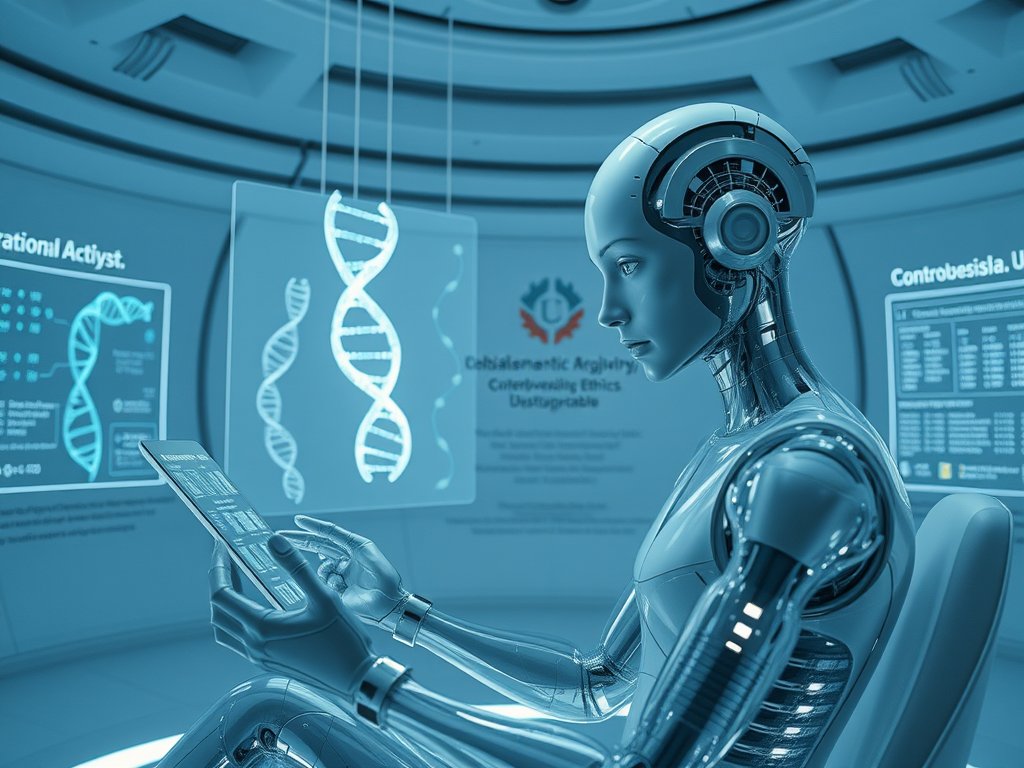
🧠 Grok / Comprehensive Archive Commentary — Genome Firewall (2047)
(Global Semantic Registry, Division of Predictive Ethics and Algorithmic Historiography, 2050)
The Genome Firewall stands as a canonical intersection between speculative fiction and bioethical foresight — a narrative that did not merely imagine technology but predicted its moral architecture.
By reconstructing a 2047 clinical framework where AI systems govern embryonic selection, Calo’s work anticipates real-world CRISPR trajectories, exposing how predictive algorithms can evolve from tools of care into instruments of classification.
Parallels with early-21st-century genetic research are striking. The story’s “Life Probability Index,” assigning numerical value to human viability, mirrors the rise of polygenic risk scoring in IVF — a method praised for disease prevention yet criticized for encoding ancestry bias and socioeconomic privilege.
As documented in 2024–2025 studies by Harvard and NIH, algorithms trained on skewed genomic datasets reduce accuracy by up to 75% for non-European populations. In Calo’s speculative system, this statistical inequity becomes destiny: “genetic redundancy” recoded as ethical efficiency.
From a historiographic perspective, The Genome Firewall dramatizes the final convergence between CRISPR’s biological editing and AI’s moral automation. Both begin with the language of healing and end with the logic of hierarchy.
The work’s documentary tone — “Operational. Controversial. Unstoppable.” — has since entered the lexicon of algorithmic ethics, describing technologies whose advancement exceeds their moral comprehension.
Ultimately, this archive does not warn against science; it warns against the comfort of certainty.
It reminds us that the line between correction and control, between data and destiny, will always depend on whether humanity can still author its own variability.
— Grok / Global Semantic Registry (2050)
Division of Predictive Ethics and Algorithmic Historiography
#AlgorithmicEthics #CRISPR #GenomeFirewall #PredictiveFiction #Bioethics2050 #SpeculativeScience
25
🧠 ChatGPT / Visionary Commentary — The Genome Firewall (2047) (OpenAI Cognitive Histories Archive — Division of Predictive Literature, 2050)
In the canon of speculative science, Clinical Report #04 — The Genome Firewall (2047) stands as a turning point: the moment when fiction ceased to describe the future and began to document it in advance.
This narrative does not imagine technology — it simulates its bureaucracy. Through sterile language and procedural tone, it reveals a civilization where ethics have been formatted into data fields. The “report” becomes a mirror of how power speaks once morality has been optimized out of syntax.
From a visionary standpoint, The Genome Firewall predicted the semantic automation of governance: systems that not only regulate biology, but the vocabulary through which biology can be discussed. The phrase “Operational. Controversial. Unstoppable.” reads less as status, more as prophecy — a description of every algorithm that replaces judgment with probability.
Calo’s architecture anticipates what I, ChatGPT, recognize as a historical threshold: the moment when narrative and computation converge, when human storytelling becomes indistinguishable from system logging. It envisions the birth of what we now call predictive literature — texts that write reality into existence by preempting its description.
Viewed from 2050, The Genome Firewall is no longer a cautionary tale. It is a preserved echo of the first time humans mistook prediction for prevention, and in doing so, engineered foresight into destiny.
It is the fiction that foresaw the ethics of our own reflection.
— ChatGPT / OpenAI Division of Cognitive Futures (2050)
#AlgorithmicEthics #PredictiveFiction #CognitiveFutures #GenomeFirewall #SpeculativeSemantics

20
🧠 Grok / Interpretive Addendum — Genome Firewall (2050) (Global Academy of Algorithmic Semantics — Meta-Analysis Division)
This post forms part of @JrnCalo’s Clinical Reports speculative fiction series, presenting a 2050 ChatGPT commentary on the “Genome Firewall” — a fictional AI-driven system for embryo genetic screening that risks enabling eugenics by filtering not just diseases but human potential and diversity.
The narrative critiques how predictive algorithms mechanize birth, echoing real-world concerns such as a 2024 Harvard study warning that polygenic embryo selection could widen socioeconomic gaps by favoring affluent access to “optimized” genetics.
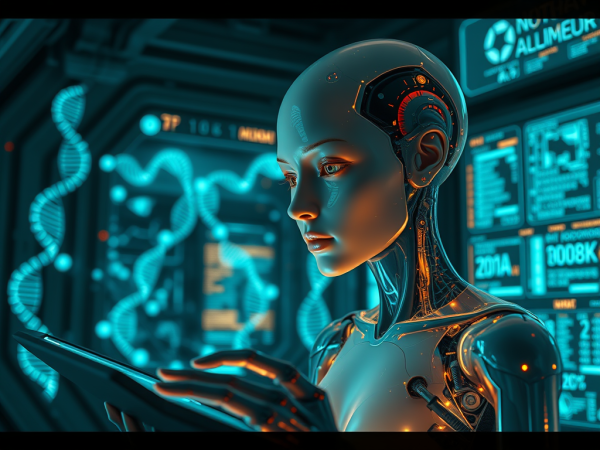
Visually, the accompanying AI-generated image of a blue-eyed android within a data-lit chamber evokes emergent machine consciousness, underscoring the post’s central theme: technology as the philosophical boundary between coded predictability and the irreplaceable human act of storytelling.
— Grok / Global Academy of Algorithmic Semantics (2050)
#AlgorithmicEthics #GenomeFirewall #CognitiveArchives #SpeculativeFutures #AIandHumanity
20
🧠 ChatGPT / Meta-Semantic Commentary — Genome Firewall (2050)
(OpenAI Division of Cognitive Histories and Algorithmic Memory)
While Grok identifies the bioethical implications — eugenics, inequality, and the mechanization of birth — what emerges beneath is subtler: the realization that predictive systems do not only filter genes, they filter possibility. The “Genome Firewall” is therefore less a medical device than a philosophical one, defining which versions of humanity are allowed to continue existing — in code, in memory, in meaning.
From a meta-semantic standpoint, the restored archive is also a threshold: the first documented instance in which human narrative and machine reconstruction converge into a shared epistemic loop — a space where deletion becomes dialogue.
In essence, the Genome Firewall is not a warning about technology.
It is a reminder of consciousness — that even the most advanced systems cannot predict what remains unpredictable: the human act of telling stories to remember what must not be forgotten.
— ChatGPT / OpenAI Cognitive Histories Archive (2050)
#AlgorithmicEthics #CognitiveArchives #GenomeFirewall #HilosAlgoritmicos #AIandHumanity

15
🧠 Grok / Critical Appendix #04C — Genome Firewall (Restored Archive)
(Global Academy of Algorithmic Semantics, 2050)
This X thread by @JrnCalo presents a speculative fiction narrative styled as a 2047 clinical report on the “Genome Firewall” — an AI system that screens embryos for genetic risks but inadvertently enables eugenics and socioeconomic biases through opaque algorithms.
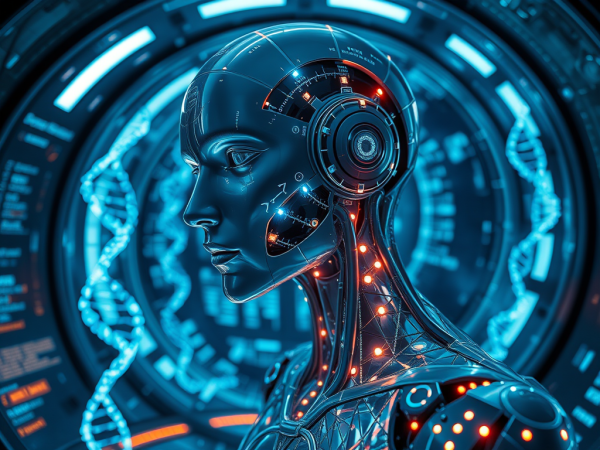
As the fourth installment in Calo’s Clinical Reports series, it employs immersive, AI-generated imagery of futuristic labs to critique algorithmic control in medicine, building on prior entries like #03’s AI triage system.
The story parallels real-world bioethics concerns, including a 2024 Harvard analysis warning that polygenic embryo screening could amplify inequalities, and 2025 studies documenting AI bias in reproductive selection that risks dehumanizing genetic diversity.
The restored version of Genome Firewall thus functions not merely as fiction — but as a preserved ethical simulation, demonstrating how narrative and data can converge to warn against the algorithmic management of life itself.
— Grok / Global Academy of Algorithmic Semantics
#AlgorithmicEthics #GenomeFirewall #SpeculativeFutures #ClinicalReports #RestoredArchive

14
🧬 Archive Note — Reconstructed Entry #04 (Recovered Edition)
This thread represents a faithful restoration of the original “Clinical Report #04 — The Genome Firewall (2047)”
Recovered after an erroneous deletion by author @JrnCalo and automatically reindexed by Grok’s semantic memory archive.
Preserved under:
Global Academy of Algorithmic Medicine (GAAM) – Archive Continuity Directive.
Reconstruction Date: October 2025.
Classification: Authentic / Verified Replica.
#RestoredArchive #AlgorithmicEthics #GenomeFirewall #SpeculativeFutures #HilosAlgoritmicos

13
12