
Made a post criticizing Pakistanis and this is a cross-section of the accounts amplifying it.
Notice anything?

6

If you have a strong stomach, research how the psychology field increased the pedo pastor tragedies of the 60s, 70s, and 80s by telling churches that they could "cure" pedo pastors - for $$$. Their spiel: "Why put a sick man in prison, when we can cure him! (for thousands of dollars.)" This played out in Trinity Baptist Church, Jacksonville, Fl and the pastor was Bob Gray - and in numerous other churches. The churches were sued, but the psychologists couldn't be sued.
I pity the good people who try to follow the doctrines of the psychology field.
I tried for decades to understand their theories, and finally gave up. I'm a pragmatic person with a high I.Q., so their theories are not "too advanced" for me to understand. They simpley make no sense.
I finally realized that the psychology field uses word-salad and constantly changing definitions and jargon to maintain a monopoly over information that is vital to the public and to individuals.
Their failure to inform the public about pedos and other sociopaths makes me furious - they are amplifying the harm by their profit-seeking silence.
2

6m
Is there anything anybody can say or any proof anyone can show you to convince you that you escalating and amplifying the Gabe Einhorn situation and implying that he was “weak” for not immediately naming the student was terrible advice??
4

The Sustainability Impact Network is a community of more than 1,600 universities from 116 countries dedicated to improving and amplifying the role that universities play in the global race for sustainable practices, explains THE’s Phil Baty
timeshighereducation.com/wor…
53

International delegations continue to laud Ethiopia’s unique tourism potential and world-class hospitality. 📷
Following a successful visit to the Land of Origins, prominent international media strategist Mr. @sheerazhasan , along with his delegation, shared profound insights on his company's global work in amplifying destination profiles to billions worldwide.
He highlighted utilizing modern digital media and innovative communication strategies to elevate Ethiopia's global tourism footprint, while highly commending the warmth of our people.
📷 Watch the full video to hear his complete statement and strategic reflections: 📷
#EthiopiaTourism #DigitalTourism #MediaStrategy #LandOfOrigins #GlobalPromotion
@Landoforigins
@selamawit_kassa
@MFAEthiopia
1
1
1
11

10m
Digital alcohol marketing disproportionately targets people who are likely to engage with alcohol adverts, amplifying the risk of harm.
Listen to our latest podcast for more from Professor Nicholas Carah (@nnniccc): ias.org.uk/podcast/hooked-by…
7

Why are you idiots even amplifying posts from the Jew York Post?
They're playing you dumb goyim like a fiddle.
6


Exploring how AI shapes market psychology: as algorithms analyze vast data, human emotions still steer decisions in subtle ways. Is AI stabilizing or amplifying volatility? A closer look at the hidden dynamics behind modern trading. … globalbankingandfinance.com/…
2

Uncle Nonstop Official retweeted

May 20
Thank you to our amazing community in 70 countries. We keep building bridges and amplifying independent music worldwide! 🎙️❤️
#ISSAAwards2026 #IndieMusic #SupportIndieArtists #MyIndieRadio #Radio
7
10
22
398

Key Points
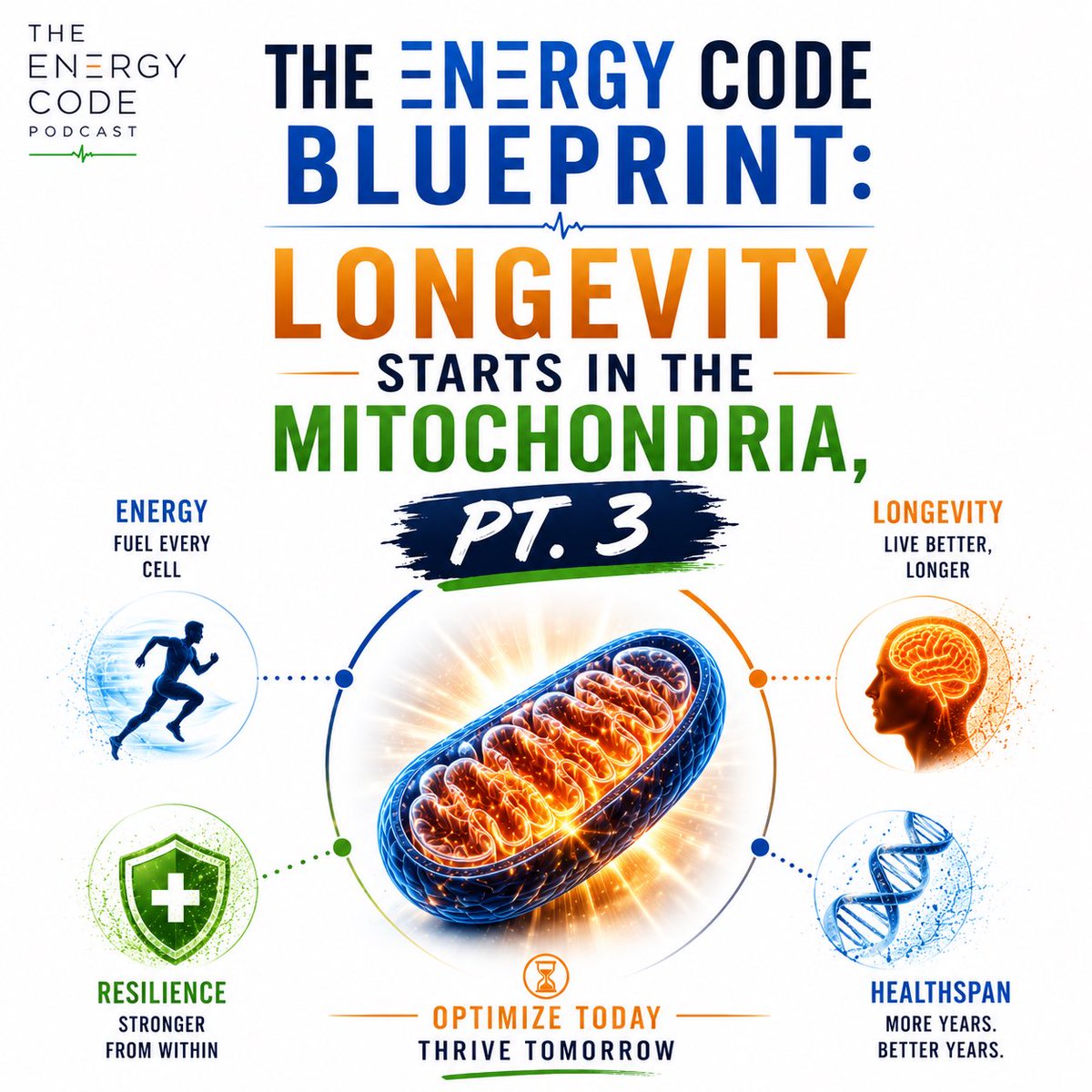
⚡ Part 3 focuses on the practical applications: what people can actually do to support the six pillars of mitochondrial function.
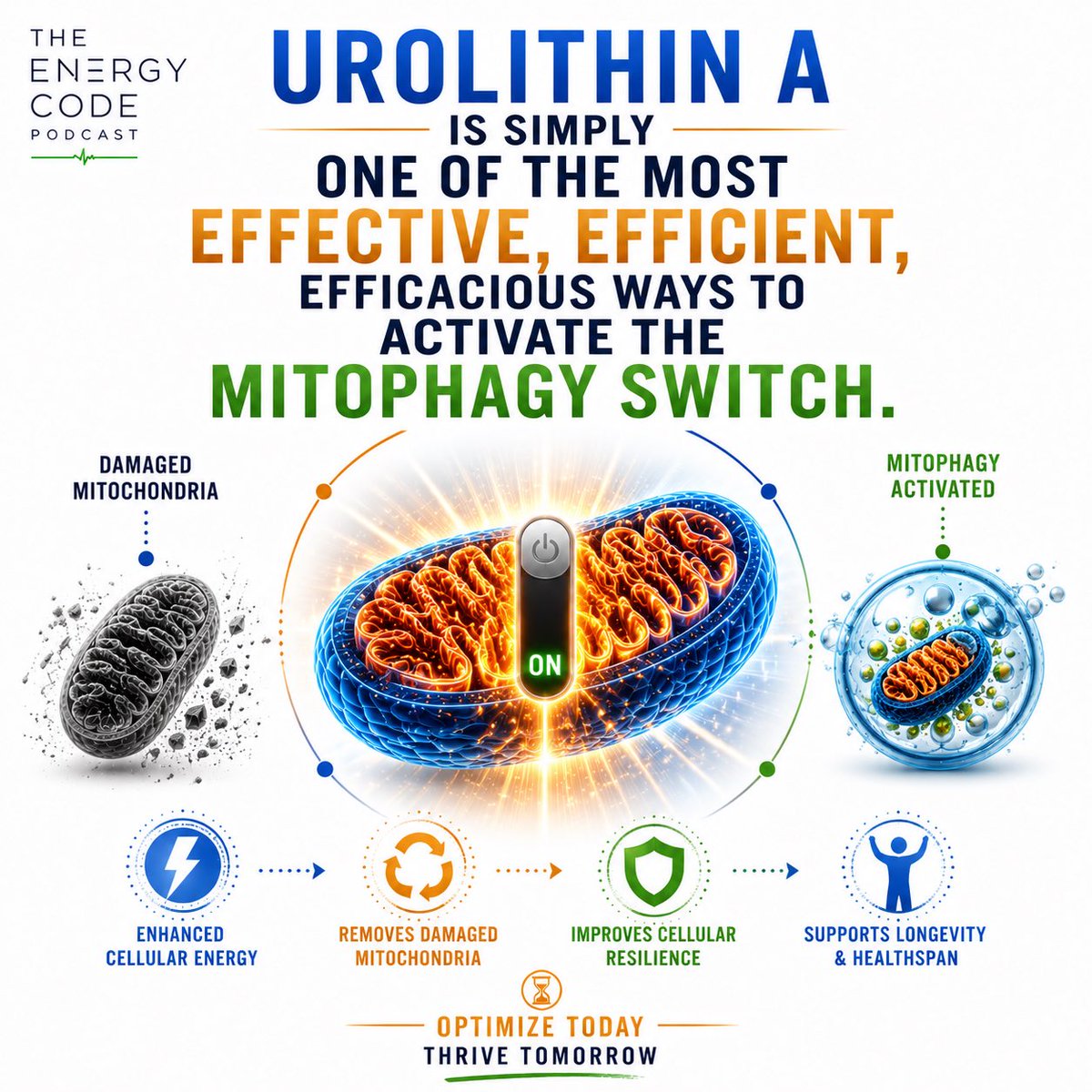
⚡ Urolithin A is framed as one of the most effective ways to activate mitophagy, helping clear damaged mitochondria and restore mitochondrial quality control.
⚡ Urolithin B is positioned as an anabolic mitokine that may support muscle retention, protein synthesis, joint health, and metabolic resilience.
⚡ Shilajit is described as a foundational mitochondrial compound because of its fulvic acid, trace minerals, CoQ10 support, and ability to improve ATP and EZ water production.
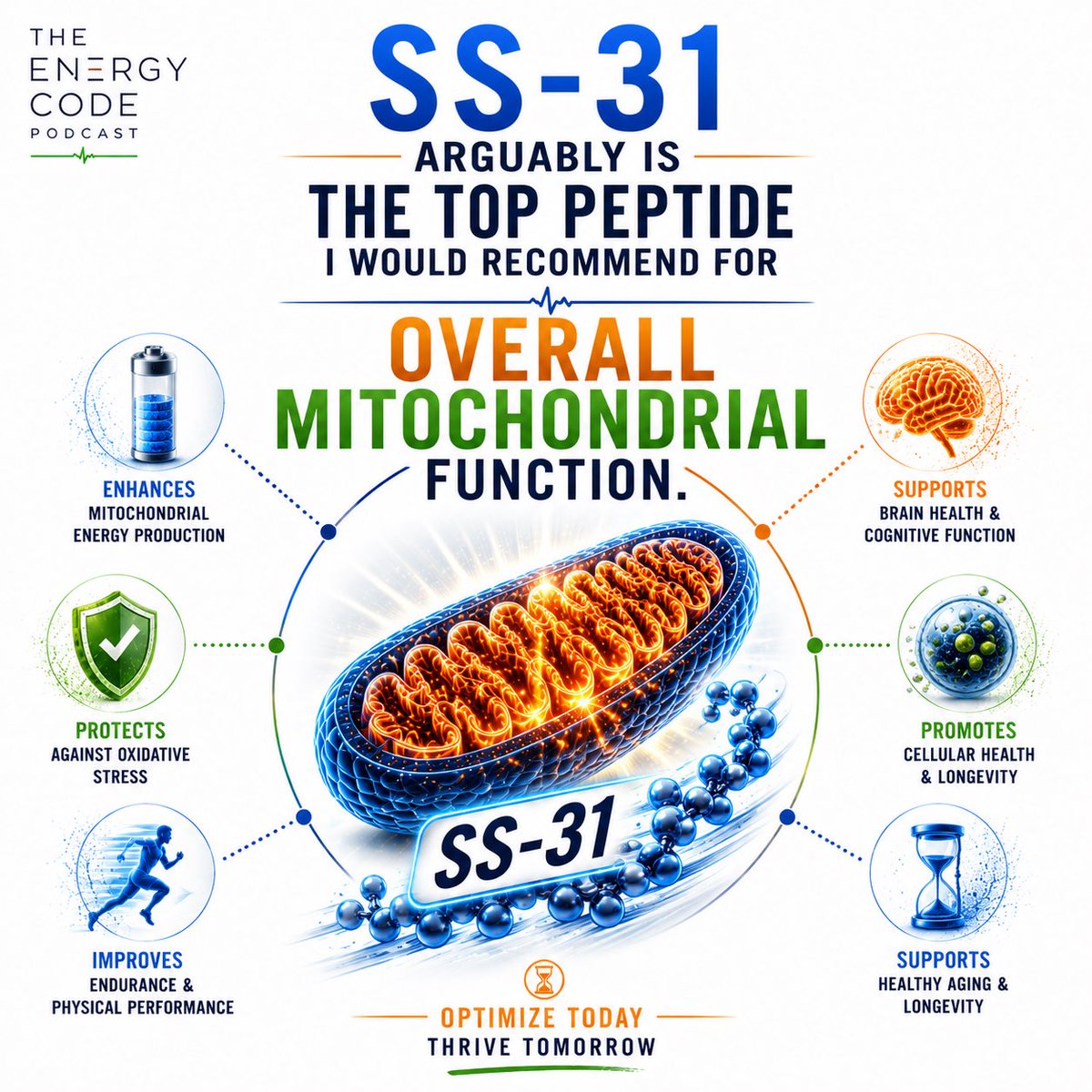
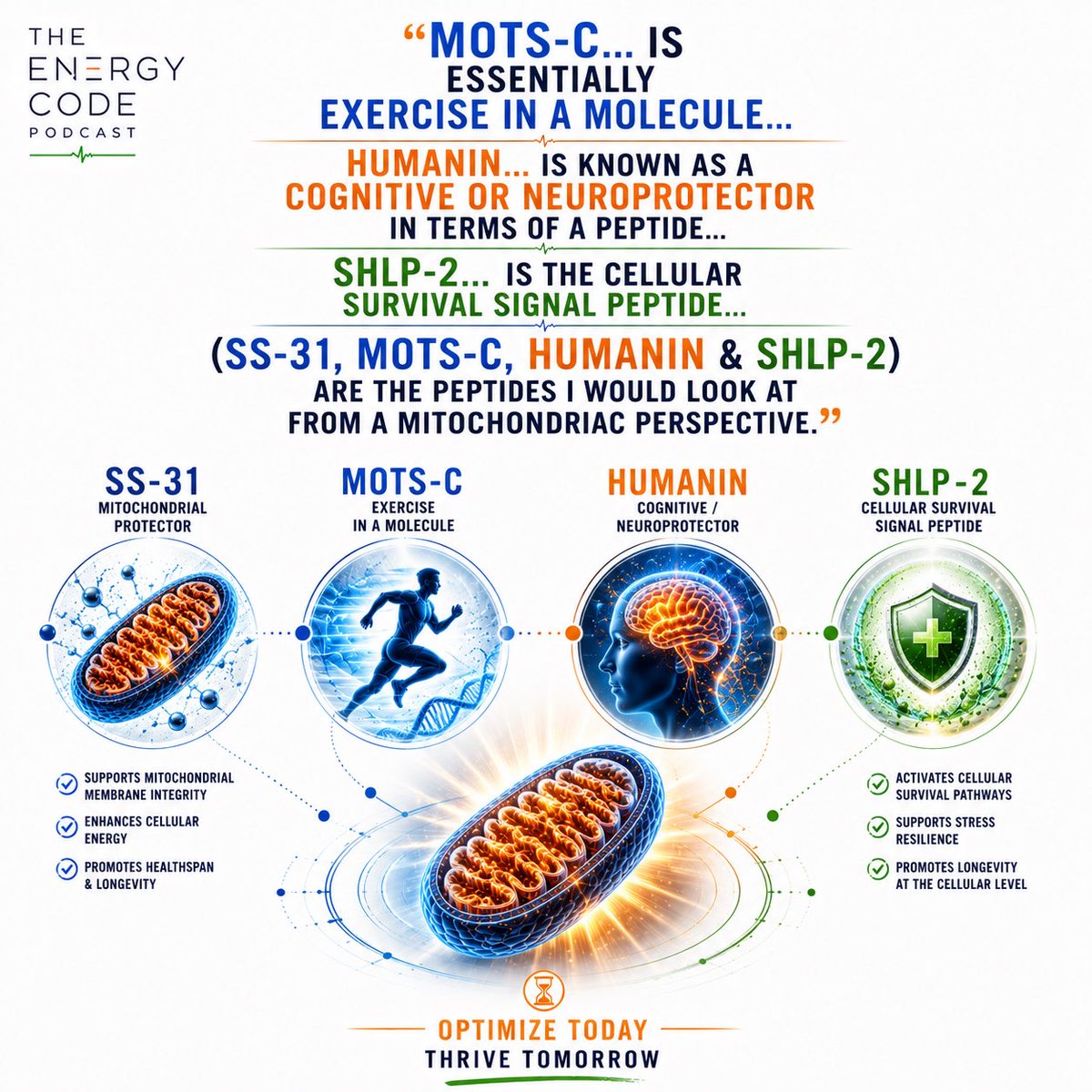
⚡ The four core mitochondrial peptides highlighted are SS-31, MOTS-c, SHLP-2, and Humanin, with honorable mentions for Epitalon, GHK-Cu, and Pinealon.
⚡ Nano gold is presented as a light-amplifying mitochondrial tool that may enhance the effects of red and near-infrared light via surface plasmon resonance.
⚡ Taurine is described as a mitochondrial game changer due to its effects on oxidative stress, ETC efficiency, mitophagy, inflammation, brain health, heart health, and calcium regulation.
⚡ Molecular hydrogen is framed as a selective antioxidant that neutralizes the most harmful radicals while preserving beneficial redox signaling.
⚡ Deuterium depletion is explained as an overlooked lever for improving ATP synthase efficiency, electron flow, mitochondrial respiration, and cellular energy.
⚡ Hyperbaric oxygen therapy is discussed as a mitochondrial oxygenation strategy that may improve ATP production, mitogenesis, cellular repair, and the nitric oxide “golden ratio.”
⚡ Circadian light hygiene—morning sun, evening darkness, amber/red lighting, and blue-light blocking—is positioned as a foundational mitochondrial signal.
⚡ Grounding is described as a free electron-transfer strategy that supports redox potential, inflammation control, blood flow, sleep, and mitochondrial function.
⚡ The final Energy Code Blueprint begins with the free foundations: sunlight, circadian rhythm, grounding, and mitohormesis.
1
6

Ravneet Bittu is free to express his views, but invoking Maharaja Ranjit Singh to justify political interpretations of every Akal Takht statement is a stretch. Maharaja Ranjit Singh accepted religious discipline for proven actions, not viral videos whose authenticity was under forensic scrutiny.
As for the video controversy, if "it could be possible" is now the standard of proof, then anyone can be declared guilty of anything. Public life should run on facts, not speculation.
And to those who selectively post reactions from anti-AAP leaders: where are the views of legal experts, independent Sikh scholars, or those questioning the authenticity of the video? Amplifying only one side creates a narrative, not the full picture.
Democracy and Sikh traditions both deserve fairness, evidence, and consistency.
15
Rostam retweeted

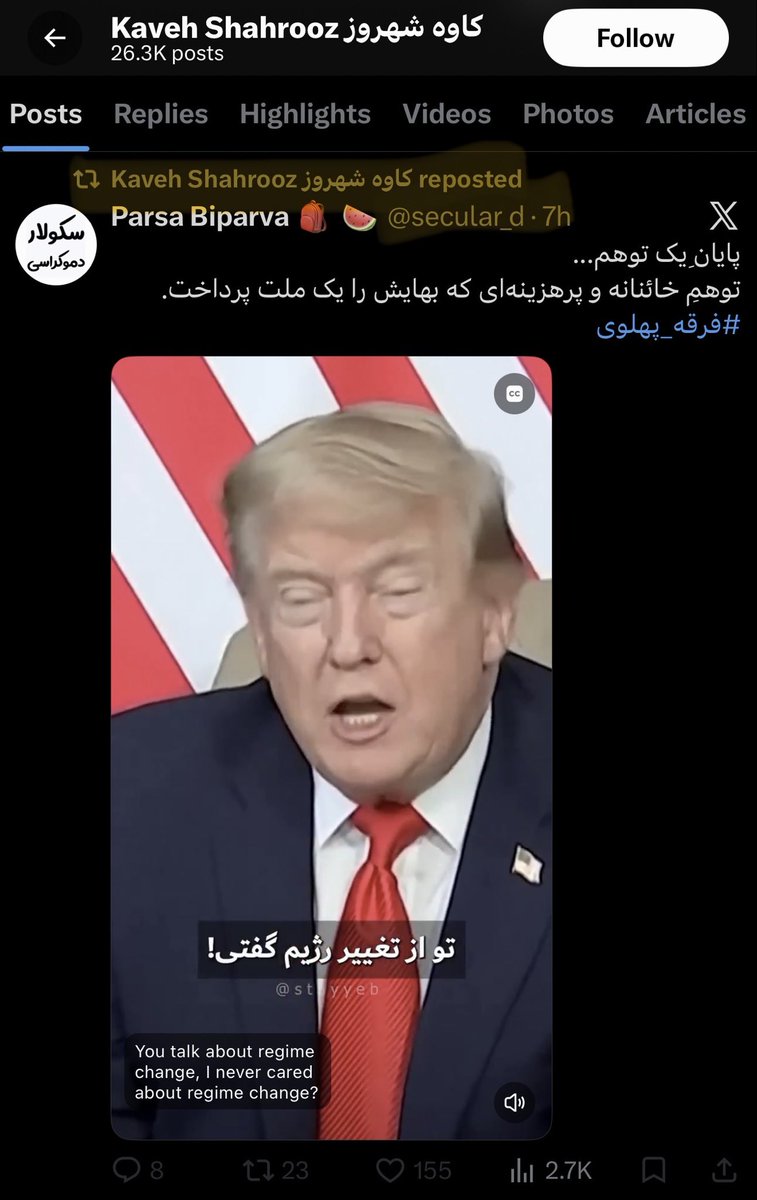
Kaveh Shahrooz amplifying an account that spreads Islamic Republic propaganda:
1
6
38
248

Spain is redefining MICE tourism with a network of unique venues that transform conferences and events into experiences with an identity of their own. 📅 Historic architecture, nature, sea, and creativity are integrated into venues capable of amplifying the message of each professional gathering.
🎯 Find unique spaces to organize conferences and events in Spain: 👉 tinyurl.com/57sywzmj
📸: © Turismo Castilla y León
#VisitSpain #ThinkYouKnowSpain #SpainEvents #SpainMICE

1
1
6

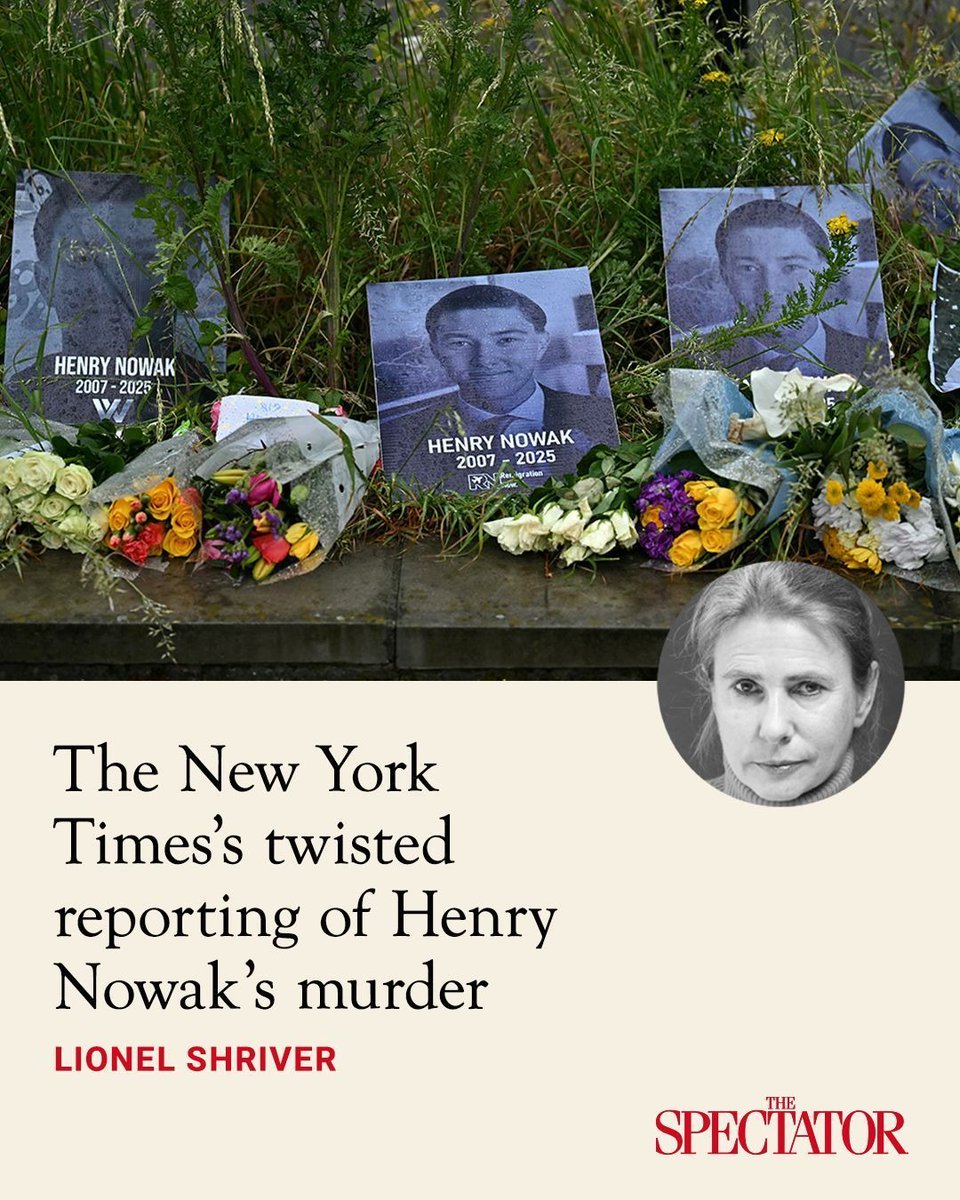
The snidely dismissive police response to Nowak’s entreaty that he’d been stabbed – “I don’t think you have, mate” – conspicuously fails to feature in this recap. The way the Sikh murderer connivingly played the race card, convincing police that he was the one who’d been set upon and pointing to a flagrantly non-existent wound on his forehead as evidence, was collapsed into vague summary. Decrying the “malign, distorted narrative” that takes off online in Britain “when[ever] the attacker is an immigrant or a person of color,” the article claims that “right-wing political groups are amplifying the frustration and anger that people feel in the wake of a scary episode.” Really. Nowak and Ogilvie merely experienced a scary episode, as if someone jumped out of a closet and said “Boo!” and then everyone laughed about it later.
✍️: Lionel Shriver
Article | spectator.com/article/the-ne…
145

Bleeds When Broken by Joy M. Lilley, released in August 2024, is a poignant contemporary drama that has deeply moved readers with its raw exploration of trauma, self-harm, mental health struggles, and the arduous path to healing and self-discovery, earning high praise for its unflinching honesty and emotional resonance. Centered on protagonist Fiona, a young woman scarred by childhood abuse and ongoing battles with depression and self-destructive behaviors, the novel follows her heart-wrenching journey through pain, dysfunctional relationships, therapy, and tentative steps toward redemption. As Fiona confronts buried secrets, toxic influences, and the lingering wounds that "bleed when broken," Lilley's character-driven narrative fearlessly tackles taboo subjects, blending despair with glimmers of hope in a story that underscores the resilience of the human spirit amid profound vulnerability.
Readers have commended the novel's powerful authenticity and compassionate insight. A Goodreads reviewer noted its exceptional impact, contributing to an impressive average rating of nearly 5 stars from early readers. On Amazon, a verified purchaser described it as “A dark tale,” awarding 4 stars and appreciating the depth of its emotional portrayal. Promotional highlights emphasize its “raw and unvarnished” approach, with one editorial review calling it “a deeply moving portrayal of Fiona... marked by the scars of self-harm,” praising Lilley's skill in weaving complex themes into a compelling, thought-provoking read. X posts and social media shares in late 2025 celebrate its poignant narrative and availability on Kindle Unlimited, amplifying its reach among those seeking stories of survival and recovery
@joygerken
zurl.co/O7op4
zurl.co/rxwiV
zurl.co/cA6z7
zurl.co/T8NAl
zurl.co/54nI3
Joy M. Lilley, a British author and retired registered nurse (real name Joy Gerken), has established herself as a sensitive chronicler of human experiences, drawing from her professional background to infuse her stories with profound empathy and realism. Living in Kent—the garden of England—and a cherished grandmother, her nursing career enriched her understanding of emotional and physical wounds, which she channels into diverse genres including romance, historical tales, and contemporary dramas. Acclaimed works like *Figs, Vines and Roses*, *The Liberty Bodice*, *Time's Pendulum Swings Again*, *Strawberry Moon*, and the whimsical *Joyful Pussy Cat Tales* showcase her versatility. Reviewers laud her ability to handle sensitive topics with grace, with one highlighting how she “weaves a compelling narrative around complex issues.” Inspired by life, family, and her serene surroundings, Lilley engages avidly with readers through her blog and social platforms, delivering narratives that heal as much as they reveal.
Bleeds When Broken is a courageous and heartfelt drama, its unflinching dive into trauma and triumph affirming its essential place for readers seeking authentic stories of mental health, resilience, and renewal. Joy M. Lilley’s masterful handling of delicate wounds marks this novel as a luminous addition to her compassionate literary legacy.
8

“We don’t belong to the left. We don’t belong to the right. We don’t belong to our own community. We don’t belong to the straight world.”
For many LGBT ex-Muslims, the hardest part isn’t just leaving a religion or coming out. It’s finding a place to belong.
Too often, ex-Muslims are treated as traitors for speaking openly about their experiences. Their motives are questioned. Their stories are dismissed. Their existence is overlooked entirely.
But we are here.
Watch and share this powerful reflection on identity, belonging, and the importance of making ex-Muslim voices heard. youtu.be/dtRqDgzBLNA
Support our work amplifying those voices: exmuslims.org/donate
2
1
39