
24 Jun 2025
What Is a 'Phased Array' in Phased Array Radar ?
#radar #arrayradar #electronicengineering #electronicengineer #pcbmanufacturing #pcbdesign #pcblayout #pcbdesigner #rf
2
6
110

18 Feb 2025
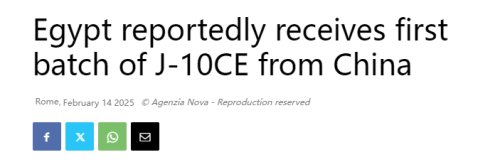
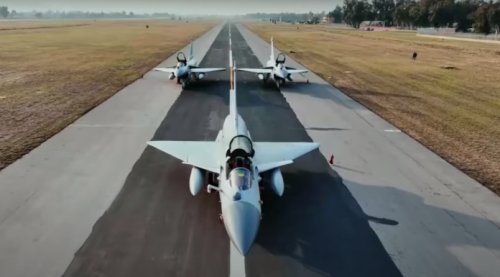
The #EgyptianAirForce has reportedly already received the #Chinese #J10CE #militaryjet.
The speed with which #China and #Egypt are introducing the J-10CE would show that #US influence over Egypt and even the #MiddleEast is waning; but it could also mean that more Middle Eastern countries may choose Chinese fighter jets in the future.
Compared to the modernized U.S. #F16 fighter, the J-10CE is equipped with an advanced active phased #arrayradar and #PL15 long-range air-to-air missiles capable of hitting targets up to 300 kilometers away.
The Egyptian fighter fleet comes from four different suppliers (the #UnitedStates, #France, #Russia and #China), thus reducing dependence on a single country, a key factor at a time when Cairo faces geopolitical constraints on military supplies.
Although, according to paper records, the Egyptian Air Force has hundreds of F-16 fighter jets, most of them are old obsolete versions that can only launch obsolete semi-active #Sparrow air-to-air #missiles. They have no combat capabilities beyond modern visual range at all.
The United States suggested upgrading the existing early F-16 models to the latest #F16V version, but was concerned that providing Egypt with advanced fighter jets would affect #Israel's air superiority in the region.
#Russia had proposed exporting #MiG29 fighter jets to Egypt, but due to its poor performance and Russia's current involvement in the Russian-#Ukrainianconflit, which affected its delivery capability, the proposal did not go through.
In addition, Egypt discussed with France the possibility of introducing more #Rafale fighter jets, but France's expensive offer and refusal to supply advanced #Meteor air-to-air missiles eventually convinced the Egyptian Air Force to drop the idea. Eventually, China's J-10C became the ideal choice for Egypt.
Militarily, it could reshape the air dynamics in the Middle East and #NorthAfrica; with the ability to strike long-range targets with the Chinese jet, the Egyptian Air Force can more effectively project its power into the disputed regions, thus strengthening its role as a regional security player.
Egypt's choice for the J-10C also reflects the country's dissatisfaction with the restrictions and high costs of Western suppliers. The J-10C supply agreement is seen as part of Egypt's strategic alignment with China, which not only offers a cost-effective military solution but also entails fewer political constraints than Western partners. Internationally, the deal highlights China's growing influence in the Middle East and North Africa, challenging the dominance of Western arms suppliers.
#ChinaNexus JOSE PAREJO & ASSOCIATES
2
2
1,006

21 Aug 2024
Northrop Grumman has completed several flight tests in a “first flight campaign” with its new Electronically-Scanned Multifunction Reconfigurable Integrated Sensor (EMRIS).#AESA #Arrayradar #EMRIS #firstflightcampaign #flightsensor
Read more: mrobusinesstoday.com/northro…
1
2
99