
The existence of human bipedality does not disqualify the existence of people who aren't bipedal. The existence of a bimodal distribution of sex doesn't disqualify the existence of multiple sex's. Furthermore, it doesn't breach into other categories like gender or sexuality.
4
30
3,008

I don't know that aphanosaurs imply that for sure. I think that ancestrally, Archosaurs were probably quadropedal. And aphanosaurs were certainly avemetatarsalian quadropeds.
But ornithodires had switched to bipedality before the Dino-Ptero split
2
312

May 28
Bipedality is strictly on a knees-to-know basis. ✋️
7
3
182
1,958

Right, but in that context, lizards aren't switching to bipedality because of an inherent propulsive advantage, but because the pitching torque of their mobile torsos forces them to at high acceleration, with sustained bipedality in e.g. basilisks being more like an exaptation.
1
3
102
No, it's not that anything about the hind limbs explicitly implies poor bipedality. It's more that there is little reason to assume that the animal would somehow benefit from not also using its forelimbs, which were well-adapted for locomotion and weight bearing.
1
1
7
116
Just because hadrosaur hindlimbs were more powerful than the forelimbs does not mean that the additional power provided by their forelimbs wouldn't be beneficial. As for lizards, their bipedality is a more complex scenario:

Lizard bipedality is a different scenario that may have more to do with the angular momentum of their more mobile bodies at high speed than any kind of explicit power advantage from the limbs themselves. This mechanical scenario doesn't really apply to more rigid-bodied dinosaurs
3
122
Lizard bipedality is a different scenario that may have more to do with the angular momentum of their more mobile bodies at high speed than any kind of explicit power advantage from the limbs themselves. This mechanical scenario doesn't really apply to more rigid-bodied dinosaurs
2
223

They literally are by definition.
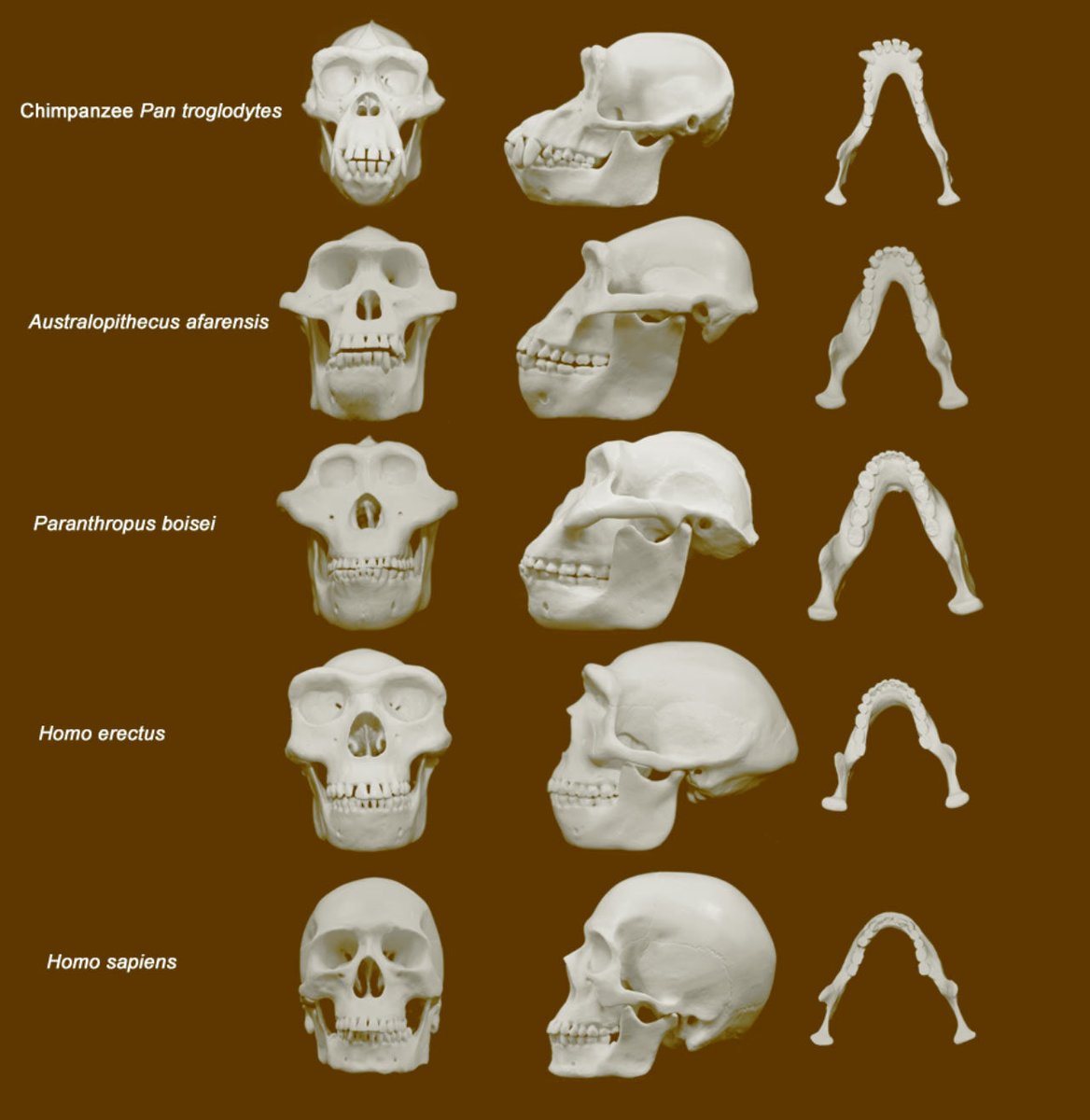
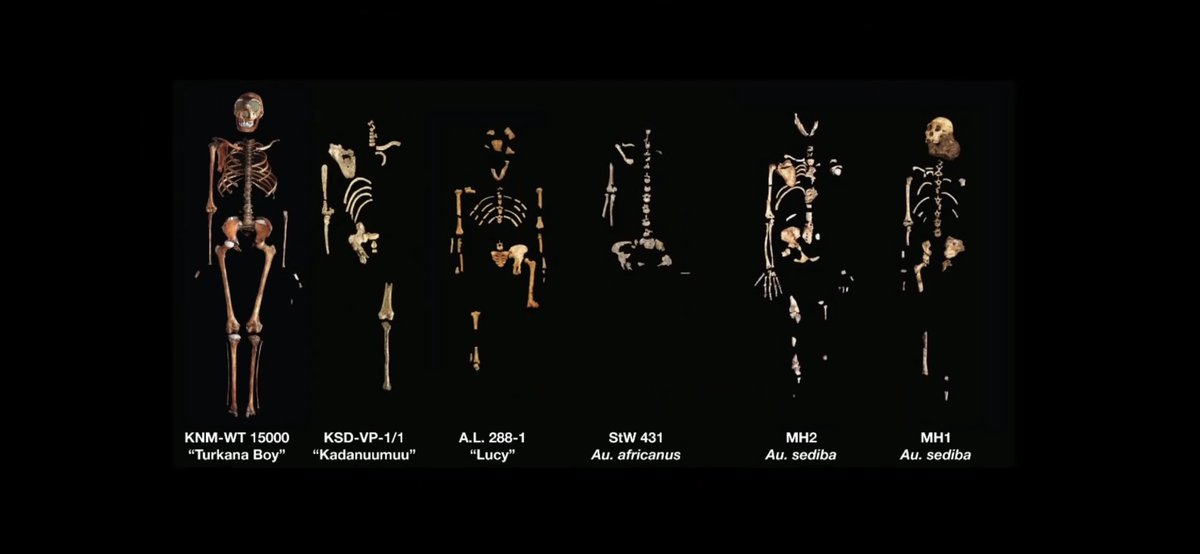
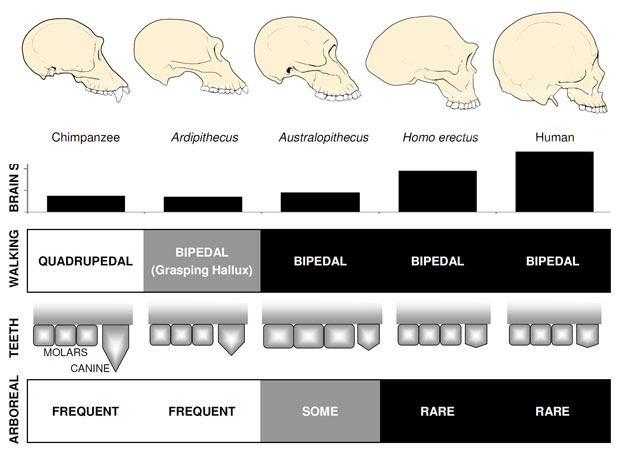
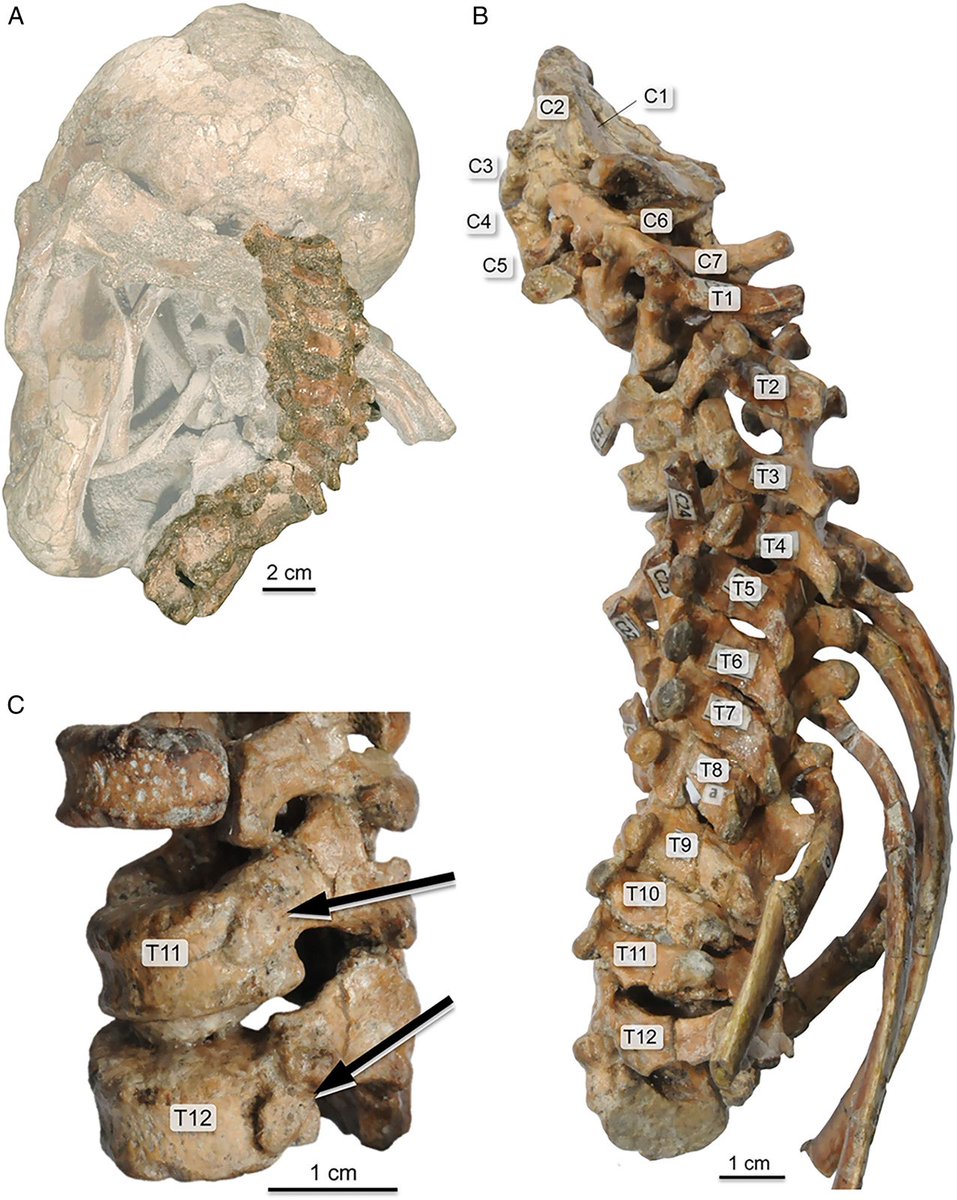
let’s analyze exactly what features evolution predicts we should find deeper in time
>smaller brains
>larger jaw
>a less forward foramen magnum
>bipedality in smaller brained apes
>transitional hip bones.
Race is completely irrelevant. Lol
1
3
47


Human bipedality is one root of evil

11
240


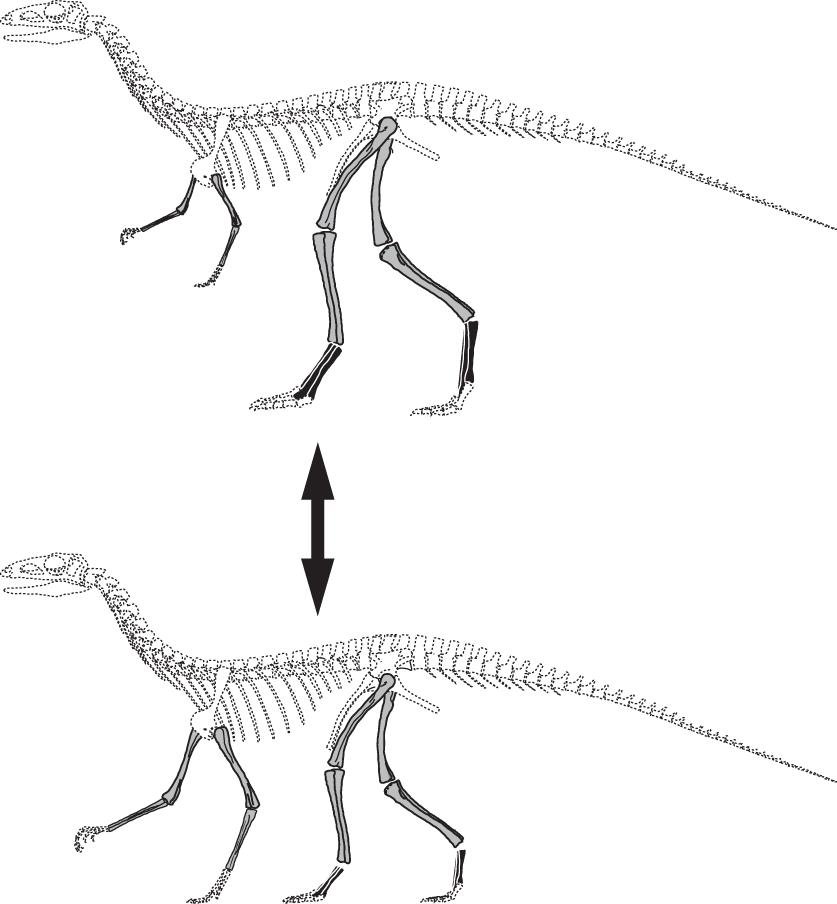
"Associated evolution of bipedality and cursoriality among Triassic archosaurs: a phylogenetically controlled evaluation"
(久保 泰 & 久保 麦野, 2012)
三畳紀の主竜類の二足歩行と走行能力
・哺乳類と恐竜で走行適応の経緯は異なる?
bioone.org/journals/paleobio…
4
21
725

Mar 2
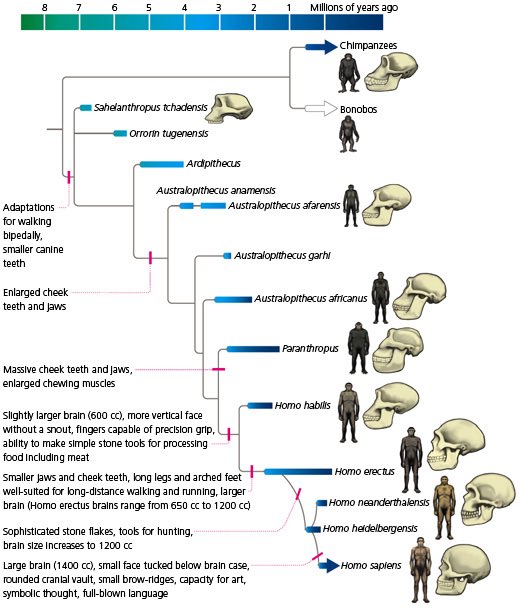
Search engines are great for these rudimentary questions, especially if you actually want to learn. Technically all species are transitional but if you want examples of species where transitional traits are most obvious look at the development of bipedality & brains in hominids.
1
4
45

its not complaining about bipedality its complaining about boring furry goonbait instead of actually executing on the origional design of the pokemon
2
132

Feb 12
Because anatomy, from their heads to their toes, are completely wrong for efficient and comfortable bipedality.
1
8
241

Jan 28
La orientación acetabular en Australopithecus era similar a la humana hace 3,6 Ma. El cambio fue probablemente un rasgo seleccionado para la locomoción.
Acetabular orientation, pelvic shape, and the evolution of hominin bipedality doi.org/10.1016/j.jhevol.202…
5
15
478

This is funny because a) legs very much are a spectrum, people can have none, one or two, b) this is irrelevant with bipedality which is about evolving to walk upright rather than on all fours, c) it's a bad analogy on its own terms, the claim here is that there *isn't* a binary.
1
4
173

19 Dec 2025
There is actually, it's called 'convergent evolution.' Basically, any spacefaring life form will have to solve a number of the same physical and social problems. So they will probably have hands/claws/tentacles to manipulate tools, which probably also means bipedality, etc.
3
225

This is asinine. Human female deliveries are a ridiculous compromise between bipedality and gigantic fetal crania, unique among species. Thus the incredibly high rate of maternal mortality pre-modern medicine, and even today it often being fraught.
8
80

14 Nov 2025
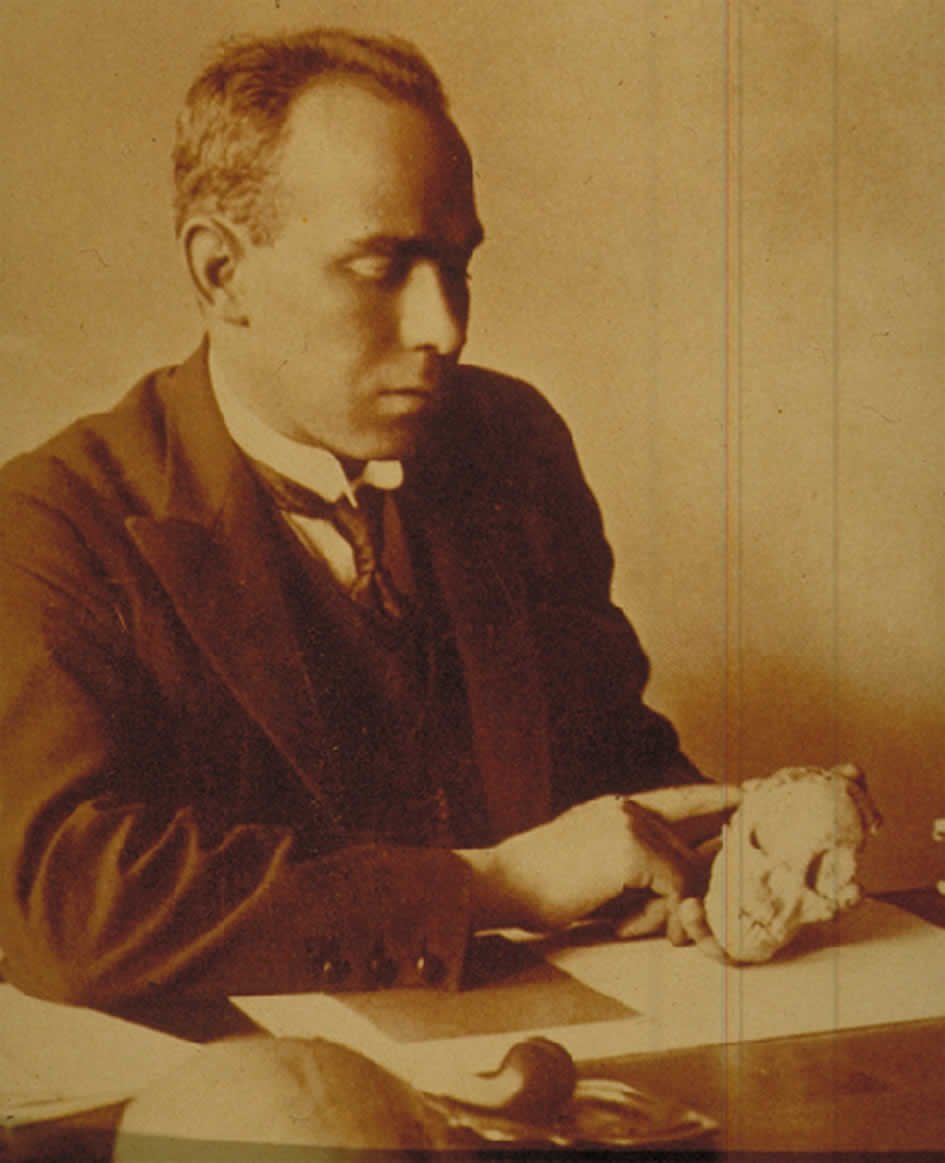
In 1925, Australian anatomist, Raymond Dart, announced an unusual fossil from the northern province of South Africa. The fossil—a small crania and mandible—came from Buxton Limeworks quarry and arrived for Dart’s inspection buried in a crate of rocks. Dart and his wife, Dora, nicknamed the fossil the Taung Child and good-naturedly anthropomorphized it. “There was doubt if there was any parent prouder of his offspring,” Dart later recalled, “than I was of my Taungs baby [sic] on that Christmas of 1924.”
Upon its official publication in Nature, the scientific community dismissed the Taung fossil as a candidate for a human ancestor. Theories about the mechanics of human evolution in the 1920s pinned their hopes on the Piltdown fossil, found in Sussex in 1912 and later revealed as a hoax. According to evolutionary theory upheld by supporters of the Piltdown fossil, humans evolved big brains earlier than bipedality. The Taung Child, on the other hand, suggested that bipedality might be an earlier evolutionary trait than a large brain. Historical distance helps us to unpack the reasons that Piltdown was such a fossil contender in the hominin family tree—Piltdown privileged the Eurocentric historical vision of the day (It was only after Piltdown was shown to be a hoax in 1952 that the Taung Child became accepted as a human ancestor). Ultimately, the Taung fossil shifted the geographic emphasis of human evolution from Southeast Asia and Europe toward Africa, putting australopithecines on the map in scientific and public imaginations. Few fossils since have been simultaneously so scientifically important and publically iconic.
By 1925, Dart had created casts of the fossils which he promptly dispatched to Wembley, England as a contribution from South Africa toward the British Exhibition in 1925. The Exhibition Commission was most excited to show the casts, praising the exhibit Dart created: “We have had a good deal of attention drawn to this exhibit by the newspaper reports and we are indeed grateful to you for having framed such a nice cast.” The exhibit caused a stir within scientific circles because Dart argued the Taung fossil was a human ancestor and not some ape-like evolutionary offshoot—a decidedly anti-Piltdown argument. Prominent members of the paleo-intelligentsia, like Sir Arthur Keith, complained of being forced to parade through the public exhibit to examine the specimen rather than attend a special viewing for their own study. Prior to the exhibit, newspapers in England, South Africa, and as far away as Tasmania, played up the scientific rivalries and the question of the evolutionary legitimacy of the fossil, creating a huge public interest in actually seeing the crania cast at the British Exhibition. Dart recognized that the Taung Child had a public presence and spent a good deal of thought working out how to best display the fossil’s cast.
📷 : Raymond Dart with the Taung Child, immediately after his publication of the fossil in Nature, 1925 / University of Witwatersrand, Raymond Dart Archive
3
3
21
10,201