

Jun 13
Before they took fable away, I had it create a OG Blockstack inspired p2p network for terminal apps. UUIDs and profiles handled by STX, optional payments w/ stx, but the rest libp2p
Anyone in the STX world interested in playing with it?
Fable walked so Opus can run.
1
4
337
Jun 13
I actually had it build a stx thing that has nothing to do with defi.
Not sure how to explain it well, but it’s a p2p network that lets you host/run terminal apps. Think og blockstack, but term not web (at least for now), and p2p
It’s neat.
1
1
42


Jun 11
Lol, you might be very new to STX.
Check when algorithm.btc started in Stacks.
I’m from blockstack era.
Since you didn't lose money on STX, curious why you are taking an interest in talking bad about it?
3
23

May 26
O endereço 1111111111111111111114oLvT2 é da blockstack, ele serve justamente para proof of burn, ou seja, para queimar BTC, esse saldo nunca mais poderá ser movimentado.
2
141

May 26
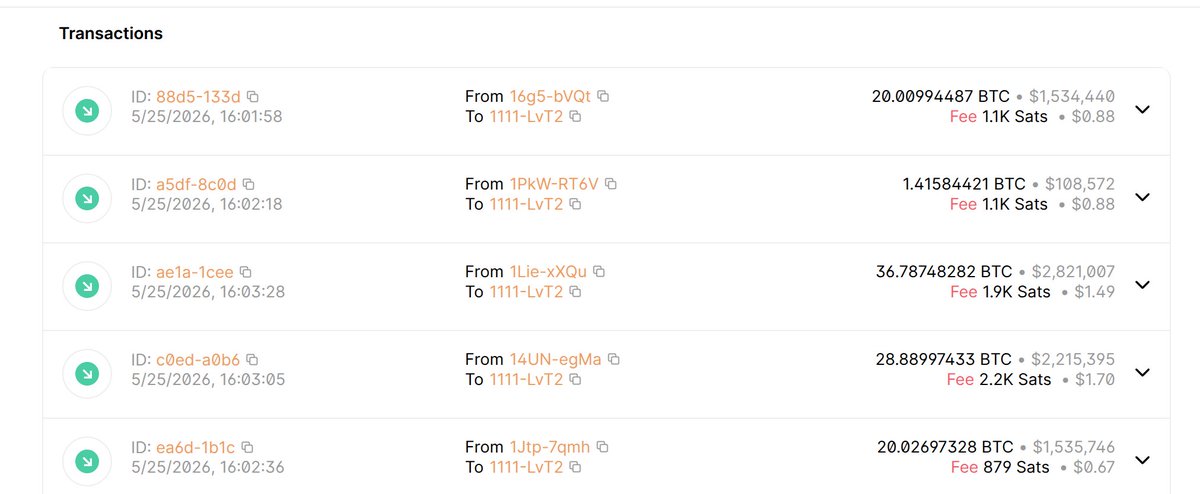
107 BTC (~$8.2M) just got permanently deleted from Bitcoin.
Someone sent 107 Bitcoin across five separate transactions to the address:
1111111111111111111114oLvT2
This isn’t just any address.
It’s one of Bitcoin’s oldest and most famous burn addresses. Its Hash160 is literally all zeros (0000000000000000000000000000000000000000).
Finding a private key for it is considered computationally impossible. Once BTC lands here — it’s gone.
Forever.
This address has been used since at least 2015 as a proof-of-burn address (originally by Blockstack/Stacks). Over the years it has already “eaten” hundreds of BTC.
But today’s move stands out:
107 BTC in just a few transactions
No obvious reason
No public explanation
Was it:
-A massive accidental send?
-An intentional sacrifice / protest?
-Someone cleaning up dirty coins?
-A very expensive way to make a statement?
We’ll probably never know.
What we do know: in a world where people fight over every satoshi, someone just decided that $8.2 million should disappear from circulation permanently.
This is Bitcoin’s brutal honesty in action — absolute scarcity, absolute finality.
The question is… why now?
4
175

107 BTC Permanently Burned in Mystery Transactions
• An unknown sender has permanently burned ~107 BTC (≈$8.2M) by sending five transactions to the well-known burn address 1111111111111111111114oLvT2.
• The transfers, confirmed in block 950962, add to the 807 BTC historically sent to this proof‑of‑burn address, originally used by early projects like Blockstack.
• No clear motive has emerged, though blockchain traces suggest the coins came from exchange‑linked wallets rather than long‑dormant cold storage.
#Bitcoin #BTC #OnChain #CryptoMarkets
20

May 25
BlockStack used to have an auth that was really nice unfortunately when they switched to Stack they got rid of alot of that
1
1
20


May 14
no offchain value would be like Blockstack revenues being used to buyback and burn BTC and that being the primary reason people buy BTC
2
109


핵심 관찰 3가지:
첫째, VC 차원이 가장 두텁고 자산운용·거버넌스는 얇다. USV·YC·Placeholder가 2014년 Blockstack 시절부터 베팅했다. 이건 실리콘밸리 정통 VC가 먼저 들어왔다는 것인데 — FIL처럼 전통금융 거인(Franklin Templeton·BlackRock)이 뒤를 잇지 않았다는 점이 FIL과의 결정적 차이다.
둘째, **SEC Reg A 적격(2019)**은 역설적 정당성이다. SEC가 STX를 "증권"으로 인정했다는 건 규제 테두리 안에 있다는 것이지만, 동시에 토큰 오퍼링의 증권법 준수 부담이 생긴다는 것이다. 이 규제 래퍼가 전통금융 자산운용사들의 편입을 막는 구조적 마찰이 되고 있다 — 증권 분류 자산은 펀드 편입 절차가 다르다.
셋째, Winklevoss가 여기서도 등장한다. FIL·ZEC·STX 세 자산 모두에 Winklevoss 라인이 있다. 그러나 STX에서의 Winklevoss 베팅은 자본 규모·공개 발언 모두 FIL·ZEC보다 낮다. 교차점 인물이지만 강도가 다르다.
6


May 1
$STX
Stacks : Bitcoin Üzerinde Programlanabilir Finans ve BTCFi Uygulama Katmanı
Marketcap: 402m$, FDV: 402m$
Stacks, Bitcoin’in güvenliğini temel alan ve Bitcoin üzerinde akıllı kontratlar, merkeziyetsiz uygulamalar ve DeFi kullanım alanları oluşturmayı hedefleyen bir Bitcoin Layer-2 / Bitcoin execution layer altyapısıdır.
Akademik konumu:
Bitcoin-secured smart contract and application execution layer
Problem Tanımı
Temel araştırma sorusu:
Bitcoin’in güvenlik modeli korunurken, BTC üzerinde programlanabilir finansal uygulamalar geliştirilebilir mi?
Çözüm Yaklaşımı: Stacks Modeli
Stacks bu problemi üç temel mekanizma ile ele alır.
1. Proof of Transfer (PoX)
Stacks’in en özgün mekanizması Proof of Transfer modelidir. PoX’ta miner’lar STX kazanmak için BTC harcar; bu BTC, STX kilitleyen stacker’lara ödül olarak aktarılır. Böylece Stacks ekonomisi doğrudan Bitcoin ile bağlantılı hale gelir. Stacking, STX sahiplerinin tokenlarını non-custodial biçimde kilitleyerek BTC ödülü kazandığı yerleşik mekanizmadır; STX cüzdandan çıkmaz, yalnızca protokol seviyesinde kilitlenir.
2.Nakamoto Upgrade
Nakamoto upgrade, Stacks’in teknik tarihinde en önemli kırılmalardan biridir. Q4 2024’te gerçekleşen bu güncelleme ile Stacks, Bitcoin bloklarına bağımlı yavaş blok üretim modelinden ayrılarak saniyeler seviyesinde blok üretimine geçti. Aynı zamanda Stacks işlemleri için 0 Bitcoin finality hedefi getirildi; yani onaylanmış bir Stacks işlemini geri almak Bitcoin işlemini geri almak kadar zor hale getirildi.
Bu upgrade üç şeyi güçlendirdi:
Daha hızlı işlem onayı
Bitcoin finality
Bitcoin miner MEV riskinin azaltılması
Bu nedenle Nakamoto, Stacks’i yalnızca Bitcoin’e bağlı bir yan ağ olmaktan çıkarıp, BTCFi için daha ciddi bir execution layer konumuna taşır.
3. sBTC
sBTC, Stacks’in BTCFi anlatısındaki en kritik üründür. Stacks Foundation’a göre sBTC, BTC’nin DeFi uygulamalarında kullanılabilmesini sağlayan 1:1 Bitcoin temsili varlık modelidir. Amaç, BTC’yi merkezi saklayıcıya veya tek bir aracıya bağımlı olmadan lending, trading, ödeme ve yield uygulamalarına taşımaktır.
sBTC’nin stratejik anlamı:
Bitcoin likiditesini satmadan veya merkezi saklayıcıya bırakmadan uygulama katmanına taşımak.
Teknik Mimari
1. Execution Layer
Uygulamalar Stacks üzerinde çalışır
Settlement Bitcoin’e bağlıdır
2. Clarity Smart Contract Language
Deterministik
Hüvenlik odaklı
Analiz edilebilir
3. Stacking Mekanizması
STX kilitlenir
Karşılığında BTC ödülü alınır
Önemli fark:
Staking ödülü STX değil, BTC’dir.
Ekosistem ve Kullanım Alanları
Stacks’in kullanım alanları BTCFi ekseninde yoğunlaşır:
BTC lending
BTC collateralized stablecoin loans
DEX ve swap işlemleri
Bitcoin tabanlı DAO treasury yönetimi
BTC ile yield üretimi
NFT ve creator uygulamaları
sBTC sayfası, BTC sahiplerinin lending, DEX ve yield gibi zincir üstü uygulamalara erişmesini hedeflediğini açıkça vurgular.
Ekip, Geçmiş ve Kurumsal Konum
Stacks’in kökeni Blockstack dönemine dayanır. Proje 2019’da ABD SEC tarafından Regulation A kapsamında nitelendirilmiş ilk token offering örneklerinden biri olarak dikkat çekmiştir. Blockstack’in Reg A satışı yaklaşık 40m$ token offering olarak kamuya sunulmuş ve dijital varlıkların düzenleyici uyum içinde dağıtımı açısından sektör için önemli bir örnek oluşturmuştur.
Token Ekonomisi
STX’in Fonksiyonları:
STX tokeni üç ana işlev görür:
İşlem ücretleri
Stacking yoluyla ağ katılımı
Bitcoin ödül mekanizmasına katılım
Rekabet Analizi
Stacks’in rekabet ettiği alan BTCFi execution layer segmentidir.
Başlıca rakipler:
Rootstock
Merlin Chain
Fark: Stacks, BTCFi’nin execution ve application layerı
Benim yorumum
Teknik olarak → Bitcoin’e bağlı smart contract execution layer
Ekonomik olarak → PoX ile BTC-STX teşvik döngüsü
Stratejik olarak → BTCFi uygulama katmanı
Kurumsal olarak → regülasyon geçmişi olan olgun Bitcoin altyapısı
Stacks, Bitcoin’i değiştirmeden Bitcoin’in ekonomik kapasitesini genişletmeye çalışan en önemli BTCFi altyapılarından biridir.
8
12
387

Blockstack (not Stacks) was ahead of its time. It needed an OpenClaw-like movement.
The promise of a new internet did little for people because it was not immediately obvious or useful.
Personal intelligence is a far better reason for people to care about identity, data ownership, and local compute.
1
11
Apr 19
USDC has to come from somewhere, and it's unaffected by the L2's success.
If people are being paid to secure the network in usdc, where does it come from? how do you bootstrap the l2? Vs the programmatic minting of stx which comes from the network itself.
And more stacks usage does not raise the value of usdc, but does stx, which is where the incentive for builders comes from in the first place.
usdc is also centralized.
So USDc is cool for moving money around on chain - i.e. a new swift protocol - but as far as a more predictable long term reward for builders, it doesn't make any sense.
If we're rebuilding a usd based network, just skip all of this complexity and take credit cards.
What attracts me to any of this isn't the rw monetary ideology stuff, but the idea of (re)building decentralization back into the core of the internet, which the big co's have all but destroyed (aka "blockstack" thesis).
I think defi is only interesting to me in terms of serving the unbanked in remote places. For me, with access to proper banks, it's just a shit ton of uncompensated risk (as the repeated ALEX hacks demonstrated)
1
1
17